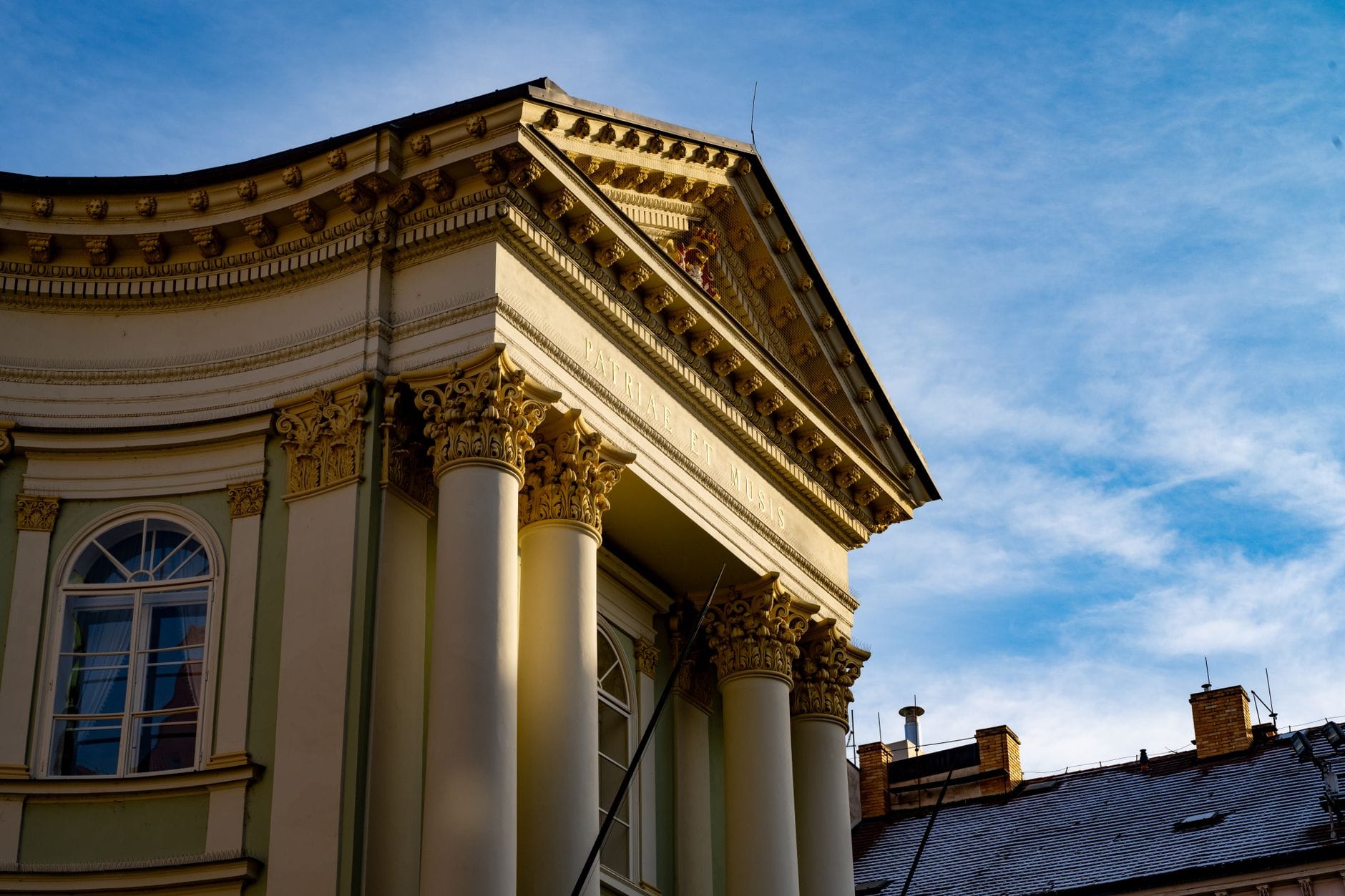
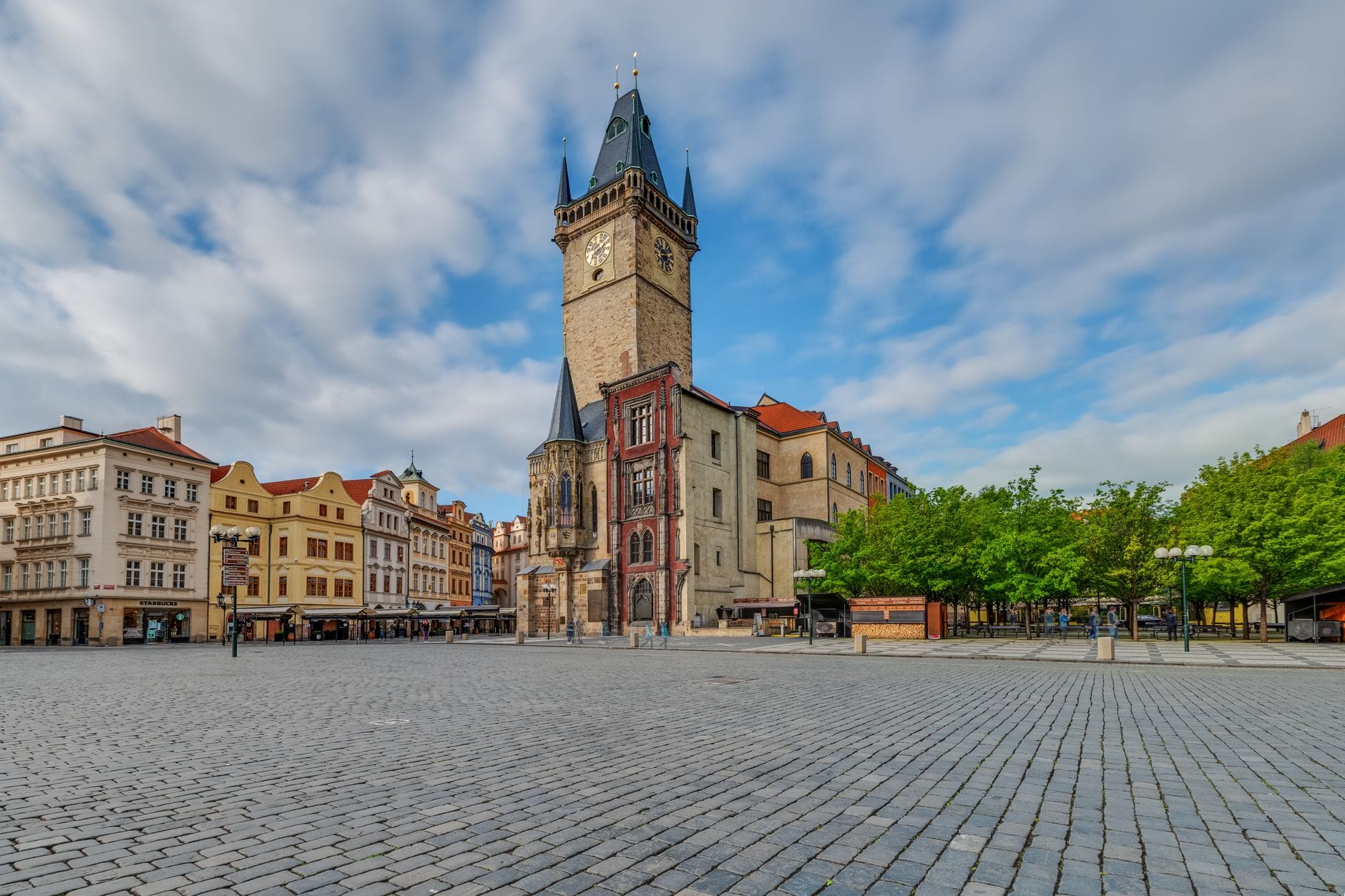
Old Town (Staré Město) is the medieval heart of Prague, a compact district of Gothic towers, winding lanes, and layered history on the right bank of the Vltava. It holds the highest concentration of major landmarks in the city, from the Astronomical Clock to Charles Bridge, and serves as the starting point for almost every visitor's experience of Prague.
Staré Město is where Prague's story begins. Bounded by the Vltava to the west and north, and by the arc of Na Příkopě and Národní Street to the south, this compact medieval district packs more architectural history into a few square kilometers than most cities manage across their entire centre. It is Prague's most visited neighborhood by a wide margin, and for good reason.
Orientation
Old Town sits on the right bank of the Vltava, forming the historic core of Prague 1. Its boundaries are relatively easy to trace: the river wraps around the western and northern edges, Revoluční Street marks the eastern boundary near náměstí Republiky (Republic Square), and the southern edge follows the curve of Na Příkopě and Národní Street, which once traced the line of the old city moat. Within those limits lies a district of roughly 1.3 square kilometers, dense with centuries of architecture and almost entirely oriented around pedestrian movement.
The neighborhood connects directly to Josefov, the former Jewish Quarter, which is technically integrated into Old Town's administrative boundaries and sits in its northwestern corner along the river. To the south, crossing Národní Street brings you into New Town (Nové Město), where the commercial pace picks up around Wenceslas Square. Crossing the river via Charles Bridge leads into Malá Strana, and from there the hill climbs toward the Castle District. Old Town is the geographic and conceptual center from which all these districts radiate.
Understanding Old Town means understanding its relationship to the medieval street plan. Unlike New Town, which was laid out by Charles IV in the 14th century on a rational grid, Old Town grew organically over centuries. Streets narrow unexpectedly, courtyards appear behind unassuming doorways, and the alley you follow toward Old Town Square might suddenly widen into a small plaza or dead-end at a Romanesque foundation. Getting slightly lost here is not a problem; it is part of how the neighborhood works.
Character & Atmosphere
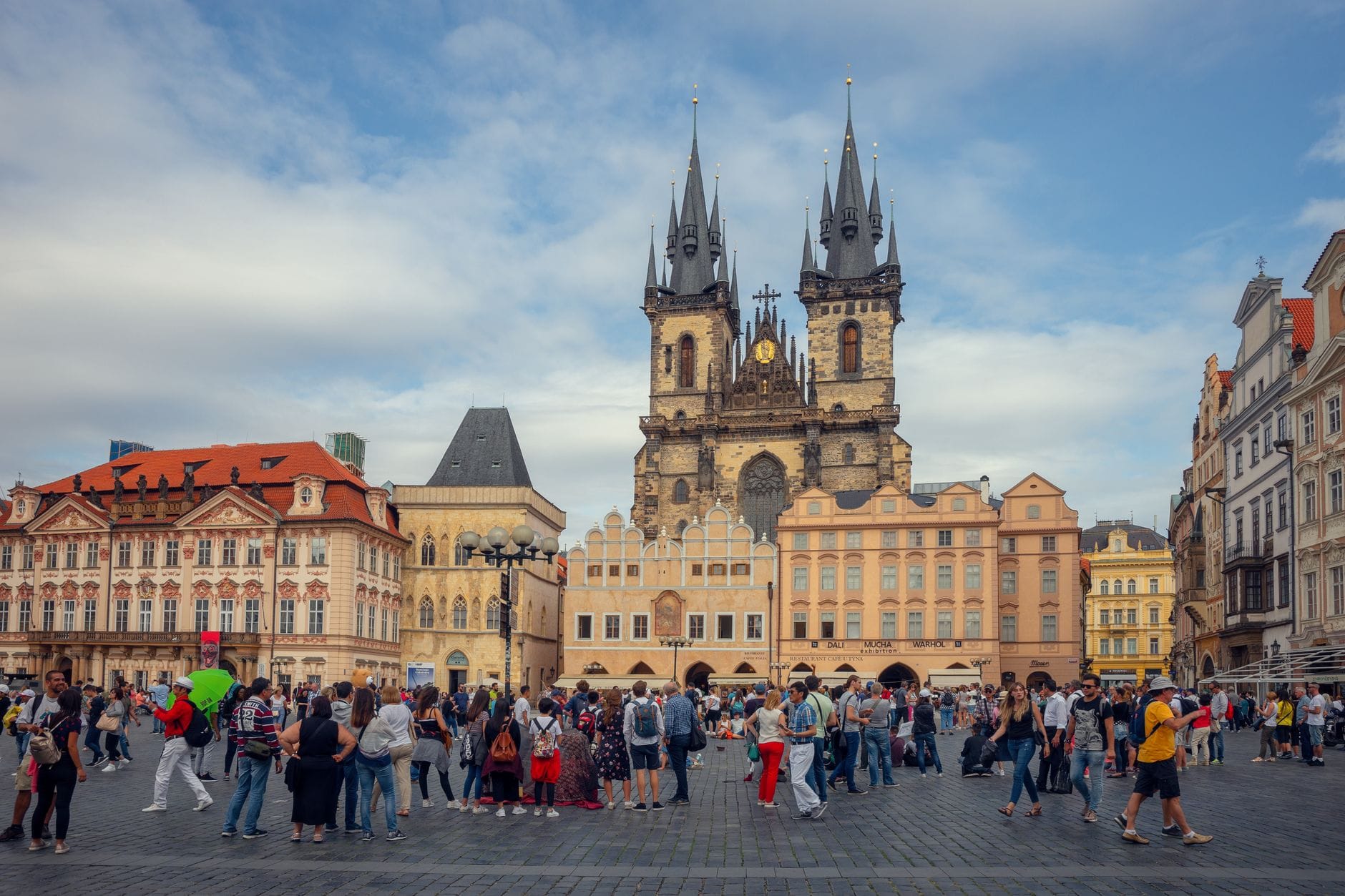
Early morning is the most revealing time to be in Old Town. Before 8am, when the souvenir shops are shuttered and the tour groups have not yet assembled, the neighborhood shows its residential and working face. Delivery vans navigate Celetná Street. Locals from the handful of apartments tucked above ground-floor restaurants walk dogs across the cobblestones near the Ungelt courtyard. The light on the Týn church's twin Gothic towers, which can look almost menacing on a grey afternoon, turns warm and amber at dawn.
By mid-morning, the transformation is complete. Old Town Square becomes one of Europe's most photographed spaces, and the crowd around the Astronomical Clock thickens noticeably in the minutes before each hour. Throughout the day, the main arteries — Celetná, Karlova, Pařížská at the northern edge — carry a continuous flow of visitors. The streets between these axes, however, can be surprisingly quiet. The lanes around Týnská, Štupartská, or the blocks near the Clementinum see far less foot traffic despite being steps away from major landmarks.
By evening, Old Town shifts again. The square takes on a different quality after dark: the tower of the Old Town Hall is lit, the Týn church glows from within during services, and the restaurant terraces fill with people settling in for long dinners. The tourist density does thin slightly after dinner hours, though the area never becomes truly quiet. On weekends and during peak summer months, noise from bar districts along the river and near Dlouhá Street can carry well into the early hours.
⚠️ What to skip
Old Town is genuinely crowded from late June through August and around Christmas. If crowds make it hard for you to enjoy sightseeing, plan your landmark visits before 9am or after 6pm, and consider basing yourself in a quieter neighborhood like Vinohrady while day-tripping into the centre.
What to See & Do
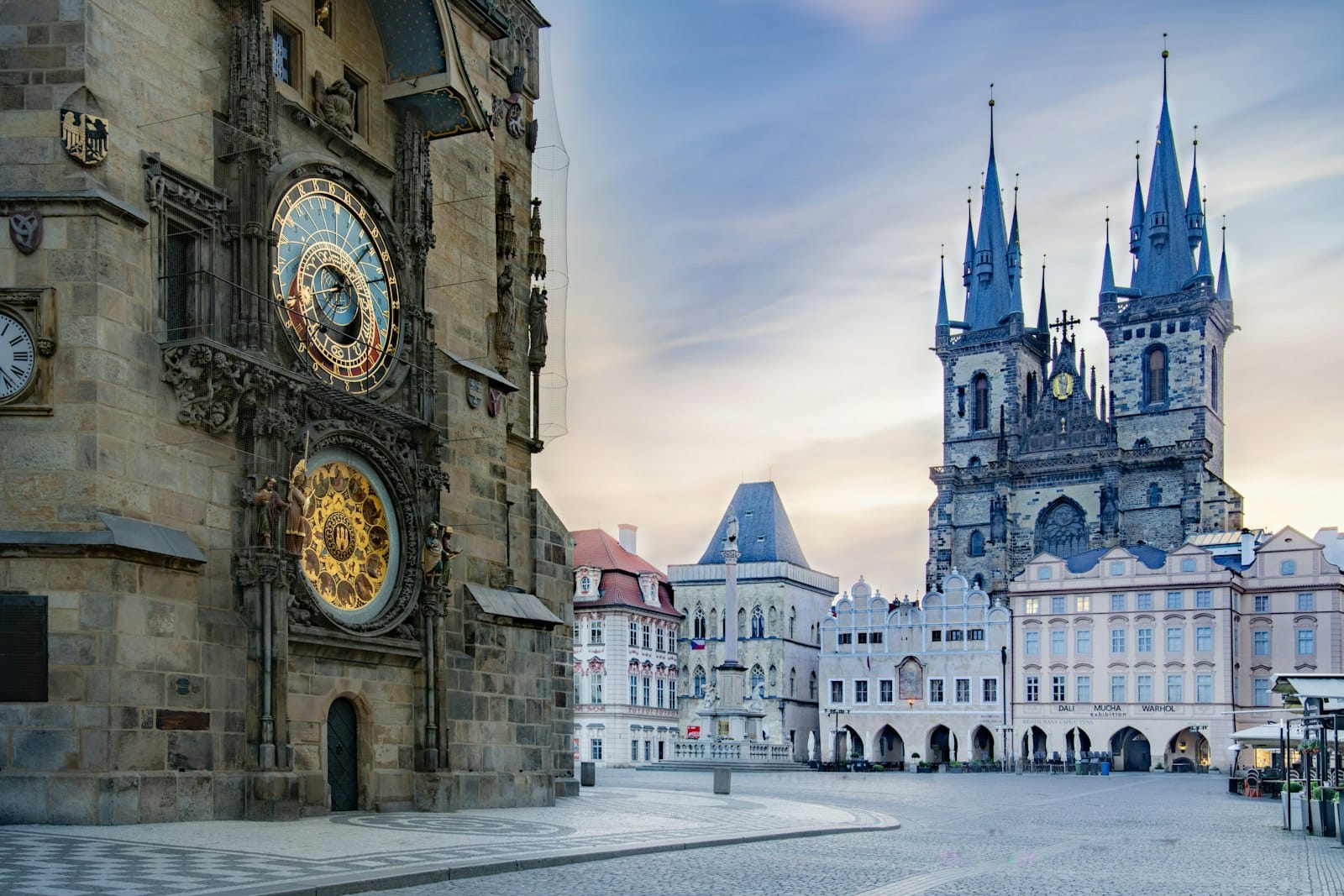
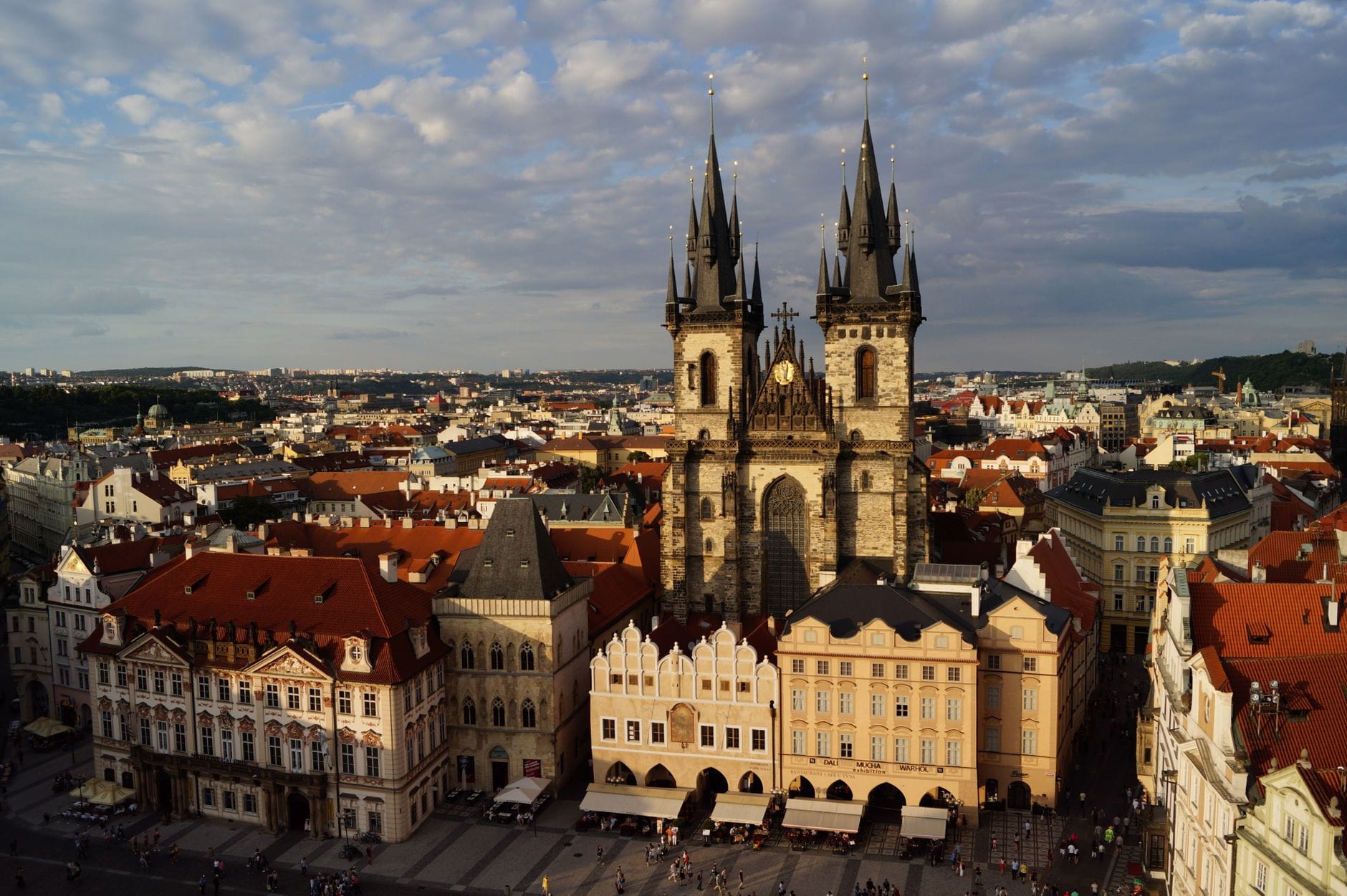
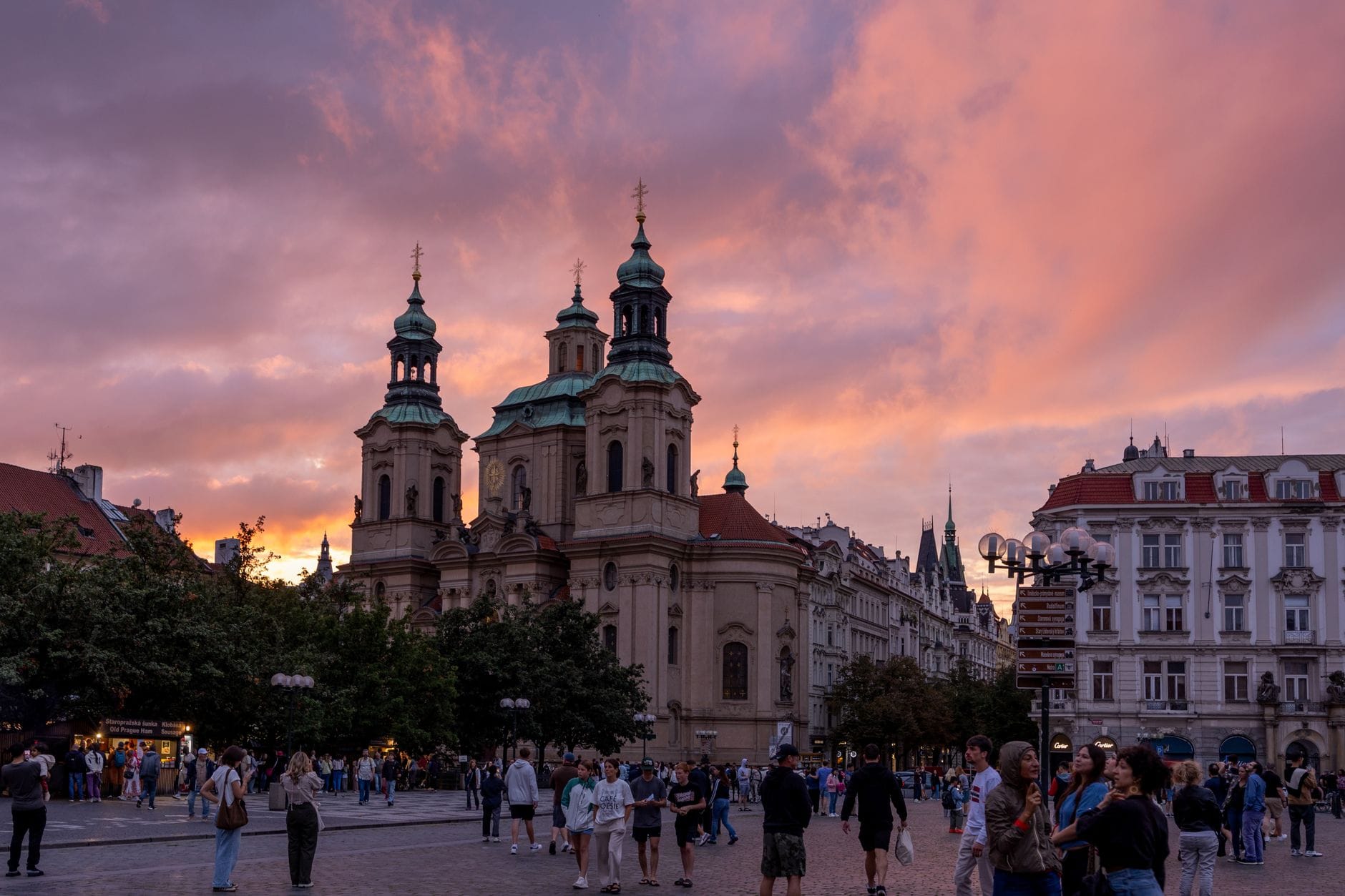
The centerpiece of Old Town is Old Town Square, a medieval marketplace surrounded by buildings from six different centuries. The square itself is not one architectural style but a compressed timeline: Gothic Týn church on the eastern face, Baroque St. Nicholas on the northwestern corner, the Renaissance Kinský Palace alongside, and the Gothic-Renaissance Old Town Hall on the western edge. Standing in the middle and turning slowly, you can trace something close to 700 years of European architectural history without moving your feet.
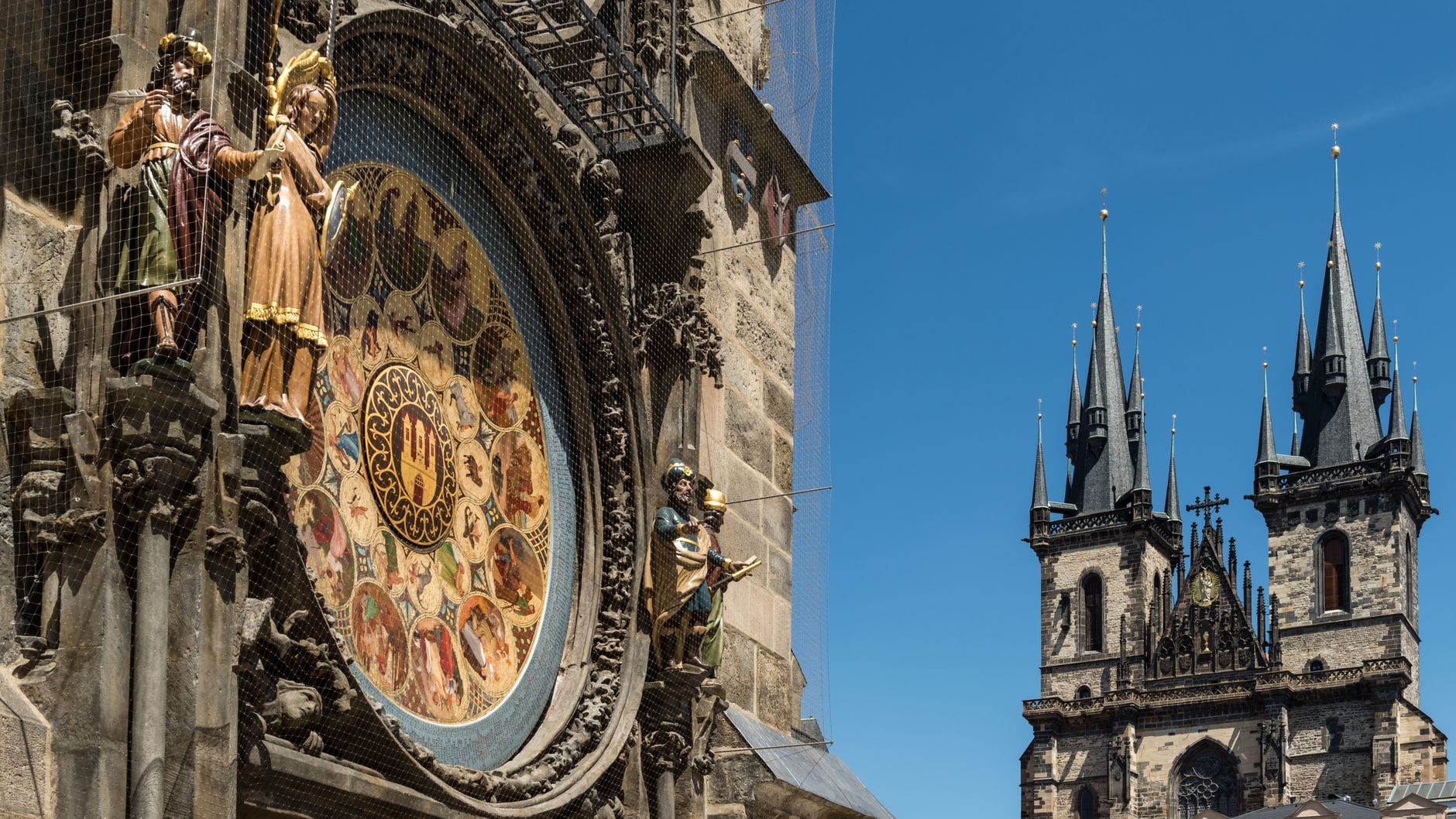
The Prague Astronomical Clock on the Old Town Hall draws crowds every hour, when its mechanical figures perform a brief procession. The clock mechanism, first installed in 1410, is genuinely remarkable as a piece of medieval engineering, displaying solar time, sidereal time, the position of the moon, and the Babylonian hour system simultaneously. The theatrical hourly show is brief — about 45 seconds — but climbing the tower afterward offers some of the best elevated views across the red-roofed district.
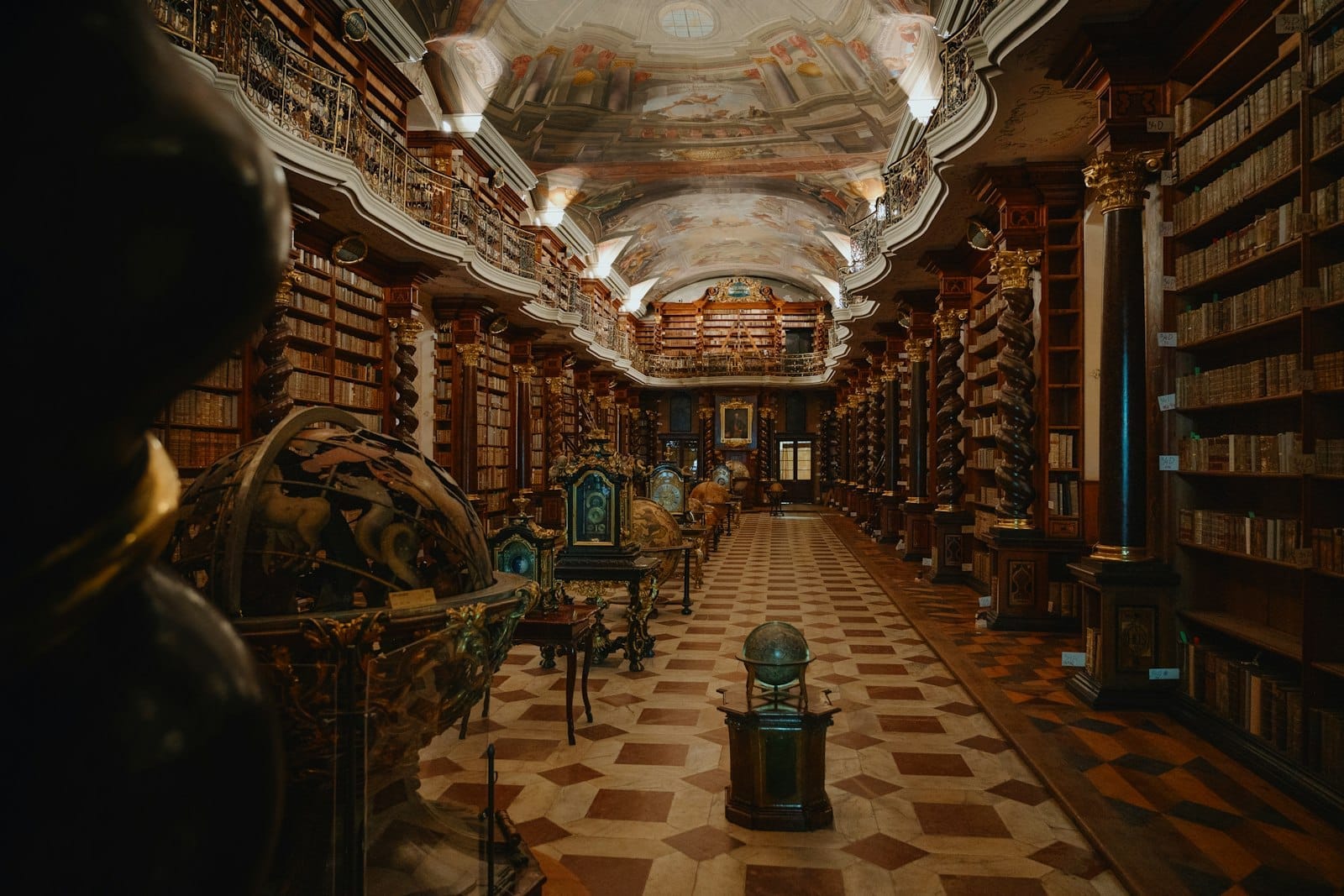
Walking west from the square down Karlova Street, one of Old Town's most atmospheric (and most congested) lanes, brings you to the Clementinum, the former Jesuit college complex that is now part of the Czech National Library. The Baroque library hall inside ranks among the most beautiful in Europe, and the complex also includes a Mirror Chapel and a Meridian Hall with an astronomical tower. Guided tours run throughout the day and are worth booking in advance during busy periods.
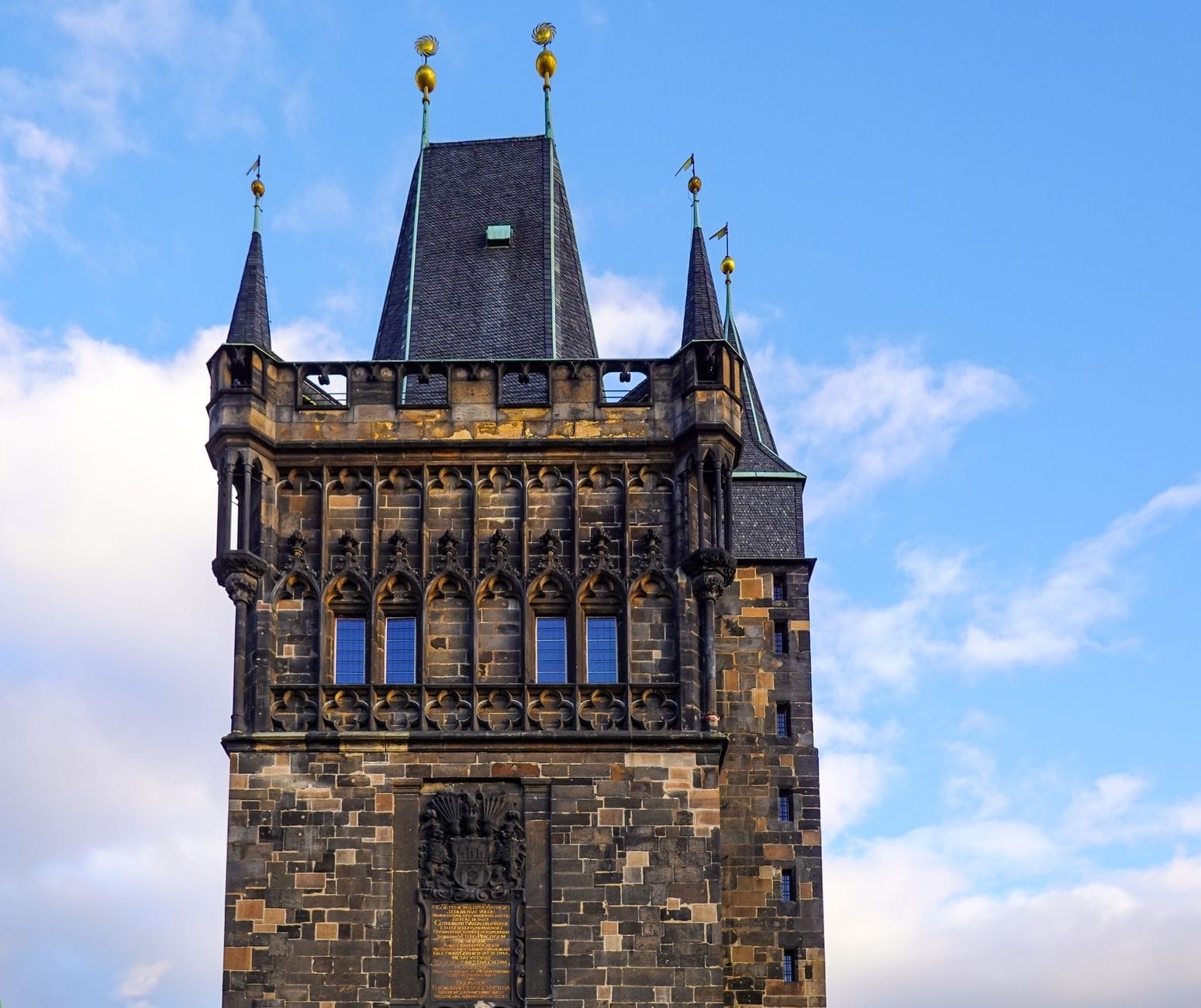
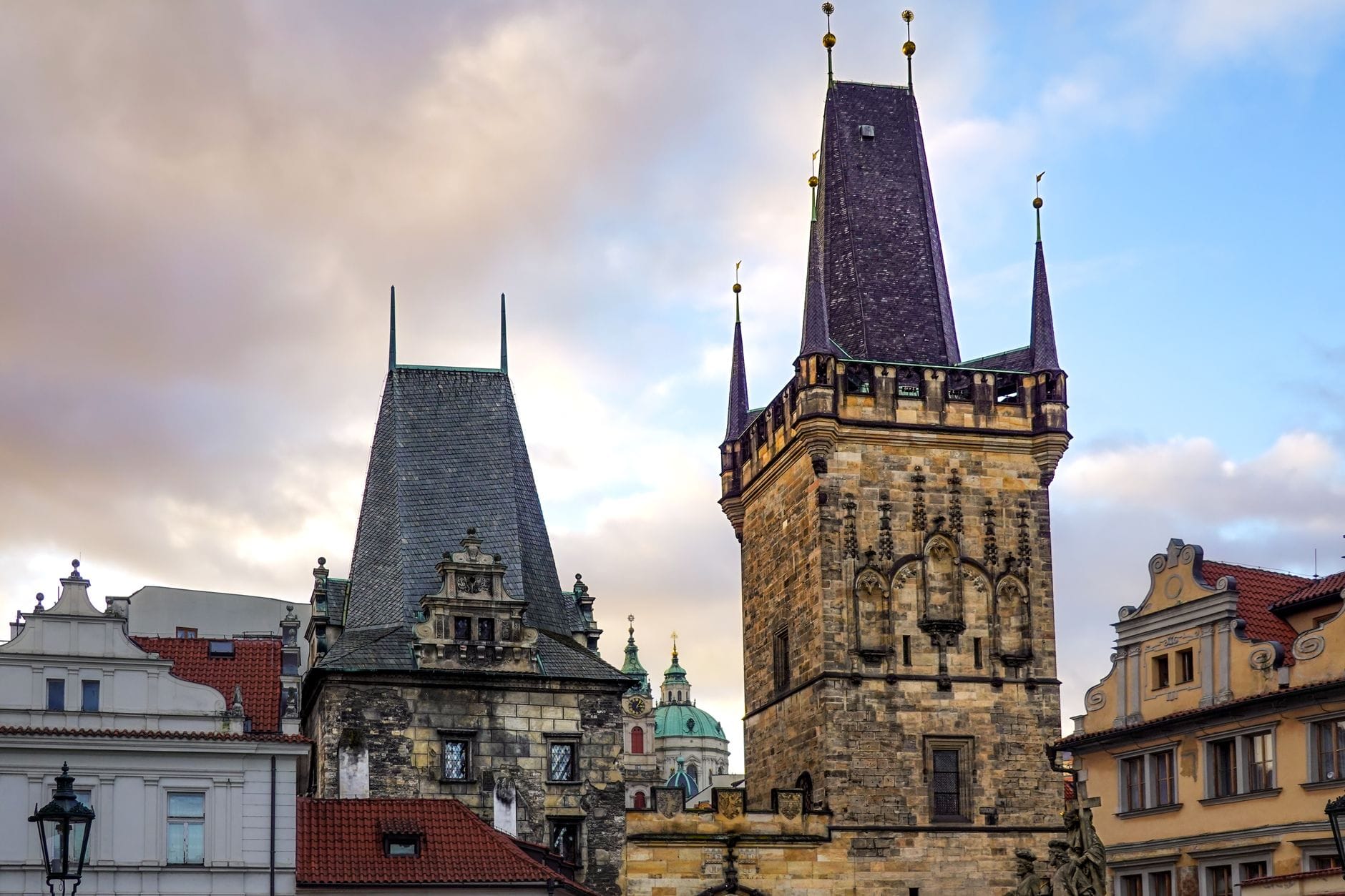
From the Clementinum it is a two-minute walk to the river and to Charles Bridge, the 14th-century stone bridge lined with Baroque statues that connects Old Town to Malá Strana. The bridge is at its most manageable in the very early morning; by 10am it is typically packed shoulder-to-shoulder. At the Old Town end, the Old Town Bridge Tower is one of the finest Gothic gateways in Central Europe and can be climbed for river views.
Church of Our Lady before Týn: the iconic Gothic twin-towered church on the eastern face of Old Town Square, with an interior that surprises most visitors with its scale and Baroque decoration
Powder Tower (Prašná brána): the 15th-century Gothic gate at the eastern edge of Old Town, marking the old royal coronation route toward Hradčany
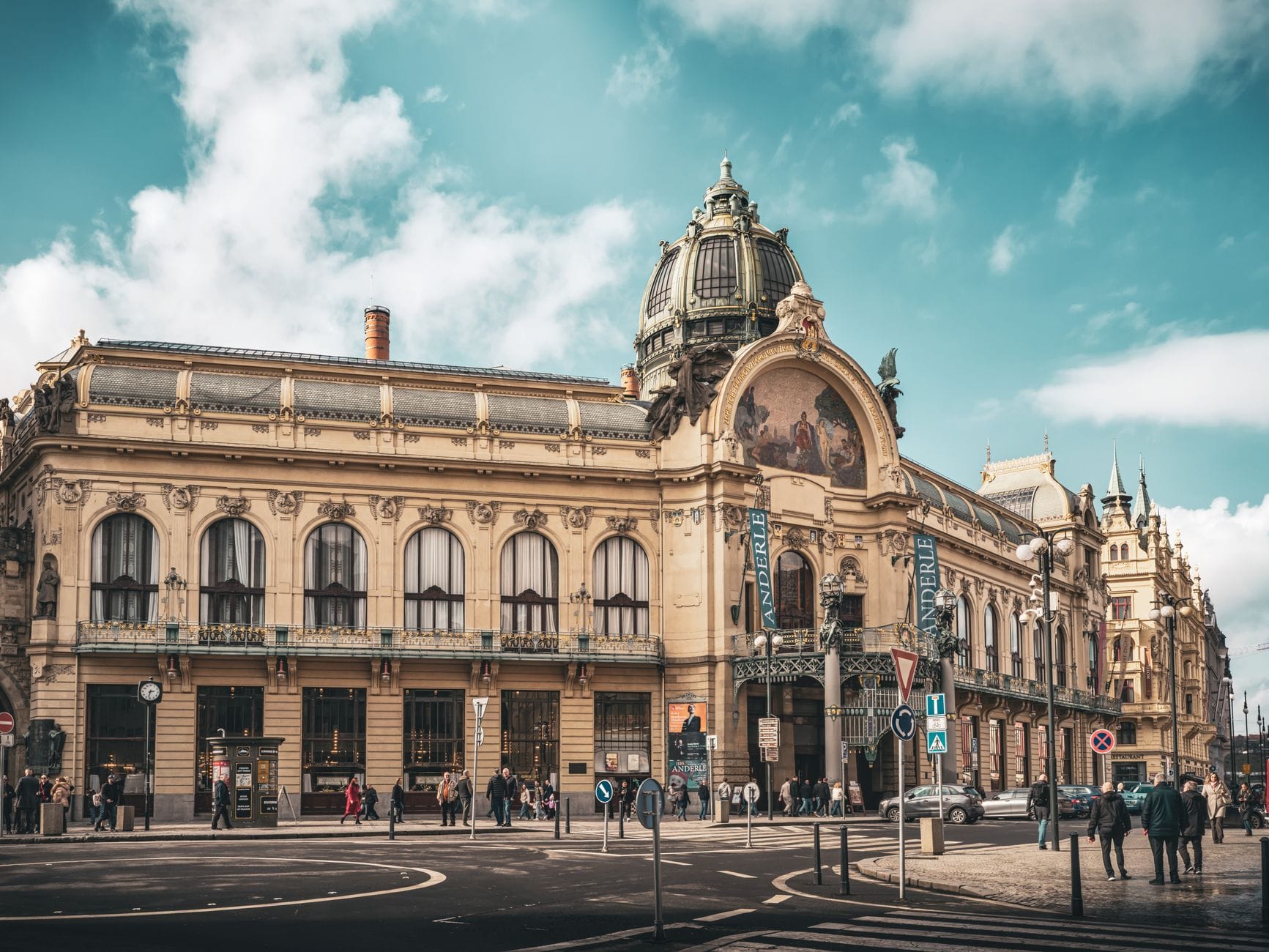
Municipal House (Obecní dům): an Art Nouveau building just outside Old Town's boundary at náměstí Republiky, housing concert halls and ornate interiors
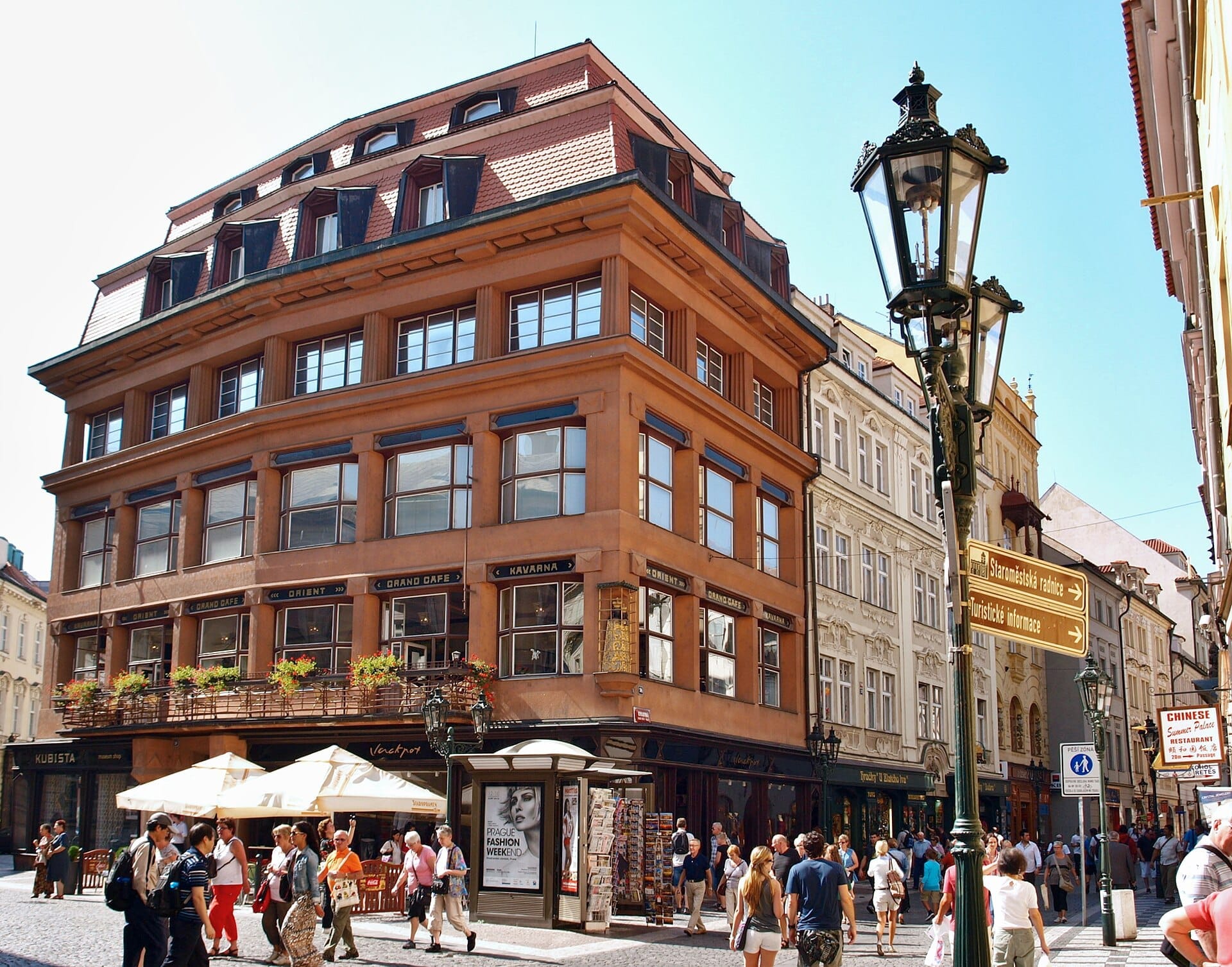
House of the Black Madonna: a remarkable Cubist building on Celetná, now home to a museum of Czech Cubism
Ungelt courtyard: a medieval merchant courtyard behind the Týn church, now lined with restaurants and shops and one of the quieter retreats from the main square
Josefov (Jewish Quarter): the former Jewish ghetto immediately north of the main Old Town area, containing six synagogues, the Old Jewish Cemetery, and the Jewish Museum
The Jewish Quarter deserves dedicated time. The Old Jewish Cemetery, with its stacked layers of graves and leaning stones, is one of the most affecting sites in the city. The Old-New Synagogue has been in continuous use since the 13th century, making it one of the oldest active synagogues in Europe. The Spanish Synagogue offers a completely different register: a Moorish Revival interior of extraordinary decorative richness. A combined ticket from the Jewish Museum covers most sites in Josefov and is the most efficient way to visit.
💡 Local tip
The streets between Týnská, Štupartská, and the back of the Ungelt courtyard see a fraction of the crowds on Celetná or Karlova. If you want to photograph Old Town architecture without tour groups in every frame, work the side streets before 9am.
Eating & Drinking
Old Town has no shortage of places to eat, but the range of quality is unusually wide. The restaurants immediately facing Old Town Square and lining the main pedestrian arteries into it tend to operate on tourist economics: menu boards in six languages, prices 30 to 50 percent above neighborhood averages, and service calibrated for high turnover. This does not mean every restaurant near the square is poor, but it does mean you should look one or two streets back from the main drag before committing.
Czech cuisine is well-represented throughout Old Town, though the versions you find in the centre are rarely the cheapest. Traditional dishes like svíčková (beef sirloin in cream sauce with bread dumplings), pork knee, and goulash appear on nearly every menu. For something closer to how locals eat, the streets around Dlouhá, Rámová, and the area near Haštalské náměstí have a more grounded set of options, including Czech pubs and mid-range restaurants that do not rely on foot traffic from the square.
Cafés are plentiful and range from grand historical interiors to small specialty coffee operations that have opened in recent years as the third-wave coffee culture took hold in Prague. The café inside the Municipal House (just at the district's eastern boundary on náměstí Republiky) is architecturally extraordinary and worth a stop for coffee even if the prices reflect the setting. For more straightforward café stops, the streets around Betlémské náměstí and the passages near the Clementinum offer quieter alternatives.
The bar scene in Old Town skews heavily toward tourists in most areas, but Dlouhá Street and its cross streets form a genuine nightlife corridor used by both visitors and younger Prague residents. Beer, unsurprisingly, is the dominant drink. Czech lager from Pilsner Urquell, Kozel, or Budvar is widely available on tap, and a half-liter in a standard pub typically costs significantly less than in a tourist-facing restaurant on the square.
ℹ️ Good to know
The Christmas market held on Old Town Square each December is one of the largest and most visited in Central Europe. Stalls sell mulled wine (svařák), trdelník pastry, and seasonal crafts. Crowds peak on weekends and in the final week before Christmas. For context on timing your visit around it, the Prague Christmas Market guide covers the seasonal calendar in detail.
Getting There & Around
Old Town is exceptionally well-served by public transit. The Staroměstská metro station on Line A sits just at the northwestern edge of the district, a five-minute walk from Old Town Square. Můstek station, where Lines A and B intersect, sits at the southern boundary near the bottom of Wenceslas Square. Náměstí Republiky station on Line B anchors the eastern edge. In practical terms, you are never more than a ten-minute walk from a metro station from anywhere in Old Town.
Trams run along the outer edges of the district rather than through its pedestrianized interior. Tram stops along the Vltava embankment (Nábřeží) provide access from the north and south, and trams along Národní and Revoluční streets connect Old Town to New Town, Smíchov, and the broader inner city. The tram network operates throughout the day and night, with night lines taking over from the daytime routes after midnight.
From Václav Havel Airport, the most straightforward route into Old Town is trolleybus 59 to Nádraží Veleslavín metro station, then Line A to Staroměstská. The journey takes roughly 45 to 55 minutes depending on connections. The Airport Express (AE) bus runs directly to Praha hlavní nádraží (Main Railway Station), from which Line C connects to Můstek via a transfer to Line A or B. Taxis and ride-hailing services (Uber and Bolt both operate in Prague) offer a direct door-to-door option. For full guidance on transit options across the city, the getting around Prague guide covers ticketing, passes, and route planning in detail.
Within Old Town itself, almost everything is on foot. The district is largely pedestrianized, and the cobblestone streets make cycling difficult for most visitors. Flat-heeled or supportive shoes are strongly advisable: the historic paving stones are beautiful but uneven, and a long day of sightseeing on cobblestones in inadequate footwear is one of the most common sources of visitor discomfort in central Prague.
Where to Stay
Staying in Old Town puts you within walking distance of the city's most significant landmarks and means you spend less time in transit. It is the obvious choice for first-time visitors who want maximum proximity to major sights or those following a short itinerary. The where to stay in Prague guide provides a full cross-neighborhood comparison, but for Old Town specifically, here is what to know.
Accommodation in Old Town skews toward the upper-middle and luxury segments. The density of heritage buildings limits new construction, and the premium location commands premium prices. Hotels in converted historic buildings along Celetná, Pařížská, and the streets immediately around Old Town Square tend to be among the most expensive in the city. Smaller boutique hotels and apartment rentals in the quieter northern and eastern parts of the district (around Štupartská or near náměstí Republiky) can offer better value without sacrificing the central location.
The trade-off for staying in Old Town is noise. The area near the square and along Dlouhá Street can be loud on weekend nights, and early-morning deliveries and cleaning operations on the main pedestrian streets start before 7am. If you are a light sleeper, look for accommodation in the inner courtyards of larger buildings rather than street-facing rooms, or choose a property in the quieter blocks near the Clementinum or the Ungelt. Budget travelers will generally find better value in Vinohrady, Žižkov, or Holešovice while taking the metro into Old Town for sightseeing.
Practical Tips & Honest Drawbacks
Old Town is the right neighborhood to visit; the question is whether it is the right neighborhood to base yourself in for an extended stay. For a two or three-day trip focused on Prague's headline sights, proximity matters and the investment in Old Town accommodation makes sense. For longer stays or for travelers interested in seeing how contemporary Prague actually functions, the neighborhood can feel like it exists slightly outside the city's daily life, operating on a parallel track defined by tourism rather than residency.
Pickpocketing is the primary safety concern in Old Town, as it is in any heavily tourist-frequented district in Europe. The highest-risk moments are around the Astronomical Clock during the hourly performance, on Charles Bridge, and in the tram stops around Staroměstská. Use an inner pocket or anti-theft bag, avoid displaying valuables, and be particularly alert in dense crowds. The district is well-lit and feels safe at night; the risk is opportunistic theft in daylight crowds, not personal safety after dark.
Currency exchange is widely available throughout Old Town, but rates vary significantly. Exchange offices on the main tourist routes near Old Town Square and Charles Bridge frequently display favorable headline rates that apply only above minimum transaction thresholds, or carry commissions that reduce the effective rate substantially. Using a bank ATM or a fee-free card for withdrawals and payments is generally the more reliable approach. For broader practical information on visiting Prague, the Prague on a budget guide covers where tourist pricing inflates costs and how to avoid it.
⚠️ What to skip
Currency exchange offices displaying '0% commission' or 'best rate' near Old Town Square and Charles Bridge frequently use unfavorable base rates or minimum transaction rules. Always check the final amount in Czech koruna before completing any exchange transaction, and compare against the Czech National Bank's published reference rate.
TL;DR
Old Town (Staré Město) is Prague's historic core and the city's highest-density sightseeing district, containing the Astronomical Clock, Old Town Square, Charles Bridge, the Clementinum, and the Jewish Quarter within walking distance of each other.
Best for: first-time visitors to Prague, short trips of 2-3 days, travelers who want to walk to the major landmarks without using transit.
Be aware: crowds are heavy from late June through August and peak at the Astronomical Clock, Charles Bridge, and Pařížská Street; restaurant pricing on main tourist arteries is noticeably higher than elsewhere in the city.
Transit is excellent: Staroměstská (Line A), Můstek (Lines A and B), and Náměstí Republiky (Line B) all sit at the district's edges, with airport connections via Line A taking under an hour.
Travelers seeking a quieter atmosphere, lower accommodation costs, or a more locally-oriented experience will find Vinohrady, Žižkov, or Holešovice more suitable as a base, with Old Town easily accessible by metro.
Three days is the ideal amount of time to experience Prague's historic core without rushing. This itinerary takes you from the medieval lanes of Old Town to the hilltop grandeur of Prague Castle, the haunting beauty of Josefov, and the quieter pleasures of Malá Strana and Vyšehrad.
Prague's museum scene stretches far beyond the obvious. This guide covers the city's finest art, history, and specialist museums, from the National Gallery's scattered palaces to underground alchemical laboratories and intimate synagogues that carry centuries of history.
Prague rewards visitors differently depending on when you arrive. This guide breaks down every season with clear seasonal notes of weather, crowd levels, hotel prices, and key events, so you can choose the right time for your trip rather than the most popular one.
Prague rewards those who climb. From medieval towers rising above Old Town to forested hills and riverside terraces, the city's skyline is best understood from above. This guide covers every worthwhile viewpoint, whether you're after a paid 360-degree panorama or a free hilltop perch with a cold beer.
Prague sits at the center of Bohemia, making it one of the best-positioned cities in Europe for day trips. Within two hours by train or bus, you can reach a Gothic castle above a forested valley, a UNESCO town wrapped in a river bend, a Nazi memorial site, and one of Europe's notable spa resorts.
Prague has one of Central Europe's most efficient public transport networks, covering the city by metro, tram, and bus under a single integrated ticket system. This guide covers fares updated for 2026, airport transfer options, ride-hailing realities, and the mistakes most visitors make on their first day.
Seven days is the right amount of time to see Prague properly. This guide breaks down exactly how to spend each day, which neighborhoods to prioritize, what the castle complex actually demands in terms of time, and how to fit in a day trip without losing a full day to logistics.
Prague's historic center packs over 1,100 years of architectural history into roughly 870–900 hectares, from Romanesque crypts and Gothic cathedrals to one of the world's most substantial collections of Cubist buildings. This guide breaks down every major style, tells you exactly what to see, and gives you the practical details to plan your visit.
Prague's Christmas markets run from late November through early January, turning Old Town Square and Wenceslas Square into some of Europe's most atmospheric winter destinations. This guide covers every major market, what to eat and drink, how to avoid the worst crowds, and exactly what to budget.
David Černý is the Czech Republic's most provocative public artist, and Prague is his gallery. This guide covers his major installations across the city, how to build a self-guided walking route, and what you need to know before you go.
Prague sets a high bar for romance: Gothic spires, cobblestone lanes, river views, and a classical music scene that rivals much larger capitals. This guide covers the best things to do in Prague for couples across every season, from iconic spots timed to avoid the crowds to quieter corners most visitors miss entirely.
Prague rewards those who look beyond Charles Bridge and Old Town Square. This guide reveals the city's quieter side: Baroque gardens tucked behind unmarked doors, medieval cellars beneath busy streets, panoramic hilltops where locals outnumber tourists, and neighborhoods reshaping Prague's creative identity.
Prague's history spans more than a thousand years of empire, revolution, occupation, and reinvention. This guide breaks down the key eras, explains what shaped the city's architecture and culture, and tells you exactly where to see that history in person.
Summer is Prague's most popular season, but it comes with trade-offs: intense heat, peak-season crowds, and higher prices. This guide covers everything you need to plan a smart trip to Prague in June, July, or August, from booking timelines to beat-the-crowd strategies.
Winter strips Prague back to its essentials: gothic spires against grey skies, Christmas markets on cobblestone squares, and a fraction of the summer crowds. This guide covers the real conditions — temperatures, daylight, costs, and which attractions stay open — so you can plan with confidence.
Josefov is one of Europe's most significant Jewish heritage sites, packed into just a few city blocks between Old Town Square and the Vltava River. This guide covers every major site, how ticketing works, the best time to visit, and what most visitors get wrong before they arrive.
Prague delivers five-star experiences at prices that would seem impossible in Paris or London. This guide covers the best luxury hotels with practical pricing data, the fine-dining restaurants worth booking weeks ahead, and the high-end experiences that go well beyond the standard tourist circuit.
Prague nightlife runs deeper than the tourist bars around Old Town Square. This guide breaks down the city's after-dark scene by district, covering the best clubs, bars, jazz venues, and rooftop spots, with practical advice on prices, timing, and where locals actually go.
Prague is one of Europe's better-value capitals, but it is not the ultra-cheap destination the myth suggests. This guide breaks down exactly what things cost in 2026, where to save money without sacrificing the experience, and which tourist traps quietly drain your wallet.
Prague rewards shoppers across every budget, from Bohemian crystal and hand-carved puppets to international luxury labels on Pařížská Street. This guide breaks down the best shopping districts, markets, malls, and genuinely worthwhile souvenirs, with practical details on hours, transport, and what to skip.
The journey from Prague to Munich covers just under 400 km and can be done by direct train, bus, or flight. This guide breaks down every realistic option with prices, journey times, and practical booking advice so you can choose the right one for your trip.
The Prague to Vienna corridor is one of Central Europe's best-connected routes, with trains, buses, and flights running daily. This guide breaks down every option by cost, comfort, and real travel time so you can pick the right one for your trip.
This step-by-step guide walks you through Prague's most rewarding route, from the medieval core of Old Town across Charles Bridge and up to the castle complex on Hradčany hill. Covers distances, timing, ticket costs, seasonal advice, and the shortcuts most visitors miss.
Prague is one of Europe's most rewarding cities for families, offering everything from a world-class zoo and a funicular railway to interactive museums and vast green parks. This guide covers the best activities for children of all ages, how to get around cheaply, which neighborhoods work best for families, and what to skip.
Prague rewards visitors with one of Europe's most intact medieval city centres, a world-class Jewish quarter, and neighbourhoods far beyond the tourist trail. This guide covers the best things to do in Prague across every budget and interest, with crowd warnings, seasonal advice, and precise logistics.
Prague's dining scene is far more nuanced than the tourist-trap stereotype suggests. This guide breaks down the best neighborhoods for food, what to order, which restaurants are worth booking in advance, and how much to expect to pay — from a 90 CZK bowl of goulash to a Michelin tasting menu.
Choosing where to stay in Prague shapes your entire trip. This guide breaks down every major neighborhood by location, price, atmosphere, and drawbacks so you can book with confidence, whether you have three days or three weeks.