Prague in Summer: What to Know Before You Go
Summer is Prague's most popular season, but it comes with trade-offs: intense heat, peak-season crowds, and higher prices. This guide covers everything you need to plan a smart trip to Prague in June, July, or August, from booking timelines to beat-the-crowd strategies.
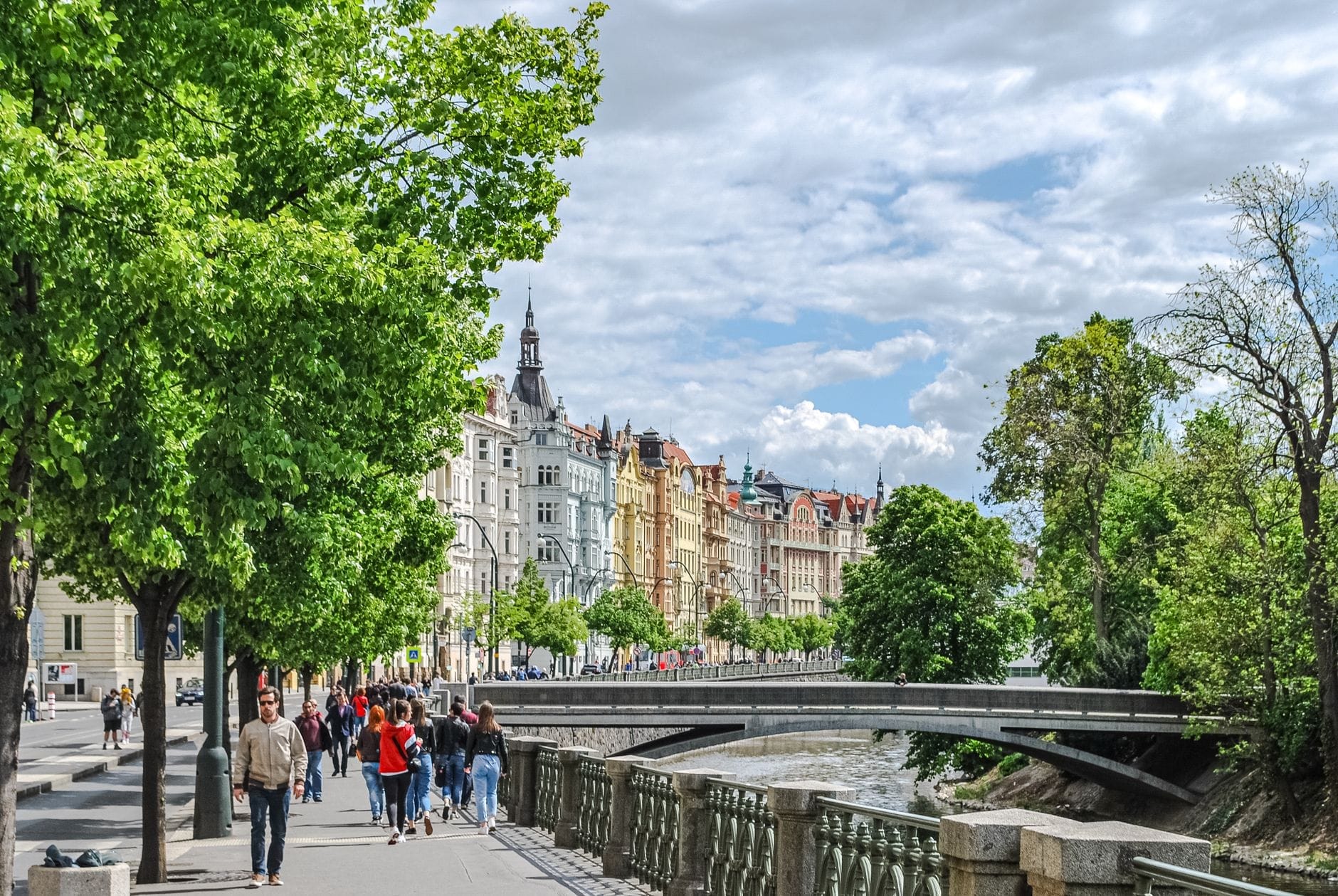
Plan and book this trip
Tools from our partner Travelpayouts help you compare flights and hotels. If you book through them, we may earn a commission at no extra cost to you.
Flights
Hotels map
TL;DR
- Prague in summer (June–August) means long days with up to 16 hours of daylight at the June solstice, temperatures averaging 22–26°C, and occasional heatwaves above 35°C.
- This is peak tourist season: expect maximum crowds at Charles Bridge and Prague Castle, with accommodation prices 30–50% higher than shoulder months.
- Book accommodation 3–4 months ahead and pre-purchase timed entry tickets for Prague Castle and the Jewish Quarter — both regularly sell out in summer.
- Early mornings (before 8:30 AM) are your best weapon against crowds at iconic sites; afternoons belong to thunderstorms and beer gardens.
- If flexibility is possible, late May or September offer nearly identical weather with far fewer tourists. See our full breakdown of when to visit Prague for a complete seasonal comparison.
Summer Weather in Prague: Hotter Than Most People Expect
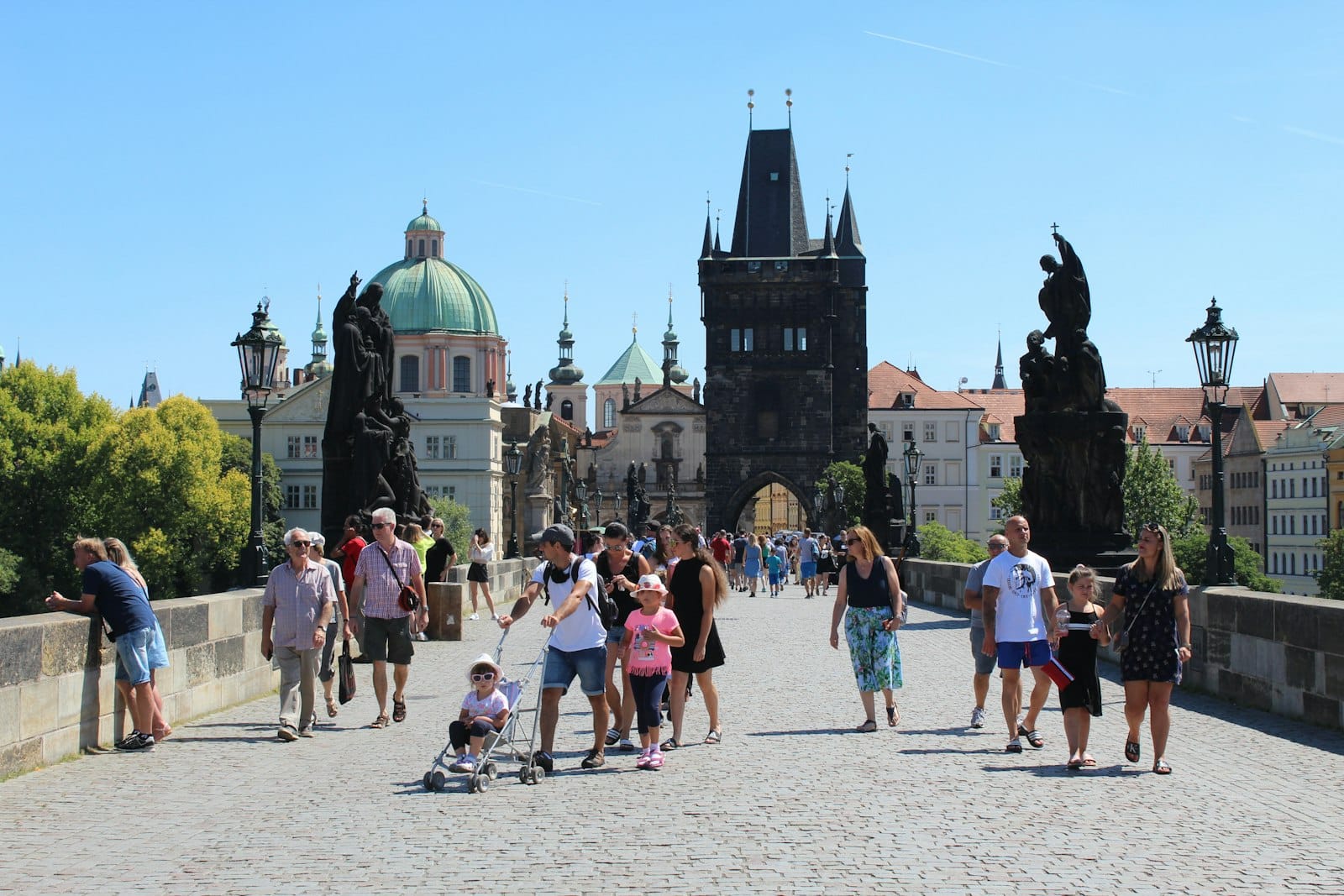
Prague sits in a humid continental climate zone, which means summers are genuinely warm, not just mild. Average daytime highs run between 22°C and 27°C (72–81°F) through June and July, but heatwaves regularly push temperatures above 35°C (95°F), especially in late July and early August. The stone-paved streets and dense urban fabric of the historic centre trap heat, making the medieval core noticeably warmer than the city's green outer districts.
Daylight is generous: around 16 hours at the June solstice, with sunrise near 5:00 AM and sunset around 9:00 PM, plus twilight stretching close to 10:00 PM. This is genuinely useful for sightseeing — early morning light on the Old Town rooftops or a late evening stroll across Charles Bridge are among Prague's best summer experiences. Nights cool down to around 13–16°C, so lighter layers are enough after dark.
⚠️ What to skip
A persistent myth: Prague is cool in summer. It is not. Heatwaves of 35–38°C are documented and increasingly common. If you're visiting in July or August, pack lightweight clothing, stay hydrated, and plan your heaviest walking for early morning. Air conditioning is not universal in older hotels and apartments.
Afternoon thunderstorms are a regular feature from June through August. These are typically short but intense — 30 to 60 minutes of heavy rain followed by clearing skies. Check the daily forecast each morning; if thunderstorms are predicted, front-load your outdoor sightseeing and save museums for the afternoon. Flooding is rare in Prague city centre but can affect lower-lying riverfront areas, so stay aware during extended rain events.
Crowds and Pricing: The Real Cost of Peak Season
Late June through August is unambiguously Prague's peak tourist season. Old Town Square, Charles Bridge, and the approach to Prague Castle see visitor volumes that are three to four times higher than in October or March. On a typical July morning, Charles Bridge is shoulder-to-shoulder with tourists by 9:30 AM; the queues for the Prague Castle ticket offices stretch well beyond the gate. This is not exaggeration — it is the documented reality of one of Europe's most visited capitals.
Accommodation prices typically run 30–50% higher in summer than in shoulder months. Quality hotels in Malá Strana or Old Town that cost 3,000–4,000 CZK per night in October can reach 5,000–6,500 CZK in August. Booking 3–4 months in advance is the standard advice from Prague-focused travel experts, and for July in particular, even that window is tight for popular properties.
- Best value timing within summer Early June offers peak-season weather without the full August crush. Prices are slightly lower and popular sites are manageable before 9:00 AM.
- Worst timing for crowds The last two weeks of July and first two weeks of August are the absolute peak. This aligns with European school holidays, which flood the city with families and group tours.
- Accommodation strategy Consider Vinohrady or Žižkov for accommodation — quieter, residential, well-connected by tram, and noticeably cheaper than Old Town equivalents.
- Ticket booking Prague Castle circuits (typically around 250–350 CZK in 2025–2026; verify current pricing at hrad.cz), the Jewish Quarter synagogue complex, and popular classical concerts sell out days or weeks ahead in summer. Book online before you arrive.
✨ Pro tip
Arrive at Charles Bridge by 7:00 AM to have it nearly to yourself. By 9:00 AM it is dense with tourists; by 10:30 AM, you're fighting for space. The same logic applies to the Prague Castle courtyard — first entry slots go fast, but the Golden Lane and St. Vitus Cathedral are manageable if you're through the gate before 9:00 AM.
What to Do in Prague in Summer
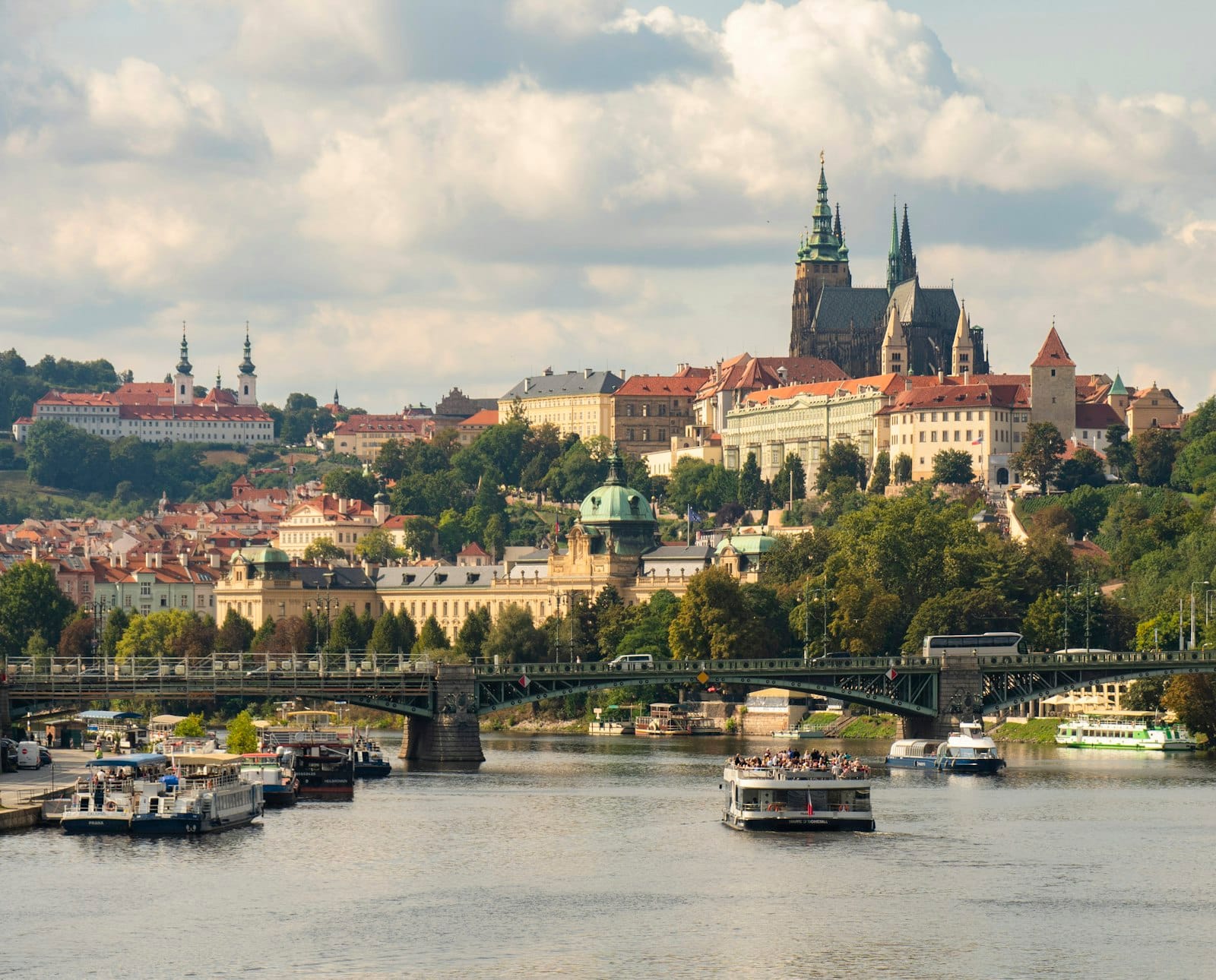
The long daylight hours make summer ideal for Prague's outdoor experiences. Petřín Hill and the surrounding orchards are at their greenest, and the views from the Petřín Lookout Tower stretch across the city on clear days. The Letná beer garden above the river is one of Prague's great summer institutions — a terrace perch with panoramic views of the Vltava and Old Town, serving Czech beer at local prices. Arrive in the late afternoon for the best light.
The Náplavka riverfront comes fully alive in summer, with weekend farmers markets, food stalls, and locals gathering along the embankment into the evening. It is one of the few places in central Prague where you see the city as residents actually use it, rather than as a backdrop for tourism. Similarly, the parks of Letná and Riegrovy Sady fill with Praguers picnicking and playing sport on warm evenings.
Summer also brings a full programme of outdoor concerts, theatre, and festivals. Opera and classical music move to courtyard and garden venues. The Prague Proms festival runs through June and July. Open-air cinema screens appear in multiple city districts. Check the official Prague.eu events calendar for current season programming, as schedules vary year to year.
- Visit Prague Castle and St. Vitus Cathedral before 9:00 AM — the castle grounds open at 6:00 AM and the historical buildings generally open at 9:00 AM; check hrad.cz for current hours.
- Take a Vltava river cruise in the evening — the city looks dramatically different from the water at dusk, and cruise operators run extended summer schedules.
- Explore the Wallenstein Garden in Malá Strana — a Baroque formal garden free to enter, less visited than the Castle, and genuinely cool in the shade.
- Day trips to Karlštejn or Kutná Hora are best attempted on weekday mornings in summer; weekend trains fill with tourists and the sites get crowded by midday.
- Use the tram network in the middle of the day rather than walking — tram Line 22 gives you a scenic ride through Malá Strana and up toward the Castle without the uphill slog in summer heat.
Navigating the City in Summer Heat
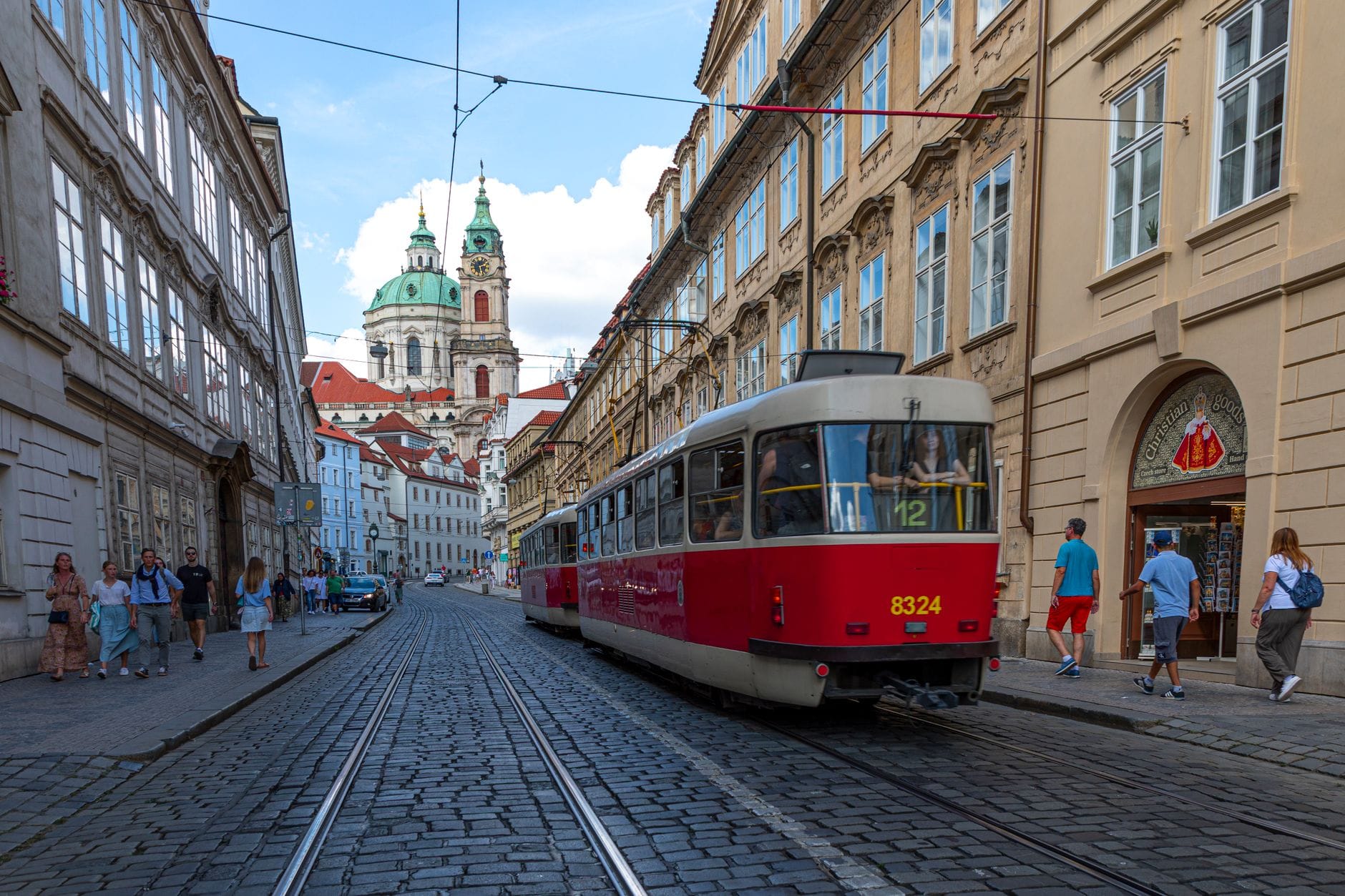
Prague's historic core is compact and walkable. Charles Bridge, Old Town Square, and the Castle District are all within roughly 30 minutes on foot of each other. A car is unnecessary and actively counterproductive in the centre — parking is limited and the medieval street plan rewards walking. In summer heat, however, the uphill climb to Prague Castle along Nerudova Street can be punishing by mid-morning. The funicular up Petřín Hill (covered by standard PID transit tickets) offers a cool alternative.
Prague's metro (three lines: A, B, C) is air-conditioned and efficient. For longer crossings of the city, the metro is faster and cooler than walking. Trams are not air-conditioned on all rolling stock, but they are the most practical way to move between Malá Strana, Vinohrady, and the riverfront areas not served by metro. The Prague Integrated Transport (PID) system covers metro, tram, and bus on the same tickets; short-duration tickets cover transfers between all modes.
💡 Local tip
Tap water in Prague is safe to drink and meets EU standards. Carry a refillable bottle — public fountains exist in some parks and squares. Buying bottled water repeatedly is unnecessary expense and generates plastic waste.
Summer vs. Shoulder Season: An Honest Comparison
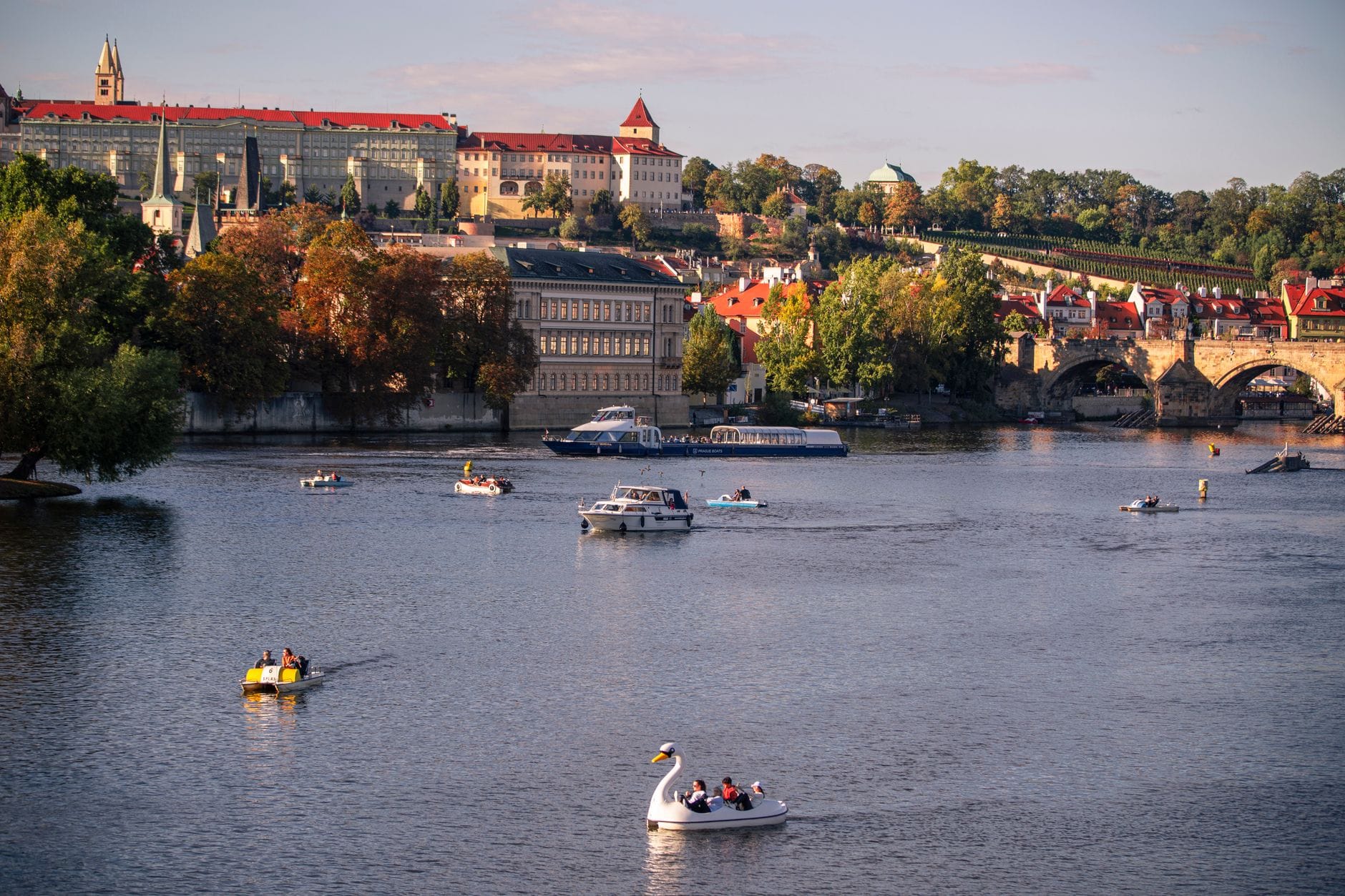
Many experienced Prague visitors will tell you that May and September are objectively better months to visit than July and August. This is not contrarianism — it reflects the trade-offs clearly. In late May and September, typical daytime temperatures are in the 18–22°C range, crowds at major sites are dramatically thinner, accommodation is cheaper, and you can walk across Charles Bridge at almost any hour without being elbowed. You lose some daylight and the chance of sitting in a beer garden until 9:00 PM, but the trade-off is significant.
That said, summer is not a bad time to visit Prague. It is simply a different experience. If your trip is fixed to school holidays or you specifically want the full energy of the city in season, plan around the crowds rather than against them. A three-day Prague itinerary in summer should front-load the big-ticket sights into early mornings and use afternoons for museums, galleries, and neighbourhood exploration in districts like Vinohrady or Holešovice where the tourist density drops sharply.
For travellers considering what lies beyond the city, summer is also the most practical season for day trips from Prague. Karlštejn Castle, Kutná Hora, and Český Krumlov are all reachable by train or bus, and the longer daylight hours give you more time on site. Kutná Hora's Sedlec Ossuary and the town centre are manageable in a full day from Prague, though summer weekends get crowded there too.
Practical Summer Checklist for Prague
- Book early 3–4 months ahead for central hotels in July–August. For early June or late August, 6–8 weeks may suffice, but earlier is always safer.
- Pre-purchase attraction tickets Prague Castle circuits and the Jewish Quarter synagogue complex regularly sell out in summer. Buy online before you travel — check hrad.cz for Castle tickets and the Jewish Museum Prague's official site for Josefov.
- Pack for heat and rain Lightweight clothing for 30°C days plus a compact packable rain jacket for afternoon storms. Comfortable walking shoes matter more than anything else — Prague's cobblestones are uneven.
- Currency Prague uses the Czech koruna (CZK), not the euro. ATMs (bankomaty) are widely available; use bank-affiliated ATMs rather than independent exchange kiosks, which typically offer poor rates.
- Power and connectivity Standard European Type C/E plugs, 230V. EU visitors need no adaptor; UK and US visitors do. SIM cards with data are affordable from mobile operators at the airport.
- Tipping Rounding up the bill or adding roughly 10% in restaurants is the accepted norm. It is not mandatory but is expected in sit-down restaurants, particularly in tourist areas.
FAQ
Is summer a good time to visit Prague?
It depends on your priorities. Summer offers long daylight hours, warm weather, and a full events calendar. The drawbacks are real: peak crowds at major attractions, accommodation prices 30–50% higher than shoulder months, and occasional extreme heat above 35°C. Late May, early June, or September give you most of the benefits with fewer trade-offs. If your dates are fixed to summer, plan around crowds by visiting key sites early in the morning.
How hot does Prague get in summer?
Average daytime highs sit between 22°C and 27°C (72–81°F) through June and July, but heatwaves regularly push temperatures to around 35–37°C (95–99°F), particularly in late July. The historic stone city centre retains heat, making it feel warmer than the surrounding districts. Nights usually cool to around 13–16°C even in peak summer.
Do I need to book Prague Castle tickets in advance in summer?
Yes. In July and August especially, timed entry slots and guided circuit tickets for Prague Castle sell out days in advance. Buy tickets through the official Prague Castle website (hrad.cz) before your trip. Walking up to the ticket office on the day is possible in shoulder season but risky in summer peak weeks.
What is the cheapest way to get from Prague Airport to the city centre?
The most affordable option is trolleybus 59 to Nádraží Veleslavín metro station (Line A), then metro into the centre — covered by a standard PID ticket. The Airport Express (AE) bus runs directly to Praha hlavní nádraží (Main Railway Station) on a separate fare. Taxis and ride-hailing apps (Bolt, Uber) offer door-to-door convenience at a higher cost; typical city-centre fares are in the range of 600–800 CZK, though prices vary. Verify current fares at prg.aero before travelling.
Is Prague too crowded in August?
The short answer: yes, by most standards. August is the single busiest month, coinciding with European school holidays. Charles Bridge, Old Town Square, and Prague Castle are extremely crowded during daytime hours. The experience is still worthwhile — Prague's architecture and riverfront don't disappear — but managing crowds requires early starts and realistic expectations. If you have flexibility, the first two weeks of June or the second half of September are noticeably more comfortable.