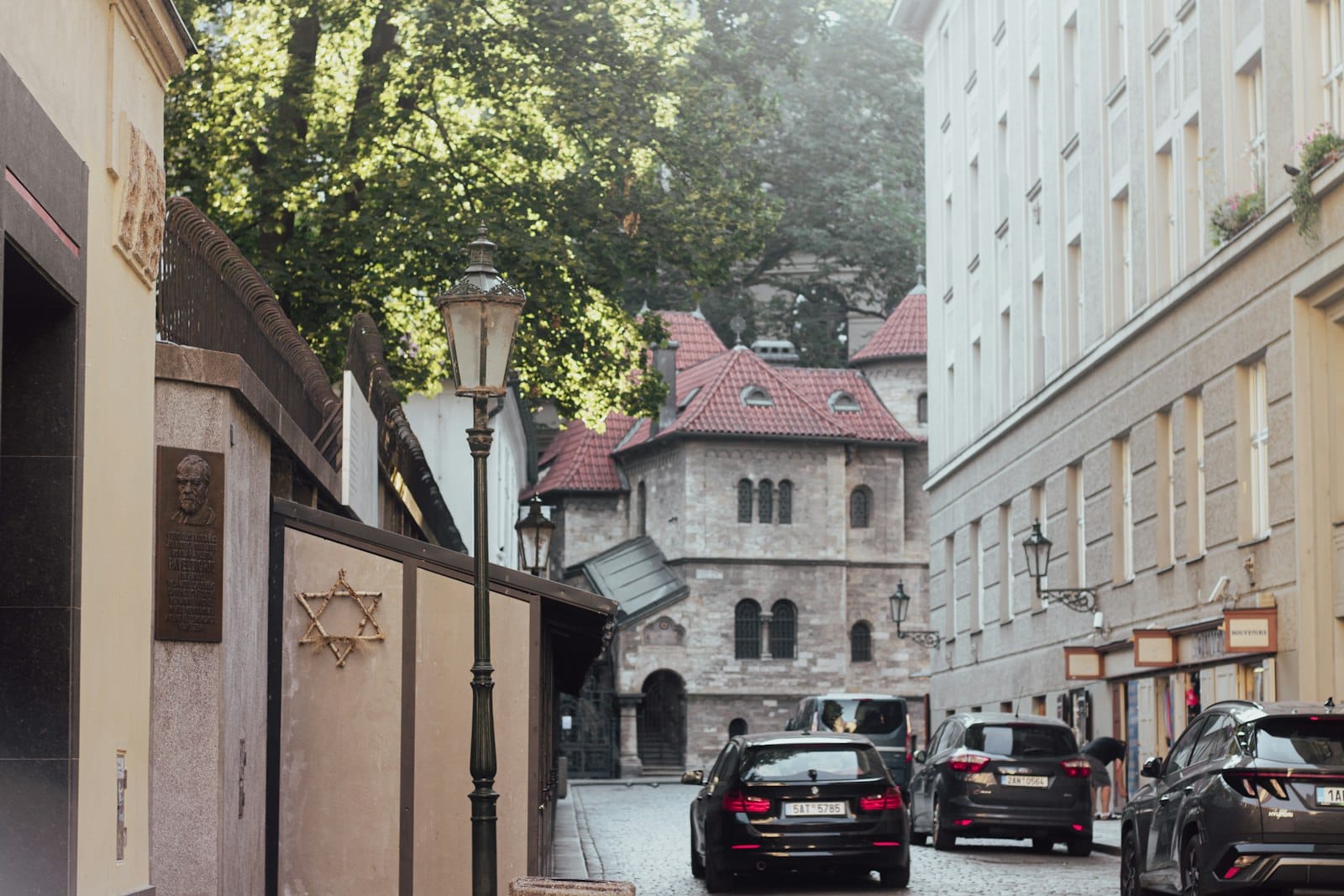
Josefov is Prague's historic Jewish Quarter, a compact district within Old Town that holds one of the best-preserved collections of Jewish monuments in Europe. Six synagogues, the medieval Old Jewish Cemetery, and the streets that shaped Franz Kafka's imagination are all within a few minutes' walk of each other.
Josefov occupies less than nine hectares between Old Town Square and the Vltava River, yet it carries more history per square metre than almost anywhere else in Prague. This is where the city's Jewish community lived for centuries under restriction, built its institutions, buried its dead in layers, and ultimately saw its neighbourhood swept away in a fin-de-siècle 'sanitation' project that preserved the sacred while demolishing the ordinary. What remains is extraordinary.
Orientation
Josefov sits inside the larger district of Staré Město (Old Town) and is the smallest cadastral area in Prague, covering approximately 8.81 hectares. Its position on the city map is easy to fix: walk north from Old Town Square along either Pařížská Street or Maiselova Street and you are immediately inside the quarter. The Vltava River forms a natural boundary to the northwest, while the quarter bleeds back into Old Town to the south and east, with Dlouhá Street marking its rough northern edge.
Pařížská (Paris Street) is the main spine running from Old Town Square down to the river embankment. It is hard to miss: a wide, tree-lined boulevard of Art Nouveau facades that feels architecturally coherent and immediately distinct from the medieval lanes nearby. Maiselova Street runs parallel and is more directly associated with the historic Jewish institutions. Between and around these two streets, the rest of Josefov unfolds in a compact grid of short blocks.
Josefov connects naturally to several other parts of central Prague. Old Town wraps around it on three sides, meaning you can drift in and out of Josefov without realising where one district ends and the other begins. The riverfront is a five-minute walk west, and from there it is a short distance north toward Letná or south toward Charles Bridge. For orientation purposes, think of Josefov as a small island of Jewish heritage surrounded by the wider medieval centre.
Character & Atmosphere
Josefov is a neighbourhood of profound contradictions, and understanding them makes the visit more meaningful. The streets you walk today are not the streets of the historic ghetto. Between 1893 and 1913, the city demolished most of the original buildings in a slum-clearance programme that was officially called asanace (sanitation). The winding alleyways, overcrowded tenements, and centuries of daily Jewish life were mostly razed and replaced with the Jugendstil (Czech Art Nouveau) apartment buildings you see lining the streets now. The religious monuments were preserved. The neighbourhood itself was rebuilt.
Early morning is the best time to understand what Josefov actually is. Before the tour groups arrive, the light comes low and gold over the rooftops, catching the Hebrew lettering above synagogue doorways and the worn stone of the cemetery wall. The streets around Maiselova and U Starého Hřbitova are quiet enough that you can hear pigeons and the occasional tram from Staroměstská. The weight of the place is easier to feel without a crowd.
By mid-morning, especially between May and September, Josefov becomes one of the most visited patches of ground in the Czech Republic. The queue for the Jewish Museum complex stretches along the pavement, groups form and re-form at synagogue entrances, and Pařížská fills with window-shoppers browsing the luxury boutiques that now occupy its ground floors. This is a legitimate tension: Pařížská is lined with Chanel, Louis Vuitton, Hermès, and comparable brands. The contrast between the district's history of poverty and exclusion and its current identity as Prague's most expensive shopping street is not subtle.
After dark, Josefov is calm and largely empty of tourists. The synagogues are closed, the luxury shops are shuttered, and the streets take on a different quality. There are some restaurants and wine bars on and around the main streets, but this is not a nightlife district. The silence after 9pm is its own form of atmosphere.
⚠️ What to skip
Josefov is genuinely small. It is easy to walk its full extent in 20 minutes without stopping. The experience of the neighbourhood comes from slowing down inside the Jewish Museum sites, not from covering ground quickly.
What to See & Do
The core experience in Josefov is the Jewish Museum in Prague complex, which administers several historic sites as a combined institution. Adult admission for the standard Jewish Museum circuit is about 600 CZK — verify current inclusions and pricing at jewishmuseum.cz, and whether the Old-New Synagogue is ticketed separately. A typical museum circuit covers multiple synagogues plus the Old Jewish Cemetery; each site has a distinct character and covers a different period or aspect of Jewish life in Bohemia.
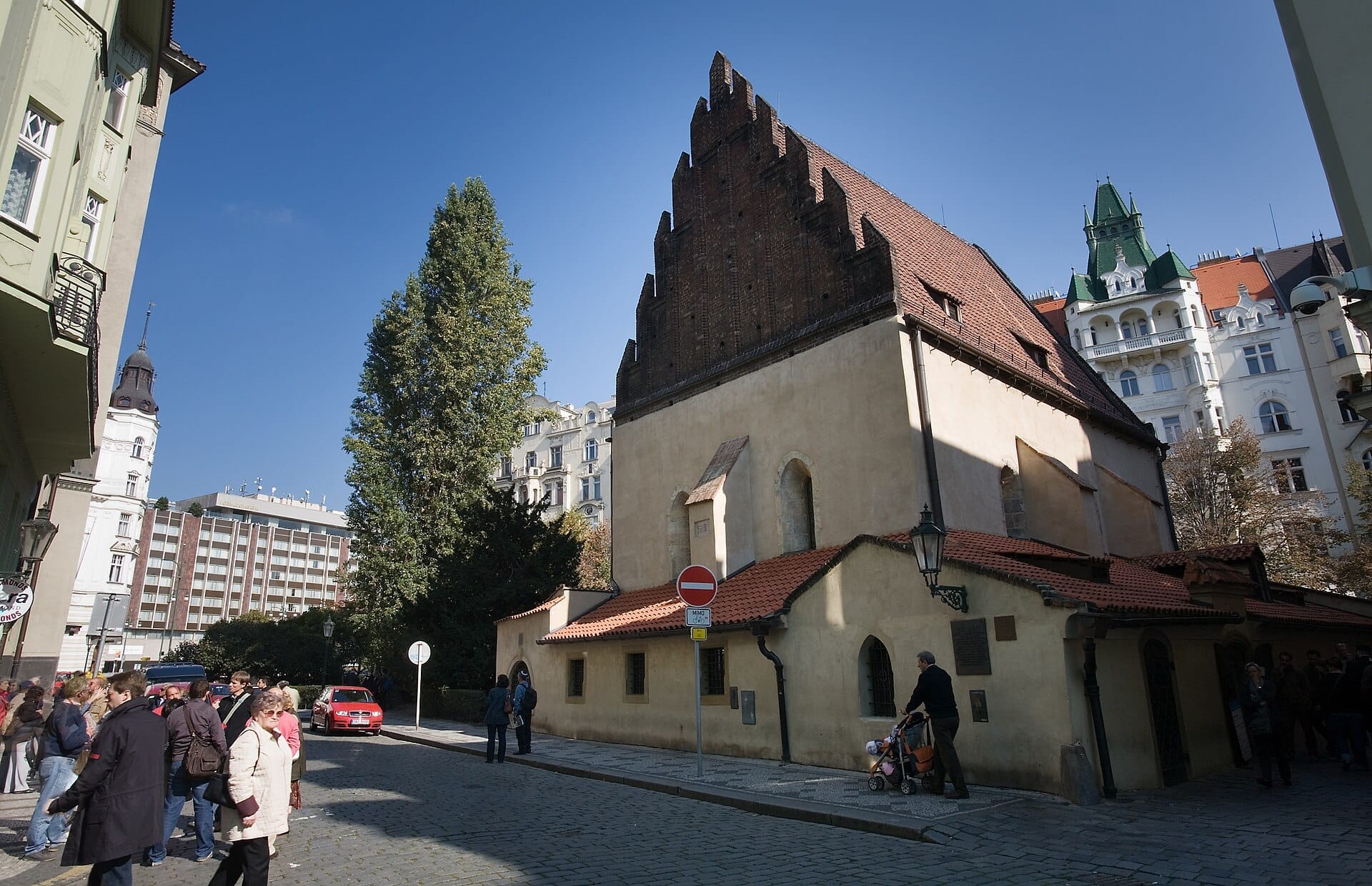
Old-New Synagogue: The oldest surviving synagogue in Central Europe, dating to around 1270. It is still an active place of worship and is separate from the museum complex. The interior is austere Gothic, unmodified in its essentials for over 700 years.
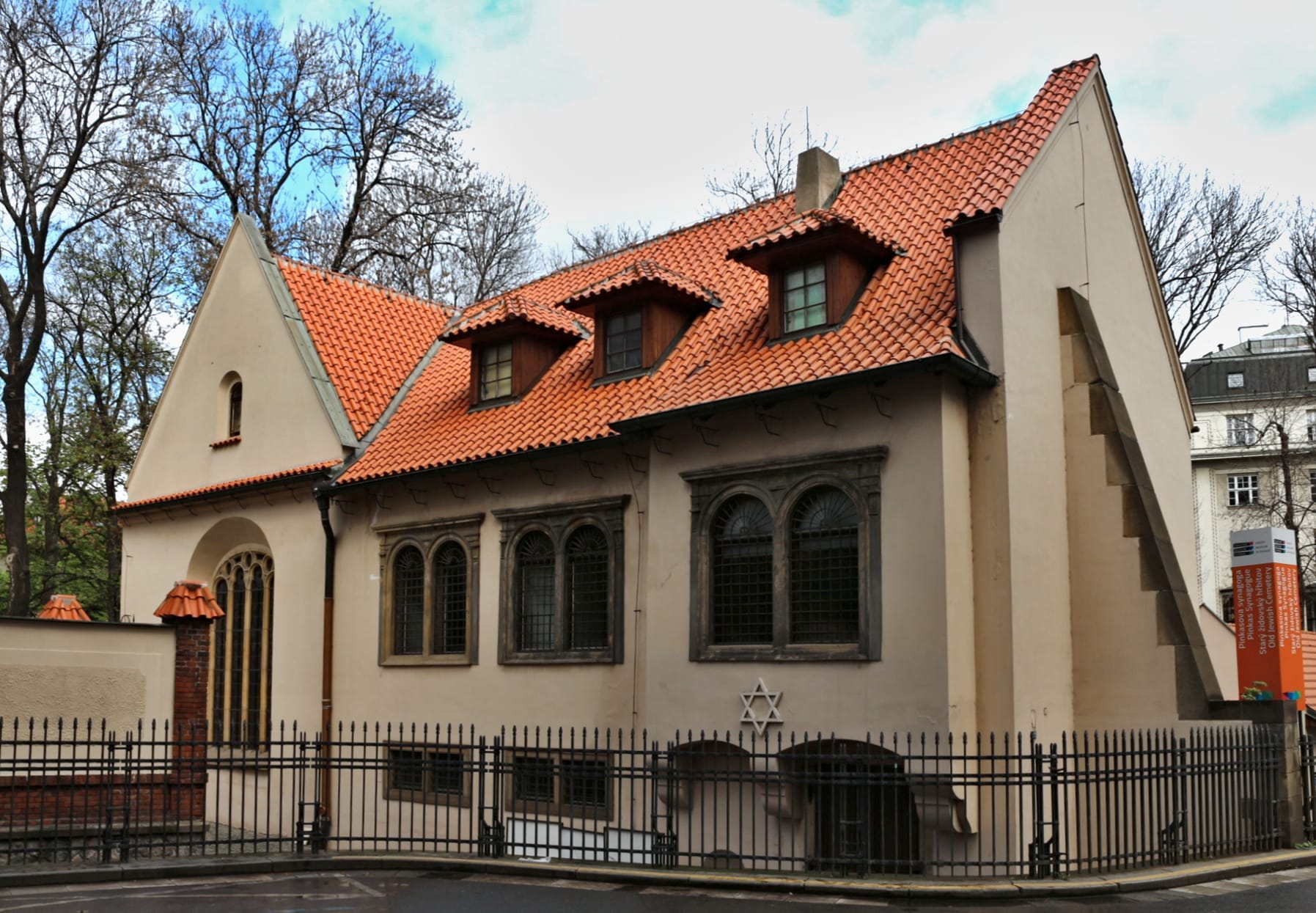
Pinkas Synagogue: The walls are inscribed with the names of 77,297 Bohemian and Moravian Jewish victims of the Holocaust. It is among the most affecting memorial spaces in Europe.
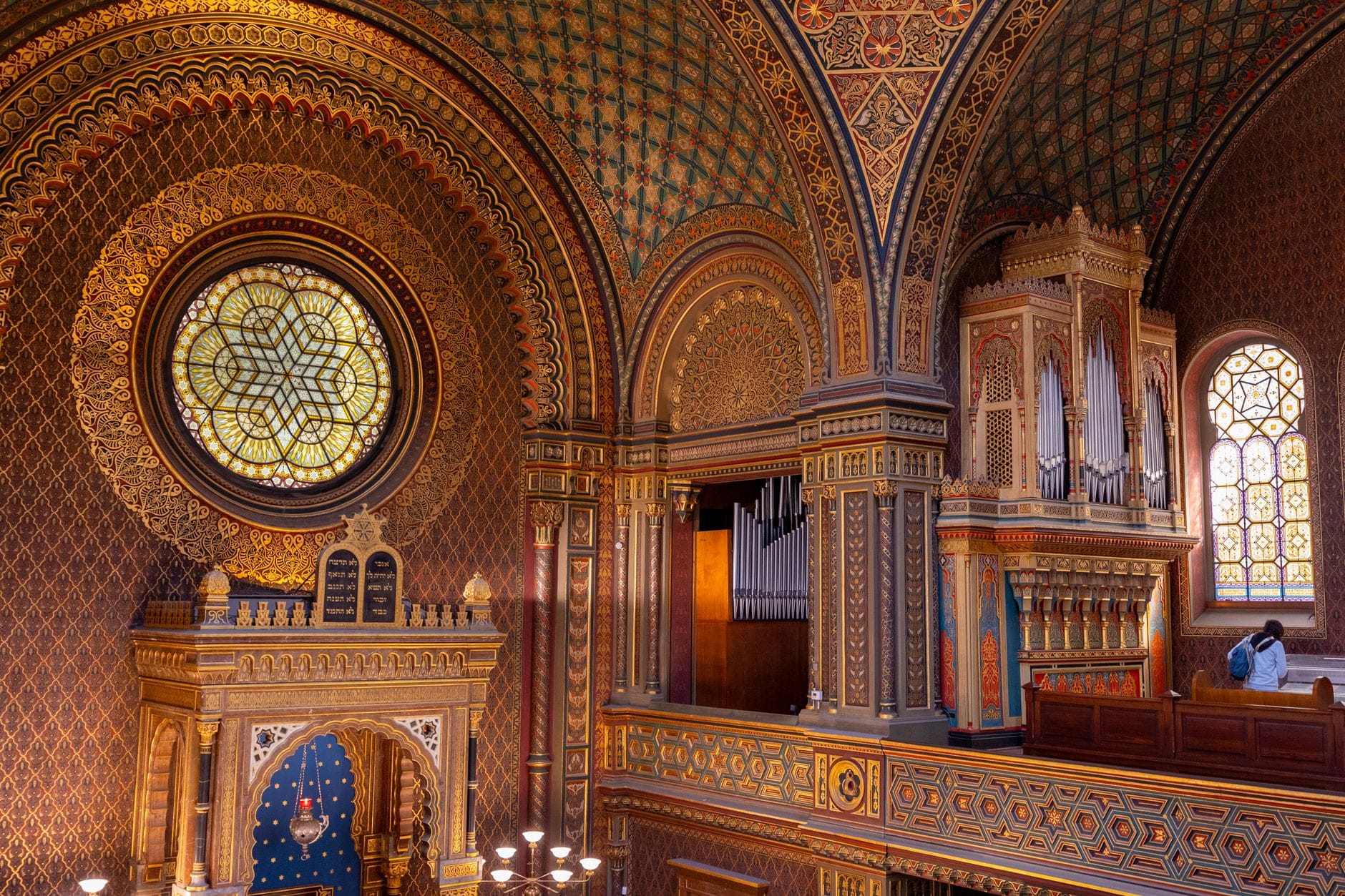
Spanish Synagogue: Built in the 1860s in Moorish Revival style, with an elaborate gilded interior that is visually unlike anything else in Prague.
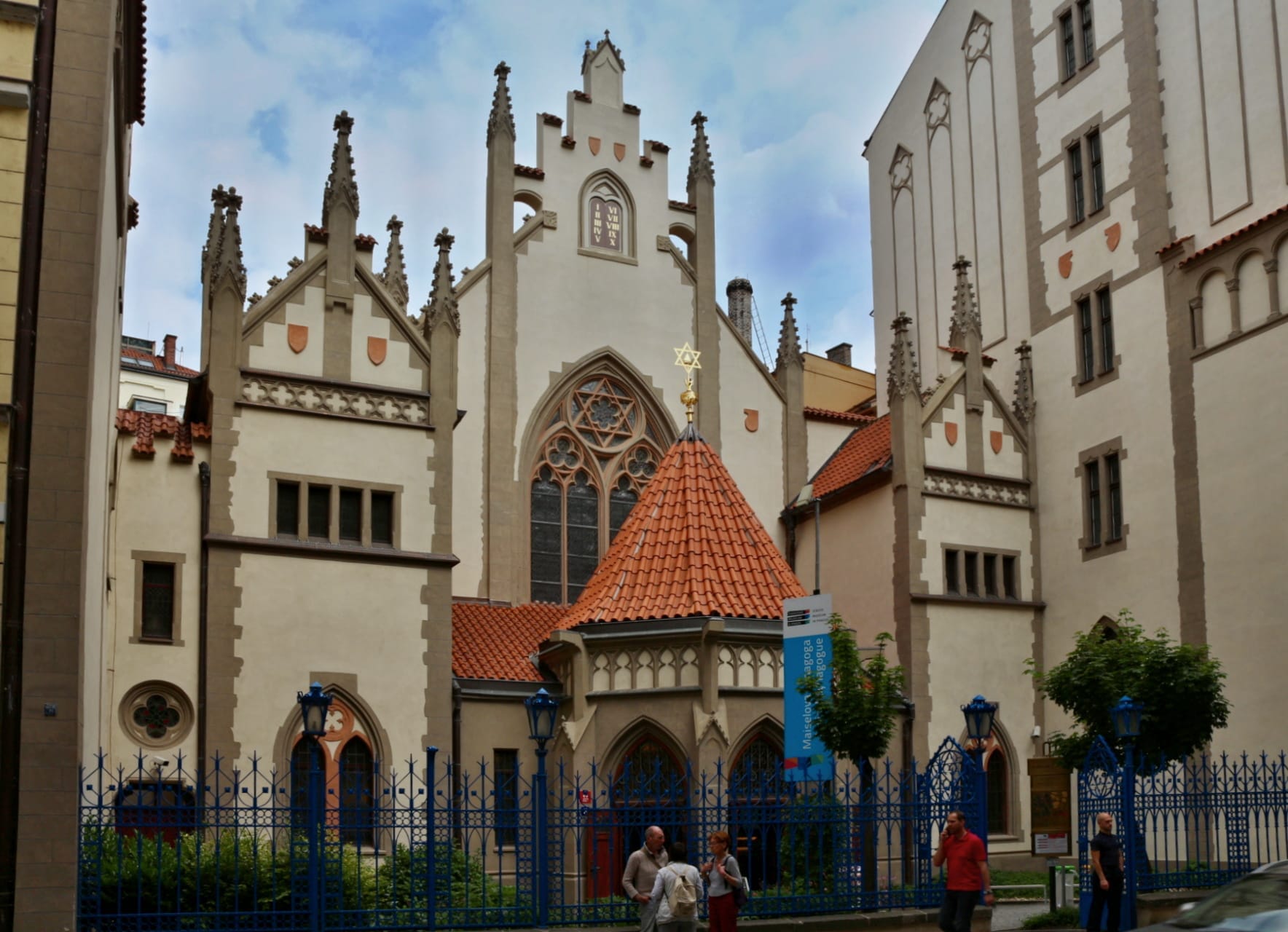
Maisel Synagogue: Houses a permanent exhibition on the history of Jews in Bohemia and Moravia from the 10th to the 18th century.
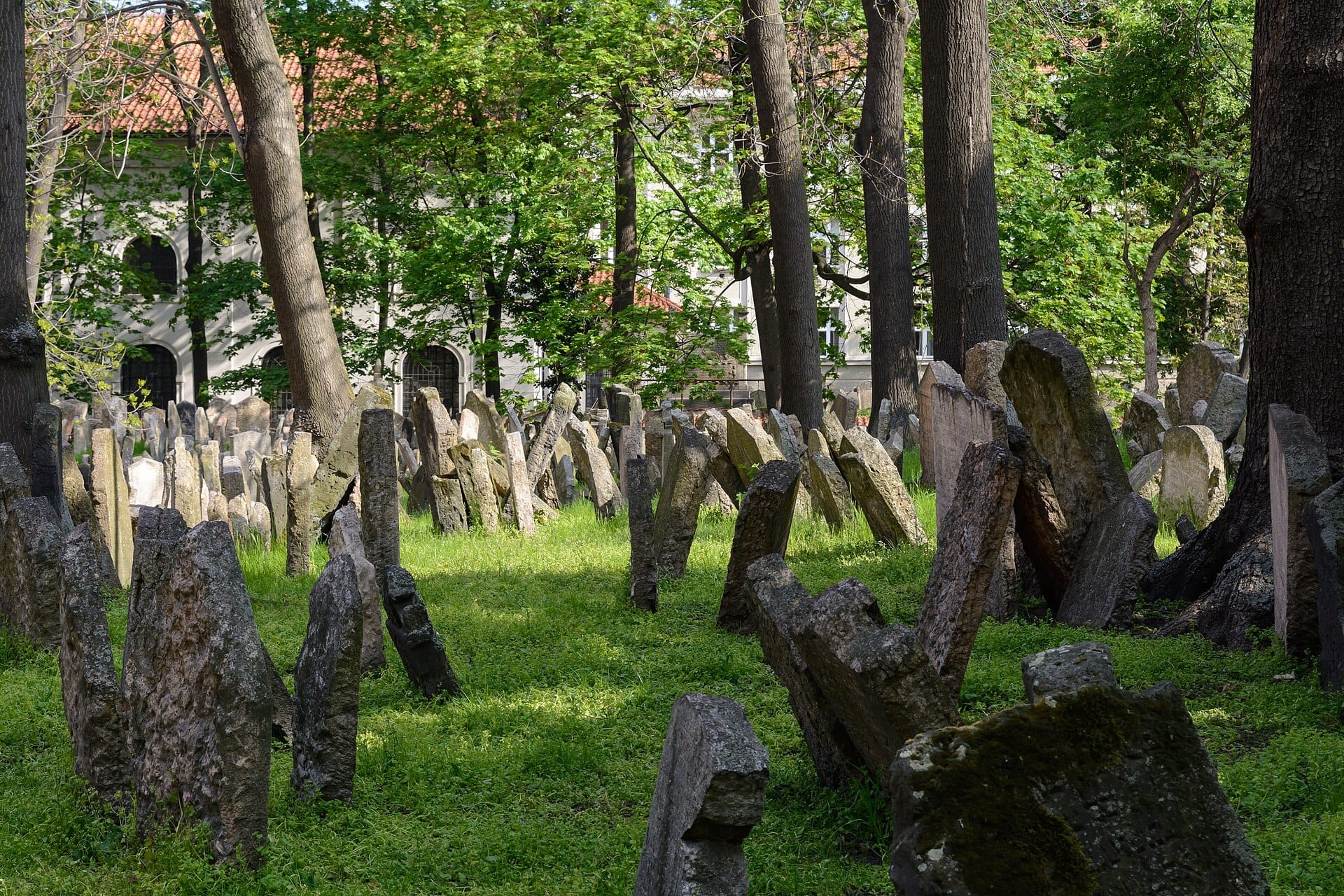
Old Jewish Cemetery: In continuous use from the early 15th century until 1787, with an estimated 100,000 people buried in layers beneath approximately 12,000 visible gravestones. The stones lean and crowd against each other across a small, tree-shaded space.
Klausen Synagogue: Adjacent to the cemetery, with exhibitions on Jewish traditions, festivals, and lifecycle ceremonies.
Jewish Town Hall: The 16th-century building is not always open to the general public, but its distinctive clock face with Hebrew numerals running counter-clockwise is visible from Maiselova Street.
Beyond the museum complex, Josefov has one more significant cultural connection: Franz Kafka was born a short distance from the quarter and spent much of his life in its proximity. A statue of Kafka stands on Dušní Street, and the Franz Kafka Museum is located across the river in Malá Strana, a 15-minute walk from the synagogues. For visitors interested in Kafka's relationship to this part of the city, the museum provides essential context.
If you have time after the main sites, the riverfront embankment a few minutes west of Pařížská offers a different perspective on the city. From there you can see across to Malá Strana and the castle hill, and it is a pleasant route south toward the bridges. The Náplavka riverfront further south is worth knowing about if you want to extend your day along the water.
💡 Local tip
Book Jewish Museum tickets online in advance during peak season (April to October). The standard circuit (about 600 CZK for adults; verify current prices and inclusions) is usually better value than buying sites individually, and queue times at the door can exceed an hour in summer. Treat Old-New Synagogue access as something to verify separately — it is an active house of worship and is often ticketed apart from the museum circuit.
Eating & Drinking
Josefov is not a neighbourhood defined by its food scene. The combination of high rents (driven by Pařížská's luxury positioning) and heavy tourist footfall means that most of the restaurants in the immediate area are expensive, oriented toward visitors, and not necessarily representative of Czech cuisine. That said, there are options worth knowing.
Pařížská and the streets immediately around it have a concentration of upscale restaurants and wine bars suited to a long lunch or dinner after a morning in the synagogues. Expect contemporary European cooking, French-influenced menus, and price points to match the surroundings. For a meal that will not require a careful examination of the bill, it is generally worth walking five minutes east toward the broader Old Town restaurant scene, or crossing into the streets around Náměstí Republiky.
For coffee and a pause during sightseeing, there are several cafés within easy reach on the edges of Josefov and in Old Town. If you are looking for a broader sense of where to eat in Prague across all price ranges and neighbourhoods, a dedicated overview will serve you better than limiting yourself to Josefov alone.
There are no traditional Czech pubs (hospody) operating in the heart of Josefov. The neighbourhood's commercial identity has moved decisively upmarket since the early 2000s. If a Czech beer in an unpretentious setting is what you are after, head south into Old Town or east toward the streets around Dlouhá, which have a wider mix of bars and more locally oriented drinking spots.
ℹ️ Good to know
Some restaurants near the synagogues market themselves as 'Jewish cuisine.' Prague does not have a deep tradition of kosher restaurants, and these establishments vary considerably in authenticity. If kosher certification matters to you, check accreditation before visiting.
Getting There & Around
Josefov is well-connected and easy to reach on foot from most of central Prague. The nearest metro station is Staroměstská on Line A (the green line), which puts you at the edge of the quarter in about a three-minute walk. From the station, head north along the river embankment or turn right onto any of the small streets that lead toward Maiselova. Trams 2, 17 and 18 also stop at Staroměstská, making it accessible from the riverfront tram corridor that connects Malá Strana with Holešovice.
From Old Town Square, Josefov is a five to seven minute walk north. Take Pařížská Street directly from the square's northwest corner and you are in the heart of the quarter within two minutes. This is the most common approach and also the most visually striking, with the boulevard opening out ahead of you. Alternatively, Maiselova Street runs parallel one block east and leads directly to the Old-New Synagogue and the Jewish Town Hall. For a full overview of getting around Prague by public transport, tram, and on foot, a dedicated transport guide covers all the practical details.
Within Josefov itself, everything is walkable. The district is so compact that there is no meaningful transit within it. The main challenge is not navigation but crowd management: the narrow pavement along U Starého Hřbitova (alongside the cemetery) can become genuinely congested during peak hours, with tour group queues and individual visitors competing for space. Morning visits before 10am or late afternoon visits after 4pm are noticeably more comfortable.
Josefov sits about a 20-minute walk from Prague's main train station (Praha hlavní nádraží) via the New Town, and roughly 25 minutes on foot from the Florenc bus station. For visitors arriving from the airport, the metro Line A connection at Staroměstská makes Josefov straightforward to reach: take the bus to Nádraží Veleslavín and then the metro directly to Staroměstská (verify current fares and ticket types before travel, as these change).
Where to Stay
Staying in or immediately around Josefov puts you within walking distance of Old Town Square, the river, and Charles Bridge, which makes it one of the most central positions in Prague. The trade-off is cost: accommodation here is among the most expensive in the city, and the streets can be noisy with tourist traffic until early evening. For a full breakdown of the options across central Prague, the guide to where to stay in Prague covers all the main neighbourhoods and accommodation types.
The northern edge of Josefov, near the river and Dlouhá Street, tends to be slightly quieter than the streets closest to Old Town Square. Hotels and apartments in this zone give you proximity to the sights without being directly on the main tourist corridors. Josefov is best suited to travellers whose primary focus is Prague's historic centre and who want to be able to walk to everything without relying on transit.
Travellers who prefer a neighbourhood with more local life, restaurants at varied price points, and less tourist density at all hours should consider Vinohrady, which is 20 minutes by metro from Josefov and offers a genuinely different character. For those wanting a base closer to the castle, Malá Strana is similarly historic but slightly less visited.
Practical Notes & What to Know Before You Go
Josefov is a serious historical site as well as a tourist attraction, and that distinction matters. The synagogues are places of memory and, in the case of the Old-New Synagogue, active worship. Visitors should dress respectfully: covered shoulders and knees are appropriate. Men are typically offered a kippah at the entrance to active synagogues. Photography policies vary by site and should be checked at the door. The Old Jewish Cemetery in particular deserves quiet and considered behaviour.
Josefov is included in almost every central Prague itinerary for good reason. If you are working through a three-day Prague itinerary, allocating a full morning here is realistic: two to three hours gives enough time to cover the main Jewish Museum sites without rushing. The afternoon can then be spent in Old Town or crossing to Malá Strana. For visitors with a particular interest in the history of Central European Jewry, a full day is not too much.
The neighbourhood also fits naturally into a broader exploration of Prague's history. The Prague history guide provides context that makes the Josefov sites more legible, particularly the sections on the Habsburg period, the First Republic, and the Second World War. Understanding why so many records and artefacts survived Nazi occupation (the Nazis reportedly planned to use the collections as a museum to an 'extinct race') changes how you look at what is preserved here.
Petty theft in crowded tourist areas is a real consideration in central Prague, and Josefov, with its dense summer crowds and queues, is no exception. Standard precautions apply: keep bags closed and in front of you, use an inside pocket for your phone, and be alert in queue situations. This is general big-city advice rather than anything specific to Josefov.
TL;DR
Josefov is one of Europe's most significant sites of Jewish heritage, with five historic synagogues and the Old Jewish Cemetery concentrated in under nine hectares of Old Town.
The neighbourhood's character is shaped by a fundamental tension: the historic community was demolished in the early 20th century, leaving religious monuments intact but surrounded by Art Nouveau architecture and, today, luxury retail on Pařížská Street.
Best visited early in the morning or late afternoon to avoid peak crowds, especially between May and October. Buy Jewish Museum tickets online in advance.
Food and drink options within Josefov skew expensive and tourist-oriented. For a more representative meal, walk five to ten minutes into the broader Old Town.
Ideal for history-focused travellers, those with specific interest in Jewish heritage or Franz Kafka, and anyone doing a thorough tour of Prague's historic centre. Not suited to travellers looking for local neighbourhood life or budget eating.
Three days is the ideal amount of time to experience Prague's historic core without rushing. This itinerary takes you from the medieval lanes of Old Town to the hilltop grandeur of Prague Castle, the haunting beauty of Josefov, and the quieter pleasures of Malá Strana and Vyšehrad.
Prague's museum scene stretches far beyond the obvious. This guide covers the city's finest art, history, and specialist museums, from the National Gallery's scattered palaces to underground alchemical laboratories and intimate synagogues that carry centuries of history.
Prague rewards visitors differently depending on when you arrive. This guide breaks down every season with clear seasonal notes of weather, crowd levels, hotel prices, and key events, so you can choose the right time for your trip rather than the most popular one.
Prague rewards those who climb. From medieval towers rising above Old Town to forested hills and riverside terraces, the city's skyline is best understood from above. This guide covers every worthwhile viewpoint, whether you're after a paid 360-degree panorama or a free hilltop perch with a cold beer.
Prague sits at the center of Bohemia, making it one of the best-positioned cities in Europe for day trips. Within two hours by train or bus, you can reach a Gothic castle above a forested valley, a UNESCO town wrapped in a river bend, a Nazi memorial site, and one of Europe's notable spa resorts.
Prague has one of Central Europe's most efficient public transport networks, covering the city by metro, tram, and bus under a single integrated ticket system. This guide covers fares updated for 2026, airport transfer options, ride-hailing realities, and the mistakes most visitors make on their first day.
Seven days is the right amount of time to see Prague properly. This guide breaks down exactly how to spend each day, which neighborhoods to prioritize, what the castle complex actually demands in terms of time, and how to fit in a day trip without losing a full day to logistics.
Prague's historic center packs over 1,100 years of architectural history into roughly 870–900 hectares, from Romanesque crypts and Gothic cathedrals to one of the world's most substantial collections of Cubist buildings. This guide breaks down every major style, tells you exactly what to see, and gives you the practical details to plan your visit.
Prague's Christmas markets run from late November through early January, turning Old Town Square and Wenceslas Square into some of Europe's most atmospheric winter destinations. This guide covers every major market, what to eat and drink, how to avoid the worst crowds, and exactly what to budget.
David Černý is the Czech Republic's most provocative public artist, and Prague is his gallery. This guide covers his major installations across the city, how to build a self-guided walking route, and what you need to know before you go.
Prague sets a high bar for romance: Gothic spires, cobblestone lanes, river views, and a classical music scene that rivals much larger capitals. This guide covers the best things to do in Prague for couples across every season, from iconic spots timed to avoid the crowds to quieter corners most visitors miss entirely.
Prague rewards those who look beyond Charles Bridge and Old Town Square. This guide reveals the city's quieter side: Baroque gardens tucked behind unmarked doors, medieval cellars beneath busy streets, panoramic hilltops where locals outnumber tourists, and neighborhoods reshaping Prague's creative identity.
Prague's history spans more than a thousand years of empire, revolution, occupation, and reinvention. This guide breaks down the key eras, explains what shaped the city's architecture and culture, and tells you exactly where to see that history in person.
Summer is Prague's most popular season, but it comes with trade-offs: intense heat, peak-season crowds, and higher prices. This guide covers everything you need to plan a smart trip to Prague in June, July, or August, from booking timelines to beat-the-crowd strategies.
Winter strips Prague back to its essentials: gothic spires against grey skies, Christmas markets on cobblestone squares, and a fraction of the summer crowds. This guide covers the real conditions — temperatures, daylight, costs, and which attractions stay open — so you can plan with confidence.
Josefov is one of Europe's most significant Jewish heritage sites, packed into just a few city blocks between Old Town Square and the Vltava River. This guide covers every major site, how ticketing works, the best time to visit, and what most visitors get wrong before they arrive.
Prague delivers five-star experiences at prices that would seem impossible in Paris or London. This guide covers the best luxury hotels with practical pricing data, the fine-dining restaurants worth booking weeks ahead, and the high-end experiences that go well beyond the standard tourist circuit.
Prague nightlife runs deeper than the tourist bars around Old Town Square. This guide breaks down the city's after-dark scene by district, covering the best clubs, bars, jazz venues, and rooftop spots, with practical advice on prices, timing, and where locals actually go.
Prague is one of Europe's better-value capitals, but it is not the ultra-cheap destination the myth suggests. This guide breaks down exactly what things cost in 2026, where to save money without sacrificing the experience, and which tourist traps quietly drain your wallet.
Prague rewards shoppers across every budget, from Bohemian crystal and hand-carved puppets to international luxury labels on Pařížská Street. This guide breaks down the best shopping districts, markets, malls, and genuinely worthwhile souvenirs, with practical details on hours, transport, and what to skip.
The journey from Prague to Munich covers just under 400 km and can be done by direct train, bus, or flight. This guide breaks down every realistic option with prices, journey times, and practical booking advice so you can choose the right one for your trip.
The Prague to Vienna corridor is one of Central Europe's best-connected routes, with trains, buses, and flights running daily. This guide breaks down every option by cost, comfort, and real travel time so you can pick the right one for your trip.
This step-by-step guide walks you through Prague's most rewarding route, from the medieval core of Old Town across Charles Bridge and up to the castle complex on Hradčany hill. Covers distances, timing, ticket costs, seasonal advice, and the shortcuts most visitors miss.
Prague is one of Europe's most rewarding cities for families, offering everything from a world-class zoo and a funicular railway to interactive museums and vast green parks. This guide covers the best activities for children of all ages, how to get around cheaply, which neighborhoods work best for families, and what to skip.
Prague rewards visitors with one of Europe's most intact medieval city centres, a world-class Jewish quarter, and neighbourhoods far beyond the tourist trail. This guide covers the best things to do in Prague across every budget and interest, with crowd warnings, seasonal advice, and precise logistics.
Prague's dining scene is far more nuanced than the tourist-trap stereotype suggests. This guide breaks down the best neighborhoods for food, what to order, which restaurants are worth booking in advance, and how much to expect to pay — from a 90 CZK bowl of goulash to a Michelin tasting menu.
Choosing where to stay in Prague shapes your entire trip. This guide breaks down every major neighborhood by location, price, atmosphere, and drawbacks so you can book with confidence, whether you have three days or three weeks.