Pinkas Synagogue: Prague's Most Sobering Holocaust Memorial
Built in 1535 and transformed into a memorial after World War II, Pinkas Synagogue bears the hand-written names of nearly 80,000 Jewish victims from Bohemia and Moravia on its interior walls. It is one of the most quietly devastating memorials in Central Europe, and no amount of preparation fully readies you for what you see inside.
Quick Facts
- Location
- Široká 3, Josefov (Jewish Quarter), Prague 1
- Getting There
- Metro Staroměstská (Line A); Trams 17 & 18 to Staroměstská
- Time Needed
- 45–90 minutes; allow more if you search for specific names
- Cost
- 600 CZK adult / 400 CZK reduced (Jewish Museum circuit ticket — verify current rates at jewishmuseum.cz)
- Best for
- History-focused travelers, those with Czech or Slovak Jewish heritage, educational groups
- Official website
- www.jewishmuseum.cz/en/explore/sites/pinkas-synagogue
What Pinkas Synagogue Actually Is
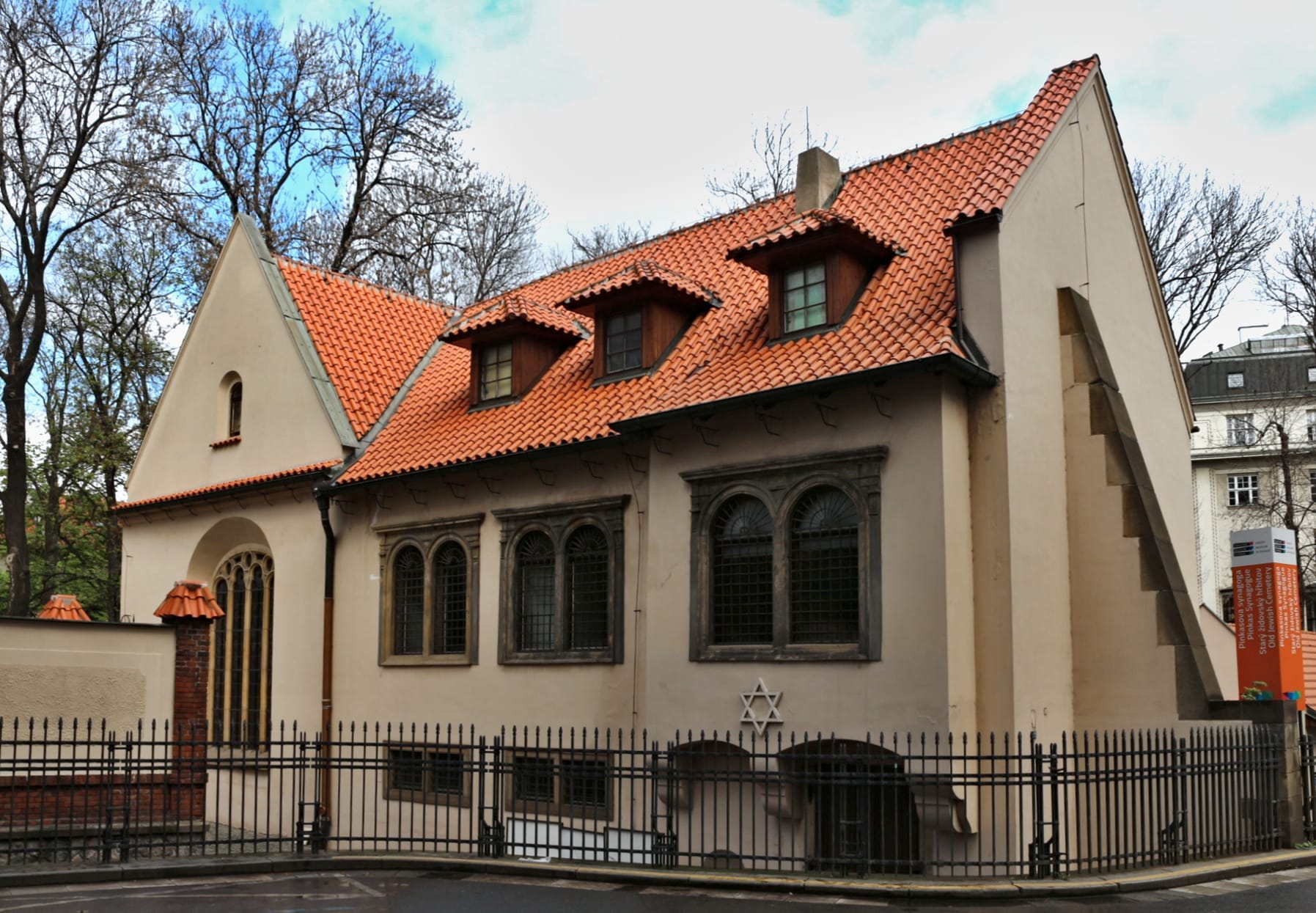
Pinkas Synagogue (Pinkasova synagoga) is the second-oldest surviving synagogue in Prague, built in 1535 by Aaron Meshulam Horowitz as a private prayer hall adjacent to the Old Jewish Cemetery. For centuries it functioned as a place of worship. Today it serves an entirely different, far heavier purpose: its interior walls are covered, floor to ceiling, with the hand-written names, birth dates, and death dates of 77,297 Jewish men, women, and children from Bohemia and Moravia who were murdered during the Holocaust.
The inscription project began after World War II and was completed in its current form between 1992 and 1996, following restoration after the communist authorities had erased the original inscriptions under the guise of flood damage repair in the 1960s. That erasure was deliberate. The fact that the names were painstakingly restored, letter by letter, adds another layer of meaning to what you see.
ℹ️ Good to know
Pinkas Synagogue is included in the Jewish Museum in Prague circuit ticket (600 CZK adult / 400 CZK student under 26; children 6–15 200 CZK). It is not available as a stand-alone ticket. The same ticket gives access to other synagogues and the Old Jewish Cemetery. Closed Saturdays and Jewish holidays — check jewishmuseum.cz before visiting.
Inside the Walls: What You See and Feel
The moment you step inside, the scale of the loss becomes physical. The walls are densely covered in dark red lettering on a pale background, organized alphabetically by community of origin. Names run in horizontal rows, interrupted by dates and places, so tightly arranged that you have to stop and look closely to parse individual entries. The overall impression is not dramatic in a theatrical sense. It is quiet and relentless.
The building itself is Late Gothic and early Renaissance in structure, with a ribbed vault in the main nave. The architecture is visible, but it recedes entirely behind the writing. You are not here to study the stonework. Most visitors move slowly around the perimeter, some running a finger near the glass that protects the lower sections, others standing still for minutes at a time.
The upper gallery houses an additional exhibition of children's drawings from Terezín (Theresienstadt), the transit concentration camp northwest of Prague where tens of thousands of Czech Jews were held before deportation east. The drawings, made by children between 1942 and 1944, are displayed alongside brief biographical notes. Most of the children who made them did not survive. This gallery requires climbing a narrow staircase and is the part of the visit that many people find most difficult.
If you are researching specific family members, the names are organized by hometown, which helps narrow your search. The Jewish Museum in Prague also maintains a database. For broader context on the Jewish Quarter's history and its surviving monuments, the Prague Jewish Quarter guide covers the full circuit of sites, including how they relate to each other chronologically and architecturally.
Tickets & tours
Hand-picked options from our booking partner. Prices are indicative; availability and final rates are confirmed when you complete your booking.
Classical Concert in Spanish Synagogue in Prague
From 39 €Instant confirmationFree cancellationPrague Jewish Quarter guided walking tour with synagogue visits
From 81 €Instant confirmationFree cancellationSelf guided tour with interactive city game of Prague
From 5 €Instant confirmationFree cancellationPrague by night city tour
From 27 €Instant confirmationFree cancellation
How the Experience Changes by Time of Day
Morning visits, particularly just after opening, are noticeably quieter. The Josefov circuit draws significant tourist volume throughout the day, and Pinkas tends to feel crowded between roughly 11:00 and 15:00, when multiple tour groups cycle through. This is not simply a comfort issue. The nature of the memorial means that the atmosphere shifts considerably depending on crowd density. A packed room shortens dwell time and makes sustained reflection harder.
Arriving at 9:00 when doors open gives you the best chance of spending unhurried time with the walls. In summer months (May through August), the synagogue is open until 19:00, and late afternoon visits after 16:30 also tend to be calmer as day-trippers taper off. Winter hours are shorter, closing at 16:30, but January through March is among the least crowded periods in Josefov overall.
💡 Local tip
Plan at least 45 minutes minimum, and closer to 90 if you intend to read names carefully or visit the upper Terezín drawing exhibition. If you are combining Pinkas with the Old Jewish Cemetery next door — which you should — set aside half a day for the full Jewish Museum circuit.
Historical and Cultural Context
Josefov, Prague's historic Jewish quarter, was largely demolished and rebuilt in the late 19th and early 20th centuries as part of a city sanitation project. What remains is a concentrated core of synagogues, cemeteries, and cultural institutions that survived that redevelopment. Pinkas Synagogue is one of the oldest of these survivors, predating the Habsburg-era restructuring by several centuries.
The building's transformation into a Holocaust memorial began in the late 1950s, making it one of the earliest such dedicated memorials in postwar Europe. The communist government's erasure of the inscriptions in the late 1960s, officially attributed to rising groundwater damage, was widely understood as political suppression of Jewish memory and history. The names were restored after 1989, following the Velvet Revolution, and the current inscription project was completed in 1996.
Understanding what happened in this part of Europe during the 1930s and 1940s benefits from a visit to Terezín Memorial, about 60 kilometers north of Prague. Terezín functioned as a transit camp for many of the people named on Pinkas Synagogue's walls, and seeing both sites together provides a coherent historical picture. It is a full-day trip from Prague and among the most significant historical excursions available in the region.
Practical Walkthrough: Getting There and What to Bring
The synagogue is located at Široká 3 in Josefov, a short walk from the Staroměstská metro station on Line A. Tram 17 also stops at Staroměstská. From the stop, Pinkas Synagogue is roughly a five-minute walk through the streets of Josefov. The area is compact and well-signposted.
Tickets for the Jewish Museum circuit are purchased at a central ticket office rather than at each individual synagogue. Check current ticket office locations on the museum website before you go, as they can change seasonally. Cards are accepted. Queues for tickets can be long during peak months (June through August), so purchasing online in advance is a practical option.
Photography is permitted inside the synagogue, but given the nature of the memorial, many visitors choose to put their cameras away. Flash photography should not be used. The interior is modestly lit, and some areas near the upper gallery are dim. The space is not large, and the acoustics carry sound easily, so tour groups with amplified guides can be intrusive. If you have a choice, visit independently rather than as part of a packaged tour.
Accessibility is partial. The main hall on the ground floor can be accessed with some limitations, but the upper gallery with the Terezín children's drawings requires navigating a narrow staircase. The Jewish Museum notes partial barrier-free access on its official site. Contact them in advance if specific accessibility needs apply.
⚠️ What to skip
Closed every Saturday and on Jewish holidays. Always verify the current holiday calendar and seasonal opening hours at jewishmuseum.cz before planning your visit.
Combining Pinkas with the Broader Jewish Quarter
Pinkas Synagogue is directly adjacent to the Old Jewish Cemetery, one of the most densely layered burial grounds in Europe, with graves stacked up to twelve layers deep due to centuries of restricted burial space. Both are included in the Jewish Museum circuit ticket, and the transition between them, from the walls of names inside to the crooked stone markers outside, carries its own weight. Allow time for both.
The circuit also includes the Old-New Synagogue, the oldest surviving synagogue in Central Europe (dating to around 1270), as well as the Maisel, Spanish, and Klausen synagogues. The Spanish Synagogue is architecturally the most ornate of the group, with a Moorish interior that contrasts sharply with the austere gravity of Pinkas. Visiting all of Josefov's major sites in a single day is feasible but emotionally taxing. Many visitors find it more manageable to spread the circuit across two visits.
Who This Suits, and Who Might Reconsider
Pinkas Synagogue is not an attraction in the conventional sense. Visitors expecting visual spectacle or architectural grandeur in the tradition of Prague's Baroque churches will not find it here. What it offers instead is an encounter with documented, specific human loss at a scale that is genuinely difficult to absorb. That is, depending on your interests and emotional readiness, either the most important stop in Josefov or a genuinely distressing one.
Families with young children should consider carefully. The exhibition is not graphic, but it is sobering in ways that require a certain cognitive maturity to process. Parents who feel their children are ready for a serious conversation about the Holocaust will find it useful. Those looking for a lighter afternoon should simply plan their itinerary around it rather than skipping Josefov altogether.
If you are building a broader itinerary for Prague's history, the Prague history guide provides useful chronological framing for how the Jewish community's history fits into the city's larger story across Bohemian, Habsburg, and 20th-century periods.
Insider Tips
- Arrive at 9:00 when the synagogue opens to have the walls to yourself. The difference in atmosphere between an empty room and a crowded one is substantial, and this is a memorial where that difference matters.
- If you are researching specific family names, note that entries are organized alphabetically by community of origin (hometown), not by surname. Knowing the Czech or Moravian town your ancestors came from will dramatically speed up your search.
- The Terezín children's drawing exhibition upstairs is often overlooked because visitors spend most of their time on the main floor. Do not skip it — the biographical notes accompanying each drawing add a layer of specificity to the abstract scale of the name walls below.
- Buy your Jewish Museum circuit ticket online in advance during summer months. The central ticket office can have long queues between 10:00 and 14:00 in June, July, and August, and the queue eats into time you would rather spend inside.
- After leaving Pinkas, take five minutes to walk along Široká street before entering the Old Jewish Cemetery. The brief transition between the interior memorial and the outdoor cemetery is an experience in itself, and rushing from one to the next loses something.
Who Is Pinkas Synagogue For?
- History and Holocaust education-focused travelers who want documented, site-specific evidence of what happened to Central European Jewish communities
- Visitors with Czech, Slovak, or Moravian Jewish heritage researching family names
- Travelers building a full Jewish Quarter day combining the circuit synagogues and cemetery
- Teachers and educational groups looking for primary memorial sites with curatorial context
- Travelers who have already visited Terezín and want to see where its victims are individually named
Nearby Attractions
Other things to see while in Josefov (Jewish Quarter):
- Maisel Synagogue
Built between 1590 and 1592 for the wealthiest man in Bohemia's Jewish community, the Maisel Synagogue stands at the heart of Josefov as both an architectural landmark and a gateway to ten centuries of Jewish life in Bohemia and Moravia. Today it houses one of the Jewish Museum in Prague's most important permanent exhibitions.
- Museum of Decorative Arts
Housed in a French Neo-Renaissance building completed in 1899 and sitting directly opposite the Rudolfinum in Josefov, the Museum of Decorative Arts in Prague (UPM) is one of Central Europe's most underrated design collections. From Bohemian glass to Art Nouveau furniture and historical textiles, the permanent collection spans centuries of applied craft — all in a building that is itself worth the entry price.
- Old Jewish Cemetery
The Old Jewish Cemetery in Prague's Josefov quarter contains over 12,000 visible tombstones layered up to ten deep across roughly one hectare. In use from 1439 to 1787, it stands as one of the best-preserved medieval Jewish cemeteries in the world and is part of the Jewish Museum in Prague complex.
- Old-New Synagogue
Built around 1270, the Old-New Synagogue in Josefov is not only the oldest surviving medieval twin-nave synagogue in Europe but also a continuously functioning house of worship. Its Gothic brick gables, centuries-old interior, and remarkable survival through Prague's turbulent history make it one of the most significant religious buildings on the continent.