Prague History: A Traveler's Guide to the City's Past
Prague's history spans more than a thousand years of empire, revolution, occupation, and reinvention. This guide breaks down the key eras, explains what shaped the city's architecture and culture, and tells you exactly where to see that history in person.
Plan and book this trip
Tools from our partner Travelpayouts help you compare flights and hotels. If you book through them, we may earn a commission at no extra cost to you.
Flights
Hotels map
TL;DR
- Prague has been continuously settled for thousands of years, with Prague Castle founded around 870–880 AD as the city's formal starting point.
- The city's medieval golden age under Charles IV produced landmarks still standing today, including Charles Bridge and St Vitus Cathedral.
- Prague's historic center has been a UNESCO World Heritage Site since 1992, covering both banks of the Vltava River.
- The 20th century brought Nazi occupation, Communist rule, the Prague Spring, and finally the 1989 Velvet Revolution that ended decades of authoritarian control.
- Understanding the history of Prague makes visiting its major sights far more rewarding. Start with our things to do in Prague guide to plan your itinerary around these sites.
The Deep Roots: From Celtic Tribes to the Přemyslid Princes
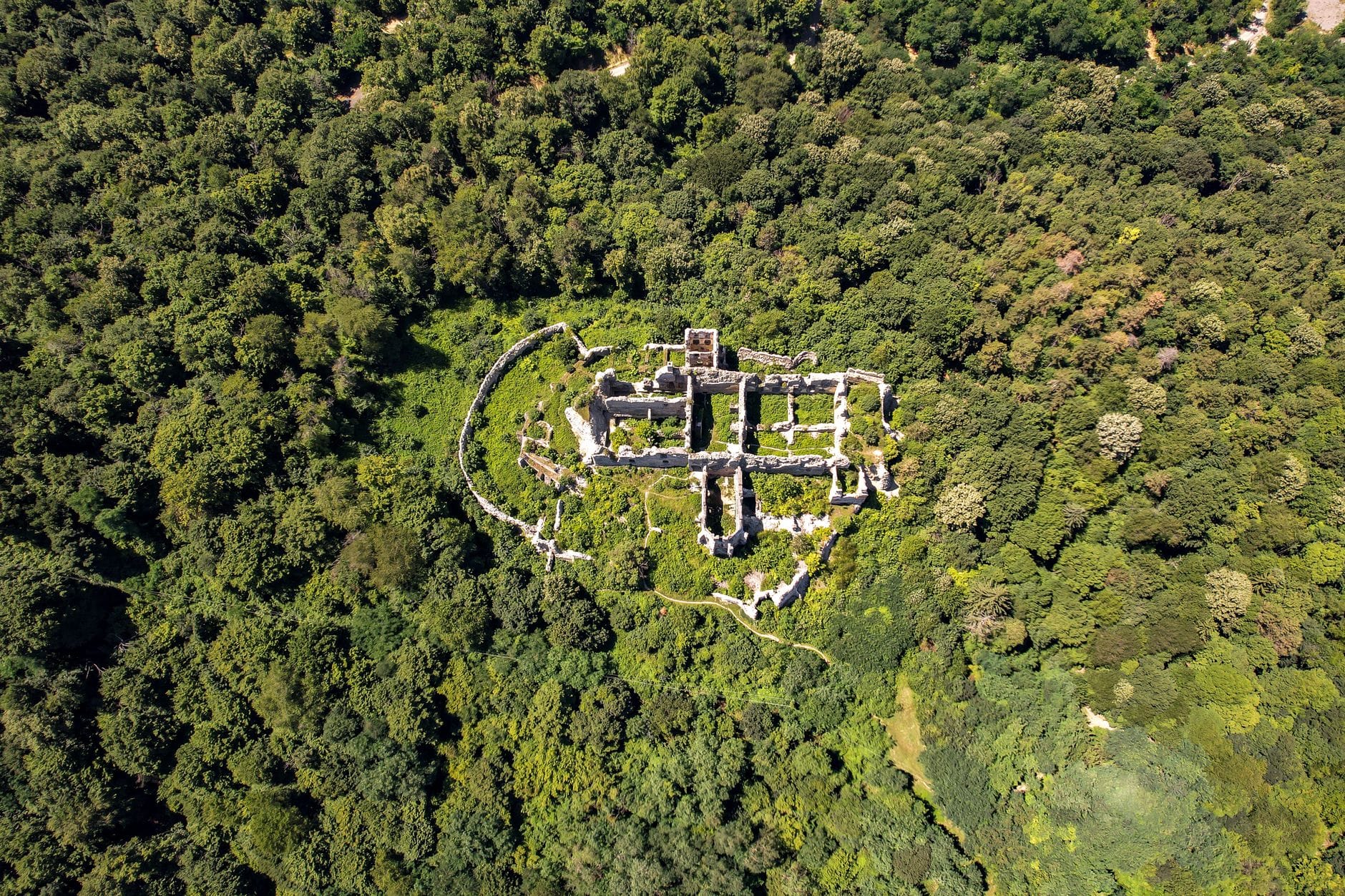
Prague history does not begin with medieval kings. Archaeological evidence places human settlement in the area as far back as the Paleolithic era, with continuous occupation from roughly 5500–4500 BC. The Celts arrived around 500 BC, a tribe called the Boii whose name gave Bohemia its lasting identity. The Romans never conquered this far north, which meant the region developed under Germanic and later Slavic influence as those groups moved into Central Europe during the Migration Period.
The Přemyslid dynasty changed everything. Around 870–880 AD, Prince Bořivoj founded a fortified settlement on a rocky promontory above the Vltava River. That stronghold became Prague Castle, Hrad Praha, and it has been the symbolic seat of Bohemian and later Czech power ever since. The city that grew beneath it was not one town but several distinct settlements: Hradčany on the castle hill, Malá Strana (Lesser Town) on the left bank, and Staré Město (Old Town) on the right bank. Each had its own walls, administration, and character.
By the 12th century, Prague functioned as the capital of the Přemyslid state and the Kingdom of Bohemia. The castle district (Hradčany) still carries the physical weight of this early political authority. Visiting today, the stacked layers of Romanesque foundations beneath Gothic vaults beneath Baroque renovations tell this story more clearly than any textbook.
ℹ️ Good to know
Prague is geographically located in Central Europe, not Eastern Europe, a distinction that matters historically and culturally. The city sits at approximately 50°N, 14°E, roughly the same longitude as Berlin and Vienna.
The Golden Age: Charles IV and the Making of a Capital
The single most transformative period in Prague's history came under Emperor Charles IV, who ruled as Holy Roman Emperor from 1346 to 1378. Charles made Prague the capital of the Holy Roman Empire and invested in it on an extraordinary scale. His building program reshaped the city permanently.
- Charles Bridge (Karlův most) Commissioned by Charles IV and completed in the early 15th century, it replaced an earlier stone bridge and remained the only river crossing in Prague until 1841.
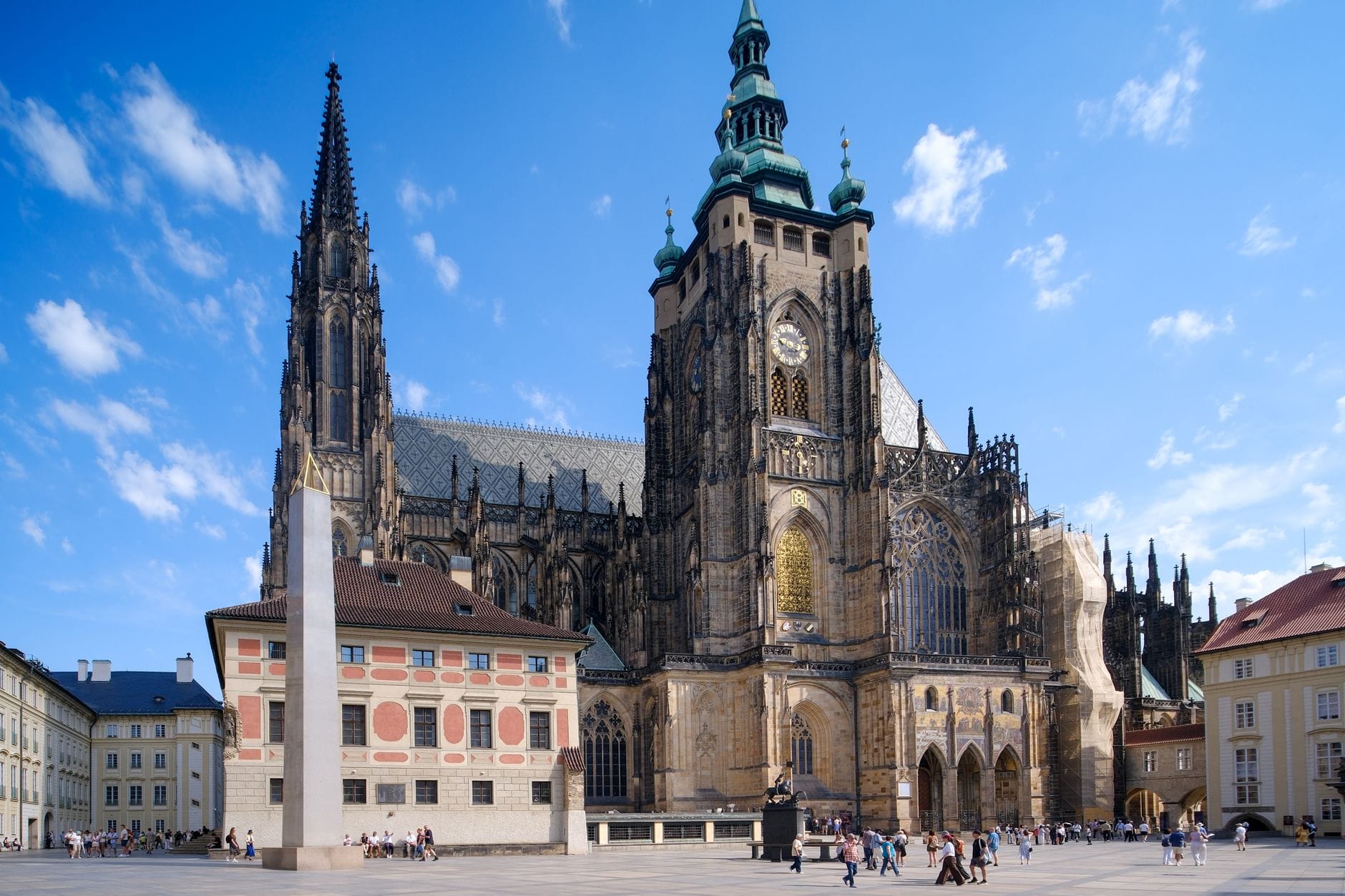
- St Vitus Cathedral Construction began in 1344 under Charles's direction. The cathedral was not actually completed until 1929, making it a project that spanned nearly six centuries.
- Nové Město (New Town) Charles founded an entirely new town district in 1348, tripling Prague's size and creating the grid of streets around Wenceslas Square that still defines central Prague today.
- Charles University Founded in 1348, it was the first university in Central Europe and remains one of the oldest universities in continuous operation in the world.
The physical legacy of this era is what most travelers come to see. Walking Charles Bridge at dawn, before the tour groups arrive, gives a genuine sense of why this city was once considered among the most important in Europe. The 30 Baroque statues and statuaries lining the bridge were added mainly between 1683 and the early 18th century, but the Gothic towers at each end are original 14th-century construction.
Reformation, War, and the Habsburg Era
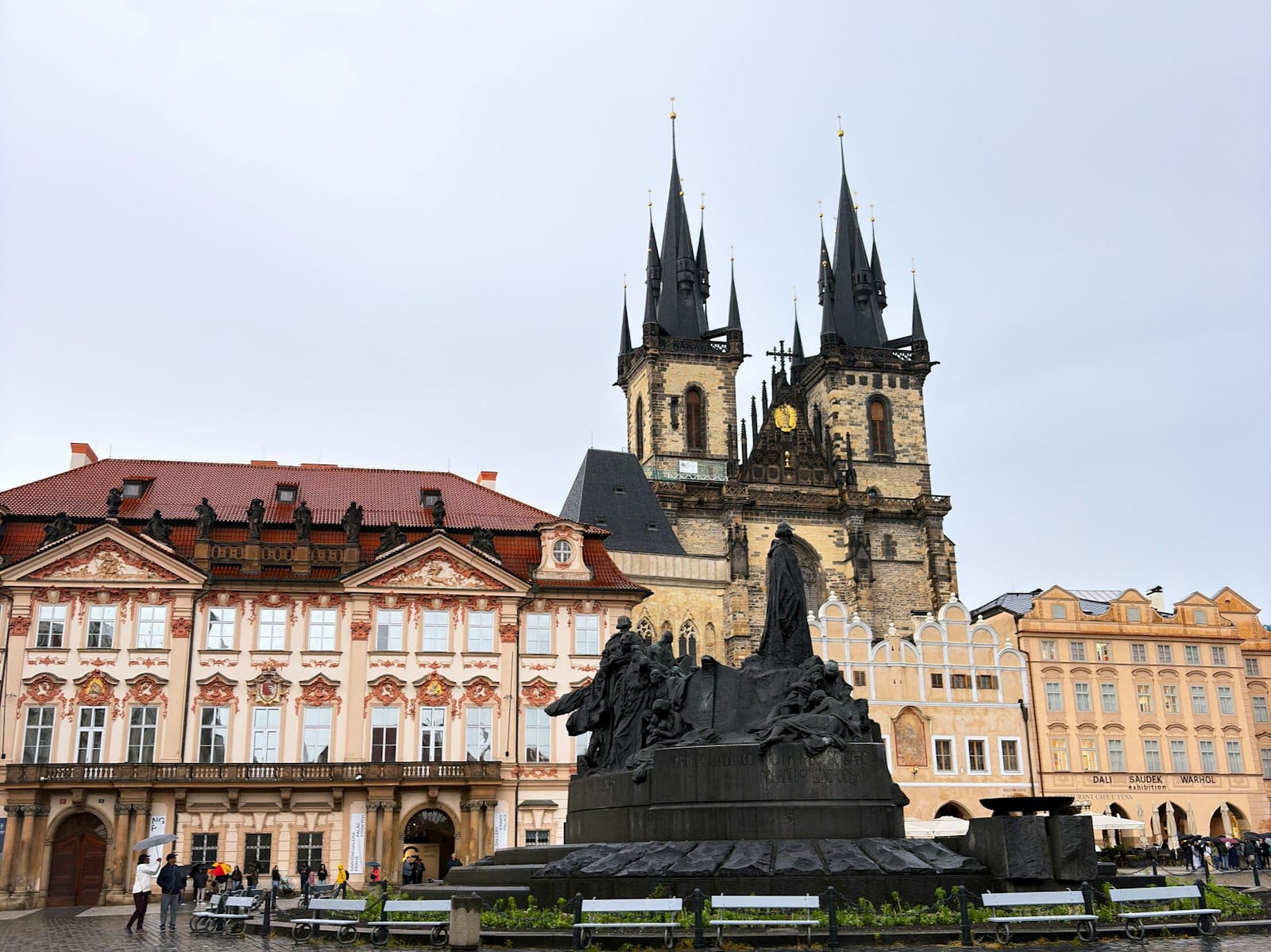
The 15th century brought religious conflict that put Prague at the center of European politics long before the Reformation reached Germany. Jan Hus, a Czech theologian and early church reformer, was burned at the Council of Constance in 1415. His followers, the Hussites, launched a series of wars that pitted Bohemia against the rest of Catholic Europe. The Hussite movement is deeply important to Czech national identity but often underexplored by visitors who focus only on the Habsburg-era architecture.
The Habsburg dynasty took control of Bohemia in 1526 and held it for nearly four centuries. Under Rudolf II (reigned 1576–1612), Prague briefly became an imperial capital again and a major center of Renaissance art and science. Astronomers Tycho Brahe and Johannes Kepler both worked here under Rudolf II at the turn of the 17th century. The Speculum Alchemiae, a Renaissance alchemical laboratory discovered beneath Old Town in 2002, dates to this period of scientific and mystical experimentation.
The turning point came in 1618. The Second Defenestration of Prague, in which Protestant noblemen threw Catholic royal officials from a window of Prague Castle, triggered the Thirty Years' War, a conflict that consumed Central Europe and killed an estimated several million people. Bohemia lost the war at the Battle of White Mountain in 1620, the Czech nobility was effectively dismantled, and the region was re-Catholicized by force. Much of Prague's Baroque architecture dates from this Counter-Reformation period, including the Church of St Nicholas in Malá Strana, one of the finest Baroque buildings in Central Europe.
✨ Pro tip
The defenestration window at Prague Castle is easy to miss. It's in the eastern wing of the Old Royal Palace, and most visitors walk past without realizing the historical weight of that specific room. Ask at the castle ticket desk for the exact location.
The 20th Century: Occupation, Resistance, and Revolution
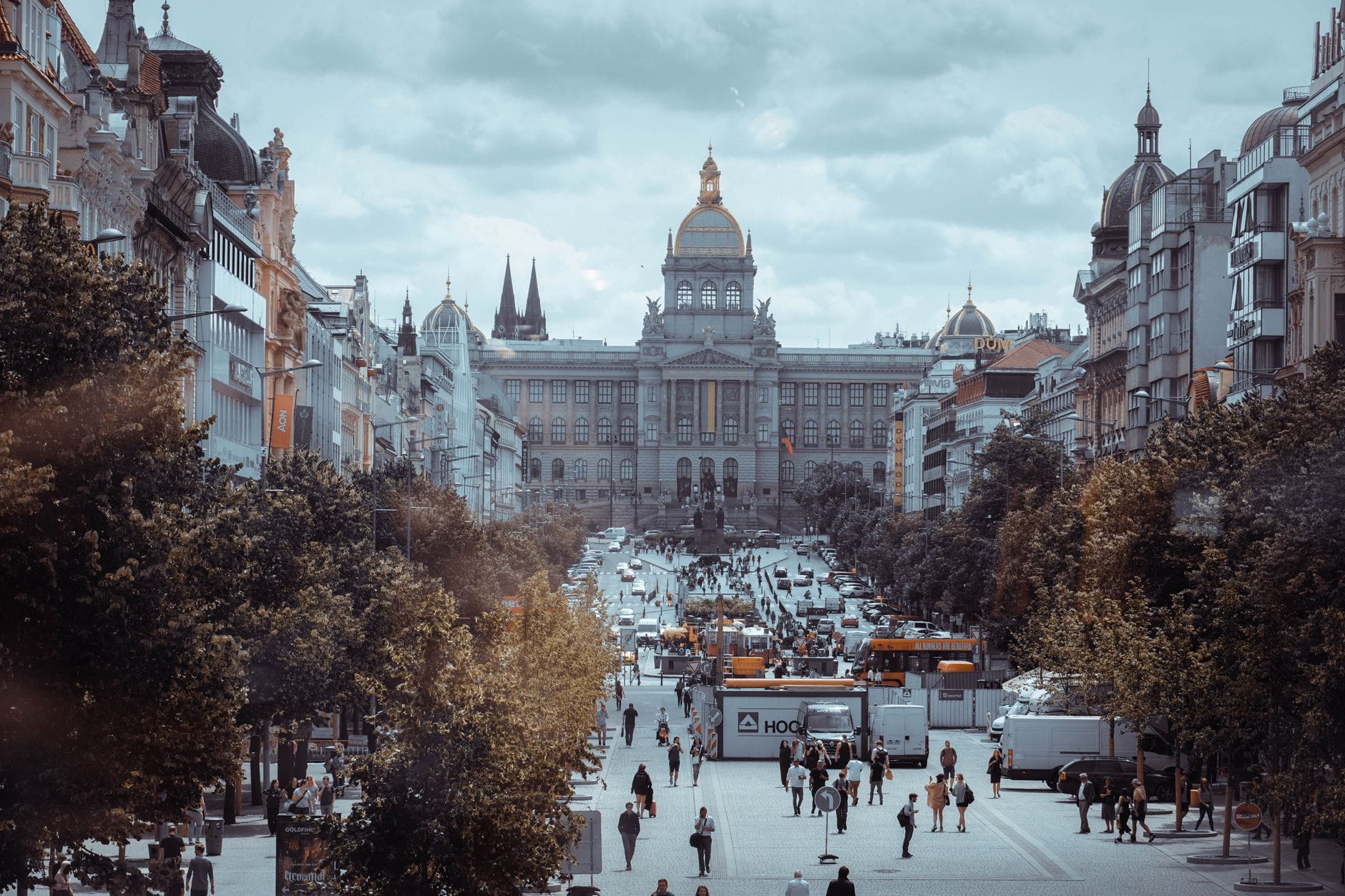
Prague entered the 20th century as the most important city of the Austro-Hungarian Empire after Vienna and Budapest. When that empire collapsed in 1918, Prague became the capital of the new Czechoslovak Republic, one of the most prosperous democracies in interwar Europe. The city expanded rapidly, producing architectural gems from Art Nouveau to Cubism to Functionalism that you can still see throughout the center and inner districts.
Nazi Germany occupied Czechoslovakia beginning in 1938–1939. For travelers, the consequences of this period are most visible in Josefov, the Jewish Quarter. Before the war, Prague had one of the most significant Jewish communities in Central Europe. The Nazi occupation resulted in the deportation and murder of the vast majority of Prague's Jewish population. The Pinkas Synagogue contains the names of 77,297 Czech and Moravian Jewish Holocaust victims inscribed on its walls. It is a deeply sobering place and essential to any serious engagement with this city's history.
After WWII, Czechoslovakia fell under Soviet-aligned Communist rule from 1948. The Prague Spring of 1968 saw reformist leader Alexander Dubček attempt to create 'socialism with a human face,' loosening censorship and political restrictions. Warsaw Pact troops invaded in August 1968 and crushed the reform movement. The Museum of Communism in Prague's New Town documents this period with considerable depth and is one of the more honest historical museums in the city.
The end came in November 1989. The Velvet Revolution, a peaceful mass protest movement, brought down Communist rule within weeks. Wenceslas Square was the epicenter. On November 17, a student march was violently broken up by police; within days hundreds of thousands of people were gathering in the square. By December, Václav Havel, playwright and dissident, was president. The whole sequence took about six weeks. In 1993, the peaceful dissolution of Czechoslovakia made Prague the capital of the independent Czech Republic.
⚠️ What to skip
Jan Palach Square, near the Rudolfinum on the riverbank, is named after a student who set himself on fire in 1969 to protest the Soviet occupation. The memorial plaque is modest and easy to walk past. It marks one of the most significant acts of protest in Cold War Europe.
Where to See Prague's History in Person
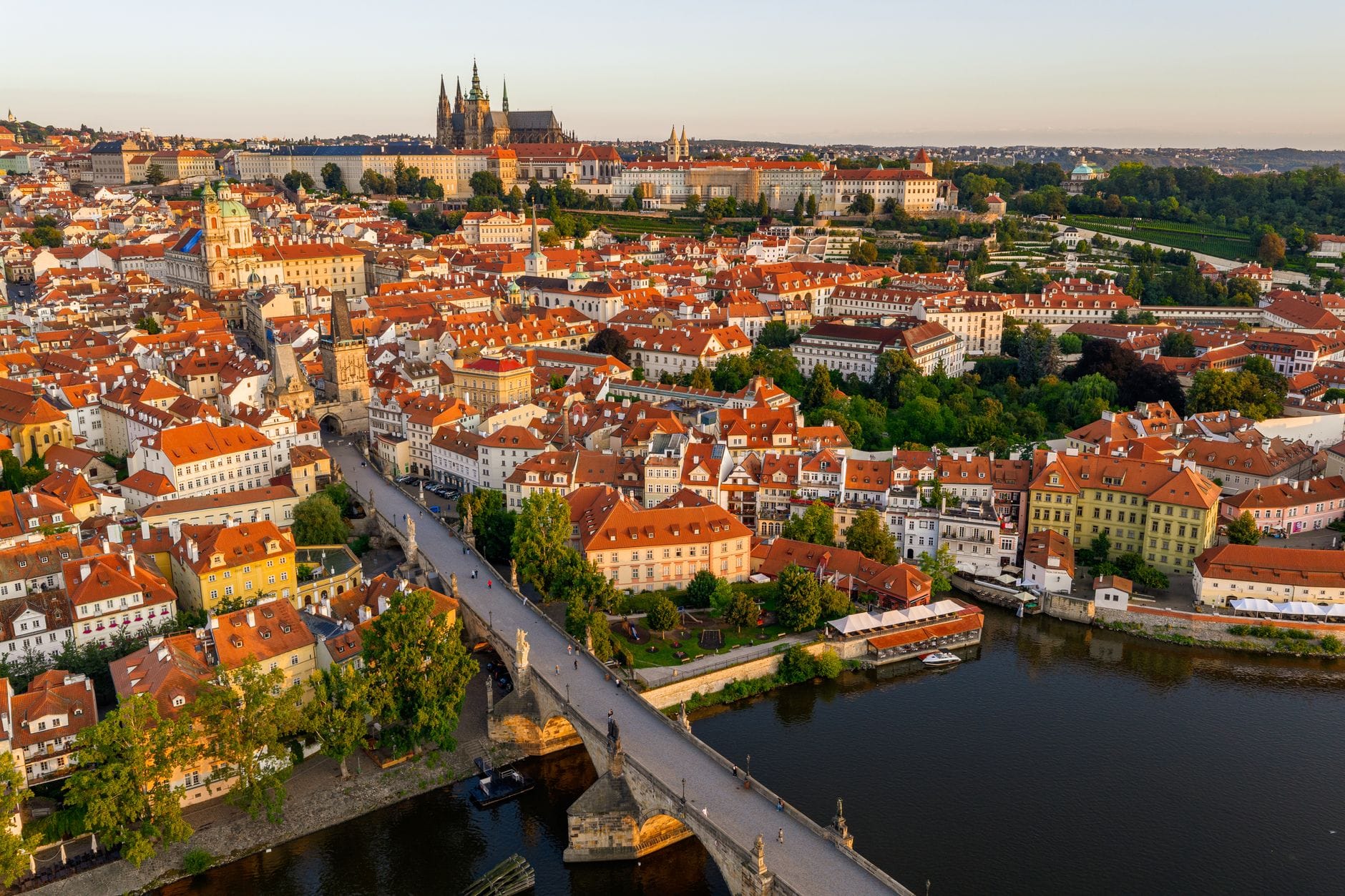
Prague's advantage over many European capitals is that its historic core survived World War II largely intact. Neither bombed by the Allies nor dismantled by the Nazis (unlike Warsaw or Rotterdam), the city presents an almost unbroken architectural sequence from the Romanesque period to the early 20th century. That UNESCO World Heritage designation, granted in 1992, covers both banks of the Vltava and recognizes exactly this continuity.
- Prague Castle (Pražský hrad) The largest ancient castle complex in the world by area, covering around 70,000 square meters. Contains the Romanesque St George's Basilica, Gothic St Vitus Cathedral, and the Old Royal Palace. Allow at least half a day. Book tickets in advance during summer.
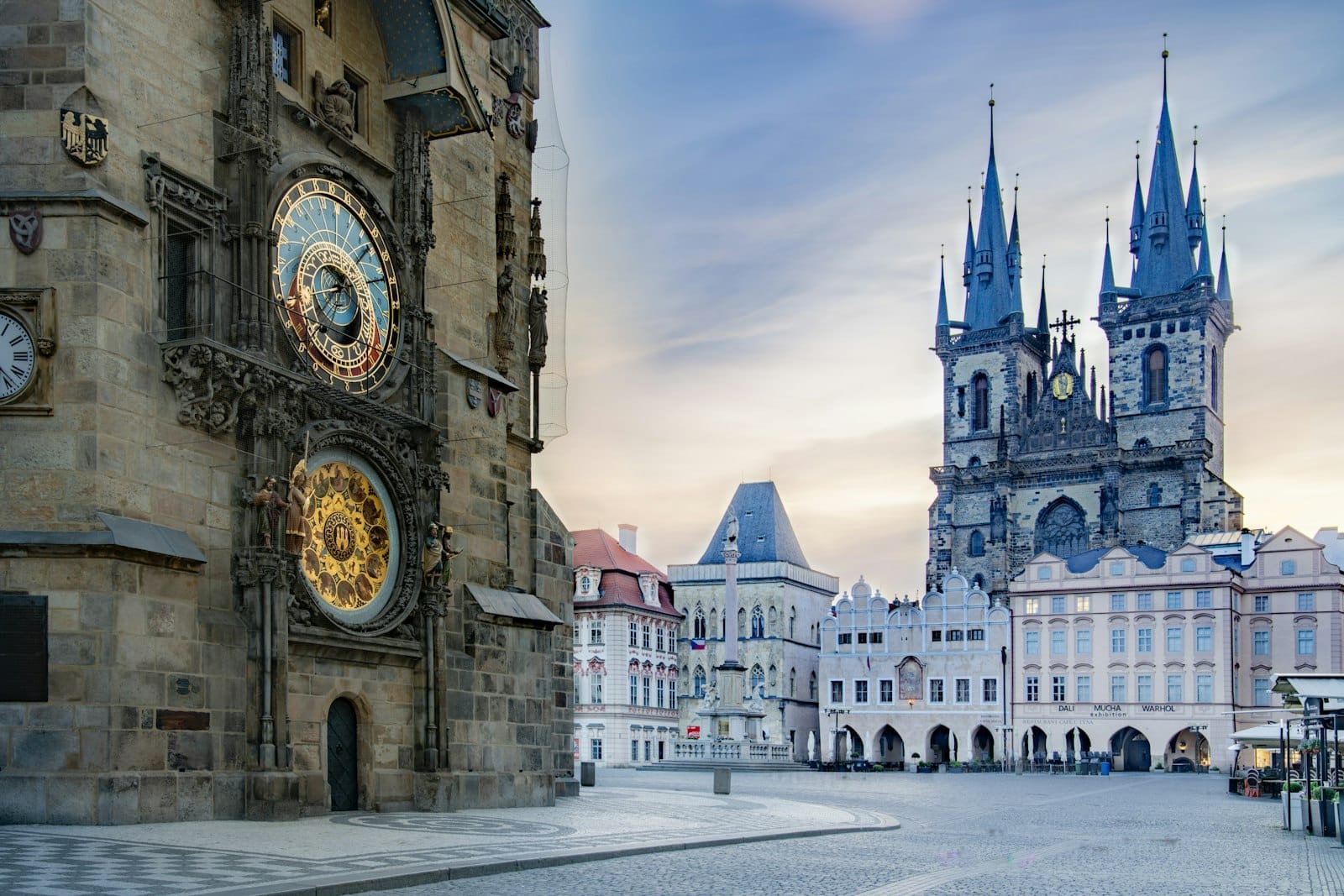
- Old Town Square and Astronomical Clock The square contains the Gothic Church of Our Lady Before Týn, the Baroque St Nicholas Church, and the medieval Astronomical Clock (Orloj) on the Old Town Hall. The clock dates to 1410 and is one of the oldest working astronomical clocks in the world.
- Jewish Quarter (Josefov) Six synagogues and the Old Jewish Cemetery within walking distance of each other. The combined ticket for the Jewish Museum in Prague covers most sites. Budget two to three hours minimum.
- Vyšehrad Fortress The earlier rival to Prague Castle, sitting on a cliff south of the center. Contains the Basilica of St Peter and Paul and the Vyšehrad Cemetery, where major Czech cultural figures including Dvořák and Smetana are buried. Far fewer tourists than the castle.
- Museum of Communism Covers the Communist period from 1948 to 1989 with genuine depth, including reconstructed interrogation rooms and a comprehensive account of the Velvet Revolution.
For a structured approach to covering the main historical sites, the Prague walking tour guide maps a logical route through the Old Town, Josefov, and Malá Strana. If you have more time, the 3 days in Prague itinerary allocates full days to the castle district and the Jewish Quarter separately, which is the right way to handle both.
Practical Notes for History-Focused Visitors
Historical sites in Prague are open year-round, but the experience varies significantly by season. Summer brings maximum crowds to Charles Bridge, Old Town Square, and the castle. Arriving at these sites before 9am makes a measurable difference in July and August. Winter gives you fewer visitors and a different atmosphere, particularly at the castle where snow on the spires of St Vitus is genuinely striking, but you'll have shorter daylight hours for outdoor sightseeing.
Ticket prices and opening hours for the castle complex, Jewish Museum, and individual churches change regularly. Always check the Prague Castle official website and Prague City Tourism (prague.eu) before your visit. The castle has multiple ticket tiers covering different combinations of buildings, and the right choice depends on how much time you have. Most first-time visitors choose the long circuit, which includes the cathedral, Old Royal Palace, and St George's Basilica.
The city operates on Czech koruna (CZK). Most major sites accept cards, but smaller churches and some museum shops prefer cash. The tap water in Prague is safe to drink, the public transport network covers all historical districts reliably, and English is widely spoken in tourist-facing services throughout the historic center.
FAQ
How old is Prague?
Human settlement in the Prague area dates back thousands of years, but Prague as a political and urban entity is typically dated from the founding of Prague Castle around 870–880 AD by Prince Bořivoj of the Přemyslid dynasty. The city's four historic towns were unified into a single administrative unit in 1784.
What is Prague most historically famous for?
Prague is best known for its medieval Golden Age under Holy Roman Emperor Charles IV (1346–1378), which produced Charles Bridge, the New Town, and Charles University. It is also significant for the 1618 Defenestration that triggered the Thirty Years' War, its role in the Holocaust, the 1968 Prague Spring, and the 1989 Velvet Revolution.
Was Prague damaged in World War II?
Prague's historic core survived World War II largely intact compared to cities like Warsaw or Dresden. The city was not subjected to major Allied bombing, and the Nazi administration largely preserved the built fabric of the center. This is why so much medieval and Baroque architecture remains standing today.
Is Prague in Eastern or Central Europe?
Geographically and culturally, Prague is in Central Europe. It sits at roughly the same longitude as Berlin and Vienna. The classification as 'Eastern European' is a Cold War-era political label that does not reflect the city's actual geographic position or its historical alignment with Western European cultural traditions.
What is the best historical site to visit in Prague?
Prague Castle is the most historically comprehensive site, covering Romanesque, Gothic, and Baroque periods in a single complex. For a more specific and emotionally powerful history experience, the Pinkas Synagogue in Josefov, with the names of Holocaust victims inscribed on its walls, is unmatched. Both are manageable within a single day if you start early.