Prague Castle (Pražský hrad): What to Know Before You Visit
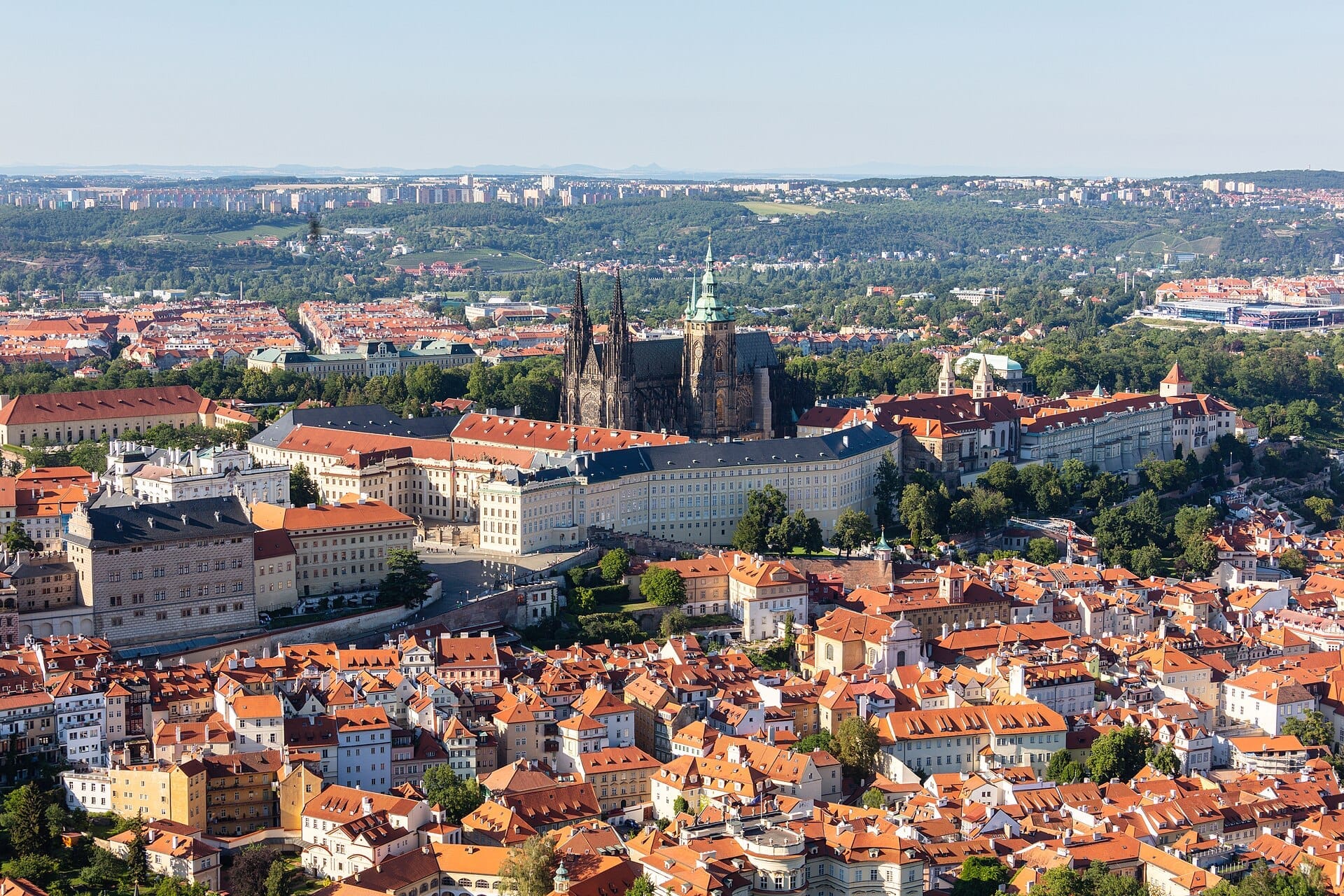
Covering nearly 70,000 square metres on a hill above the Vltava, Prague Castle is the seat of the Czech president and the largest ancient castle complex on earth. It holds a Gothic cathedral, a Romanesque basilica, a Renaissance palace, a medieval lane of tiny houses, and some of the best panoramic views in the city.
Quick Facts
- Location
- Hradčany district, Prague 1 (west bank of the Vltava, on the hill above Malá Strana)
- Getting There
- Metro Line A – Malostranská (approx. 10–15 min walk uphill); Trams to Malostranské náměstí, then walk up. Also reachable on foot via Charles Bridge from Old Town (approx. 20 min).
- Time Needed
- 2–5 hours depending on which interiors you enter. The grounds alone take 1–2 hours to walk properly.
- Cost
- Castle courtyards and most outdoor areas: free. Interior monuments (St Vitus Cathedral paid area, Old Royal Palace, St George's Basilica, Golden Lane, etc.) require a ticket – several circuit options available in CZK. Verify current prices at hrad.cz before visiting.
- Best for
- History lovers, architecture enthusiasts, panoramic views of Prague, first-time visitors
- Official website
- www.hrad.cz/en/prague-castle-for-visitors
What Prague Castle Actually Is
Prague Castle (Pražský hrad in Czech) is not a single building. That point gets lost on visitors who expect a fairy-tale tower and end up walking through what feels more like a small fortified city. The complex stretches across almost 70,000 square metres, making it the largest ancient castle complex in the world according to Guinness World Records. Within those boundaries you will find a Gothic cathedral, a Romanesque basilica, a Baroque palace converted into state apartments, a street of miniature houses cut into the castle wall, formal gardens, two museums, several galleries, a historic powder tower, and the working office of the Czech president.
It was founded around 880 by Prince Bořivoj of the Přemyslid dynasty, making it over 1,100 years old. Since then it has served as the seat of Bohemian kings, Holy Roman emperors, and now the presidents of Czechoslovakia and the Czech Republic. Every major European architectural style from the Romanesque period onward left its mark here, which explains why the buildings feel so stylistically varied. There is no single coherent look to the place, and that is precisely the point: Prague Castle is a physical record of who governed this region and when.
ℹ️ Good to know
The castle grounds (courtyards, gardens, and outdoor areas) are open daily 06:00–22:00 year-round and are free to enter. Interior monuments are open 09:00–17:00 from 1 April to 31 October, and 09:00–16:00 from 1 November to 31 March (closed on 24 December). Verify current ticket prices for interior circuits at hrad.cz before you go.
Arriving and Getting Oriented
Most visitors approach from two directions: up through Malá Strana from the Malostranská metro station (Line A), or on foot across Charles Bridge from Old Town, which takes about 20 minutes. The uphill walk from Malostranská takes you along Ke Hradu or up the old castle steps. Neither route is flat. The hill is real, the cobblestones are uneven, and comfortable shoes are not optional. Expect security checks including ID presentation and bag screening at the main entry points.
The castle has four courtyards, each serving as a kind of threshold into a different historical era. The First Courtyard, facing the Hradčany square, is where the hourly Changing of the Guard takes place and is usually the most photographed and most crowded. The Second Courtyard holds the Castle Gallery with its collection of European baroque paintings. The Third Courtyard is dominated by the overwhelming south facade of St Vitus Cathedral, which takes up so much of the space that first-time visitors often crane their necks awkwardly trying to take it all in. The Fourth Courtyard connects to the northern gardens.
💡 Local tip
Pick up a free floor plan at the main information points inside the complex. The signage within the castle is reasonable but the courtyards connect in ways that are not immediately obvious, and it is easy to exit in the wrong direction.
Tickets & tours
Hand-picked options from our booking partner. Prices are indicative; availability and final rates are confirmed when you complete your booking.
Prague by night city tour
From 27 €Instant confirmationFree cancellationPrague Castle online audio guide
From 5 €Instant confirmationFree cancellationPrague 6-Hour tour with river boat cruise and lunch
From 89 €Instant confirmationFree cancellationPrague Castle and Orloj with National Museum or Jewish Quarter
From 60 €Instant confirmationFree cancellation
The Buildings Worth Your Time
St Vitus Cathedral
The cathedral is the centrepiece of the complex and one of the finest examples of Gothic architecture in Central Europe. Construction began in 1344 under Charles IV but the building was not completed until 1929, nearly 600 years later. The west facade, with its neo-Gothic towers, is 20th century work. The interior holds the tombs of Bohemian kings including Charles IV and Wenceslas IV, the silver tomb of St John of Nepomuk (a Baroque masterpiece of hammered silver), and the stained glass windows designed in part by Alfons Mucha. The basic interior is accessible free of charge; a ticket is required to enter the upper choir, the royal crypt, and the south tower. You can read more about Mucha's legacy across the city in our Mucha Museum guide.
Old Royal Palace
The Old Royal Palace sits just east of the cathedral and contains the Vladislav Hall, a late Gothic ceremonial space so large that jousting tournaments were once held inside it. The hall dates from 1493–1502 and its ribbed vaulted ceiling is one of the most impressive Gothic interiors in the country. Also here is the room where the Second Defenestration of Prague took place in 1618, the event that helped trigger the Thirty Years' War. It is a small window overlooking an unglamorous courtyard, but the historical weight of the moment makes it worth a few minutes.
Golden Lane
Golden Lane (Zlatá ulička) is a narrow street of coloured cottages built into the northern ramparts of the castle, originally constructed in the late 16th century for castle guards and later inhabited by goldsmiths, which gave the street its name. The houses are tiny, many just a few metres wide, and the interiors have been turned into period displays. Franz Kafka lived for a short period at No. 22 in 1916–17, which is noted inside. The lane gets very congested in peak hours. Visit before 09:30 or after 16:00 in summer to experience it without shoulder-to-shoulder crowds. You can explore Kafka's connection to the city further at the Franz Kafka Museum in Malá Strana.
St George's Basilica
This is the oldest surviving church building within the castle complex and one of the best examples of Romanesque architecture in Bohemia. Founded in 920 and rebuilt in its current form after a fire in 1142, the interior has a stripped-back austerity that feels entirely different from the Gothic and Baroque excess elsewhere in the complex. The whitewashed nave, the crypt, and the remnants of early medieval frescoes reward anyone with an interest in pre-Gothic sacred architecture.
How the Experience Changes by Time of Day
Early morning is the only time Prague Castle feels uncrowded. Between 06:00 and 08:30, the outer courtyards are mostly quiet apart from castle staff and a few early runners who use the paths through the castle gardens. The light on the cathedral's south facade in morning sun is particularly striking. By 09:00 when the interiors open, tour groups begin arriving in waves, and the Third Courtyard around St Vitus can feel overwhelmingly packed by 10:30.
Midday is the worst time to visit in summer. The stone courtyards trap heat, there is almost no shade in the main areas, and queues for the cathedral and Golden Lane can be substantial. If you arrive between 11:00 and 14:00 in July or August, build in extra patience or prioritise the gardens, which thin out considerably.
Late afternoon, from about 15:00 onward, sees crowds thinning as tour groups depart and day-trippers head back. The light turns golden over the city rooftops from the castle's south-facing viewpoints, and in the main season the gardens remain open into the evening, giving you a pleasant way to end the visit. The Changing of the Guard happens on the hour; the main ceremony at noon is the most elaborate.
💡 Local tip
The castle grounds stay open until 22:00, and an evening walk through the lit courtyards (and, in the main season, gardens) is free. This is one of the better times to photograph the city panorama from the southern ramparts without crowds obscuring the foreground.
The Views Over Prague
The southern terraces and ramparts of Prague Castle offer some of the most comprehensive views over the city, taking in the red rooftops of Malá Strana, the curve of the Vltava, and the spires of Old Town in the middle distance. This is one of the best vantage points in Prague, and it costs nothing to stand there once you are in the complex. For a comparison of other viewpoints around the city, see our guide to the best views in Prague.
The St Vitus Cathedral tower (accessible with a ticket) offers a higher vantage point with a close-up view of the cathedral's flying buttresses and roof, plus a wider city panorama, though the staircase is narrow and steep.
Practical Walkthrough and Logistics
Plan your route before entering. A common itinerary is: First Courtyard (Changing of the Guard) → Second Courtyard and Castle Gallery → Third Courtyard and St Vitus Cathedral → Old Royal Palace → St George's Basilica → Golden Lane → south gardens and rampart views. This covers the main sites and takes roughly 3–4 hours at a moderate pace. If you only have 90 minutes, prioritise St Vitus Cathedral and the south terrace views. Pair the castle with a walk through the surrounding Hradčany district and the nearby Nový Svět quarter for a quieter look at the neighbourhood beyond the tourist flow.
Accessibility is a genuine consideration here. The complex is extensive and hilly, with cobbled surfaces throughout and steps at many of the interior monuments. Wheelchair users and visitors with limited mobility should check the castle's official accessibility information at hrad.cz, as some areas have limited or no accessible routes.
There is a cloakroom for storing bags. Toilets are available in several locations around the complex. Food options within the castle itself are limited and expensive; better to eat before arriving or descend into Malá Strana for a proper meal.
⚠️ What to skip
Photograph the view, not just the buildings. Many visitors spend all their time in the interior queue and miss the panoramic views from the southern ramparts, which are free and take five minutes to reach from the Third Courtyard.
An Honest Assessment
Prague Castle is the single most visited attraction in the Czech Republic and it shows. The main sights are well-maintained and genuinely significant, but the experience at peak times in summer can feel managed and transactional. The ticket system, with its multiple circuits and add-ons, can be confusing if you arrive without a plan. That said, the sheer scale and historical depth of the complex is hard to replicate anywhere else in Central Europe. Even if you only walk the free areas, the combination of architecture, city views, and 1,100 years of layered history is worth the effort. First-time visitors to Prague should come. Repeat visitors who have already seen the main interiors may find more satisfaction exploring the castle gardens, the nearby Strahov Monastery, or the quieter lanes of Hradčany.
Those who should think carefully before visiting: travellers with significant mobility limitations (the terrain is genuinely difficult), anyone expecting a single coherent architectural style, and visitors hoping for a quiet, contemplative experience in peak summer months. The castle is the opposite of intimate at 10:30 on a July morning.
Insider Tips
- Enter through the western (main) gate for the Changing of the Guard spectacle, but exit through the eastern gate near the Black Tower to descend into the Malá Strana backstreets — this route is far less crowded and takes you past some of the castle's less-visited ramparts.
- The Castle Gallery in the Second Courtyard is consistently overlooked by visitors rushing toward the cathedral. It holds a notable collection of 16th–18th century European paintings, and queues are rarely an issue.
- Golden Lane is included in the standard castle circuit ticket. Visit it last, after 16:00 in summer, when the crowds thin substantially and the afternoon light enters the low cottage windows.
- The Prague Castle gardens (accessible from the northern and southern sides) are free to enter with castle grounds access and rarely feel overcrowded even in peak season. The Royal Garden on the northern side contains the Renaissance Summer Palace (Belvedere) and is a good escape from the courtyard crowds.
- The Changing of the Guard happens every hour, but the midday ceremony (12:00) at the First Courtyard gate is the most elaborate. Arrive ten minutes early and position yourself along the side of the courtyard rather than directly in front for a cleaner sightline.
Who Is Prague Castle For?
- First-time visitors to Prague who want to understand the city's historical and political foundation in a single location
- Architecture enthusiasts: the complex spans Romanesque, Gothic, Renaissance, Baroque, and neo-Gothic styles across one site
- Photographers seeking panoramic views over Malá Strana and the Vltava from the southern ramparts
- History-focused travellers interested in medieval Bohemia, the Holy Roman Empire, and 20th-century Czech statehood
- Families with older children who can handle significant walking and benefit from the story-rich interiors of St Vitus Cathedral and the Old Royal Palace
Nearby Attractions
Other things to see while in Prague Castle District (Hradčany):
- Golden Lane
A row of tiny, brightly painted houses tucked against Prague Castle's northern fortification wall, Golden Lane compresses five centuries of city life into roughly 100 metres. Once home to castle guards, goldsmiths, and briefly Franz Kafka, it is one of the most photogenic and historically layered corners of the entire castle complex.
- Loreto Sanctuary (Loreta)
The Loreto Sanctuary is one of the most elaborately decorated Baroque pilgrimage sites in Central Europe, anchored by a 1626 replica of the Holy House from Loreto, Italy. Located on Loretánské náměstí in the Hradčany district, the complex rewards visitors with a carillon that rings every hour, a surprising treasury of religious art, and an atmosphere that stands apart from the crowds near Prague Castle.
- National Gallery – Schwarzenberg Palace
Schwarzenberg Palace stands on Hradčanské náměstí, directly opposite the main entrance to Prague Castle. Built between 1545 and 1567, its sgraffito-covered facade is one of the most technically accomplished examples of Italian Renaissance architecture in Central Europe. Inside, the National Gallery Prague displays its permanent collection of Czech and Central European Baroque art across three floors of period-appropriate grandeur.
- National Gallery – Sternberg Palace
Tucked just off Hradčanské Square, Sternberg Palace is one of the finest High Baroque buildings in Bohemia and home to the National Gallery Prague's permanent Old Masters collection. Here you'll find European paintings and sculpture spanning the 14th to 18th centuries, from Flemish altarpieces to Italian Renaissance panels, in rooms that feel genuinely unhurried compared to the castle crowds outside.