Strahov Monastery: Prague's Most Remarkable Library and Hidden Art Collection
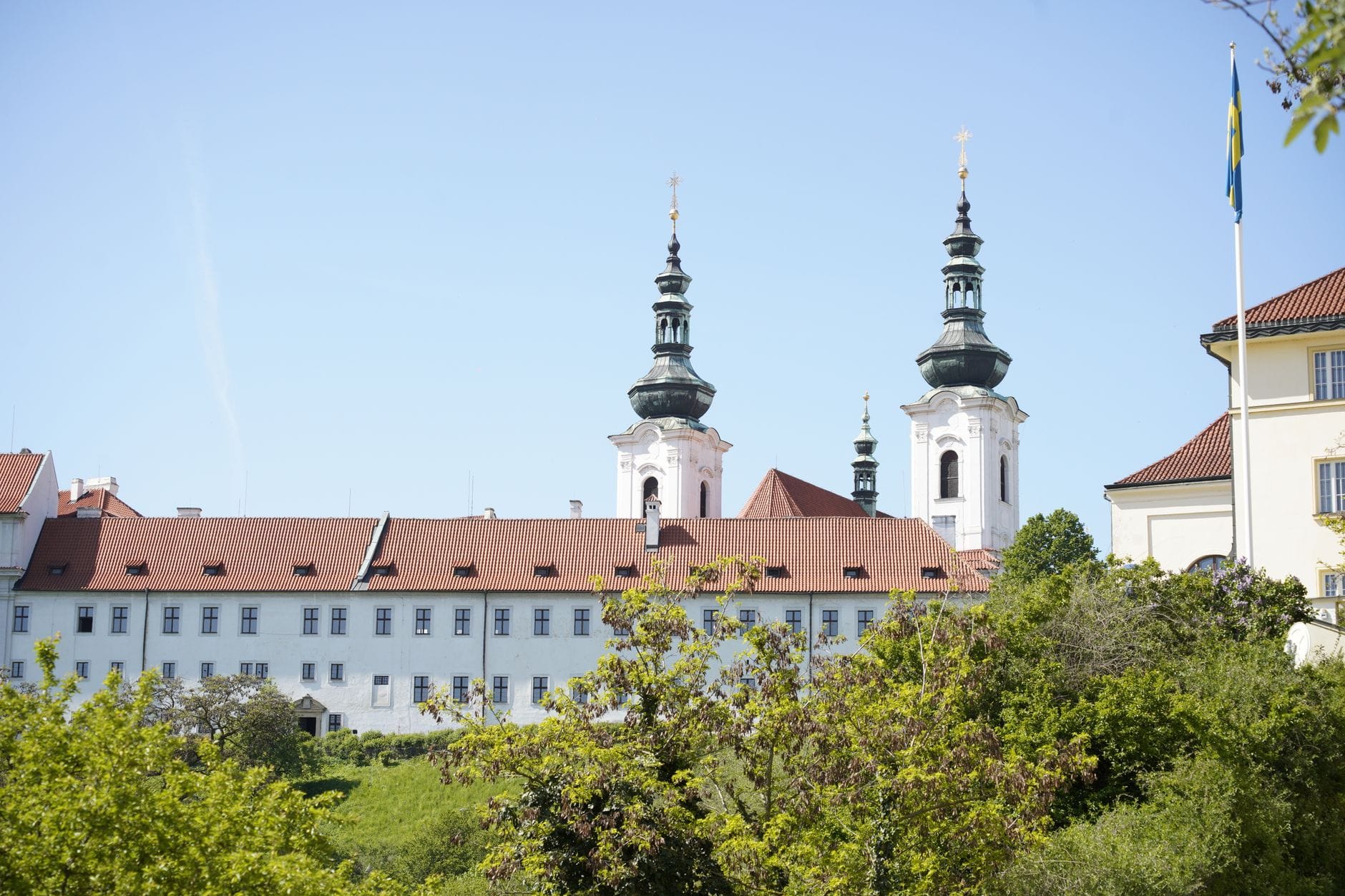
Strahov Monastery is a working Premonstratensian abbey perched above Malá Strana, home to two of Central Europe's best-preserved Baroque library halls and an underrated art gallery spanning medieval panel paintings to Baroque masters. Founded in 1143, it remains one of Prague's most genuinely impressive interiors.
Quick Facts
- Location
- Strahovské nádvoří 1/132, 118 00 Praha 1–Strahov (Hradčany), Prague
- Getting There
- Tram 22 or 23 to Pohořelec stop, then a short uphill walk
- Time Needed
- 1.5–2.5 hours for library and gallery combined
- Cost
- Library CZK 220 adults / Gallery CZK 220 adults / Combined CZK 390 adults (verify current prices)
- Best for
- Architecture lovers, book enthusiasts, history visitors, art collectors, and anyone seeking a quieter alternative to Prague Castle
- Official website
- www.strahovskyklaster.cz/en/for-visitors
What Is Strahov Monastery, and Why Does It Matter?
Strahov Monastery, officially the Royal Canonry of Premonstratensians at Strahov (Královská kanonie premonstrátů na Strahově), is a functioning religious community that has occupied this hilltop since 1143. That is not a typo. Nearly nine centuries of monastic history have left behind a complex of Baroque courtyards, a church, a brewery, and above all, two library halls that rank among the most spectacular rooms in Central Europe.
Most visitors come for the Theological Hall and the Philosophical Hall, and they are absolutely the highlight. But the Strahov Art Gallery is a genuinely underrated addition, housing a collection of medieval and Baroque works that would command attention in any major museum. The monastery sits above Malá Strana on the western edge of the city, about a 10–15 minute walk from Prague Castle, and the elevated position alone earns it a visit.
💡 Local tip
Tickets are sold at the library entrance until 16:15, with last entry at 16:30. The gallery closes ticket sales at 16:00. Plan to arrive before 15:30 if you want to see both without rushing.
The Two Library Halls: What You Actually See
The Theological Hall was completed in 1679 and expanded in the early 18th century. It is a long, barrel-vaulted room with elaborate stucco decoration by Siard Nosecký, a Strahov monk who spent years painting the ceiling frescoes depicting the theme of wisdom. The walnut bookshelves stretch floor to ceiling along both walls, holding around 18,000 volumes, including illuminated manuscripts and early printed books. The smell in this room, a combination of aged leather, old paper, and wood polish, is the kind of thing you notice immediately and remember long after you leave.
The Philosophical Hall was added later, between 1782 and 1784, after Emperor Joseph II dissolved many Bohemian monasteries and the monks had to rapidly acquire the walnut library furniture from the suppressed Louka Monastery in Moravia to furnish a new hall. The result is a two-story Rococo room of unusual grandeur, 32 meters long, with a sweeping ceiling fresco by Franz Anton Maulbertsch depicting the Struggle of Mankind to Know Real Wisdom. The fresco was completed in just six months in 1794, an extraordinary pace for a work of that scale and quality.
Visitors view both halls from behind a rope or low barrier at the entrance to each room. You cannot walk freely among the shelves. This frustrates some visitors who expect open access, but it also means the halls remain in exceptional condition. The rooms are lit primarily by natural light from tall windows, which shifts noticeably depending on time of day and season. Morning visits, when the light is low and golden through the south-facing windows of the Theological Hall, produce the best photographs.
⚠️ What to skip
Photography is permitted inside the library halls, but tripods and flash are not allowed. The low light means a steady hand or high-ISO capability matters. Smartphone cameras set to night mode can produce good results.
Tickets & tours
Hand-picked options from our booking partner. Prices are indicative; availability and final rates are confirmed when you complete your booking.
Prague's Monasteries and Breweries: beer tour with a Historian
From 87 €Instant confirmationFree cancellationSelf guided tour with interactive city game of Prague
From 5 €Instant confirmationFree cancellationPrague by night city tour
From 27 €Instant confirmationFree cancellationPrague city tour with Vltava River cruise
From 38 €Instant confirmationFree cancellation
The Strahov Art Gallery: Consistently Overlooked
The gallery occupies the upper floor of the monastery's west wing and displays works accumulated by the community over centuries, including medieval panel paintings, Gothic carved altarpieces, and Baroque canvases. The collection includes works by Lucas Cranach the Elder and pieces from the circle of Rubens, alongside Bohemian masters who rarely appear in international survey exhibitions. Unlike the library, this is a gallery you can walk through at your own pace, and it consistently draws smaller crowds than the library halls.
The joint ticket for library and gallery (CZK 390 for adults at time of writing, confirm current prices before visiting) is good value if you have a genuine interest in art history. If the library is your only priority, the individual ticket at CZK 220 is sufficient. Reduced tickets apply to children and youth aged six to seventeen, with younger children typically covered by family arrangements.
Historical Context: From 1143 to Today
Strahov was founded in 1143 by Bishop Jindřich Zdík of Olomouc, Bishop John of Prague, and Vladislaus II, Duke of Bohemia, as one of the first Premonstratensian abbeys in Bohemia. The Premonstratensians, a Catholic religious order founded in 1120 in northern France, emphasize communal life, prayer, and scholarship. Their commitment to manuscript production and library building explains why Strahov developed one of the most important monastic libraries in Bohemia.
The original Romanesque structures were rebuilt after being damaged during the Hussite Wars, and the present Baroque appearance of most buildings dates primarily from the 17th century. Remarkably, the monastery survived Joseph II's 1783 dissolution decree that shut down many Bohemian monasteries, in part because the monks successfully argued their library served a public educational function. It later survived communist nationalization in 1950, though the monks were expelled and only returned after 1989. The community has been active since, and the on-site brewery, which produces Sv. Norbert beer, has roots dating back to the 17th century.
For broader historical context on Prague's religious and architectural heritage, the Prague history guide covers the city's development from medieval settlement to the present day. Strahov sits within the wider Prague Castle District, which contains a concentration of historic buildings unmatched anywhere in the city.
Getting There and Moving Through the Complex
The most practical route from the city center is tram 22 or 23 to the Pohořelec stop. From there, it is a short walk uphill, roughly five to eight minutes, to the monastery entrance at Strahovské nádvoří, where you buy tickets at the main gate ticket office before proceeding to the library and gallery.
Alternatively, visitors coming from Prague Castle can walk west along Pohořelec street in about ten minutes. This direction puts the climb behind you, since you descend from the castle and arrive at Strahov roughly at the same elevation.
Accessibility is a genuine challenge here. The monastery sits on a hill, the approach from Pohořelec involves an uphill gradient, and the historic interiors include stairs and uneven stone floors. The library halls are viewed from the entrance rather than walked through, which reduces mobility requirements inside, but getting to the complex itself requires effort. Visitors with significant mobility limitations should consult the official site or contact the monastery directly before visiting.
ℹ️ Good to know
The monastery’s visitor facilities generally operate 09:00–17:00 daily, with special hours on New Year’s Eve (09:00–12:00) and New Year’s Day (12:00–17:00), and closures on Christmas Eve, Christmas Day, and Easter Sunday; check the official site for exact dates each year.
When to Visit and How Crowds Behave
Strahov draws consistently fewer visitors than Prague Castle or the Old Town Square, but it is not isolated from tourism. The library halls see a steady flow of group tours from mid-morning onward, typically between 10:00 and 13:00. Individual travelers who arrive at opening time, 09:00, often have the Theological Hall almost to themselves for the first twenty minutes. The Philosophical Hall, being the larger and more dramatic room, tends to fill faster once group tours begin.
Afternoon visits from 14:30 onward are generally quieter than late morning, though closing time approaches quickly. July and August bring higher overall visitor numbers, but even in peak season the crowds at Strahov rarely feel overwhelming compared to Old Town. On rainy days, the library becomes noticeably busier as visitors redirect from outdoor sights, so clear mornings in shoulder season (May, June, September, October) offer the best combination of good light and manageable numbers.
If you are planning your timing around weather and season, the best time to visit Prague guide breaks down crowd patterns and climate conditions across the year.
The Broader Setting: Views, Courtyard, and the Brewery
The monastery's main courtyard is pleasant and largely free to enter, with the Church of the Assumption of the Virgin Mary (closed to general visitors as an active church) forming one side. From the terrace area just below the monastery, there are good views over the red-tile rooftops of Malá Strana and across to the Old Town, though the most dramatic panoramic views require walking a short distance to the Petřín hillside.
The Petřín Hill is immediately adjacent and can be combined with a Strahov visit in the same morning. The two attractions complement each other well: Strahov for the enclosed, scholarly atmosphere of the library interiors, and Petřín for the open park and elevated views. The best views in Prague guide identifies specific vantage points across the city, including the Petřín Tower area.
The Strahov Brewery (Klášterní pivovar Strahov) occupies part of the monastery complex and operates as a restaurant and brew pub. Sv. Norbert beers, brewed on-site, include lager, wheat, amber, and seasonal varieties. The brewery tends to fill up at lunchtime, and the interior seating has a genuine monastic atmosphere, with exposed stone and wooden furniture. It is one of the more honest examples of a functioning monastic brewery in central Prague, not a tourist recreation.
Who Should Think Twice
Strahov is not for everyone in equal measure. Visitors who primarily want outdoor sightseeing, panoramic walks, or a quick photographic stop may find the admission price for the library underwhelming, since you view the rooms from the doorway rather than moving freely through the stacks. The experience is more contemplative than interactive. Young children may find the viewing format limiting, and the gallery requires a genuine interest in pre-modern European painting to hold attention.
Visitors with significant mobility limitations should assess their capacity for uphill walking before committing to the trip. The monastery grounds themselves are manageable once you arrive, but the approach requires effort.
Insider Tips
- Arrive at 09:00 when the library opens. The first twenty minutes in the Theological Hall, before group tours arrive, are notably quieter and the morning light through the south windows is ideal for photography.
- The combined ticket for library and gallery (CZK 390 for adults) is genuinely worthwhile if you have ninety minutes. Many visitors buy only the library ticket at CZK 220 and miss the Lucas Cranach the Elder works upstairs.
- The Strahov Brewery restaurant is worth a stop for lunch, but it fills up quickly between 12:00 and 13:30. Arriving before noon or after 14:00 avoids the peak wait.
- Walking down from Strahov toward Malá Strana through Nový Svět quarter takes about fifteen minutes and passes one of Prague's most photogenic lanes of low baroque houses, with almost no tourist infrastructure.
- The library sells a small selection of high-quality facsimile publications of manuscripts from the collection at the ticket desk. These are produced to a good standard and make more specific souvenirs than typical tourist merchandise.
Who Is Strahov Monastery For?
- Architecture and design enthusiasts drawn to intact Baroque and Rococo interiors
- Book lovers and history readers interested in early printed books and manuscript culture
- Art history visitors looking for medieval and Baroque painting outside the main gallery circuit
- Travelers who have already done Prague Castle and want a nearby attraction with genuine depth
- Visitors seeking a quieter, more contemplative experience away from Old Town crowds
Nearby Attractions
Other things to see while in Prague Castle District (Hradčany):
- Golden Lane
A row of tiny, brightly painted houses tucked against Prague Castle's northern fortification wall, Golden Lane compresses five centuries of city life into roughly 100 metres. Once home to castle guards, goldsmiths, and briefly Franz Kafka, it is one of the most photogenic and historically layered corners of the entire castle complex.
- Loreto Sanctuary (Loreta)
The Loreto Sanctuary is one of the most elaborately decorated Baroque pilgrimage sites in Central Europe, anchored by a 1626 replica of the Holy House from Loreto, Italy. Located on Loretánské náměstí in the Hradčany district, the complex rewards visitors with a carillon that rings every hour, a surprising treasury of religious art, and an atmosphere that stands apart from the crowds near Prague Castle.
- National Gallery – Schwarzenberg Palace
Schwarzenberg Palace stands on Hradčanské náměstí, directly opposite the main entrance to Prague Castle. Built between 1545 and 1567, its sgraffito-covered facade is one of the most technically accomplished examples of Italian Renaissance architecture in Central Europe. Inside, the National Gallery Prague displays its permanent collection of Czech and Central European Baroque art across three floors of period-appropriate grandeur.
- National Gallery – Sternberg Palace
Tucked just off Hradčanské Square, Sternberg Palace is one of the finest High Baroque buildings in Bohemia and home to the National Gallery Prague's permanent Old Masters collection. Here you'll find European paintings and sculpture spanning the 14th to 18th centuries, from Flemish altarpieces to Italian Renaissance panels, in rooms that feel genuinely unhurried compared to the castle crowds outside.