National Gallery – Sternberg Palace: Prague's Old Masters in a Baroque Palace
Tucked just off Hradčanské Square, Sternberg Palace is one of the finest High Baroque buildings in Bohemia and home to the National Gallery Prague's permanent Old Masters collection. Here you'll find European paintings and sculpture spanning the 14th to 18th centuries, from Flemish altarpieces to Italian Renaissance panels, in rooms that feel genuinely unhurried compared to the castle crowds outside.
Quick Facts
- Location
- Hradčanské náměstí 15, Praha 1 – Hradčany (Prague Castle District)
- Getting There
- Tram 22 to Pražský hrad, Brusnice, or Pohořelec; Metro Line A to Malostranská or Hradčanská
- Time Needed
- 1.5 to 2.5 hours for the permanent collection
- Cost
- Adults 180 CZK, Students 100 CZK, Children free (verify current prices before visiting)
- Best for
- Art history enthusiasts, European painting collections, quiet museum mornings away from castle crowds
- Official website
- www.ngprague.cz/en/about/buildings/sternberg-palace
What Sternberg Palace Actually Is
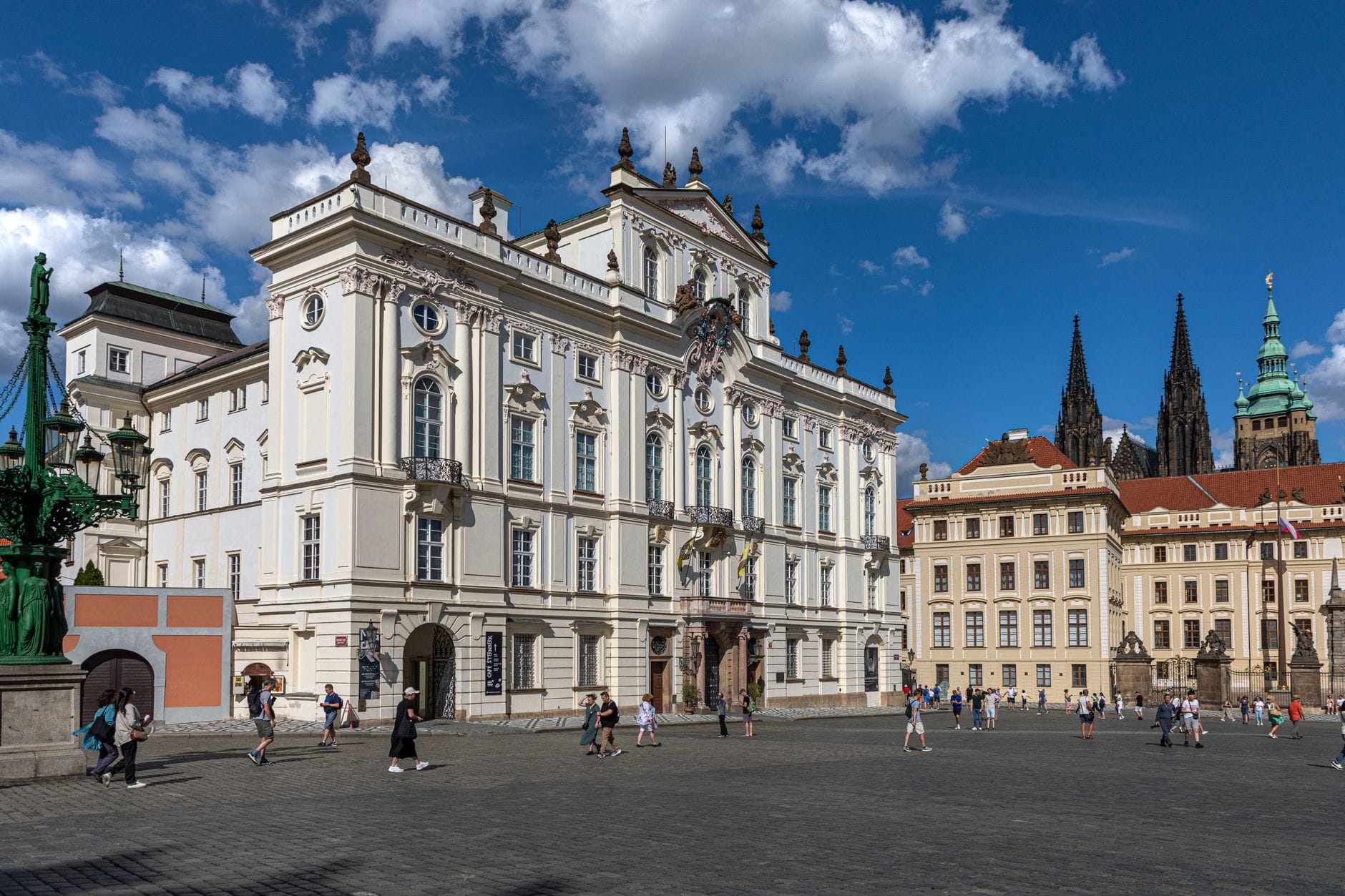
The National Gallery Prague – Sternberg Palace (Národní galerie Praha – Šternberský palác) is a High Baroque palace on Hradčanské Square, the broad ceremonial square immediately west of Prague Castle's main gate. Since 1947, it has served as one of the National Gallery Prague's primary exhibition spaces, currently dedicated to the permanent collection known as "Old Masters II", which covers European painting and sculpture from the 14th through 18th centuries.
What this means in practice: you walk off the square's tourist-heavy pavement and into galleries of Cranach, Dürer, Rubens, Hals, and Tiepolo, among others, in a palace that most visitors walk straight past on their way to the castle entrance. That oversight is your opportunity. Even on busy summer days, the interior can feel conspicuously calm by Prague standards.
💡 Local tip
The palace entrance is set back from Hradčanské Square behind a courtyard. Look for the gateway to the right of the Archbishop's Palace. First-time visitors regularly miss it entirely.
The Building: High Baroque Architecture in Bohemia
Sternberg Palace is considered one of the most significant examples of early High Baroque architecture in Bohemia. Construction began around 1698 for Count Franz Josef Sternberg and was largely completed by the early 18th century. The design reflects the influence of Viennese Baroque models, with a formal courtyard, oval vestibule, and the kind of restrained exterior grandeur typical of aristocratic palaces built in the shadow of the Habsburg court.
From the street, the palace's facade is partially concealed. But once through the gateway, the courtyard opens to reveal a structure of considered proportions. The stonework is cool and pale, the ornamental detailing precise rather than excessive. Inside, the staircase hall and ceiling frescoes survive largely intact, giving the building a layered quality: you are simultaneously looking at the architecture and the art it was built to contain.
If Baroque civic and ecclesiastical architecture in Prague interests you more broadly, the Prague architecture guide covers the full spectrum from Romanesque foundations to 20th-century modernism.
Tickets & tours
Hand-picked options from our booking partner. Prices are indicative; availability and final rates are confirmed when you complete your booking.
Self guided tour with interactive city game of Prague
From 5 €Instant confirmationFree cancellationPrague by night city tour
From 27 €Instant confirmationFree cancellationPrague city tour with Vltava River cruise
From 38 €Instant confirmationFree cancellationPrague Castle online audio guide
From 5 €Instant confirmationFree cancellation
The Collection: European Old Masters from 14th to 18th Centuries
The permanent exhibition 'Old Masters II' is organized geographically and chronologically across the palace's upper floors. The collection is substantial without being overwhelming: you can move through it in under two hours if you are selective, or spend a full afternoon if you engage methodically.
The Flemish and Dutch holdings are among the strongest. Works from the 15th and 16th centuries illustrate the shift from devotional panel painting toward secular portraiture and landscape. The German collection includes works by Lucas Cranach the Elder. Italian Renaissance and Baroque rooms cover the arc from early religious composition to the theatrical dynamism of 17th-century painting. There are also Spanish and French works, though these sections are smaller.
The labeling is in Czech and English throughout, which is practical for international visitors. Gallery lighting tends toward the controlled and slightly dim, which is appropriate for older paintings but means bright-day photography through windows can create awkward exposures if you are documenting individual works.
ℹ️ Good to know
The palace's garden is closed to visitors from 13 October 2025 until spring 2026 for works. Factor this in if garden access was part of your plan.
When to Visit: Time of Day and Seasonal Patterns
Sternberg Palace opens Tuesday through Sunday at 10:00 and closes at 18:00. Monday is closed. The first hour after opening, roughly 10:00 to 11:30, is consistently the quietest period. By mid-morning, school groups occasionally move through specific rooms, but the palace rarely becomes crowded in the way that Prague Castle or the Old Town Astronomical Clock do.
Summer afternoons between 13:00 and 16:00 represent the peak window, when visitors who have finished the castle complex spill across the square. Even then, the interior absorbs people reasonably well. Winter visits have a particular quality: the light outside is flat and cold, the rooms are warm, and the attendance is thin. If you are visiting Prague in the off-season, this is one of the better indoor options near the castle.
For a broader picture of how the city's seasons affect what you experience, the guide on the best time to visit Prague covers climate patterns and crowd cycles in detail.
Getting There: Transit and Walking Routes
Tram 22 is the most convenient option from the city centre, running directly to the Prague Castle area. The stop Pražský hrad places you on the upper terrace near the castle's second courtyard; Brusnice and Pohořelec drop you slightly to the west, a short walk downhill to Hradčanské Square. Both involve some walking on steep or cobbled terrain.
Metro Line A serves Malostranská and Hradčanská stations. From Malostranská, the walk up through Malá Strana and the castle steps takes around 15 to 20 minutes and passes several notable buildings. From Hradčanská, the route along Milady Horákové and up through the Hradčany neighborhood is flatter and less visited. Both are viable; the choice depends on what you want to see on the way.
⚠️ What to skip
The entire Hradčanské Square area is on a hill. Cobblestones and gradient are significant factors for visitors with mobility considerations. The castle district is not flat; plan accordingly and check the National Gallery Prague's official site for current accessibility information before visiting.
Fitting Sternberg Palace Into a Broader Castle District Visit
Sternberg Palace sits at the logical beginning or end of a Prague Castle District itinerary. If you arrive via tram and start at Hradčanské Square, the palace works well as your first stop before the castle crowds build up. If you are finishing the day from the castle side, it is a natural final destination before descending.
The square itself is framed by the Archbishop's Palace to the north and, on the opposite side, the National Gallery Schwarzenberg Palace, which houses Czech Baroque art and shares the same square. The two galleries are independent visits but complement each other architecturally and thematically.
A short walk further into the castle complex brings you to St. Vitus Cathedral and the Old Royal Palace, both part of Prague Castle's ticketed circuit. For the full picture of what the castle district contains, the Prague Castle District guide provides a structured overview.
Practical Notes Before You Go
Standard admission is 180 CZK for adults and 100 CZK for students; children enter free. The Prague Visitor Pass covers entry to the permanent exhibition. Prices are in Czech koruna; card payments are generally accepted at National Gallery venues, but it is worth confirming at the desk. All prices should be verified against current National Gallery Prague listings before your visit, as they are subject to change.
Photography for personal, non-commercial use is typically permitted in National Gallery Prague venues, but flash photography and tripods are usually restricted. Confirm the current policy at the entrance. Bag storage is available. The palace does not have a full restaurant, but there are cafes on Hradčanské Square and along Loretánská street nearby.
The collection is not suited to visitors who are primarily interested in Czech national art or 20th-century work. For Czech Baroque painting, the Schwarzenberg Palace across the square is the more relevant stop. For modern and contemporary art, the National Gallery's Veletržní Palace in Holešovice holds the main 20th-century collection.
Insider Tips
- The palace entrance is easy to miss. Walk through the arched gateway to the right of the Archbishop's Palace on Hradčanské Square and cross the courtyard. The museum entrance is at the far end.
- Tuesday mornings are typically the quietest day-and-time combination. The post-weekend drop in castle district visitors means the gallery can feel nearly private between 10:00 and noon.
- The palace's oval vestibule and ceiling frescoes are worth stopping for even if you are not visiting the collection. They are visible from the entrance hall before you pay admission.
- If you hold a Prague Visitor Pass, admission to the permanent collection is included. The pass can represent good value if you are also visiting other National Gallery venues on the same trip.
- Pair the visit with the Schwarzenberg Palace directly across the square for a full morning of art before the castle crowds peak around 11:00. Both galleries open at 10:00.
Who Is National Gallery – Sternberg Palace For?
- Art history enthusiasts interested in European painting from the medieval through Baroque periods
- Visitors who want a substantive museum experience near Prague Castle without the admission price or queues of the castle itself
- Travellers visiting in winter or shoulder season who want a warm, uncrowded indoor destination in the castle district
- People combining art with architecture, given the quality of the Baroque building itself
- Anyone with a Prague Visitor Pass looking to make full use of included National Gallery admissions
Nearby Attractions
Other things to see while in Prague Castle District (Hradčany):
- Golden Lane
A row of tiny, brightly painted houses tucked against Prague Castle's northern fortification wall, Golden Lane compresses five centuries of city life into roughly 100 metres. Once home to castle guards, goldsmiths, and briefly Franz Kafka, it is one of the most photogenic and historically layered corners of the entire castle complex.
- Loreto Sanctuary (Loreta)
The Loreto Sanctuary is one of the most elaborately decorated Baroque pilgrimage sites in Central Europe, anchored by a 1626 replica of the Holy House from Loreto, Italy. Located on Loretánské náměstí in the Hradčany district, the complex rewards visitors with a carillon that rings every hour, a surprising treasury of religious art, and an atmosphere that stands apart from the crowds near Prague Castle.
- National Gallery – Schwarzenberg Palace
Schwarzenberg Palace stands on Hradčanské náměstí, directly opposite the main entrance to Prague Castle. Built between 1545 and 1567, its sgraffito-covered facade is one of the most technically accomplished examples of Italian Renaissance architecture in Central Europe. Inside, the National Gallery Prague displays its permanent collection of Czech and Central European Baroque art across three floors of period-appropriate grandeur.
- Nový Svět Quarter
Nový Svět, meaning 'New World,' is a tiny cluster of cobblestone lanes tucked just northwest of Prague Castle in the Hradčany district. Dating to the 14th century and once home to castle servants and later artists, this freely accessible residential quarter offers one of the most atmospheric walks in the city, far removed from the tourist crowds a few minutes away.