Prague Architecture Guide: Gothic, Baroque, Art Nouveau & Beyond
Prague's historic center packs over 1,100 years of architectural history into roughly 870–900 hectares, from Romanesque crypts and Gothic cathedrals to one of the world's most substantial collections of Cubist buildings. This guide breaks down every major style, tells you exactly what to see, and gives you the practical details to plan your visit.
Plan and book this trip
Tools from our partner Travelpayouts help you compare flights and hotels. If you book through them, we may earn a commission at no extra cost to you.
Flights
Hotels map
TL;DR
- Prague's UNESCO-listed historic center contains thousands of protected monuments representing every major European style from Romanesque through 20th-century modernism.
- Unlike most Central European capitals, Prague was largely spared from WWII destruction, leaving its medieval, Renaissance, and Baroque fabric almost entirely intact.
- The city holds the world's only coherent collection of Cubist buildings, centered on the House of the Black Madonna (1912) in Old Town.
- Key interiors such as St Vitus Cathedral and the Municipal House require paid tickets; castle courtyards are free. Hours vary by season, so always check official sites before visiting.
- For the full context, pair this guide with a Prague walking tour to connect the architectural highlights on foot.
Why Prague's Architecture Is Unlike Any Other European Capital
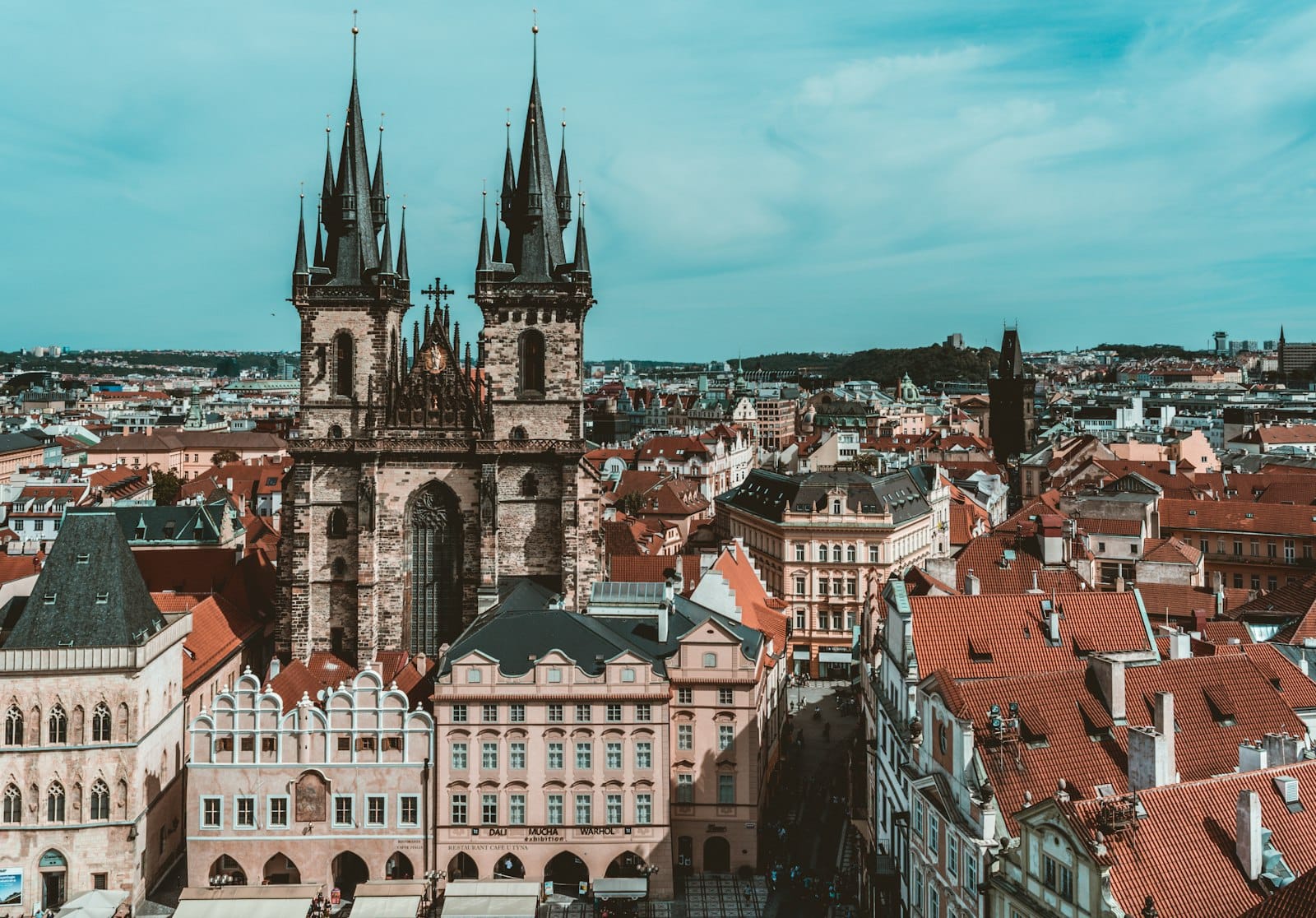
Prague did not suffer the large-scale wartime bombing that reshaped Warsaw, Dresden, or Rotterdam, nor did it undergo the aggressive 19th-century Haussmann-style demolitions that transformed Paris. The result is a city where a single street can present a Romanesque cellar beneath a Gothic ground floor, a Baroque facade above, and an Art Nouveau cornice at the top. This layering is not a curated museum effect — it is the product of organic, largely uninterrupted urban development spanning more than a millennium.
The historic center, officially inscribed as a UNESCO World Heritage Site, covers approximately 900 hectares and contains around 4,000 listed monuments. It encompasses Old Town, Malá Strana, the Castle District, and New Town, all of which developed distinct architectural characters over different centuries.
ℹ️ Good to know
One common misconception: Gothic is not the oldest surviving style in Prague. Romanesque architecture predates it by several centuries, and Romanesque-era rotundas and basement structures still survive beneath later buildings across the city.
Romanesque and Gothic: The Medieval Foundations
Romanesque construction in Prague dates to the 11th and 12th centuries. Most surviving examples are modest in scale: the Rotunda of the Holy Cross in Old Town (one of the city's oldest intact structures), the foundations of the Bishop's Court in Malá Strana, and the lower levels of several buildings that have since been built over. Prague's underground archaeology is extensive, and guided tours of spaces like the Prague Old Town Underground reveal Romanesque masonry that most visitors walk directly above without knowing it.
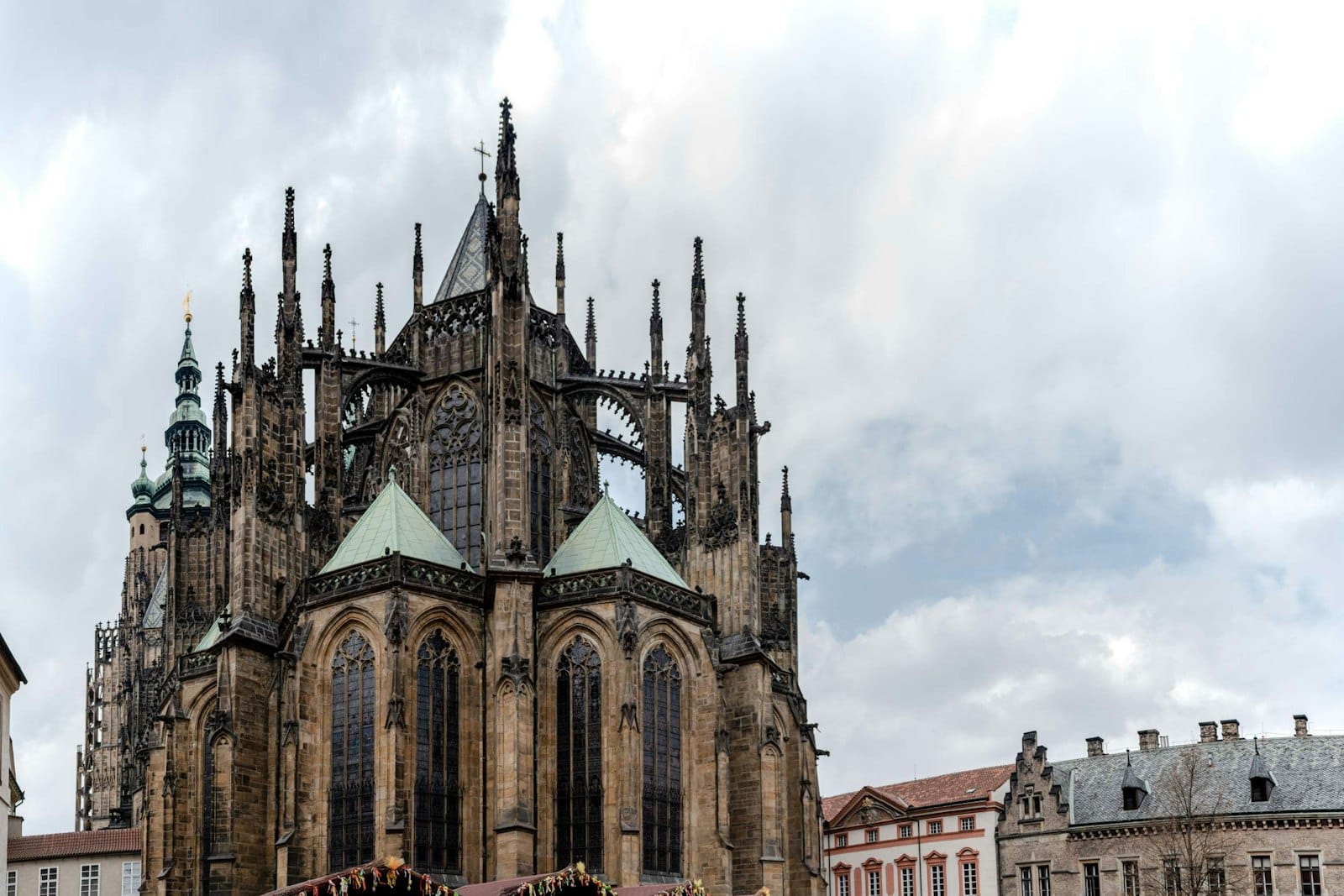
Gothic architecture became Prague's dominant visual language between the 13th and 15th centuries, reaching its peak under Emperor Charles IV in the 14th century. St Vitus Cathedral, begun in 1344, is the city's most ambitious Gothic project — though it was not completed until 1929, meaning the building spans nearly six centuries of construction styles within a single structure. Charles Bridge, commissioned in 1357 and lined with Baroque statues added centuries later, rests on Gothic piers that have withstood floods for over 650 years.
- St Vitus Cathedral The definitive Gothic landmark. The interior houses the crown jewels, the St Wenceslas Chapel with 14th-century wall paintings, and the ornate Art Nouveau stained glass windows by Alfons Mucha — a surprising detail inside a Gothic structure.
- Old Town Bridge Tower One of the finest Gothic city gates in Central Europe, built in the late 14th century as a triumphal arch rather than a defensive fortification.
- St Agnes Convent Prague's first Gothic building, founded in 1231 and now housing the National Gallery's collection of medieval Bohemian art. Undervisited relative to its historical importance.
Baroque Prague: A City Rebuilt in Stone and Drama
No single architectural period transformed Prague's skyline more decisively than the Baroque. Following the Thirty Years' War and the Catholic reclamation of Bohemia in the early 17th century, Prague was rebuilt and ornamented on a massive scale. Habsburg patronage funded the construction or reconstruction of over 230 churches, palaces, and monasteries. The result is a city where Baroque is not confined to a few showpiece buildings — it is the dominant texture of entire neighborhoods.
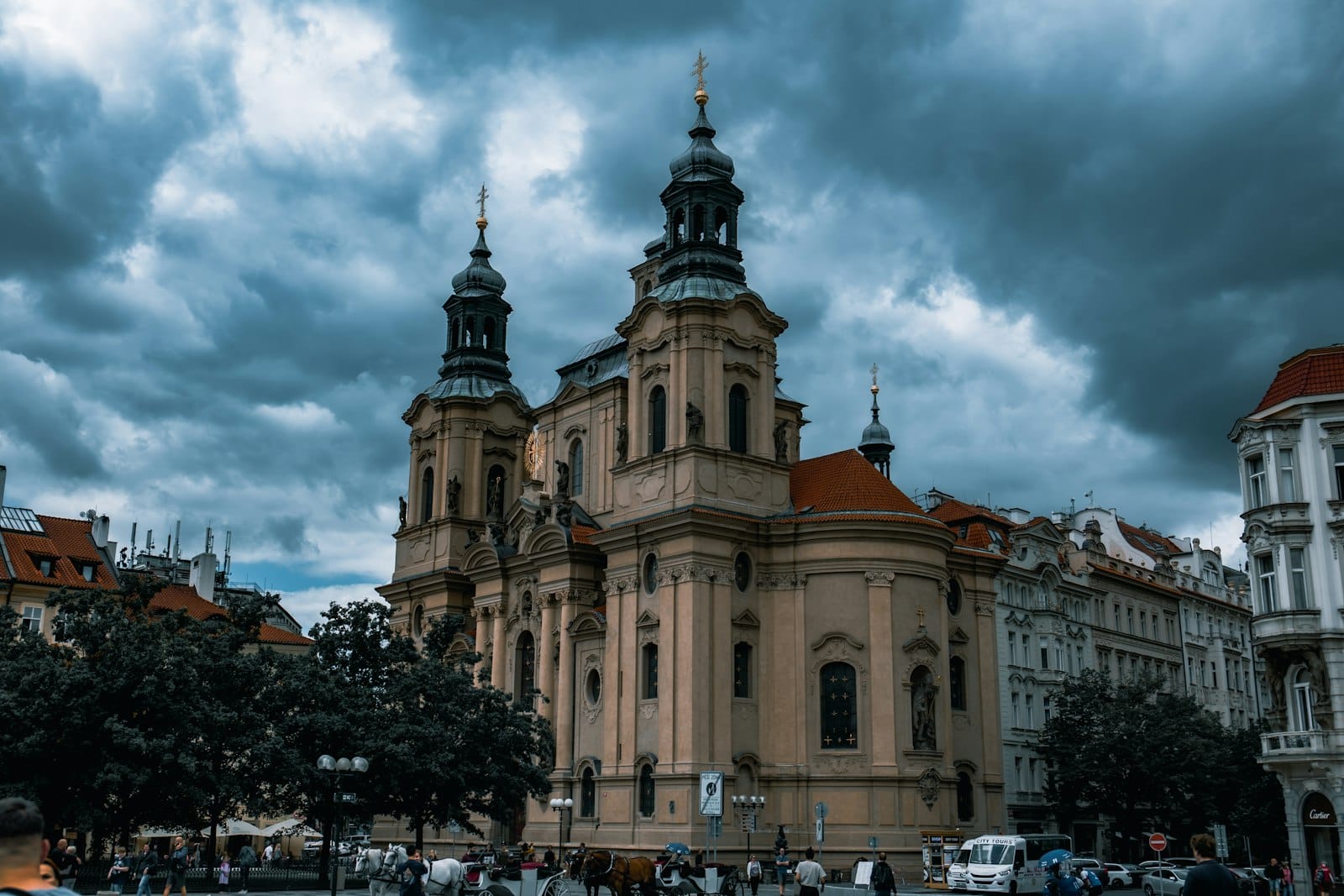
Malá Strana is the most concentrated Baroque quarter. The Church of St Nicholas in Malá Strana — designed by the Dientzenhofer family and completed in 1755 — is considered one of the finest Baroque interiors in Central Europe, with a nave ceiling fresco covering over 1,500 square meters. Across the river, the Clementinum complex represents Jesuit Baroque at its most ambitious: a campus of churches, libraries, and astronomical towers that effectively consumed an entire Old Town quarter.
The Wallenstein Garden behind Wallenstein Palace (now the Czech Senate) offers one of the best free Baroque experiences in the city: formal gardens, a mannerist grotto, and bronze copies of the original statues that were looted by Swedish troops in 1648. The originals are in Sweden. Open seasonally, with free admission.
💡 Local tip
Visit the Church of St Nicholas in Malá Strana early in the morning on a weekday, before tour groups arrive. The light through the high oval windows at that hour is exceptional, and the scale of the interior — which is far larger than the exterior suggests — reads much better without crowds.
Art Nouveau, Historicism, and the Turn of the 20th Century
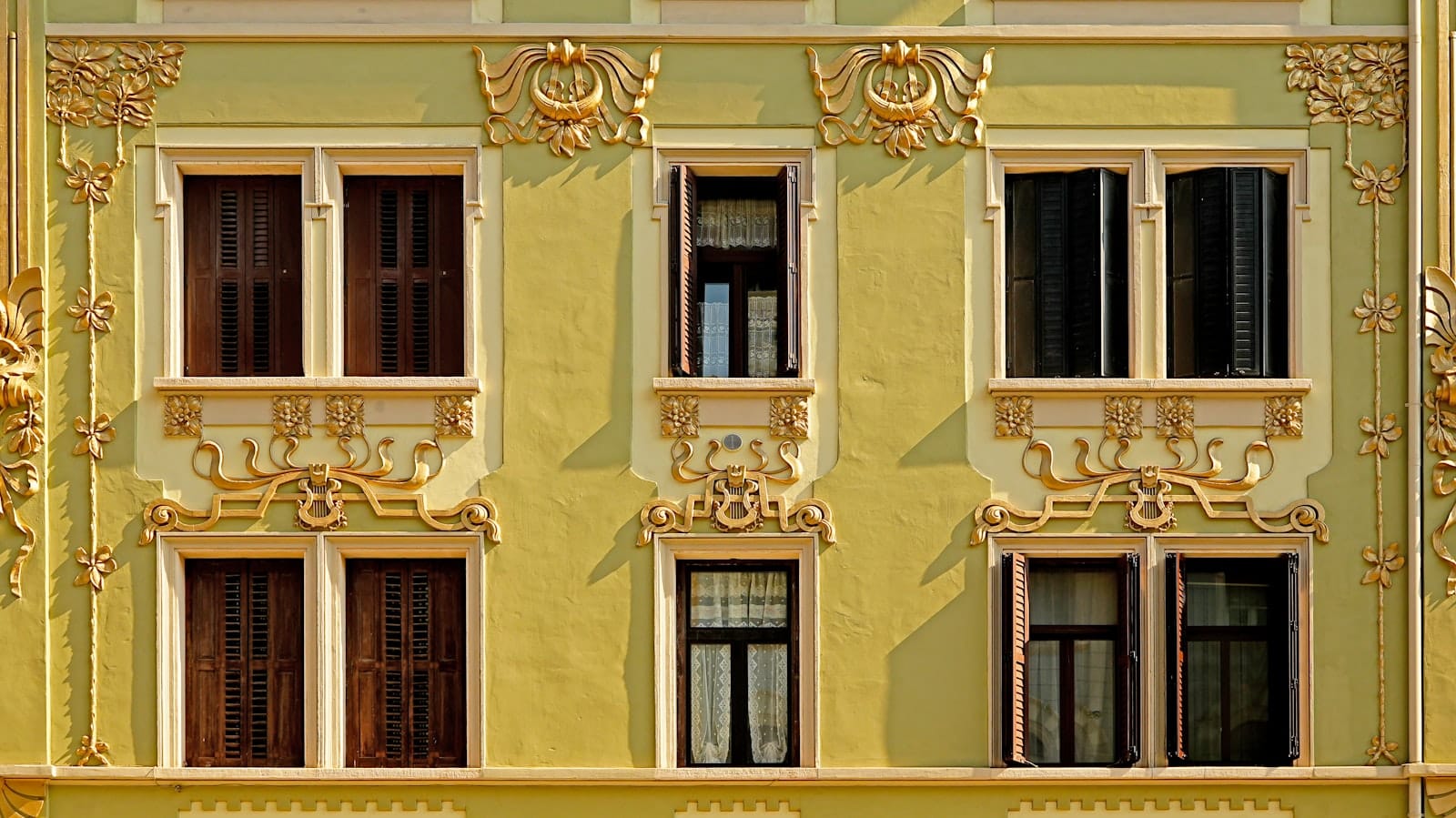
The late 19th and early 20th centuries brought an architectural boom to Prague fueled by industrial prosperity and a rising Czech national consciousness. Two parallel movements shaped this era: historicism (neo-Gothic, neo-Renaissance, and neo-Baroque revival styles) and Art Nouveau, which arrived slightly later and with considerably more originality.
The Municipal House (Obecní dům), completed in 1912, is the city's Art Nouveau set piece. Every interior space — the Smetana Concert Hall, the Lord Mayor's Salon, the cafes and restaurants — was designed by a different Czech artist, making the building a collective work of national art as much as an architectural statement. Guided interior tours run daily; tickets can be purchased on-site or booked online through the official Obecní dům website. Prices and schedules change seasonally, so verify current details before visiting.
Pařížská Street (Paris Street), which cuts through Josefov toward the river, was laid out in the 1890s and 1900s during the controversial demolition and reconstruction of the old Jewish ghetto. The street's facades are a showcase of Secession and Art Nouveau architecture, though the redevelopment that created it erased most of the historic ghetto fabric — a transformation that drew criticism even at the time. Today it is Prague's luxury retail corridor, which makes it easy to walk without looking up. Look up.
- Municipal House (Obecní dům): Prague's most complete Art Nouveau interior. Paid entry for guided tours; free to enter the ground-floor cafe and lobby.
- Hotel Central (Hybernská Street): An early Prague Secession building by Bedřich Bendelmayer, less famous than the Municipal House but architecturally significant.
- Main Railway Station (Praha hlavní nádraží): The 1909 Art Nouveau station building still stands — largely intact — though it was encased in a 1970s communist-era extension. The original ornate dome hall is accessible from the upper level.
Czech Cubism: Prague's Unique Contribution to Architectural History
Between roughly 1911 and 1914, a small group of Czech architects applied the visual logic of Cubist painting to building design — not as surface decoration, but as a structural and spatial concept. The movement lasted only a few years before being interrupted by World War I, but it produced a handful of buildings that exist nowhere else on earth in this form. Prague is the only city in the world with a coherent collection of full Cubist buildings.
The House of the Black Madonna (Dům U Černé Matky Boží), designed by Josef Gočár and completed in 1912, is the landmark example. Located at the corner of Celetná and Ovocný trh in Old Town, it now houses the Museum of Czech Cubism, operated by the National Gallery Prague. The building's faceted facade and crystalline forms are impossible to miss once you know what you are looking at — but many visitors walk past it daily without recognition. The museum is the best place to understand why this movement matters.
✨ Pro tip
After the House of the Black Madonna, walk south to Vyšehrad to see the Cubist residential houses on Rašínovo nábřeží (the Vltava embankment) — particularly the apartment buildings designed by Josef Chochol around 1912-1913. These are working residential buildings, so the exteriors are the experience. No ticket required.
20th-Century and Contemporary Architecture: Beyond the Postcard
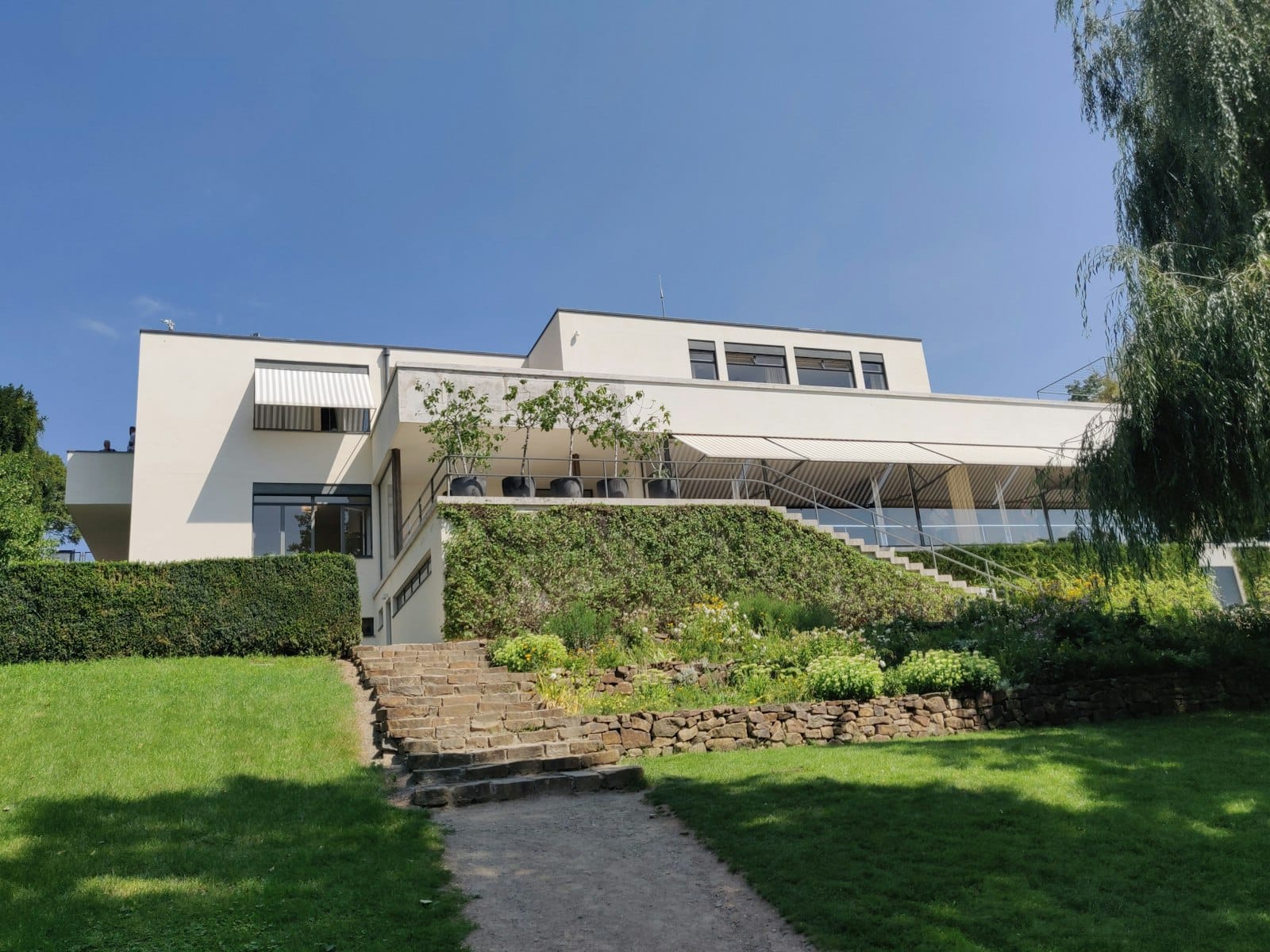
Prague's architectural story does not end with Art Nouveau. The interwar First Czechoslovak Republic (1918-1938) produced some of the most sophisticated functionalist and modernist architecture in Europe, particularly in residential and civic buildings across districts like Vinohrady and Dejvice. The Müller Villa by Adolf Loos (1930) in Střešovice is considered a canonical work of early modernism — guided tours must be booked in advance through the City of Prague Museum.
The communist era (1948-1989) left its own mark, primarily in the form of prefabricated housing estates (paneláky) on the city's periphery and a handful of more ambitious projects in the center, including the Žižkov Television Tower — a 216-meter transmitter built between 1985 and 1992, now one of Prague's most recognizable silhouettes and worth visiting for the observation deck and David Černý's crawling-baby sculptures on its exterior. For post-1989 architecture, the Dancing House (Tančící dům, 1996) by Frank Gehry and Vlado Milunič remains the most internationally known example, though opinions on it among Prague architects are decidedly mixed.
For contemporary and experimental Czech design, the Holešovice district is the most productive place to look, with converted industrial halls now housing galleries, studios, and cultural spaces. The DOX Centre for Contemporary Art occupies a repurposed factory and is itself an interesting piece of adaptive reuse architecture.
⚠️ What to skip
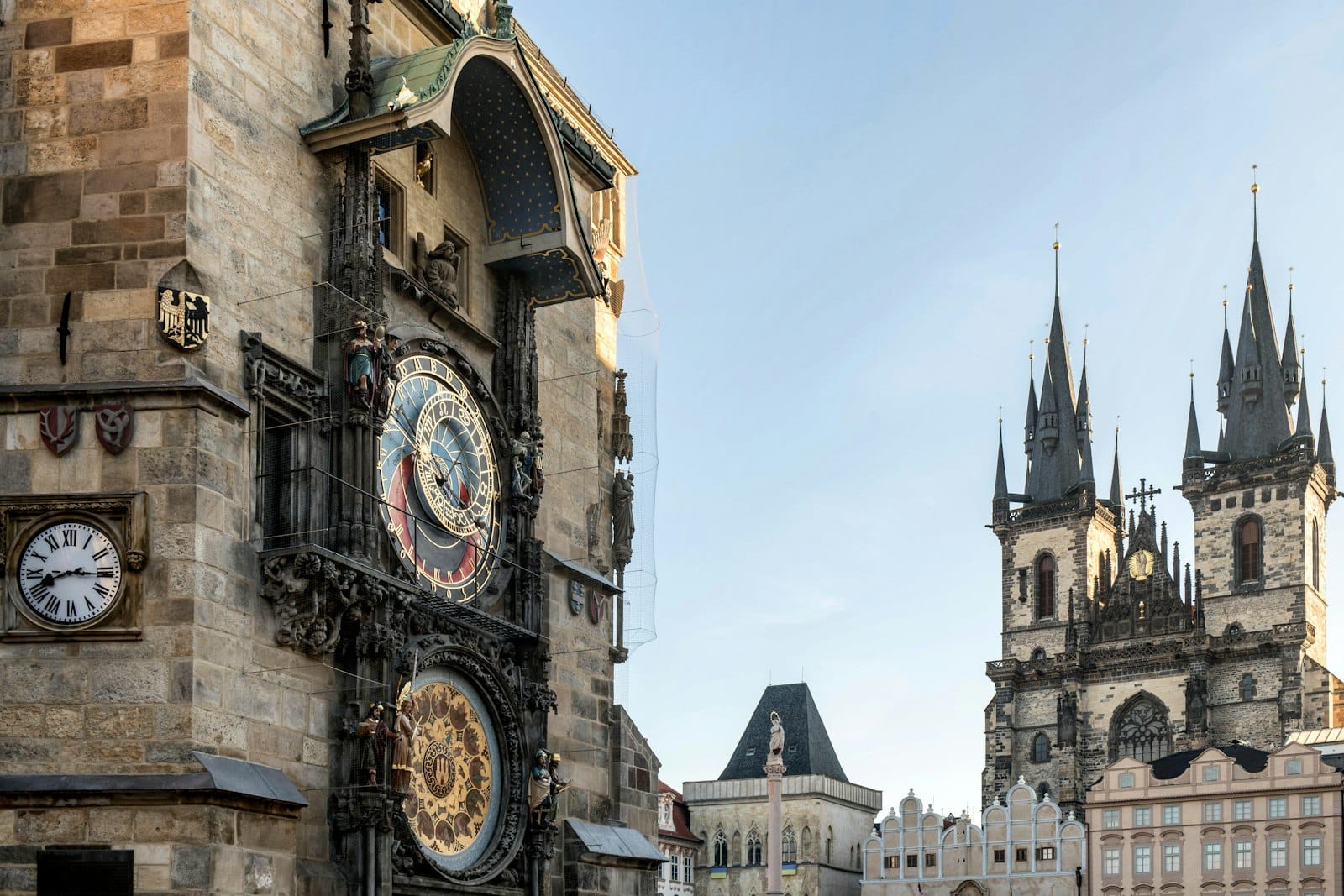
The Old Town Square area sees extreme tourist density from roughly 10am to 6pm year-round. If you are there specifically to study architecture — to actually look at facades, details, and proportions — go before 9am or after 7pm. The Astronomical Clock and Church of Our Lady Before Týn both read very differently without hundreds of people blocking sight lines.
Planning Your Architecture Visit: Practical Details
Most of Prague's exterior architecture is free to observe at any time. The major cost considerations are for interior access. The Prague Castle complex — which includes St Vitus Cathedral, the Old Royal Palace, and St George's Basilica — uses a tiered ticket system. Courtyards and gardens are free; interior circuit tickets are sold at the castle's official ticket offices and online at hrad.cz. Prices and circuit options are updated seasonally, so verify before you go.
- Prague Castle complex Free courtyards; paid interior circuits. Book online via hrad.cz to avoid queuing, especially in summer. Allow at least half a day for a thorough visit.
- Municipal House (Obecní dům) Lobby and ground-floor cafe are free. Guided interior tours (the only way to see the main halls) require a paid ticket, bookable online at obecnidum.cz.
- House of the Black Madonna / Museum of Czech Cubism National Gallery ticket. Check ngprague.cz for current hours and admission. Closed Mondays.
- Clementinum Guided tours only for the Baroque Library and Mirror Chapel. Book in advance; tours fill up quickly, particularly in peak season.
- Church interiors generally Many Prague churches charge a small entry fee (typically around 100-200 CZK). Check posted hours and be aware that access may be restricted during Mass.
If you want a structured route that connects the key architectural periods efficiently, the Prague history guide provides useful chronological context that pairs well with an architectural walk. For the best elevated perspectives that reveal Prague's roofscape and skyline, the best views in Prague guide covers the key vantage points, from the castle terrace to Petřín Hill.
FAQ
What architectural style is Prague most famous for?
Prague is most associated with Baroque architecture, which dominates entire neighborhoods like Malá Strana and accounts for over 230 churches and palaces. However, the city is equally notable for its Gothic heritage (St Vitus Cathedral, Charles Bridge) and for being the only city in the world with a coherent collection of Cubist buildings — a distinction that often surprises visitors who expect only medieval and Baroque styles.
Was Prague damaged in World War II?
Prague was largely spared from the large-scale bombing and ground-fighting that destroyed much of Warsaw, Dresden, and other Central European cities. This is a primary reason why so much medieval, Renaissance, and Baroque architecture survives intact. Some damage occurred during the Prague Uprising in May 1945, but it was limited compared to most major European capitals.
What is Czech Cubist architecture and where can I see it?
Czech Cubist architecture applied the fragmented, crystalline forms of Cubist painting to full building facades and spatial design. It flourished briefly between 1911 and 1914, making Prague unique. The best starting point is the House of the Black Madonna (Dům U Černé Matky Boží) at the corner of Celetná and Ovocný trh in Old Town, which now houses the Museum of Czech Cubism. The Chochol houses near Vyšehrad on Rašínovo nábřeží are also essential, and they are free to view from the street.
Do I need tickets to see Prague's major architectural landmarks?
Most exterior architecture is free to observe at any time. For interiors, the main costs are: Prague Castle interior circuits (ticketed, purchase at hrad.cz), Municipal House guided tours (ticketed, purchase at obecnidum.cz), the Museum of Czech Cubism in the House of the Black Madonna (National Gallery ticket), and the Clementinum (guided tours that require advance booking). Many Baroque churches charge small entry fees of around 100-200 CZK. Always verify current prices and hours on official websites before visiting, as these change seasonally.
How long do I need to see Prague's architecture properly?
A focused two-day itinerary can cover the main periods: one day for the Castle District, Malá Strana Baroque, and Gothic highlights; a second day for Old Town's Art Nouveau and Cubist buildings, Josefov, and the New Town. However, three or four days allows you to move at a pace where you can actually look at buildings rather than race between them. Adding Vyšehrad and Holešovice for 20th-century architecture requires at least a third day.