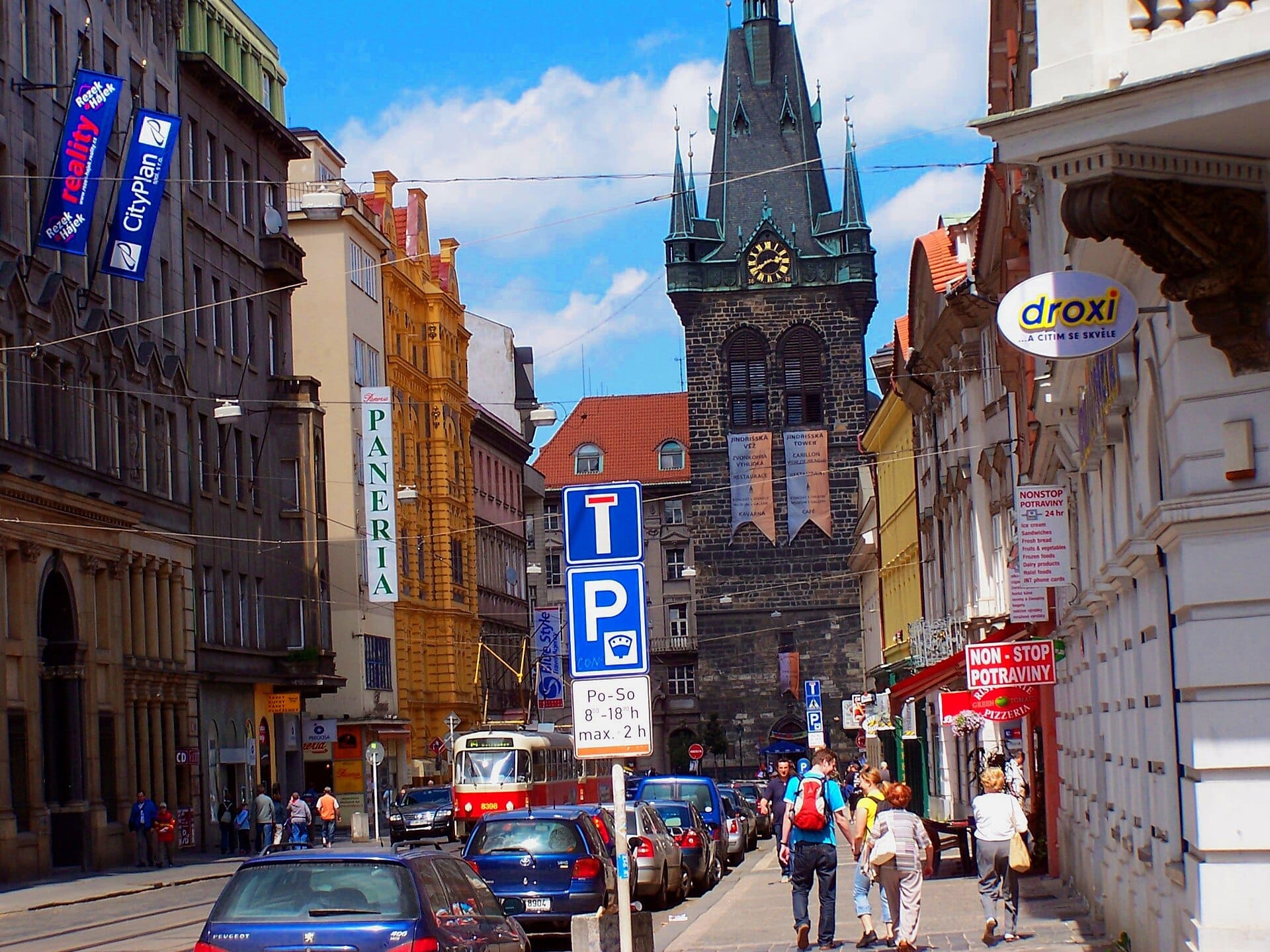
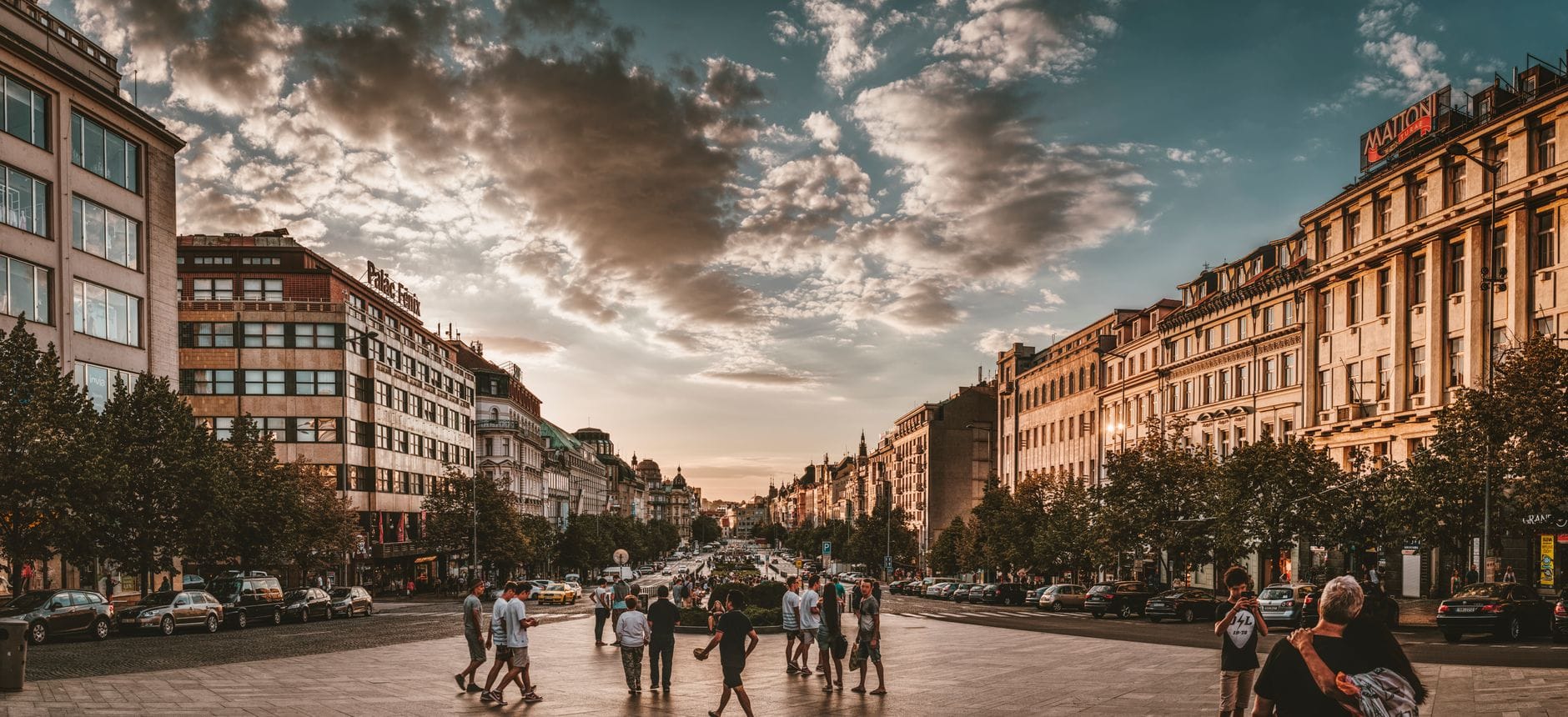
New Town (Nové Město) is Prague's largest and most commercially active historic quarter, founded in 1348 and anchored by Wenceslas Square, the National Museum, and the National Theatre. It sits between the Old Town and the city's inner residential districts, making it a practical base and a destination in its own right. The area rewards those willing to look past its main boulevard and explore the quieter streets, grand squares, and riverfront architecture that define its full character.
New Town (Nové Město) is where Prague's medieval ambitions met 19th-century commercial energy, producing a district that is simultaneously historic and workday. Larger and less polished than the Old Town directly to its north, it's the part of the city where Praguers actually shop, commute, and go out on a Tuesday night. Wenceslas Square is its spine, but the neighborhood extends far beyond that single boulevard, taking in the riverfront Dancing House, the vast Charles Square, and some of the city's most significant cultural institutions.
Orientation
New Town occupies the right bank of the Vltava south and east of the Old Town, forming a wide arc that stretches from the riverfront embankment inland toward the railway stations and beyond. It was founded in 1348 by Charles IV as a deliberate expansion of Prague's urban footprint, planned around three large market squares including the horse market that became Wenceslas Square and the cattle market that is now Charles Square (Karlovo náměstí).
The boundary with Old Town runs roughly along Na Příkopě and Revoluční, with Náměstí Republiky (Republic Square) marking the northern edge. To the south and east, New Town transitions into Vinohrady, Žižkov, and Karlín. The Vltava riverfront forms the western edge, where the embankment roads and the view across to Malá Strana give the district its most scenic face.
Praha hlavní nádraží (Prague's main railway station) sits near the northeastern edge of New Town, close to the Muzeum metro stop. This gives the district excellent connections to both the wider city and intercity rail. In practical terms, New Town is the transit spine of central Prague: three metro lines cross it, and tram routes thread through its streets in every direction.
ℹ️ Good to know
New Town is part of Prague 1 and Prague 2 administratively, with a small portion extending into Prague 8. When looking at maps, the district label 'Nové Město' covers a large area — the streets closest to the riverfront and Wenceslas Square feel very different from the quieter residential blocks near Karlovo náměstí.
Character & Atmosphere
New Town does not have the concentrated fairy-tale density of the Old Town, and that is largely its appeal if you look past the surface. Wenceslas Square itself is a long, wide boulevard rather than a traditional square, lined with department stores, hotels, fast food chains, currency exchange booths, and the occasional Art Nouveau facade that reminds you of what this street looked like when it mattered more architecturally. It can feel simultaneously grand and tired, particularly around its lower end near Můstek, where the foot traffic is relentless and the commercial offerings are largely interchangeable.
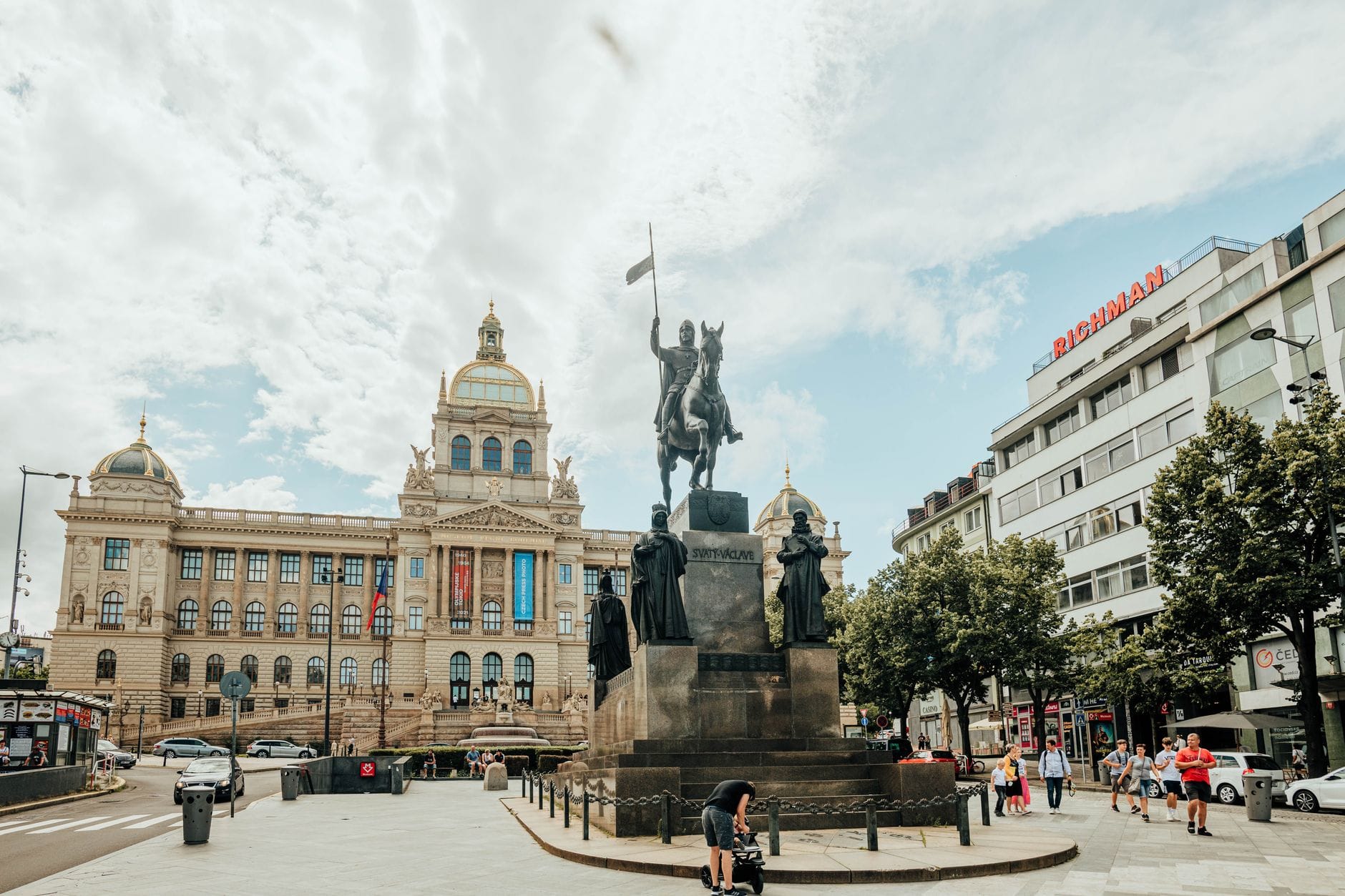
Early mornings on Wenceslas Square have a different quality entirely. Before 9am, when the tourist groups and shoppers have not yet arrived, you can walk the full length of the boulevard and get a clear sense of its scale. The equestrian statue of Saint Wenceslas at the upper end, with the National Museum behind it, reads as genuinely imposing at this hour. By midday the square is crowded with foot traffic flowing between the metro entrances. By evening the lower section near Vodičkova transforms again, with cinemas, bars, and restaurants drawing a local crowd alongside tourists.
Move off the main boulevard and the character changes quickly. The streets running west toward the riverfront, particularly around Národní třída and the embankment, feel more residential and purposeful. Karlovo náměstí, about ten minutes' walk south of Můstek, is one of the largest historic squares in Central Europe and surprisingly undervisited. Its park is used by locals for lunchtime breaks and evening walks, and the atmosphere is entirely different from the commercial intensity of Wenceslas Square.
The nightlife around the lower part of Wenceslas Square and the side streets branching off it can be loud and rowdy after dark, particularly on weekends when stag parties concentrate here. This is not a neighborhood that goes quiet at midnight. Travelers who want an early night should look for accommodation on the side streets away from the main boulevard, or consider whether a different neighborhood might suit them better.
⚠️ What to skip
The area around the lower end of Wenceslas Square, particularly after dark, attracts pickpockets working crowded pavement and nightclub strips. Keep valuables secure and be cautious of unsolicited offers from people outside clubs or exchange booths with no posted rates. Standard urban caution applies throughout.
What to See & Do
Wenceslas Square is the starting point for most visitors, less as a destination in itself and more as an orientation anchor. The Saint Wenceslas statue at the upper end marks the spot where Czechs have gathered at moments of historical significance, from the declaration of Czechoslovakia in 1918 through the Velvet Revolution demonstrations of 1989. The National Museum at the top of the square anchors this end of the boulevard with its neo-Renaissance bulk and panoramic position above the city.
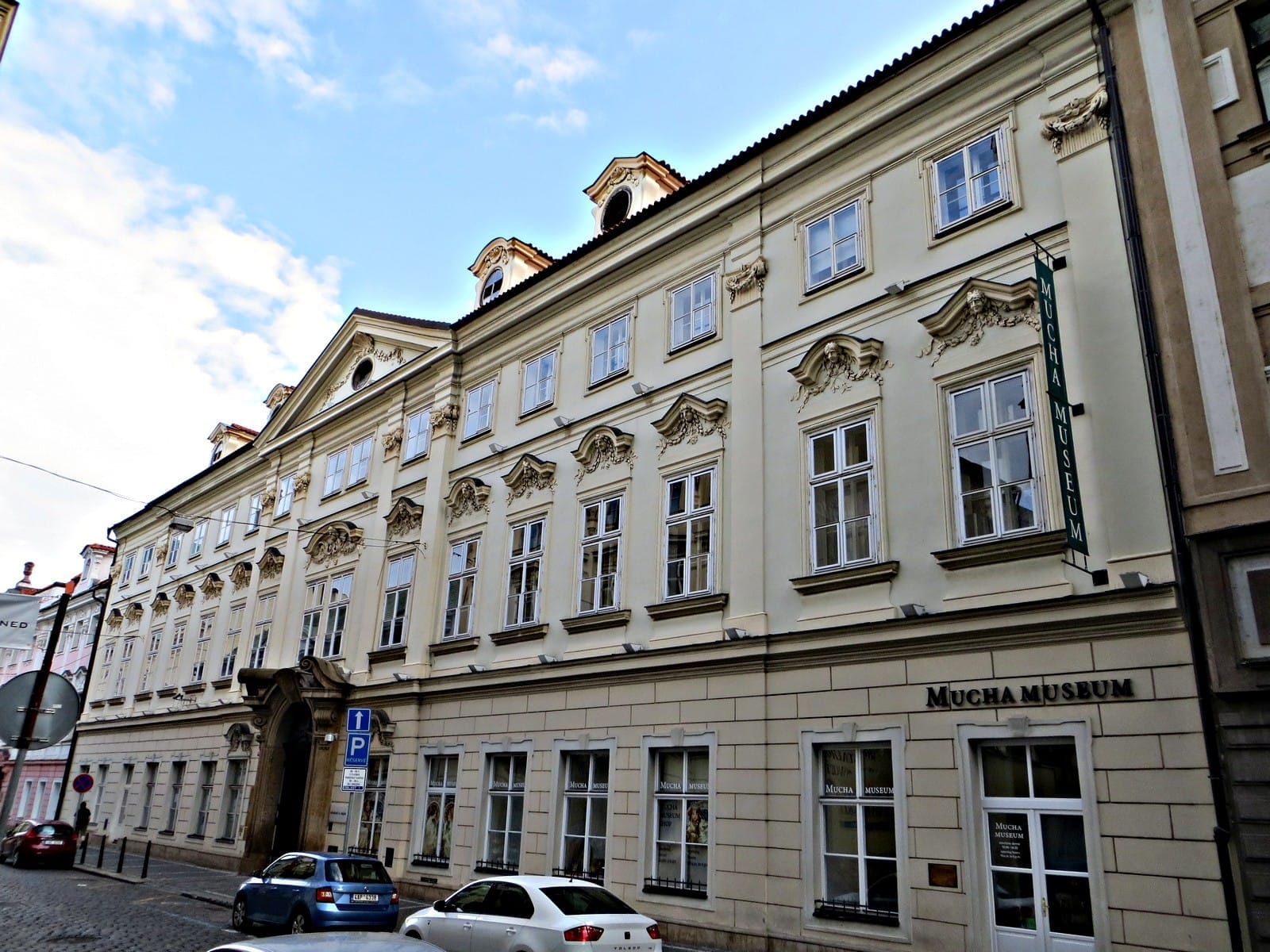
The National Museum is worth visiting for its natural history and history collections, and for the building itself, which was under extensive restoration for years and has re-emerged as one of the most impressive interiors in the city. Nearby, the Mucha Museum on Panská Street offers a compact but well-curated look at Alphonse Mucha's Art Nouveau work, manageable in an hour and genuinely impressive up close.
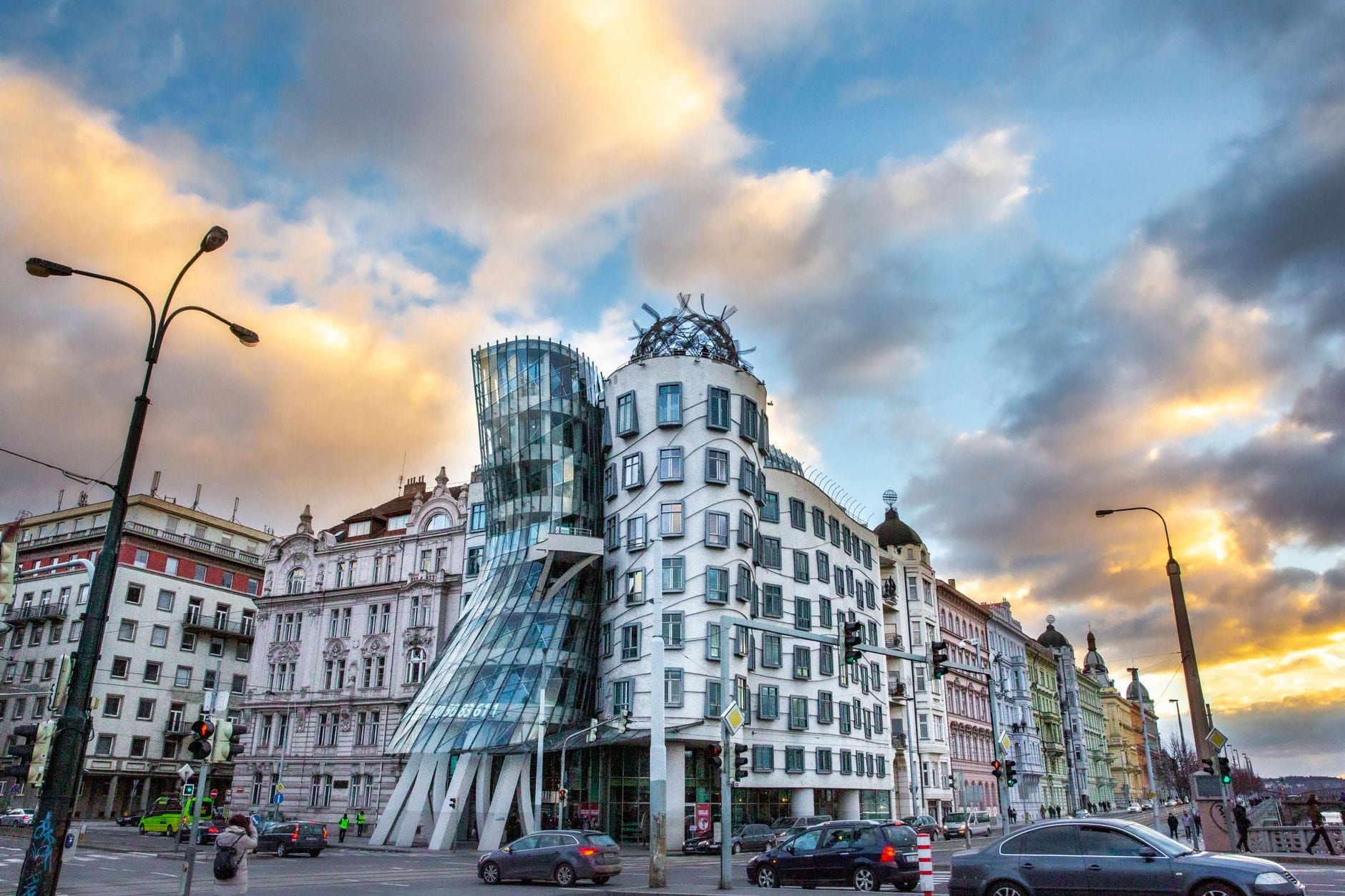
Walking southwest along Národní třída and then down to the riverfront brings you to the Dancing House (Tančící dům), the Fred and Ginger building designed by Frank Gehry and Vlado Milunič and completed in 1996. It sits at Rašínovo nábřeží on the embankment and is best appreciated from across the street or from the river. There is a rooftop bar on the upper floor that provides views across the Vltava toward Malá Strana and Prague Castle.
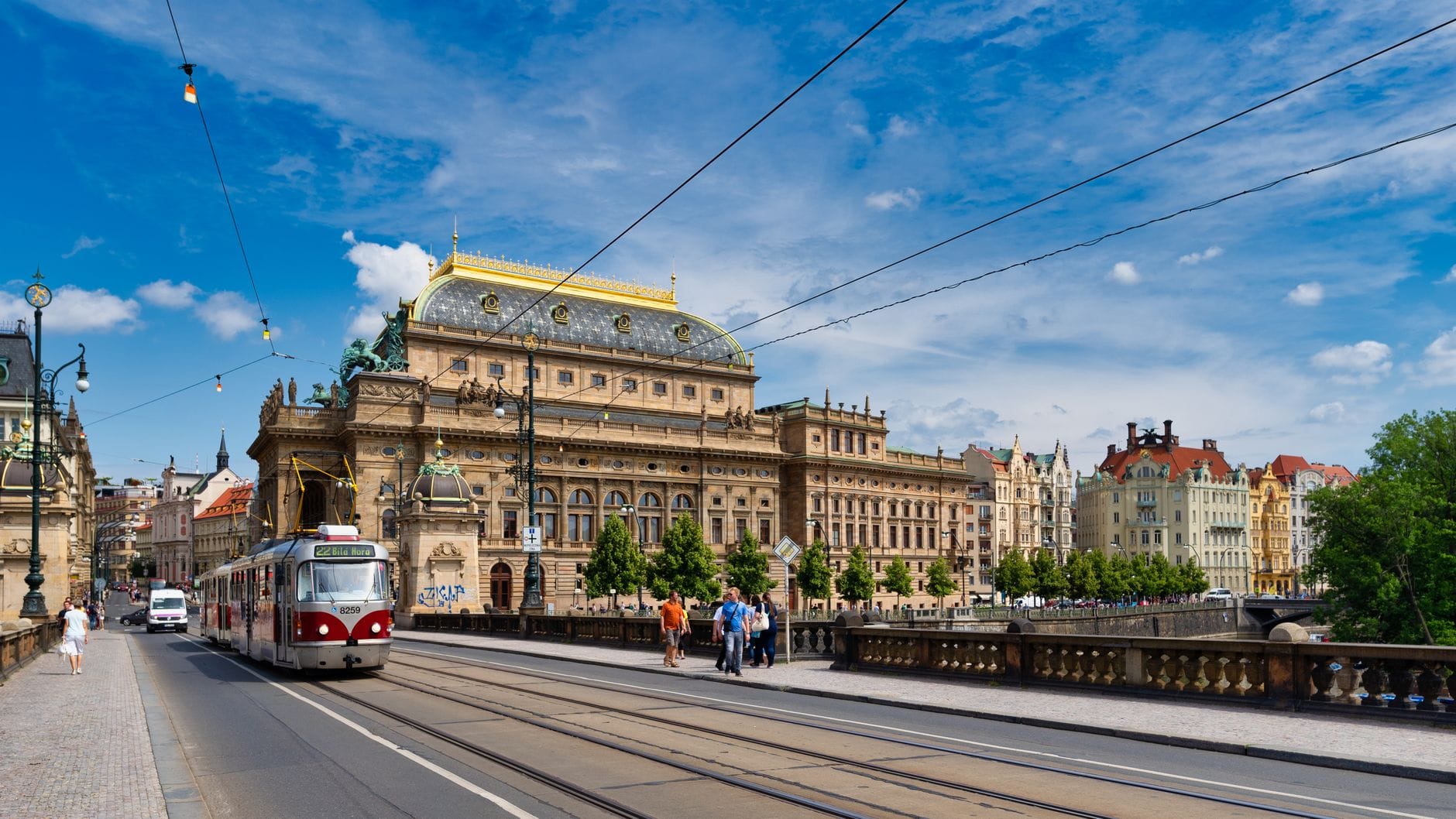
Further south along the riverfront, the National Theatre (Národní divadlo) is one of Prague's most significant cultural institutions and one of its most beautiful neo-Renaissance buildings. Performances include opera, ballet, and drama. The theatre faces the river and the adjacent Nová scéna building creates an interesting contrast between 19th-century grandeur and 1980s glass architecture.
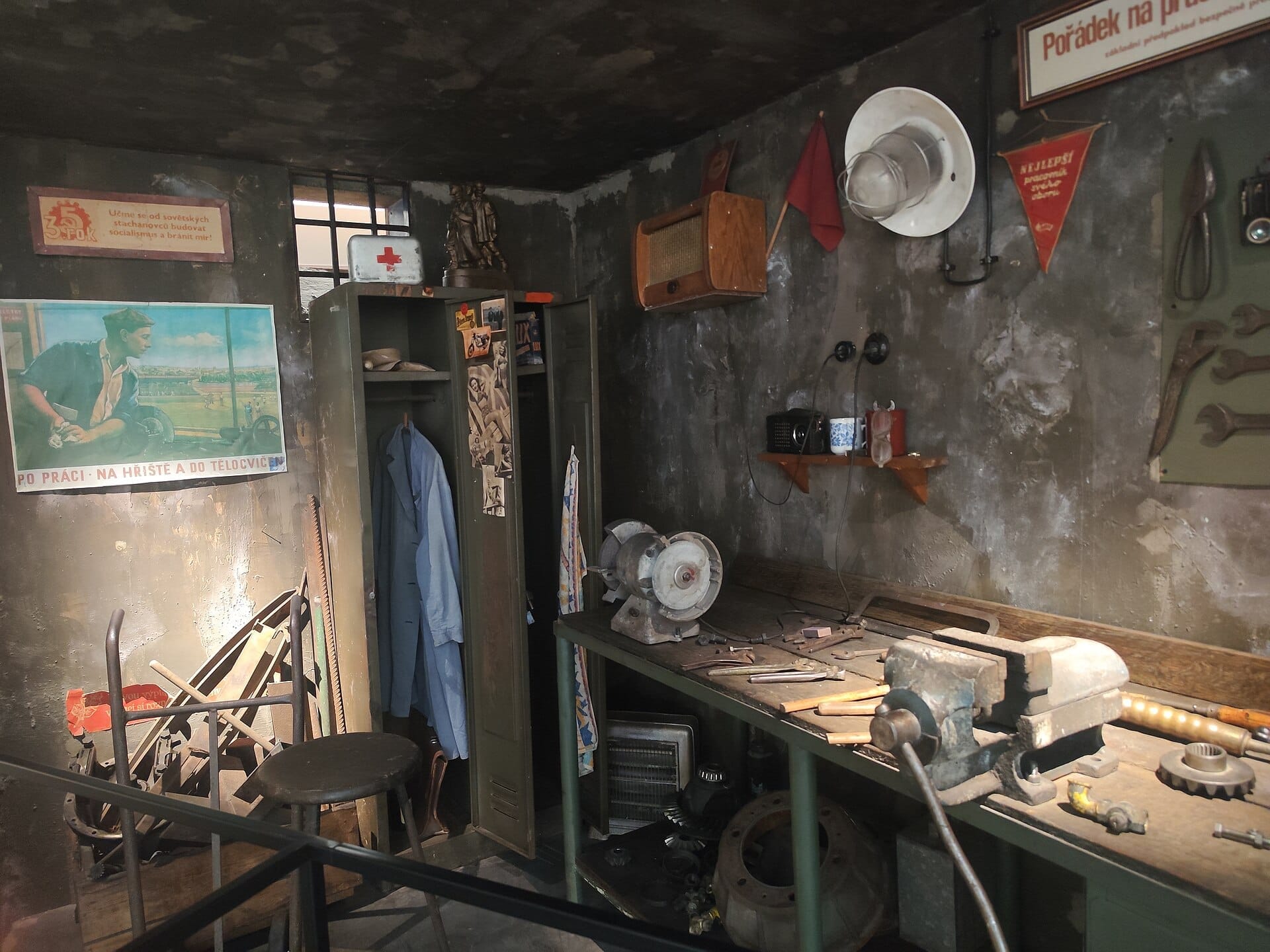
The Museum of Communism near Náměstí Republiky documents the communist era in Czechoslovakia with photographs, artifacts, and first-hand accounts. It is a serious and well-assembled exhibition rather than a novelty attraction, and it provides important context for understanding much of what you see elsewhere in the city. Plan for at least 90 minutes.
National Museum: natural history, history collections, and a restored neo-Renaissance interior
Wenceslas Square: the full length walk from Můstek to the Saint Wenceslas statue
Dancing House: Frank Gehry architecture on the Vltava embankment, rooftop views
National Theatre: opera, ballet, and drama in one of Prague's finest 19th-century buildings
Museum of Communism: essential context for Czech 20th-century history
Mucha Museum: Alphonse Mucha's Art Nouveau work on Panská Street
Karlovo náměstí: one of Central Europe's largest historic squares, with a shaded park
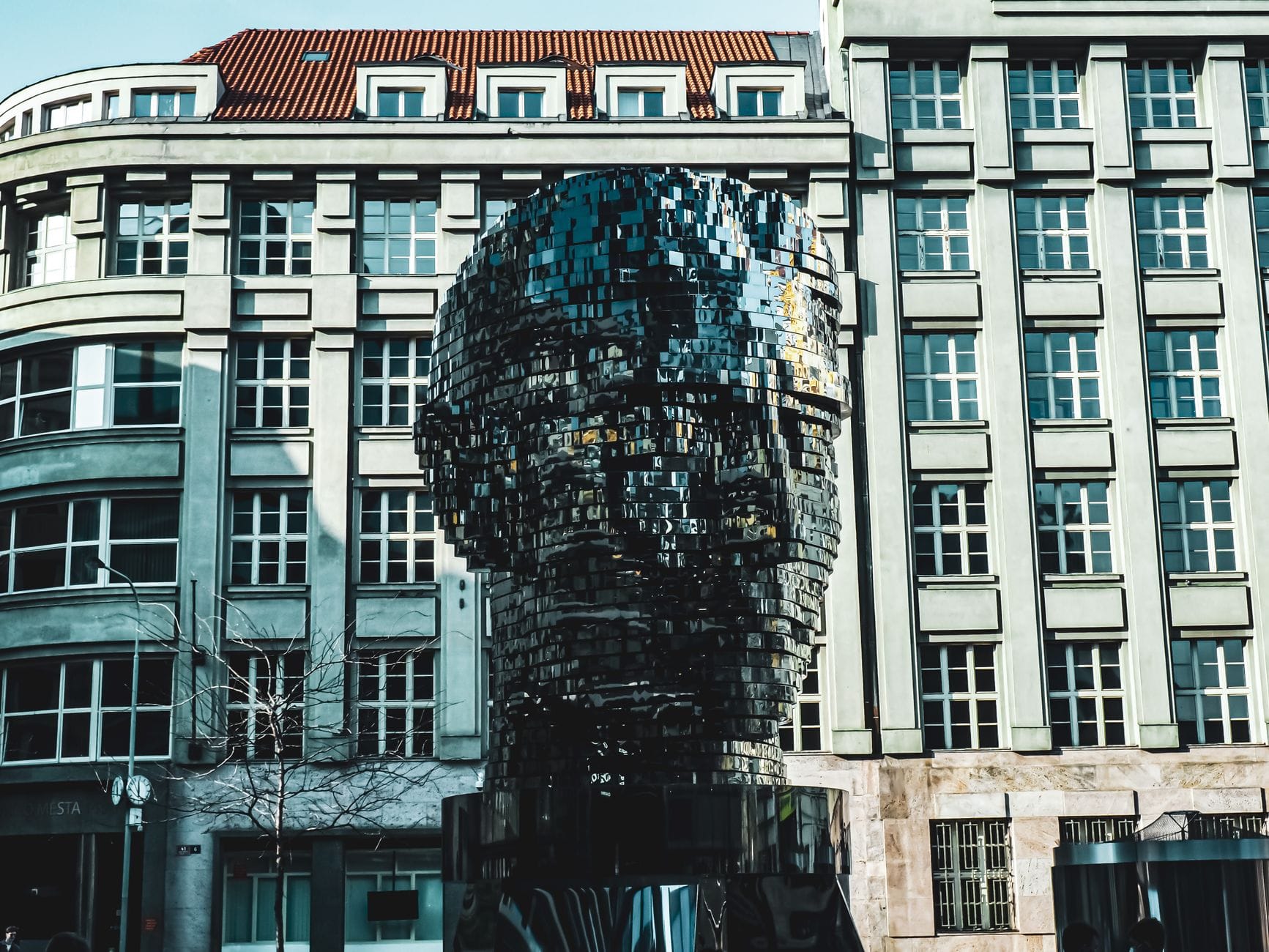
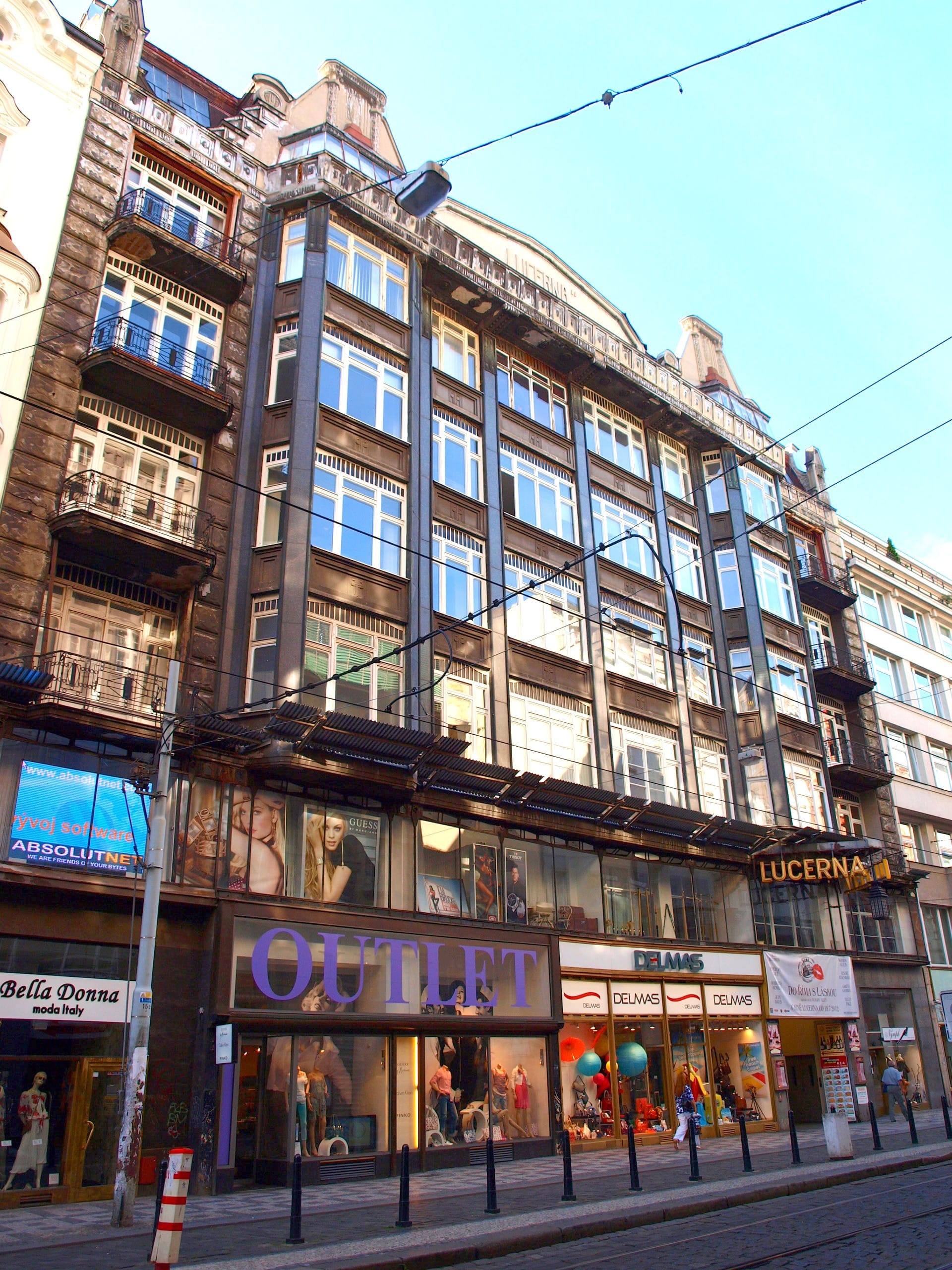
Lucerna Palace: Art Nouveau arcade on Štěpánská with a cinema, cafés, and an inverted Wenceslas horse sculpture
The Lucerna Palace deserves special mention: built in the early 20th century and designed in part by Václav Havel's grandfather, this multilevel arcade on Štěpánská and Vodičkova contains a cinema, a music club, a grand hall, and several cafés under a glass-roofed atrium. David Černý's inverted equestrian statue hanging from the ceiling is one of the more wry pieces of public art in a city that has plenty of it.
💡 Local tip
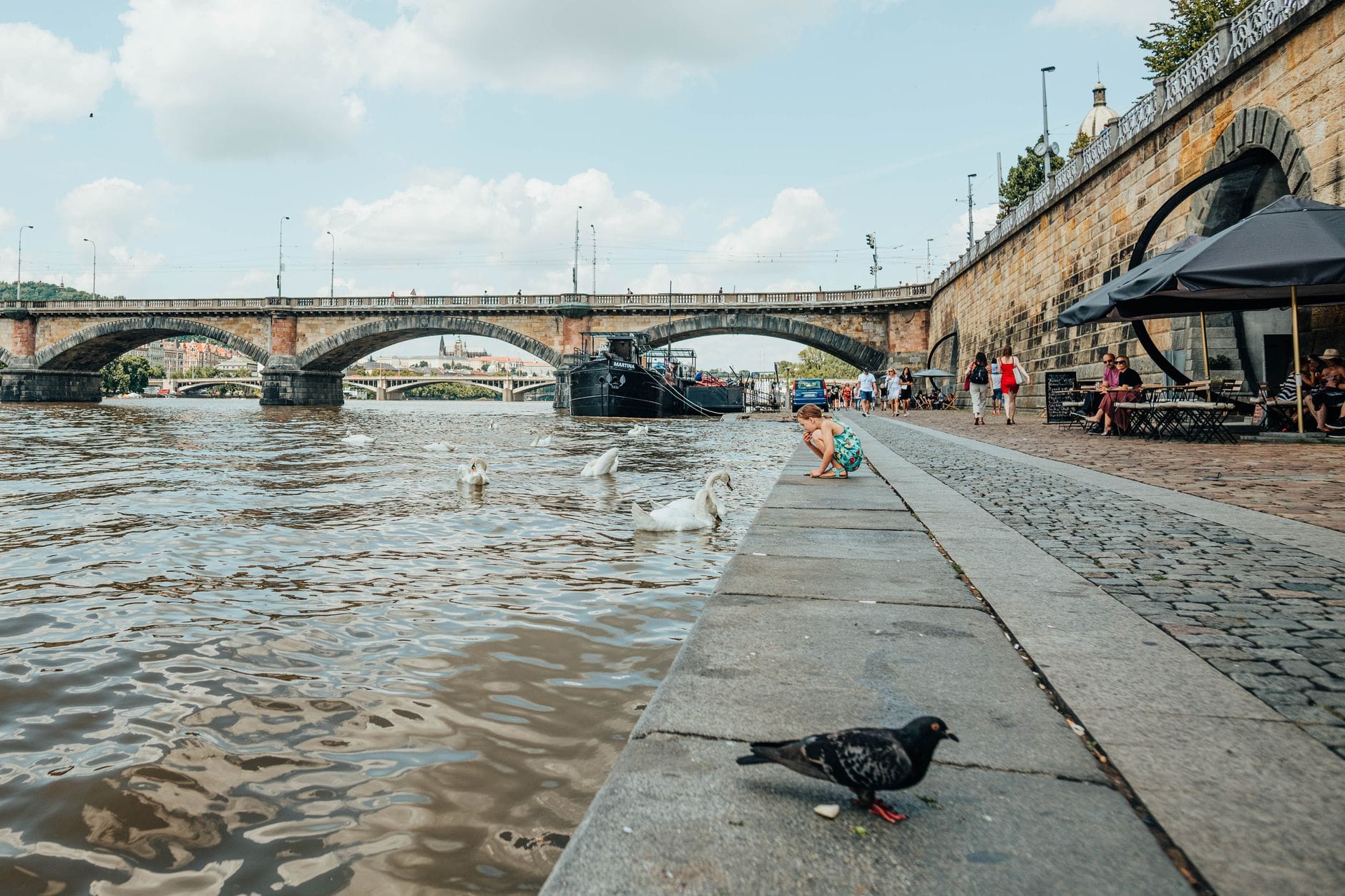
The Náplavka riverfront, running south from the Dancing House along the embankment, hosts a popular farmers' market on Friday and Saturday mornings and weekend evenings in warmer months. It's one of the more genuinely local outdoor spots in central Prague, with food stalls, moored boats used as bars, and views across the river.
Eating & Drinking
The food scene in New Town is broad but uneven. Wenceslas Square and its immediate side streets are thick with tourist-trap restaurants offering laminated menus and overpriced Czech classics. These places are not the worst food in Prague but they represent poor value, and with a five-minute walk in almost any direction you can do considerably better.
The streets running off Wenceslas Square toward the east and south, particularly around Jindřišská, Štěpánská, and the blocks near Karlovo náměstí, have a higher concentration of places serving locals alongside visitors. You'll find Czech pub food in traditional hospody (pubs), Vietnamese lunch restaurants that are common throughout Prague's inner districts, and a growing number of modern Czech and international restaurants that take their sourcing seriously.
The Náplavka riverfront area around the Náplavka riverfront has become one of the better concentrations of casual eating and drinking in central Prague, particularly from spring through autumn. The moored boats along the embankment operate as bars, and the weekend market brings food vendors with everything from grilled meats to international street food. This is where you should head if you want a beer with a river view without paying the premium that applies to most riverside terraces closer to Charles Bridge.
For traditional Czech beer, the district is a short walk from some of the city's more historic pub institutions. Prices across New Town range from around 50-80 CZK for a half-litre of beer in a local pub to considerably more in hotel bars and restaurants on the main square. Coffee culture is well established in the side streets, with specialty cafés operating in the blocks between Wenceslas Square and the riverfront.
Avoid: tourist-facing restaurants directly on Wenceslas Square with photo menus displayed outside
Try: Vietnamese lunch spots and Czech hospody on the streets east of the square toward Vinohrady
Náplavka embankment: casual bars and weekend food market, best late afternoon through evening
Lucerna Palace: cafés inside the Art Nouveau arcade, useful for a mid-morning or afternoon break
Karlovo náměstí area: quieter restaurant and café options with more local clientele
Getting There & Around
New Town is the best-connected neighborhood in Prague for public transport, with all three metro lines serving it. Line A (green) and Line B (yellow) intersect at Můstek, right at the midpoint of Wenceslas Square. Line A and Line C (red) share the Muzeum station at the upper end of the square near the National Museum. Line C continues south to IP Pavlova and Vyšehrad. Line B continues southwest through Karlovo náměstí and runs northeast to Náměstí Republiky at the Old Town boundary.
Praha hlavní nádraží (the main railway station) is a ten-minute walk northeast of the National Museum, or one stop on Line C from Muzeum to Hlavní nádraží. This makes New Town the natural arrival point for train travelers from across the Czech Republic and from international routes including Vienna, Munich, and Berlin. Masaryk station, closer to Náměstí Republiky, handles some regional and suburban services.
Trams run along Spálená, Vodičkova, Národní třída, and the riverfront embankment, providing surface connections that can be faster than the metro for shorter crosstown trips. For getting to and from Václav Havel Airport, the Airport Express bus connects directly to Praha hlavní nádraží, making New Town one of the most convenient points in the city for airport transfers. Full details on fares and routes are covered in the complete guide to getting around Prague.
On foot, New Town is very walkable and compact enough that most of its main sights are within fifteen to twenty minutes of each other. Walking south from Náměstí Republiky to the Dancing House takes around twenty-five minutes at a steady pace. From Wenceslas Square to Charles Bridge via Národní třída is a fifteen-minute walk through some of the city's most architecturally interesting streets.
💡 Local tip
If you are traveling between New Town and the castle area, tram line 22 from near the National Theatre (Národní divadlo stop) runs through Malá Strana and up to the castle district. It is one of the most scenic tram routes in the city and avoids a long uphill walk.
Where to Stay
New Town has one of the highest concentrations of hotel accommodation in Prague, ranging from international chains on and near Wenceslas Square to smaller boutique properties on the side streets. For most travelers it is a practical and central choice, with the full guide to where to stay in Prague covering the trade-offs between different neighborhoods. New Town sits between the tourist intensity of Old Town and the more residential feel of Vinohrady, which means it suits travelers who want good transit access without paying Old Town premium prices.
The best accommodation options within New Town are generally found on the quieter streets running east and west off Wenceslas Square rather than directly on the boulevard itself. Properties on or immediately beside Wenceslas Square face street noise until late at night, particularly on weekends. Streets like Ječná near Karlovo náměstí and the blocks between Národní třída and the riverfront offer better quiet without sacrificing central access.
New Town suits solo travelers, couples, and those visiting primarily for culture and city sightseeing. Families will find it manageable but should be aware that the nightlife strips around the lower part of Wenceslas Square are not the most pleasant environment late in the evening. Business travelers benefit from the strong transit connections and the proximity to Praha hlavní nádraží.
New Town and the Wider City
New Town is bordered by neighborhoods that each offer a different version of Prague. To the north, across the Na Příkopě line, is Old Town with its medieval street plan, Baroque churches, and the concentrated historic sights. To the east, across the Vinohrady boundary, the city shifts into a 19th-century residential grid of apartment buildings and local squares that feels distinctly less touristy. To the south, Vyšehrad sits on its cliff above the river, accessible in about twenty minutes on foot along the embankment or directly by metro on Line C.
Understanding New Town's position helps you navigate the wider city more efficiently. It is the transit hub from which most day trips and cross-city journeys begin. Whether you are heading to Malá Strana and the castle, out to Holešovice for contemporary art, or planning a day trip to Kutná Hora or Karlštejn, you will likely pass through New Town's metro and rail connections to get there. This centrality is its primary practical advantage over other neighborhoods.
For those interested in understanding Prague more deeply, the Prague history guide provides context for how New Town's founding fits into the city's medieval expansion, and why Charles IV's urban planning ambitions are still visible in the scale of Karlovo náměstí and the width of the main streets.
TL;DR
New Town (Nové Město) is Prague's largest historic quarter, founded in 1348 and today functioning as the city's commercial and transit core.
Wenceslas Square is the main axis, but the character improves significantly on the side streets, near Karlovo náměstí, and along the Náplavka riverfront.
All three metro lines serve the district, and Praha hlavní nádraží makes it the best-connected neighborhood for arrivals and day trips.
Nightlife around the lower end of Wenceslas Square is active and can be rowdy; accommodation on side streets away from the boulevard will be considerably quieter.
Best suited to travelers who want central access, strong transit connections, and proximity to major cultural institutions including the National Museum, National Theatre, Dancing House, and Museum of Communism.
Three days is the ideal amount of time to experience Prague's historic core without rushing. This itinerary takes you from the medieval lanes of Old Town to the hilltop grandeur of Prague Castle, the haunting beauty of Josefov, and the quieter pleasures of Malá Strana and Vyšehrad.
Prague's museum scene stretches far beyond the obvious. This guide covers the city's finest art, history, and specialist museums, from the National Gallery's scattered palaces to underground alchemical laboratories and intimate synagogues that carry centuries of history.
Prague rewards visitors differently depending on when you arrive. This guide breaks down every season with clear seasonal notes of weather, crowd levels, hotel prices, and key events, so you can choose the right time for your trip rather than the most popular one.
Prague rewards those who climb. From medieval towers rising above Old Town to forested hills and riverside terraces, the city's skyline is best understood from above. This guide covers every worthwhile viewpoint, whether you're after a paid 360-degree panorama or a free hilltop perch with a cold beer.
Prague sits at the center of Bohemia, making it one of the best-positioned cities in Europe for day trips. Within two hours by train or bus, you can reach a Gothic castle above a forested valley, a UNESCO town wrapped in a river bend, a Nazi memorial site, and one of Europe's notable spa resorts.
Prague has one of Central Europe's most efficient public transport networks, covering the city by metro, tram, and bus under a single integrated ticket system. This guide covers fares updated for 2026, airport transfer options, ride-hailing realities, and the mistakes most visitors make on their first day.
Seven days is the right amount of time to see Prague properly. This guide breaks down exactly how to spend each day, which neighborhoods to prioritize, what the castle complex actually demands in terms of time, and how to fit in a day trip without losing a full day to logistics.
Prague's historic center packs over 1,100 years of architectural history into roughly 870–900 hectares, from Romanesque crypts and Gothic cathedrals to one of the world's most substantial collections of Cubist buildings. This guide breaks down every major style, tells you exactly what to see, and gives you the practical details to plan your visit.
Prague's Christmas markets run from late November through early January, turning Old Town Square and Wenceslas Square into some of Europe's most atmospheric winter destinations. This guide covers every major market, what to eat and drink, how to avoid the worst crowds, and exactly what to budget.
David Černý is the Czech Republic's most provocative public artist, and Prague is his gallery. This guide covers his major installations across the city, how to build a self-guided walking route, and what you need to know before you go.
Prague sets a high bar for romance: Gothic spires, cobblestone lanes, river views, and a classical music scene that rivals much larger capitals. This guide covers the best things to do in Prague for couples across every season, from iconic spots timed to avoid the crowds to quieter corners most visitors miss entirely.
Prague rewards those who look beyond Charles Bridge and Old Town Square. This guide reveals the city's quieter side: Baroque gardens tucked behind unmarked doors, medieval cellars beneath busy streets, panoramic hilltops where locals outnumber tourists, and neighborhoods reshaping Prague's creative identity.
Prague's history spans more than a thousand years of empire, revolution, occupation, and reinvention. This guide breaks down the key eras, explains what shaped the city's architecture and culture, and tells you exactly where to see that history in person.
Summer is Prague's most popular season, but it comes with trade-offs: intense heat, peak-season crowds, and higher prices. This guide covers everything you need to plan a smart trip to Prague in June, July, or August, from booking timelines to beat-the-crowd strategies.
Winter strips Prague back to its essentials: gothic spires against grey skies, Christmas markets on cobblestone squares, and a fraction of the summer crowds. This guide covers the real conditions — temperatures, daylight, costs, and which attractions stay open — so you can plan with confidence.
Josefov is one of Europe's most significant Jewish heritage sites, packed into just a few city blocks between Old Town Square and the Vltava River. This guide covers every major site, how ticketing works, the best time to visit, and what most visitors get wrong before they arrive.
Prague delivers five-star experiences at prices that would seem impossible in Paris or London. This guide covers the best luxury hotels with practical pricing data, the fine-dining restaurants worth booking weeks ahead, and the high-end experiences that go well beyond the standard tourist circuit.
Prague nightlife runs deeper than the tourist bars around Old Town Square. This guide breaks down the city's after-dark scene by district, covering the best clubs, bars, jazz venues, and rooftop spots, with practical advice on prices, timing, and where locals actually go.
Prague is one of Europe's better-value capitals, but it is not the ultra-cheap destination the myth suggests. This guide breaks down exactly what things cost in 2026, where to save money without sacrificing the experience, and which tourist traps quietly drain your wallet.
Prague rewards shoppers across every budget, from Bohemian crystal and hand-carved puppets to international luxury labels on Pařížská Street. This guide breaks down the best shopping districts, markets, malls, and genuinely worthwhile souvenirs, with practical details on hours, transport, and what to skip.
The journey from Prague to Munich covers just under 400 km and can be done by direct train, bus, or flight. This guide breaks down every realistic option with prices, journey times, and practical booking advice so you can choose the right one for your trip.
The Prague to Vienna corridor is one of Central Europe's best-connected routes, with trains, buses, and flights running daily. This guide breaks down every option by cost, comfort, and real travel time so you can pick the right one for your trip.
This step-by-step guide walks you through Prague's most rewarding route, from the medieval core of Old Town across Charles Bridge and up to the castle complex on Hradčany hill. Covers distances, timing, ticket costs, seasonal advice, and the shortcuts most visitors miss.
Prague is one of Europe's most rewarding cities for families, offering everything from a world-class zoo and a funicular railway to interactive museums and vast green parks. This guide covers the best activities for children of all ages, how to get around cheaply, which neighborhoods work best for families, and what to skip.
Prague rewards visitors with one of Europe's most intact medieval city centres, a world-class Jewish quarter, and neighbourhoods far beyond the tourist trail. This guide covers the best things to do in Prague across every budget and interest, with crowd warnings, seasonal advice, and precise logistics.
Prague's dining scene is far more nuanced than the tourist-trap stereotype suggests. This guide breaks down the best neighborhoods for food, what to order, which restaurants are worth booking in advance, and how much to expect to pay — from a 90 CZK bowl of goulash to a Michelin tasting menu.
Choosing where to stay in Prague shapes your entire trip. This guide breaks down every major neighborhood by location, price, atmosphere, and drawbacks so you can book with confidence, whether you have three days or three weeks.