National Museum Prague: What to Expect Before You Go
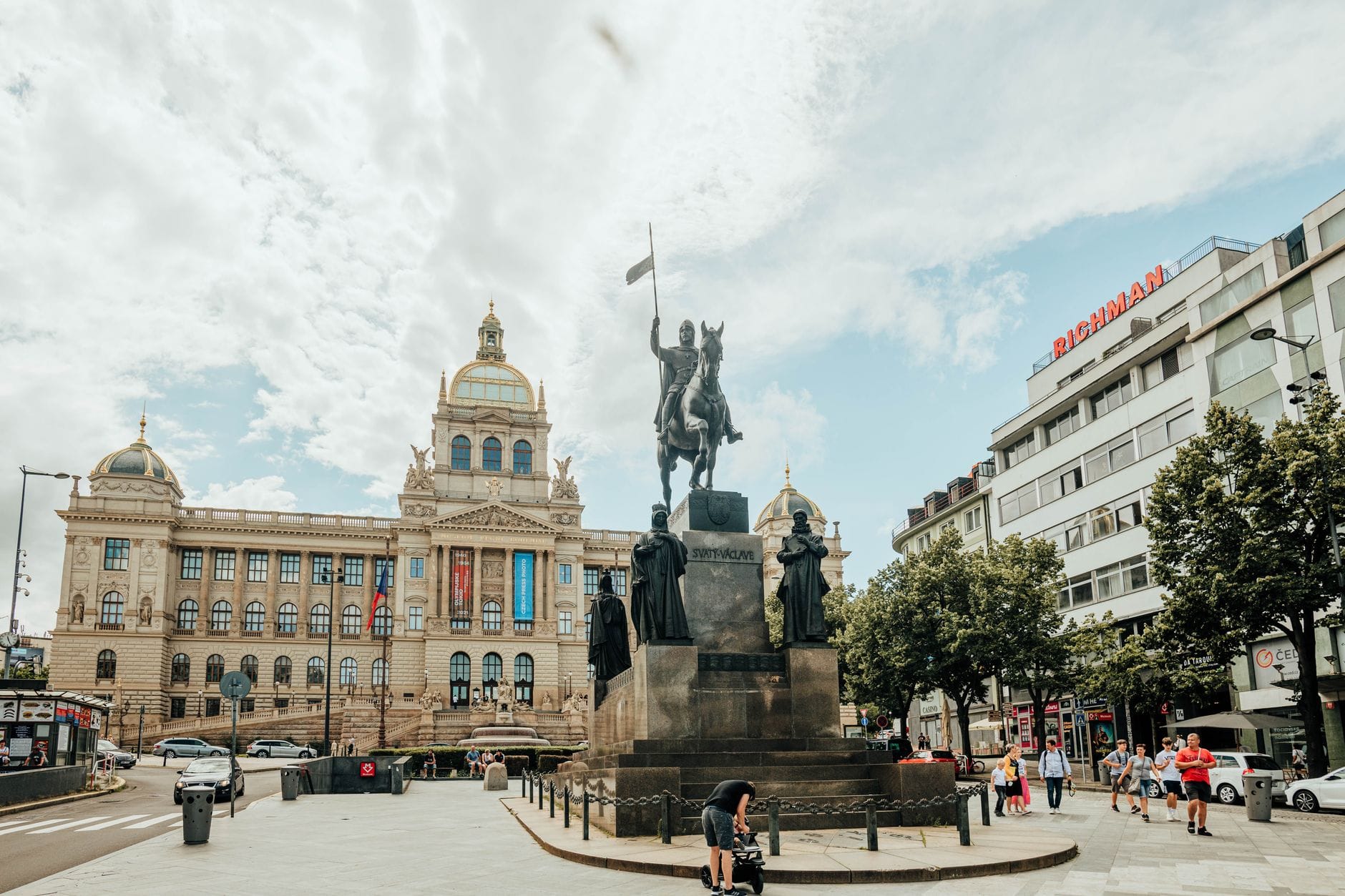
The National Museum in Prague crowns the upper end of Wenceslas Square in a neo-Renaissance building that has defined the city's skyline since 1891. Reopened after a landmark renovation in 2018, it houses natural history, Czech history, and decorative arts collections across a grand ceremonial interior. Here is everything you need to visit with confidence.
Quick Facts
- Location
- Václavské náměstí 68, Nové Město, Praha 1
- Getting There
- Metro Muzeum (Lines A & C), directly adjacent
- Time Needed
- 2–3 hours for the main building
- Cost
- Adults 300 CZK, concessions 200 CZK, under 15 free (confirm on arrival as prices may change)
- Best for
- Czech history, natural history, grand architecture, rainy-day culture
- Official website
- www.nm.cz
Why the National Museum Still Matters
The National Museum in Prague (Czech: Národní muzeum) is not simply a repository of objects. It is the physical embodiment of Czech national identity, founded in 1818 as the Patriotic Museum in Bohemia at a moment when the Czech cultural revival was just beginning to articulate what it meant to be Czech. The building most visitors see today — the imposing neo-Renaissance pile that closes off the upper end of Wenceslas Square — was constructed between 1885 and 1891 to designs by architect Josef Schulz, and it has served ever since as an architectural full stop at the end of one of Central Europe's most historically charged boulevards.
After a years-long reconstruction, the historical building reopened in October 2018, comprehensively restored and with substantially improved visitor infrastructure. The renovation was overdue: the building had accumulated damage from decades of deferred maintenance, and its interior spaces — particularly the ceremonial staircase and the Pantheon — had long been inaccessible to the public. Today, both are central to any visit.
The museum sits at the southern boundary of Nové Město (New Town), the district laid out by Charles IV in the 14th century. Understanding that geography matters: this is not a quiet side-street institution. It faces directly onto Wenceslas Square, where in 1989 enormous crowds gathered during the Velvet Revolution. The museum's steps have been witness to both celebration and tragedy in modern Czech history, which gives the building a weight that goes well beyond its display cases.
The Building: What to Notice Before You Even Enter
Approach from the middle of Wenceslas Square and the scale of the building becomes clear gradually. The facade is 100 metres wide, clad in warm sandstone that picks up the afternoon light in a way that makes it photograph best between 3pm and 5pm in summer. The central dome, flanked by corner towers, is visible from much of the surrounding area and appears on countless panoramic photographs of Prague. Up close, the decorative program is worth lingering over: allegorical figures representing Bohemia, Moravia, and Silesia flank the central entrance, and the relief panels chart the rivers and regions of historical Czech lands.
The main entrance is on the Wenceslas Square side. Accessibility is well-served by the post-renovation layout: elevators and step-free routes connect the main levels, and accessible toilets are provided. If you have mobility considerations, the modern New Building (the annex connected by an underground passage) is generally easier to navigate, though the historical building is manageable with assistance.
💡 Local tip
Come between 10am and noon on weekdays for the lightest crowds. Weekend afternoons, particularly in summer, draw school groups and tour parties that can make the ceremonial entrance hall congested. The building opens daily at 10:00 and closes at 18:00.
Tickets & tours
Hand-picked options from our booking partner. Prices are indicative; availability and final rates are confirmed when you complete your booking.
Self guided tour with interactive city game of Prague
From 5 €Instant confirmationFree cancellationPrague by night city tour
From 27 €Instant confirmationFree cancellationPrague city tour with Vltava River cruise
From 38 €Instant confirmationFree cancellationPrague Castle online audio guide
From 5 €Instant confirmationFree cancellation
Inside: The Ceremonial Spaces and the Collections
The interior of the historical building divides broadly into two experiences: the ceremonial architecture of the entrance hall, grand staircase, and Pantheon on one hand, and the permanent collections on the other. If you have limited time, do not underestimate the architecture. The entrance vestibule and the main staircase, decorated with paintings and mosaic floors, are among the finest public interiors in Prague. The Pantheon at the top of the building houses busts and sculptures of notable Czech historical and cultural figures, arranged in a circular galleried space beneath the central dome. The natural light that falls through the dome on a clear morning is genuinely striking.
The collections themselves cover natural history (mineralogy, palaeontology, zoology), Czech and world history, theatre and music history, and numismatics. The natural history galleries are particularly strong and rarely feel as crowded as the ground-floor entrance areas. The mineralogy collection, which includes specimens from Bohemian mines accumulated over two centuries, is one of the more underappreciated holdings in Central Europe. Children who have any interest in fossils or minerals tend to stay in these rooms longer than their parents expect.
The history collections require some knowledge of Czech historical context to get the most from them — the English-language labelling is adequate but not always comprehensive. If Czech history is a priority for your visit, consider pairing the National Museum with the nearby Museum of Communism, which provides a more narrative-driven account of the 20th century.
ℹ️ Good to know
The National Museum operates a complex of several buildings in Prague. The main address at Václavské náměstí 68 covers the historical building and the adjacent New Building. Other specialized branches (such as Náprstek Museum and the Czech Museum of Music) are separate sites with their own hours and tickets.
How the Experience Changes by Time of Day
Arriving at opening time (10:00) gives you the best chance of having the grand staircase and Pantheon nearly to yourself. The morning light enters from the east-facing windows of the upper floors and catches the gilded details along the stair balustrades. By 11:30, organized tour groups have typically arrived and the ground floor becomes noisier.
The lunch hour (roughly 12:30 to 14:00) sees a partial thinning of crowds as groups leave, making it a reasonable time to revisit the ceremonial spaces or work through the upper-floor collections at a slower pace. Late afternoon, particularly from 16:00 onward, is often the quietest period of all: individual visitors rather than groups, and the warm late-day light on the facade if you want an exterior photograph on the way out.
In terms of season: winter visits (November to February) mean shorter daylight and fewer tourists on Wenceslas Square, which makes the approach to the building calmer. Summer visits benefit from the longer days but peak tourist volumes. The museum is fully climate-controlled, so it works well as a refuge on an unexpectedly hot or rainy afternoon, particularly in July and August when Prague can see afternoon thunderstorms.
Getting There and Getting Around
The logistics are unusually straightforward. Metro station Muzeum (served by both Line A and Line C) is directly adjacent to the building's main entrance — the station exit deposits you within metres of the front steps. If you are coming from Old Town, take either Line A from Staroměstská or Line B to Můstek and walk up the square. The walk from Můstek to the museum entrance takes about 8 minutes and passes the full length of Wenceslas Square, which is worth doing at least once.
Tickets are available at the entrance or online via the museum's website and other official channels. Adults pay 300 CZK, concessions (seniors around 65+, students, teenagers 15–18) pay 200 CZK, and children under 15 enter free. These prices are verified against the museum's official information at time of writing but should be confirmed on arrival, as Czech museum pricing does change.
The museum has a cloakroom for larger bags and coats, which is worth using: the galleries are easier to navigate without a backpack, and the cloakroom is typically included in the admission price. A museum shop is located near the exit and stocks a reasonable selection of Czech-themed books, prints, and gifts at prices that are neither cheap nor extortionate.
Honest Assessment: Who Will Get the Most from This Visit
The National Museum rewards visitors who have some prior interest in Czech history or natural sciences, or those who respond to grand 19th-century public architecture. The building itself is the single most compelling reason to visit: few institutions in Prague have an interior of this quality that is open to the general public.
Visitors who are primarily interested in fine art will find the collections less satisfying than at other Prague institutions. For painting and decorative arts, the National Gallery's various venues serve that interest better. Similarly, travellers who prefer narrative-focused, highly curated exhibits with strong English interpretation may find parts of the National Museum's historical displays somewhat text-heavy and context-dependent.
Families with children in the 7–14 age range tend to do well here, particularly in the natural history galleries. Those travelling with very young children or toddlers may find the scale of the building and the formal atmosphere of the Pantheon less practical. For a broader picture of what Prague's museums offer across different interests, the guide to the best museums in Prague covers the full range of options worth considering.
⚠️ What to skip
The National Museum is one of the most photographed buildings in Prague, and the area immediately in front of the entrance on Wenceslas Square can become congested with tour groups, souvenir sellers, and passing pedestrians. If you are planning exterior photography, early morning (before 10:00, before the museum opens) gives you the cleanest shots with minimal foot traffic.
Insider Tips
- The Pantheon under the central dome is the architectural highlight of the whole building. Walk straight up the main staircase on arrival before any collection galleries to see it in the clearest morning light.
- The New Building (connected by an underground passage) often runs temporary exhibitions that receive far less foot traffic than the historical building and can be excellent. Check the museum website before your visit to see what is on.
- If you want an unobstructed exterior photograph of the facade, stand at the midpoint of Wenceslas Square early on a weekday morning. The square is a tram and pedestrian corridor, so there is always movement, but before 9:00 it is manageable.
- Metro station Muzeum doubles as a useful interchange between Line A and Line C. If you are planning an onward journey to Prague Castle (Line A to Malostranská) or to Holešovice (Line C northbound), the museum visit can be a natural pivot point in a longer day.
- The museum cloakroom is on the entry level and accepts larger backpacks and luggage. This is particularly useful if you are visiting on a day when you have luggage with you between accommodation check-in and check-out.
Who Is National Museum Prague For?
- Architecture enthusiasts who want access to one of Prague's finest 19th-century interiors
- Travellers with an interest in Czech national history and the context behind the Velvet Revolution
- Families with school-age children drawn to natural history, fossils, and mineralogy
- Visitors seeking a substantial indoor attraction on a rainy or very hot afternoon
- Photographers wanting to document the Wenceslas Square skyline from its southern anchor point
Nearby Attractions
Other things to see while in New Town (Nové Město):
- Dancing House (Tančící dům)
Designed by Frank Gehry and Vlado Milunić and completed in 1996, the Dancing House stands on the Vltava embankment as one of Prague's most photographed and debated buildings. Here's what the experience actually looks like from the outside, from the rooftop bar, and from the gallery inside.
- Franciscan Garden
Hidden behind the commercial noise of Wenceslas Square, the Franciscan Garden (Františkánská zahrada) is a free, walled courtyard garden Hidden behind the commercial noise of Wenceslas Square, the Franciscan Garden (Františkánská zahrada) is a free, walled courtyard garden with roots in the 14th century, a Baroque pavilion, and rose beds that offer genuine quiet in the middle of Prague's busiest district. Entry is free, and the contrast with the streets outside is immediate., a Baroque pavilion, and rose beds that offer genuine quiet in the middle of Prague's busiest district. Entry is free, and the contrast with the streets outside is immediate.
- Jerusalem Synagogue
Built in 1904–1906, the Jerusalem Synagogue is the largest synagogue of Prague's Jewish community and one of the most visually arresting religious buildings in the city. Its exterior fuses Moorish Revival arches with Art Nouveau ornament, while the interior overwhelms with color, pattern, and scale.
- Kafka's Rotating Head (Franz Kafka Sculpture)
Standing 11 metres tall outside the Quadrio shopping centre in New Town, the Head of Franz Kafka is a kinetic sculpture of 42 polished stainless steel layers that slowly rotate out of sync, fragmenting and reassembling Kafka's face. It is free to see at any time, though the programmed rotation runs at set intervals between morning and late evening, and it is one of the most photographed modern artworks in the Czech Republic.