One Week in Prague: The Complete 7-Day Itinerary
Seven days is the right amount of time to see Prague properly. This guide breaks down exactly how to spend each day, which neighborhoods to prioritize, what the castle complex actually demands in terms of time, and how to fit in a day trip without losing a full day to logistics.
Plan and book this trip
Tools from our partner Travelpayouts help you compare flights and hotels. If you book through them, we may earn a commission at no extra cost to you.
Flights
Hotels map
TL;DR
- Seven days is enough to cover Prague's historic core, several distinct neighborhoods, and one or two day trips without rushing.
- Prague Castle alone warrants a half to full day — pair it with Malá Strana on the same day for a logical route.
- Budget travelers can manage on roughly 1,500–2,500 CZK (~€60–100) per day including food, transport, and entry fees — significantly less than comparable Western European capitals.
- Day trips to Kutná Hora or Karlštejn Castle are easy by train and worth building into your week.
- Visit Old Town Square and the Astronomical Clock before 9am or after 6pm — midday crowds make the experience genuinely unpleasant.
Why a Full Week in Prague Makes Sense
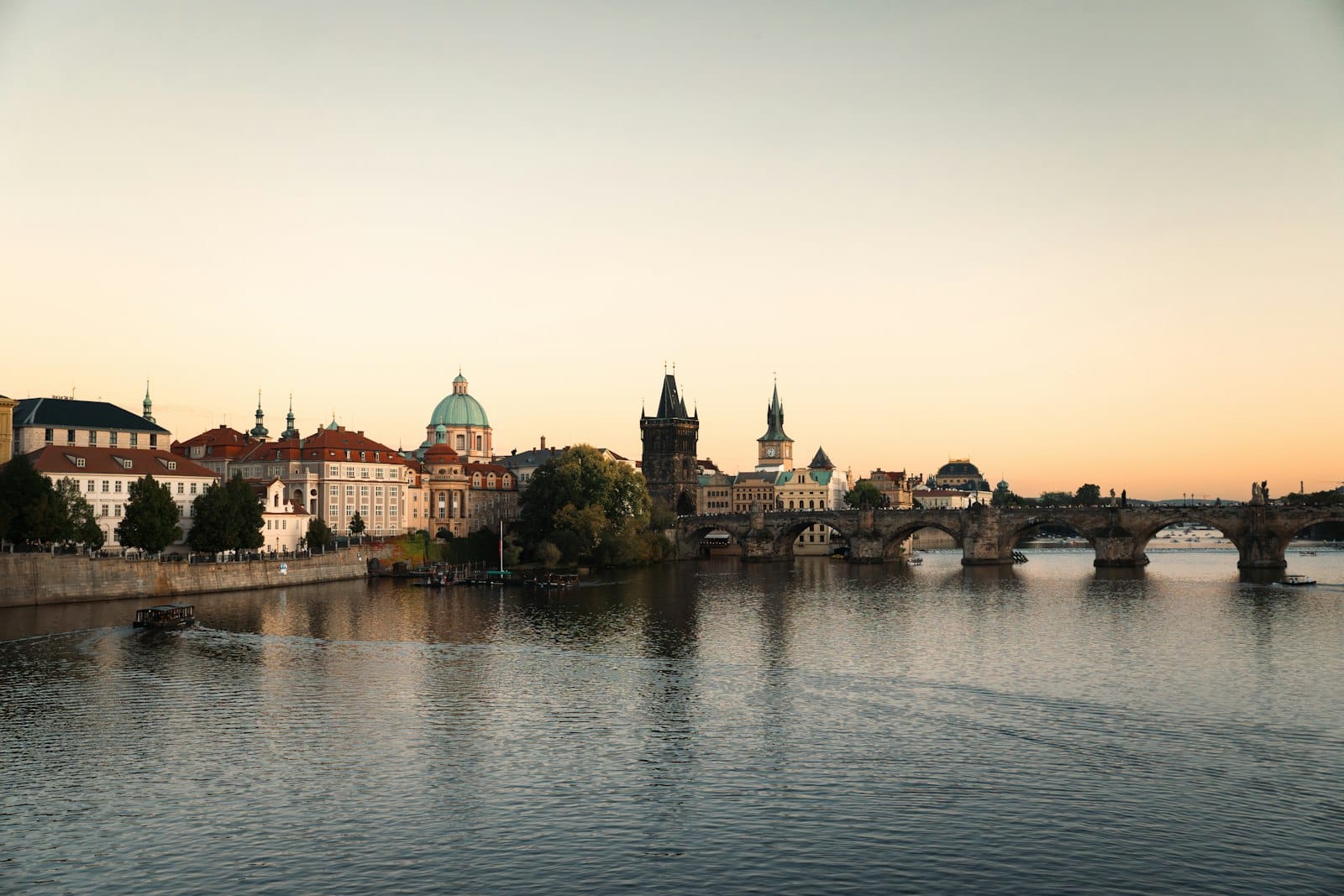
The common assumption that Prague can be done in a weekend is understandable but wrong. The historic core is compact, yes, but the city has 10 distinct urban areas worth visiting, one of the largest castle complexes in the world, a Jewish Quarter with six functioning historic synagogues, and enough museums and galleries to fill several separate trips. A three-day visit covers the greatest hits at a sprint. Seven days lets you move at a pace where you actually absorb the place.
Prague (officially Hlavní město Praha, the Capital City of Prague) sits on the Vltava River in central Bohemia. It covers about 496 km² and has a population of around 1.3 million in the city proper. It operates on Central European Time (CET, UTC+1, switching to CEST UTC+2 in summer), uses the Czech koruna (CZK) rather than the euro, and sits firmly within the Schengen Area. For most visitors from the EU, USA, Canada, and Japan, no visa is required for short stays — but check current Schengen rules before traveling. For a full overview of when to go, see our guide to the best time to visit Prague.
ℹ️ Good to know
Currency note: Prague uses Czech koruna (CZK), not euros. As of 2026, approximately 25 CZK equals 1 EUR, though rates fluctuate. Always pay in CZK rather than accepting dynamic currency conversion — the exchange rate offered at card terminals in tourist zones is consistently poor. Withdraw cash from bank ATMs rather than exchange bureaus near Old Town Square.
Days 1–2: Old Town, Josefov, and New Town
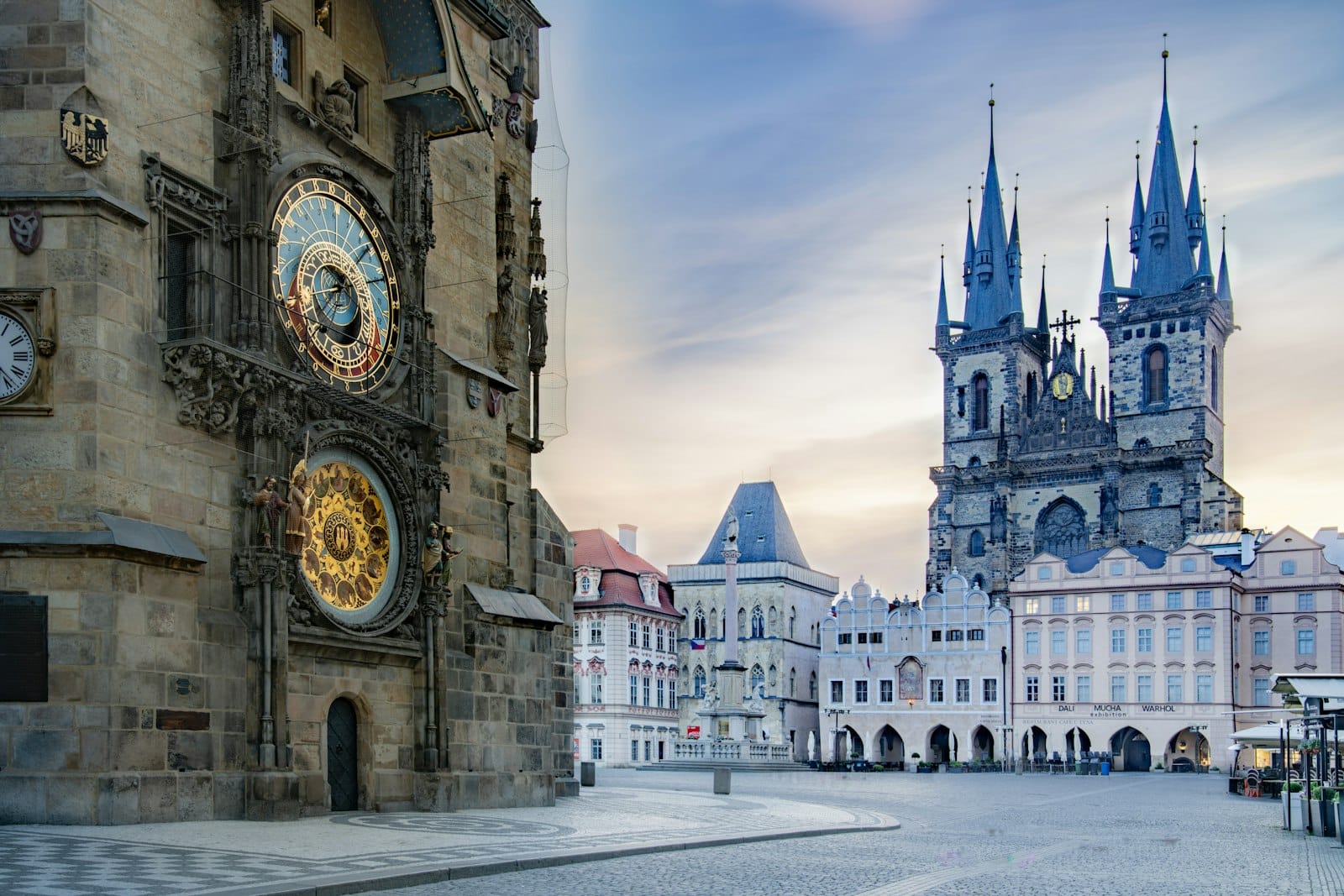
Start where Prague's density of sights is highest. Old Town (Staré Město) is the logical anchor for your first two days. On Day 1, walk to Old Town Square early — by 8am if possible. The Astronomical Clock performs its mechanical show on the hour, and the square at 8am is genuinely different from 11am, when tour groups have arrived and the cobblestones are packed solid. Climb the Old Town Hall Tower for city views before the queues build.
Dedicate the afternoon of Day 1 to Josefov, the Jewish Quarter. The complex includes six historic synagogues and the Old Jewish Cemetery, one of the most historically significant sites in Central Europe. A combined ticket covers most synagogues including the Pinkas Synagogue, whose walls are inscribed with the names of 77,297 Bohemian and Moravian Jewish Holocaust victims. Budget two to three hours minimum — rushing this area is a mistake.
On Day 2, shift south to Wenceslas Square and the surrounding New Town (Nové Město), laid out in the 14th century. The square itself is more of a wide boulevard than a traditional square, and it functions primarily as a commercial corridor today — don't expect it to be the city's most scenic spot. The real draw here is the National Museum at its upper end, and the surrounding streets, which contain the Municipal House (Art Nouveau architecture at its most elaborate) and the Powder Tower.
⚠️ What to skip
Tourist trap alert: The restaurants immediately surrounding Old Town Square charge two to three times standard Prague prices for average food. Walk two streets in any direction and quality goes up while prices drop significantly. The same applies to currency exchange offices with neon signs around Wenceslas Square — their rates are exploitative.
Day 3: Prague Castle and Malá Strana
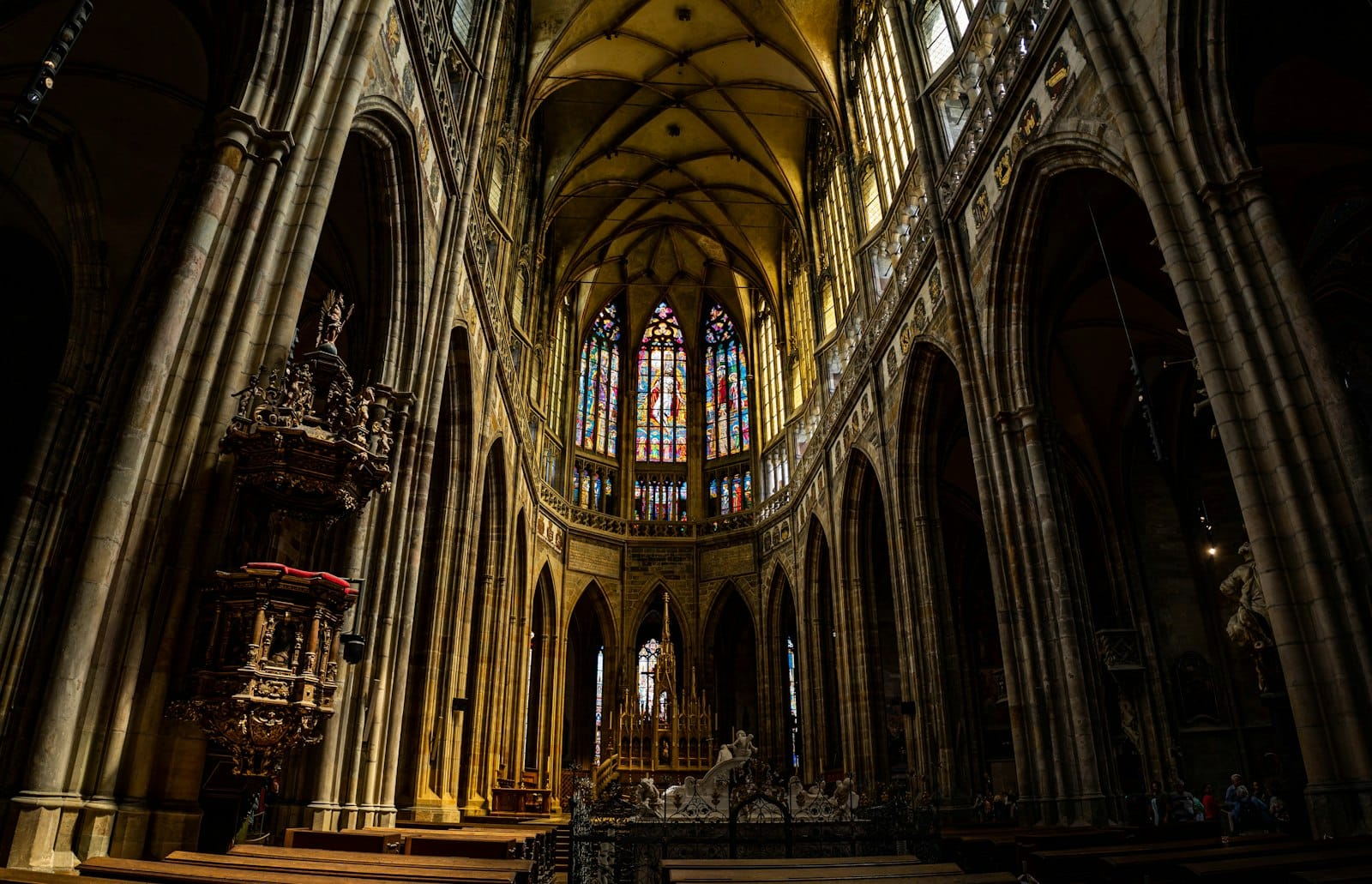
Prague Castle (Pražský hrad) is one of the largest castle complexes in the world, covering roughly 70,000 m². It includes St. Vitus Cathedral, the Old Royal Palace, St. George's Basilica, and the charming Golden Lane with its miniature historic houses. A full castle circuit with cathedral interior access takes three to four hours at minimum if you're reading exhibits. The castle is the official residence of the Czech President and remains a functioning state site, so some areas may close for official events with little notice.
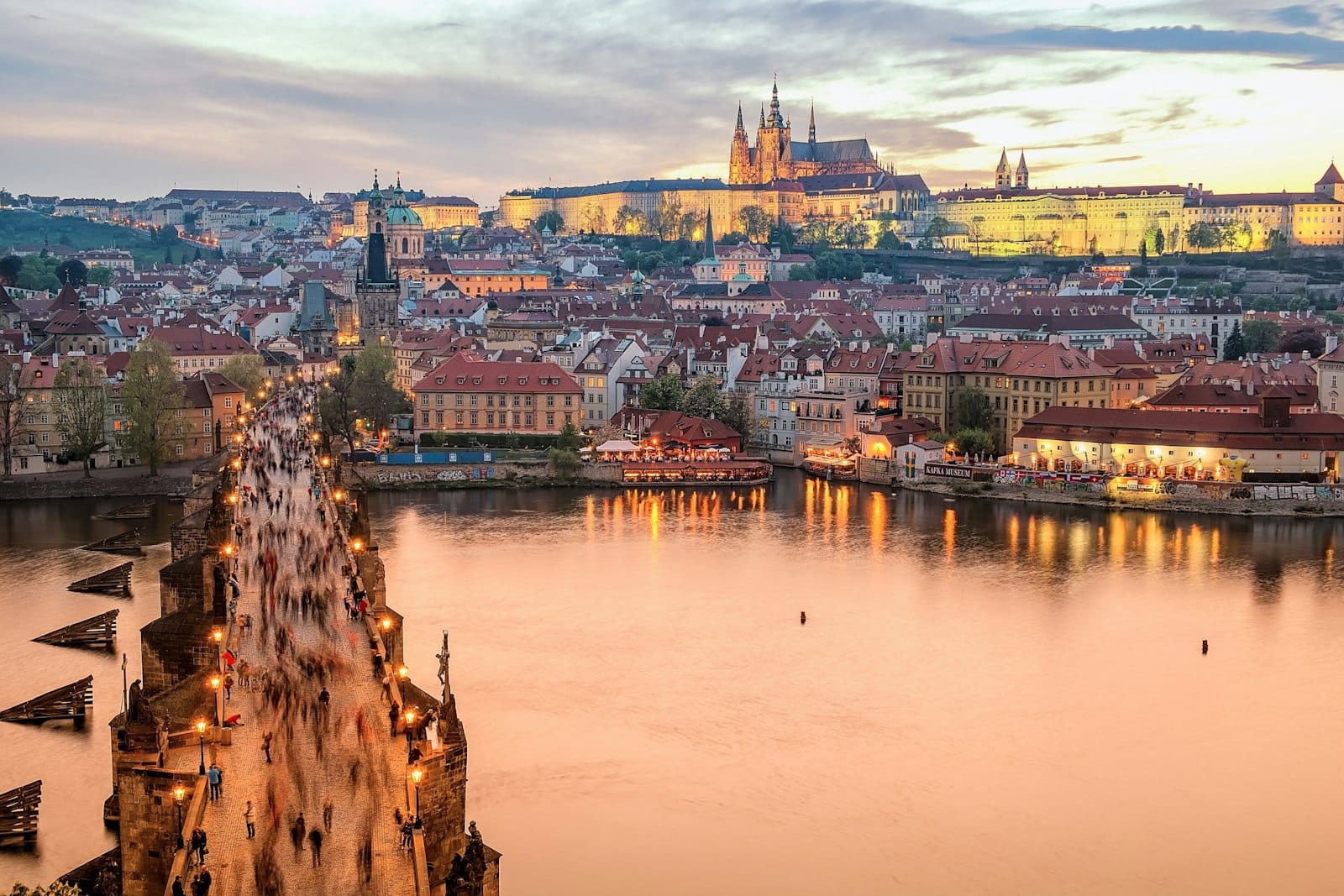
After the castle, walk downhill into Malá Strana (Lesser Town) via the Nerudova street, lined with Baroque palaces. Cross Charles Bridge back toward Old Town in the late afternoon — the light at that hour is far better for photography than the midday glare, and the bridge will have thinned out from its peak crush. Malá Strana also holds the Wallenstein Garden (free entry, genuinely beautiful Baroque design) and the Church of St. Nicholas, considered one of the finest Baroque churches in Central Europe.
Days 4–5: Neighborhoods Beyond the Tourist Core
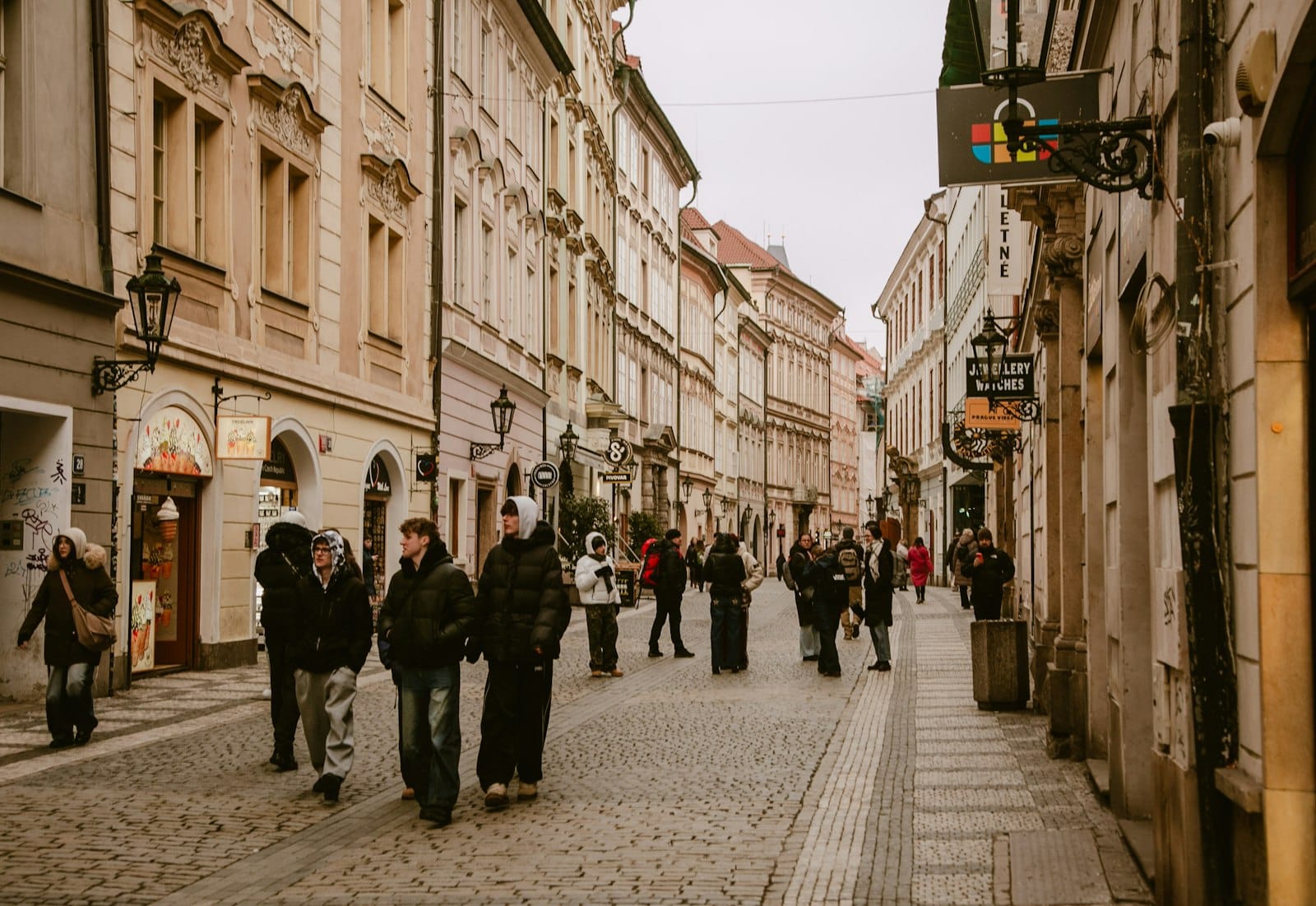
Days four and five are where a week-long stay separates itself from a short break. Use these days to explore the neighborhoods that most visitors skip entirely. Start with Vinohrady, an inner residential district east of the center built on what were historically vineyards. Its streets are lined with late 19th-century apartment buildings, and its main squares — náměstí Míru and Náměstí Jiřího z Poděbrad — have a local rhythm that's entirely absent from tourist-facing Prague. The farmer's market at Jiřák (Jiřího z Poděbrad) runs on weekends and is worth timing your visit around.
Pair Vinohrady with adjacent Žižkov, a historically working-class district with an unusually high density of pubs and one genuinely unmissable landmark: the Žižkov Television Tower, a brutalist structure from the communist era (completed in 1992) that now has an observation platform and a small hotel pod. It's deliberately divisive — the ten giant crawling babies designed by David Černý are either fascinating or unsettling, depending on your tolerance for provocative public art.
On Day 5, head north to Holešovice, an inner-north district that sits within a loop of the Vltava. It contains the Veletržní Palace (the National Gallery's modern and contemporary art collection, housed in a functionalist 1920s trade fair building), the DOX Centre for Contemporary Art, and the Holešovice Market Halls. Combine with Letná Park for afternoon views over the city from the Letná beer garden, one of the best vantage points in Prague and genuinely popular with locals rather than tour groups.
- Vinohrady Inner residential district with excellent cafes, weekend markets, and Art Nouveau architecture. Low tourist density, high local authenticity.
- Žižkov Working-class roots, good pub culture, and the Television Tower. Not picturesque in a postcard sense, but genuinely interesting.
- Holešovice The city's contemporary art hub. Veletržní Palace alone justifies the tram ride from the center.
- Vysehrad The second castle hill, often ignored by visitors. Quieter than Prague Castle, with river views, a Romanesque rotunda, and the national cemetery.
Day 6: Day Trip Options
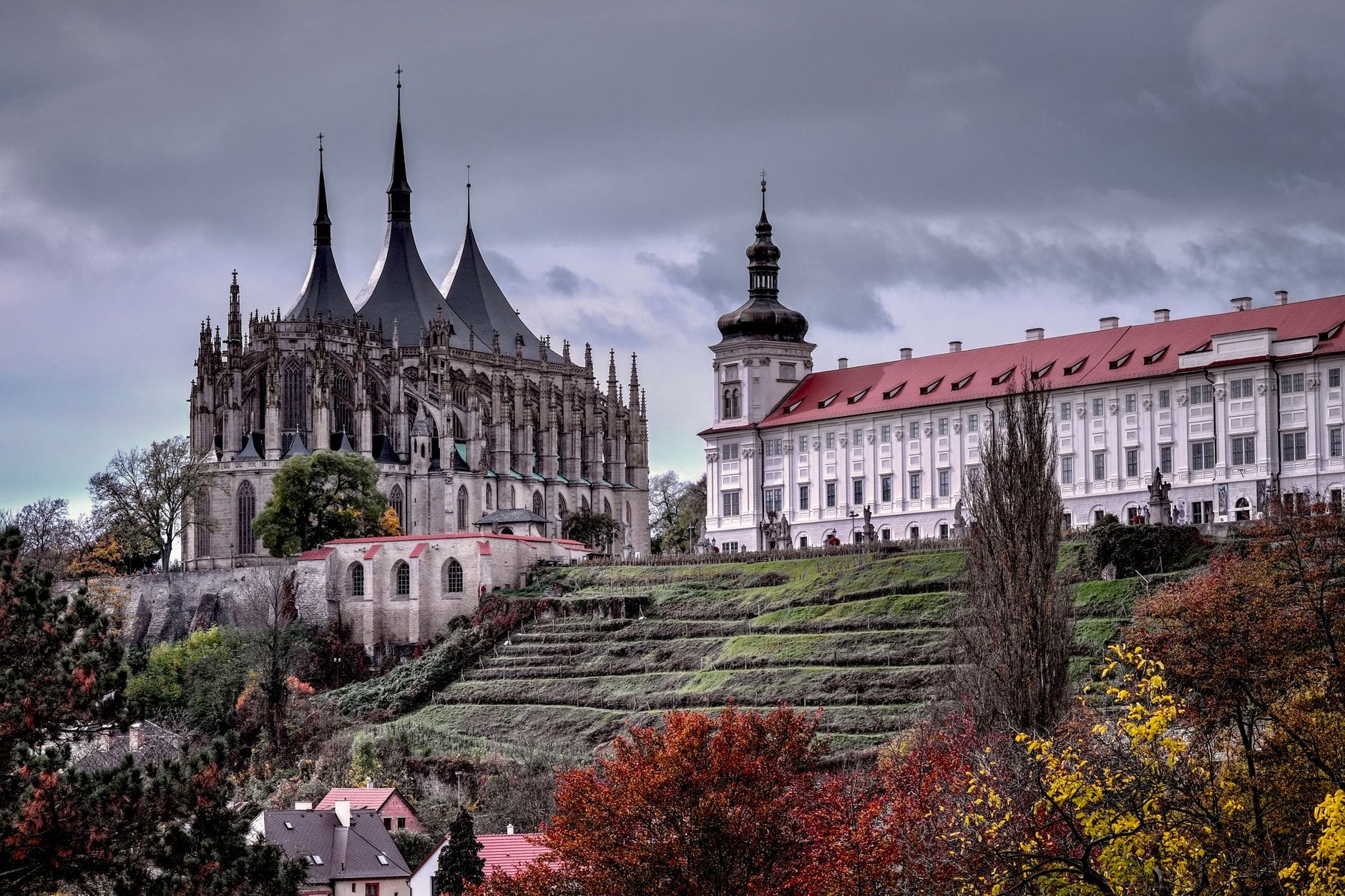
A week in Prague gives you room for at least one day trip without feeling like you've abandoned the city. The two most practical options by train are Kutná Hora and Karlštejn Castle. Kutná Hora (about 70km east of Prague, roughly an hour by direct train) contains the Gothic Cathedral of St. Barbara and the macabre Sedlec Ossuary — a small chapel decorated with the bones of an estimated 40,000–70,000 people. It's a genuine UNESCO World Heritage Site and a half-day visit at minimum. Karlštejn is closer (30km, 40-minute train) and better for those who want a classic castle-in-the-forest experience rather than a medieval town.
For a longer reach, Český Krumlov is about three hours by bus or car and is better treated as an overnight rather than a true day trip — you lose too much time in transit otherwise. See our day trips from Prague guide for full logistics on each option, including train schedules and what to prioritize if you only have limited time on site.
✨ Pro tip
For Kutná Hora: take the morning train from Praha hlavní nádraží (Main Railway Station) and aim to reach the Sedlec Ossuary before it gets busy — tour buses typically arrive mid-morning. The ossuary and Sedlec Cathedral are 2km from the main town center, so factor in either a walk or a short taxi ride between sites.
Day 7: Petřín, Vysehrad, and Winding Down
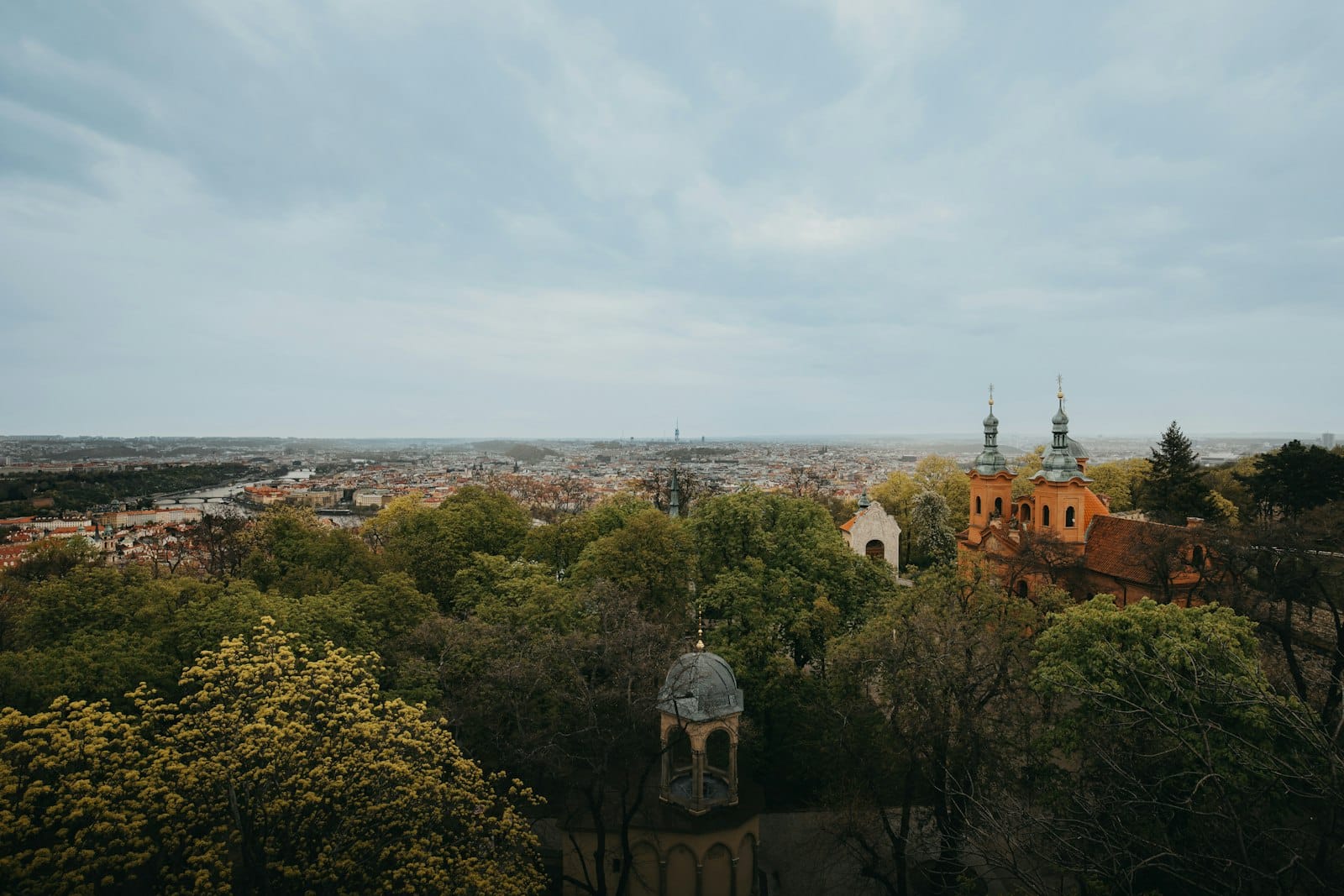
Save your final day for the two hilltop escapes that offer the best city views without castle-level crowds. Petřín Hill is normally reached by funicular from Újezd in Malá Strana (currently closed for reconstruction until around September 2026 — walk up or take tram 22 to Pohořelec) and offers parks, orchards, and the Petřín Lookout Tower — a smaller-scale Eiffel Tower lookalike built for the 1891 Jubilee Exhibition. The hill itself is free; the tower has a modest entry fee. It works well as a morning walk before the city gets busy.
In the afternoon, cross to the south bank for Vysehrad, Prague's second historic fortress. It's quieter than Prague Castle in every way, with sweeping views over the Vltava, the 11th-century Basilica of St. Peter and Paul, and the Vysehrad Cemetery, where many of the Czech Republic's most prominent cultural figures are buried, including composer Antonín Dvořák and writer Karel Čapek. The fortress grounds are free to enter; individual sites charge separately.
Practical Planning: Budget, Transport, and Timing
Prague's integrated public transport system (Pražská integrovaná doprava, PID) covers the metro, trams, and buses under a single ticket structure. For a week-long stay, a multi-day or weekly pass is worth calculating against single-trip tickets — check current PID fares before travel as they update periodically. The metro has three lines (A, B, C) covering most central areas, while trams reach everything else including Holešovice, Vinohrady, and the funicular base at Petřín. Night trams run through the early hours on different route numbers.
Getting from Václav Havel Airport Prague (IATA: PRG, about 15km from the city center) into town is straightforward. Trolleybus 59 runs to Nádraží Veleslavín metro station on Line A; the Airport Express (AE) bus goes directly to the Main Railway Station (Praha hlavní nádraží). Taxi fares to the center run approximately 700–900 CZK by licensed taxi; Bolt and Uber also operate from the airport. Verify current fares before travel.
- Budget travelers: 1,500–2,500 CZK per day (~€60–100), covering accommodation in a hostel or budget hotel, meals at local pubs and market stalls, public transport, and a few attraction entry fees.
- Mid-range travelers: 2,500–5,000 CZK per day (~€100–200), covering a three-star hotel, sit-down restaurant meals, and most major attractions.
- Luxury travelers: 5,000+ CZK per day (~€200+), with five-star hotels, fine dining, and private tours.
- Prague runs roughly 30–50% cheaper than comparable Western European capitals like Paris or Amsterdam for the same tier of experience.
- Tap water in Prague is safe to drink by EU standards — skip bottled water and save the budget for food.
💡 Local tip
Tipping: rounding up the bill or adding around 10% is standard in sit-down restaurants. You can say the total you want to pay when handing over cash, rather than waiting for change. In cafes and bars, rounding up is common but not obligatory. Tipping is not expected in fast-casual or self-service settings.
Seasonal timing matters. May, June, and September offer mild temperatures (roughly 15–20°C), manageable crowds, and good daylight hours. July and August are the warmest months but also the most crowded and prone to afternoon thunderstorms. Winter (December–February) drops to around -1 to 3°C and brings the Christmas markets in late November and December, which are genuinely atmospheric but draw large crowds. For a full seasonal breakdown, the best time to visit Prague guide covers each month in detail.
For accommodation decisions, the choice of base matters more than budget. Staying in Prague 1 (Old Town or Malá Strana) puts you within walking distance of most Day 1–3 sights but costs more. Vinohrady is quieter, better value, and still only two metro stops from the center. Our where to stay in Prague guide breaks down each neighborhood by accommodation type and price range.
FAQ
Is 7 days too long for Prague?
No. Prague has enough sights, neighborhoods, and nearby day trips to fill a full week comfortably without repeating yourself. Most visitors who feel like they 'ran out of things to do' stayed exclusively in the tourist core and didn't explore Holešovice, Vinohrady, Žižkov, Vysehrad, or take any day trips. A week is actually the right amount of time to experience the city at a relaxed pace.
How should I structure a 7-day Prague itinerary?
Days 1–2: Old Town, Josefov, and New Town. Day 3: Prague Castle and Malá Strana. Days 4–5: Neighborhoods (Vinohrady, Žižkov, Holešovice, Letná). Day 6: Day trip to Kutná Hora or Karlštejn Castle. Day 7: Petřín Hill and Vysehrad. Adjust based on your interests — museum-focused travelers should swap a neighborhood day for the Veletržní Palace or the National Museum.
What is the daily budget for one week in Prague?
Budget travelers can manage on roughly 1,500–2,500 CZK (~€60–100) per day, covering a hostel bed or budget hotel room, meals at local pubs and market stalls, public transport, and a couple of attraction entry fees. Mid-range travelers spending 2,500–5,000 CZK (~€100–200) per day get three-star hotels and sit-down restaurant meals. Prague is consistently 30–50% cheaper than Paris, Amsterdam, or London for the same experience tier.
Do I need a car for a one-week Prague itinerary?
No. Prague's public transport system (metro, trams, buses) covers everything within the city, and day trips to Kutná Hora and Karlštejn are both easy by direct train from Praha hlavní nádraží. A car is unnecessary and actually a disadvantage in the city center, where parking is scarce and traffic is slow. Only consider renting a car if you plan to drive independently to Český Krumlov or into the Bohemian countryside.
What do most visitors miss on a week in Prague?
The Jewish Quarter gets underestimated — most visitors spend 45 minutes there and miss the full emotional weight of the Pinkas Synagogue and Old Jewish Cemetery. Vysehrad is almost entirely skipped despite being one of the most peaceful and historically interesting spots in the city. Holešovice and Vinohrady are rarely on short itineraries but show what Prague actually looks like when it's not performing for tourists. The Veletržní Palace (National Gallery modern art) is world-class and consistently empty compared to the castle.