Holešovice Market Halls (Pražská tržnice): Prague's Most Underrated Market Complex
The Holešovice Market Halls, officially known as Pražská tržnice, The Holešovice Market Halls, officially known as Pražská tržnice, occupy a large heritage complex in Prague 7 that began life as the city's central slaughterhouse in 1895.. Today the red-brick halls host a year-round farmers market, street food vendors, pop-up events, and independent businesses, offering a slice of everyday Prague that most tourists never reach.
Quick Facts
- Location
- Bubenské nábřeží 306/13, Praha 7 – Holešovice
- Getting There
- Metro Line C (Vltavská), then tram 1, 6, 14, 17, or 25 to Pražská tržnice stop
- Time Needed
- 1–2 hours for a casual visit; longer during events
- Cost
- Free entry; pay only for what you buy (prices in CZK)
- Best for
- Local food markets, industrial architecture, weekday morning browsing
- Official website
- www.holesovickatrznice.cz
What Pražská tržnice Actually Is
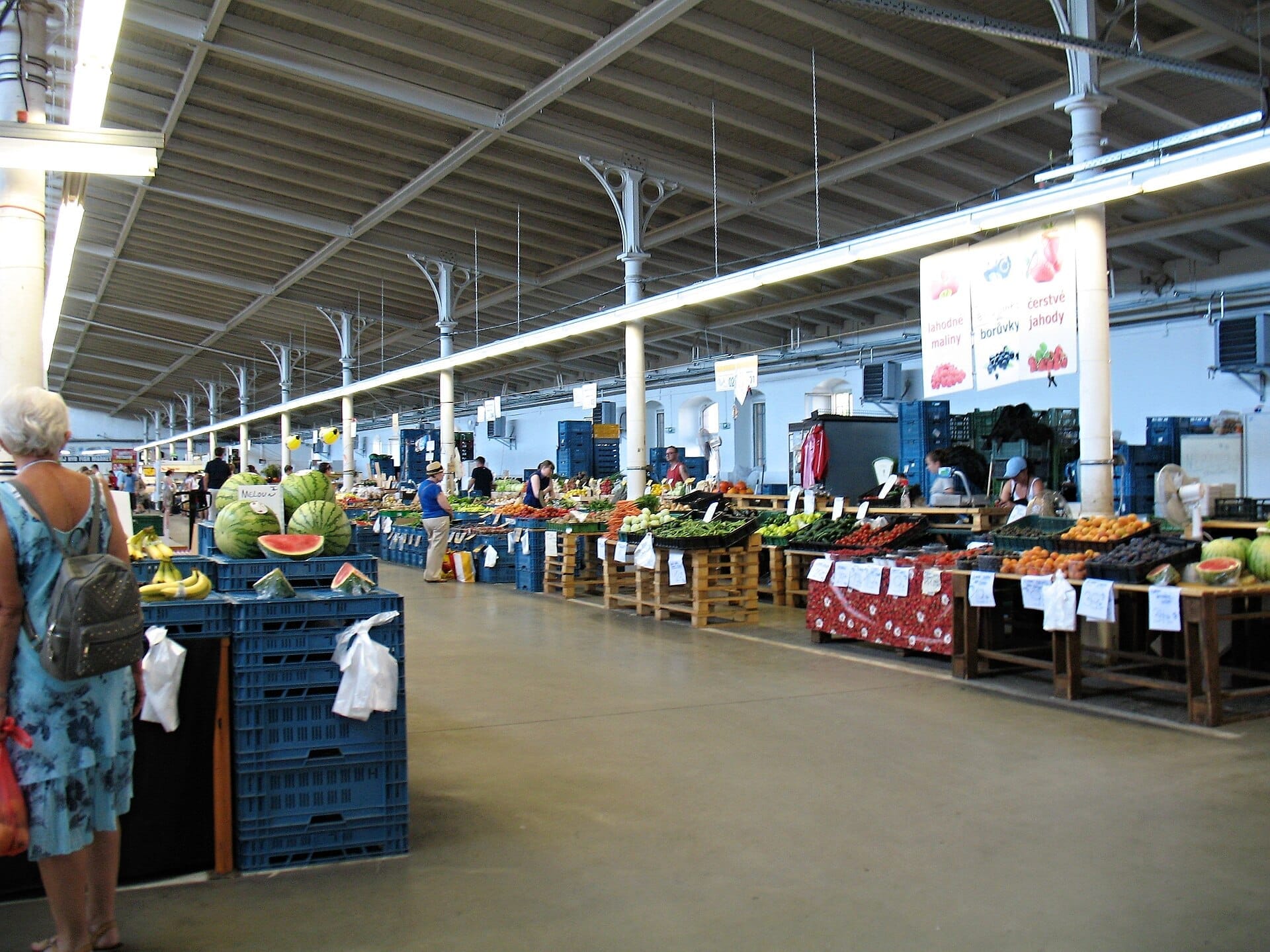
The Holešovice Market Halls, or Pražská tržnice, are not a cute artisan weekend pop-up. They are a serious, working market complex, built in 1895 as Prague's central slaughterhouse and spread across a large heritage complex of red-brick industrial architecture in the Prague 7 district of Holešovice.. The sheer scale tends to catch first-time visitors off guard. You enter through gates that feel more like a factory entrance than a market, pass numbered halls in varying states of activity, and realise quickly that this place operates on its own logic, separate from the polished tourist circuits of the Old Town.
The complex functioned as a slaughterhouse until 1983, when it was converted into a municipal market. The complex functioned as a slaughterhouse until 1983, when it was converted into a municipal market. Its heritage status has shaped what the site has become: too significant to flatten, too large to fill with a single purpose, and therefore organically occupied by a mix of wholesale vendors, farmers' market stalls, food trucks, event organisers, and small businesses. That heritage status has shaped what the site has become: too significant to flatten, too large to fill with a single purpose, and therefore organically occupied by a mix of wholesale vendors, farmers' market stalls, food trucks, event organisers, and small businesses.
ℹ️ Good to know
The outdoor campus is open 24 hours, 7 days a week. Hall 22, which hosts the main food and farmers' market, is open Monday to Friday 7:30–17:00 and Saturday 7:30–14:00. It is closed on Sundays. Individual shops and food trucks within the complex set their own hours.
The Architecture: What the Bricks Tell You
Walking the site without knowing its history, you might assume it was a train depot or a brewery. The buildings share the same confident, utilitarian neo-Renaissance vocabulary common to late 19th-century municipal infrastructure across Central Europe: arched windows, decorative brick cornices, pitched roofs with iron supports still visible inside. The largest halls have generous ceiling heights that make the interiors feel more like cathedrals than market sheds. In winter, those same ceilings make them feel very cold.
The heritage designation means the complex sits in interesting tension between preservation and adaptation. Some halls are fully renovated and well-lit; others retain their original rough plaster and exposed ironwork. If Prague's architectural variety interests you, the market makes a worthwhile companion to a broader exploration of the city's industrial past. Holešovice itself, a district within a loop of the Vltava, has more of this texture: the DOX Centre for Contemporary Art and the National Gallery at Veletržní Palace are both within walking distance and represent different chapters of the neighbourhood's post-industrial reinvention.
Tickets & tours
Hand-picked options from our booking partner. Prices are indicative; availability and final rates are confirmed when you complete your booking.
Escape Tour self-guided, interactive city challenge in Prague
From 30 €Instant confirmationEscape Tour self-guided, interactive city challenge in Prague
From 30 €Instant confirmationSelf guided tour with interactive city game of Prague
From 5 €Instant confirmationFree cancellationPrague by night city tour
From 27 €Instant confirmationFree cancellation
Hall 22 and the Food Market: What to Expect
Hall 22 is the operational heart of the complex for most visitors. On weekday mornings, it functions as a genuine working market. The smells are immediate and concrete: dried herbs in cellophane bags, aged cheeses under glass, fresh bread still warm from delivery, and occasionally the sharper scent of cured meats from the deli counters. Produce stalls stock vegetables at prices that make clear this market serves people who actually cook, not primarily people who want an experience.
Vendors range from Czech farmers selling seasonal fruit and vegetables to importers with olives, specialty oils, and Eastern European dairy products. The mix is more international than a strict farmers' market label implies. On weekday mornings before around 10:00, the hall is calm enough to actually browse: you can hear the vendors talking, the refrigeration units humming, the occasional crinkle of paper bags. By late morning, foot traffic increases but never reaches anything close to the chaos of a weekend market in the city centre.
Saturday mornings before midday are the best single moment for visiting Hall 22. The stalls are fully stocked, outdoor food trucks are operating, and the combination of the hall interior and the open courtyard gives the place a genuinely different atmosphere from weekdays. Bring cash in Czech koruna, though some stalls accept card payments. Arrive before 11:00 if you want to avoid the short Saturday rush before vendors start packing down ahead of the 14:00 close.
💡 Local tip
Photography tip: The best light inside the halls falls through the arched windows in the mid-morning, roughly between 9:00 and 11:00. The contrast between the brick interior and the produce displays is sharp enough that even a phone camera produces strong results. Avoid flash — it flattens the textures completely.
Events, Evening Use, and the Rest of the Complex
Beyond the food market, the complex hosts a rotating programme of flea markets, design fairs, food festivals, concerts, and club nights. The outdoor spaces and larger halls are rented out for events throughout the year, which means that on any given weekend there may be a vintage clothing fair in one hall while a food truck festival occupies the courtyard. The site's official website and Prague's events calendars are the only reliable way to know what is on during your visit, since the event schedule changes frequently and is not predictable from the outside.
The campus is open year-round, and some businesses within it operate into the evening. However, arriving after 18:00 on a weekday outside of a scheduled event will leave you walking through a largely empty complex. The atmosphere shifts considerably: the brick halls feel larger and quieter, the lighting is sparse in the unoccupied sections, and it reads more as an urban exploration site than a market. That is not necessarily a drawback, but it should calibrate expectations.
Getting There and Getting Around the Site
The most direct route is metro Line C (the red line) to Vltavská station, followed by tram lines 1, 6, 14, 17, or 25 to the Pražská tržnice stop. The tram drops you close to one of the main entrances. The most direct route is metro Line C (the red line) to Vltavská station, followed by tram lines 1, 6, 14, 17, or 25 to the Pražská tržnice stop. The tram drops you close to one of the main entrances. For context on getting around Prague more broadly, the guide to Prague's public transport covers the integrated PID ticketing system that applies to all metro, tram, and bus connections.
Once inside, the complex is navigated by numbered halls. There are no comprehensive maps posted at every entrance, which can be disorienting on a first visit. The main food market in Hall 22 is typically the easiest to locate by following foot traffic and the smell of fresh produce. The main food market in Hall 22 is typically the easiest to locate by following foot traffic and the smell of fresh produce.
Accessibility across the outdoor areas is generally good: the complex is large and flat, with paved surfaces between the halls. However, specific accessibility features vary by hall, and individual event setups can affect ease of navigation. If mobility is a concern, contacting the site administration in advance is the most reliable approach.
⚠️ What to skip
The complex covers a large heritage area — roughly the size of 15 football pitches. Wear comfortable shoes. In winter, many of the non-market halls are unheated, so dress accordingly if you plan to explore beyond Hall 22. Wear comfortable shoes. In winter, many of the non-market halls are unheated, so dress accordingly if you plan to explore beyond Hall 22.
Honest Assessment: Who Gets the Most from This Place
Pražská tržnice rewards visitors who are interested in Prague beyond the postcard circuit. It sits in Holešovice, a district that has accumulated a genuine mix of creative spaces, local restaurants, and post-industrial architecture without becoming a self-consciously 'alternative' destination. The market feels like a working part of that neighbourhood rather than a curated visitor experience.
Travellers who come specifically looking for a photogenic farmers' market stocked with artisan products in attractive packaging may find the reality more utilitarian than expected. The food is good, and the prices are fair, but the aesthetic is practical rather than Instagram-optimised. That is, depending on your perspective, either the whole point or a mild disappointment.
Visitors with only one or two days in Prague should weigh this stop carefully. The market is not in the same zone as the city's central historic sites, and getting there requires a 20–30 minute transit journey from the Old Town. If your time is limited, a focused 3-day Prague itinerary will help you decide whether Holešovice fits your schedule. If you have four days or more, or if you are specifically interested in local food culture and industrial heritage, it is a sensible addition.
Insider Tips
- Arrive at Hall 22 between 7:30 and 9:00 on a weekday morning for the calmest experience. Vendors are fully set up, the space is nearly empty of other visitors, and the light through the arched windows is at its best.
- The outdoor food trucks operate on their own schedules and are most consistently present on Saturday mornings. Check the Pražská tržnice social media channels or website in the week before your visit to see what vendors are currently operating.
- If you are visiting during a scheduled event (flea market, design fair, food festival), arrive in the first hour after opening. The later sessions of large events can become crowded in the outdoor courtyard spaces, which have limited shade in summer.
- Bring Czech koruna in small denominations. While card payments are becoming more common at individual stalls, cash remains the more reliable option, particularly at produce vendors and smaller food stalls.
- The neighbourhood around the market has several good independent cafes and lunch spots along Jablonského and nearby streets. The market itself is not a full-service dining destination, so plan for a proper meal nearby if you are staying in Holešovice for the morning.
Who Is Holešovice Market Halls (Pražská tržnice) For?
- Travellers who want to see a working Prague market used by local residents rather than designed for tourists
- Architecture and industrial heritage enthusiasts interested in late 19th-century Czech municipal buildings
- Food shoppers looking for Czech and Central European produce at local prices
- Visitors with extra days in Prague who have already covered the main historic sites
- Those attending a scheduled event or fair at the complex — check the programme in advance
Nearby Attractions
Other things to see while in Holešovice:
- DOX Centre for Contemporary Art
Opened in 2008 inside a converted 19th-century factory in Holešovice, DOX Centre for Contemporary Art is a major venue for international contemporary art, architecture, and design. With around 3,000 m² of exhibition space across renovated industrial halls, it stages politically engaged, visually demanding shows that rarely play it safe.
- Letná Beer Garden
Perched on the edge of Letná Park above the Vltava River, the Letná Beer Garden is where Prague locals actually drink in summer. No admission charge, plastic cups of cold Pilsner, and a sweeping view across the city's rooftops — it is one of the most genuinely local outdoor experiences in the Czech capital.
- Letná Park
Letná Park occupies a broad plateau above the Vltava in Prague's Holešovice district, offering panoramic views over the Old Town, a famous open-air beer garden, and kilometers of tree-lined paths. Entry is free and the park is open around the clock.
- National Gallery – Veletržní Palace
Veletržní Palace houses the National Gallery Prague's collection of 20th and 21st century art across 13,500 square metres of exhibition space. Built in 1928 as a trade fair hall, this Functionalist landmark in Holešovice is a major destination for modern and contemporary art.