Getting Around Prague: Metro, Trams, Airport Transfers & Transport Tips
Prague has one of Central Europe's most efficient public transport networks, covering the city by metro, tram, and bus under a single integrated ticket system. This guide covers fares updated for 2026, airport transfer options, ride-hailing realities, and the mistakes most visitors make on their first day.

Plan and book this trip
Tools from our partner Travelpayouts help you compare flights and hotels. If you book through them, we may earn a commission at no extra cost to you.
Flights
Hotels map
TL;DR
- Prague's public transport (metro, trams, buses) runs under one integrated system called PID, with time-based tickets valid across all modes.
- Tickets must be validated at first use — buying one without stamping it counts as travelling without a ticket.
- From January 2026, a 30-minute city ticket costs 39 CZK on paper or 36 CZK via the PID Lítačka app, making the app the cheapest way to pay.
- The Airport Express bus (AE) is separate from the regular PID network — its fare is 200 CZK from 2026. Budget travellers should take trolleybus 59 plus the metro instead.
- Trams are often faster than the metro for short hops in the historic centre, and they run through the night.
How Prague's Public Transport System Works
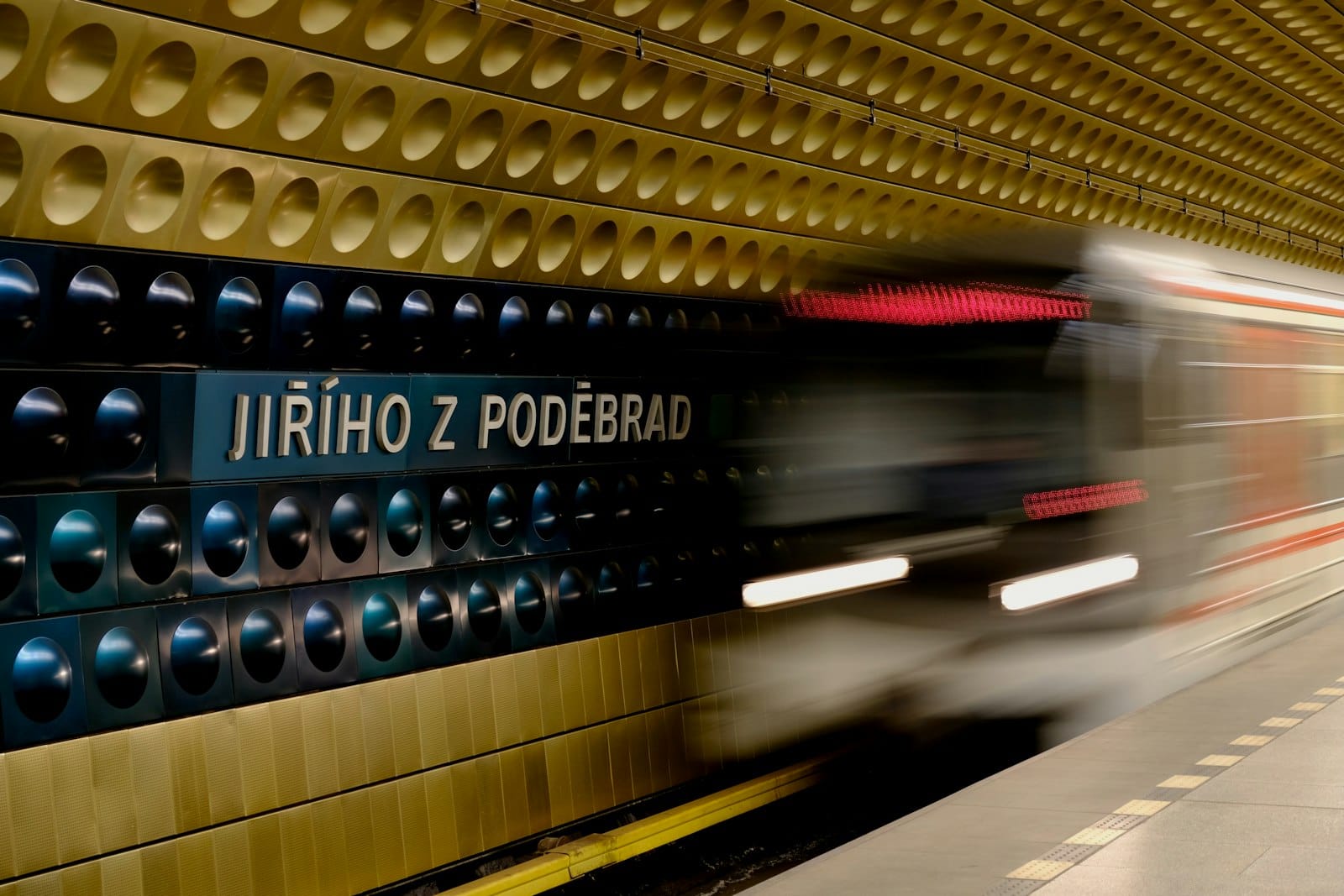
Getting around Prague is genuinely straightforward once you understand one key principle: the system is time-based, not zone-based for most city travel. Prague Integrated Transport (PID, or Pražská integrovaná doprava) operates the metro, trams, buses, the Petřín funicular, and suburban rail links under a single ticketing umbrella. One valid ticket gives you free transfers between any of these modes for the duration of its time window.
The metro has three lines: Line A (green) runs east to west through the centre, Line B (yellow) crosses the city diagonally, and Line C (red) runs north to south. The network covers over 60 stations and connects most major tourist areas. That said, the metro misses several important sights — Charles Bridge has no direct metro stop, and most of Malá Strana is tram territory. Knowing when to use the metro versus a tram saves real time.
Trams are the backbone of the inner city. Lines 17 and 18 run along the river and serve the Malá Strana and Old Town waterfronts. Line 22 is arguably the most useful single route for tourists, connecting Vinohrady, Náměstí Míru, Malá Strana, and the Prague Castle district in one arc. Night trams (marked with numbers 91–99) run approximately every 30 minutes after midnight, keeping the network functional around the clock.
⚠️ What to skip
Buying a ticket is not enough. Every ticket must be validated (stamped) at the yellow machines in metro stations or the validators on trams and buses at the start of your journey. An unvalidated ticket is treated the same as no ticket. Inspectors work plainclothes and check frequently on popular tourist routes.
Ticket Prices and How to Buy (2026 Fares)
Fares increased from January 2026, primarily affecting short-term paper tickets and the Airport Express. The cheapest way to pay for individual journeys is consistently the PID Lítačka mobile app, which applies a small discount over paper tickets at every tier.
- 30-minute ticket Paper: 39 CZK | App: 36 CZK | SMS: 42 CZK. Valid for metro, trams, and buses with transfers, as long as you stay within the time window.
- 90-minute ticket Paper: 50 CZK | App: 46 CZK | SMS: 55 CZK. The better option if your journey involves a transfer or a slightly longer route.
- 24-hour pass Around 120-150 CZK. Pays for itself after roughly three single journeys and removes any anxiety about time limits.
- 72-hour pass Around 330-350 CZK. Ideal for stays of 2-4 nights where you plan to use transport regularly. Check current PID pricing before purchase.
- Children under 15 and adults 65+ Free on all Prague city transport. Ages 60-65 qualify for half fare with valid ID.
Tickets can be bought from yellow machines at metro stations (which accept cards and cash), from DPP ticket offices, or through the PID Lítačka app. SMS tickets are also supported at a premium price if your mobile operator allows it — send codes DPT31 or DPT42 to 902 06 for short-term options. The app is the most convenient option for most visitors and consistently the cheapest per journey.
ℹ️ Good to know
Dogs and large luggage (oversized bags, bicycles) require a supplementary ticket. These fees are small but were also revised upward in 2026. If you're travelling with a large backpack, technically this applies — in practice enforcement varies, but it's worth knowing before you board.
Riding without a valid, validated ticket risks a fine of 1,200 CZK on the spot. Early payment discounts apply, and fines can be settled via the DPP e-shop or in person at their offices. Don't rely on looking like a tourist as protection — inspectors are experienced and the routes around Old Town Square and the main metro stations are checked constantly.
Getting from Václav Havel Airport to the City Centre
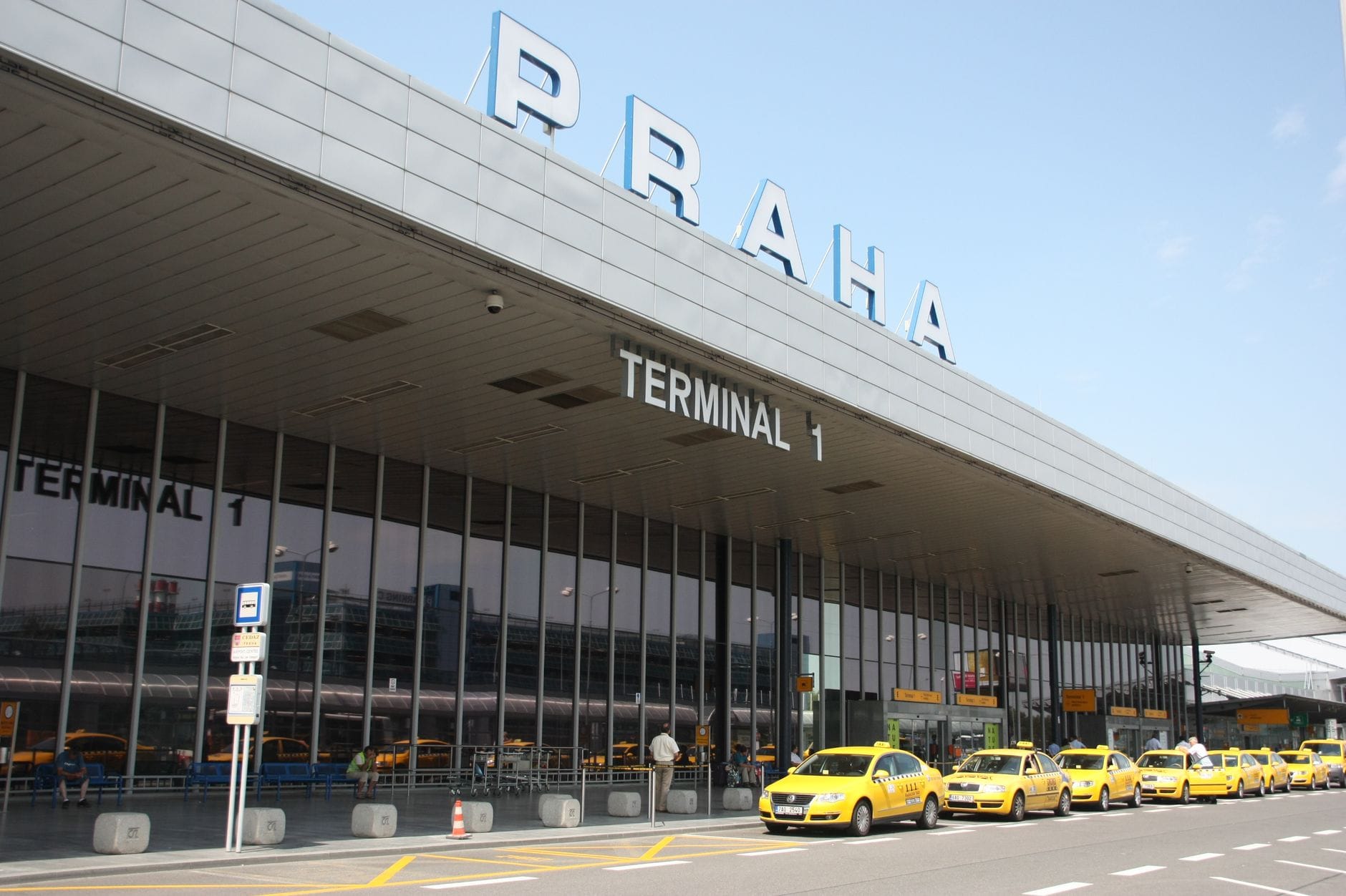
Václav Havel Airport Prague (IATA: PRG) sits northwest of the Old Town. You have four realistic options, and the right choice depends on your budget, luggage, and time of day.
- Trolleybus 59 + Metro (cheapest) Take trolleybus 59 from either terminal to Nádraží Veleslavín (Line A metro), then ride the green line into the centre. Journey time is around 35-45 minutes total. A standard 30 or 90-minute PID ticket covers the whole trip — validate it at the stop before boarding. This is the best option for solo travellers with manageable luggage.
- Airport Express (AE) bus (midrange) Runs directly between the airport and Praha hlavní nádraží (Main Railway Station). Fare is 200 CZK per person from 2026 — it doubled from its previous 100 CZK price. It's faster than the bus-metro combo and drops you at a central transport hub, but it's not covered by standard PID tickets. Families or groups may find a taxi more cost-effective at this price.
- Licensed taxi (convenient) Fixed-price taxis are available from official stands at the terminals. Expect to pay around 700-900 CZK for a ride to the central districts, depending on the provider and destination. Agree on the price before departure. Verify current rates at the airport's official taxi page before travel.
- Ride-hailing: Uber or Bolt (flexible) Both Uber and Bolt operate in Prague and can be booked from the arrivals area. Prices fluctuate with demand but typically land in a similar range to licensed taxis. The advantage is price transparency upfront in the app — no negotiation needed. Bolt tends to run slightly cheaper for standard rides.
⚠️ What to skip
The Airport Express (AE) bus ticket is not a standard PID ticket. You cannot substitute a regular day pass or 90-minute ticket for the AE fare — they are entirely separate products with separate pricing. Many visitors make this mistake and end up paying a fine.
Taxis and Ride-Hailing in Prague

Prague's taxi reputation has improved significantly with the arrival of app-based services, but street hails in heavy tourist areas remain risky. Unlicensed or unmetered taxis still operate around Old Town Square and Wenceslas Square, and some charge several times the fair rate. The rule is simple: book via app or use an established radio taxi company.
AAA Radiotaxi is one of the longest-established licensed services in Prague. Uber and Bolt both provide reliable alternatives with full price visibility before you confirm a ride. For trips within the centre, including late-night returns from the Prague nightlife areas around Žižkov or Vinohrady, Bolt in particular tends to have good availability and competitive rates.
Walking and Getting Around on Foot

Much of Prague's historic core is compact enough to cover on foot, and walking is often the right call. The distance from Old Town Square to Charles Bridge is about a 5-minute walk. From the bridge to Prague Castle is around 20 minutes uphill through Malá Strana, or 30-35 minutes via the scenic Nerudova street route. Walking also means you notice the city's architecture, courtyards, and passageways that trams and metros simply skip.
The cobblestone streets in the historic districts are visually striking but uneven underfoot, especially after rain. Comfortable, flat-soled shoes are essential. For a structured approach to the historic core on foot, the Prague walking tour guide covers the key routes with practical timings.
Practical Tips for Navigating Prague's Transport
A few things that take most visitors at least one trip to figure out, laid out clearly here to save you the trouble.
- Download the PID Lítačka app before you arrive — it shows live departures, journey planning, and lets you buy tickets at a slight discount over paper. The journey planner also covers suburban rail and bus connections beyond the city.
- The metro runs approximately from 5:00 AM to midnight. After midnight, night trams take over. There is no overnight metro, unlike some other European capitals.
- Peak hours on weekdays are roughly 7:30-9:00 AM and 4:30-6:30 PM. The centre-bound trams and Line C southbound get genuinely crowded. If you have flexibility, shift sightseeing starts to mid-morning. The centre-bound trams and Line C southbound get genuinely crowded. If you have flexibility, shift sightseeing starts to mid-morning.
- The Petřín funicular has been undergoing long-term maintenance. Check its current operational status on the PID or DPP website before including it in your itinerary — The Petřín funicular has been undergoing long-term maintenance. Check its current operational status on the PID or DPP website before including it in your itinerary.
- Prague uses Type C (Europlug) and Type E sockets at 230V/50Hz. US and UK visitors need adapters — pick one up before departure or from any electronics shop near Wenceslas Square.
- Tap water in Prague is safe to drink and regularly tested to EU standards, which means you can skip buying bottled water at every stop and significantly reduce costs and plastic waste.
✨ Pro tip
For a 2-4 night stay with regular sightseeing, the 72-hour pass (340-350 CZK) almost always works out cheaper than buying individual tickets. It removes the need to buy a new ticket each time and lets you hop on any tram without checking your watch. Buy it from a metro station machine or via the Lítačka app on arrival.
If you're planning to visit attractions outside the city, PID also covers suburban rail (Esko) connections. Day trips to places like Karlštejn Castle or Kutná Hora require a different ticket zone — check the PID journey planner or the train operator (České dráhy) for specific fares before travelling.
FAQ
Do I need to validate my Prague public transport ticket every time I board?
You validate the ticket once at the start of your journey, at the yellow stamping machines in metro stations or the validators on trams and buses. After that, you can transfer freely between metro, trams, and buses within the ticket's time window without re-validating. Never boarding with an unvalidated ticket — that's the single most common mistake and the one most likely to result in a fine.
What is the cheapest way to get from Prague Airport to the city centre?
Trolleybus 59 to Nádraží Veleslavín metro station (Line A), then metro to your destination. A standard 30-minute or 90-minute PID ticket covers the whole journey. Validate the ticket at the stop before boarding. The journey takes around 35-45 minutes and costs under 50 CZK. The Airport Express bus is faster but costs 200 CZK from 2026 and drops you at the main railway station only.
Can I use a contactless bank card directly on Prague trams and metro?
Contactless payment is accepted on trams via onboard terminals for single short-term tickets. In metro stations, ticket machines accept cards. However, you cannot tap a contactless card at metro barriers the way you can in London or New York — you still need to buy and validate a proper PID ticket. Using the Lítačka app or buying from machines before entering is the standard approach.
Is Uber or Bolt safe to use in Prague?
Yes, both Uber and Bolt are legitimate and widely used in Prague. They offer transparent pricing before you confirm the booking and are generally reliable. Bolt tends to have competitive pricing for city trips. Avoid unlicensed taxis hailing you near tourist hotspots — agree the price in advance or use an app.
How do I get from Prague's historic centre to Prague Castle without a taxi?
The best public transport option is tram 22, which stops at Malostranské náměstí and Pohořelec, both within easy walking distance of the castle entrance. From Old Town, take tram 17 or 18 across the river to Malostranské náměstí and transfer. Alternatively, it's a pleasant 20-25 minute walk from Charles Bridge through Malá Strana directly to the castle steps.