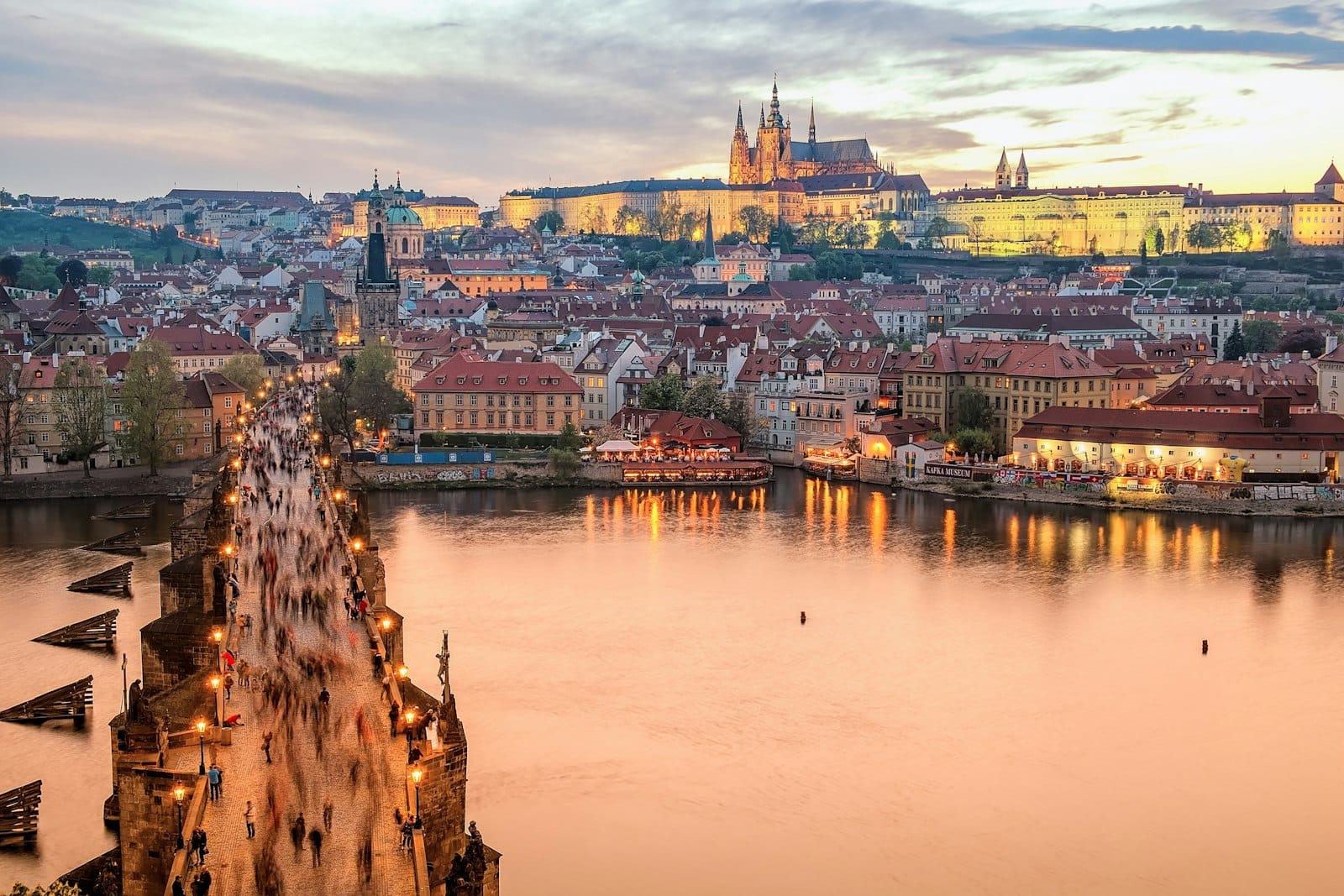
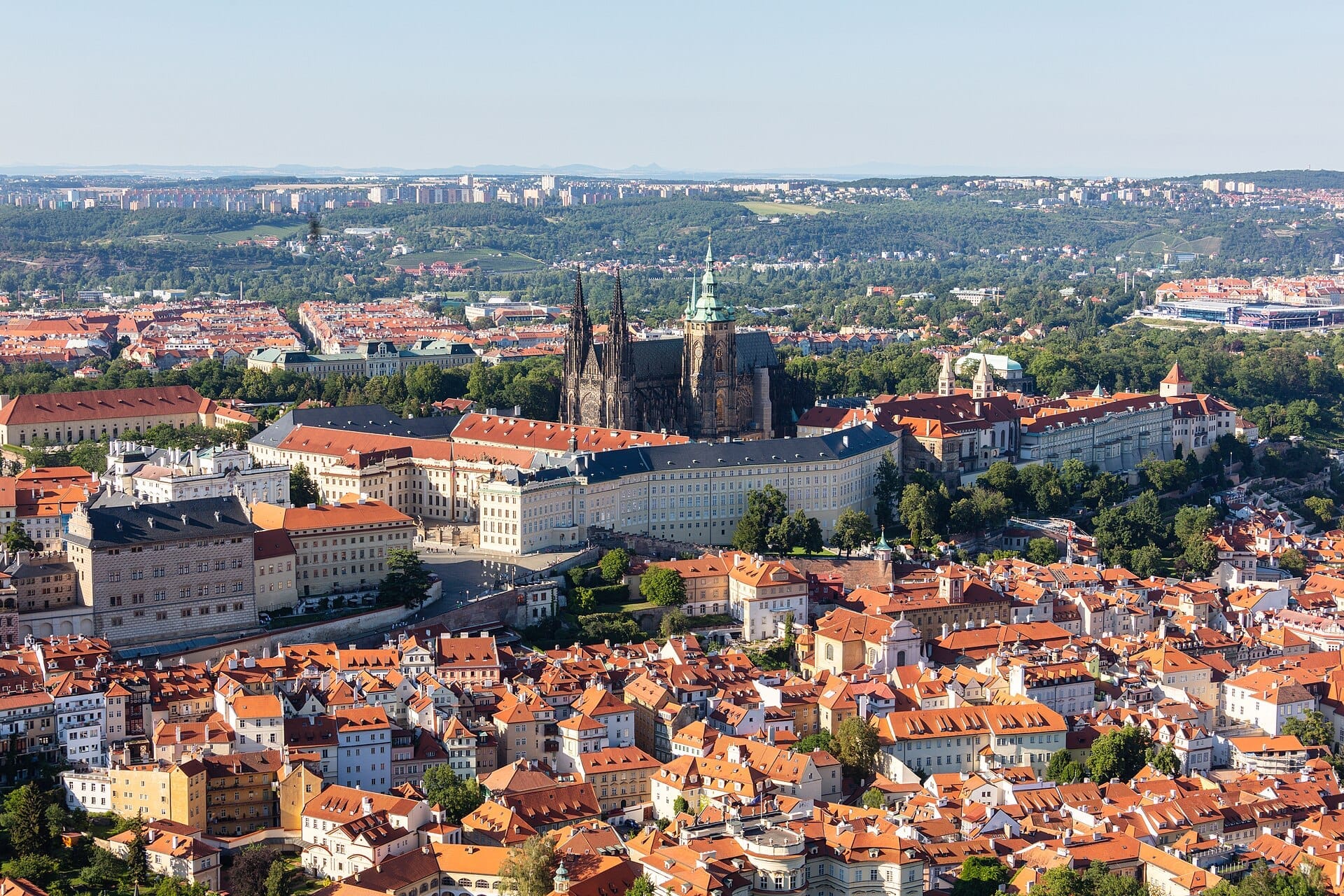
Hradčany sits on the highest ridge of Prague's left bank, anchored by one of the largest castle complexes in the world. This is the city's historic seat of political and religious power, a neighborhood shaped by centuries of royalty, clergy, and nobility rather than everyday urban life.
Hradčany is Prague at its most monumental. Perched above the Vltava River on a long stone ridge, this compact hilltop district exists almost entirely in the shadow of Prague Castle, the largest ancient castle complex in the world and the official residence of the Czech president. It is less a lived-in neighborhood than a historic precinct, where baroque palaces, monastery walls, and cobbled lanes give way to panoramic views across the terracotta rooftops of the city below.
Orientation: Where Hradčany Sits in Prague
Hradčany occupies the highest ground on Prague's left bank, forming a long elevated ridge that runs roughly west to east above the Malá Strana district below. To the south, the hill drops sharply toward the baroque streets and embassy gardens of Malá Strana. To the west, the district merges with Pohořelec and the approach to Strahov Monastery. To the north, the ground falls away toward the Hradčanská metro station and the quieter residential edges of Prague 6.
The Prague Castle complex dominates the eastern section of the ridge and forms the visible anchor of the entire district. When Praguers refer to 'Hradčany,' they typically mean both the castle grounds and the historic streets that surround them: Hradčanské náměstí (Hradčany Square), the lanes running west toward Strahov, and the Nový Svět quarter tucked behind the castle's northern ramparts. Together, these areas form a coherent historic precinct within Prague 1, administratively part of the same borough as Old Town and Malá Strana.
Understanding how Hradčany relates to Malá Strana below it is key to planning your visit. The two districts are visually and historically linked, but functionally distinct. Malá Strana is where people eat, live, and drink. Hradčany is where they look up at the castle walls and walk between monuments. Most visitors combine the two in a single day.
Character and Atmosphere
Hradčany functions at a different pace and scale from anywhere else in Prague. Early in the morning, before the tour groups ascend from Malá Strana, the streets around Hradčanské náměstí are almost eerily quiet. The castle guards conduct their ceremonial changing at the main gate, the light falls low and golden across the baroque facades, and the only sounds are footsteps on cobblestones and the distant bells of St. Vitus Cathedral. These early morning hours, roughly 7 to 9am, offer the closest thing to solitude you will find anywhere near Prague's historic core.
By mid-morning, the dynamic shifts completely. Coaches arrive at the lower car parks, tour groups stream up Nerudova Street and through the castle gates, and Hradčanské náměstí fills with the particular noise of mass tourism: commentary in a dozen languages, the click of cameras, queues at ticket windows. This is the reality of Hradčany between roughly 10am and 4pm during peak season. The castle complex is the most visited tourist attraction in the Czech Republic, and the district makes no attempt to disguise that fact.
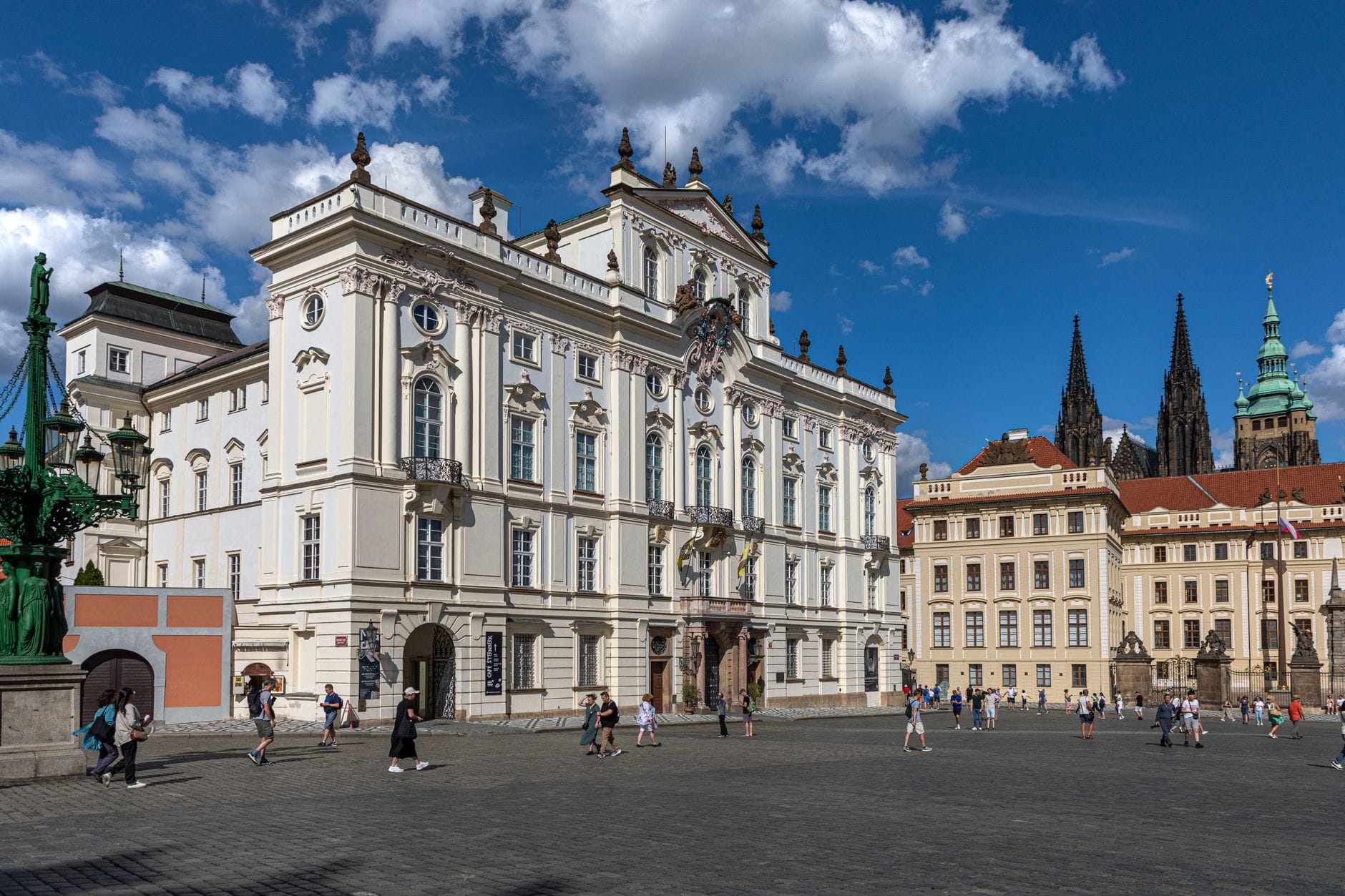
What the crowds cannot diminish is the architectural weight of the place. The density of baroque, Gothic, and Renaissance buildings here is extraordinary even by Prague's standards. Hradčanské náměstí is lined with the Schwarzenberg Palace, the Archbishop's Palace, and the Sternberg Palace, all fronting onto a square that feels ceremonial rather than commercial. There are no souvenir kiosks here, no café terraces spilling onto the cobblestones. The square functions as an approach to the castle, not a destination in itself, and it retains a formal, almost severe character that sets it apart from the livelier squares of Old Town.
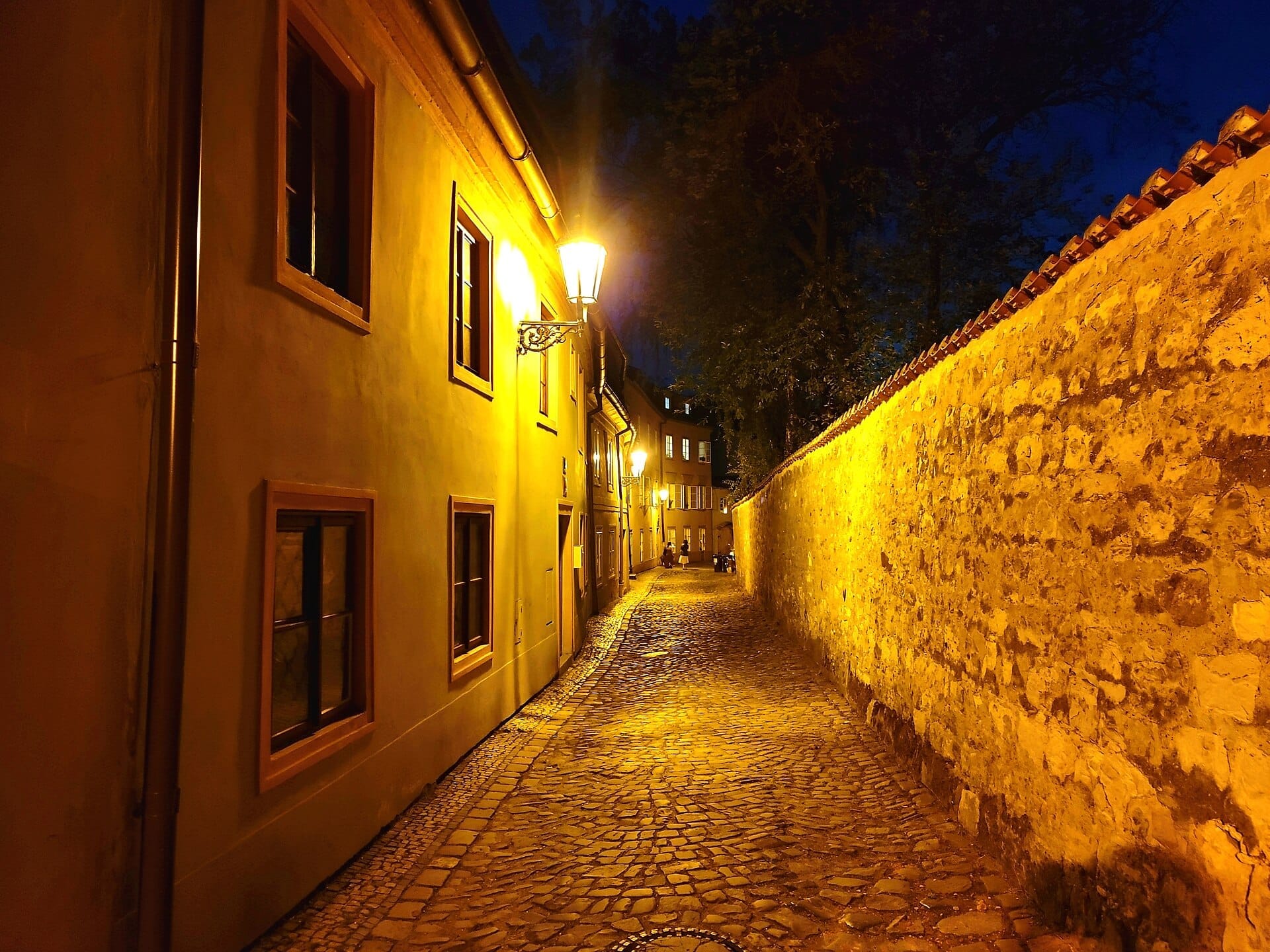
Late afternoon, as the castle closes and tour groups begin descending, a second quieter window opens. The western parts of Hradčany, toward Pohořelec and the lanes around Nový Svět, feel genuinely peaceful in the early evening. Nový Svět in particular, a cluster of small pastel-painted houses north of the castle walls, survives as one of Prague's most intact historic residential lanes, preserved largely because it was too modest to attract major development.
💡 Local tip
The castle grounds open at 6am, well before the ticket offices and most attractions. Walking through the courtyards in the first hour of the day costs nothing and means almost no crowds. If you want a photograph of St. Vitus Cathedral without a hundred other people in it, this is your window.
What to See and Do
Prague CastlePrague Castle is the obvious starting point and the reason most visitors come to Hradčany at all. The complex spans over 70,000 square metres across multiple courtyards, making it genuinely enormous. A single entrance ticket covers several attractions within the grounds, but the complex is large enough that it deserves most of a day if you want to see it properly rather than just walk through.
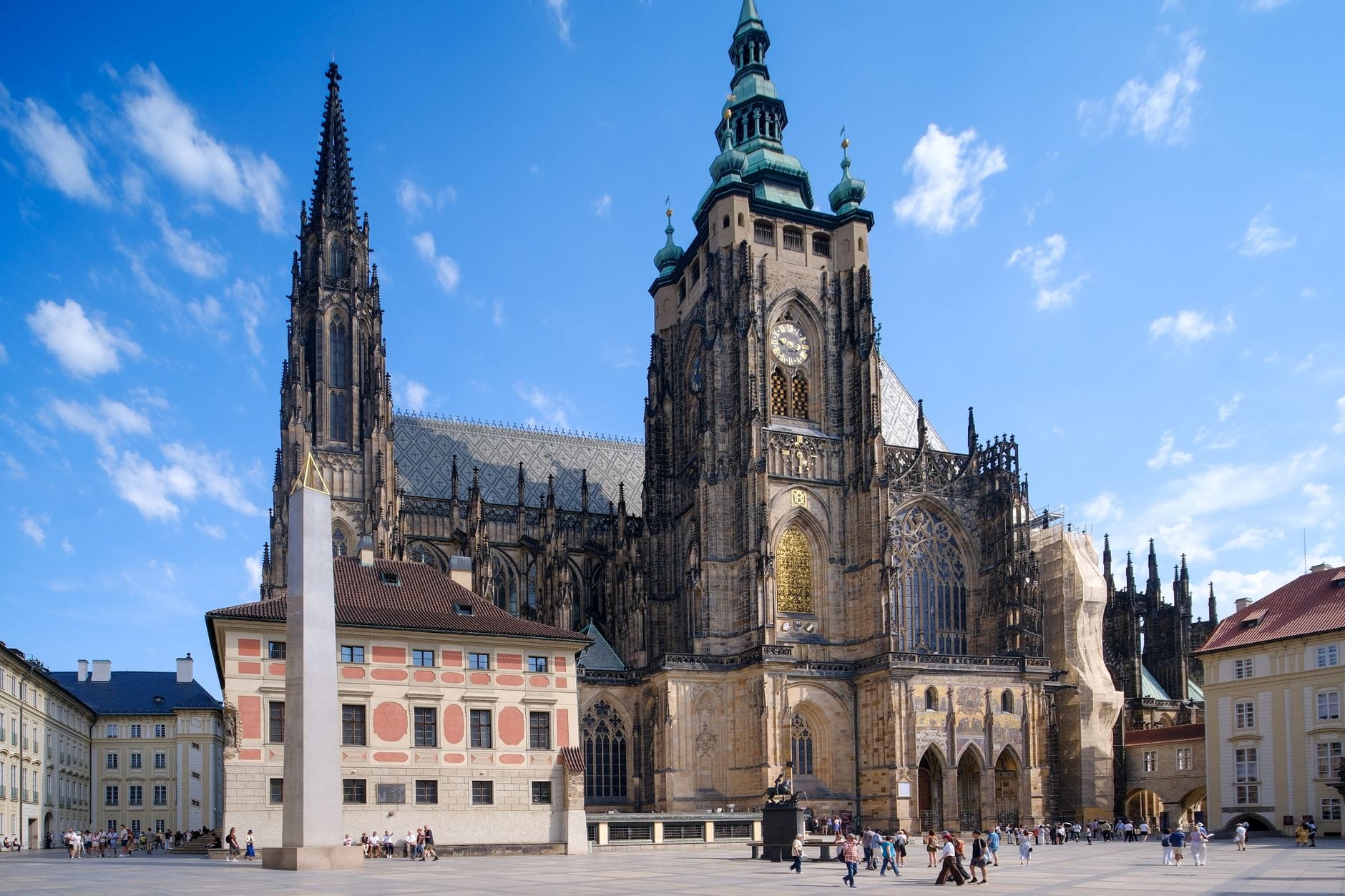
Inside the castle grounds, St. Vitus Cathedral is the dominant structure and one of the great Gothic buildings in Central Europe. Construction began in 1344 and continued for nearly six centuries, finally completing in 1929, which explains the remarkable compression of architectural styles visible in its nave, chapels, and windows. The south tower offers panoramic views across the city, though the staircase is steep and narrow.
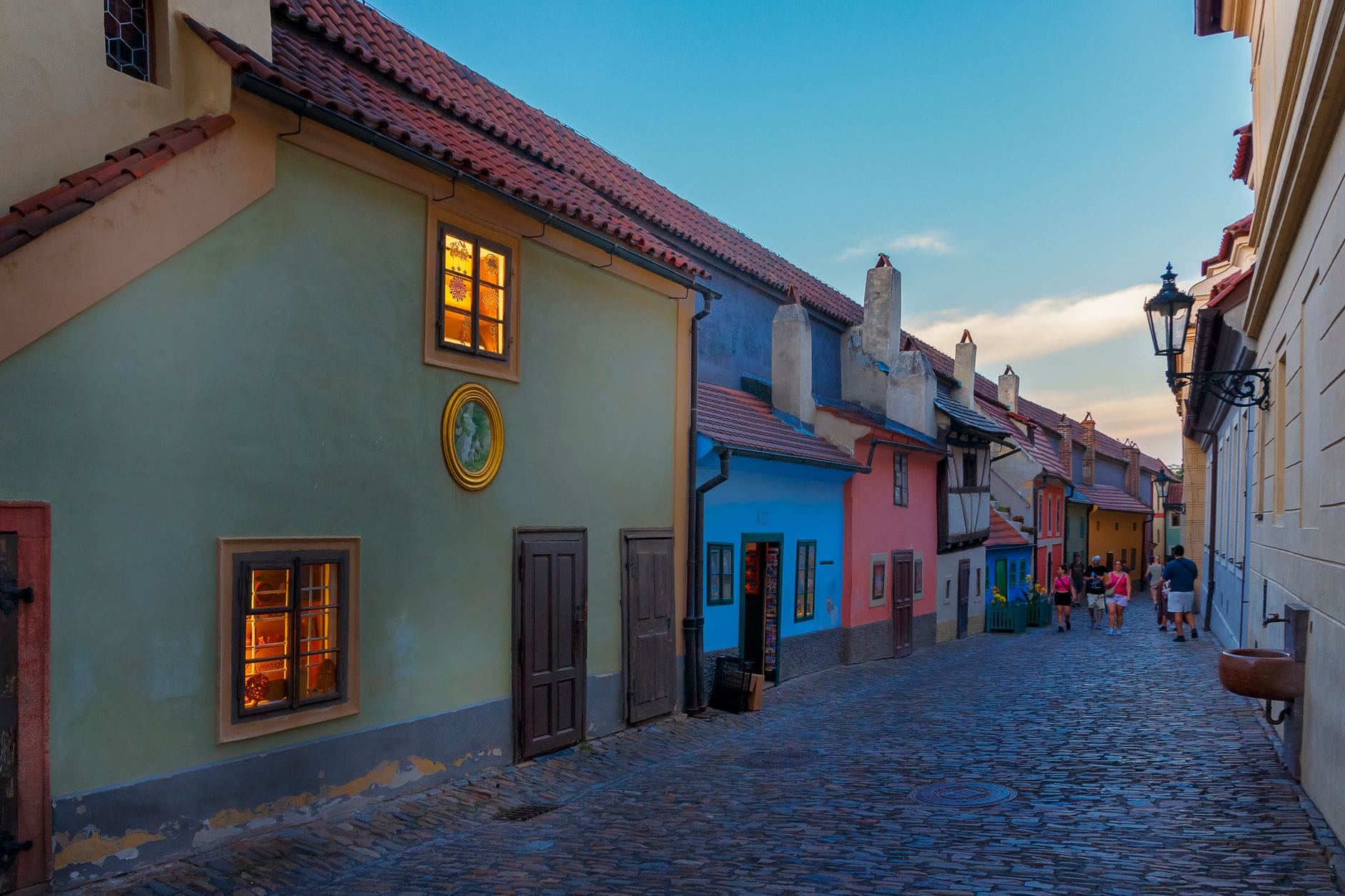
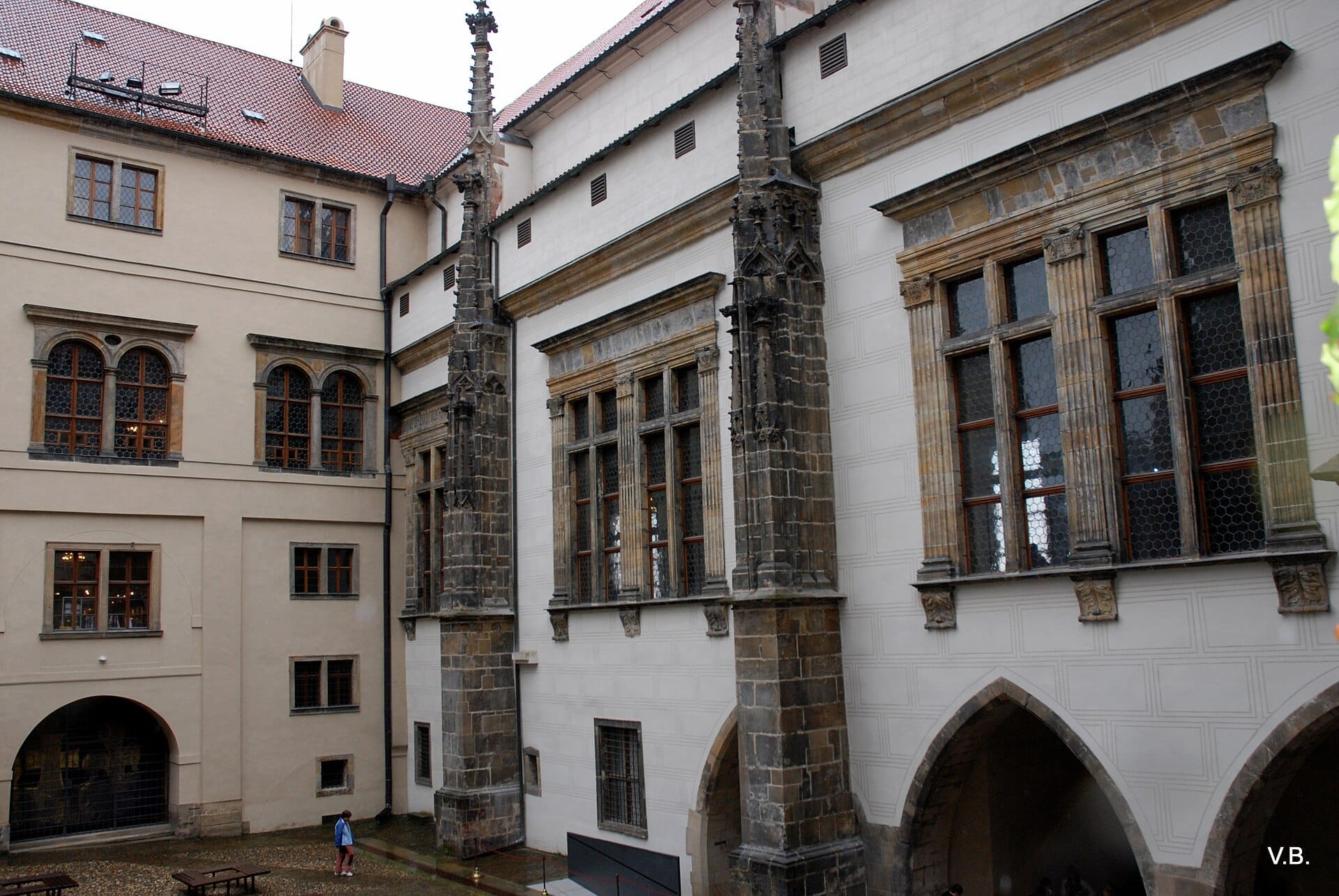
Also within the castle walls, Golden Lane is a street of tiny medieval houses built into the castle fortifications, later occupied by goldsmiths, castle guards, and, briefly, Franz Kafka, who worked in one of the cottages around 1916 and 1917. The houses are small enough that tall visitors will have to duck through doorways, and in summer they fill quickly. The Old Royal Palace next to the cathedral contains the vast Vladislav Hall, a late Gothic vaulted space that once hosted jousting tournaments and today gives a more convincing sense of medieval royal scale than almost anywhere else in Prague.
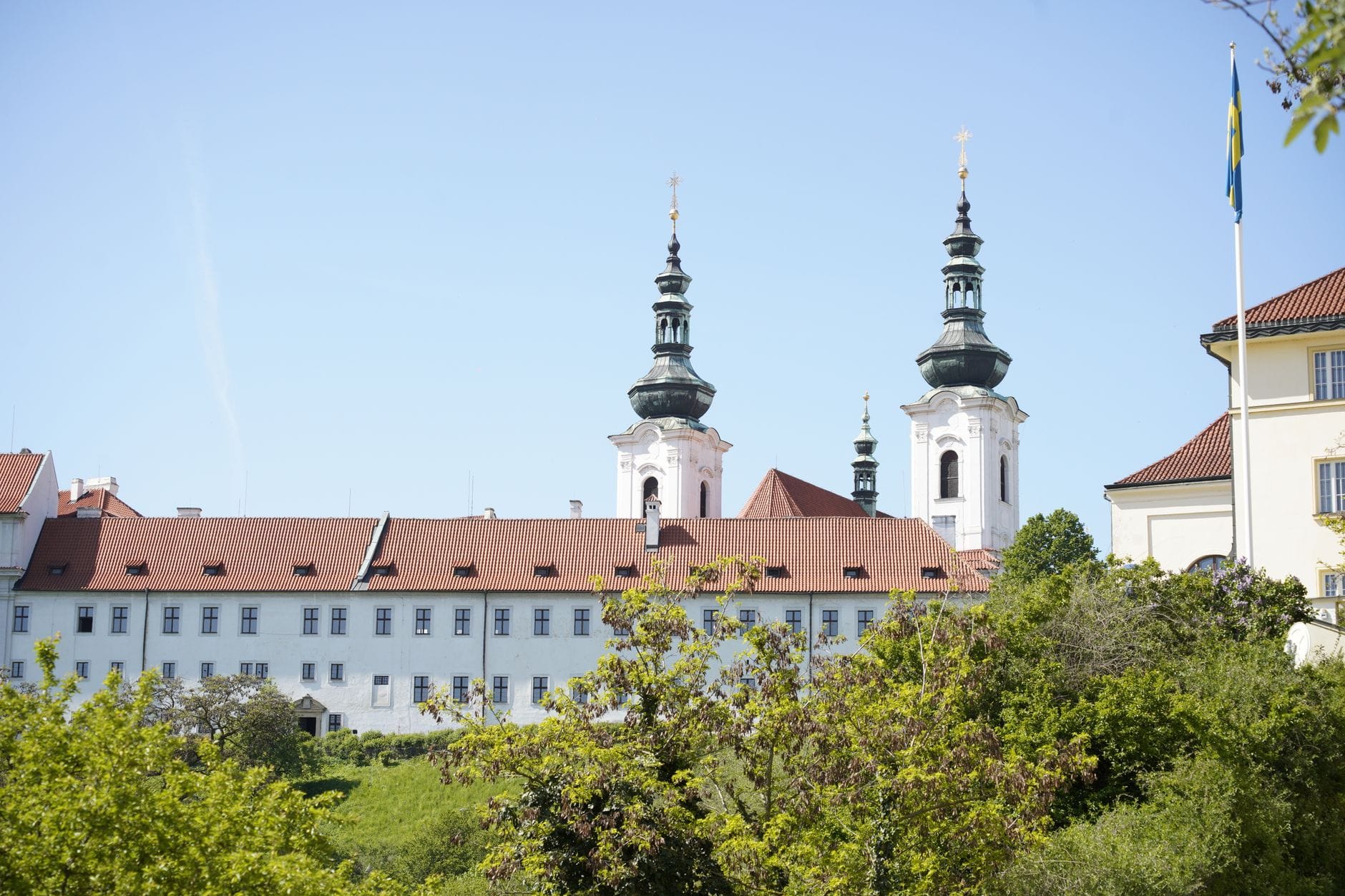
Outside the castle walls, Hradčany contains several major sites that many visitors overlook in their rush through the main gates. The Loreto Sanctuary on Loretánské náměstí is a substantial baroque pilgrimage complex with a famous carillon, an ornate chapel at its core, and a treasury of religious art. It draws far fewer visitors than the castle and rewards an unhurried visit. A short walk further west, Strahov Monastery houses two extraordinary library halls, the Theological Hall and the Philosophical Hall, whose ceiling frescoes and floor-to-ceiling shelves of ancient volumes are among the most photographed interiors in Prague.
St. Vitus Cathedral: Gothic masterpiece at the heart of the castle complex
Old Royal Palace and Vladislav Hall: medieval royal architecture on a grand scale
Golden Lane: historic cottages built into the castle fortifications
Loreto Sanctuary: baroque pilgrimage complex with carillon bells and a treasury
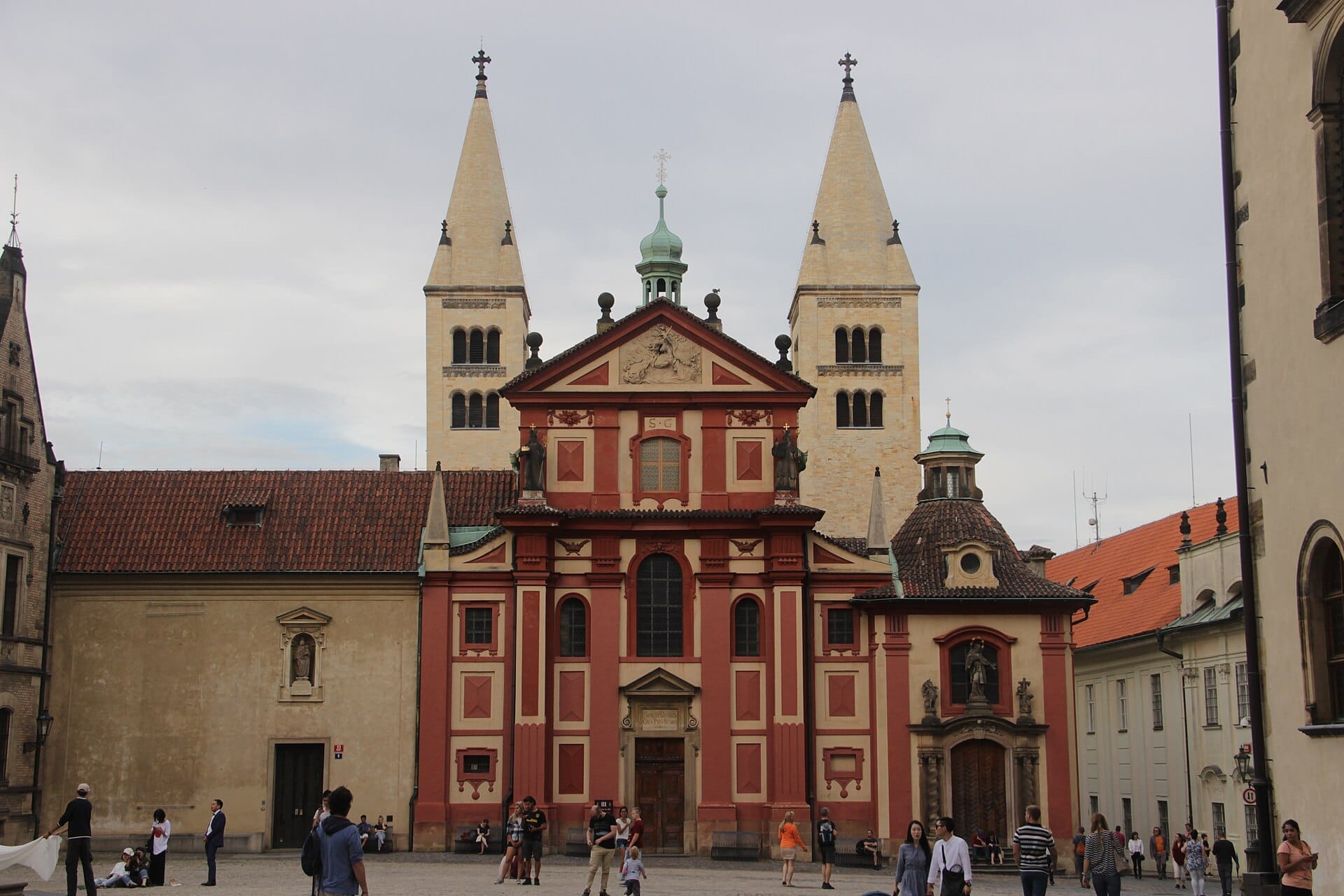
Strahov Monastery: two magnificent library halls dating to the 17th and 18th centuries
National Gallery in the Schwarzenberg Palace: Renaissance palace housing Czech Baroque art
Nový Svět quarter: intact historic lane north of the castle walls, largely overlooked by tour groups
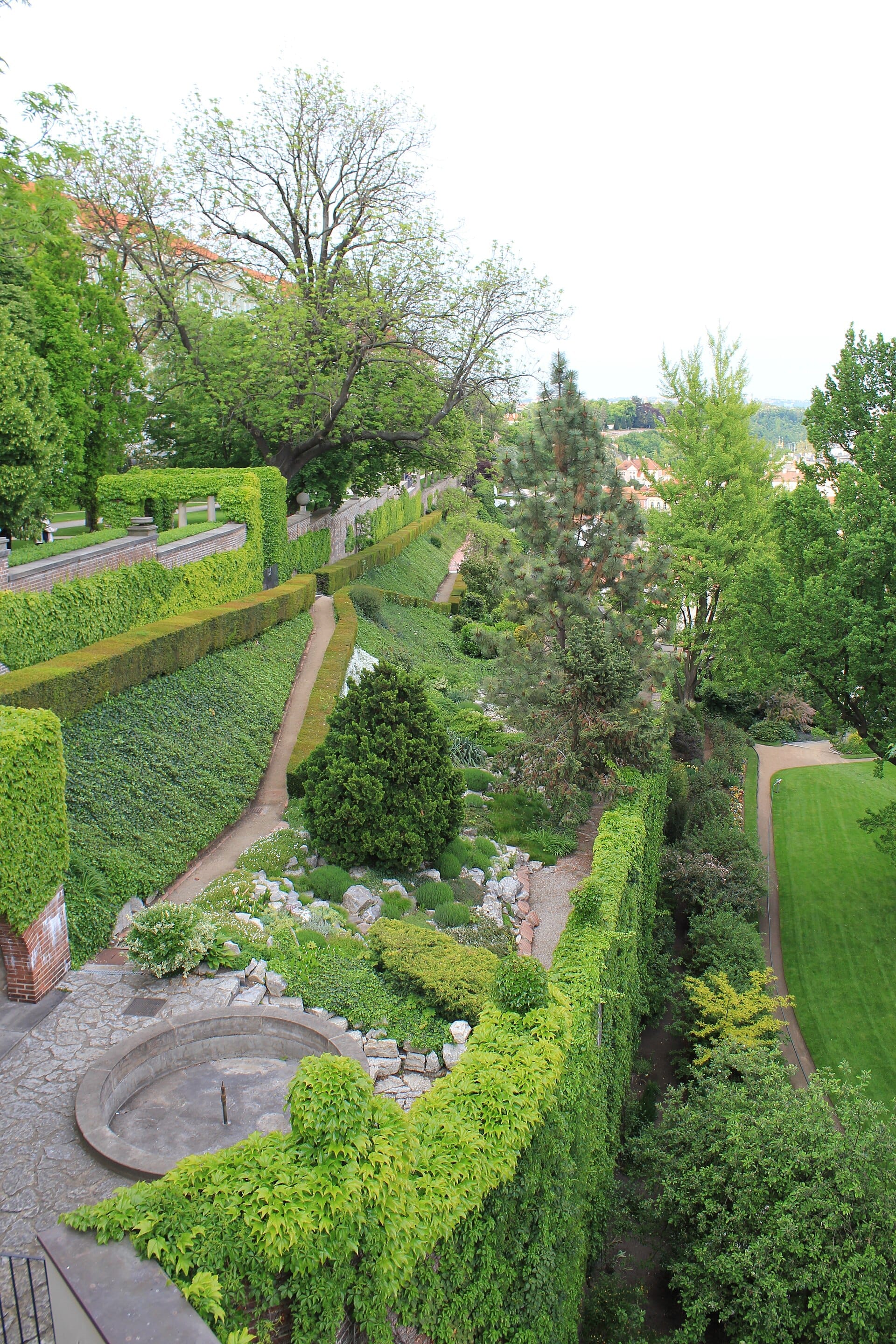
The Prague Castle Gardens on the southern slopes below the castle walls offer a more relaxed way to spend time in the district. The terraced gardens step down toward Malá Strana with formal hedgerows, fountains, and some of the best elevated views across the city's rooftops. They are open seasonally and are considerably quieter than the castle courtyards above.
ℹ️ Good to know
Prague Castle admission is divided into ticket tiers covering different combinations of attractions. The full circuit ticket covers the most sites. Entering the castle courtyards themselves is free, so you can walk through and see the exterior of St. Vitus Cathedral without paying. Check the Prague Castle Administration website for current pricing and opening hours before you visit, as both change seasonally.
Eating and Drinking
Hradčany is not a food destination. This is worth saying plainly, because visitors who arrive expecting a range of good restaurants will be disappointed. The district has very few permanent residents, almost no local neighborhood food culture, and a concentration of tourist-facing establishments whose prices and quality reflect a captive audience rather than competitive market forces. The cafés and restaurants immediately around the castle gates and along Nerudova Street charge significantly more than equivalent places in Old Town or Malá Strana, and the quality rarely justifies the premium.
That said, there are a handful of reliable options. The café attached to Strahov Monastery operates a small brewery on the premises and serves food alongside its beers in a setting that is functional rather than atmospheric but at least locally rooted. The monastery's beer tradition goes back centuries, and the pale and dark lagers brewed here are worth trying if you are already making the walk to Strahov. Pohořelec, the square just west of the castle district before you reach Strahov, has a small concentration of restaurants that cater to a slightly more local clientele than the places directly on the tourist corridor.
For a proper meal with good value, the practical advice is to descend into Malá Strana. The difference in price and quality between the tourist-adjacent restaurants of Hradčany and the better places on Tomášská or Tržiště in Malá Strana is substantial enough to justify the ten-minute walk downhill.
⚠️ What to skip
Restaurants with outdoor terraces offering 'castle views' along the approach routes tend to charge tourist prices for average food. If you see a menu without prices displayed or a waiter who approaches you on the street to invite you in, skip it and walk further from the main path.
Getting There and Around
Reaching Hradčany requires either walking uphill or using public transport, as private vehicles have very limited access to the district and parking is almost nonexistent near the castle. The Prague Integrated Transport network provides several good options, and choosing the right one can significantly change how you experience the arrival.
Tram lines 22 and 23 are the most convenient options for most visitors. The Pražský hrad stop deposits you directly at the northern castle entrance, a level approach that avoids the steep climb from Malá Strana. The Pohořelec stop, one stop further west, is the better choice if you are planning to start at Strahov Monastery and walk east through the district toward the castle. Both stops are served frequently throughout the day. Board tram 22 or 23 from Malostranské náměstí in Malá Strana, or ride them in from further afield via Náměstí Republiky or IP Pavlova.
Metro Line A serves two useful stations for Hradčany. Hradčanská station is on the northern side of the ridge and involves a moderate uphill walk to the castle entrance. Malostranská station, in Malá Strana below the hill, is the starting point for the classic approach via the Old Castle Steps (Staré zámecké schody), a picturesque but genuinely steep staircase that climbs directly to the eastern castle gate. This approach is the most atmospheric but the hardest on the legs, particularly when loaded with luggage or in summer heat.
For broader context on navigating Prague's public transport system, the getting around Prague guide covers ticket types, tram and metro maps, and practical advice for moving between districts.
Tram 22/23, stop Pražský hrad: direct level access to the northern castle entrance
Tram 22/23, stop Pohořelec: best for starting at Strahov and walking east
Metro Line A, Hradčanská: northern approach, moderate uphill walk
Metro Line A, Malostranská: southern approach via Old Castle Steps (steep, atmospheric)
On foot from Charles Bridge: cross the bridge, walk through Malá Strana, ascend via Nerudova Street (approx 25-30 minutes from Old Town)
Where to Stay
Very few hotels operate within Hradčany itself, and those that do tend toward the luxury segment, occupying converted palace buildings or boutique properties with castle views. Staying in the district puts you moments from the castle gates and gives you that rare early-morning window before the crowds arrive, but it comes at a price premium and with limited food and nightlife options on your doorstep.
For most visitors, staying in adjacent Malá Strana offers a better balance: still within easy walking distance of Hradčany, but with more restaurant choices, better transit connections, and a more genuine sense of daily Prague life. Old Town is another practical base if you want central positioning with easy tram access to the castle. The where to stay in Prague guide covers the full range of neighborhoods and hotel options across the city.
If you do choose to stay in Hradčany, prioritize properties on the western side of the district near Pohořelec rather than those immediately on the tourist corridor approaching the castle gates. The western end is quieter in the evenings, has slightly better access to the Strahov Monastery area, and sits closer to the tram stops.
Practical Tips for Visiting Hradčany
Hradčany pairs naturally with a full day that also takes in Malá Strana below it. A logical route is to tram up to the castle in the morning, spend three to four hours inside the complex, walk west to the Loreto and Strahov in the early afternoon, then descend into Malá Strana via Nerudova Street for a late lunch and an afternoon exploring the baroque lanes, gardens, and the riverside. This gives you both districts without excessive backtracking.
The views from Hradčany are among the best in Prague, but they are not the only elevated perspectives the city offers. For comparison, Petřín Lookout Tower on the adjoining hill to the south gives a different angle, while the best views in Prague guide maps out all the major vantage points across the city.
Wear comfortable shoes with grip. The cobblestones throughout Hradčany are uneven, and the approaches from below involve either steep stairs or extended inclines. In wet weather the stones become slippery, which is worth knowing if you are visiting in autumn or winter. Prague's winters are cold, typically between -1 and 3°C, but the castle and Strahov remain open and are considerably less crowded than in peak summer months.
💡 Local tip
Hradčany in winter has a genuinely different atmosphere from the summer peak. Snow on the castle walls, near-empty courtyards, and the low winter light hitting the cathedral's stone facade can be extraordinary. If you are visiting Prague in December or January, the castle is one of the few major sights that is actually improved by the off-season timing.
TL;DR
Hradčany is Prague's historic hilltop castle precinct, home to Prague Castle, St. Vitus Cathedral, Golden Lane, the Loreto Sanctuary, and Strahov Monastery.
Best experienced early morning or late afternoon to avoid the peak crowds that arrive mid-morning daily; the castle courtyards open at 6am and are free to enter.
Not a neighborhood for dining or nightlife: food options are limited and tourist-priced, and the district is largely quiet after the castle closes in the early evening.
Transit access is straightforward via tram lines 22 and 23 (stops Pražský hrad and Pohořelec) or Metro Line A (Hradčanská or Malostranská stations).
Best suited to travelers with a strong interest in history, architecture, and monumental spaces; pairs well with a half-day in Malá Strana and a visit to Petřín Hill on the same day.
Top Attractions in Prague Castle District (Hradčany)
Three days is the ideal amount of time to experience Prague's historic core without rushing. This itinerary takes you from the medieval lanes of Old Town to the hilltop grandeur of Prague Castle, the haunting beauty of Josefov, and the quieter pleasures of Malá Strana and Vyšehrad.
Prague's museum scene stretches far beyond the obvious. This guide covers the city's finest art, history, and specialist museums, from the National Gallery's scattered palaces to underground alchemical laboratories and intimate synagogues that carry centuries of history.
Prague rewards visitors differently depending on when you arrive. This guide breaks down every season with clear seasonal notes of weather, crowd levels, hotel prices, and key events, so you can choose the right time for your trip rather than the most popular one.
Prague rewards those who climb. From medieval towers rising above Old Town to forested hills and riverside terraces, the city's skyline is best understood from above. This guide covers every worthwhile viewpoint, whether you're after a paid 360-degree panorama or a free hilltop perch with a cold beer.
Prague sits at the center of Bohemia, making it one of the best-positioned cities in Europe for day trips. Within two hours by train or bus, you can reach a Gothic castle above a forested valley, a UNESCO town wrapped in a river bend, a Nazi memorial site, and one of Europe's notable spa resorts.
Prague has one of Central Europe's most efficient public transport networks, covering the city by metro, tram, and bus under a single integrated ticket system. This guide covers fares updated for 2026, airport transfer options, ride-hailing realities, and the mistakes most visitors make on their first day.
Seven days is the right amount of time to see Prague properly. This guide breaks down exactly how to spend each day, which neighborhoods to prioritize, what the castle complex actually demands in terms of time, and how to fit in a day trip without losing a full day to logistics.
Prague's historic center packs over 1,100 years of architectural history into roughly 870–900 hectares, from Romanesque crypts and Gothic cathedrals to one of the world's most substantial collections of Cubist buildings. This guide breaks down every major style, tells you exactly what to see, and gives you the practical details to plan your visit.
Prague's Christmas markets run from late November through early January, turning Old Town Square and Wenceslas Square into some of Europe's most atmospheric winter destinations. This guide covers every major market, what to eat and drink, how to avoid the worst crowds, and exactly what to budget.
David Černý is the Czech Republic's most provocative public artist, and Prague is his gallery. This guide covers his major installations across the city, how to build a self-guided walking route, and what you need to know before you go.
Prague sets a high bar for romance: Gothic spires, cobblestone lanes, river views, and a classical music scene that rivals much larger capitals. This guide covers the best things to do in Prague for couples across every season, from iconic spots timed to avoid the crowds to quieter corners most visitors miss entirely.
Prague rewards those who look beyond Charles Bridge and Old Town Square. This guide reveals the city's quieter side: Baroque gardens tucked behind unmarked doors, medieval cellars beneath busy streets, panoramic hilltops where locals outnumber tourists, and neighborhoods reshaping Prague's creative identity.
Prague's history spans more than a thousand years of empire, revolution, occupation, and reinvention. This guide breaks down the key eras, explains what shaped the city's architecture and culture, and tells you exactly where to see that history in person.
Summer is Prague's most popular season, but it comes with trade-offs: intense heat, peak-season crowds, and higher prices. This guide covers everything you need to plan a smart trip to Prague in June, July, or August, from booking timelines to beat-the-crowd strategies.
Winter strips Prague back to its essentials: gothic spires against grey skies, Christmas markets on cobblestone squares, and a fraction of the summer crowds. This guide covers the real conditions — temperatures, daylight, costs, and which attractions stay open — so you can plan with confidence.
Josefov is one of Europe's most significant Jewish heritage sites, packed into just a few city blocks between Old Town Square and the Vltava River. This guide covers every major site, how ticketing works, the best time to visit, and what most visitors get wrong before they arrive.
Prague delivers five-star experiences at prices that would seem impossible in Paris or London. This guide covers the best luxury hotels with practical pricing data, the fine-dining restaurants worth booking weeks ahead, and the high-end experiences that go well beyond the standard tourist circuit.
Prague nightlife runs deeper than the tourist bars around Old Town Square. This guide breaks down the city's after-dark scene by district, covering the best clubs, bars, jazz venues, and rooftop spots, with practical advice on prices, timing, and where locals actually go.
Prague is one of Europe's better-value capitals, but it is not the ultra-cheap destination the myth suggests. This guide breaks down exactly what things cost in 2026, where to save money without sacrificing the experience, and which tourist traps quietly drain your wallet.
Prague rewards shoppers across every budget, from Bohemian crystal and hand-carved puppets to international luxury labels on Pařížská Street. This guide breaks down the best shopping districts, markets, malls, and genuinely worthwhile souvenirs, with practical details on hours, transport, and what to skip.
The journey from Prague to Munich covers just under 400 km and can be done by direct train, bus, or flight. This guide breaks down every realistic option with prices, journey times, and practical booking advice so you can choose the right one for your trip.
The Prague to Vienna corridor is one of Central Europe's best-connected routes, with trains, buses, and flights running daily. This guide breaks down every option by cost, comfort, and real travel time so you can pick the right one for your trip.
This step-by-step guide walks you through Prague's most rewarding route, from the medieval core of Old Town across Charles Bridge and up to the castle complex on Hradčany hill. Covers distances, timing, ticket costs, seasonal advice, and the shortcuts most visitors miss.
Prague is one of Europe's most rewarding cities for families, offering everything from a world-class zoo and a funicular railway to interactive museums and vast green parks. This guide covers the best activities for children of all ages, how to get around cheaply, which neighborhoods work best for families, and what to skip.
Prague rewards visitors with one of Europe's most intact medieval city centres, a world-class Jewish quarter, and neighbourhoods far beyond the tourist trail. This guide covers the best things to do in Prague across every budget and interest, with crowd warnings, seasonal advice, and precise logistics.
Prague's dining scene is far more nuanced than the tourist-trap stereotype suggests. This guide breaks down the best neighborhoods for food, what to order, which restaurants are worth booking in advance, and how much to expect to pay — from a 90 CZK bowl of goulash to a Michelin tasting menu.
Choosing where to stay in Prague shapes your entire trip. This guide breaks down every major neighborhood by location, price, atmosphere, and drawbacks so you can book with confidence, whether you have three days or three weeks.