Prague to Vienna: Train, Bus, Flight & Every Way to Get There
The Prague to Vienna corridor is one of Central Europe's best-connected routes, with trains, buses, and flights running daily. This guide breaks down every option by cost, comfort, and real travel time so you can pick the right one for your trip.
Plan and book this trip
Tools from our partner Travelpayouts help you compare flights and hotels. If you book through them, we may earn a commission at no extra cost to you.
Flights
Hotels map
TL;DR
- The train is the most practical option for most travelers: direct services from Praha hlavní nádraží to Wien Hauptbahnhof take around 4 hours, with advance tickets from roughly €13.
- Buses are cheaper and surprisingly frequent (40+ departures per day), but journey times are similar to trains and comfort levels vary.
- Flying sounds fast, but door-to-door flight time usually matches or beats the train by very little — factor in airport transfers from central Prague and security queues.
- Book trains 30–60 days ahead for the best prices; walk-up fares can be 3–4x more expensive.
- Both cities are in the Schengen Area, so no passport control at the border — you cross seamlessly.
The Route at a Glance
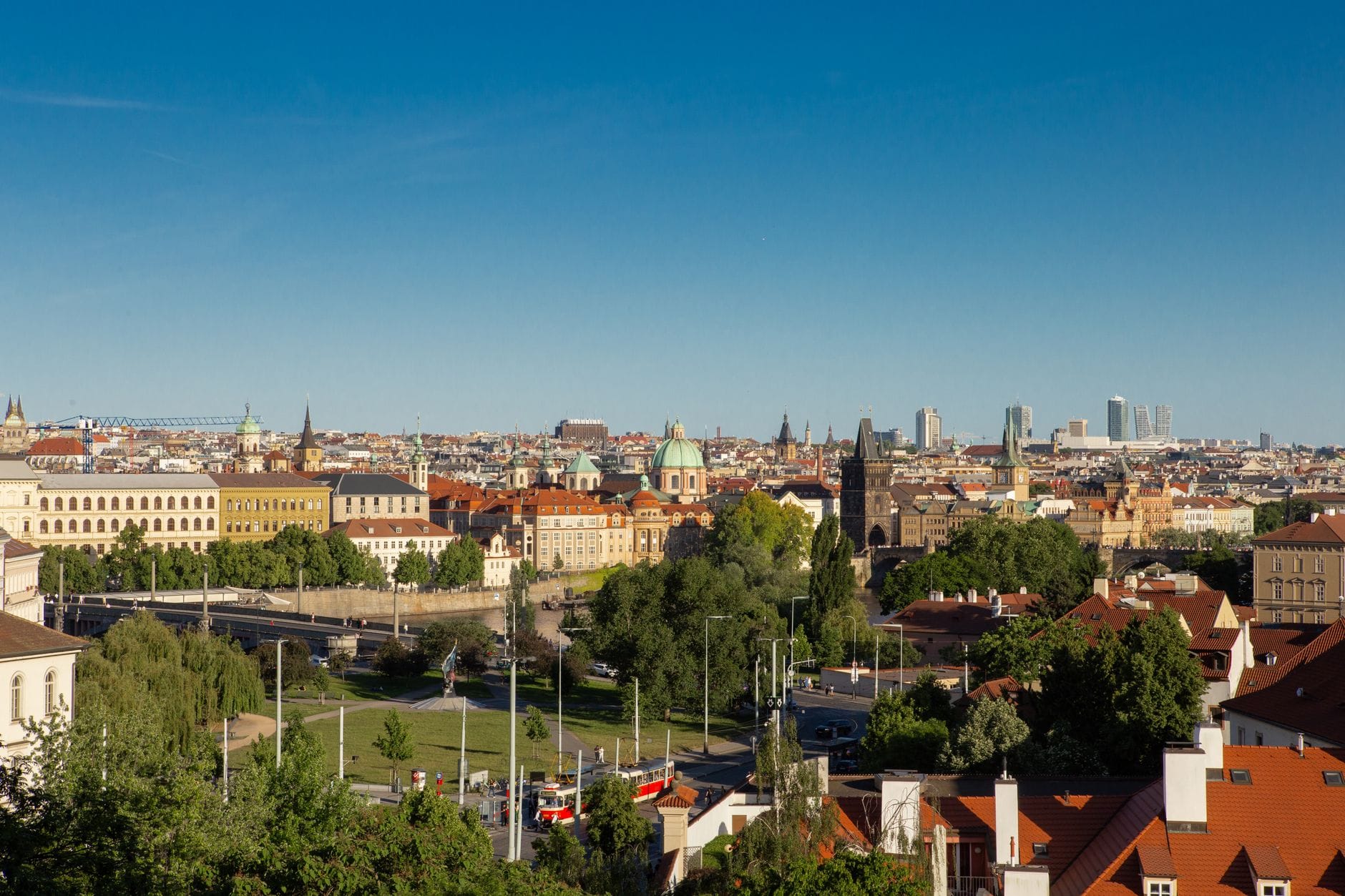
Prague and Vienna sit roughly 250–254 km apart by rail, making this one of the more manageable intercity routes in Central Europe. Both capitals are well-served by modern infrastructure, and the corridor has enough demand that you'll find departures throughout the day regardless of which transport mode you choose. The Czech koruna (CZK) is Prague's currency, while Vienna uses the euro, so budget accordingly if you're splitting time between the two cities.
If you're combining both destinations on a longer trip, it's worth reading a 3-day Prague itinerary before deciding how many days to allocate to each city. Most travelers find three full days in Prague is the minimum to see the major landmarks without rushing.
ℹ️ Good to know
Both Prague and Vienna are in the Schengen Area. There is no passport control at the Czech-Austrian border, though your documents may be checked on board. Carry your passport or EU ID card regardless.
Taking the Train: The Recommended Option
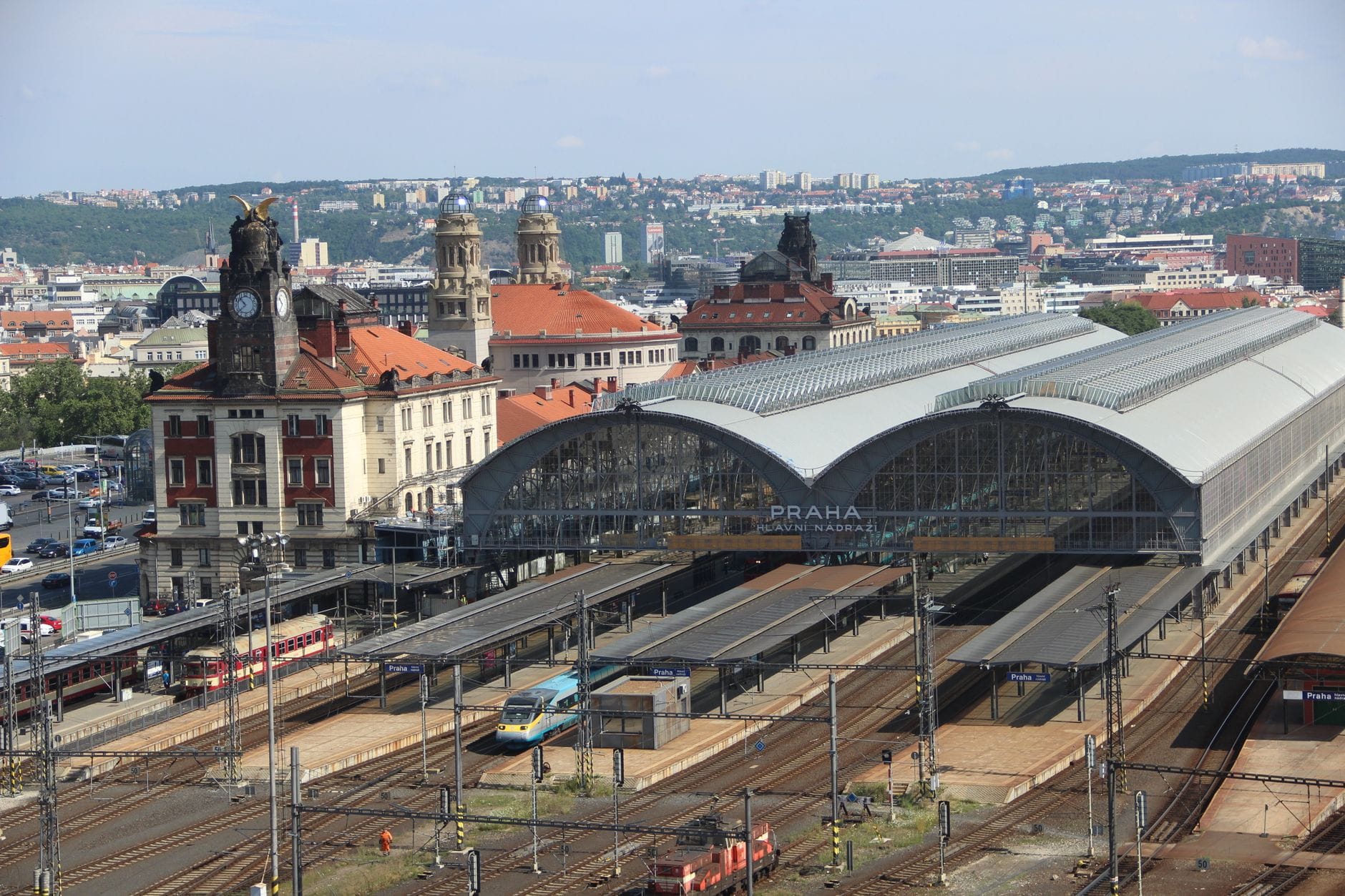
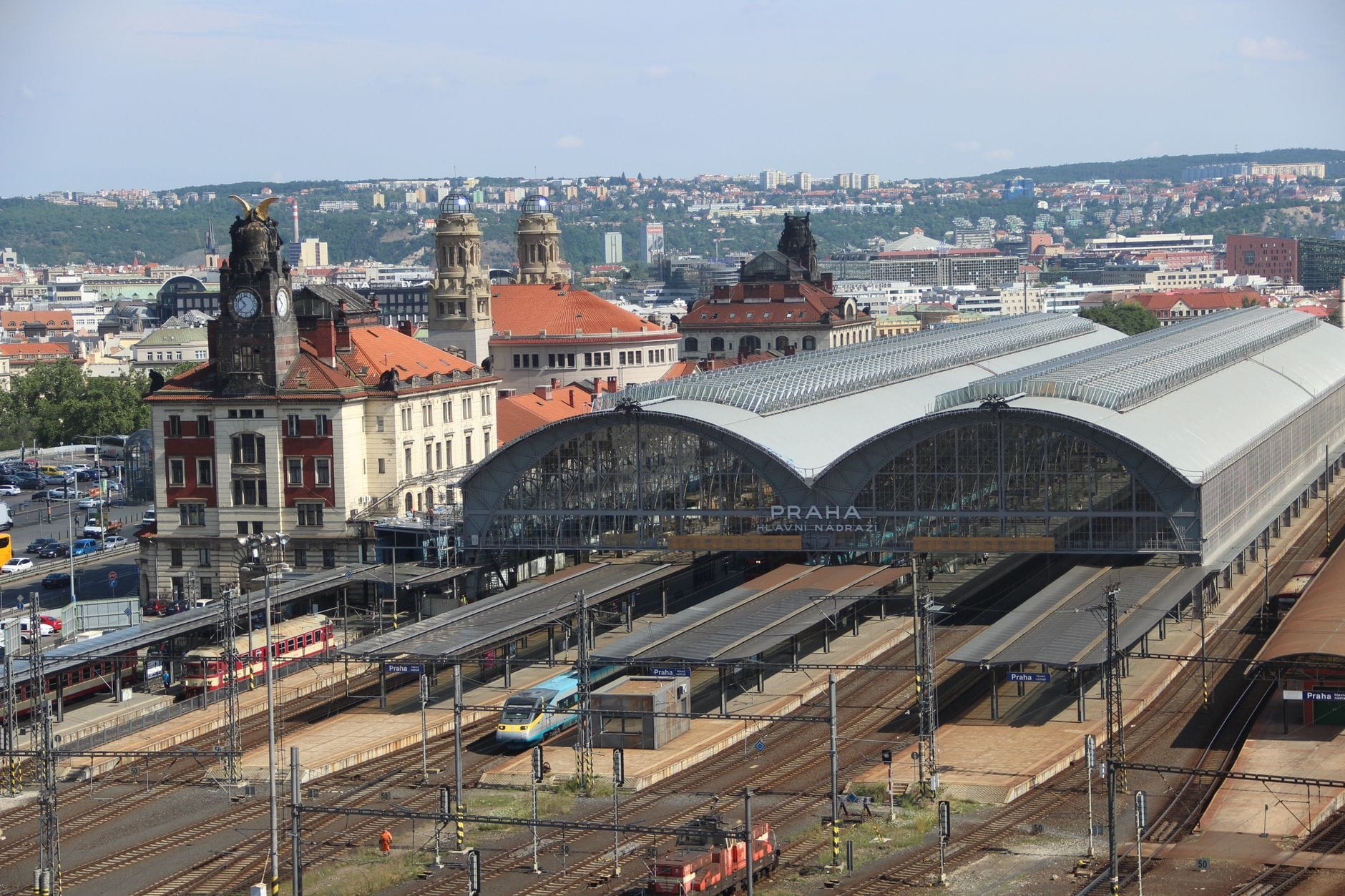
For the vast majority of travelers, the train is the smart choice on this route. Direct services run from Praha hlavní nádraží (Prague Main Station) to Wien Hauptbahnhof (Vienna Central Station) multiple times daily, operated primarily by ÖBB Railjet and Czech Railways (ČD), with RegioJet also offering competitive services on certain departures. Fastest trains cover the route in around 3 hours 57 minutes to 4 hours 15 minutes, depending on the service.
Roughly 10 to 13 direct trains run daily, spaced approximately every two hours from early morning through late evening. Both departure and arrival stations are central: Praha hlavní nádraží is on the Prague metro (Line C), and Wien Hauptbahnhof is connected to Vienna's U-Bahn. You step off the train and into the heart of each city, with no expensive taxi or airport shuttle required.
- Advance economy tickets From around €12.90–€15 in 2nd class if booked 30–60 days ahead. These are non-flexible, non-refundable fares.
- Standard advance fares Typically €23–€35 for tickets booked 7–30 days out, depending on the service and operator.
- Walk-up / flexible fares Can reach €45–€60 or more in 2nd class on popular departure times. 1st class costs more again.
- Booking platforms Book directly via ÖBB (oebb.at), ČD (cd.cz), or third-party platforms like Rail Europe, Trainline, or Omio. Prices are usually identical across platforms, though fees may vary.
✨ Pro tip
ÖBB Railjet trains offer a proper bistro car with hot food and drinks, power sockets at most seats, and decent legroom in 2nd class. RegioJet services are known for free coffee and onboard entertainment. Both are a comfortable way to spend four hours.
One practical note: rail timetables on this route typically update in mid-December each year, which can shift exact departure times. If you're booking more than a couple of months out, double-check the schedule closer to your travel date. Tickets are generally released 60–90 days in advance, so planning ahead pays off both for availability and price.
Taking the Bus: Cheapest, But Know the Trade-Offs
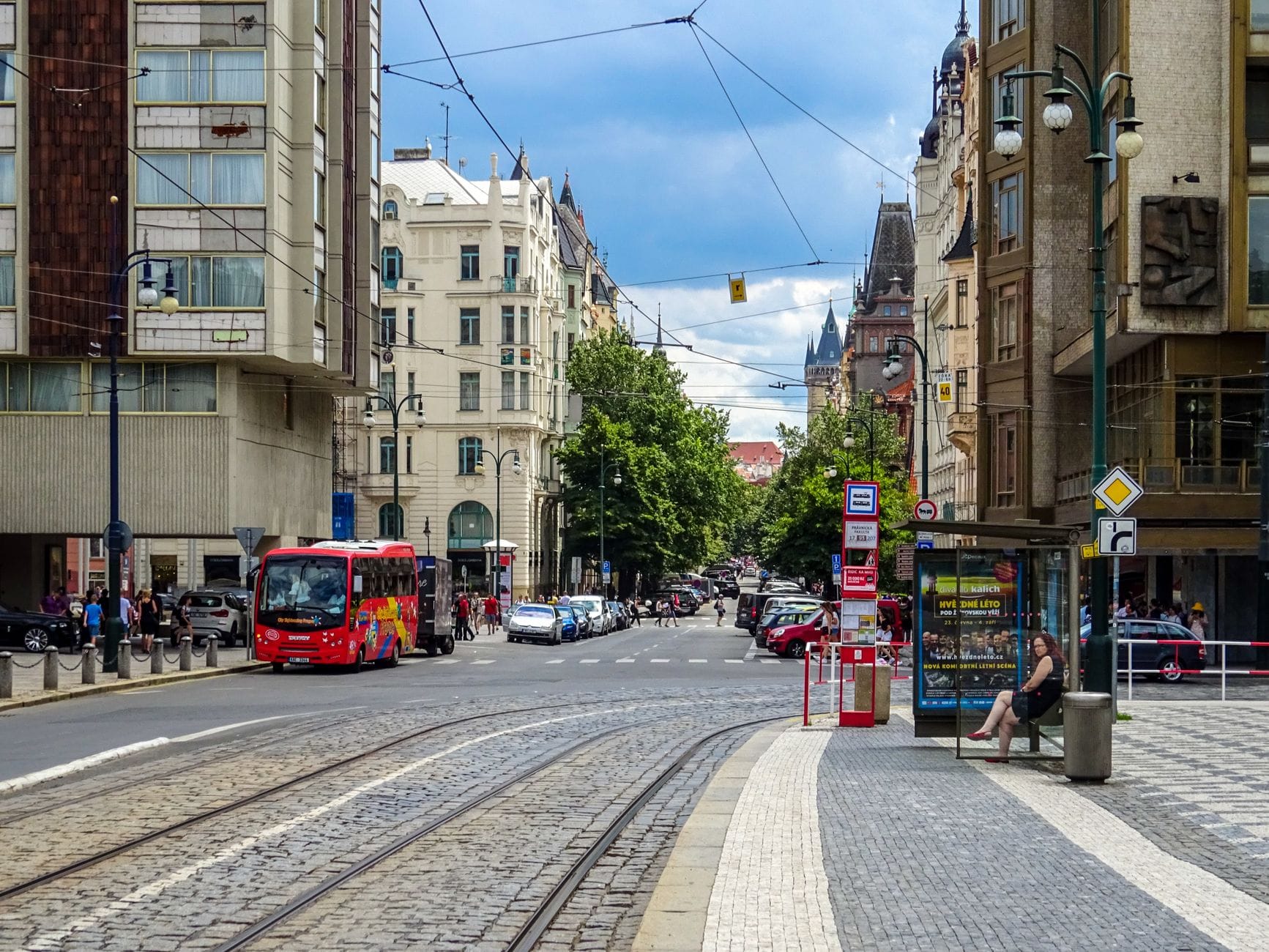
The bus is genuinely competitive on price, and the sheer frequency is impressive: dozens of bus departures run daily between Prague and Vienna, from just after midnight to just before midnight. FlixBus is the dominant operator, with routes typically departing from near Praha hlavní nádraží and arriving at Vienna's International Bus Terminal (VIB). RegioJet also operates on this corridor.
Journey times run from about 3 hours 55 minutes to 4 hours 30 minutes, which means the bus can actually be faster than some slower train services on paper. The catch is comfort and reliability. Bus travel involves highway conditions, occasional traffic delays, and rest stop breaks. For a four-hour journey, that matters. Advance bus tickets start around €11–€15, with typical fares in the €22–€35 range depending on how far ahead you book.
⚠️ What to skip
Bus prices fluctuate with demand just like trains. A €12 advance ticket is genuinely available, but the same seat booked two days before departure on a Friday afternoon can cost three times as much. Check multiple operators before assuming buses are always cheaper.
Flying: Technically Possible, Rarely Worth It
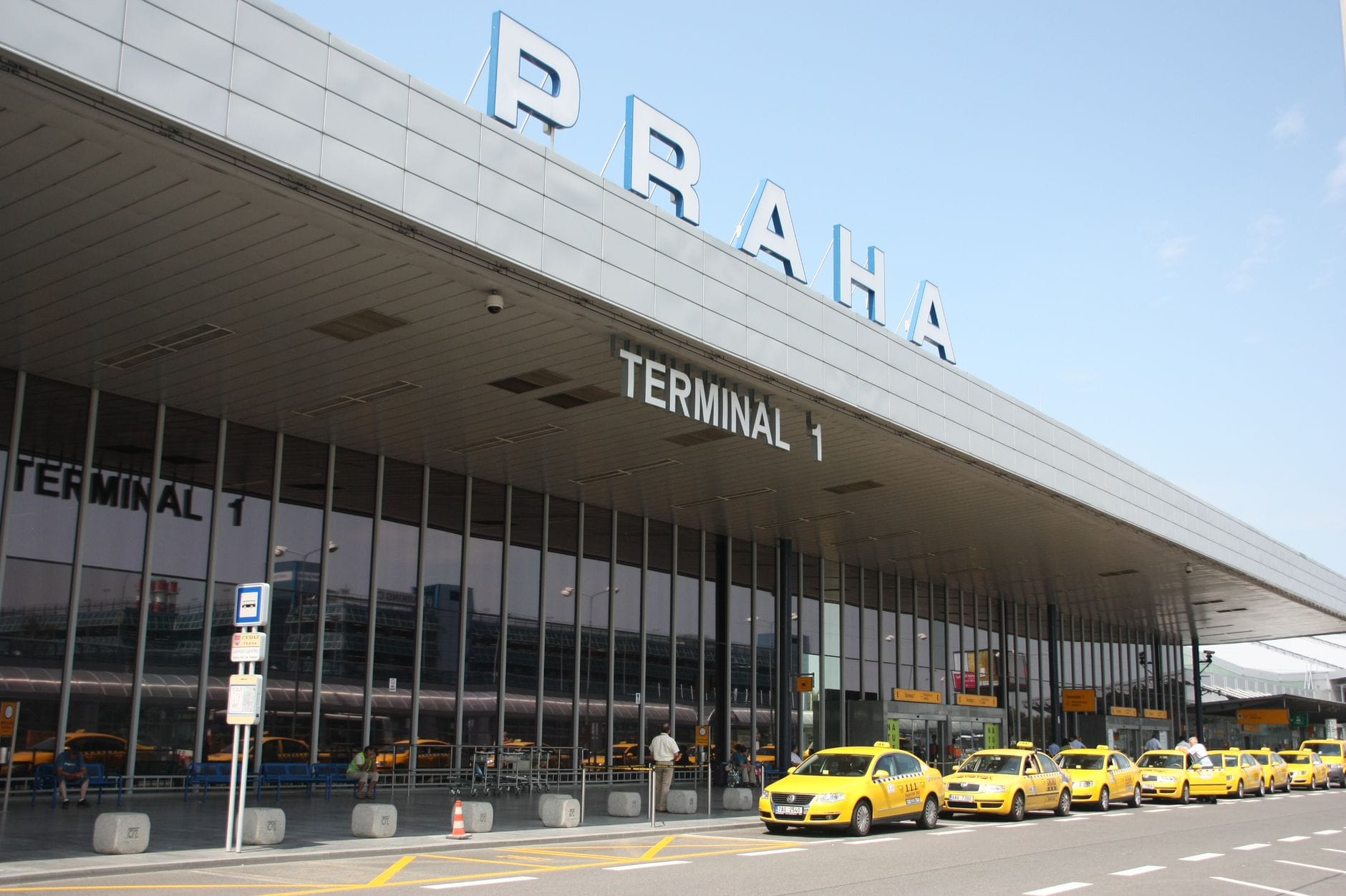
Austrian Airlines operates nonstop flights between Prague's Václav Havel Airport (PRG) and Vienna International Airport (VIE), with around three daily departures. Airborne time is under an hour. The problem is everything around it. Václav Havel Airport is about 15–17 km northwest of Prague city centre; Vienna Airport is around 18 km southeast of central Vienna. Factor in getting to both airports, check-in time, security, and then the transfer at the other end, and your total door-to-door time often hits 4 to 5 hours — the same as a direct train from city centre to city centre.
One-way fares start around €80–€130 when booked in advance, which already undercuts the train's price advantage significantly. Add airport transfers on both ends and the gap widens further. Flying Prague to Vienna makes sense only in very specific situations: if you're already at the airport connecting from a long-haul flight, or if you find an unusually cheap fare and don't mind the airport hassle. For most travelers planning this leg of a trip, the train wins.
Comparing Your Options Side by Side
- Train (direct, ÖBB/ČD/RegioJet) ~4 hours city centre to city centre. From €13 advance, €45–60 walk-up. Best overall balance of comfort, price, and convenience. 10–13 departures daily.
- Bus (FlixBus/RegioJet) ~4–4.5 hours. From €11–15 advance. Cheapest option but less comfortable on longer journeys. 40+ departures daily give maximum flexibility.
- Flight (Austrian Airlines) ~4–5 hours door to door despite <1 hour airborne. From €80–130 one-way. Only worthwhile in exceptional circumstances.
- Private transfer / taxi 3–3.5 hours driving time, but costs several hundred euros for a private car. Suited to groups splitting costs or travelers with significant luggage.
Practical Tips Before You Travel
Praha hlavní nádraží is well-connected within Prague: it sits on Metro Line C (red line) and serves as a hub for trams and regional buses. If you're staying in Malá Strana or near Prague Castle, allow 20–30 minutes to reach the station. From Old Town, it's a short metro ride or a 15-minute walk.
Both Czech Railways and ÖBB allow you to book online and show a mobile ticket, so there's no need to queue at the station. If you're buying on the day, machines at Praha hlavní nádraží accept credit cards and cover international routes. Buying at the counter is also possible, though queues can build during peak hours.
- Book train tickets 30–60 days in advance for the best prices, especially for weekend or summer travel.
- If you book via a third-party platform, check whether it charges a booking fee on top of the base fare.
- Carry some Czech koruna (CZK) for Prague and euros for Vienna — ATMs at both main stations are reliable.
- Luggage storage is available at Praha hlavní nádraží if you need to store bags before departure.
- RegioJet trains include free hot drinks in standard class and are often cheaper than ÖBB on the same route.
- The border crossing is seamless (Schengen), but train staff may walk through the carriage to check tickets and documents.
If you're planning your time in Prague before the journey, getting around Prague by public transport is straightforward and inexpensive. Prague's integrated transit system (PID) covers metro, trams, and buses under a single ticket structure. For orientation, choosing where to stay in Prague relative to the main station can save meaningful time on departure day.
💡 Local tip
If you're doing a one-way trip and want to see more of Central Europe, consider returning from Vienna by a different route — Bratislava is just an hour from Vienna by train or bus, and could be added as a short stop before flying home from Vienna or continuing onward.
FAQ
How long does the train from Prague to Vienna take?
Direct trains take approximately 4 hours, with the fastest services arriving in around 3 hours 57 minutes. Journey time varies slightly depending on the operator and specific service. Both departure and arrival stations are in the city centres, so no additional transfer time is needed.
How much does the Prague to Vienna train cost?
Advance 2nd class tickets start from around €12.90–€15 if booked 30–60 days ahead. Standard fares booked 1–4 weeks out typically run €23–€35. Walk-up or fully flexible tickets can reach €45–€60 or more. Prices are dynamic, so earlier booking consistently delivers better fares.
Is the bus from Prague to Vienna faster than the train?
On paper, some bus services are marginally faster than slower train departures, with journey times from around 3 hours 55 minutes. However, buses are subject to highway traffic and rest stops, while trains run on a fixed schedule with no traffic delays. In practice, travel times are very comparable, and the train offers a more reliable experience.
Do I need a visa or passport to travel from Prague to Vienna?
Both the Czech Republic and Austria are Schengen Area members, so there is no passport control at the border. EU and EEA citizens can travel with a national ID card. Non-EU citizens should carry a valid passport. While border checks are rare, they do occasionally occur on trains, so always carry your travel documents.
Where do trains and buses depart from in Prague?
The main train station is Praha hlavní nádraží (Prague Main Station), located on Metro Line C. Most FlixBus and RegioJet bus services also depart from stops near or adjacent to the main station, though some buses use a separate stop, so check your ticket for the exact boarding point.