Where to Stay in Prague: Best Neighborhoods & Hotels
Choosing where to stay in Prague shapes your entire trip. This guide breaks down every major neighborhood by location, price, atmosphere, and drawbacks so you can book with confidence, whether you have three days or three weeks.
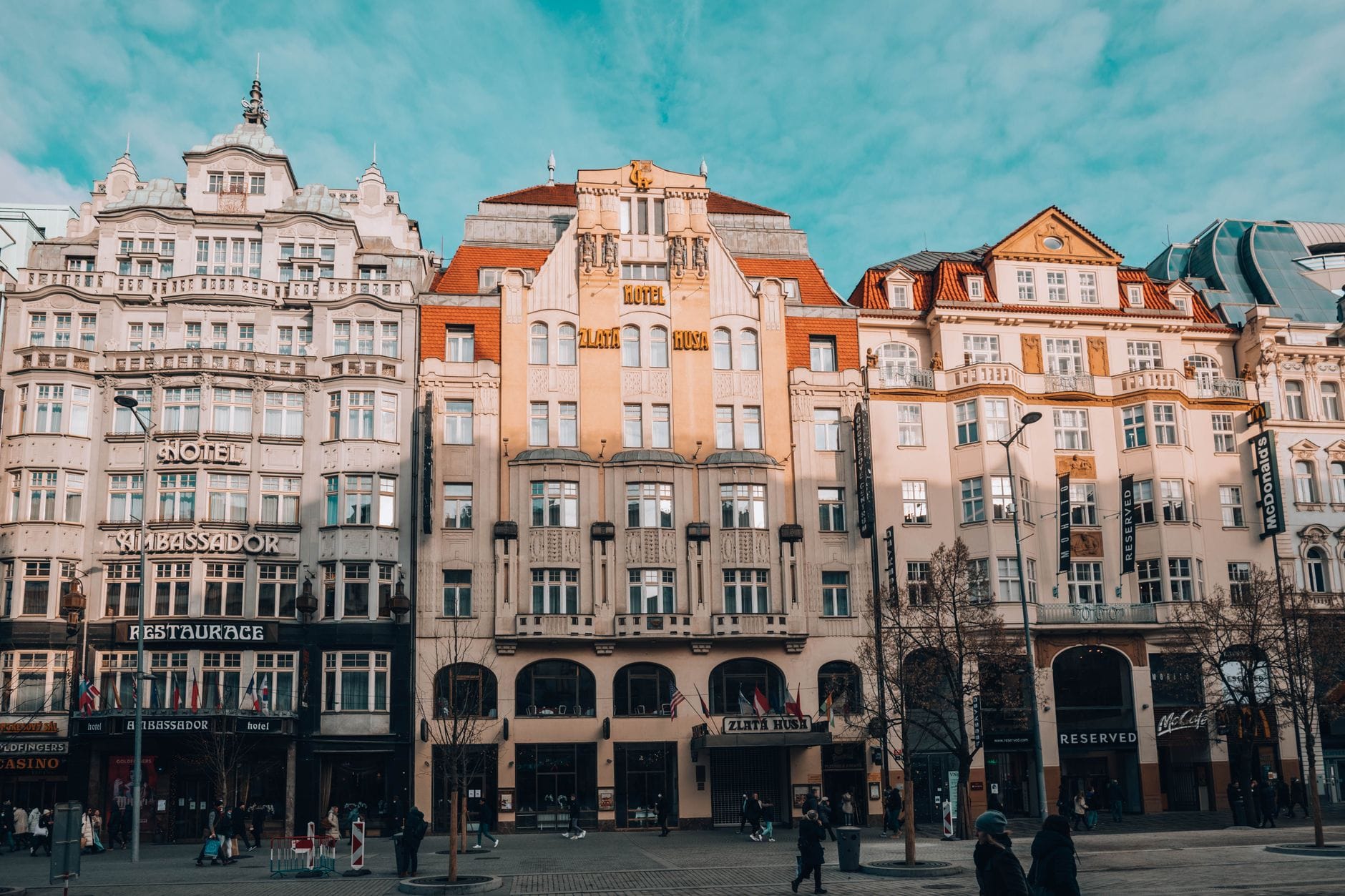
Plan and book this trip
Tools from our partner Travelpayouts help you compare flights and hotels. If you book through them, we may earn a commission at no extra cost to you.
Flights
Hotels map
TL;DR
- Old Town (Staré Město) puts every major sight within a 10-minute walk but costs the most, typically USD 150–280 per night for mid-range hotels.
- Vinohrady and Karlín offer 20–40% lower prices than the historic core with easy metro and tram connections, making them smart picks for longer stays.
- You do not need to stay in Old Town to be central. Prague's metro (lines A, B, C) and tram network put most neighborhoods within 15–20 minutes of Old Town Square.
- Book 2–3 months ahead for July–August and December; New Year's and Easter also see sharp price spikes in the historic center.
- See the full guide to getting around Prague to understand how public transport connects each neighborhood.
How Prague Is Organized (and Why It Matters for Accommodation)
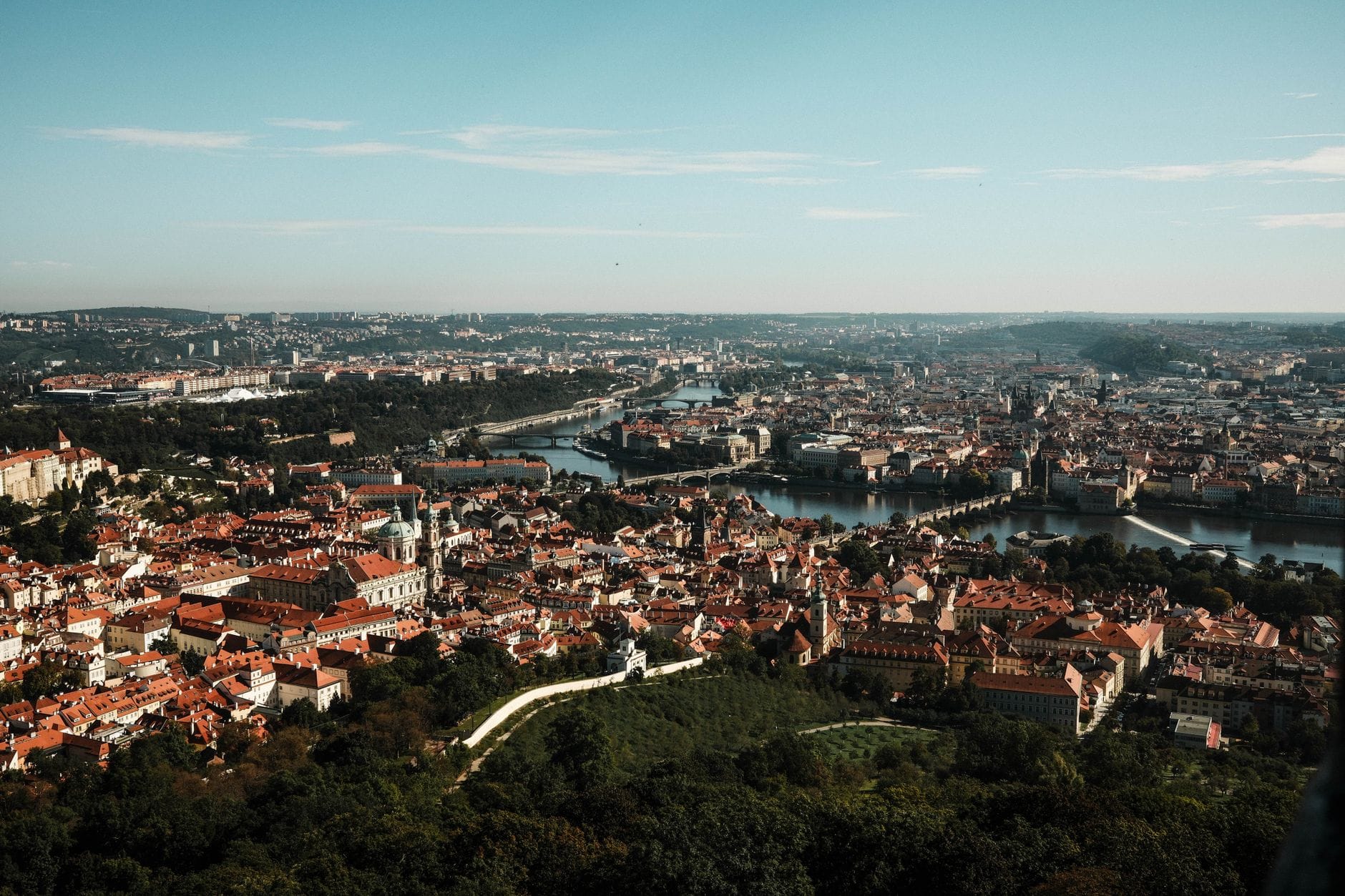
Prague sits in the historical region of Bohemia, divided by the Vltava River into a right bank (Old Town, New Town, Vinohrady, Žižkov, Karlín) and a left bank (Malá Strana, Hradčany, Smíchov). The city covers 496 km² and has around 1.3 million residents, but the areas most visitors care about are compact enough to walk across in roughly an hour. Understanding this geography before booking a hotel saves a lot of frustration.
Administratively, Prague uses numbered districts (Prague 1 through 10 and beyond), but most locals and hotels refer to traditional neighborhood names. Prague 1 covers the historic core: Old Town, Josefov, parts of New Town, and Malá Strana. This is also where accommodation prices peak. Every district beyond Prague 1 offers progressively lower rates, and for most visitors, the trade-off in travel time is minimal given the density of the metro and tram network.
ℹ️ Good to know
Prague uses Czech koruna (CZK) as its currency, not euros. USD 1 buys roughly 22–24 CZK depending on current rates. Always check the Czech National Bank's published exchange rates before your trip, and pay in CZK rather than accepting dynamic currency conversion at hotels or ATMs.
Old Town (Staré Město): Maximum Convenience, Maximum Price
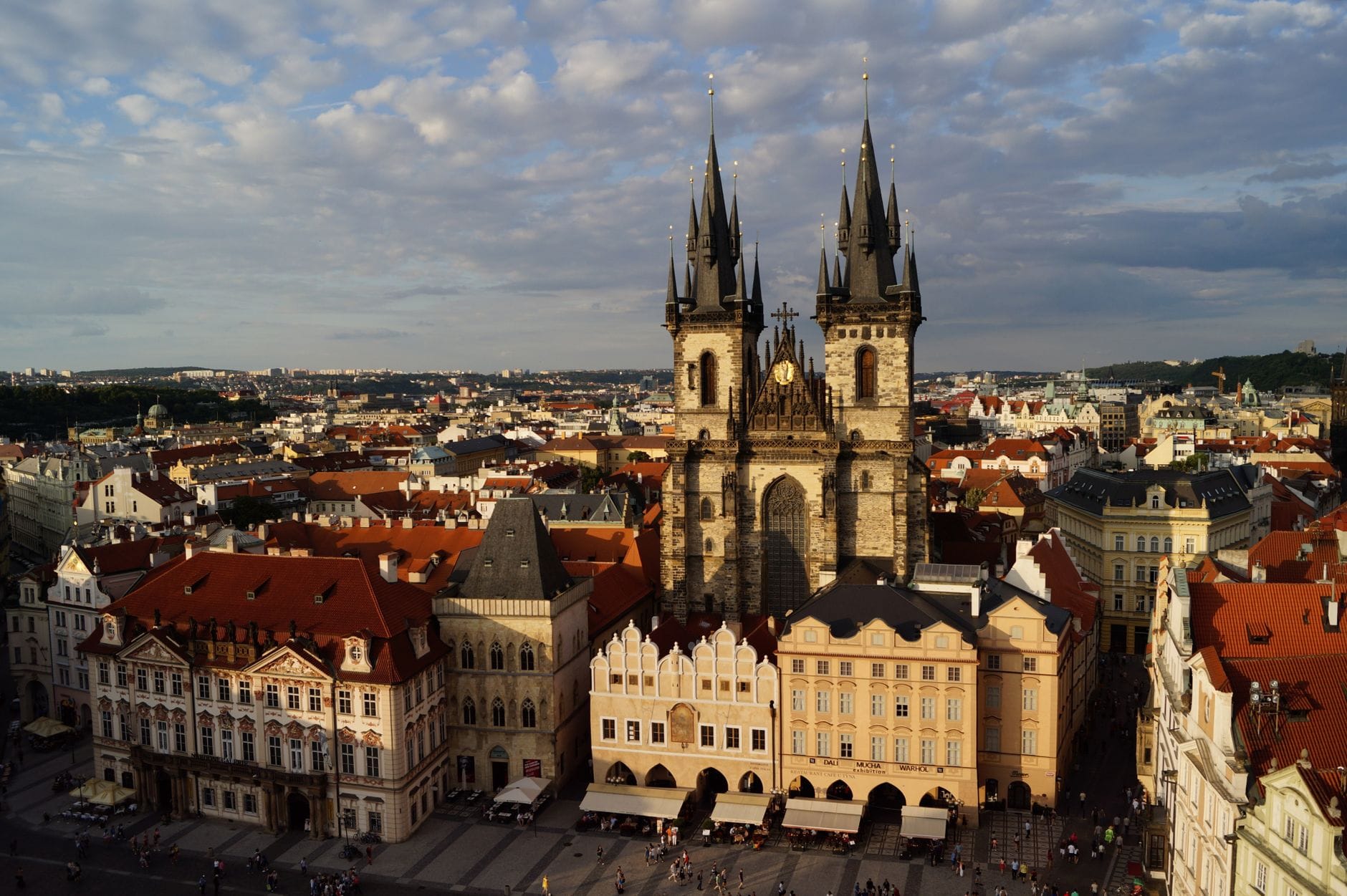
Old Town is the obvious choice for first-time visitors who want to step out of the hotel and immediately be in the thick of things. Charles Bridge, the Astronomical Clock, and Josefov are all within a 5–10 minute walk of most Old Town hotels. You will spend less on taxis and tram tickets, and early-morning or late-night access to these sights before crowds arrive is a genuine advantage.
The honest downside: Old Town is loud. Streets around Old Town Square are busy until well past midnight in summer, and some alleys have bar noise until 2–3 AM. If you are a light sleeper or traveling with children, ask specifically for a courtyard-facing room. Mid-range hotels here run USD 150–280 per night; boutique and luxury properties can go significantly higher. Budget accommodation in Old Town proper is rare and often poor quality for the price.
Josefov, the former Jewish Quarter now folded into Old Town, sits within this zone and deserves a mention. It is quieter than the square itself, with beautiful Art Nouveau streets and easy access to the Old Jewish Cemetery and the synagogues. Hotels here tend to be on the upper end of the Old Town price range, but the relative calm makes it worth considering.
Malá Strana: Baroque Atmosphere, Uphill Trade-offs
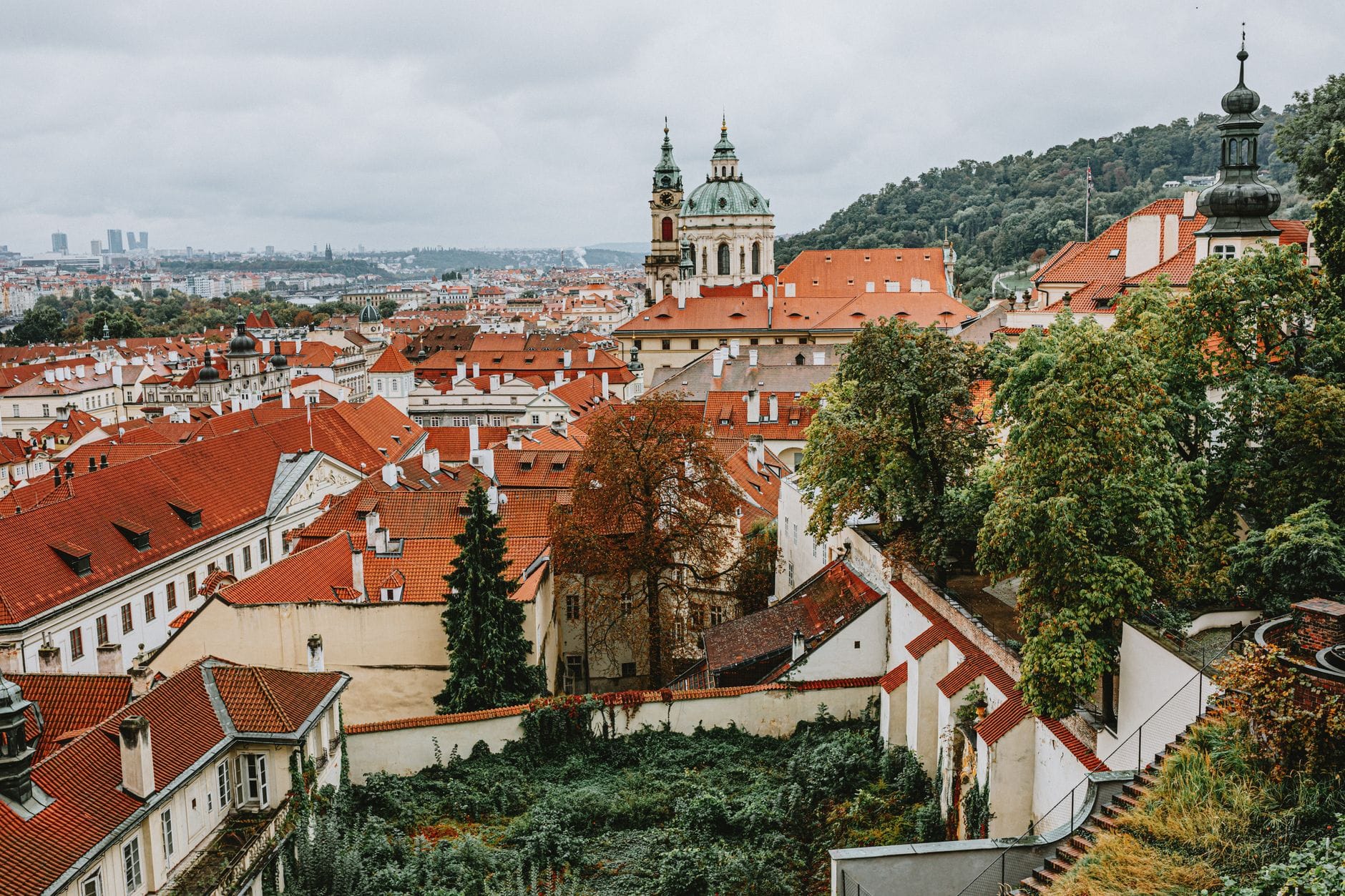
Malá Strana (Lesser Town) occupies the left bank below Prague Castle. The architecture is predominantly Baroque, the streets are narrower and less commercialized than Old Town, and the neighborhood has a genuinely different character after dark. The John Lennon Wall and Kampa Island are right here. Hotels run USD 140–260 for mid-range options.
The trade-off is topography. Getting to Prague Castle requires a serious uphill walk, and heading to Old Town means crossing the river (usually via Charles Bridge or tram). Neither journey is far, but if you have mobility concerns or are doing high-mileage sightseeing days, the extra effort accumulates. Malá Strana is best suited to travelers who value atmosphere over pure convenience and prefer quieter evenings.
💡 Local tip
Tram line 22 runs through Malá Strana and connects with metro line A at Malostranská, from where Old Town and Staroměstská are just one stop away. It also goes up toward the Castle district. If you stay in Malá Strana, this tram line largely solves the neighborhood's connectivity limitations.
New Town (Nové Město): The Practical, Underrated Choice
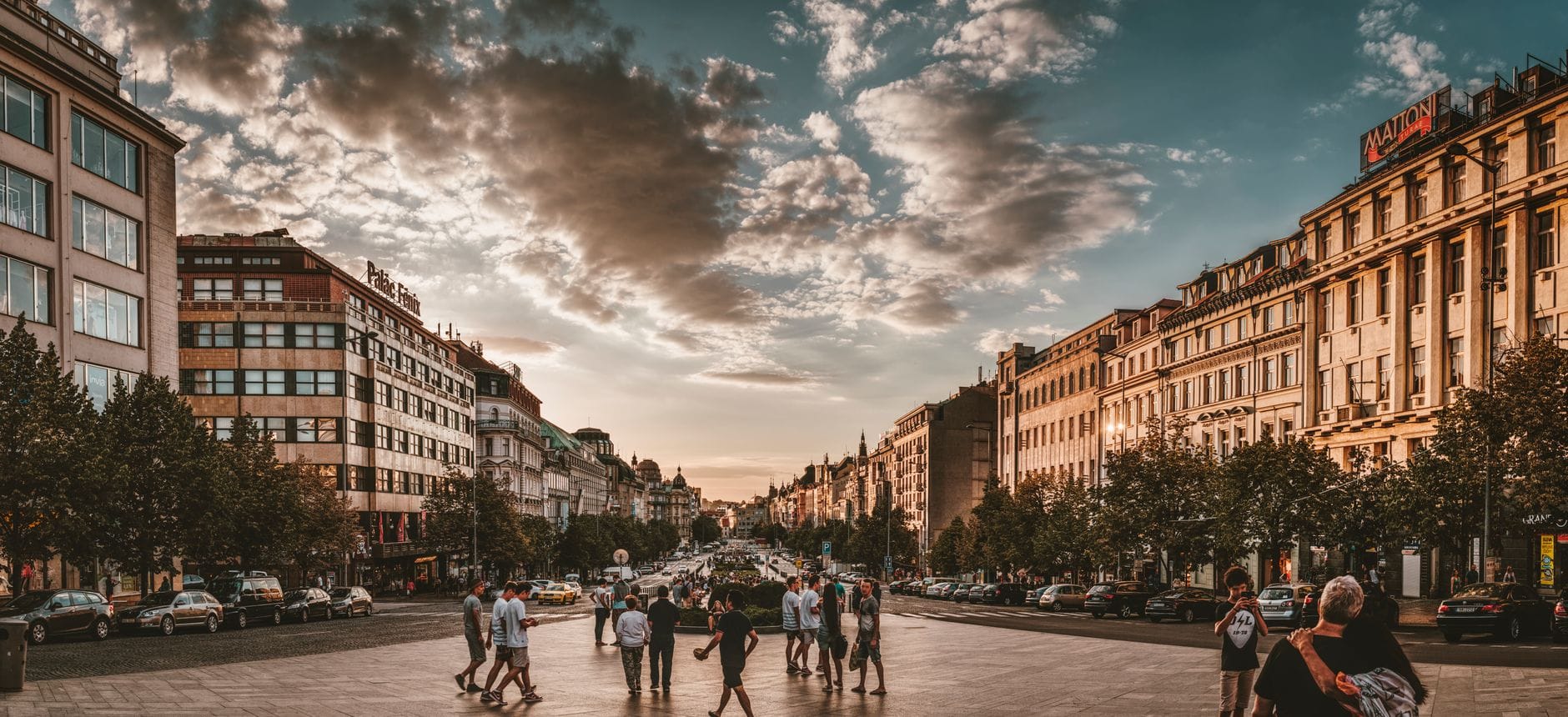
Despite the name, New Town was laid out in the 14th century. The area around Wenceslas Square is commercial and busy, with the main train station (Praha hlavní nádraží) a short walk away. For travelers arriving by train from Vienna or Munich, or planning day trips, this location is genuinely useful.
Hotel prices here typically run 20–30% lower than equivalent Old Town properties, around USD 110–200 per night for mid-range. The downside is atmosphere: Wenceslas Square itself has struggled with seedy bars and tourist traps in some sections, and the area lacks the medieval streetscape of Old Town. That said, the southern end of Wenceslas Square near the National Museum is considerably more dignified, and the residential streets east of the square blend into Vinohrady.
Vinohrady, Žižkov & Karlín: Where Locals (and Savvy Visitors) Stay
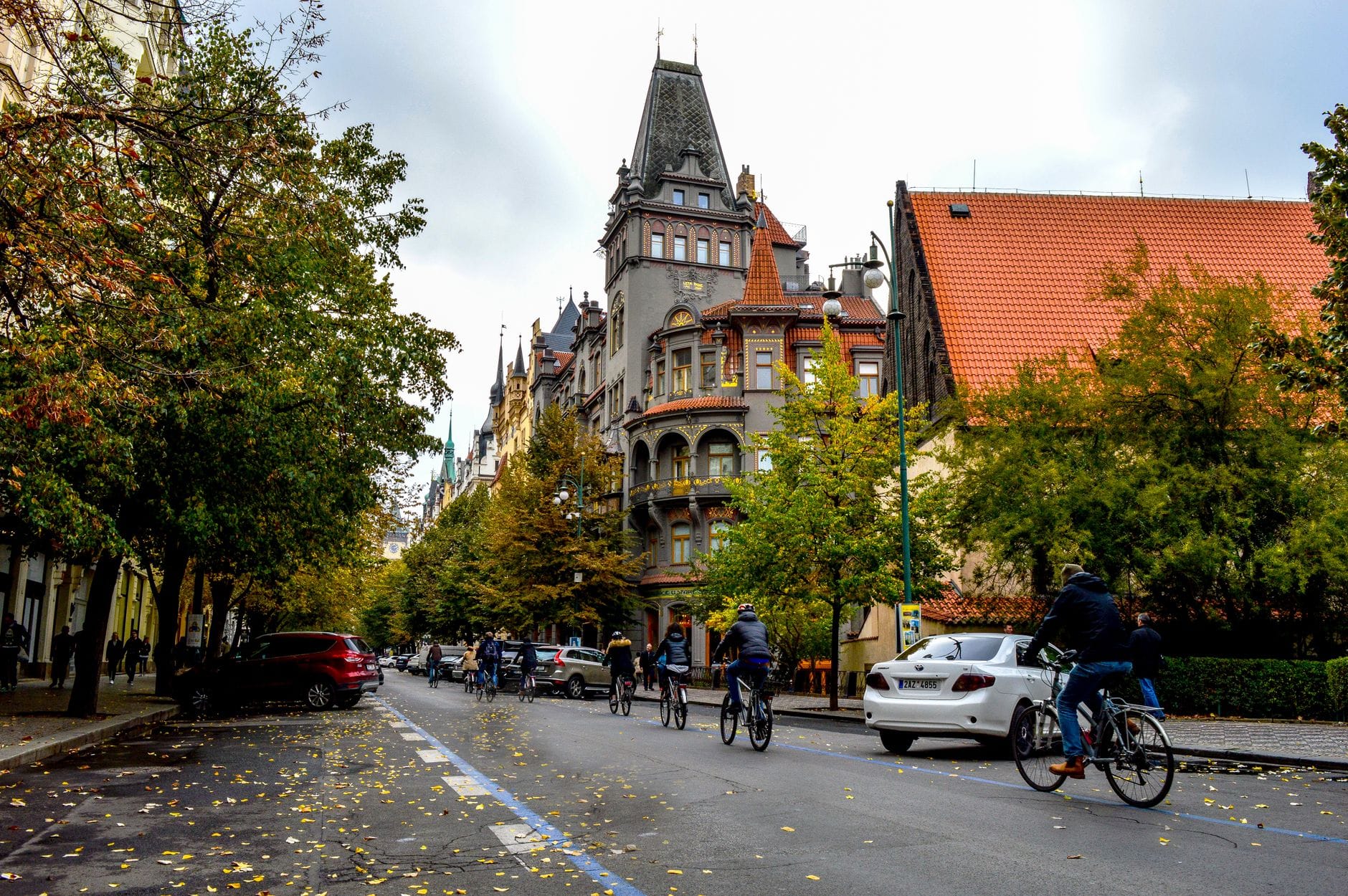
These three neighborhoods form the best alternative zone for visitors who want lower prices and a more genuine experience of Prague without sacrificing access. Vinohrady is the most polished of the three: leafy streets, excellent cafés, solid restaurant options, and a mix of long-term expats and young Czech professionals. Hotels run USD 90–170, and metro line A and multiple tram lines put Old Town Square under 15 minutes away.
Žižkov is hilly, has the highest pub density of any Prague neighborhood by some counts, and tends to have the lowest hotel prices close to the center. It suits visitors who prefer unpretentious bars and do not mind uneven cobblestones. The Žižkov Television Tower is one of Prague's more divisive landmarks and is right here. Karlín, between Žižkov and the river, has become the city's food and coffee destination of choice for discerning locals: modern dining, well-kept apartment-style accommodation, and a sense that the neighborhood is still in the process of becoming something rather than having already peaked.
- Vinohrady Best for: longer stays, couples, repeat visitors, anyone who wants local cafés and leafy streets. Price: USD 90–170/night mid-range. Metro: line A (Náměstí Míru or Jiřího z Poděbrad).
- Žižkov Best for: budget travelers, pub crawl enthusiasts, anyone who prioritizes price above all. Lowest prices near the center. Metro: limited direct access, but trams connect quickly.
- Karlín Best for: foodies, design-conscious travelers, anyone interested in a contemporary Prague rather than a medieval one. Growing boutique hotel scene. Metro: line B (Florenc or Křižíkova).
- Holešovice Best for: families (Prague Zoo is here), art lovers (DOX Contemporary Art Centre), and travelers who want apartment-style accommodation at reasonable prices. Tram access to center is direct.
- Smíchov Best for: travelers who need easy access to intercity bus and train connections, or who are planning day trips. Commercial and transit-oriented rather than atmospheric.
Booking Timing, Seasonal Prices & Practical Logistics
Prague has two clear accommodation peaks. July and August bring the heaviest tourist volumes, with Old Town and Malá Strana hotels filling weeks in advance. December is nearly as competitive due to the Christmas markets, which draw visitors from across Europe. For these periods, booking 2–3 months ahead is not overcautious; it is necessary if you want a specific neighborhood at a reasonable rate.
Easter and New Year's also see sharp price spikes in Prague 1. If your dates fall around these periods and Old Town prices look prohibitive, Vinohrady and Karlín offer far better value without meaningful inconvenience. For advice on when to visit more broadly, the best time to visit Prague guide covers seasonal crowds and weather in detail.
On transport: Václav Havel Airport (IATA: PRG) sits roughly 12–15 km west of Old Town. Trolleybus 59 connects to Nádraží Veleslavín on metro line A, from where Old Town is four stops. The Airport Express (AE) bus still runs directly between the airport and Praha hlavní nádraží (Main Railway Station) on a separate fare. A licensed taxi or Bolt/Uber ride to central Prague typically costs around 700–800 CZK, though app-based ride estimates vary by demand and time of day. Always verify current PID fares and taxi rates before traveling, as these change.
⚠️ What to skip
Avoid unlicensed taxis at the airport arrivals hall. Only use official taxi stands at the terminal exits, pre-booked transfers from your hotel, or app-based services like Bolt or Uber. Overcharging by unofficial drivers remains a documented issue at Prague Airport.
- Old Town: walk to almost everything, but expect noise, crowds, and the highest prices in the city.
- Malá Strana: beautiful and calm, but uphill to the Castle and across the river to Old Town nightlife.
- New Town: practical and affordable, especially near the train station, but lacks medieval charm.
- Vinohrady: best all-round value for most travelers, strong public transport, local atmosphere.
- Žižkov: cheapest close-in option, best for pub culture, hilly terrain and limited metro access.
- Karlín: emerging food and design scene, growing boutique accommodation, metro line B.
- Holešovice: good for families and longer stays, direct trams to center, DOX and the zoo nearby.
- Smíchov: transit-oriented, practical for day-trippers, not a destination neighborhood in itself.
One practical detail that gets overlooked: Prague's tap water is safe to drink and meets EU standards according to the municipal water supplier. You do not need to budget for bottled water. The city uses the Czech koruna (CZK), not euros, so check current Czech National Bank rates before arrival. English is widely spoken in hotels, restaurants, and tourist-facing businesses throughout all of these neighborhoods. For a full orientation to the city, the things to do in Prague guide pairs well with this one.
✨ Pro tip
If you are staying more than four or five days, seriously consider Vinohrady or Karlín as a base and take the metro or tram into the historic center for sightseeing. You will pay 20–40% less per night, eat better food at lower prices, and experience a side of Prague that the Old Town hotel strip simply cannot offer.
For travelers combining Prague with wider Czech Republic exploration, neighborhoods with easy rail access matter more. New Town (main train station) and Smíchov (Smíchovské nádraží) are both useful bases for reaching Karlštejn Castle or Kutná Hora on day trips without needing to cross the city first.
FAQ
Is it worth paying extra to stay in Old Town Prague?
For a short trip of 2–3 days where you want maximum sightseeing with zero transit time, yes. For stays of 4 days or longer, the premium rarely justifies itself. Vinohrady and Karlín are 10–20 minutes from Old Town Square by metro or tram and cost 20–40% less per night, with better restaurants and fewer tourists.
What is the best neighborhood in Prague for families?
Holešovice is the strongest choice for families: Prague Zoo is located here, the DOX Contemporary Art Centre runs family programs, and the Letná park area offers open space. It is served by direct trams to the center, and apartment-style accommodation is more common here than in Old Town.
How far is Vinohrady from Prague's main sights?
Vinohrady is typically 10–15 minutes from Old Town Square by metro (line A) or tram. The Náměstí Míru and Jiřího z Poděbrad metro stations are the main connections. Walking to Old Town takes around 25–35 minutes depending on your starting point in the neighborhood.
When should I book a hotel in Prague to get the best rates?
For July, August, and December, book 2–3 months in advance. Easter and New Year's also see early sell-outs in Prague 1. Shoulder season (March–May and September–October) allows more flexibility, though popular boutique properties in Vinohrady and Karlín can fill up quickly even then.
Is Malá Strana safe and easy to get around at night?
Yes. Malá Strana is generally safe and well-lit at night. Tram line 22 runs through the neighborhood and connects to Old Town. The main consideration is the hilly terrain: some streets involve steps or steep inclines that can be tiring after a long day. It is one of the quieter central neighborhoods after midnight, which is either a pro or a con depending on what you want.