Žižkov is Prague's most defiantly working-class neighborhood, a dense grid of late-19th-century tenements sitting immediately east of the city centre. Known for its extraordinary concentration of pubs, its towering TV transmitter, and a long tradition of left-wing politics, it offers a counterweight to the polished historic core.
Žižkov sits just uphill from the main railway station and feels like a different city from the tourist-facing Old Town a kilometre to the west. Its long reputation as Prague's rough-edged, red-blooded workers' quarter is slowly giving way to something more mixed, but the bones of the place remain: narrow streets, crumbling plaster facades, a pub on virtually every corner, and a skyline punctuated by one of the stranger pieces of architecture in Central Europe.
Orientation
Žižkov occupies the hilly ground immediately east of Prague's historic core, forming the bulk of the municipal district Prague 3. The cadastral area covers roughly 5.44 square kilometres and is home to around 58,000 residents, making it one of the most densely populated parts of Prague.
The western edge begins practically at Praha hlavní nádraží, Prague's main railway station, which sits on the boundary between Žižkov and Nové Město. From there the neighborhood climbs eastward across a ridge toward the Olšany Cemeteries. To the north, Vítkov Hill provides a physical and visual boundary separating Žižkov from Karlín. To the south, the border runs along the edge of Vinohrady, which shares Prague 3 and feels noticeably different in character: quieter, more prosperous, and more architecturally uniform.
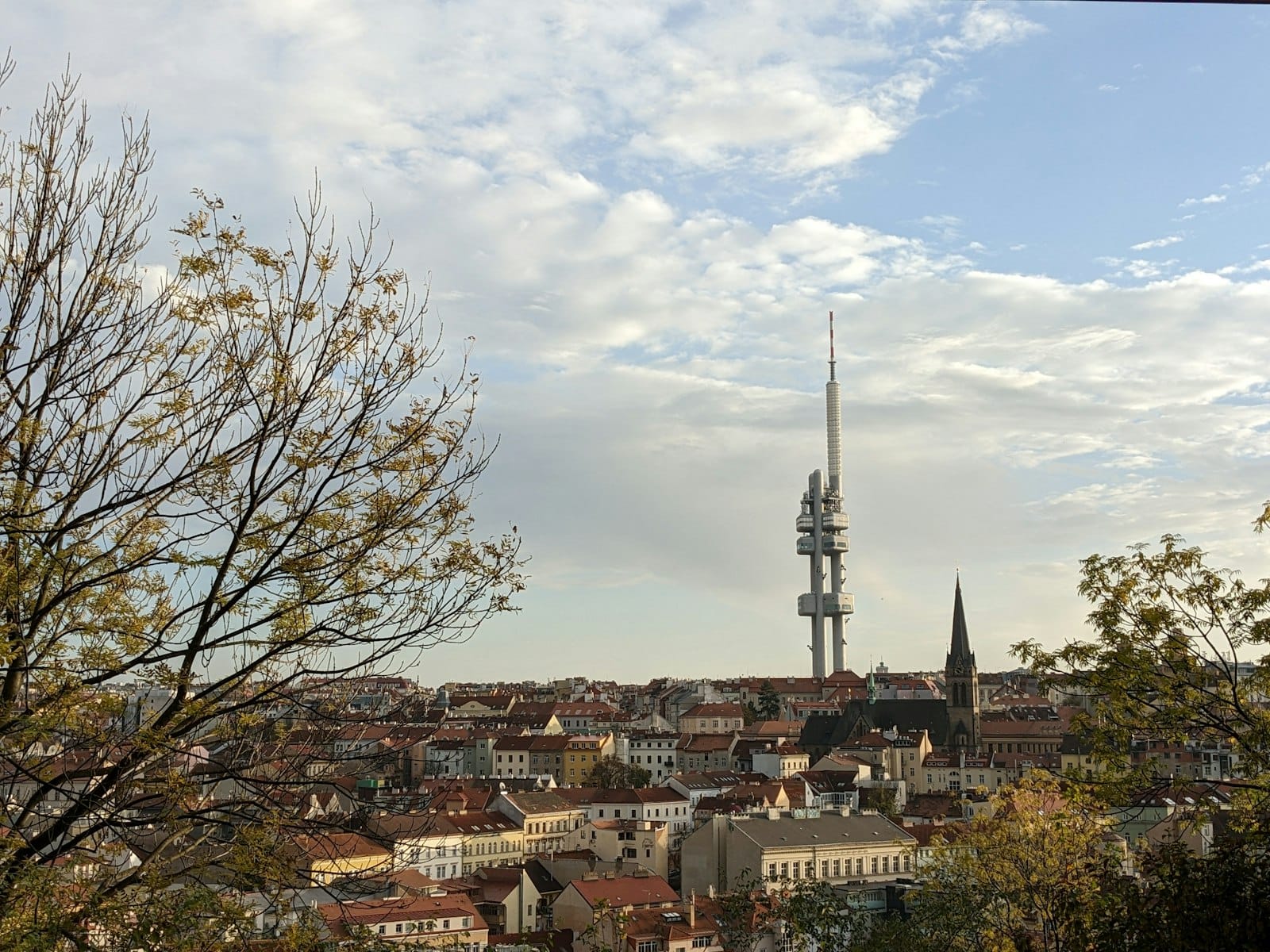
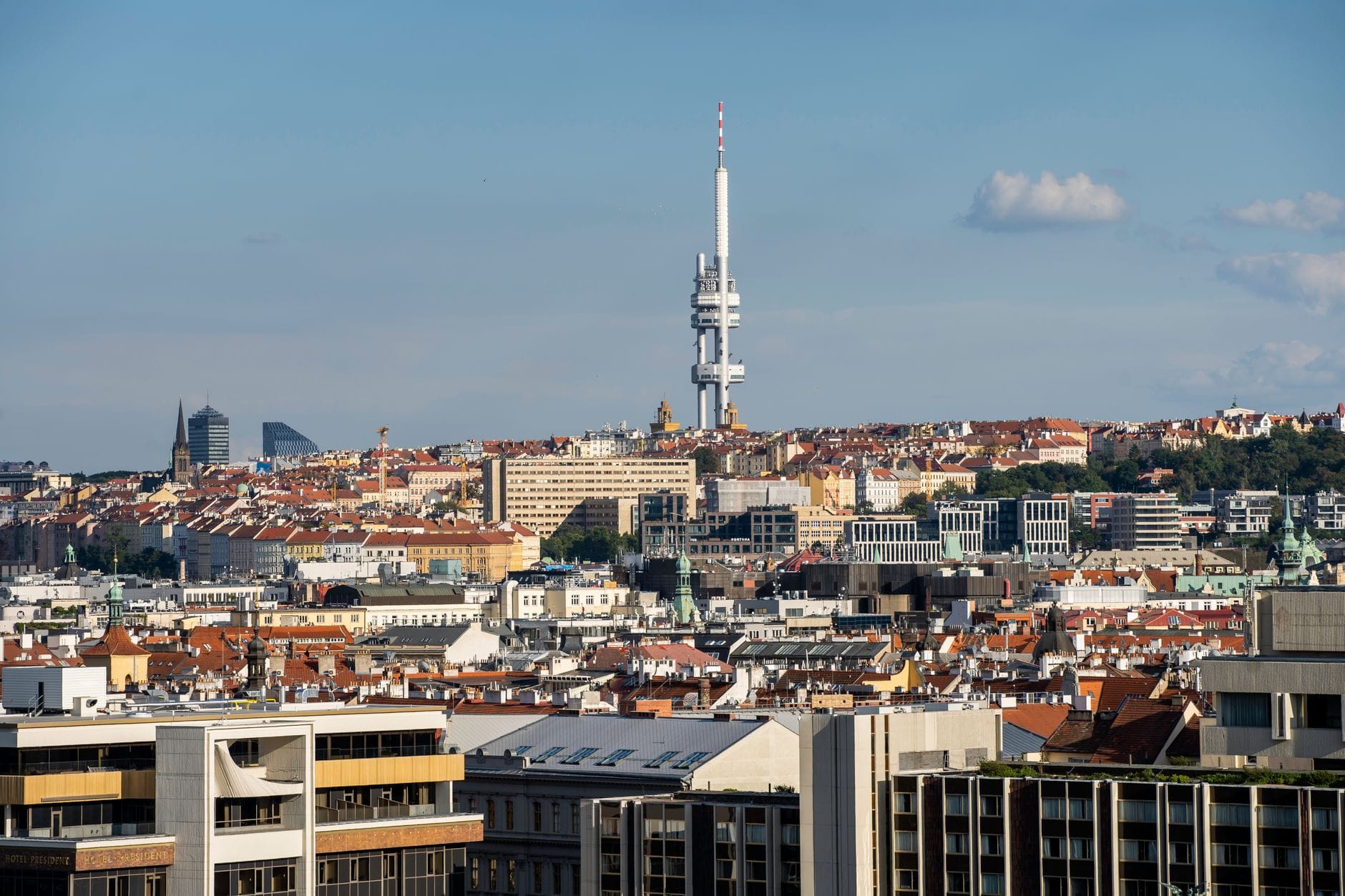
The two main arteries are Seifertova, which runs east-west along the lower, northern edge of the neighborhood, and Koněvova (a continuation of Husitská), which cuts through the heart of the district toward the eastern cemeteries. If you are orienting yourself using the skyline, the Žižkov Television Tower is visible from most of the neighbourhood and from large parts of central Prague, making it the most reliable landmark for getting your bearings.
Žižkov is adjacent to several other neighbourhoods worth understanding in relation to it. Vinohrady to the south is its closest neighbour and useful contrast: if Žižkov feels raw, Vinohrady feels composed. Holešovice lies further north across the river, and the historic centre of Old Town is about a 20-minute walk west.
Character & Atmosphere
Žižkov was built quickly in the late 19th century to house workers flooding into industrial Prague, and it shows. The urban fabric is dense Gründerzeit: five- and six-storey apartment blocks with ornamental facades, many of which have been slowly losing plaster for decades. The streets are narrow enough that afternoon light barely reaches the pavement in places, and the slope of the terrain means that even a short walk involves a noticeable climb.
In the morning, Žižkov runs on routine. Locals stop at the news-stand on Seifertova for cigarettes, the párek v rohlíku (sausage-in-a-roll) cart near the tram stops does a brisk trade, and the pubs that serve breakfast do so in near-silence, with regulars nursing their first beer of the day at tables that have been in the same position since the 1970s. There is nothing performative about any of it.
By afternoon, the character of the neighbourhood shifts depending on which street you are on. The blocks immediately around the Television Tower have been tidied up somewhat, and a cluster of cafés and restaurants has established itself nearby. But walk two streets away in any direction and you are back in a working Prague of laundromats, hardware shops, and Vietnamese grocery stores that have been serving the neighbourhood for decades.
Žižkov after dark is what the neighbourhood is most famous for. The bar density here is, by any measure, remarkable: estimates have long circulated that Žižkov has more pubs per capita than almost any other urban neighbourhood in Europe, and while that figure is difficult to verify precisely, walking any stretch of Bořivojova or the side streets off Koněvova gives you the impression it might be true. The atmosphere is unpretentious and occasionally loud, with a genuine mix of students, locals who have lived here for forty years, and a growing number of visitors who have found their way here from the tourist belt.
ℹ️ Good to know
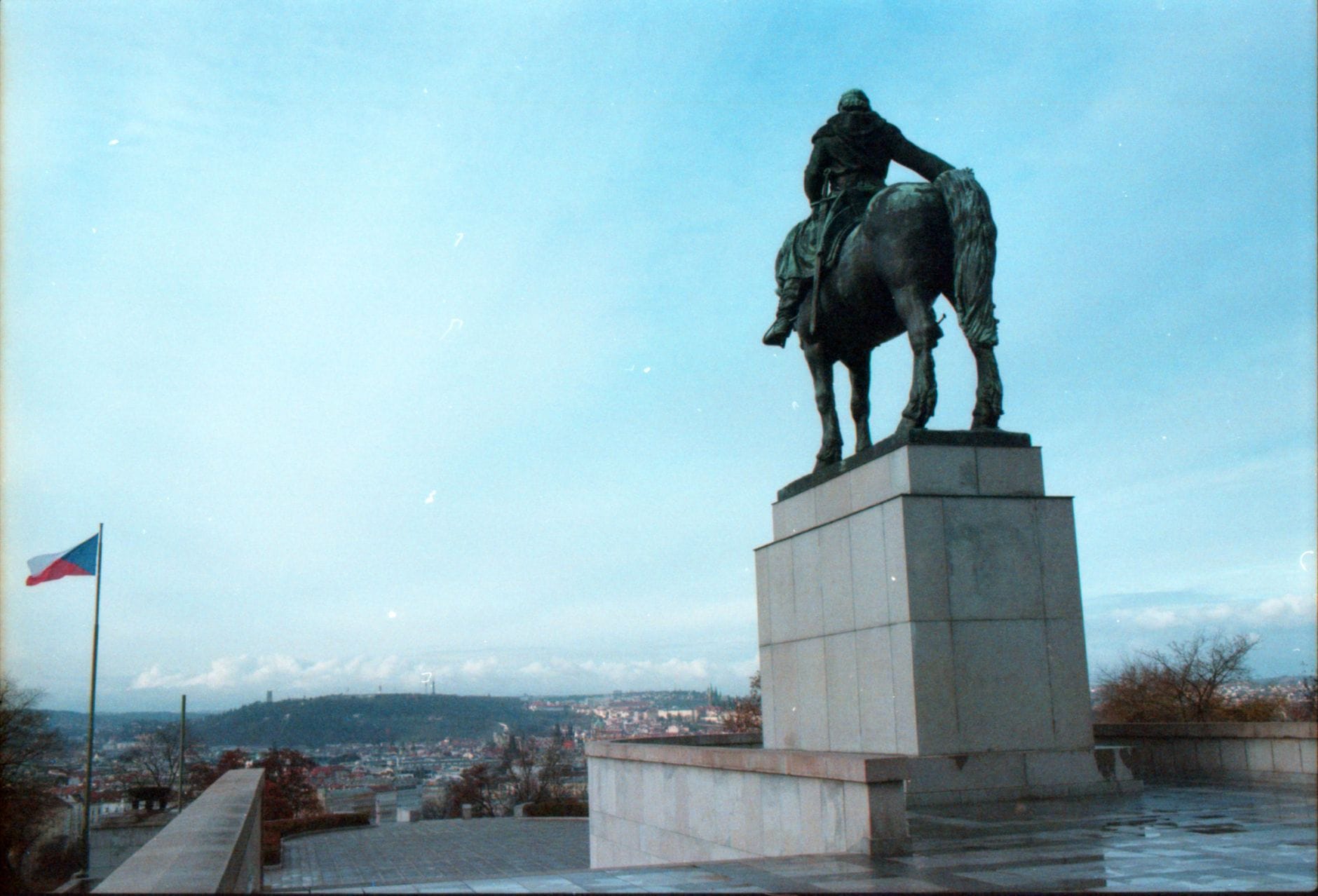
Žižkov earned the nickname 'the red heart of Prague' for its historic alignment with the political left, including strong Communist Party support during the 20th century. The name 'Žižkov' itself comes from Jan Žižka, the Hussite military leader whose enormous equestrian statue crowns Vítkov Hill on the northern edge of the neighbourhood.
What to See & Do
The Žižkov Television Tower is the neighbourhood's defining structure and one of the most polarising pieces of architecture in the Czech Republic. Built between 1985 and 1992, it rises 216 metres above the surrounding rooftops, its three concrete legs straddling a small park. The interior contains a viewing platform and a hotel pod, and the exterior is decorated with giant crawling infant sculptures by artist David Černý. Whether you find it magnificent or appalling, it is impossible to ignore, and the views from the observation deck are among the best in the city.
On the northern edge of Žižkov, Vítkov Hill rises above Husitská and is topped by the National Memorial on Vítkov. The equestrian statue of Jan Žižka that stands here is one of the largest bronze equestrian statues in the world. The memorial building itself was constructed in the early 20th century and has served various political functions across different regimes. The hilltop park provides views over Karlín and the wider city, and the walk up through the trees from Husitská is quiet and takes only ten minutes.
At the eastern end of the neighbourhood, the Olšany Cemeteries (Olšanské hřbitovy) form one of the largest cemetery complexes in Prague, dating back to the 17th century. The grounds are extensive, atmospheric, and genuinely worth an hour of wandering. The adjacent New Jewish Cemetery (Nový židovský hřbitov) contains the grave of Franz Kafka and receives visitors throughout the year.
For theatre, Žižkov has an established performing arts scene that is stronger than the district's size suggests. The Divadlo Járy Cimrmana has built a cult following around satirical Czech theatre that speaks directly to local culture, and Ponec Theatre is one of Prague's main contemporary dance venues. Neither is aimed at tourists in the conventional sense, but if you are comfortable with Czech-language performance or modern dance, both are worth checking.
Žižkov Television Tower: observation deck and David Černý baby sculptures
National Memorial on Vítkov: Jan Žižka equestrian statue and hilltop views
Olšany Cemeteries: one of Prague's oldest and largest burial grounds
New Jewish Cemetery: Franz Kafka's grave and historic Jewish burial ground
Divadlo Járy Cimrmana: cult Czech satirical theatre
Ponec Theatre: contemporary dance and performance
💡 Local tip
The Television Tower is free to approach and photograph from the street-level park. If you want to go up, you will need a paid ticket for the observation deck, which is worth booking in advance, especially in summer. The David Černý babies are visible without entering the building.
Eating & Drinking
Žižkov's food and drink scene is the main reason many visitors come here at all. The neighbourhood has a higher concentration of traditional Czech pubs per street than anywhere else in the inner city, and unlike the tourist-oriented pivnice of the Old Town, most of these operate primarily for regulars. Expect low prices, cold Pilsner Urquell or Kozel on tap, and no printed menus in English. For context on Prague's wider drinking culture, the Prague nightlife guide covers the city's bar scene in more depth.
The street Bořivojova, which runs roughly parallel to Koněvova through the lower residential grid, is the most reliable corridor for bar-hopping. The pubs here range from small, smoky rooms with six tables to slightly more spacious venues that occasionally host live music. Prices are low by any European standard: a half-litre of beer typically costs less than a third of what you would pay in the Old Town.
The area around the Television Tower has developed a more varied eating scene over the last decade. Several cafés serve good espresso and light food during the day, and there are a handful of restaurants offering Czech food at mid-range prices alongside Vietnamese and other cuisines, reflecting the neighbourhood's long-established Vietnamese community. Prague 3 has had a significant Vietnamese population for decades, and the Vietnamese grocery stores and small restaurants here are the real thing rather than tourist-facing adaptations.
If you are eating on a tight budget, Žižkov is one of the better parts of Prague for it. For broader eating guidance across the city, the where to eat in Prague guide gives a full overview of neighbourhoods and price ranges. For budget-conscious travel generally, Prague on a budget is worth reading before you arrive.
⚠️ What to skip
Many of Žižkov's traditional pubs are cash-only and do not have English menus. Having small denominations of Czech koruna (CZK) on hand makes things considerably easier. ATMs are available on Seifertova and near the main tram stops.
Getting There & Around
Žižkov is not served by the Prague Metro directly, which is the main practical inconvenience for visitors. The closest metro stations are Praha hlavní nádraží (Line C, red) and Florenc (Lines B and C), both of which sit on the western edge of Žižkov. From Hlavní nádraží, the lower streets of Žižkov are a five-minute walk uphill on Seifertova.
Trams are the most practical way to move around Žižkov and connect it to the rest of the city. Several tram lines run along Seifertova on the lower edge of the neighbourhood, providing direct connections west to the city centre and east toward Žižkov's residential interior. Additional tram routes run along Koněvova further into the neighbourhood. The Prague Integrated Transport (PID) system means a single ticket covers metro, tram, and bus travel within a time window.
For orientation within the neighbourhood, walking is the most effective approach. The Television Tower is visible from most streets and provides a reliable reference point. The terrain is hilly: the streets running north-south involve more climbing than those running east-west along the ridge. For a broader understanding of getting around Prague, the getting around Prague guide covers the full PID network and ticketing.
Ride-hailing apps including Bolt and Uber operate throughout Prague and cover Žižkov without issue. Taxis are available but using an app gives more price transparency. From Žižkov to the Old Town by ride-hailing takes roughly five to ten minutes depending on traffic.
Where to Stay
Žižkov is not a primary hotel district for Prague visitors, and accommodation options are thinner here than in the historic centre or Vinohrady. That said, a number of mid-range hotels, guesthouses, and apartment rentals exist here, and staying in Žižkov gives you easy access to the city centre at lower accommodation prices than you would pay in Prague 1 or 2.
The best base within the neighbourhood is the lower section, between Seifertova and the Television Tower area. This keeps you within a ten-minute walk of tram and metro connections and positions you for easy movement across the city. The deeper residential streets further east are quieter but add time to any journey toward the historic centre.
Žižkov suits travellers who want to experience Prague at a local residential pace rather than at the centre of tourist activity. If you are undecided about where to base yourself, the where to stay in Prague guide provides a full neighbourhood-by-neighbourhood breakdown with accommodation types and price expectations.
💡 Local tip
If you are visiting Žižkov for the nightlife, staying here means you can walk home rather than navigating public transport late at night. Most trams on Seifertova run through the night on reduced schedules, but walking distance to your accommodation is a genuine advantage after midnight.
Honest Assessment: Who Žižkov Is For
Žižkov is not the right choice for every traveller, and it is worth being clear about that. The neighbourhood is unpolished, literally in the sense that many buildings have not been renovated since the communist era. Some streets feel neglected by any reasonable standard. First-time visitors to Prague who want to stay somewhere comfortable and close to the main sights may find it more convenient to base themselves in Vinohrady or the New Town.
Žižkov's past reputation for being rough has softened considerably over the last twenty years, and it is not an area that requires particular caution beyond the standard awareness you would apply in any dense urban neighbourhood at night. The worst that most visitors encounter is a neighbourhood that simply does not cater to them, which some will find refreshing and others will find frustrating.
For travellers who want to see a Prague that functions independently of the tourism economy, who are interested in the Television Tower and Vítkov memorial, who want genuinely cheap Czech beer in unpretentious surroundings, or who simply enjoy spending time in a neighbourhood with real urban texture, Žižkov is exactly the right place. It pairs naturally with a visit to Vinohrady to the south, and the walk between the two neighbourhoods takes less than fifteen minutes.
TL;DR
Žižkov is Prague's most authentic working-class inner neighbourhood, with a genuine local character that contrasts sharply with the tourist-facing historic centre.
The Žižkov Television Tower is the standout attraction: one of the most distinctive pieces of late-communist architecture in Europe, with a viewing deck and David Černý baby sculptures on the exterior.
The National Memorial on Vítkov, Olšany Cemeteries, and the New Jewish Cemetery with Franz Kafka's grave make Žižkov worth a half-day visit even if you are not staying here.
The bar scene is the densest and cheapest in Prague: Bořivojova and the streets around it are the place to drink without paying tourist-zone prices.
Best suited to independent travellers comfortable with a rougher urban environment; not ideal as a first-time Prague base, but excellent for those who want local texture over tourist convenience.
Three days is the ideal amount of time to experience Prague's historic core without rushing. This itinerary takes you from the medieval lanes of Old Town to the hilltop grandeur of Prague Castle, the haunting beauty of Josefov, and the quieter pleasures of Malá Strana and Vyšehrad.
Prague's museum scene stretches far beyond the obvious. This guide covers the city's finest art, history, and specialist museums, from the National Gallery's scattered palaces to underground alchemical laboratories and intimate synagogues that carry centuries of history.
Prague rewards visitors differently depending on when you arrive. This guide breaks down every season with clear seasonal notes of weather, crowd levels, hotel prices, and key events, so you can choose the right time for your trip rather than the most popular one.
Prague rewards those who climb. From medieval towers rising above Old Town to forested hills and riverside terraces, the city's skyline is best understood from above. This guide covers every worthwhile viewpoint, whether you're after a paid 360-degree panorama or a free hilltop perch with a cold beer.
Prague sits at the center of Bohemia, making it one of the best-positioned cities in Europe for day trips. Within two hours by train or bus, you can reach a Gothic castle above a forested valley, a UNESCO town wrapped in a river bend, a Nazi memorial site, and one of Europe's notable spa resorts.
Prague has one of Central Europe's most efficient public transport networks, covering the city by metro, tram, and bus under a single integrated ticket system. This guide covers fares updated for 2026, airport transfer options, ride-hailing realities, and the mistakes most visitors make on their first day.
Seven days is the right amount of time to see Prague properly. This guide breaks down exactly how to spend each day, which neighborhoods to prioritize, what the castle complex actually demands in terms of time, and how to fit in a day trip without losing a full day to logistics.
Prague's historic center packs over 1,100 years of architectural history into roughly 870–900 hectares, from Romanesque crypts and Gothic cathedrals to one of the world's most substantial collections of Cubist buildings. This guide breaks down every major style, tells you exactly what to see, and gives you the practical details to plan your visit.
Prague's Christmas markets run from late November through early January, turning Old Town Square and Wenceslas Square into some of Europe's most atmospheric winter destinations. This guide covers every major market, what to eat and drink, how to avoid the worst crowds, and exactly what to budget.
David Černý is the Czech Republic's most provocative public artist, and Prague is his gallery. This guide covers his major installations across the city, how to build a self-guided walking route, and what you need to know before you go.
Prague sets a high bar for romance: Gothic spires, cobblestone lanes, river views, and a classical music scene that rivals much larger capitals. This guide covers the best things to do in Prague for couples across every season, from iconic spots timed to avoid the crowds to quieter corners most visitors miss entirely.
Prague rewards those who look beyond Charles Bridge and Old Town Square. This guide reveals the city's quieter side: Baroque gardens tucked behind unmarked doors, medieval cellars beneath busy streets, panoramic hilltops where locals outnumber tourists, and neighborhoods reshaping Prague's creative identity.
Prague's history spans more than a thousand years of empire, revolution, occupation, and reinvention. This guide breaks down the key eras, explains what shaped the city's architecture and culture, and tells you exactly where to see that history in person.
Summer is Prague's most popular season, but it comes with trade-offs: intense heat, peak-season crowds, and higher prices. This guide covers everything you need to plan a smart trip to Prague in June, July, or August, from booking timelines to beat-the-crowd strategies.
Winter strips Prague back to its essentials: gothic spires against grey skies, Christmas markets on cobblestone squares, and a fraction of the summer crowds. This guide covers the real conditions — temperatures, daylight, costs, and which attractions stay open — so you can plan with confidence.
Josefov is one of Europe's most significant Jewish heritage sites, packed into just a few city blocks between Old Town Square and the Vltava River. This guide covers every major site, how ticketing works, the best time to visit, and what most visitors get wrong before they arrive.
Prague delivers five-star experiences at prices that would seem impossible in Paris or London. This guide covers the best luxury hotels with practical pricing data, the fine-dining restaurants worth booking weeks ahead, and the high-end experiences that go well beyond the standard tourist circuit.
Prague nightlife runs deeper than the tourist bars around Old Town Square. This guide breaks down the city's after-dark scene by district, covering the best clubs, bars, jazz venues, and rooftop spots, with practical advice on prices, timing, and where locals actually go.
Prague is one of Europe's better-value capitals, but it is not the ultra-cheap destination the myth suggests. This guide breaks down exactly what things cost in 2026, where to save money without sacrificing the experience, and which tourist traps quietly drain your wallet.
Prague rewards shoppers across every budget, from Bohemian crystal and hand-carved puppets to international luxury labels on Pařížská Street. This guide breaks down the best shopping districts, markets, malls, and genuinely worthwhile souvenirs, with practical details on hours, transport, and what to skip.
The journey from Prague to Munich covers just under 400 km and can be done by direct train, bus, or flight. This guide breaks down every realistic option with prices, journey times, and practical booking advice so you can choose the right one for your trip.
The Prague to Vienna corridor is one of Central Europe's best-connected routes, with trains, buses, and flights running daily. This guide breaks down every option by cost, comfort, and real travel time so you can pick the right one for your trip.
This step-by-step guide walks you through Prague's most rewarding route, from the medieval core of Old Town across Charles Bridge and up to the castle complex on Hradčany hill. Covers distances, timing, ticket costs, seasonal advice, and the shortcuts most visitors miss.
Prague is one of Europe's most rewarding cities for families, offering everything from a world-class zoo and a funicular railway to interactive museums and vast green parks. This guide covers the best activities for children of all ages, how to get around cheaply, which neighborhoods work best for families, and what to skip.
Prague rewards visitors with one of Europe's most intact medieval city centres, a world-class Jewish quarter, and neighbourhoods far beyond the tourist trail. This guide covers the best things to do in Prague across every budget and interest, with crowd warnings, seasonal advice, and precise logistics.
Prague's dining scene is far more nuanced than the tourist-trap stereotype suggests. This guide breaks down the best neighborhoods for food, what to order, which restaurants are worth booking in advance, and how much to expect to pay — from a 90 CZK bowl of goulash to a Michelin tasting menu.
Choosing where to stay in Prague shapes your entire trip. This guide breaks down every major neighborhood by location, price, atmosphere, and drawbacks so you can book with confidence, whether you have three days or three weeks.