David Černý in Prague: A Guide to His Sculptures & Art
David Černý is the Czech Republic's most provocative public artist, and Prague is his gallery. This guide covers his major installations across the city, how to build a self-guided walking route, and what you need to know before you go.
Plan and book this trip
Tools from our partner Travelpayouts help you compare flights and hotels. If you book through them, we may earn a commission at no extra cost to you.
Flights
Hotels map
TL;DR
- David Černý (born 1967) has installed provocative, often darkly humorous sculptures across Prague, from the Žižkov TV Tower to Malá Strana.
- His works are spread across multiple neighborhoods, so combine stops with visits to areas like Malá Strana and Žižkov rather than treating the route as a standalone sprint.
- Most pieces are free outdoor installations; the Musoleum (his private museum in Smíchov, opened in 2023) has an entry fee.
- A full self-guided tour covering Old Town, New Town, Malá Strana, and Smíchov realistically takes a full day with transit time included.
- Černý rarely provides official interpretations of his work, so expect ambiguity and bring your own reading to each piece.
Who Is David Černý?
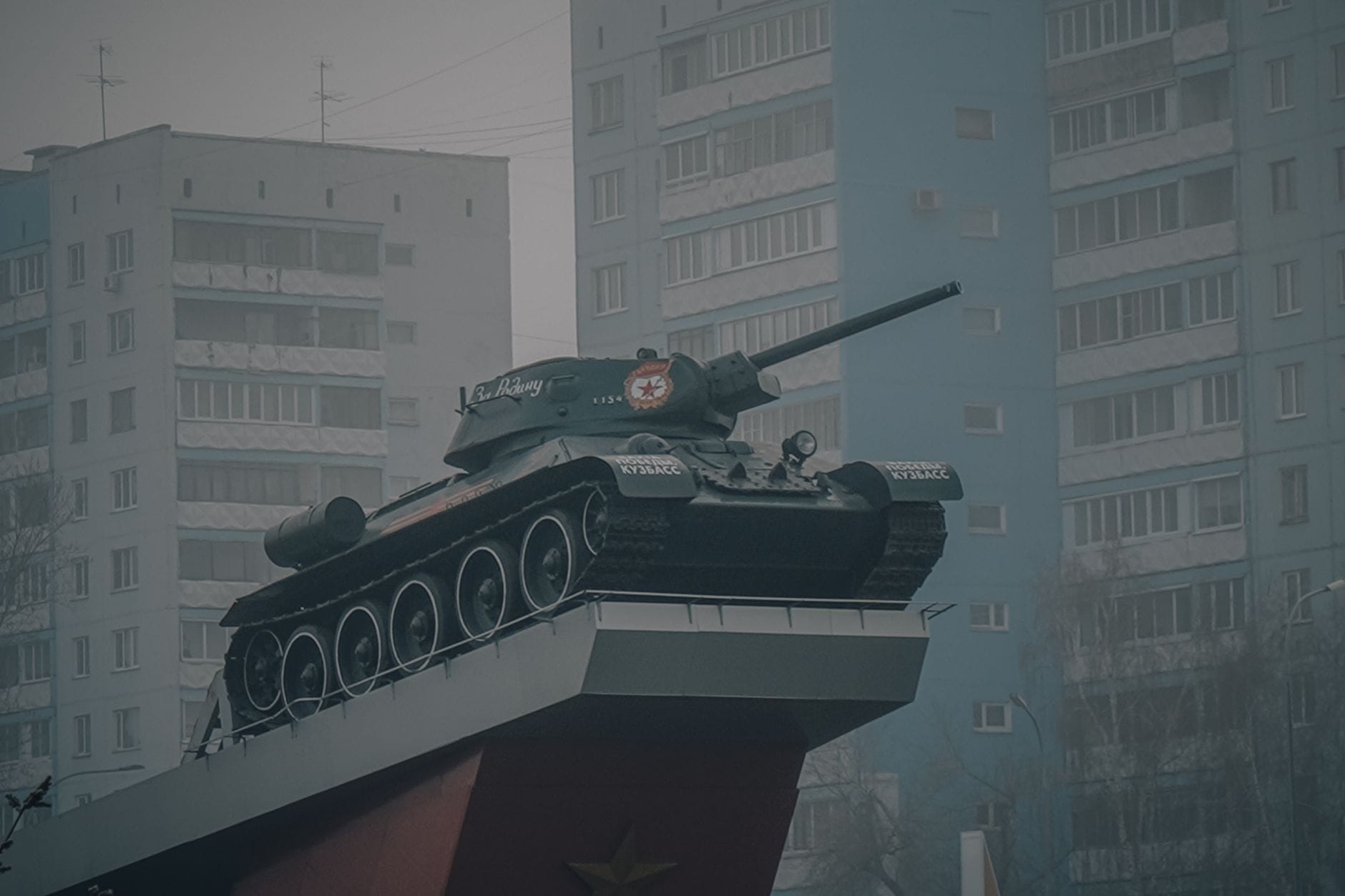
David Černý was born in Prague in 1967, and his career began with an act of defiance: in 1991, shortly after the Velvet Revolution, he painted a Soviet tank memorial pink. He was briefly arrested. The stunt made him a national figure before he had a gallery show to his name. That instinct, using art to provoke, to ridicule authority, or simply to unsettle, defines everything he has made since.
His Prague installations range from whimsical to unsettling. Crawling metallic babies. Figures urinating in a map of the Czech Republic. A giant rotating head of Franz Kafka. None of these come with a tidy explanatory placard. Černý has been consistently reluctant to pin down singular meanings, which means the works reward looking at them for more than thirty seconds. They also generate arguments, which is probably the point.
His work is not confined to Prague; pieces appear in Brussels, London, and elsewhere in the Czech Republic. But Prague is where the density is highest. If you're building a broader itinerary, the Černý route pairs naturally with a Prague walking tour since several sculptures sit directly on paths you'd walk anyway.
The Major Works: Where They Are and What to Expect
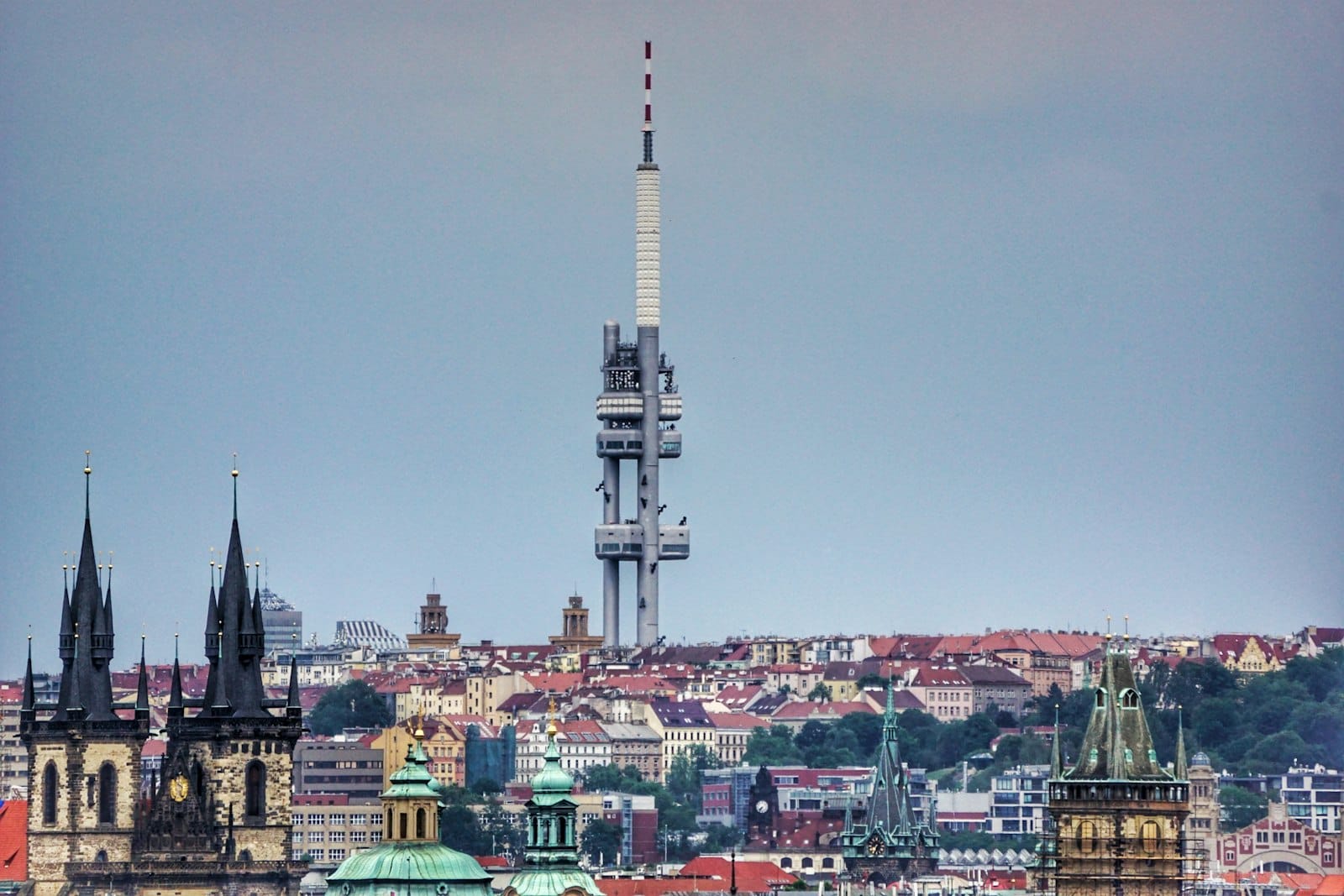
The most-photographed of all Černý's Prague works are the Miminka, giant bronze babies with barcodes stamped on their faces in place of features, crawling up the sides of the Žižkov Television Tower. The tower itself is already one of Prague's more divisive structures, a 216-metre concrete spike built in the 1980s that locals either love or loathe. The babies were added in 2000, initially as a temporary installation, and they stayed permanently. You can see them from a distance, but getting close requires a visit to the tower's base. A smaller set of the same Miminka figures is also installed at Kampa Island in Malá Strana, where they're easier to approach and photograph.
Behind the Quadrio shopping center on Spálená Street in New Town, you'll find the rotating Head of Franz Kafka. The sculpture is 11 metres tall, made from 42 layered stainless steel rings that rotate independently, periodically assembling into a recognizable portrait of Kafka before dissolving back into abstraction. It runs on a programmed cycle, so if you arrive and it looks like a scrambled stack of metal discs, wait a few minutes. This piece, officially titled K, is genuinely spectacular in motion and consistently underestimated by people who see photos of it in its fragmented state.
Near the Franz Kafka Museum in Malá Strana, the Piss installation features two bronze figures facing each other, urinating into a pool shaped like the Czech Republic. The figures move their hips to spell out literary quotes in the liquid. It's crude, it's funny, and it's exactly the kind of thing that either makes Černý for you or against you. The Kafka Museum courtyard is where you'll find it; the museum itself has an entry fee but the courtyard is viewable from outside.
On the façade of the Máj Národní building on Národní třída, Černý unveiled Spitfire Butterflies in 2024. The installation features giant mechanical butterfly forms built from vintage Spitfire aircraft components, mounted directly onto the building's exterior. It's a newer addition to the circuit and not yet in many older guides, but it's hard to miss if you're walking along Národní toward the National Theatre.
In Prague 4, at the BB Centrum office complex on Vyskočilova Street, Černý installed Beetle (Brouk), a large sculpture of a Volkswagen Beetle balanced nose-down, as if it has crashed vertically into the ground. It's off the standard tourist path, which means you'll likely have it to yourself. Worth the detour if you're in the area, but not worth a dedicated trip from the historic center.
ℹ️ Good to know
Černý's works don't cluster neatly in one district. The TV Tower babies are in Žižkov (Prague 3), the Kafka Head is in New Town, and the Piss statues and Kampa Miminka are in Malá Strana. Plan for transit time between stops, or you'll underestimate the day significantly.
The Musoleum: Černý's Private Museum
Černý opened the Musoleum in Smíchov in 2023, inside a restored former distillery building at Nádražní 2. The name is a deliberate combination of museum and mausoleum. The space functions as both a retrospective of his career and a working studio environment, with pieces ranging from early-career works to large-scale installations you cannot see anywhere else.
Unlike the free outdoor sculptures, the Musoleum charges admission. Prices and opening hours are updated periodically, so check their official channels before visiting. The Smíchov location is straightforward to reach by tram or metro (Line B to Anděl station, then an 8-minute walk), and the surrounding area has changed significantly in recent years with new commercial development nearby.
✨ Pro tip
Visit the Musoleum on a weekday morning. Weekend afternoons draw larger crowds, and the interior spaces work better with fewer people competing for the same angles. The building itself is architecturally interesting, so budget time to look at the structure, not just the art.
Planning Your Self-Guided Černý Route
A shorter Černý segment can be done in under an hour of walking, but that's optimistic if you want to actually spend time at each piece rather than tick them off a list. A realistic full-day circuit covering the major works across Old Town, New Town, Malá Strana, and Smíchov, including the Musoleum, will take six to eight hours with transit. That's optimistic if you want to actually spend time at each piece rather than tick them off a list. A realistic full-day circuit covering the major works across Old Town, New Town, Malá Strana, and Smíchov, including the Musoleum, will take six to eight hours with transit.
- Morning: Malá Strana cluster Start with the Piss statues near the Kafka Museum and the Miminka at Kampa. Both are outdoor and free. Malá Strana is quieter in the morning before tour groups arrive.
- Late morning: New Town Walk or tram to the rotating Kafka Head behind Quadrio on Spálená. Then continue to Národní třída to see the Spitfire Butterflies on the Máj Národní building.
- Afternoon: Smíchov Head to Nádražní 2 for the Musoleum. This works well in the afternoon since the building is climate-controlled and gives your legs a rest.
- Evening option: Žižkov Tower The TV Tower is open in the evenings and the Miminka are lit at night. The tower's observation deck and restaurant offer a different perspective on the city after dark.
If you're combining the Černý route with broader sightseeing, the Malá Strana cluster pairs naturally with Charles Bridge and the John Lennon Wall, both a short walk away. The New Town stops sit between the Old Town and Wenceslas Square, making them easy to fold into a longer walk.
⚠️ What to skip
Google Maps sometimes places Černý sculptures imprecisely. The Kafka Head, for example, is tucked behind a shopping center and not visible from the street. Use the intersection of Spálená and Myslíkova as your navigation anchor and look for the Quadrio building, then walk around to the rear courtyard.
Other Notable Černý Works Across the City
Beyond the headline pieces, Prague has a number of smaller or less-visited Černý works that reward the effort. Brownnosers, installed at the Futura Gallery in Smíchov, features two large figures bent double with their heads inserted into each other. The position and title leave little to interpretation. It's confrontational in a way that even seasoned Černý viewers tend to find startling in person.
The Mucha Museum neighborhood in New Town has several Černý-adjacent points of interest, and the area around Wenceslas Square is worth examining for public art installations more broadly. Černý's Man Hanging Out, a figure of Sigmund Freud dangling from a pole by one hand, has appeared in multiple locations over the years and occasionally returns to Prague in temporary form.
- Miminka at Žižkov TV Tower: permanent, outdoor, visible from the street
- Miminka at Kampa Island: permanent, outdoor, free
- Kafka's Rotating Head (Quadrio, Spálená Street): permanent, outdoor, free
- Piss statues (Kafka Museum courtyard, Malá Strana): permanent, outdoor, viewable for free
- Spitfire Butterflies (Máj Národní, Národní třída): installed May 2024, outdoor, free
- Beetle/Brouk (BB Centrum, Vyskočilova, Prague 4): permanent, outdoor, free
- Musoleum (Nádražní 2, Smíchov): ticketed entry, check current hours
Practical Tips for Visiting
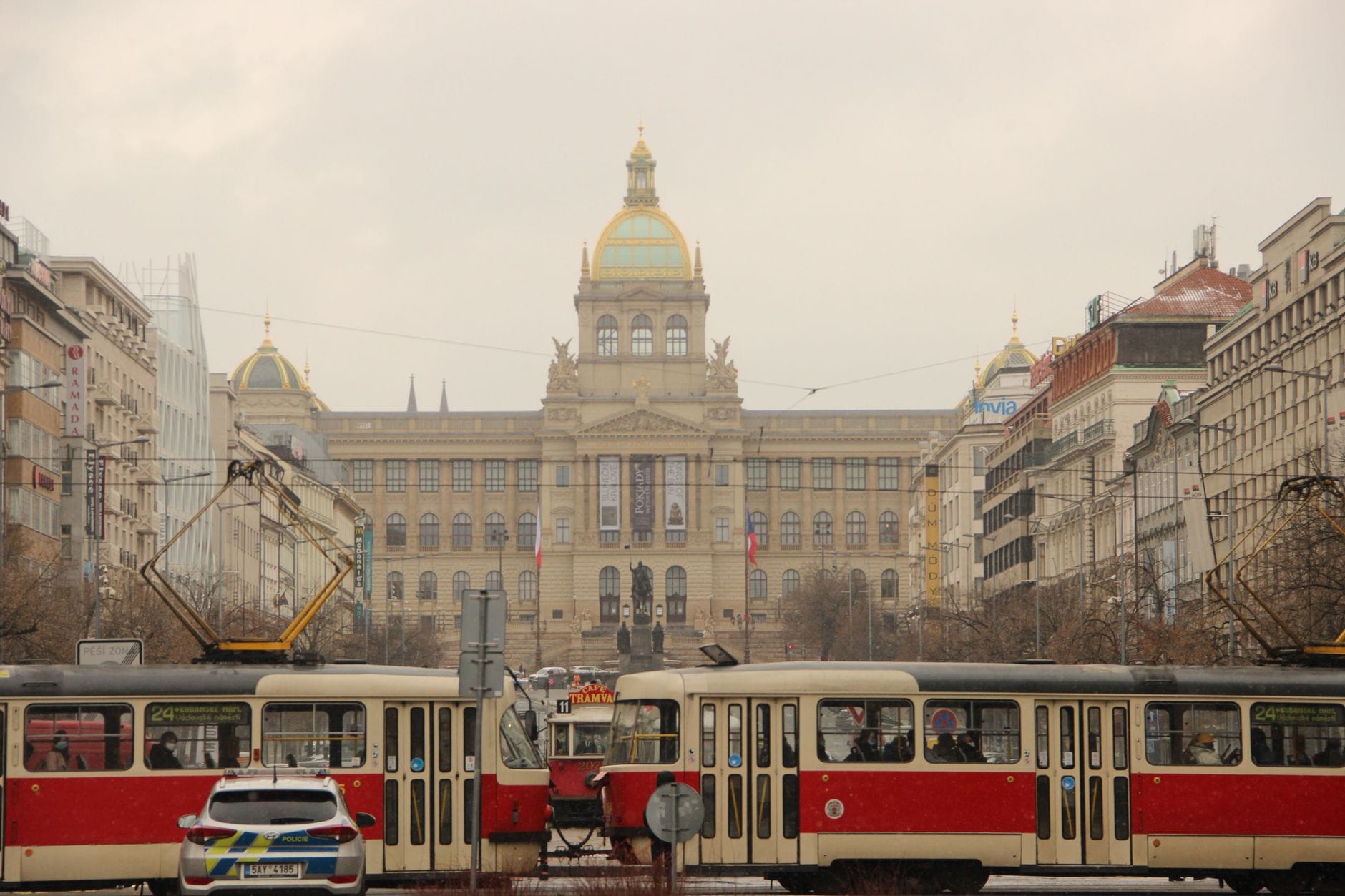
Prague's public transport system (PID, Pražská integrovaná doprava) covers all the neighborhoods where Černý's works appear. The metro, trams, and buses run frequently and the city is compact enough that you'll often walk between stops in Malá Strana or New Town faster than waiting for a connection. Single-journey and 24-hour pass tickets are available; current fares should be checked on the PID website before your visit since pricing updates periodically.
For context beyond Černý's work, the Prague architecture guide helps explain the urban settings his sculptures inhabit. Many pieces are deliberately in dialogue with the buildings around them, and understanding what's Baroque, Communist-era, or contemporary changes how you read the work. The Prague hidden gems guide also points toward less-visited corners of the city where Černý installations can turn up unexpectedly.
- Currency is Czech koruna (CZK); many tourist-area cafés accept cards, but carry some cash for smaller purchases near outdoor sculptures
- Tap water is safe to drink in Prague, confirmed by the municipal water supplier and Czech health standards
- Emergency number: 112 (general EU), 158 (police), 155 (ambulance)
- Photography is permitted at all outdoor sculptures; the Musoleum has its own photography policy, confirm on-site
- Comfortable walking shoes are essential; cobblestones in Malá Strana and Old Town are uneven
FAQ
How many David Černý sculptures are in Prague?
There is no single official count, and the number changes as temporary installations come and go. Prague has many significant permanent works, including the Žižkov Tower babies, the Kafka rotating head, the Piss statues, the Kampa Miminka, and the Spitfire Butterflies on Národní třída. The Musoleum in Smíchov holds additional pieces in a museum setting.
Are David Černý's sculptures free to see?
The overwhelming majority of his Prague works are free outdoor installations on public streets or in publicly accessible spaces. The main exception is the Musoleum at Nádražní 2 in Smíchov, which charges an entry fee. Check current prices on their official website before visiting.
Can I do a David Černý tour in half a day?
A half-day is workable if you focus on one geographic cluster, for example the Malá Strana pieces (Kampa Miminka, Piss statues) plus the Kafka Head in New Town. Including the Musoleum and the Žižkov Tower babies in the same outing realistically requires a full day.
Where is the rotating Franz Kafka head in Prague?
The sculpture, officially called Hlava (Head), is installed behind the Quadrio shopping center on Spálená Street in New Town (Nové Město). It's not visible from the street; walk around to the rear courtyard of the building. Use the Quadrio building name when navigating, not the sculpture title, as mapping apps can place it imprecisely.
What is the Musoleum and when is it open?
The Musoleum is David Černý's private museum in Smíchov, opened on 1 April 2023 in a restored former distillery at Nádražní 2. It houses an extensive collection of his work across multiple rooms and floors. Opening hours and ticket prices change, so verify current information directly with the Musoleum before your visit.