Mucha Museum Prague: The Definitive Guide to Alphonse Mucha's Legacy
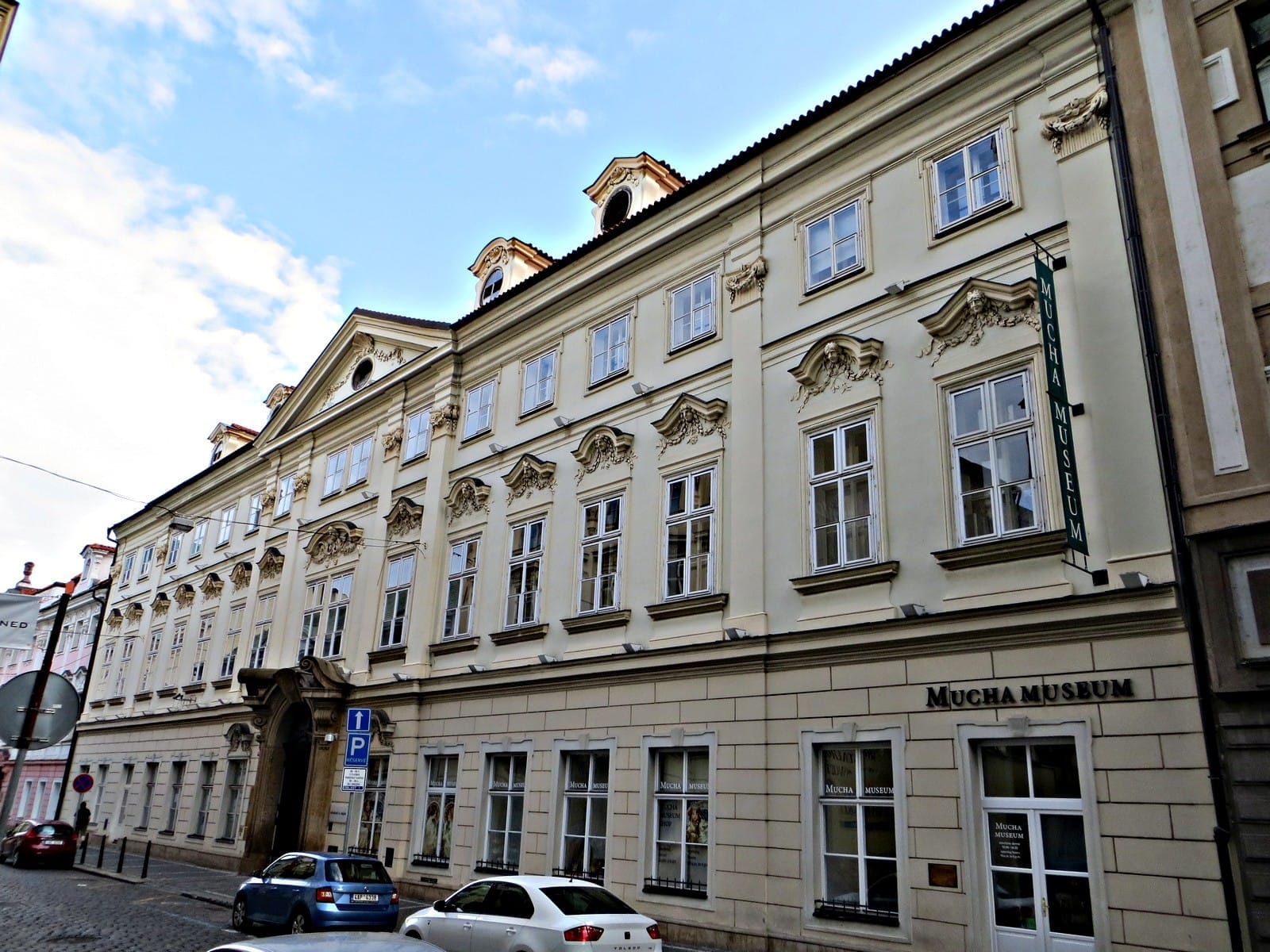
Housed in the 18th-century Kaunitz Palace just off Wenceslas Square, the Mucha Museum is the world's only museum dedicated exclusively to Alphonse Mucha, the Czech master of Art Nouveau. Spanning 500 square metres, the collection covers everything from iconic Parisian poster art to intimate personal photographs and the monumental Slav Epic sketches.
Quick Facts
- Location
- Kaunický palác, Panská 7, Praha 1 (New Town)
- Getting There
- Můstek metro (Lines A & B), 5-minute walk
- Time Needed
- 1 to 1.5 hours
- Cost
- Adults 300 CZK, Concessions 220 CZK, Family 800 CZK
- Best for
- Art lovers, design enthusiasts, fin-de-siècle history
- Official website
- www.mucha.cz/en
What the Mucha Museum Actually Is
The Mucha Museum opened on 13 February 1998 as the world's first museum devoted entirely to the life and work of Alphonse Mucha (1860–1939), the Moravian-born artist who became synonymous with the Art Nouveau movement during his years in Paris. The museum occupies the Kaunitz Palace, a Baroque townhouse tucked along Panská Street, a quiet lane one block north of the main shopping corridor Na Příkopě. The building itself dates to the 18th century and its vaulted ceilings, ornate plasterwork, and worn stone floors add an understated grandeur to the experience without overwhelming the art.
The exhibition covers roughly 500 square metres and is compact by major-museum standards. That is not a drawback. The curation is focused and coherent: original posters, decorative panels, pastels, drawings, photographs, and personal memorabilia trace Mucha's career from his early commercial commissions to the philosophical ambitions of his later years. Nothing here is padding.
💡 Local tip
Arrive within the first 30 minutes of opening (daily from 10:00) to have the smaller rooms to yourself. By late morning, tour groups from nearby hotels arrive in waves, and the narrow corridors become difficult to navigate comfortably.
Alphonse Mucha: Why He Matters
Mucha rose to international fame almost accidentally. In December 1894, the Parisian actress Sarah Bernhardt needed an emergency theatre poster for her new play, Gismonda. Mucha, then an obscure illustrator, was the only artist available at the printing house. The resulting poster, tall and narrowly proportioned with Bernhardt depicted in Byzantine-influenced robes against a mosaic background, was unlike anything the city had seen. Bernhardt immediately signed Mucha to a six-year contract, and Art Nouveau was given one of its defining visual languages.
The style he developed during this period, sinuous lines, floral borders, women with cascading hair rendered in soft golds and muted greens, became commercially ubiquitous across Europe and America. He designed not only posters but jewellery, wallpaper, biscuit tins, cigarette packaging, and theatrical costumes. What separates Mucha from his imitators is the structural discipline underneath the decorative surface: his compositions are architecturally rigorous despite their apparent softness.
Later in life, Mucha returned to his Czech homeland and embarked on the Slav Epic, a cycle of 20 monumental canvases depicting the history and mythology of Slavic peoples. That series is now displayed at the National Gallery's Veletržní Palace, but the Mucha Museum provides essential context for understanding it through preparatory sketches, correspondence, and photographs of the artist at work.
Tickets & tours
Hand-picked options from our booking partner. Prices are indicative; availability and final rates are confirmed when you complete your booking.
Mucha Museum entrance ticket
From 12 €Instant confirmationFree cancellationSelf guided tour with interactive city game of Prague
From 5 €Instant confirmationFree cancellationPrague by night city tour
From 27 €Instant confirmationFree cancellationPrague city tour with Vltava River cruise
From 38 €Instant confirmationFree cancellation
Moving Through the Exhibition
The layout is roughly chronological and thematic. Visitors move from the commercial Paris years into more personal spaces covering Mucha's documentary photographs, his time in America, and his later philosophical and patriotic work. The exhibition does not feel rushed or artificially stretched.
The poster room is where most visitors spend the longest time, and reasonably so. The originals are displayed under controlled lighting that brings out the lithographic textures in a way that reproductions simply cannot replicate. Stand close to the Gismonda or the Job cigarette papers poster and you can see the grain of the stone printing process and the deliberate hand-applied colour layering. It is a different experience from seeing the same images on a screen or a postcard.
The pastel drawings and decorative panel studies displayed further in are less famous but arguably more interesting for anyone who wants to understand how Mucha actually worked. You can trace his compositional thinking through preliminary sketches and see where he made adjustments. The personal photograph archive, including self-portraits and studio shots of models posing for reference, makes the work feel surprisingly immediate and human.
ℹ️ Good to know
Audio guides are available at the museum. Given the depth of context around Mucha's career phases, the audio commentary adds meaningful value and is worth picking up, especially if you are visiting without prior knowledge of Art Nouveau history.
Visiting by Time of Day
Morning visits (10:00 to 11:30) are the clearest window for a relaxed experience. The rooms are quiet, the light through the palace windows is soft, and the staff are not yet managing crowd flow. You can stand in front of a poster for as long as you like without someone's shoulder in your peripheral vision.
Midday through early afternoon is the busiest period. The museum's position between Wenceslas Square and Old Town puts it directly on the tourist circuit, and group bookings cluster between 11:30 and 14:00. The space becomes noticeably warmer, and the narrower display corridors feel congested. If you can only visit during these hours, try to start in the rooms furthest from the entrance, which tend to clear faster.
Late afternoon, from around 16:00 onward, brings a second quieter window. Day-trip groups have largely departed, and the remaining visitors tend to be individual travellers moving at their own pace. The museum closes at 18:00, giving you a comfortable two-hour window even if you arrive at 16:00.
Getting There and Practical Logistics
The museum sits on Panská Street in Prague's New Town, less than a ten-minute walk from either the Můstek metro station (Lines A and B) or the Museum metro station (Lines A and C). From Můstek, walk southeast along Wenceslas Square, turn left onto Jindřišská, then right onto Panská. The entrance is on the left, marked by a modest sign on the palace facade.
The museum is open daily from 10:00 to 18:00 with no seasonal closures indicated on the official site. Admission is 300 CZK for adults, 220 CZK for children, students, and seniors aged 65 and over, and 800 CZK for a family ticket covering two adults and two children. Tickets can be purchased at the door. The museum shop, located near the exit, carries a well-edited selection of prints, books, and design objects, and is notably less generic than most attraction shops.
On accessibility: the museum is described as wheelchair accessible, though the building is a historic Baroque palace and visitors with specific mobility needs should contact the museum directly before visiting to confirm current step-free access arrangements. The exhibition is on a single level for the most part, but palace buildings of this age sometimes have threshold variations that are not captured in general accessibility descriptions.
⚠️ What to skip
Photography rules inside the museum have changed over time. Check the current policy at the entrance before raising your camera. Flash photography is generally prohibited near original works to protect the lithographic inks.
How This Museum Fits Into a Prague Art Itinerary
The Mucha Museum works well as a focused, time-efficient stop that complements broader Prague art itineraries. It pairs naturally with a visit to the Municipal House, Prague's most complete Art Nouveau building, which stands about seven minutes on foot to the northeast. Mucha contributed directly to Czech decorative arts of the same era, and seeing both on the same afternoon creates a coherent picture of how Art Nouveau translated from Parisian commercial design into civic architecture.
For context on how Mucha's later nationalist ambitions connected to broader Czech cultural identity, the Prague history guide provides useful background on the Bohemian national revival and the period in which Mucha created the Slav Epic.
Visitors who want to compare the Art Nouveau decorative tradition with early Czech modernism should consider adding the House of the Black Madonna to the same day, a ten-minute walk away in Old Town. That building represents the Cubist counterreaction to Art Nouveau and now houses a permanent exhibition on Czech Cubism.
Who Should Skip This Museum
The Mucha Museum is not for everyone, and it is worth being honest about that. If you have no particular interest in decorative arts, poster design, or the cultural history of the Belle Époque, the collection may feel too narrow to justify the entrance fee and time. Unlike the city's larger institutions, there is no variety here: the entire exhibition is about one artist and one body of work.
Visitors travelling with young children may find the low-stimulus environment difficult. There are no interactive elements, no dedicated family programming that is apparent from public information, and the exhibition format is traditional and reading-heavy. The space is also not large enough to absorb restless movement without disturbing other visitors.
Anyone who has recently visited a major Mucha retrospective at a national gallery elsewhere in Europe may find the Prague museum's collection feels smaller than expected, though it compensates with the biographical depth and the personal archive material, which larger travelling exhibitions rarely include.
Insider Tips
- The museum shop carries high-quality reproductions and prints of Mucha’s works. These are significantly better quality than the mass-produced posters sold at market stalls around Old Town Square, and the price difference reflects it.
- Panská Street has a small café directly opposite the museum entrance. It is a good option for a coffee before or after, and far less crowded than the cafés on Wenceslas Square two blocks away.
- If you plan to visit the Municipal House on the same day, buy your Municipal House guided tour tickets online in advance. The Mucha Museum requires no advance booking and rarely sells out, so walk-in is fine here.
- The Kaunitz Palace courtyard, accessible briefly as you enter, gives you a sense of the building's Baroque proportions. It takes less than a minute to walk through but most visitors miss it by heading straight to the ticket desk.
- The museum's permanent exhibition does not change frequently, so if you visited more than five years ago, the core display will be familiar. The biographical and archival sections have been refreshed over the years and are worth revisiting for returning visitors.
Who Is Mucha Museum For?
- Art and design enthusiasts with a specific interest in Art Nouveau, illustration, or fin-de-siècle European culture
- Travellers on a half-day schedule in the New Town area who want a focused, high-quality cultural stop
- Architecture and decorative arts researchers looking for primary material on Mucha's working process
- Couples combining art with a walk through the New Town and Municipal House area
- Visitors who want to understand Czech national identity through the lens of one of its most internationally recognised artists
Nearby Attractions
Other things to see while in New Town (Nové Město):
- Dancing House (Tančící dům)
Designed by Frank Gehry and Vlado Milunić and completed in 1996, the Dancing House stands on the Vltava embankment as one of Prague's most photographed and debated buildings. Here's what the experience actually looks like from the outside, from the rooftop bar, and from the gallery inside.
- Franciscan Garden
Hidden behind the commercial noise of Wenceslas Square, the Franciscan Garden (Františkánská zahrada) is a free, walled courtyard garden Hidden behind the commercial noise of Wenceslas Square, the Franciscan Garden (Františkánská zahrada) is a free, walled courtyard garden with roots in the 14th century, a Baroque pavilion, and rose beds that offer genuine quiet in the middle of Prague's busiest district. Entry is free, and the contrast with the streets outside is immediate., a Baroque pavilion, and rose beds that offer genuine quiet in the middle of Prague's busiest district. Entry is free, and the contrast with the streets outside is immediate.
- Jerusalem Synagogue
Built in 1904–1906, the Jerusalem Synagogue is the largest synagogue of Prague's Jewish community and one of the most visually arresting religious buildings in the city. Its exterior fuses Moorish Revival arches with Art Nouveau ornament, while the interior overwhelms with color, pattern, and scale.
- Kafka's Rotating Head (Franz Kafka Sculpture)
Standing 11 metres tall outside the Quadrio shopping centre in New Town, the Head of Franz Kafka is a kinetic sculpture of 42 polished stainless steel layers that slowly rotate out of sync, fragmenting and reassembling Kafka's face. It is free to see at any time, though the programmed rotation runs at set intervals between morning and late evening, and it is one of the most photographed modern artworks in the Czech Republic.