Loreto Sanctuary (Loreta): Prague's Baroque Pilgrimage Complex
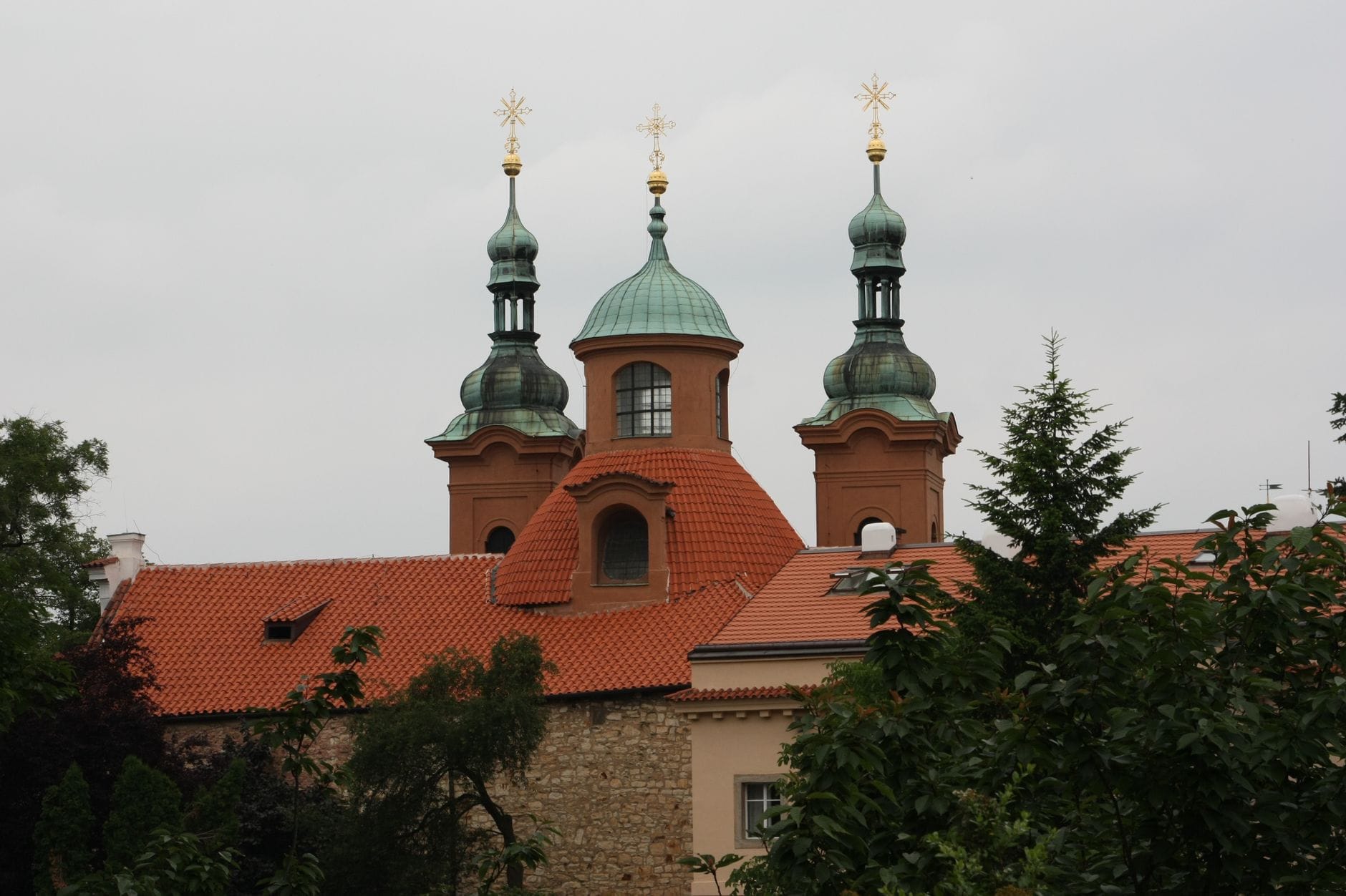
The Loreto Sanctuary is one of the most elaborately decorated Baroque pilgrimage sites in Central Europe, anchored by a 1626 replica of the Holy House from Loreto, Italy. Located on Loretánské náměstí in the Hradčany district, the complex rewards visitors with a carillon that rings every hour, a surprising treasury of religious art, and an atmosphere that stands apart from the crowds near Prague Castle.
Quick Facts
- Location
- Loretánské náměstí 7/100, Hradčany, Prague 1 (Prague Castle District)
- Getting There
- Tram stop Pohořelec (line 22) is the most direct connection; also reachable from Malostranská metro (Line A) by continuing on tram 22 to Pohořelec
- Time Needed
- 60–90 minutes for a thorough visit; 45 minutes if focused on the Holy House and treasury
- Cost
- Approx. CZK 260 adults, CZK 170 students/seniors, CZK 120 children (6–15), under 6 free. Audio guide extra. Verify on official site before visiting.
- Best for
- Baroque architecture, Catholic history, quiet contemplation, art and treasury enthusiasts
- Official website
- www.loreta.cz
What the Loreto Sanctuary Actually Is
The Loreto Sanctuary, known in Czech as Loreta Praha, is a Baroque Marian pilgrimage complex built around a replica of the Holy House (Santa Casa) of Loreto, Italy. It sits on Loretánské náměstí in the Hradčany district, a broad square just a few minutes' walk west of Prague Castle's main entrance. Despite being this close to one of Europe's most visited castle complexes, the Loreto often feels significantly quieter, drawing visitors who have done their research rather than those following the main tourist stream.
The Holy House at the core of the complex was commissioned in 1626 by Benigna of Lobkowicz, a member of one of Bohemia's most powerful Catholic noble families, as a direct replica of the venerated Santa Casa in Loreto, Italy. The broader pilgrimage site grew around it from 1631 onward, eventually incorporating an arcaded courtyard, chapels, a Baroque church, and a treasury that today displays some of the finest surviving religious silver and goldsmithing in the Czech Republic.
ℹ️ Good to know
The Loreto Sanctuary is open daily 10:00–17:00. The 27-bell carillon in the tower plays a Marian song several times a day; check current times on the official site. Arriving just before the hour is worthwhile: the sound carries across the square and sets the atmosphere of the entire visit.
The Holy House: What You're Looking At and Why It Matters
The theological concept behind the Loreto pilgrimage tradition is that the original house in Nazareth where the Angel Gabriel announced the Incarnation to Mary was miraculously transported by angels to Loreto, Italy, in the 13th century. Whether or not visitors hold that belief, the architectural consequence is striking: a modest brick structure of Mediterranean proportions sits in the center of a Central European Baroque courtyard, surrounded by covered arcaded galleries far taller than the house itself.
The exterior of the Holy House is encased in stucco reliefs depicting scenes from the life of the Virgin Mary. The craftsmanship is detailed and well preserved, and because the structure is small and freestanding in the courtyard, you can walk the full perimeter slowly, examining the panels at close range. Inside, the atmosphere is genuinely devotional: the space is dim, centered on a Black Madonna figure, and the air carries a faint trace of incense even outside of active services. Photography inside the Holy House is typically restricted.
For context on how the Loreto fits into the broader Catholic and Baroque architectural legacy of Prague, the Prague architecture guide covers the wave of Counter-Reformation building that transformed the city from the early 17th century onward. The Loreto is one of the most intact examples of that transformation.
Tickets & tours
Hand-picked options from our booking partner. Prices are indicative; availability and final rates are confirmed when you complete your booking.
Self guided tour with interactive city game of Prague
From 5 €Instant confirmationFree cancellationPrague by night city tour
From 27 €Instant confirmationFree cancellationPrague city tour with Vltava River cruise
From 38 €Instant confirmationFree cancellationPrague Castle online audio guide
From 5 €Instant confirmationFree cancellation
The Treasury: The Most Underrated Room in the Building
Most visitors spend the bulk of their time in the courtyard and the Holy House, which means the treasury on the upper floor of the complex receives a fraction of the attention it deserves. The collection includes chalices, monstrances, reliquaries, and liturgical objects spanning the 16th to 18th centuries, many donated by Czech noble families. The craftsmanship of individual pieces is extraordinary.
The most famous object in the treasury is the Diamond Monstrance, created in Vienna in 1699 and set with approximately 6,200 diamonds. The piece was funded by a bequest from Ludmila Eva Franziska of Kolowrat, who directed that her diamonds be melted down and reset into an object of permanent devotion rather than kept as personal jewelry. Seeing it in person clarifies why the treasury earns its own mention in serious accounts of Central European decorative arts.
💡 Local tip
The treasury can feel cramped with even a small group inside. If you arrive shortly after opening at 10:00, you will likely have it nearly to yourself for 20–30 minutes. By late morning, tour groups begin rotating through and the experience becomes more compressed.
The Courtyard, Arcades, and Church of the Nativity
The arcaded galleries enclosing the courtyard were built in the early 18th century and contain several chapels along their inner walls. The chapels are small, individually decorated, and range in theme from the Sorrows of the Virgin to specific saints. They are easy to pass quickly, but slowing down to read the iconographic programs rewards anyone with an interest in Baroque devotional art.
At the eastern end of the courtyard stands the Church of the Nativity of Our Lord, built in the 1730s. The interior is a single-nave Baroque space with ceiling frescoes, carved altarpieces, and side chapels. The quality of the ceiling paintings is high, though the church is compact and can only accommodate modest visitor numbers comfortably at one time. The skeletons of two Spanish saints, dressed in wax masks and ornate vestments, are displayed in glass cases within the church interior, which surprises visitors who weren't expecting it.
How the Experience Changes by Time of Day
Morning visits, especially in the first hour after opening, offer the clearest advantage in terms of crowd levels and light quality. The courtyard faces generally east, meaning morning sun catches the stucco reliefs of the Holy House from a favorable angle. The carillon at 10:00 rings out over an empty square, which is considerably more atmospheric than hearing it amid a group of tour visitors.
Midday hours, particularly between 11:30 and 14:00, see the most consistent visitor traffic, though the Loreto never approaches the saturation levels of Old Town Square or the main Prague Castle courtyard. Afternoon visits are quieter again, and the last entry timing means the treasury and church can be visited more slowly. In winter, closing at 17:00 means the final hour falls in or near dusk, which drains the courtyard of the natural light that makes the stucco work most legible.
For a broader sense of when to plan your Prague trip for shorter queues and better weather, the best time to visit Prague guide lays out the seasonal trade-offs in detail.
Getting There and Practical Notes
Tram line 22 is the most practical public transport connection. The stop Pohořelec places you about five minutes' walk from the sanctuary entrance on Loretánské náměstí. Tram 22 connects directly to Malostranské náměstí in Malá Strana and to the National Theatre area in New Town, making it easy to combine this visit with other sites in the Prague Castle District or Lesser Town.
Visitors arriving on foot from Prague Castle walk west along Hradčanské náměstí and continue to Loretánské náměstí, a journey of about five minutes. This sequencing, visiting the castle complex first and the Loreto afterward, works well because the Loreto's quieter, more contemplative atmosphere contrasts effectively with the open scale of the castle grounds.
The Loreto fits naturally into a half-day or full-day itinerary of the Prague Castle District. Strahov Monastery, Nový Svět quarter, and the castle gardens are all within comfortable walking distance.
⚠️ What to skip
Ticket prices and opening hours change periodically. The figures listed here are indicative. Confirm current admissions and any temporary closures at loreta.cz before your visit, especially around Catholic feast days when the sanctuary may have restricted public visiting hours due to services.
The Prague City Tourism information page marks the site as having at least partial wheelchair accessibility, but detailed information on step-free routes and accessible facilities is not comprehensively published. Visitors with specific mobility requirements should contact the sanctuary directly via the contact details on the official website before visiting.
Who Should Think Twice Before Visiting
If your primary interest is panoramic city views or the sweep of Prague's secular architectural history, the Loreto will feel focused to the point of narrow. The complex does one thing very well: it presents a coherent, high-quality Baroque pilgrimage environment. Visitors looking for interactive exhibits, modern design, or broad historical narrative across multiple eras will find the experience thin. The same is true for children under 10, who are likely to find the chapels and treasury repetitive unless they have a specific interest in old objects.
If the treasury-and-church format isn't what you're after but you want to stay in the neighborhood, the Strahov Monastery a short walk away offers a completely different experience, including two remarkable Baroque library halls and a small picture gallery.
Insider Tips
- Arrive at 10:00 sharp and head directly to the treasury before any tour groups arrive. You may have 15–20 minutes with the Diamond Monstrance and the surrounding collection almost entirely to yourself.
- The carillon performance is best heard from Loretánské náměstí outside the main entrance gate rather than inside the courtyard, where the sound bounces off the arcades unpredictably. Position yourself on the square a minute before the hour.
- The small chapels along the inner arcade walls are easy to rush past. Each has a distinct iconographic program and some contain altar paintings of genuine quality. The Chapel of Our Lady of Sorrows in the northwest corner of the arcade is particularly detailed.
- If you plan to visit both the Loreto and Prague Castle on the same day, start at the Loreto when it opens at 10:00 and move to the castle afterward. The Loreto's morning calm contrasts sharply with the castle's midday visitor volume, and you'll have seen the quieter site at its best.
- An audio guide is available for an additional fee and adds meaningful context to objects and spaces that carry little or no English signage in the complex itself. For the treasury in particular, it substantially improves the visit.
Who Is Loreto Sanctuary (Loreta) For?
- Travelers with an interest in Baroque art and Catholic devotional architecture
- Anyone who wants a meaningful cultural experience within walking distance of Prague Castle without the castle crowds
- Photography enthusiasts focused on architectural detail and ornamental stucco work
- Visitors who appreciate decorative arts and fine goldsmithing, specifically for the treasury collection
- Travelers following the Counter-Reformation history of Bohemia
Nearby Attractions
Other things to see while in Prague Castle District (Hradčany):
- Golden Lane
A row of tiny, brightly painted houses tucked against Prague Castle's northern fortification wall, Golden Lane compresses five centuries of city life into roughly 100 metres. Once home to castle guards, goldsmiths, and briefly Franz Kafka, it is one of the most photogenic and historically layered corners of the entire castle complex.
- National Gallery – Schwarzenberg Palace
Schwarzenberg Palace stands on Hradčanské náměstí, directly opposite the main entrance to Prague Castle. Built between 1545 and 1567, its sgraffito-covered facade is one of the most technically accomplished examples of Italian Renaissance architecture in Central Europe. Inside, the National Gallery Prague displays its permanent collection of Czech and Central European Baroque art across three floors of period-appropriate grandeur.
- National Gallery – Sternberg Palace
Tucked just off Hradčanské Square, Sternberg Palace is one of the finest High Baroque buildings in Bohemia and home to the National Gallery Prague's permanent Old Masters collection. Here you'll find European paintings and sculpture spanning the 14th to 18th centuries, from Flemish altarpieces to Italian Renaissance panels, in rooms that feel genuinely unhurried compared to the castle crowds outside.
- Nový Svět Quarter
Nový Svět, meaning 'New World,' is a tiny cluster of cobblestone lanes tucked just northwest of Prague Castle in the Hradčany district. Dating to the 14th century and once home to castle servants and later artists, this freely accessible residential quarter offers one of the most atmospheric walks in the city, far removed from the tourist crowds a few minutes away.