Church of St. Nicholas (Malá Strana): Prague's Baroque Masterpiece
The Church of St. Nicholas in Malá Strana is the most ambitious Baroque building in Prague, rising above the Lesser Town with a copper-green dome that defines the city's skyline. Built between 1704 and 1755, it rewards visitors with extraordinary ceiling frescoes, a soaring interior nearly 60 metres high, and a separate bell tower offering rooftop views across the red-tiled district below.
Quick Facts
- Location
- Malostranské náměstí, 118 00 Praha 1 – Malá Strana
- Getting There
- Tram to Malostranské náměstí (lines 12, 20, 22); or Malostranská metro (Line A), then 8-min walk
- Time Needed
- 45–90 minutes (allow extra for the bell tower)
- Cost
- Paid entry; admission and bell tower priced separately (verify current prices at stnicholas.cz)
- Best for
- Architecture enthusiasts, photography, history, concert-goers
- Official website
- www.stnicholas.cz/en
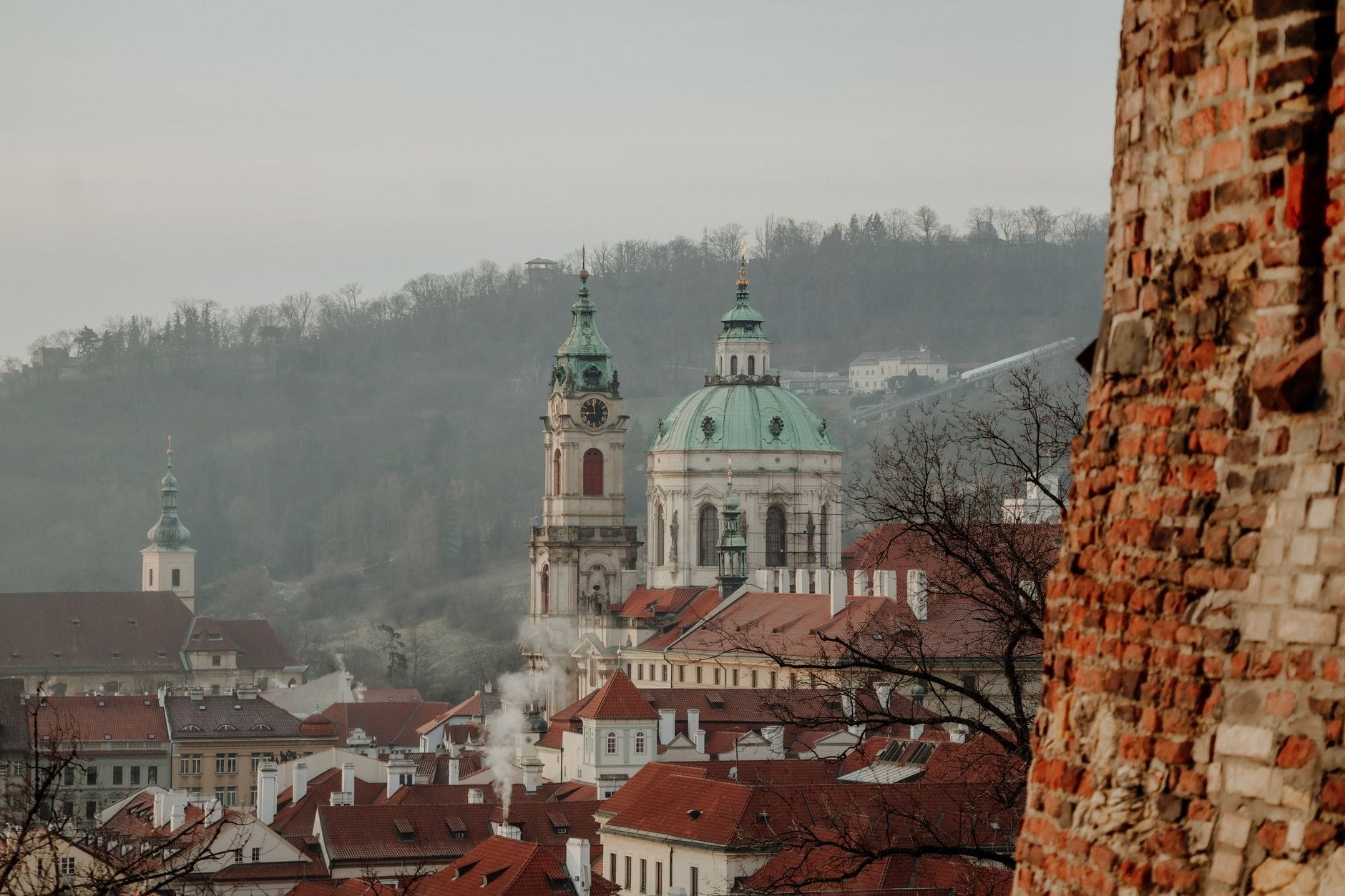
What You're Actually Looking At
The Church of St. Nicholas (Kostel svatého Mikuláše) is not simply a large church. It is the defining statement of Central European Baroque architecture, completed over five decades by three members of the Dientzenhofer family of architects and finished by Anselmo Lurago. When you arrive at Malostranské náměstí, the façade fills the entire south-western edge of the square. The copper-green dome, measuring 20 metres in diameter, and the roughly 80-metre bell tower rise in unison above the Lesser Town roofline, visible from Charles Bridge, from the Petřín slopes, and from viewpoints across the river in Old Town.
The church was constructed between 1704 and 1755 on the site of a 13th-century Gothic church that the Jesuits had acquired a century earlier. The order used it as a symbol of Catholic reassertion in Bohemia following the Thirty Years' War, and the scale and opulence were entirely deliberate. After the Jesuits were dissolved in 1773, the church passed through several uses, including a period as a concert hall and, during World War I, as a storage and observation point. It is now an active Roman Catholic parish and a registered cultural monument of the Czech Republic.
ℹ️ Good to know
Opening hours vary by season: generally from 9:00 until between 16:00 and 18:00 depending on the month. Always check the official site (stnicholas.cz) before visiting, as hours adjust across the year and the church closes during services.
Inside the Church: What to Look For
The interior dimensions alone are startling. The nave climbs to almost 60 metres at its highest point beneath the dome, a space that forces your gaze upward the moment you step through the doors. The first thing you will notice is the ceiling fresco above the nave, painted by Johann Lukas Kracker in 1761. At roughly 1,500 square metres, it is one of the largest ceiling frescoes in Europe, depicting scenes from the life of St. Nicholas. The colours remain extraordinary, the blues and ochres deepening as your eyes adjust to the interior light.
Below the dome, the fresco by Franz Xaver Palko depicts the Holy Trinity, and the dome's interior creates an almost theatrical sense of vertical space. The ornate pulpit, the gilded side altars, and the massive organ, which Mozart reportedly played during his visits to Prague in 1787, compound the sense of deliberate excess. These are not incidental decorations. They were commissioned to overwhelm, and at this scale, they still do.
Photography inside the nave is generally permitted. The light is best in the late morning when natural light enters from the upper windows and supplements the interior illumination, reducing the yellowish cast that artificial lighting alone creates. A wide-angle lens or a smartphone in panorama mode is useful here, but no single frame captures the ceiling fresco in full.
Tickets & tours
Hand-picked options from our booking partner. Prices are indicative; availability and final rates are confirmed when you complete your booking.
Classical Concert in St. Nicholas church
From 33 €Instant confirmationFree cancellationKutna Hora with St.Barbara's Cathedral and Bone Church
From 72 €Instant confirmationFree cancellationSelf guided tour with interactive city game of Prague
From 5 €Instant confirmationFree cancellationPrague by night city tour
From 27 €Instant confirmationFree cancellation
The Bell Tower: A Separate Ticket, a Different Reward
The bell tower is accessed separately from the main church, with its own entrance and its own admission charge. It is not connected to the nave interior, so if you want both, you will need two tickets purchased on site. The climb is steep and the staircase is narrow, which makes it unsuitable for visitors with mobility limitations or those with a fear of heights. At the top, however, the view is specific and worthwhile: you are looking directly across the Malá Strana rooftops toward the slopes of Petřín Hill and back toward the Vltava. For a broader panoramic view of the city, Petřín Lookout Tower offers more range, but the tower here places you inside the neighbourhood itself in a way that hilltop viewpoints cannot.
💡 Local tip
Visit the bell tower in the early afternoon on a clear day. The light falls from the west at that hour, illuminating the Lesser Town copper rooftops and the façade of Prague Castle above. Bring something warm even in summer — it is noticeably cooler and windier at the top.
How the Experience Changes by Time of Day
In the morning, from opening until around 10:30, the square outside is relatively quiet. The café tables at the surrounding restaurants are empty or just filling. The church interior at this hour is often occupied by small groups of early-rising visitors and, depending on the day, by worshippers attending morning Mass. The quality of light inside is softer and more diffuse at this time, which suits those who want to study the frescoes without crowd pressure.
By mid-morning and into the early afternoon, Malostranské náměstí fills steadily, partly because it sits directly on the tourist route between Charles Bridge and Prague Castle. Tour groups arrive in sequence, and the interior can become noisy with multiple languages echoing under the dome. If you are visiting during peak summer months, between roughly June and August, arriving at opening or waiting until after 16:00 will give you a noticeably quieter experience.
In the evening, the church hosts regular classical music concerts, particularly chamber performances and organ recitals. These are not tourist novelties. The acoustic properties of the space are exceptional, and the concerts make serious use of the organ and the building's resonance. Tickets are sold separately and in advance through the church. If you are planning a cultural evening in Malá Strana, an evening concert here is a practical and rewarding option.
Getting There and Around the Neighbourhood
The most direct public transport route is the tram to Malostranské náměstí, served by several lines including 12, 15, 20, and 22. The stop places you approximately 50 metres from the church entrance. Alternatively, Malostranská station on Metro Line A puts you about an eight-minute walk away through the lanes of the Lesser Town. If you are coming from Charles Bridge, the walk from the bridge's western tower through Mostecká Street leads directly into the square in under five minutes.
Parking in Malá Strana is extremely limited and the streets immediately around the square are pedestrianised or tightly controlled. Driving here is not practical for most visitors, and the tram network covers the area well from both the Old Town and the Castle District.
The neighbourhood around the church is worth time in its own right. The streets running south and west of the square toward Vrtba Garden and up toward the Castle are lined with Baroque palaces, small wine bars, and unexpectedly quiet courtyards. If you are building a walking route through the area, Wallenstein Garden is a ten-minute walk north and offers a different architectural register.
Practical Notes and Who Should Reconsider
The church has a paid admission, which is appropriate given the cost of maintaining a building of this scale. Exact prices should be verified at stnicholas.cz before your visit, as they are subject to change. The interior is generally accessible at ground level, though the bell tower involves a steep, narrow staircase with no lift. Visitors with significant mobility limitations should factor this in when deciding whether the tower is worth attempting.
For visitors with very limited time in Prague, one thing to be honest about: the exterior of the church is visible and impressive without paying for entry. If your schedule does not allow a slow interior visit, walking around the square and looking up at the dome from different angles still gives you a clear sense of the building's scale. However, the ceiling frescoes, the organ, and the spatial effect of the nave interior are not visible from outside, and those are the elements that make the entry fee worthwhile.
Visitors who are not interested in Baroque religious art and find large church interiors unremarkable may find the admission price hard to justify. The church is not a museum with rotating exhibits. It is a single, extraordinary architectural space, and your experience of it depends almost entirely on your engagement with that kind of thing.
⚠️ What to skip
The church closes during religious services. Check the official schedule before planning your visit around a specific time slot. Services are held regularly and can affect access for general visitors mid-morning or at other fixed hours.
Context: Where This Fits in Prague's Architecture
Prague has no shortage of Baroque buildings, but the Church of St. Nicholas in Malá Strana operates at a scale and quality that places it in a different category from the rest. If you are working through the city's architectural layers, this belongs alongside St. Vitus Cathedral as one of the two buildings that genuinely require a standing-still moment to absorb. The cathedral represents Gothic ambition; St. Nicholas represents the Baroque response to it, roughly three centuries later and two kilometres downhill.
For broader context on how this building fits into Prague's layered architectural history, the Prague architecture guide covers the city's major periods and how to read them on a walking route through the centre.
Insider Tips
- Arrive at opening time (9:00) on weekday mornings to have the nave almost entirely to yourself. Tour groups rarely arrive before 10:00, and the quality of your experience in the space is dramatically different without them.
- The evening concerts are consistently well-attended and book up in advance during summer. If you want to attend, check the schedule on stnicholas.cz early and buy tickets before your trip rather than on arrival.
- Stand directly beneath the dome and look straight up. The perspective from that point is the single most effective way to understand what the Dientzenhofers were attempting architecturally. Most visitors look at the nave from near the entrance and miss the dome fresco entirely.
- The bell tower entrance is on the side of the square, not inside the nave. First-time visitors frequently look for access through the church interior and waste time before realising the tower has a separate street-level entrance.
- In winter, from November through February, the church sees far fewer visitors and the admission experience is closer to what the space actually deserves: quiet, unhurried, and almost private.
Who Is Church of St. Nicholas (Malá Strana) For?
- Architecture and art history enthusiasts wanting to understand Central European Baroque at its peak
- Photographers looking for Prague's most complex interior light and fresco-scale compositions
- Concert-goers seeking a classical music performance in an acoustically and visually exceptional setting
- History-focused travellers tracing Prague's Counter-Reformation and Jesuit legacy
- Visitors on a Malá Strana walking route connecting Charles Bridge to Prague Castle
Nearby Attractions
Other things to see while in Malá Strana (Lesser Town):
- Charles Bridge
Charles Bridge is Prague's most recognizable landmark, a 516-metre medieval stone arch bridge lined with 30 Baroque statues linking the Old Town to Malá Strana. Free to cross at any hour, its experience shifts dramatically depending on when you arrive.
- Church of Our Lady Victorious (Infant Jesus of Prague)
Tucked along Karmelitská street in Malá Strana, the Church of Our Lady Victorious is one of Prague's most visited pilgrimage sites. It houses a 16th-century wax-coated wooden statue of the Infant Jesus that draws Catholic pilgrims from across the world, alongside curious visitors exploring Prague's Baroque heritage. Entry is free, and the attached museum adds unexpected depth to the visit.
- Franz Kafka Museum
The Franz Kafka Museum occupies a converted 19th-century brickworks on the Malá Strana riverbank, a short walk from Charles Bridge. It holds original manuscripts, correspondence, photographs, and first editions that illuminate the life and literary world of one of the 20th century's most influential writers. The experience is deliberately unsettling, and that is precisely the point.
- John Lennon Wall
The John Lennon Wall in Malá Strana is a free, ever-changing outdoor graffiti wall with roots in Cold War resistance. Official visiting hours are generally listed as 10:00–19:00, it costs nothing to see, and it sits just a short walk from Charles Bridge, rewarding those who understand its history as much as its color.