Museum of Decorative Arts Prague: What to Know Before You Visit
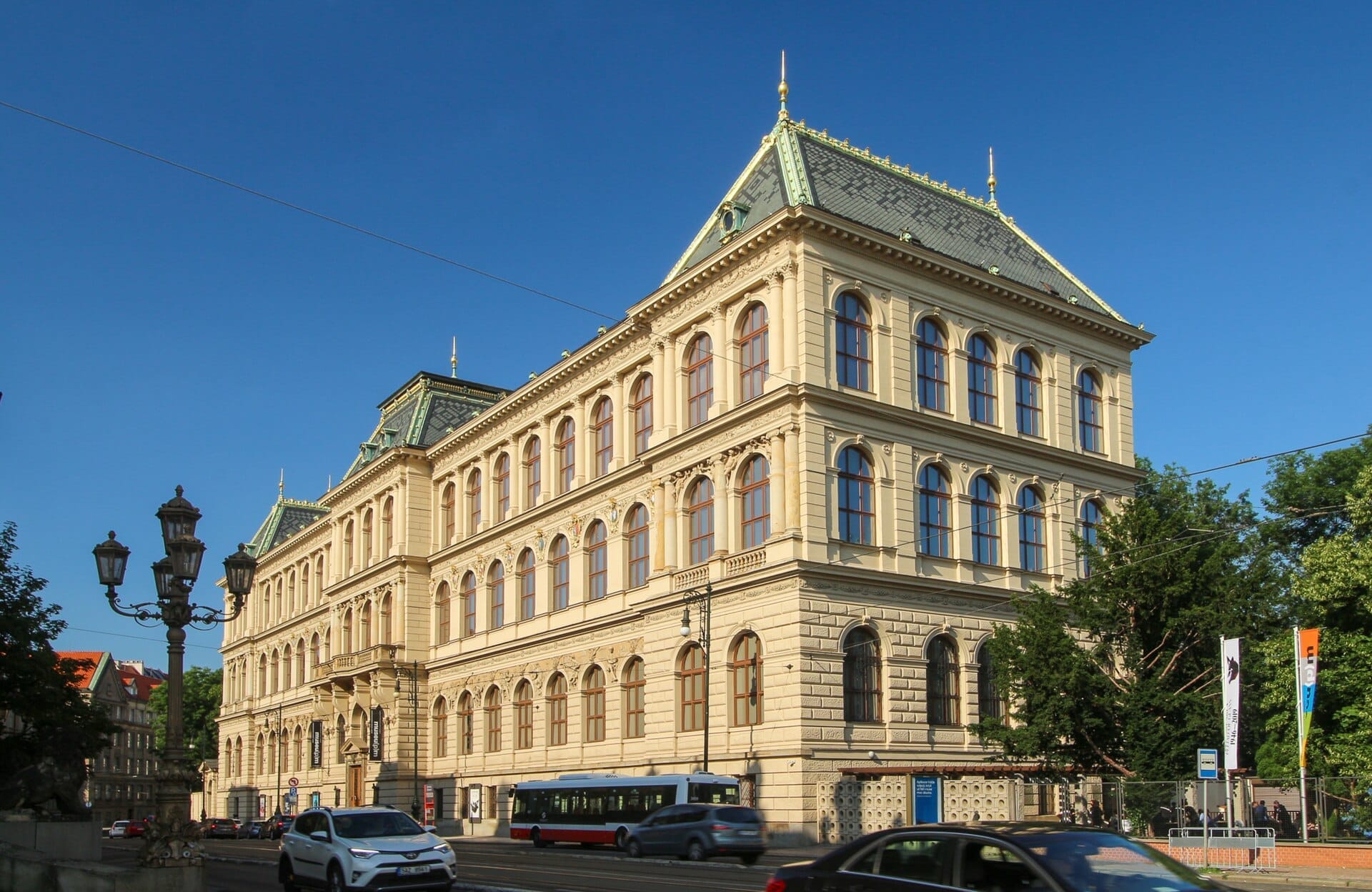
Housed in a French Neo-Renaissance building completed in 1899 and sitting directly opposite the Rudolfinum in Josefov, the Museum of Decorative Arts in Prague (UPM) is one of Central Europe's most underrated design collections. From Bohemian glass to Art Nouveau furniture and historical textiles, the permanent collection spans centuries of applied craft — all in a building that is itself worth the entry price.
Quick Facts
- Location
- 17. listopadu 2, Josefov, Prague 1 (opposite the Rudolfinum)
- Getting There
- Tram stop Právnická fakulta or Staroměstská; Metro Line A – Staroměstská
- Time Needed
- 1.5 to 2.5 hours for the permanent collection; longer if a temporary exhibition is running
- Cost
- 250 CZK full price / 120 CZK concession (verify before visiting)
- Best for
- Design enthusiasts, history of craft, Art Nouveau fans, rainy-day culture
- Official website
- http://www.upm.cz/index.php?language=en
What the Museum of Decorative Arts Actually Is
The Museum of Decorative Arts in Prague — known in Czech as Uměleckoprůmyslové muzeum v Praze, or simply UPM — is a dedicated applied arts museum founded in February 1885, making it one of the oldest institutions of its kind in Central Europe. Its collection covers glass, ceramics, textiles, furniture, clocks, graphic arts, photography, and fashion across several centuries, with particular depth in Bohemian and Central European craft traditions.
The building itself is significant. Designed by architect Josef Schulz in the French Neo-Renaissance style and completed between 1897 and 1899, it sits on the edge of Josefov, Prague's former Jewish Quarter, directly facing the Rudolfinum concert hall across a small square. The facade features sculpted reliefs and decorative stonework that announce the museum's purpose before you've even walked through the door. If you appreciate Prague's architectural heritage beyond just Gothic and Baroque, this stretch of the embankment is worth a slow look.
ℹ️ Good to know
Entrance is via the garden-side entrance, not the grand staircase facing the street. You'll find the info point, museum shop, and café just inside — useful to know before you spend five minutes looking for the ticket desk.
The Permanent Collection: What You'll Actually See
The permanent exhibition is organised thematically rather than strictly chronologically, which works in its favour. Rooms move through stories of materials and techniques: glassmaking, ceramics and porcelain, textiles and fashion, furniture and interior design, clocks, jewellery, and the graphic arts including photography. The collection spans roughly from the medieval period to the 20th century, though the strongest holdings cluster around the 17th to early 20th centuries.
Bohemian glass is a particular strength. The collection traces glassmaking from early Venetian-influenced pieces through the distinctly Bohemian cut-glass tradition that dominated European markets in the 18th century, and into the experimentally shaped Art Nouveau forms of the early 1900s. These are not dusty cabinet pieces — many are genuinely beautiful objects displayed with enough breathing room to appreciate them properly.
The textiles rooms are slower to move through but rewarding for anyone interested in the history of European fashion and weaving. The furniture collection, meanwhile, gives clear visual context for styles that visitors encounter throughout Prague's historic interiors — Baroque, Biedermeier, and Secessionist pieces sit in sequence, making the aesthetic shifts legible even if you're not a specialist.
The graphic arts section deserves particular attention if you have any interest in Czech visual culture. The museum holds significant works connected to the development of Czech poster art and photography, traditions that intersect with the broader world of Alfons Mucha's decorative output — though Mucha himself has a dedicated museum elsewhere in the city. If you're tracking the Art Nouveau thread through Prague, UPM is a substantive stop on that itinerary.
Tickets & tours
Hand-picked options from our booking partner. Prices are indicative; availability and final rates are confirmed when you complete your booking.
Self guided tour with interactive city game of Prague
From 5 €Instant confirmationFree cancellationPrague by night city tour
From 27 €Instant confirmationFree cancellationPrague city tour with Vltava River cruise
From 38 €Instant confirmationFree cancellationPrague Castle online audio guide
From 5 €Instant confirmationFree cancellation
Timing Your Visit: How the Experience Changes by Hour
The museum opens at 10:00 Tuesday through Sunday and stays open until 20:00 on Tuesdays, with closing at 18:00 Wednesday through Sunday — a late opening that is genuinely useful. Most visitors come mid-morning to early afternoon, meaning the rooms are quietest in the first hour after opening and again in the late afternoon from around 16:00 onward. On Tuesdays, the extended hours create a window from about 17:00 to 20:00 when the museum is often nearly empty and feels like a different place entirely.
Natural light plays a role in some of the gallery spaces, particularly rooms facing the courtyard garden. Morning visits can feel warmer and more pleasant visually; afternoon light shifts the mood in some of the glass display rooms. That said, the museum uses supplementary lighting throughout, so the difference is subtle rather than dramatic.
💡 Local tip
Tuesday evening is the best-kept scheduling advantage UPM offers. If your Prague itinerary is tight with daytime attractions, use the 10:00–20:00 Tuesday opening to fit in the museum after dinner-hour crowds have moved on.
The museum is closed on Mondays, as is standard for many Prague institutions. Arriving on Monday without checking will mean a wasted journey — worth noting if your time in the city is short.
Location and Getting There
The museum's address is 17. listopadu 2, in the part of Old Town that borders Josefov. It is a short walk from Old Town Square — roughly 8 to 10 minutes on foot heading northwest toward the river. From the Staroměstská metro station on Line A, it is a 4 to 5-minute walk. Trams serving the Právnická fakulta or Staroměstská stops put you within two minutes of the entrance.
The museum sits directly opposite the Rudolfinum, one of Prague's principal concert halls, and a short walk from the edge of Josefov's synagogue cluster. If you're spending a day in this part of the city, UPM combines naturally with the Old Jewish Cemetery and the surrounding synagogues — though those sites require separate admission tickets and have their own significant time commitment.
The Building as an Attraction in Its Own Right
Josef Schulz was responsible for several major Prague cultural buildings — including the National Museum on Wenceslas Square — and the UPM building shares that monumental civic ambition. The exterior stonework features allegorical figures and decorative reliefs referencing various crafts and industries, an intentional program that announces the building's purpose. The interior staircase and upper hall retain their late 19th-century character: ornate ironwork, ceiling detailing, and proportions designed to make objects of craft feel elevated to the level of fine art.
This architectural context matters. The UPM building was part of a broader late 19th-century project to raise the status of applied arts in Central Europe — the same impulse that drove the founding of similar institutions in Vienna and London. For visitors interested in Prague's architectural layers, the building offers a readable example of how Neo-Renaissance design was adapted to civic and cultural purposes in the Habsburg era.
Honest Limitations: Who Might Not Enjoy This
The Museum of Decorative Arts is not a crowd-pleaser in the way that Prague Castle or the Astronomical Clock is. There are no dramatic views, no single iconic object that everyone photographs, and no theatrical experience to speak of. The permanent collection rewards slow, attentive looking — visitors who arrive expecting a quick walk-through are likely to feel uncertain about what they're supposed to be responding to.
Families with young children will find the museum challenging. The collection consists almost entirely of fragile objects in cases, the rooms are relatively quiet and formal, and there are few interactive or child-oriented elements. It is not inaccessible to older children with an interest in art history, but it requires patience that the format does not always reward for younger visitors.
Accessibility within the building is worth checking in advance. Entry via the garden-side entrance avoids the main staircase, but visitors with mobility requirements should contact the museum directly or check the official website for current step-free route information, as not all areas may be uniformly accessible.
Photography and Practical Notes
Photography for personal, non-commercial use is generally permitted in the permanent galleries, though this can change with temporary exhibitions — check at the ticket desk when you arrive. The glass collections photograph particularly well in the museum's display lighting, and the architectural interiors of the staircase area are worth documenting before you descend into the galleries. Flash is typically not permitted, and tripods are not practical in the case-lined rooms.
The museum has a café and shop accessible from the garden entrance. The shop carries a selection of design-focused publications and Czech craft objects that are more carefully curated than typical tourist gift shops — worth a look on the way out even if you don't make a purchase.
⚠️ What to skip
Ticket prices and opening hours are subject to change. The figures in this guide (250 CZK full / 120 CZK concession; Tuesday 10:00–20:00, Wednesday–Sunday 10:00–18:00, Monday closed) should be verified at upm.cz before your visit.
Insider Tips
- Tuesday evening (from around 17:00 to 20:00) is the least-visited window in the week. The museum is often almost empty, the light is lower and more atmospheric, and there is no sense of being rushed through the rooms.
- The garden-side entrance, not the grand street-facing staircase, is where you buy tickets, use the café, and access the shop. First-time visitors often circle the building looking for a way in from the Rudolfinum-facing facade.
- If you're building an Art Nouveau or Czech design itinerary, UPM pairs logically with the Municipal House and the Mucha Museum — all three cover overlapping design periods from different angles.
- The permanent collection rooms are labelled in Czech and English, but the interpretive depth varies. Downloading the museum's materials or picking up a printed guide at the ticket desk helps substantially with context in the glass and textiles rooms.
- Temporary exhibitions at UPM tend toward rigorous curatorial scholarship rather than blockbuster accessibility — worth checking the programme on the museum website before your visit to see whether the current show aligns with your interests.
Who Is Museum of Decorative Arts For?
- Design and applied arts enthusiasts who want substance over spectacle
- Architecture-focused visitors tracking Prague's late 19th-century civic building programme
- Travellers on a rainy day looking for a genuinely engaging indoor alternative to the main tourist circuit
- Art Nouveau and Secessionist style followers building a thematic itinerary across the city
- Repeat visitors to Prague who have covered the headline attractions and want to go deeper
Nearby Attractions
Other things to see while in Josefov (Jewish Quarter):
- Maisel Synagogue
Built between 1590 and 1592 for the wealthiest man in Bohemia's Jewish community, the Maisel Synagogue stands at the heart of Josefov as both an architectural landmark and a gateway to ten centuries of Jewish life in Bohemia and Moravia. Today it houses one of the Jewish Museum in Prague's most important permanent exhibitions.
- Old Jewish Cemetery
The Old Jewish Cemetery in Prague's Josefov quarter contains over 12,000 visible tombstones layered up to ten deep across roughly one hectare. In use from 1439 to 1787, it stands as one of the best-preserved medieval Jewish cemeteries in the world and is part of the Jewish Museum in Prague complex.
- Old-New Synagogue
Built around 1270, the Old-New Synagogue in Josefov is not only the oldest surviving medieval twin-nave synagogue in Europe but also a continuously functioning house of worship. Its Gothic brick gables, centuries-old interior, and remarkable survival through Prague's turbulent history make it one of the most significant religious buildings on the continent.
- Pinkas Synagogue
Built in 1535 and transformed into a memorial after World War II, Pinkas Synagogue bears the hand-written names of nearly 80,000 Jewish victims from Bohemia and Moravia on its interior walls. It is one of the most quietly devastating memorials in Central Europe, and no amount of preparation fully readies you for what you see inside.