Maisel Synagogue: Prague's Jewish Quarter in Stone and Silver
Built between 1590 and 1592 for the wealthiest man in Bohemia's Jewish community, the Maisel Synagogue stands at the heart of Josefov as both an architectural landmark and a gateway to ten centuries of Jewish life in Bohemia and Moravia. Today it houses one of the Jewish Museum in Prague's most important permanent exhibitions.
Quick Facts
- Location
- Maiselova 10, Josefov (Prague 1)
- Getting There
- Metro Line A – Staroměstská; Tram 17 to Staroměstská (about a 3‑min walk)
- Time Needed
- 45–90 minutes
- Cost
- Combined Jewish Museum ticket (verify current price at jewishmuseum.cz); no stand-alone entry
- Best for
- History enthusiasts, architecture lovers, Jewish heritage travellers
- Official website
- www.jewishmuseum.cz/en/explore/sites/maisel-synagogue
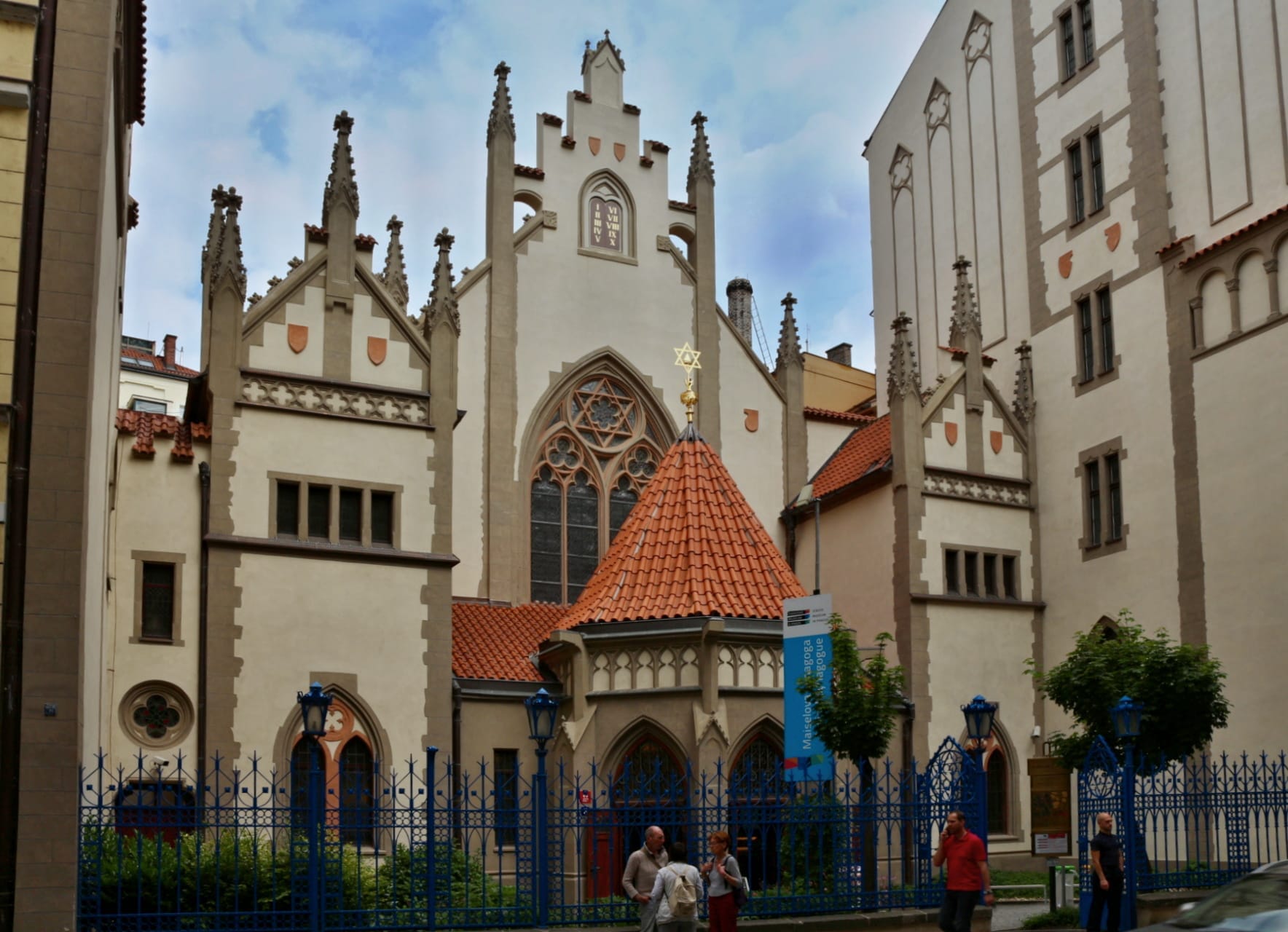
What Is the Maisel Synagogue?
The Maisel Synagogue is a late-Renaissance synagogue, later rebuilt in Neo-Gothic style, on Maiselova Street in Josefov, Prague's historic Jewish Quarter. It was commissioned in 1590 by Mordecai Maisel, a financier who was a leading patron of Prague's Jewish community and maintained close ties to the court of Holy Roman Emperor Rudolf II. The building you see today was rebuilt in Neo-Gothic style between 1893 and 1905, but the story it tells reaches back far earlier.
The synagogue is one of six sites managed by the Jewish Museum in Prague, and entry is only possible with a combined museum ticket. This means your visit here is naturally part of a broader walk through Josefov, a quarter whose cobblestone streets and layered history reward slow exploration.
ℹ️ Good to know
Entry to the Maisel Synagogue is included in the combined Jewish Museum in Prague ticket, which also covers the Spanish Synagogue, Pinkas Synagogue, Old Jewish Cemetery, Ceremonial Hall, and Klausen Synagogue. There is no separate ticket for individual sites. Verify the current price at jewishmuseum.cz before visiting.
The History Behind the Building
Mordecai Maisel funded the original synagogue's construction from his own fortune as a personal gift to the Jewish community. Rudolf II granted the project special imperial permission, an unusual concession that reflected Maisel's status at court and the emperor's famous openness to Jewish scholars and scientists during Prague's late-Renaissance golden age. The original structure was reportedly one of the grandest private synagogues in Central Europe.
Following Maisel's death in 1601, his assets were seized by the Habsburg authorities, and the synagogue changed hands and function several times over the following centuries. A devastating fire in 1689 gutted much of the original late Renaissance interior, built between 1590 and 1592. What remained was rebuilt, modified, and ultimately transformed in the Neo-Gothic renovation of 1893 to 1905, which gave the building its current pointed arches, ribbed vaulting, and the pale stone facade visible from Maiselova Street today.
To understand how the Maisel Synagogue fits into the wider arc of Jewish Prague, it helps to read it alongside Prague's Jewish Quarter history. Josefov was almost entirely demolished and rebuilt at the turn of the 20th century, but the major synagogues survived, forming a cluster of buildings that is unlike anywhere else in Central Europe.
Tickets & tours
Hand-picked options from our booking partner. Prices are indicative; availability and final rates are confirmed when you complete your booking.
Classical Concert in Spanish Synagogue in Prague
From 39 €Instant confirmationFree cancellationPrague Jewish Quarter guided walking tour with synagogue visits
From 81 €Instant confirmationFree cancellationSelf guided tour with interactive city game of Prague
From 5 €Instant confirmationFree cancellationPrague by night city tour
From 27 €Instant confirmationFree cancellation
The Permanent Exhibition: Jewish History in Bohemia and Moravia
The synagogue's interior now serves as the home of a permanent exhibition covering Jewish history in Bohemia and Moravia from the 10th to the 18th centuries. The exhibition opens with the earliest documented evidence of Jewish settlement in the Bohemian lands and traces the community's evolution through medieval persecution, Renaissance flourishing, and the beginnings of the Enlightenment era.
Display cases along the nave hold silver Torah finials, Hanukkah lamps, Kiddush cups, and textile ceremonial objects, many of extraordinary craftsmanship. The collection documents not just religious practice but also the practical and legal dimensions of Jewish life: guild restrictions, land-ownership bans, and the periodic expulsions that punctuated centuries of otherwise sustained presence in Prague. Exhibition panels are in Czech and English, and the level of detail is serious enough to satisfy specialists while remaining accessible to visitors with no prior background.
The building itself is part of the display. The Neo-Gothic arches and stained-glass windows create a cooler, quieter atmosphere than the more ornate Spanish Synagogue a few streets away. Morning light from the east windows hits the silver objects around 10am in summer, producing a quality of illumination that the curators appear to have considered in the placement of key pieces.
💡 Local tip
If you are moving through all six Jewish Museum sites in one day, start with the Maisel Synagogue when it opens. The chronological sweep of its exhibition (10th–18th century) provides context for the Pinkas Synagogue's Holocaust memorial lists, making the emotional weight of the later site more grounded.
When to Visit and What to Expect by Time of Day
Josefov is one of the most visited parts of Prague, and the narrow streets around Maiselova fill steadily from mid-morning onwards. The combined Jewish Museum ticket is popular with school groups on weekday mornings between April and June. If you arrive when the doors open (9:00am), you will often have the main nave largely to yourself for the first half hour.
Midday and early afternoon bring the heaviest foot traffic, coinciding with tour groups moving between the cemetery and the nearby synagogues. The building is not large, so a concentration of visitors in the nave can feel crowded around the display cases. Late afternoon, roughly from 4:30pm, sees numbers thin out, though in summer the Jewish Museum sites generally stay open until 7:00pm, giving you a genuinely unhurried window in the final two hours.
The synagogue is closed on Saturdays and on Jewish holidays. Hours are shorter from mid-October through December (closing around 4:30pm), which means early arrival is more important in those months. Always check the official Jewish Museum website for current hours before your visit, as seasonal adjustments are routine.
Getting There and the Josefov Walk
The Maisel Synagogue sits on Maiselova Street in Josefov, a short walk from the Staroměstská metro station (Line A). From the station, head west along the river embankment briefly, then turn into the quarter; the walk takes about three minutes. Tram 17 also stops at Staroměstská if you are approaching from the Nové Město direction.
Josefov is compact enough that the Maisel Synagogue, Old Jewish Cemetery, Pinkas Synagogue, and Spanish Synagogue can all be visited within a half-day. Plan for 45 to 90 minutes inside the Maisel Synagogue depending on how closely you engage with the exhibition text. The combined ticket is worth buying at the first Jewish Museum site you enter rather than queuing at each location.
Wear comfortable walking shoes. The synagogue's stone floor is even, but Josefov's historic paving stones outside are uneven in places, and you will cover meaningful ground if you follow the full Jewish Museum circuit. Accessibility information for specific mobility needs is not comprehensively listed online; contact the Jewish Museum directly before visiting if this is a concern.
Photography and Practical Notes
Photography is generally permitted inside without flash. The silver collection and the Gothic-vaulted interior both photograph well in available light. Morning visits offer warmer light through the eastern windows; afternoon light is more diffuse. Avoid large zoom lenses in crowded midday conditions as the aisles between display cases are narrow.
The building maintains a quiet, respectful atmosphere. Large bags may need to be checked at the entrance. There is no cafe inside the synagogue, but Maiselova Street and the nearby streets of Josefov have several coffee options within a two-minute walk.
⚠️ What to skip
The Maisel Synagogue is closed every Saturday and on Jewish holidays. Visiting during Passover, Rosh Hashanah, or Yom Kippur may mean the site is shut without advance notice in some calendars. Check the official Jewish Museum site for holiday closures before booking travel around those dates.
Who Might Not Find This Worth the Time
The Maisel Synagogue is, at its core, a museum inside a historic building. If your primary interest is active religious sites or ceremonial atmosphere, the building no longer functions as a working synagogue. The exhibition is text-heavy, and visitors who find museum-style displays tiring will likely feel the experience is more academic than visceral. Families with very young children may find the display-case format limiting.
If your Prague itinerary is extremely short and you can only justify one Jewish Museum site, the Pinkas Synagogue tends to deliver a more immediately affecting experience with its hand-painted walls listing the names of Czech Jewish Holocaust victims. The Maisel Synagogue rewards visitors with an appetite for the longer historical arc.
Insider Tips
- Buy the combined Jewish Museum ticket at whichever site you reach first. You do not need to queue again at each subsequent location, which saves significant time in the busier months.
- The Maisel Synagogue's exhibition follows a chronological order, but the layout is not always obvious. Pick up the free site map at the entrance and work from the right-hand aisle toward the apse for the clearest narrative sequence.
- If you want a photograph of the exterior without tour groups in the frame, Maiselova Street is quiet in the first 30 minutes after opening and again in the final hour before closing in summer.
- The light on the silver ceremonial objects is noticeably better on bright mornings when the eastern windows are unobstructed by cloud. Overcast days flatten the metalwork considerably.
- Combine the visit with a walk through the quieter northern end of Josefov, away from the main tourist circuit on Pařížská Street. The streets immediately around the Old New Synagogue feel more residential and less commercial.
Who Is Maisel Synagogue For?
- Travellers with a specific interest in Jewish European history and material culture
- Architecture enthusiasts drawn to the Neo-Gothic reconstruction and its relationship to the original Renaissance building
- Anyone following the full Jewish Museum in Prague circuit across multiple sites
- Visitors who want to understand the wider context of Prague's Jewish Quarter before exploring the surrounding streets
- History-focused travellers who find the Holocaust-era focus of other Jewish Museum sites emotionally exhausting and want to engage with the longer, pre-modern story
Nearby Attractions
Other things to see while in Josefov (Jewish Quarter):
- Museum of Decorative Arts
Housed in a French Neo-Renaissance building completed in 1899 and sitting directly opposite the Rudolfinum in Josefov, the Museum of Decorative Arts in Prague (UPM) is one of Central Europe's most underrated design collections. From Bohemian glass to Art Nouveau furniture and historical textiles, the permanent collection spans centuries of applied craft — all in a building that is itself worth the entry price.
- Old Jewish Cemetery
The Old Jewish Cemetery in Prague's Josefov quarter contains over 12,000 visible tombstones layered up to ten deep across roughly one hectare. In use from 1439 to 1787, it stands as one of the best-preserved medieval Jewish cemeteries in the world and is part of the Jewish Museum in Prague complex.
- Old-New Synagogue
Built around 1270, the Old-New Synagogue in Josefov is not only the oldest surviving medieval twin-nave synagogue in Europe but also a continuously functioning house of worship. Its Gothic brick gables, centuries-old interior, and remarkable survival through Prague's turbulent history make it one of the most significant religious buildings on the continent.
- Pinkas Synagogue
Built in 1535 and transformed into a memorial after World War II, Pinkas Synagogue bears the hand-written names of nearly 80,000 Jewish victims from Bohemia and Moravia on its interior walls. It is one of the most quietly devastating memorials in Central Europe, and no amount of preparation fully readies you for what you see inside.