Prague Old Town Underground: A Walk Beneath 700 Years of History
Buried beneath Old Town Square, the Prague Old Town Underground reveals layers of medieval and Romanesque construction that predate the city streets above by centuries. Part of the Old Town Hall visitor circuit, it offers a rare chance to see how Prague literally built itself upward over time. This guide covers what the experience actually involves, who will find it worthwhile, and how to make the most of a visit.
Quick Facts
- Location
- Staroměstské nám. 1, Staré Město, Prague (Old Town Square)
- Getting There
- Staroměstská (Metro Line A / trams), approx. 5-minute walk to Old Town Square
- Time Needed
- 45–75 minutes including the underground section
- Cost
- Part of the Old Town Hall visitor circuit; verify current pricing at prague.eu before visiting
- Best for
- History lovers, architecture enthusiasts, travelers seeking context beyond the surface sights
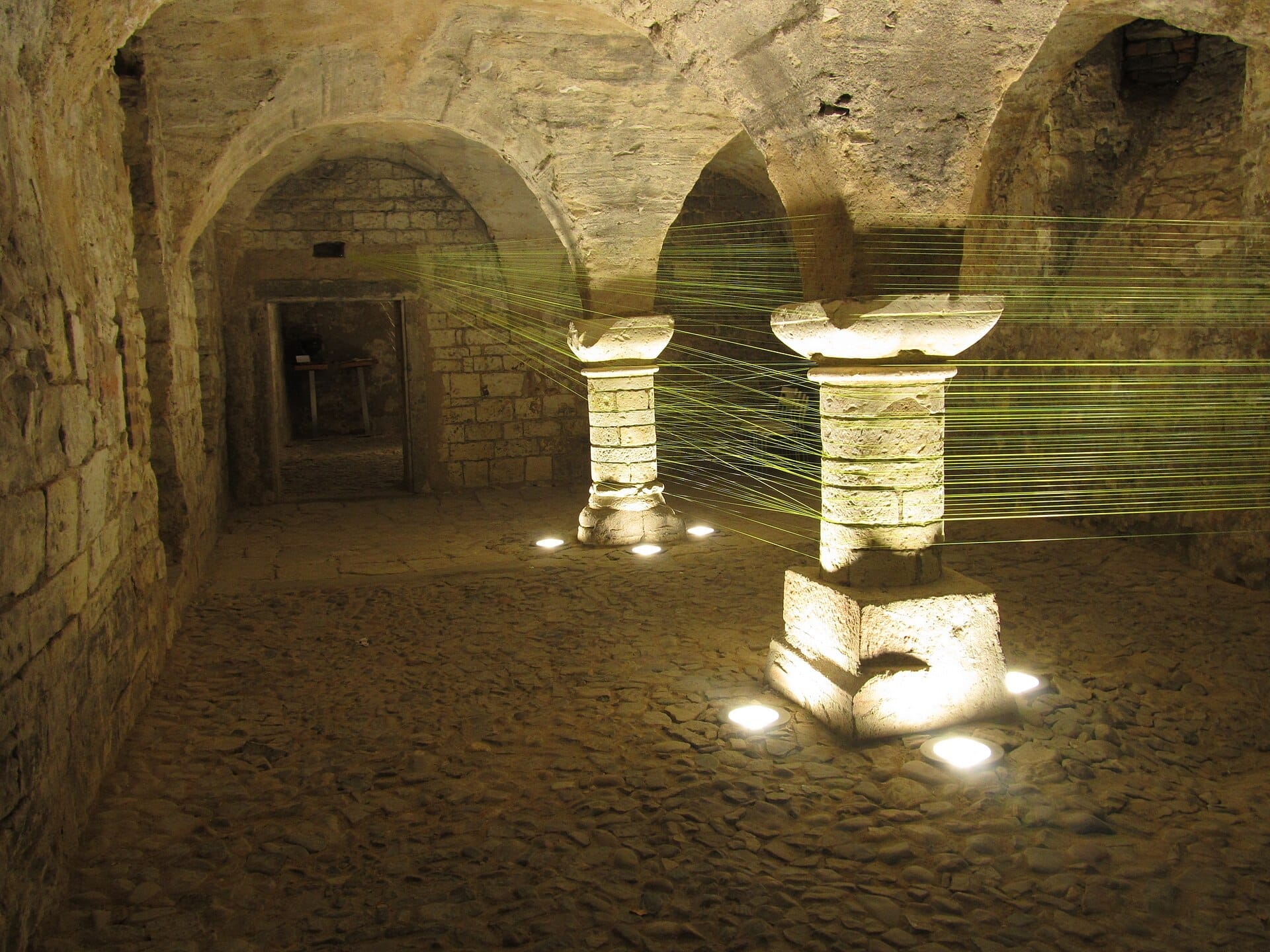
What the Prague Old Town Underground Actually Is
Most visitors arrive at Old Town Square to look up: at the Astronomical Clock, the Gothic spire of the Týn Church, the painted facades. Fewer think about what is directly beneath their feet. The Prague Old Town Underground, accessed through the Old Town Hall complex at Staroměstské náměstí 1, is a network of surviving cellars and passages that formed the ground level of the medieval town before centuries of floods and deliberate ground-raising buried them entirely.
The Old Town Hall itself dates to 1338, when Prague's Old Town municipality purchased a corner house to serve as the seat of civic administration. The underground spaces, however, predate this. Some of the stonework visible in the lower levels likely reflects Romanesque construction methods from the high Middle Ages, a period when today's street level was the basement of a completely different urban landscape.
ℹ️ Good to know
The underground is part of the structured Old Town Hall visitor circuit, not a standalone walk-in experience. Entry is through the hall's visitor center. Check current opening hours and ticket pricing directly at prague.eu before visiting, as schedules can vary by season and the attraction has been subject to periodic closures for renovations.
The History Underfoot: Why Prague Built Upward
The story of why this underground exists is as interesting as the spaces themselves. The Vltava River, which curves around the edges of the Old Town, flooded repeatedly throughout the medieval period. Rather than continuously repairing ground-floor damage, the inhabitants of Prague's Old Town progressively raised street levels, filling in existing structures and building new floors above the old ones. Over several centuries, what had been ground-floor rooms, storage cellars, and even part of Romanesque residential towers became buried beneath two to three meters of fill and new construction.
This process, repeated across much of the historical city, is why Old Town Square sits at the level it does today, and why walking its cobblestones gives no indication of what lies below. The underground is effectively a time capsule: the surfaces down there have not been worn by feet or weathered by sun for 600 to 700 years.
Tickets & tours
Hand-picked options from our booking partner. Prices are indicative; availability and final rates are confirmed when you complete your booking.
Prague's Old Town, astronomical clock and underground guided tour
From 56 €Instant confirmationFree cancellationOnline audio guide of Prague Orloj and Old Town Square
From 5 €Instant confirmationFree cancellationPrague Old and Jewish Town: guided tour with entrance tickets, coffee and cake
From 48 €Instant confirmationFree cancellationPrague old town, river cruise and Prague castle sightseeing tour including lunch
From 98 €Instant confirmationFree cancellation
What You Actually See on the Tour
The visit moves through sections of vaulted cellars and connecting passages. The stonework is the main event: barrel-vaulted ceilings, thick ashlar walls, and in places the original threshold levels of medieval doorways now set below the current ground. The air is noticeably cooler and damper than the square above, with the faint mineral smell of old stone that is characteristic of underground heritage spaces across Central Europe.
Interpretive displays explain the stratigraphy of the site, which is more useful than it sounds. Understanding that you are standing in what was once someone's ground-floor hall, and that today's visitors above you are walking on what was once that building's roof, reframes the entire experience of the Old Town. Some sections include original architectural fragments and explanatory models showing how the city's elevation changed over time.
The circuit is guided; the underground sections can only be accessed as part of an organized tour rather than an independent self-guided walk. For those interested in comparing Prague's underground history with its above-ground architectural legacy, the Prague architecture guide provides useful context on how the city's construction history spans Romanesque through to 20th-century modernism.
Time of Day and Crowd Patterns
Old Town Square reaches its highest foot traffic between 10:00 and 14:00, particularly in the warmer months when tour groups cluster around the Astronomical Clock for the hourly show. The underground benefits from being a structured, capacity-limited experience: you are not going to find yourself shoulder to shoulder with strangers in a narrow medieval corridor in the same way you might at the clock face or on Charles Bridge.
That said, mornings before 10:00 or late afternoon visits tend to feel less rushed, and the guides, where present, have more time for questions. The underground itself is temperature-stable year-round at around 10 to 12 degrees Celsius, which makes it a welcome escape in the heat of July and August but genuinely cold in winter. Bring a light layer regardless of what the surface temperature is doing.
💡 Local tip
Wear closed, flat shoes with a grip sole. The stone floors in the underground can be uneven and occasionally damp. Sandals or smooth-soled dress shoes are a genuine inconvenience here.
Photography Inside the Underground
The lighting in the underground is functional rather than dramatic: enough to read the interpretive panels, not enough to make a phone camera perform at its best. Bring or enable night mode on your phone, and avoid flash if possible as it flattens the texture of the stonework. The most rewarding shots tend to be of the vaulted ceilings shot upward at an angle, or close details of the masonry where the different construction periods are visible as distinct layers.
Tripods are impractical in the narrow passages and are generally not permitted on guided sections. If photography is a priority, a phone with strong low-light capability or a small mirrorless camera with a fast prime lens will serve you better than a large DSLR with a kit zoom.
Combining the Underground with the Old Town Hall Circuit
The underground is part of a broader visitor circuit that also includes the Old Town Hall's tower, which offers one of the better elevated views across the square and roofline toward the Týn Church. The two experiences complement each other structurally: the tower shows you the city's horizontal spread at its most legible, while the underground shows you its vertical depth. Allocating 90 minutes for both is reasonable; doing just the underground takes 45 to 60 minutes depending on pace and queue time.
After the visit, the Astronomical Clock is right outside. If you time it for a few minutes before the hour, you will catch the mechanical figures without having arrived specifically for the show, which means a smaller immediate crowd directly in front of the clock face.
Accessibility and Practical Limitations
The underground is not wheelchair accessible. The route involves descending stairs and navigating uneven stone surfaces that were not designed with modern accessibility standards in mind. This is an honest limitation of the site, not something that is likely to change given the heritage constraints. Visitors with significant mobility concerns should factor this in when planning.
For those who prefer their medieval history at street level, the surrounding Old Town offers ample Romanesque and Gothic architecture without stairs. The Clementinum and the Municipal House are both within a 10-minute walk and provide architectural depth at surface level.
⚠️ What to skip
The Old Town Hall has undergone phased restoration work in recent years. Before visiting, confirm that the underground section is currently open as part of the circuit. Prague City Tourism's official page at prague.eu is the most reliable source for current status.
Is It Worth Your Time?
The honest answer is: it depends on what you want from Prague. If you approach the city primarily as a backdrop for photography or a list of iconic sights to check off, the underground will feel slow and slightly anticlimactic. The spaces are atmospheric but not spectacular in the visual sense. There are no dramatic vaulted halls, no treasures on display, no theatrical lighting effects.
If, on the other hand, you find the process of cities building themselves layer by layer genuinely interesting, and you want a concrete encounter with the physical evidence of medieval Prague rather than just reading about it in a guidebook, this is one of the most honest and under-interpreted sites in the Old Town. The crowds are thinner, the experience is quieter, and you leave with a different understanding of everything you see on the surface.
Insider Tips
- Book or confirm entry in advance during peak summer months (July–August). Even though the underground itself has limited visitor numbers, the Old Town Hall tower queue can significantly extend your total time at the complex.
- The underground temperature holds steady around 10–12°C year-round. In summer this is a genuine relief; in winter it means the underground can feel noticeably colder than the street, so plan to wear a warm layer.
- If you are visiting with children who have limited patience for interpretive panels, focus on the vaulted ceilings and the physical sensation of being below street level. The spatial drama of descending below the square tends to hold attention in a way that display text does not.
- Combine the visit with the tower circuit for a single ticket value. The view from the tower across Old Town Square toward the Týn Church is one of the better elevated perspectives in the neighborhood, and it requires no additional travel.
- The square is at its quietest in the early morning (before 9:00) and in the evening. If you visit the underground midday, budget time to return to the square later for a calmer look at its exterior architecture.
Who Is Prague Old Town Underground For?
- History and archaeology enthusiasts who want physical evidence of medieval Prague, not just surface-level facades
- Architecture-focused travelers interested in how Prague's street levels evolved over centuries of flooding and rebuilding
- Visitors on multi-day itineraries who have already covered the major surface sights and want a different angle on the city
- Anyone looking for a cool, quiet hour away from the peak-hour crowds concentrated at street level around the Astronomical Clock
- Travelers with older children who respond to immersive, spatial environments rather than conventional museum displays
Nearby Attractions
Other things to see while in Old Town (Staré Město):
- Church of Our Lady before Týn
The Church of Our Lady before Týn is Prague's most recognizable Gothic landmark, its twin 80-metre spires rising sharply above the rooflines of Old Town Square. Entry is free, but visiting hours are short and the interior tells a story most visitors walk past without ever stepping inside.
- Church of St. Nicholas (Old Town)
Standing in the north-west corner of Old Town Square, St. Nicholas Church is a compact Baroque masterpiece built between 1732 and 1737. Entry is free, the interior is genuinely beautiful, and most visitors walk past it without stopping. Here is why they should not.
- Clementinum
The Clementinum is one of the largest building complexes in Prague, stretching over 2 hectares in the heart of Old Town. Its guided tours take visitors into a breathtaking Baroque library hall and up a narrow tower for panoramic rooftop views over the city's spires.
- Estates Theatre (Stavovské divadlo)
The Estates Theatre in Prague's Old Town is one of the best-preserved 18th-century opera houses in Europe, and one of the surviving venues where Mozart himself conducted. Built in 1783, it staged the world premiere of Don Giovanni and remains an active performance space under the National Theatre umbrella.