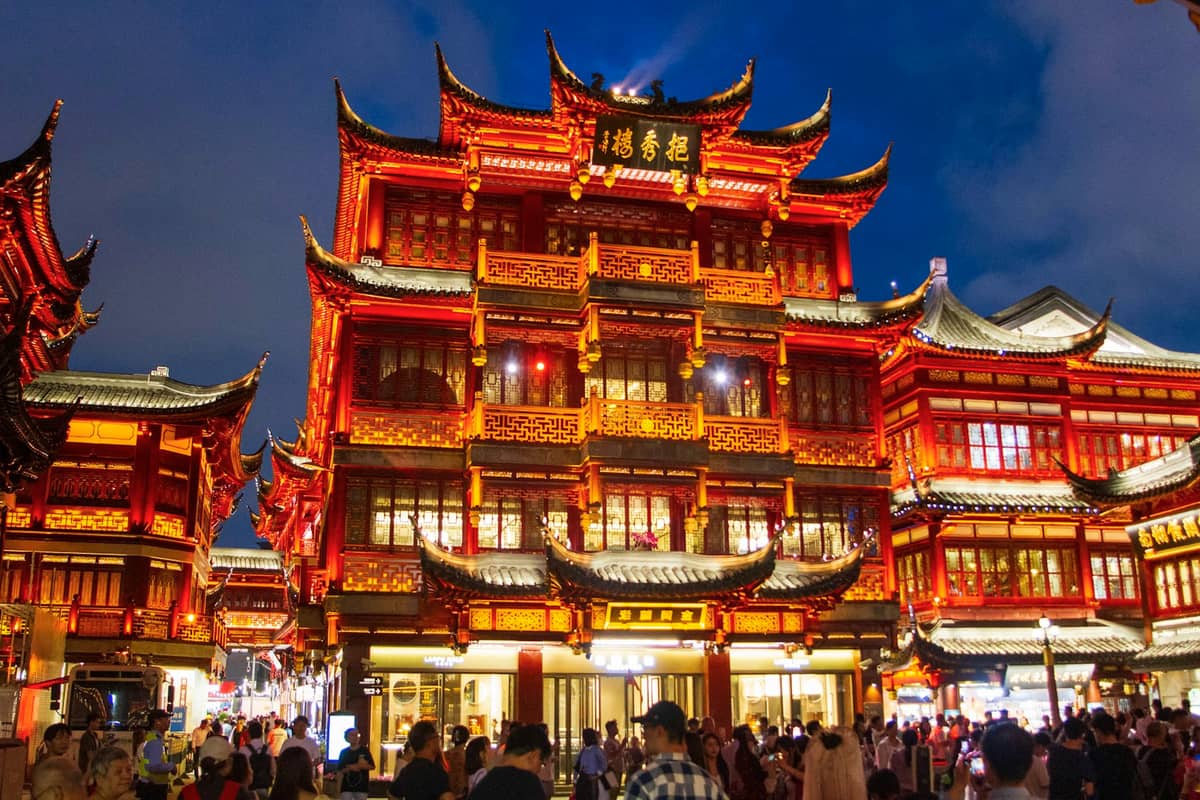
Old Town, known historically as Nanshi, is Shanghai's oldest surviving urban core, a compact maze of temple courtyards, bazaar lanes, and traditional-style shopfronts squeezed inside the loop of Renmin Road and Zhonghua Road in Huangpu District. It is the place to understand what Shanghai looked like before the treaty ports transformed the city, and it remains the spiritual and commercial heart of Chinese Shanghai rather than colonial Shanghai.
Old Town (Nanshi) is the oldest surviving urban core of Shanghai, a compact district of Taoist temples, classical gardens, and dense bazaar streets that predate the colonial-era concessions by centuries. It sits inside a circular road loop in Huangpu District that traces the outline of the city's original walls, and it remains the clearest place in central Shanghai to see the city's Chinese identity rather than its international one.
Orientation
Old Town occupies a roughly oval patch of land in southern Huangpu District, defined by the loop road formed by Renmin Road on the north and east and Zhonghua Road on the south and west. These roads follow the exact line of the old city wall, which was demolished in the early twentieth century and replaced with a ring boulevard. Everything inside that loop is, loosely speaking, Old Town. The concentrated tourist core sits at the northern end of that oval, centered on Yu Garden, the City God Temple, and Fangbang Middle Road.
The neighborhood connects directly southward to the quieter residential lanes of southern Huangpu and westward toward Xintiandi and the former French Concession. The Bund is roughly one to one-and-a-half kilometers northeast, walkable in around twenty minutes along the Huangpu River waterfront or through the back streets off Henan South Road. People's Square, Shanghai's civic and transit hub, sits about fifteen minutes on foot to the northwest.
Understanding where Old Town sits relative to the rest of central Shanghai helps you plan an efficient day. It pairs naturally with a morning walk along the Bund promenade and an afternoon in Old Town, or it works as a standalone half-day combined with lunch on Fangbang Middle Road. It is close enough to Xintiandi that the two make a logical pairing, showing the full spectrum of how Shanghai has preserved and reinvented its architectural heritage.
Character & Atmosphere
Old Town operates on a different rhythm from most of central Shanghai. Mornings are the best time to feel the neighborhood as something other than a tourist destination. Before nine o'clock, the lanes around Fuyou Road and the smaller alleys west of the garden fill with older residents buying breakfast from street-side stalls: fried dough sticks (youtiao), sesame flatbreads (shaobing), and steamed dumplings wrapped in paper bags. The smell of frying oil and soy milk drifts across streets that are quiet enough to hear bicycle bells. Street cleaners work the narrow passages between the Ming and Qing-style shopfronts, and temple-goers arrive at the City God Temple carrying incense bundles before the tour groups appear.
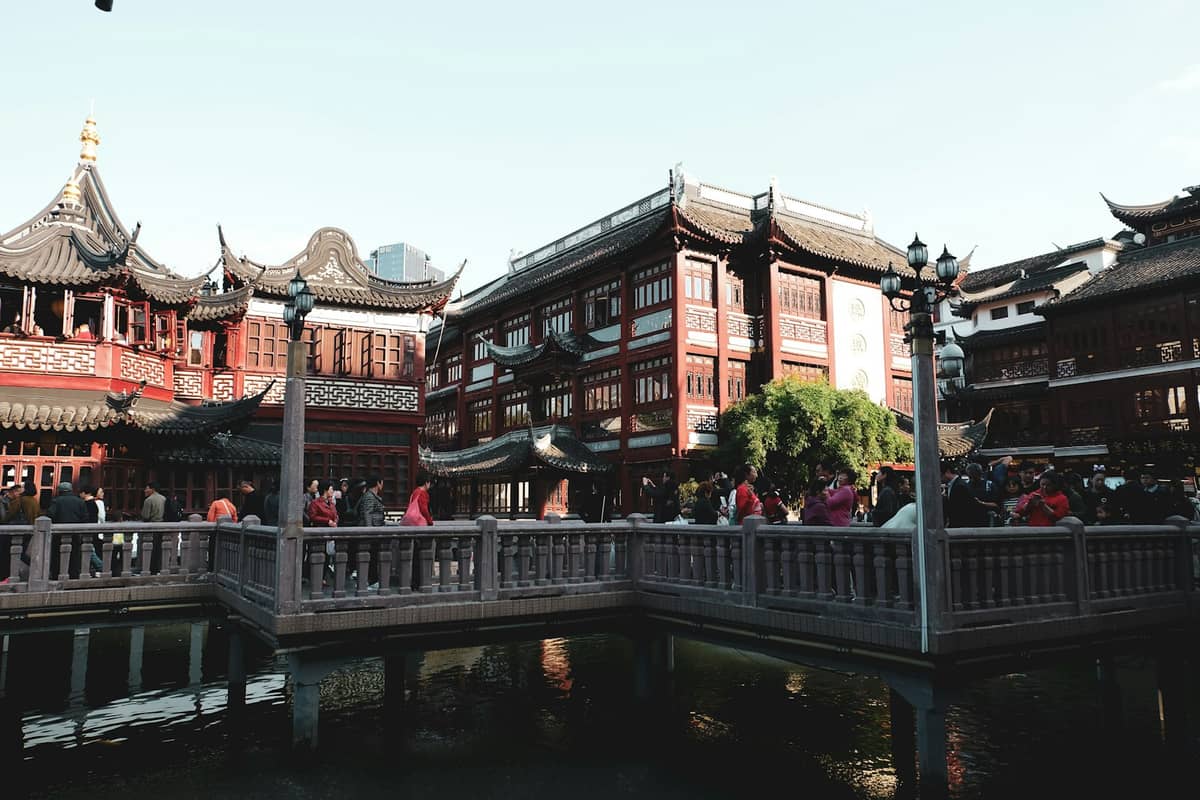
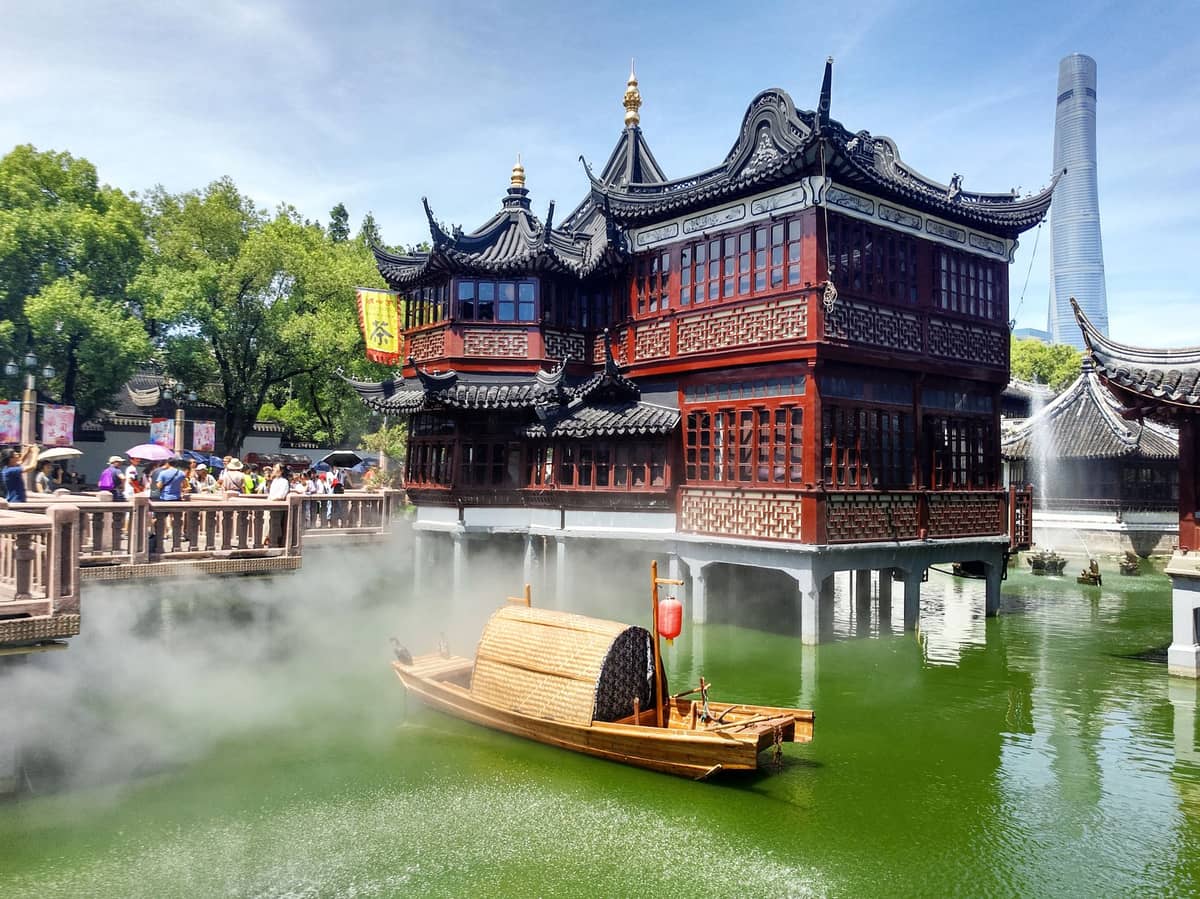
By mid-morning, the character shifts. Tour buses discharge visitors onto the plaza in front of the City God Temple, and the Yuyuan Bazaar — the commercial precinct surrounding Yu Garden — fills rapidly. The covered walkways and wooden-facade shopfronts look authentic from the outside but house a well-trodden mix of souvenir stalls, tea shops, and snack vendors. The famous zigzag bridge across the central pond is a reliable bottleneck by eleven o'clock, photographed from every angle by every visitor simultaneously.
Afternoons in the bazaar can feel overwhelming during peak tourist season, particularly on weekends and Chinese public holidays when domestic tourism peaks. The light in the afternoon falls flat and hot in summer. If you are visiting in warmer months, the covered interior spaces of Yu Garden itself offer shade and a genuine sense of retreat — the garden's whitewashed walls, ornamental rockery, and pavilion corridors are designed to make you feel further from the city than you actually are.
After dark, Old Town takes on a completely different quality. The illuminated eaves of the temple complex and the lantern-lit zigzag bridge reflect in the central pond, and the bazaar stalls thin out to the vendors selling snacks and drinks. The streets south of the bazaar core, deeper into the old residential lanes, are quiet enough at night that you will hear your own footsteps on the stone pavement. This southern part of Old Town, away from the tourist precinct, gives you a sense of what a low-rise, lane-house Shanghai neighborhood actually feels like at street level.
💡 Local tip
Visit on a weekday morning before 9:30 if you want Yu Garden and the City God Temple courtyard without the crowds. Chinese public holidays (especially Golden Week in October and the Spring Festival period) bring extremely heavy foot traffic to the bazaar — manageable if you expect it, but worth knowing in advance.
What to See & Do
The primary draw is Yu Garden (Yuyuan Garden), a classical Chinese garden built during the Ming dynasty in the sixteenth century and one of the most complete examples of its type in eastern China. The garden covers about two hectares and is divided into six main scenic areas by ornamental walls topped with undulating dragon-shaped ridges. It contains more than thirty pavilions, halls, and corridors arranged around rockery formations and ponds, with the Great Rockery at its center rising around ten meters. The garden is technically modest in scale compared to the grand gardens of Suzhou, but its density of detail is remarkable, and it rewards slow exploration rather than a quick circuit.
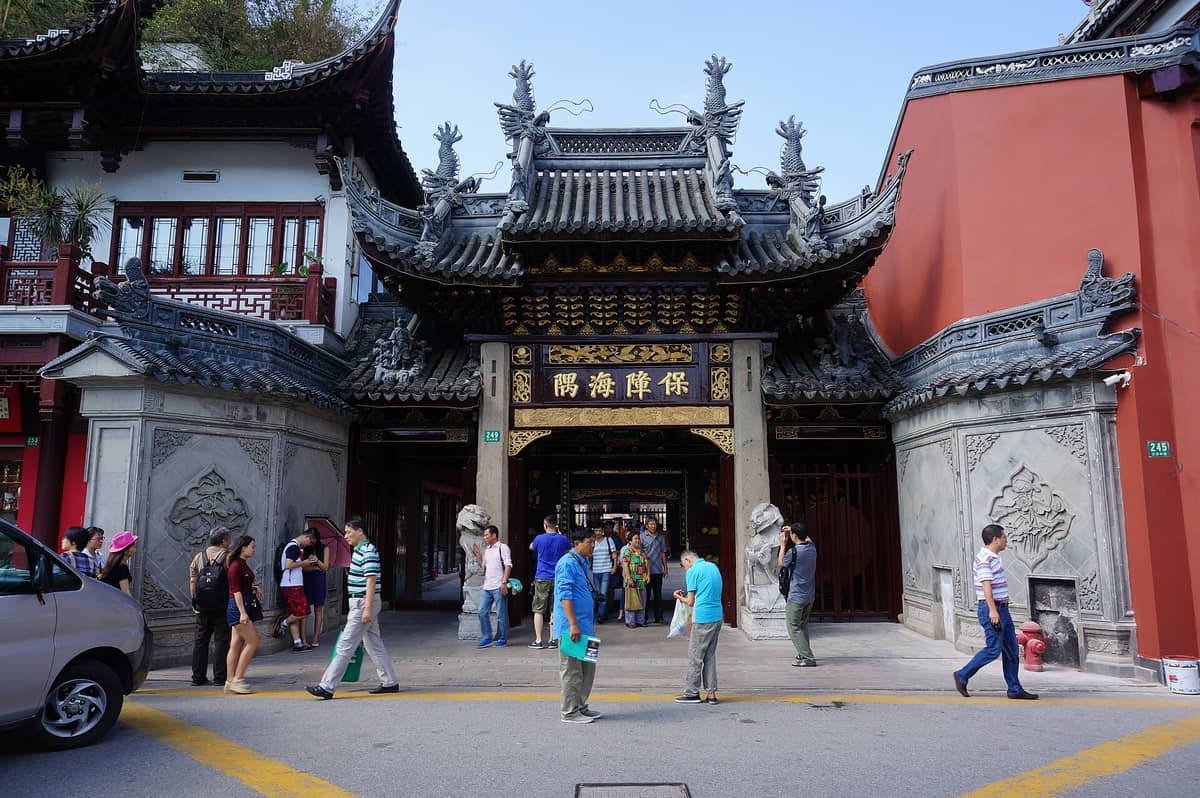
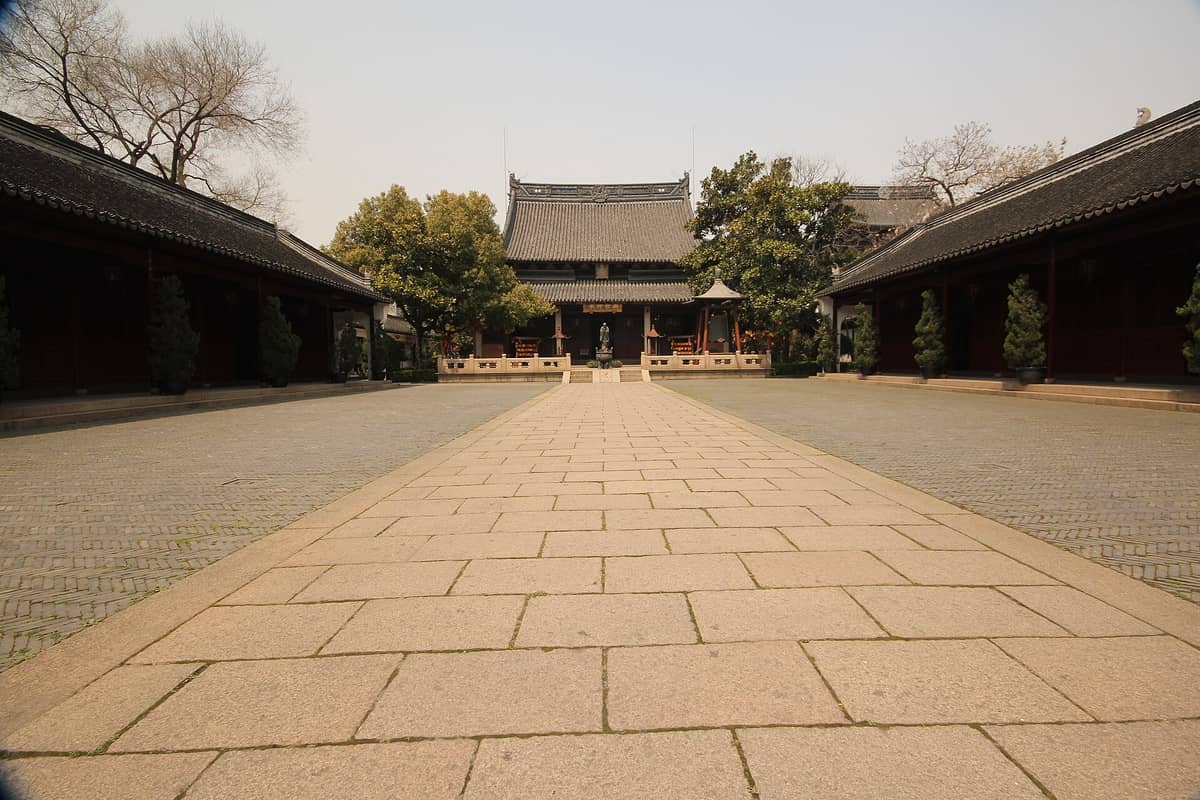
Immediately adjacent is the City God Temple (Chenghuangmiao) at 249 Fangbang Middle Road, a functioning Taoist temple that has served as the spiritual center of Shanghai's old city for centuries. The current structures date largely from reconstruction after various periods of damage, but the temple remains an active place of worship rather than a museum piece. Incense smoke drifts through the main halls at all hours, and the fortune-telling area and side shrines attract a mix of devoted locals and curious visitors. Entry requires a separate ticket from Yu Garden.
Fangbang Middle Road, running east-west through the northern part of Old Town, is marketed as Shanghai Old Street and lined with reconstructed Qing dynasty-style shopfronts selling antiques, calligraphy supplies, folk crafts, and tourist goods. The western section of the street has a higher concentration of genuine antique dealers and second-hand goods stalls, which draws collectors and browsers. The eastern section becomes more souvenir-oriented. Walking the full length gives you a useful cross-section of what the old commercial street culture of Shanghai once looked like, even if much of the architecture is reconstruction rather than original.
The lanes immediately surrounding the bazaar core reward wandering. South of the main tourist precinct, the streets narrow and the buildings drop in scale to two- and three-story lane houses and small temples that receive almost no tourist traffic. This southern section of Old Town is one of the least-visited parts of central Shanghai and gives you direct access to ordinary neighborhood life. For context on Shanghai's layered history across the entire city, the Shanghai architecture guide helps frame what you are looking at as you move between different eras of construction.
Yu Garden (Yuyuan Garden) — Ming dynasty classical garden, allows 1.5 to 2 hours for a thorough visit
City God Temple (Chenghuangmiao) — active Taoist temple with distinct atmosphere from the surrounding bazaar
Fangbang Middle Road (Shanghai Old Street) — Qing-style commercial street; the western end has more authentic antique dealers
Yuyuan Bazaar — the commercial precinct around Yu Garden, best for snacks and atmosphere rather than serious shopping
Southern Old Town lanes — quieter residential streets south of the bazaar, worth a slow walk
ℹ️ Good to know
Yu Garden and the City God Temple charge separate entry fees. Opening hours and ticket prices are updated periodically — confirm current details on the official attraction websites or at the gate before visiting.
Eating & Drinking
Old Town is one of the better places in central Shanghai to eat traditional Shanghainese snacks in their most concentrated form, though the quality varies sharply between the tourist-facing stalls in the bazaar and the more local options in the surrounding streets. The bazaar precinct has long been known for xiaolongbao (soup dumplings), shengjianbao (pan-fried pork buns), and tangyuan (sweet glutinous rice balls), and the stalls that line the covered walkways near the central pond serve these to thousands of visitors a day. The food is generally reliable and priced for tourist foot traffic — not expensive, but not the same as eating at a neighborhood spot outside the precinct.
For soup dumplings specifically, the area is a natural starting point, though it is worth reading the broader Shanghai soup dumplings guide to understand what distinguishes a good xiaolongbao from a merely adequate one. Several restaurants on the streets bordering the bazaar specialize in traditional Shanghainese dishes beyond dumplings: red-braised pork (hongshao rou), smoked fish (xunyu), and sticky rice with toppings (cifan). These sit in the mid-range price bracket by Shanghai standards, roughly 40 to 120 yuan per person depending on how much you order.
Street food is the real draw at ground level. The covered corridors of the Yuyuan Bazaar have snack vendors selling sesame balls (jiandeui), sugar-coated haws on sticks, and various sweet and savory pastries. Prices are clearly marked on most stalls. The best approach is to graze your way through the bazaar rather than sitting down for a full meal inside the tourist precinct.
Outside the immediate bazaar zone, the streets heading south and west from the City God Temple have more local-facing tea houses and small restaurants. These are quieter, generally cheaper, and serve a clientele that includes residents from the surrounding lane houses rather than exclusively tourists. Tea houses in this part of the neighborhood carry a selection of Chinese teas and serve light accompaniments; they are a reasonable place to sit and rest after walking the garden and temple circuit.
Old Town does not have a nightlife scene in the bar or cocktail sense. For that, the nearest options are in the former French Concession, accessible in about twenty minutes by metro or taxi. Old Town's evenings are better suited to a temple visit by lantern light and street food than to drinking.
Getting There & Around
The most direct metro access to the Yu Garden and City God Temple core is Yuyuan Garden Station on Lines 10 and 14. From the station, the bazaar entrance and the temple are within a three to ten minute walk depending on which exit you use. Line 10 connects Yuyuan Garden Station westward to Xintiandi, Jing'an Temple, and Hongqiao, and eastward to East Nanjing Road and the Bund area. Line 14 extends coverage across more of central and western Shanghai.
Alternatively, you can approach from People's Square Station (Lines 1, 2, and 8), which is about fifteen to twenty minutes on foot heading southeast, or take Line 2 or Line 10 one stop to East Nanjing Road and walk south from there. This approach lets you combine Old Town with the Bund and Nanjing Road Pedestrian Street in a single day without backtracking.
Several bus routes serve the Old Town area, with stops near Yuyuan Garden and along Fangbang Middle Road. Routes 26, 64, and 71 (BRT) are among those commonly cited for access to the area. Bus travel is slower than the metro but puts you at street level and is useful if you are approaching from a direction not well served by Line 10 or 14.
Within Old Town, the neighborhood is navigated entirely on foot. The bazaar precinct and Yu Garden are compact enough that a comfortable circuit takes ninety minutes to two hours. The streets outside the bazaar core have no vehicle restrictions but are narrow enough that cars move slowly. Ride-hailing via Didi works well for arriving and departing, and drivers familiar with the area will know to drop off near the Henan South Road entrance or the Fangbang Middle Road side rather than attempting to enter the bazaar streets directly.
⚠️ What to skip
The bazaar streets immediately around Yu Garden can become very crowded on weekends and Chinese public holidays, making it difficult to move quickly. If you have mobility concerns or are traveling with young children, a weekday morning visit is significantly more comfortable. Watch your bags and pockets in the densest crowd areas — pickpocketing in busy tourist zones is the primary safety concern in Old Town.
Where to Stay
Old Town is not a primary hotel district, and options within the neighborhood itself are limited compared to Huangpu's northern core near the Bund or the French Concession area. A small number of boutique hotels and guesthouses operate within or immediately adjacent to the old town loop, occupying converted lane-house buildings and offering an atmospheric base that is genuinely close to the temple and garden district.
Most travelers who want to explore Old Town thoroughly choose to base themselves in nearby Huangpu District near the Bund, where the concentration of hotels across all price points is much higher, and Old Town is easily accessible by metro or a twenty-minute walk. For a broader look at where different neighborhoods suit different travel styles, the Shanghai neighborhood accommodation guide covers the trade-offs in detail.
Staying in or very close to Old Town suits travelers who specifically want the experience of waking up inside the historic core, hearing morning temple bells, and walking to the garden before the crowds arrive. It suits visitors with a strong interest in traditional Chinese culture and architecture over the colonial-era grandeur of the Bund or the cafe-and-boutique character of the French Concession. It is less suited to travelers who want proximity to Shanghai's contemporary art scene, rooftop bars, or international dining options, all of which are better served by other neighborhoods.
Honest Assessment: Who Old Town Is For
Old Town is one of the most photographed areas in Shanghai, and that creates a real tension between what it is and what visitors expect from it. The Yuyuan Bazaar is a heavily commercialized tourist precinct that happens to surround a genuine Ming dynasty garden and a functioning Taoist temple. The reconstructed shopfronts on Fangbang Middle Road look like a film set of old Shanghai, because in some respects they were designed to. None of that makes the experience worthless, but it is worth being clear-eyed about what you are visiting.
Yu Garden itself is genuinely old and genuinely beautiful. The City God Temple is genuinely active as a place of worship. The street food in the bazaar is genuinely good. The deeper residential streets south of the tourist precinct are genuinely unvisited and interesting. Old Town rewards visitors who can look past the souvenir stalls and find the actual neighborhood underneath.
For visitors on a tight itinerary, Old Town earns a half-day without question. It is an essential part of understanding Shanghai's Chinese identity, distinct from and older than the colonial-era districts that dominate most tourist itineraries. It pairs well with the best self-guided walks in Shanghai for building a coherent day that connects the old city core to the waterfront.
TL;DR
Old Town (Nanshi) is Shanghai's pre-colonial Chinese urban core, centered on Yu Garden and the City God Temple in Huangpu District, inside the loop of Renmin Road and Zhonghua Road.
Best visited on a weekday morning before the tour groups arrive — the crowds between 10am and 4pm on weekends and holidays are substantial and can overwhelm the narrow bazaar lanes.
The primary draws are Yu Garden (a genuine Ming dynasty classical garden), the City God Temple (an active Taoist place of worship), and the street food in the Yuyuan Bazaar precinct.
Ideal for travelers interested in traditional Chinese architecture, temple culture, and Shanghainese snack food. Less suited to visitors looking for nightlife, contemporary art, or modern Shanghai.
Reach it via Yuyuan Garden Station on Metro Lines 10 and 14 — the station is within walking distance of all the main sites and connects easily to the Bund, People's Square, and Xintiandi.
Three days is enough to cover Shanghai's essential contrasts: colonial waterfront, modern skyscrapers, art deco lanes, and some of the best urban food in China. This itinerary is built around the metro, organized by geography to minimize backtracking, and clear about what's worth your limited time.
Shanghai has one of the most diverse museum scenes in Asia, spanning 5,000 years of Chinese civilization, cutting-edge contemporary art, and world-class science. This guide covers the best museums in Shanghai by category, with practical tips on what to expect at each.
Shanghai rewards photographers at every turn, from the world-famous Bund skyline to laneway cafés draped in plane tree shade. This guide covers the 20 best photo spots in Shanghai, with specific advice on timing, angles, and what makes each location worth the trip.
Shanghai rewards walkers more than almost any other megacity in Asia. From the colonial grandeur of the Bund promenade to the plane-tree canopy of the French Concession and the regenerated industrial banks of Suzhou Creek, these self-guided routes are free, fully walkable, and rich with architectural and cultural detail. This guide gives you the routes, the logistics, and the practical detail to make the most of them.
Shanghai's temples are active places of worship with centuries of history behind them, not museum pieces. This guide covers the best Buddhist, Taoist, and Confucian temples in the city, from a golden shrine flanked by luxury malls to a 1,700-year-old complex with Shanghai's oldest surviving pagoda.
Shanghai is a city you can visit year-round, but when you go shapes everything from what you wear to how much you pay. This guide breaks down every season, the crowds, the climate quirks, and the festivals so you can plan with confidence.
Shanghai has one of the world's most dramatic skylines, and the city delivers it from every angle: glass-floored observation decks above the clouds, riverside promenades facing twin horizons, and rooftop bars with unobstructed Bund vistas. This guide covers the best spots to see it all, whether you're chasing the perfect photo at dusk or looking for the highest point in China.
Shanghai sits at the heart of one of China's best high-speed rail networks, putting ancient canal towns, mountain lakes, and imperial gardens within easy reach. This guide covers the top day trips from Shanghai with real costs, transport logistics, and a clear view of what's worth the journey.
Shanghai is one of Asia's most spectacular cities, and a surprising amount of it costs nothing to experience. This guide covers the best free attractions, from iconic waterfronts and heritage walks to museums with free-entry days and parks that locals actually use.
Shanghai has one of the world's most extensive metro systems, official taxi tariffs, a record-breaking Maglev train, and two major international airports. This guide breaks down every transport option with real fares, journey times, and what actually works best for travelers.
Shanghai rewards the curious traveller who looks beyond the Bund and Yu Garden. From a 1930s slaughterhouse turned art labyrinth to a basement full of Cold War propaganda posters, these are the places locals treasure and guidebooks overlook.
Shanghai sits at the top tier of Asia's luxury city-break destinations, with world-class hotels lining the Bund, a Michelin-starred restaurant scene that rivals Paris and Tokyo, and a shopping landscape anchored by flagship boutiques and heritage malls. This guide cuts through the noise to tell you exactly where to stay, eat, and spend your time, and when to go to get the most out of it.
Shanghai contains one of the world's most layered architectural landscapes: 52 colonial-era buildings on the Bund, one of the largest surviving Art Deco collections outside New York, and a Lujiazui skyline that rewrote the rulebook on supertall towers. This guide breaks it all down by era, district, and visiting logic.
Chinese New Year transforms Shanghai into a city of red lanterns, temple fairs, and reunion dinners, but it also brings closures, surging prices, and the world's largest annual human migration. This guide covers everything visitors need to know before arriving during Spring Festival.
Shanghai has quietly become one of Asia's most compelling contemporary art cities, with a scene distributed across state museums, private foundations, converted industrial spaces, and laneway galleries. This guide covers the essential venues across the city, from the West Bund riverfront to Suzhou Creek and the Bund.
Shanghai's food streets and night markets range from centuries-old snack courts near the City God Temple to massive outdoor markets running until 2am on weekends. This guide breaks down every major venue by location, hours, transport links, and what to actually order — so you spend less time searching and more time eating.
Shanghai delivers romance at every budget, from candlelit Bund rooftops and Huangpu River night cruises to slow afternoons in the French Concession. This guide breaks down the best couple experiences with real pricing, seasonal tips, and a clear view of what's worth your time.
Shanghai's hairy crab season runs from late September to early December, with distinct peak windows for female and male crabs. This guide covers the best restaurants, realistic price ranges, authenticity warnings, and practical booking tips to make the most of one of China's most celebrated annual eating events.
Autumn is widely considered the best season to visit Shanghai, but the three months play out very differently. This guide breaks down weather, crowds, seasonal food, key events, and practical logistics for September, October, and November so you can plan the right trip at the right time.
Spring is one of the most rewarding times to visit Shanghai, but each month feels different. This guide breaks down the weather, crowds, cherry blossom timing, and practical tips for March, April, and May so you can plan with confidence.
Shanghai at night is a different city entirely. The Bund glows across the river, French Concession bars fill up past midnight, and underground clubs don't peak until 2am. This guide breaks down where to go, when to arrive, what to pay, and what to skip.
Shanghai noodles are not one dish but an entire culinary category spanning delicate scallion oil noodles, rich braised pork belly noodles, and luxurious seasonal crab roe noodles. This guide breaks down every style worth knowing, with realistic price ranges, seasonal notes, and practical ordering tips for first-timers and returning visitors alike.
Shanghai has a reputation as a global financial powerhouse, but day-to-day costs are far more manageable than most visitors expect. From ¥3 metro rides to free museum admissions and ¥15 noodle bowls, this guide breaks down exactly how to explore one of the world's great cities without burning through your money.
Shanghai is one of Asia's safest major cities for tourists, but petty theft, overcharging, and a handful of persistent scams do catch visitors off guard. This guide breaks down exactly what to watch for, how to get around safely, and what to do if something goes wrong.
Shanghai is one of Asia's great shopping cities, with options ranging from luxury flagship stores and slick megamalls to fabric markets where tailors cut custom suits for a fraction of Western prices. This guide breaks down the best areas, what to expect, and how to avoid the traps.
Xiaolongbao are Shanghai's most iconic bite — thin-skinned, broth-filled, and deceptively tricky to eat without burning yourself. This guide covers where to find the best versions across the city, what to order by season, how much to pay, and the rookie mistakes that will ruin your first basket.
Shanghai is a city of 24.8 million people, 20 metro lines, and a learning curve that catches most first-timers off guard. This guide cuts through the noise with practical, specific advice on getting around, choosing the right season, understanding the neighborhoods, and avoiding the mistakes that waste your time and money.
Four ancient water towns sit within day-trip distance of Shanghai, each with a different character, price point, and crowd level. This guide cuts through the confusion with specific transport details, current ticket prices, and a ranking to help you choose the right one for your trip.
Shanghai rewards family travel more than most cities its size. From the immersive lands of Shanghai Disneyland to the dinosaur halls of the Natural History Museum, this guide covers the best activities for kids of all ages, when to visit, how to get around with children, and what to skip.
Shanghai is one of the most layered cities on earth, where Art Deco waterfront architecture stands opposite a forest of supertall skyscrapers, and century-old tea houses sit a short metro ride from world-class contemporary art museums. This guide covers the best things to do in Shanghai, organized by theme and neighborhood, with a clear view of what's worth your time and what to skip.
Shanghai cuisine is one of China's most distinct regional food traditions, built around sweetness, umami, and precision technique. This guide covers the dishes you should not leave without trying, where to find them, what to pay, and how to eat like someone who actually lives here.
Choosing where to stay in Shanghai shapes your entire trip. This guide breaks down the city's key neighborhoods by location, metro access, price range, and who each area suits best, so you can book with confidence.