City God Temple of Shanghai: The Living Heart of the Old City
The City God Temple of Shanghai (上海城隍庙) is an active Taoist temple at the center of the Old City's historic bazaar district. Part religious sanctuary, part cultural landmark, it offers a rare window into Shanghai's spiritual and mercantile past, just steps from Yu Garden.
Quick Facts
- Location
- 249 Fangbang Middle Road, Huangpu District, Shanghai (Old Town / Nanshi)
- Getting There
- Yuyuan Garden Station (Metro Line 10 / Line 14), then 5–10 min walk through Yu Garden Bazaar
- Time Needed
- 45–90 minutes for the temple; allow a half-day if exploring the surrounding bazaar
- Cost
- ¥10 (CNY) — verify on-site or call 021-63284494 before visiting, as pricing varies by source
- Best for
- History enthusiasts, those curious about Taoist practice, Old City explorers, and photographers
- Official website
- http://shchm.org
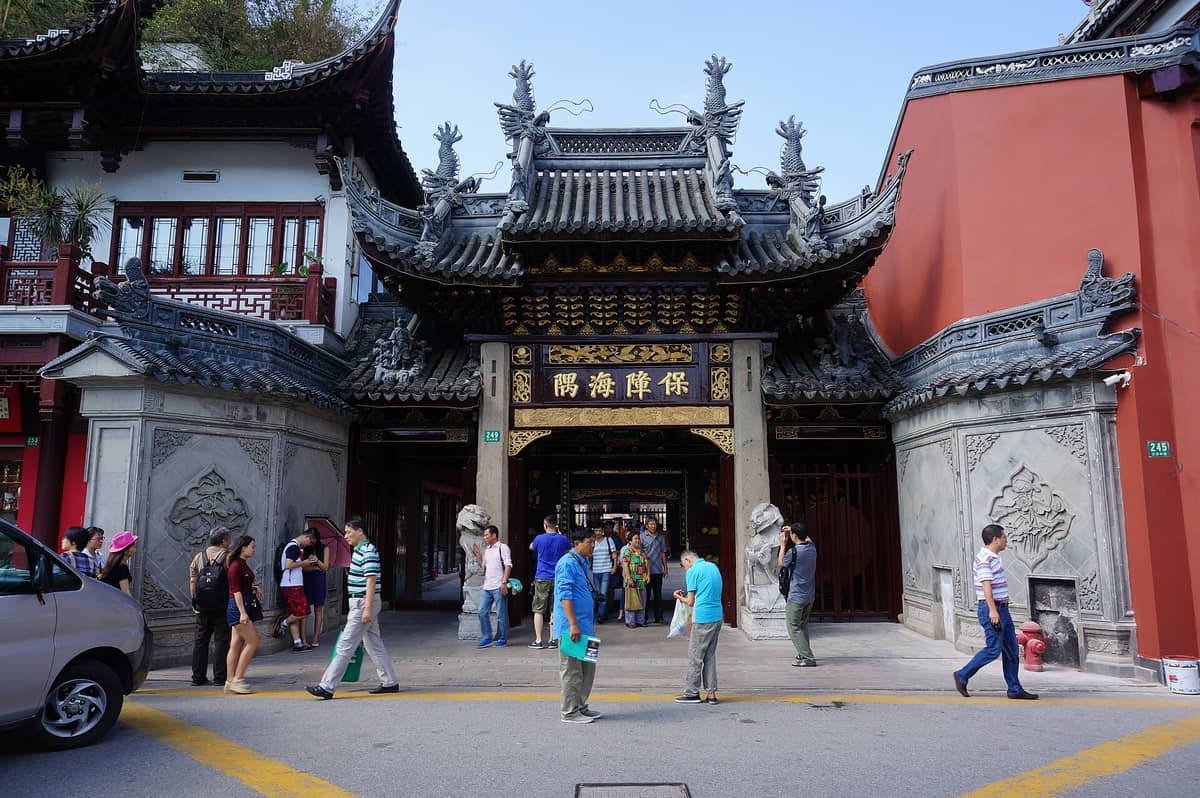
What Is the City God Temple of Shanghai?
The City God Temple of Shanghai, known in Chinese as 上海城隍庙 (Shanghai Chenghuang Miao), is an active Taoist temple dedicated to the city's protective deities — historical figures who were deified and entrusted with guardianship over the urban community. It sits at 249 Fangbang Middle Road in Huangpu District, at the geographic and spiritual core of Shanghai's Old City. This is not a museum piece. Incense burns throughout the day, worshippers kneel before lacquered altars, and the air carries a low, continuous hum of ritual activity that sets it apart from Shanghai's glassy towers just a few kilometers to the north and east.
The temple is embedded within the broader Yu Garden Bazaar district, a pedestrian zone of teahouses, snack stalls, and souvenir shops that forms one of Shanghai's most visited tourist corridors. The two are adjacent but distinct: the bazaar trades in commerce, while the temple — even on its busiest days — maintains a quality of sincere religious purpose that rewards visitors who take the time to look past the crowds.
For context on the surrounding neighborhood and how this area fits into Old Town Nanshi, the Old Town Nanshi neighborhood guide covers the full district and its walking routes.
ℹ️ Good to know
Opening Hours: Typically 08:30–16:30 daily, with slightly extended closing times (up to about 17:00) in peak seasons and on major holidays. On the 1st and 15th day of the lunar calendar, the temple may open earlier for worshippers. Hours often change around Spring Festival. Always verify before visiting.
Historical and Cultural Context
City God temples (城隍庙, Chenghuang Miao) are a distinctive feature of Chinese urban life. In traditional Chinese cosmology, each city was assigned a divine protector — a City God (Chenghuang) — often a historical official or military figure recognized for virtue. These temples served as the spiritual administration parallel to the physical city government: where the magistrate governed the living, the City God governed the dead and dispensed spiritual justice. Shanghai's version honored a series of such figures over the centuries, and the temple became intertwined with the commercial and civic identity of the Old City.
The current temple complex has been rebuilt and expanded multiple times across its history — fires, wars, and political upheaval each left their mark. The architecture you see today reflects a layered restoration effort, with its upswept eaves, painted beams, and carved gateways representing the visual language of southern Chinese religious architecture. The main hall's scale is grander than it appears from the entrance: the ceilings recede into lacquered darkness above tiers of gilded statues, and the incense smoke gives the interior a quality of light that no photograph fully captures.
To understand Shanghai's broader temple landscape before your visit, the guide to the best temples in Shanghai provides useful comparisons with other active religious sites across the city.
Tickets & tours
Hand-picked options from our booking partner. Prices are indicative; availability and final rates are confirmed when you complete your booking.
Shanghai city and Zhujiajiao water town private tour with lunch
From 371 €Instant confirmationFree cancellationShanghai private tour with iconic landmarks of the old and new city
From 284 €Instant confirmationFree cancellationShangai Yuyuan Garden entrance tickets
From 9 €Instant confirmationFree cancellation
What the Visit Actually Feels Like
Approach from Yuyuan Garden Station on Line 10 or Line 14 and you will pass through the bazaar's outer ring: a corridor of shops selling everything from silk fans to dried plums. The noise level is high, the crowds move slowly, and the smell shifts between roasting sesame and sweet osmanthus pastries. None of this fully prepares you for the moment you cross through the temple gate. The contrast is immediate. The courtyard absorbs sound. Coils of incense hang from the ceiling of the entrance pavilion like slow-burning chandeliers, dropping pale ash into ceramic pots below.
Inside the main hall, the statues of the City Gods are larger than many visitors expect, flanked by guardian figures with exaggerated expressions painted in red, black, and gold. Worshippers move with practiced efficiency — lighting incense sticks, pressing palms together in front of specific altars, murmuring prayers. This is not a performance for tourists. Visitors who approach quietly and respectfully will find the experience genuinely absorbing.
The complex extends beyond the main hall into smaller side chapels dedicated to different deities, each with its own character. Some are dim and intimate; others open onto small inner courtyards where natural light falls across stone paving. If you have more than an hour, walk the full perimeter rather than turning back at the first hall.
💡 Local tip
Photography: The main hall's interior is often too dim for handheld shots without raising your ISO significantly. The courtyard in the morning offers the best natural light. Always check for no-photography signs near specific altars and be discreet around worshippers.
Best Time to Visit and How the Temple Changes Through the Day
Mornings are the most rewarding. In the first hour after opening — especially on weekdays — the bazaar outside is still quiet and the temple fills with local worshippers rather than tour groups. The light at this hour slants through the gate at a low angle, catching the incense smoke in long golden columns. If you arrive mid-morning on a weekend, the temple is substantially more crowded, and the surrounding bazaar becomes genuinely difficult to move through by midday.
On the 1st and 15th days of the lunar calendar, the temple opens at 06:00 and draws its largest congregation of devotees. This is the best time to observe active religious practice in its fullest form, though it requires planning around the lunar calendar. On these days the main hall can be thick with incense smoke by 07:00, and the sound of ceremonial bells and chanting carries into the courtyard.
Spring Festival (Chinese New Year) brings special ceremonies and enormous crowds to the entire district. The atmosphere is festive but the temple can become genuinely overwhelming, with queues extending into the bazaar. Autumn — particularly October and November, when Shanghai's temperatures settle between roughly 15–22°C — offers the most comfortable combination of manageable crowds and good light.
For a broader breakdown of seasonal conditions across the city, the best time to visit Shanghai guide covers climate patterns, peak seasons, and festival timing in detail.
Getting There and Practical Logistics
The most straightforward approach is Metro Line 10 or Line 14 to Yuyuan Garden Station (豫园站). From the station exits, signs direct you toward the Yu Garden Bazaar. The temple entrance on Fangbang Middle Road is a 5–10 minute walk through the pedestrian zone. The streets are well-marked in English and Chinese, and the temple's distinctive gateway is visible from the main bazaar square.
If you are coming from The Bund, the temple district is about 1.5 kilometers to the southwest — a walkable distance in under 20 minutes through the Old City's back streets, though the route requires navigating some narrow lanes. Taxis and ride-hailing apps (Didi Chuxing) can drop you at the bazaar perimeter, though traffic congestion in this area during peak hours makes walking from the metro station faster in practice.
⚠️ What to skip
Tickets and pricing: Multiple sources cite ¥10 for temple admission, but figures vary and some sources conflict. Do not rely on any single number. Verify the current admission fee at the gate or by calling 021-63284494. Note that the Yu Garden adjacent ticket is separate (¥40 in peak months such as April–June and September–November, and ¥30 in off-peak months such as July–August and December–March).
The surrounding lanes include steps and uneven stone surfaces typical of historic temple districts. The narrow approach through the bazaar can be difficult for wheelchair users or visitors with mobility impairments. Official barrier-free access details are not clearly published by the temple. Visitors with specific accessibility requirements should contact the temple directly before planning their visit.
Combining the Temple with Yu Garden and the Old Town
The City God Temple is rarely visited in isolation. Most visitors combine it with Yu Garden (豫园), the 16th-century classical garden immediately adjacent, which requires its own entrance ticket. The two complement each other well: the garden offers landscape contemplation and architectural detail in a relatively controlled environment, while the temple provides a direct encounter with living religious culture. Together they represent the Old City's dual identity as both a place of aesthetic refinement and active community faith.
The Yu Garden is covered in a separate attraction guide, including tips on navigating its pavilions and avoiding the most crowded sections.
The area also connects naturally to a broader Old Town walking circuit. The self-guided walks in Shanghai guide includes an Old City route that links the temple, the garden, and the surrounding historic lanes into a coherent half-day itinerary.
The bazaar's food stalls are worth factoring into your timing. Nanxiang steamed buns (小笼包) from the famous Nanxiang Mantou Dian shop overlooking the central pond are a fixture of the area, and the queues are shortest before 11:00. The snack street immediately east of the temple gate sells sesame flatbreads, sugar-coated hawthorn skewers, and Shanghai-style glutinous rice cakes — informal, cheap, and eaten standing.
Who Should Think Twice
Visitors with a low tolerance for crowds will find the bazaar district genuinely exhausting on weekends and public holidays. The narrow streets funnel tour groups through in waves, and the commercial pressure from surrounding shops can feel relentless if your interest is purely in the temple itself. The temple's interior dimensions are also more modest than its reputation suggests — those expecting a grand cathedral-scale space may find it compact. If your primary interest is in Chinese religious architecture at larger scale, the Longhua Temple in Xuhui offers a more expansive complex with a pagoda, extensive grounds, and a functioning monastery.
Visitors arriving during heavy summer rainfall (June through September, when Shanghai receives the bulk of its annual precipitation including the plum rain season and typhoon-related weather) should know that the bazaar's covered sections provide some shelter, but the temple courtyard and approach lanes are fully exposed. A compact umbrella is worth carrying from June through September.
Insider Tips
- Visit on a weekday morning in the first 30–45 minutes after opening to see the temple primarily populated by local worshippers rather than tour groups. The shift in atmosphere from midday is significant.
- On the 1st and 15th of the lunar calendar, the 06:00 opening is not widely publicized to tourists. Arriving early on these mornings offers access to ceremonial activity rarely witnessed by visitors on a standard schedule.
- The small side chapels are frequently overlooked by visitors who turn back after the main hall. The secondary altars dedicated to specific deities are often more intimate and easier to observe without disrupting worshippers.
- The Yu Garden Bazaar's central zigzag bridge over the pond is at its most photogenic in the hour after opening, before tour groups arrive. The Nine-Turn Bridge (九曲桥) connects to the Huxinting Teahouse and offers an angle toward the temple gateway that appears in many classic Shanghai photographs.
- Modest dress is appropriate. There is no strict enforced dress code, but sleeveless tops and shorts attract notice inside the main hall. A light layer packed in your bag is useful on warmer days.
Who Is City God Temple of Shanghai For?
- Travelers interested in Chinese religious practice and Taoist culture, especially those who want to observe active worship rather than a static display
- History-focused visitors exploring Shanghai's pre-colonial Old City identity, distinct from the Bund and French Concession eras
- Photographers seeking traditional architectural detail and atmospheric interior light away from Shanghai's modern skyline
- Food-curious visitors who want to pair a cultural site with the Old Town's dense concentration of traditional Shanghai snacks
- Those building a half-day Old City circuit combining the temple, Yu Garden, and the surrounding historic lanes
Nearby Attractions
Other things to see while in Old Town (Nanshi):
- Confucian Temple (Wen Miao)
Tucked into a narrow pedestrian lane in Shanghai's old town, the Confucian Temple (Wen Miao) is the city's only surviving ancient architectural complex dedicated to Confucius. With ¥10 admission, a Sunday book market, and traditional courtyards that feel a world away from the metropolis outside, it rewards visitors who seek context over spectacle. With ¥10 admission, a Sunday book market, and traditional courtyards that feel a world away from the metropolis outside, it rewards visitors who seek context over spectacle.
- Yu Garden (Yuyuan Garden)
Built in 1559 during the Ming dynasty, Yu Garden is Shanghai's most celebrated classical Chinese garden. Spanning 2 hectares in the heart of the Old Town, it draws visitors with ornate rockeries, dragon-topped walls, lotus ponds, and more than 30 pavilions and halls. Understanding when to go and what to expect makes the difference between a rewarding experience and an overcrowded one.
- Yuyuan Bazaar
Yuyuan Bazaar is the sprawling commercial precinct surrounding Yu Garden and the City God Temple in Shanghai's Old Town district of Huangpu. Part traditional marketplace, part tourist hub, it rewards visitors who know how to navigate it — and frustrates those who don't.