Yu Garden (Yuyuan Garden): The Complete Visitor Guide
Built in 1559 during the Ming dynasty, Yu Garden is Shanghai's most celebrated classical Chinese garden. Spanning 2 hectares in the heart of the Old Town, it draws visitors with ornate rockeries, dragon-topped walls, lotus ponds, and more than 30 pavilions and halls. Understanding when to go and what to expect makes the difference between a rewarding experience and an overcrowded one.
Quick Facts
- Location
- No. 168 Fuyou Road, Huangpu District, Shanghai (Old Town / Nanshi)
- Getting There
- Yuyuan Garden Station, Metro Lines 10 & 14 (short walk northeast)
- Time Needed
- 1.5 to 2.5 hours for the garden; add 1 hour if exploring the surrounding bazaar
- Cost
- Peak season (Apr–Jun, Sep–Nov): ¥40 adult; Off-season (Jul–Aug, Dec–Mar): ¥30 adult. Discounts for seniors 60+, students, and children. Free under 1.3 m tall or under 6 years old.
- Best for
- Classical Chinese architecture, photography, cultural history, a quiet morning escape from the city
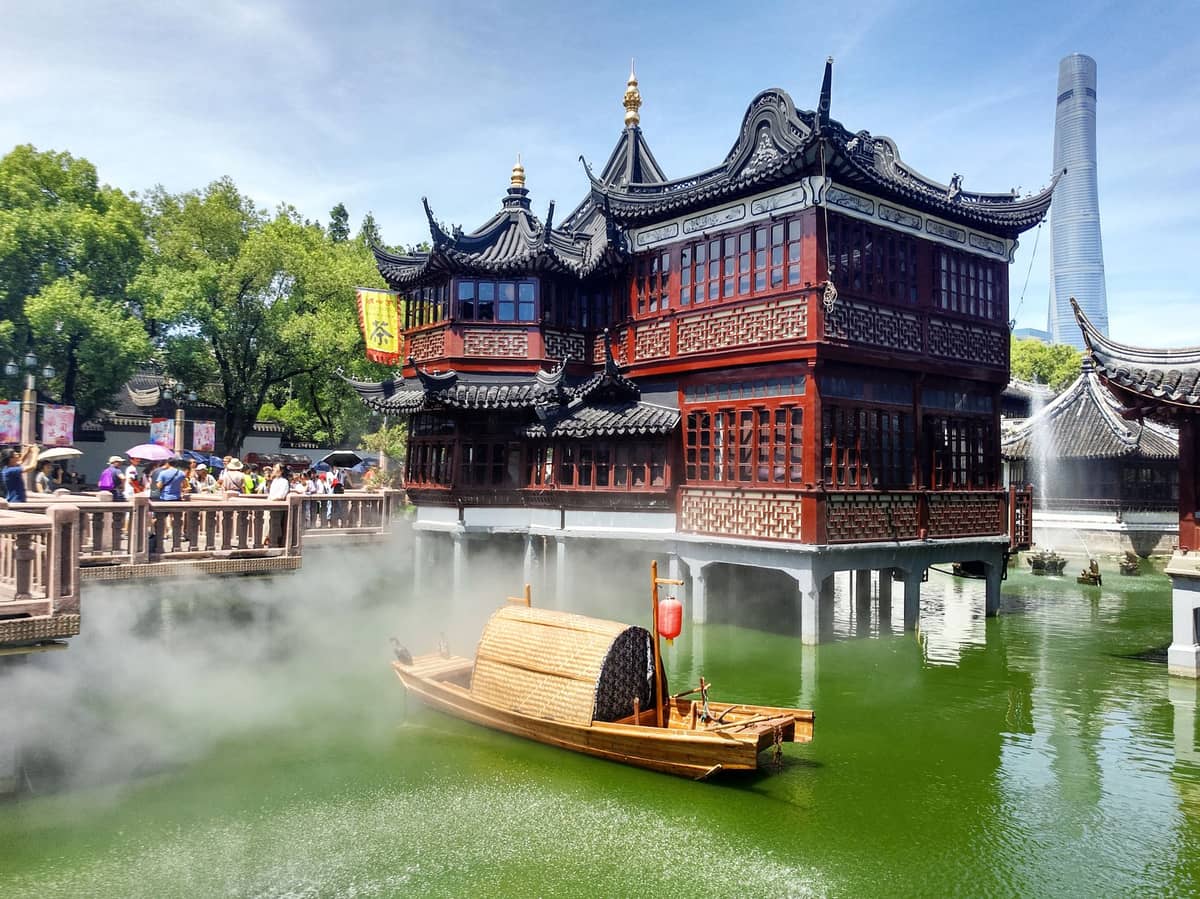
What Is Yu Garden?
Yu Garden, known in Mandarin as Yuyuan (豫园), is a classical Chinese private garden that has survived four and a half centuries at the center of what is now Shanghai's Old Town. The name is commonly translated as the 'Garden of Happiness,' reflecting the original intent of its patron, Ming dynasty official Pan Yunduan, who commissioned the garden in 1559 as a place of retirement and enjoyment for his parents. Construction stretched over several decades, and the garden reached its completed form in 1577.
It covers roughly 2 hectares, about 5 acres, and contains more than 30 individual pavilions, halls, rockeries, and ponds connected by zig-zagging bridges, narrow corridors, and moon gates. The design follows the Suzhou garden tradition of creating layered, compressed landscapes where each turn reveals a new composed view. Nothing is revealed all at once, which is precisely the point.
Yu Garden sits within the broader Old Town (Nanshi) neighborhood, just steps from the City God Temple and the Yuyuan Bazaar. The combination of the garden, temple, and bazaar forms one of Shanghai's most concentrated visitor areas, which is both an advantage and a crowd-management challenge depending on when you arrive.
A Walk Through the Garden: What You Actually See
Entering through the North Gate on Fuyou Road, you pass through a screen wall designed to block direct sightlines, a traditional feng shui device. The transition from the noise of the surrounding bazaar to the interior of the garden is abrupt and, on quieter mornings, genuinely striking. The smell of still water and aged stone takes over within the first few paces.
The most photographed feature is the Great Rockery (大假山, Da Jishan), a 14-meter-high artificial hill constructed from Zhejiang province's yellow stone. It is one of the largest and best-preserved Ming-era rockeries in China. Climbing its stone steps offers elevated views across the pond and rooftops, and the texture of the stone, pitted, rough, and covered in traces of moss, contrasts sharply with the whitewashed garden walls below.
The dragon walls are another signature element: low compound walls topped with undulating ceramic dragon forms whose scales are individually molded. These creatures are not decorative afterthoughts but structural and symbolic features dividing the garden into six distinct scenic areas. Each zone has its own character: one is dominated by water, another by rock, another by an enclosed courtyard arrangement of halls used for official functions during the Qing dynasty.
The Exquisite Jade Rock (玉玲珑, Yu Linlong) is a single piece of Taihu limestone about 3.3 meters tall, perforated with natural holes and valued in classical garden aesthetics for its visual complexity. It stands in the eastern section of the garden and tends to draw a small crowd of photographers throughout the day. Arrive at this section early if you want a clean shot.
💡 Local tip
The South Gate entrance on Yuyuan Old Street is less used than the North Gate and can mean a shorter queue on busy weekend afternoons. Last entry is at 16:00; the garden closes at 16:30.
Tickets & tours
Hand-picked options from our booking partner. Prices are indicative; availability and final rates are confirmed when you complete your booking.
Shangai Yuyuan Garden entrance tickets
From 9 €Instant confirmationFree cancellationShanghai city and Zhujiajiao water town private tour with lunch
From 371 €Instant confirmationFree cancellationShanghai private tour with iconic landmarks of the old and new city
From 284 €Instant confirmationFree cancellation
How the Experience Changes by Time of Day
Arriving at or shortly after 09:00 on a weekday is the most reliable way to experience the garden with room to breathe. The ponds reflect the morning light cleanly, the corridors are walkable at your own pace, and the sounds are mostly birdsong and distant city traffic rather than tour group commentary. By 10:30, domestic tour groups begin arriving in numbers and the narrow bridges over the central pond can back up into slow-moving queues.
Midday, especially on weekends and public holidays, is genuinely difficult. The garden's 2-hectare footprint feels small when shared with large crowds, and certain bottleneck points, particularly the zigzag bridge leading to the Huxinting Teahouse just outside the garden wall, become very congested. If you visit then, move against the flow of the main tour group circuit, which generally runs clockwise.
The hour before closing, roughly 15:30 to 16:00, sees a second quieter window as afternoon tour groups depart. The low afternoon light at this time casts long shadows across the rockery and gives the pond a warmer tone. It is a good photography window if the midday crowd put you off. Note that during certain seasonal events, the garden has offered extended evening opening until around 21:20 for special night tours, which adds lantern lighting to the pavilions. Check current hours before visiting, as these arrangements are not permanent.
⚠️ What to skip
Yu Garden is closed on Mondays, except during major Chinese national holidays when special opening arrangements may apply. Always confirm current hours via the official Shanghai tourism channels or the 'Shanghai Yuyuan' WeChat official account (ID: yu-garden) before your visit.
Historical and Cultural Context
Pan Yunduan began constructing Yu Garden in 1559 as a private retreat. The garden passed through various periods of ownership and use after the Pan family's fortune declined, and it suffered damage during the Opium War in 1842, when British forces occupied parts of the Old City. It was also used as the headquarters of the Small Swords Society during the Taiping era in the 1850s. The restoration you see today is the result of a major reconstruction campaign carried out between 1956 and 1961, which used historical records and the knowledge of craftsmen trained in traditional techniques.
The garden belongs to the Jiangnan garden tradition, a style of landscape design that developed in the cities of the Yangtze River Delta region during the Ming and Qing dynasties. The goal is to simulate natural landscapes within a confined urban plot using carefully arranged water, rocks, and plants. Yu Garden is one of the best remaining examples of this tradition within Shanghai's city limits; for comparable examples without the crowds, the classical gardens of Suzhou, accessible as a day trip, are the benchmark.
The surrounding Yuyuan Bazaar, which envelops the garden on all sides, is a separate commercial zone and not technically part of the garden itself. It was developed in the 1990s in a neo-Ming architectural style and contains restaurants, tea houses, and souvenir shops. Its most famous tenant is the Nanxiang Steamed Bun Restaurant (南翔馒头店), where queues for xiaolongbao can stretch to 30 minutes or more. For more on the city's dumpling culture, the guide to Shanghai soup dumplings is worth reading before you visit.
Getting There and Practical Logistics
The most straightforward approach is Metro Lines 10 or 14 to Yuyuan Garden Station, then a short walk northeast toward the Old Street area. The walk takes about 5 to 8 minutes and passes through the bazaar perimeter. Metro Line 2 also serves nearby People's Square Station, from which the garden is about a 15-minute walk south, passing through the edge of the Old Town.
Taxis and Didi rides can drop you close but the surrounding streets are narrow and sometimes pedestrianized, so allow a short walk from any drop-off point. If you are staying near the Bund, the garden is about a 20-minute walk southwest, a pleasant route through the older lanes of Huangpu District.
Wear flat, closed shoes. The stone paths throughout the garden are uneven, the rockery steps are steep and sometimes slick after rain, and several sections require ducking through low-clearance moon gates. Wheelchair access through the classical garden area is limited; the surrounding bazaar is more accessible. Children under 1.3 m tall or under 6 years old enter free, but visitors with disabilities should confirm any applicable concessions in advance, as the historic structures are not fully barrier-free.
ℹ️ Good to know
Tickets can be purchased at the gate in cash or via the 'Shanghai Yuyuan' WeChat official account (ID: yu-garden). Having a payment method set up on WeChat Pay or Alipay before arrival speeds things up considerably. Peak season runs April to June and September to November; off-season covers July to August and December to March.
Photography Notes
Yu Garden is one of Shanghai's most photogenic sites, but it requires timing and patience. The central pond with its zigzag bridge and Huxinting Teahouse beyond it is the canonical composition, best shot from the northwest corner of the pond in morning light. A wide-angle lens helps in the tighter courtyards where you have little room to step back.
The dragon walls work well in overcast conditions because flat light shows the ceramic scale texture more clearly than direct sun, which creates harsh shadows. For architectural photography more broadly, the best photo spots in Shanghai guide has context on how Yu Garden fits into the wider photography landscape of the city.
Inside the exhibition halls, lighting is dim and tripods are not permitted. A camera or phone with good low-light performance handles the interior displays well. The Exquisite Jade Rock is best shot in the morning before the courtyard fills, as the surrounding space is small and people quickly appear in the frame.
Who Should Reconsider Visiting
Yu Garden is genuinely worth seeing, but it is not an undervisited place. On national holiday weeks, Golden Week in particular, the garden reaches crowd densities that make it difficult to appreciate the design. If your visit falls during these periods and you have limited flexibility, you may get more from the classical garden experience by prioritizing an early morning entry, accepting that the bazaar will be nearly impassable by mid-morning, and keeping expectations calibrated accordingly.
Visitors with limited mobility will find the historic garden interior challenging regardless of the time they visit. Those primarily interested in outdoor greenery rather than classical architecture and cultural history may find more space and breathing room at Century Park in Pudong or the more relaxed atmosphere of Fuxing Park in the Former French Concession.
Insider Tips
- Buy your ticket via the Shanghai Yuyuan WeChat official account (ID: yu-garden) before queuing. On weekends the physical ticket line can add 15 to 20 minutes to your entry time.
- Walk the garden counter-clockwise. The main tour group circuit runs clockwise, so going the other way means you are often moving into emptier sections as groups vacate them.
- The Huxinting Teahouse (湖心亭茶楼) sits just outside the garden wall on the central pond, connected by the famous zigzag bridge. It is one of Shanghai's oldest teahouses, serving simple teas for around ¥30 to ¥50. It is worth a 20-minute stop and offers a ground-level view of the garden wall and pond that you cannot get from inside.
- Rain makes the stone surfaces slippery but also empties a portion of the crowd and gives the rockery and moss a richer appearance. A compact umbrella or light rain jacket is worth carrying between April and September.
- The bazaar restaurants see their longest queues between 11:30 and 13:30. Either eat before 11:00 or after 14:00 to avoid the worst of it. The lanes one block west of the main bazaar area have smaller, locally-used eateries with shorter waits.
Who Is Yu Garden (Yuyuan Garden) For?
- Travelers interested in classical Chinese garden design and Ming-dynasty architecture
- Photography enthusiasts who can arrive at opening time on a weekday
- Cultural history visitors pairing the garden with the nearby City God Temple and Old Town lanes
- First-time visitors to Shanghai who want to understand the city's pre-colonial urban character
- Travelers building a half-day loop combining the garden, the bazaar, and a riverfront walk along the Huangpu
Nearby Attractions
Other things to see while in Old Town (Nanshi):
- City God Temple of Shanghai
The City God Temple of Shanghai (上海城隍庙) is an active Taoist temple at the center of the Old City's historic bazaar district. Part religious sanctuary, part cultural landmark, it offers a rare window into Shanghai's spiritual and mercantile past, just steps from Yu Garden.
- Confucian Temple (Wen Miao)
Tucked into a narrow pedestrian lane in Shanghai's old town, the Confucian Temple (Wen Miao) is the city's only surviving ancient architectural complex dedicated to Confucius. With ¥10 admission, a Sunday book market, and traditional courtyards that feel a world away from the metropolis outside, it rewards visitors who seek context over spectacle. With ¥10 admission, a Sunday book market, and traditional courtyards that feel a world away from the metropolis outside, it rewards visitors who seek context over spectacle.
- Yuyuan Bazaar
Yuyuan Bazaar is the sprawling commercial precinct surrounding Yu Garden and the City God Temple in Shanghai's Old Town district of Huangpu. Part traditional marketplace, part tourist hub, it rewards visitors who know how to navigate it — and frustrates those who don't.