The Marina District sits along San Francisco's northern waterfront, offering bay views, the landmark Palace of Fine Arts, and a lively commercial strip on Chestnut Street. Built on the former grounds of the 1915 Panama-Pacific International Exposition, it combines well-preserved Mediterranean Revival architecture with a neighborhood feel that skews young, active, and well-heeled.
The Marina District is San Francisco's most polished waterfront neighborhood: flat, walkable, and oriented toward the bay, with sweeping views of the Golden Gate Bridge from Marina Green and a dining scene on Chestnut Street that draws locals more than tourists. Its Mediterranean Revival buildings and manicured streets give it a distinct feel from the rest of the city, and the proximity to the Presidio and Crissy Field makes it a natural base for anyone who wants to spend time outdoors on the northern waterfront.
Orientation: Where the Marina Sits in San Francisco
The Marina District occupies a flat strip of San Francisco's northern edge, pressed between the San Francisco Bay shoreline to the north and Lombard Street to the south. Van Ness Avenue and Fort Mason mark its eastern boundary, while Lyon Street and the edge of Presidio National Park define the west. In practical terms, the neighborhood runs roughly from Fort Mason in the east to the Marina Green boat harbor in the center, with the Palace of Fine Arts anchoring the quieter western end near the Presidio.
This is one of San Francisco's flattest neighborhoods, which is immediately noticeable if you've been navigating the city's hills. The grid is regular, the blocks are wide, and you can walk from one end of the Marina to the other fairly quickly. That flatness has a geological explanation: most of the Marina sits on land that was reclaimed from the bay and engineered specifically to host the 1915 Panama-Pacific International Exposition. The neighborhood that grew up afterward retained the exposition's general footprint and its architectural ambitions.
The Marina connects directly to several of San Francisco's most visited corridors. Walk east along the waterfront and you reach Fisherman's Wharf in about 20 minutes. Head west through the Presidio gate at Lyon Street and you're on the road to the Golden Gate Bridge. South along Fillmore Street leads into Pacific Heights and, further on, toward the commercial streets of Lower Haight. This central position on the northern waterfront makes the Marina an efficient base for anyone with an itinerary that spans the bay side of the city.
Character and Atmosphere
The Marina has a character that feels distinct from much of San Francisco. It is affluent, largely residential, and built to a human scale that invites walking rather than destination-hopping. The streets are lined with Mediterranean Revival and Spanish Colonial buildings from the 1920s and 1930s, most of them well-maintained, and the neighborhood has a tidiness that contrasts with the denser, more layered feel of neighborhoods like the Mission or North Beach.
Mornings here are genuinely pleasant. By 7 a.m. on a clear day, Marina Green is already populated with runners tracing the path along the seawall, dog walkers crossing the grass, and cyclists heading toward Crissy Field. The light off the bay is bright and cold, and on calm days the water between the Marina and Marin County is glassy enough to reflect the hills on the far shore. The smell of the bay, salt and kelp, is noticeable when the wind is low. Chestnut Street, the main commercial strip running east-west through the middle of the neighborhood, gets its first wave of coffee drinkers around 8 a.m., and the outdoor tables at the handful of cafes fill quickly on weekends.
By midafternoon, particularly on weekends, Chestnut Street between Fillmore and Divisadero takes on the rhythm of a neighborhood high street that knows it's doing well: boutiques, juice bars, and brunch spots with queues spilling onto the sidewalk. This stretch attracts a mix of residents, young professionals from nearby Pacific Heights, and visitors who have wandered up from Fisherman's Wharf. It is not a tourist strip in the way that Pier 39 or Ghirardelli Square are, but it is self-conscious in its own way.
After dark, the Marina tilts younger and louder. The bars along Fillmore Street and the eastern end of Chestnut attract a crowd that trends toward its late 20s and 30s, and on Friday and Saturday nights the sidewalks outside certain blocks stay busy until well past midnight. It is not a nightlife district in the way that SoMa or the Mission are, but the concentration of bars in a residential area means noise can be an issue if you're staying in ground-floor accommodation near the commercial streets. The western end of the neighborhood, around the Palace of Fine Arts, is quiet by 9 p.m.
ℹ️ Good to know
San Francisco's summer months (June through August) bring heavy marine fog to the northern waterfront. Marina Green and Crissy Field can be socked in by mid-morning on many summer days, with temperatures staying in the low 60s°F (around 16-17°C). September and October are typically the clearest and warmest months for waterfront walks.
What to See and Do
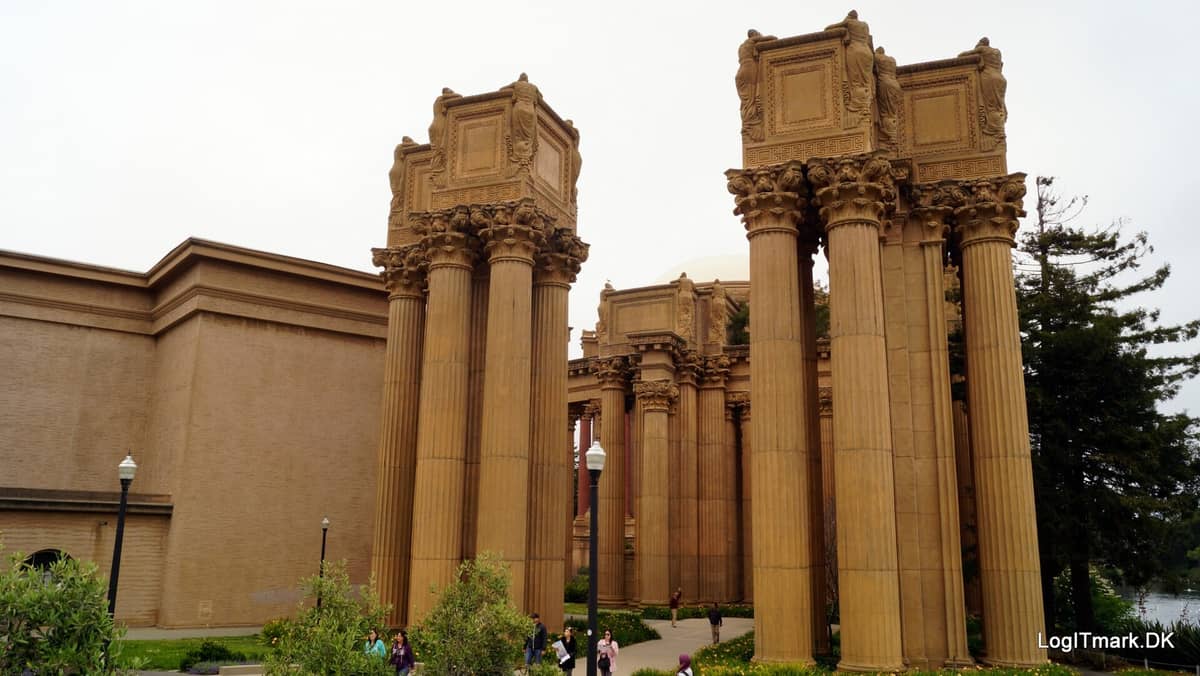
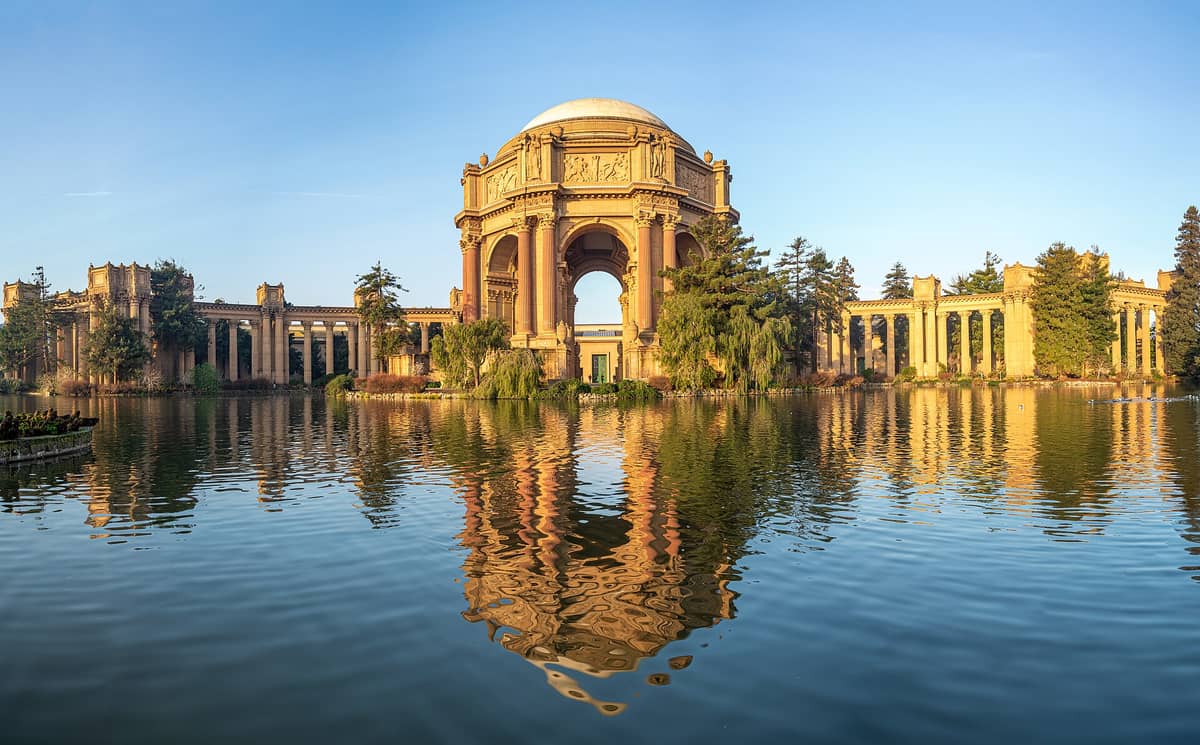
The Palace of Fine Arts is the Marina's architectural centerpiece and the one structure that survived from the 1915 exposition. The domed rotunda and its colonnaded wings sit beside a small lagoon populated by ducks and the occasional heron, and the setting has a deliberately theatrical quality: the building was designed to evoke a Roman ruin. The interior hosts events and exhibitions, but the exterior and the lagoon are free to visit at any hour. Evening light hits the rotunda at a low angle that turns the concrete a warm amber, and it is one of the more photographed spots in the city for good reason.
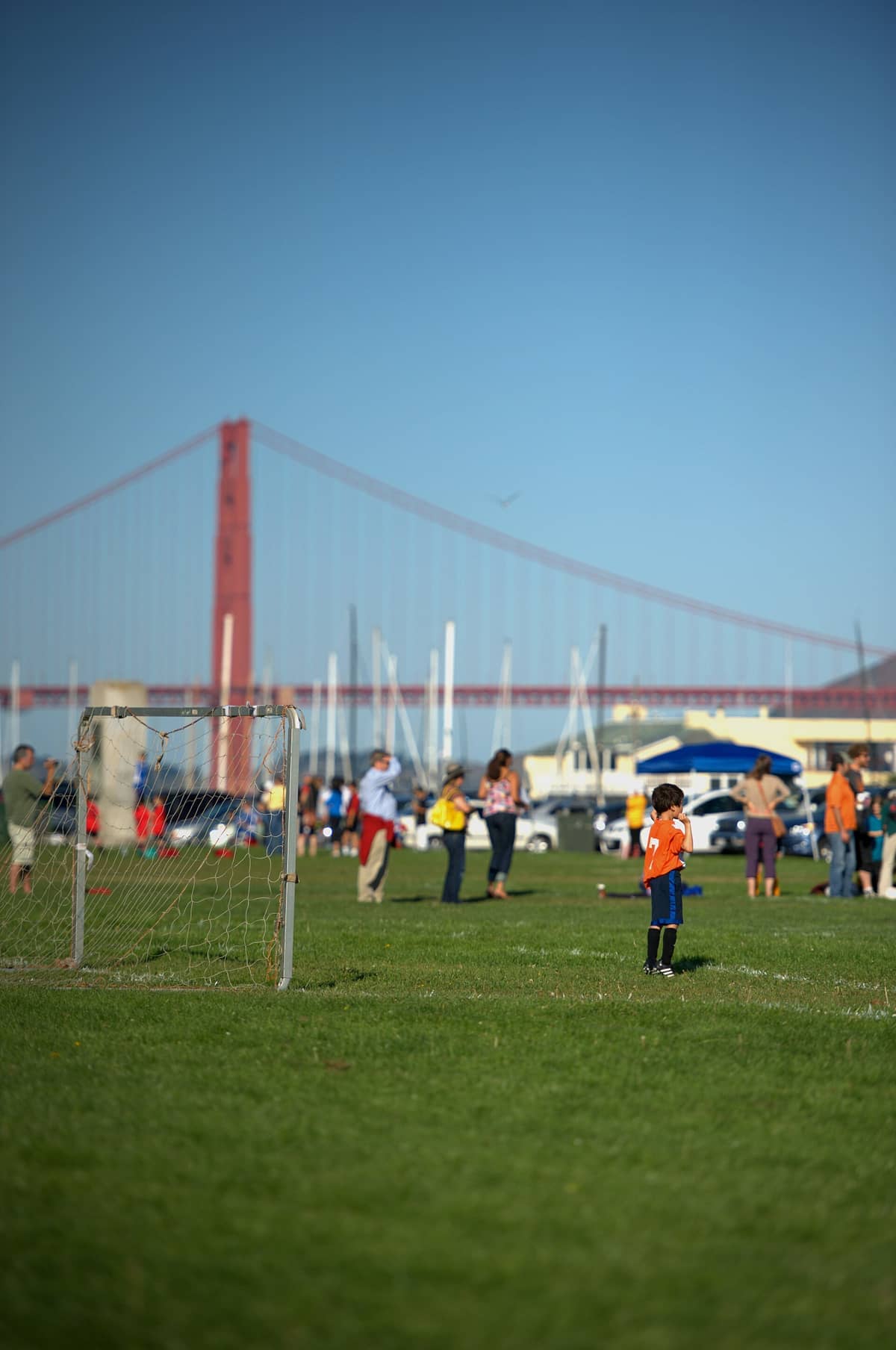
Marina Green is the neighborhood's primary open space: a long, flat strip of lawn running along the waterfront between the boat harbor and Fort Mason. It is used constantly, for kite-flying, yoga, pickup volleyball, and simply sitting on the seawall watching the bay traffic. The green connects westward to Crissy Field, the restored tidal marsh and promenade that runs along the Presidio shoreline toward the base of the Golden Gate Bridge. Walking or cycling this full stretch, from Fort Mason to the bridge overlook at Fort Point, is one of the finest flat waterfront routes in San Francisco and takes around 45 minutes each way on foot.
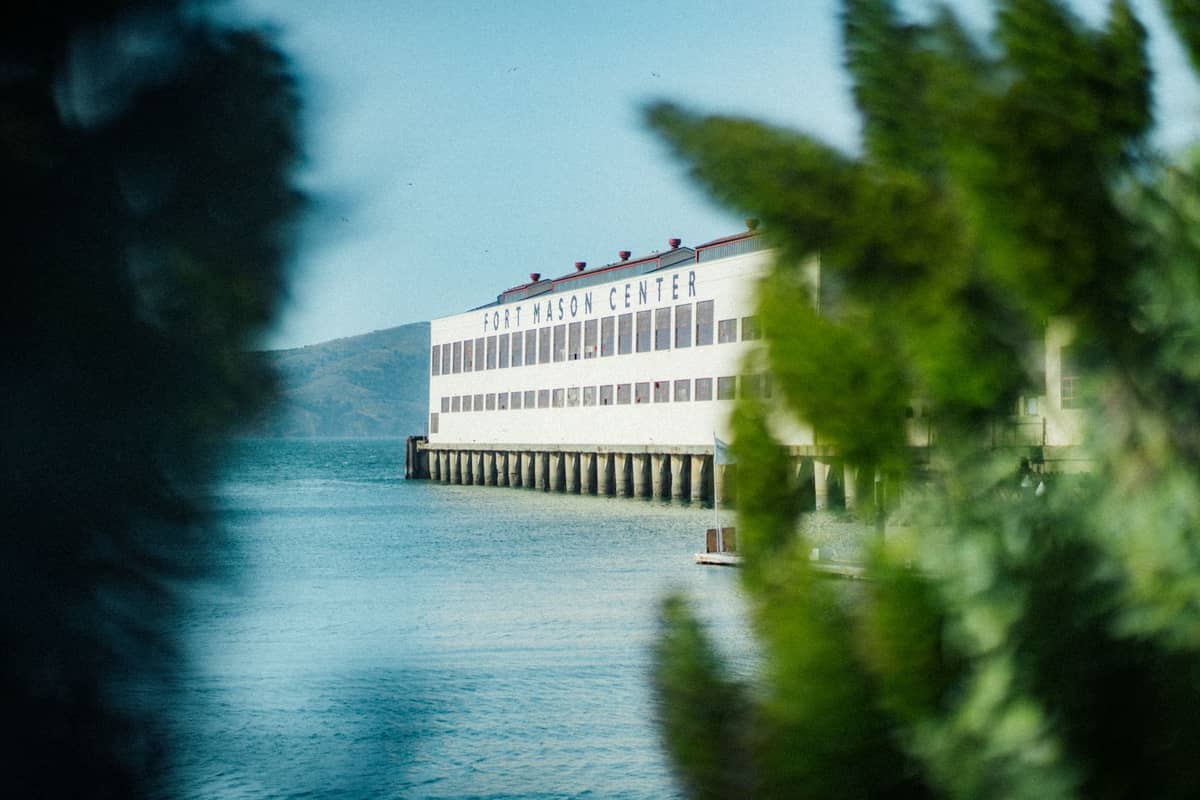
At the eastern end of the Marina, Fort Mason occupies a promontory above the waterfront and houses a cultural center with theaters, galleries, and performance spaces in former military warehouses. The SFMOMA Artists Gallery and the San Francisco Museum of Modern Art Bookstore have operated here, and the complex regularly hosts food and arts events, including the widely attended Outside Lands satellite programming. The views from the upper lawns at Fort Mason, across the bay toward Alcatraz and the Marin headlands, are among the best in the city without requiring any climbing.
Palace of Fine Arts rotunda and lagoon (free, open all hours)
Marina Green waterfront walk and kite-flying
Crissy Field marsh trail to Fort Point and the Golden Gate Bridge base
Fort Mason Center for Arts and Culture
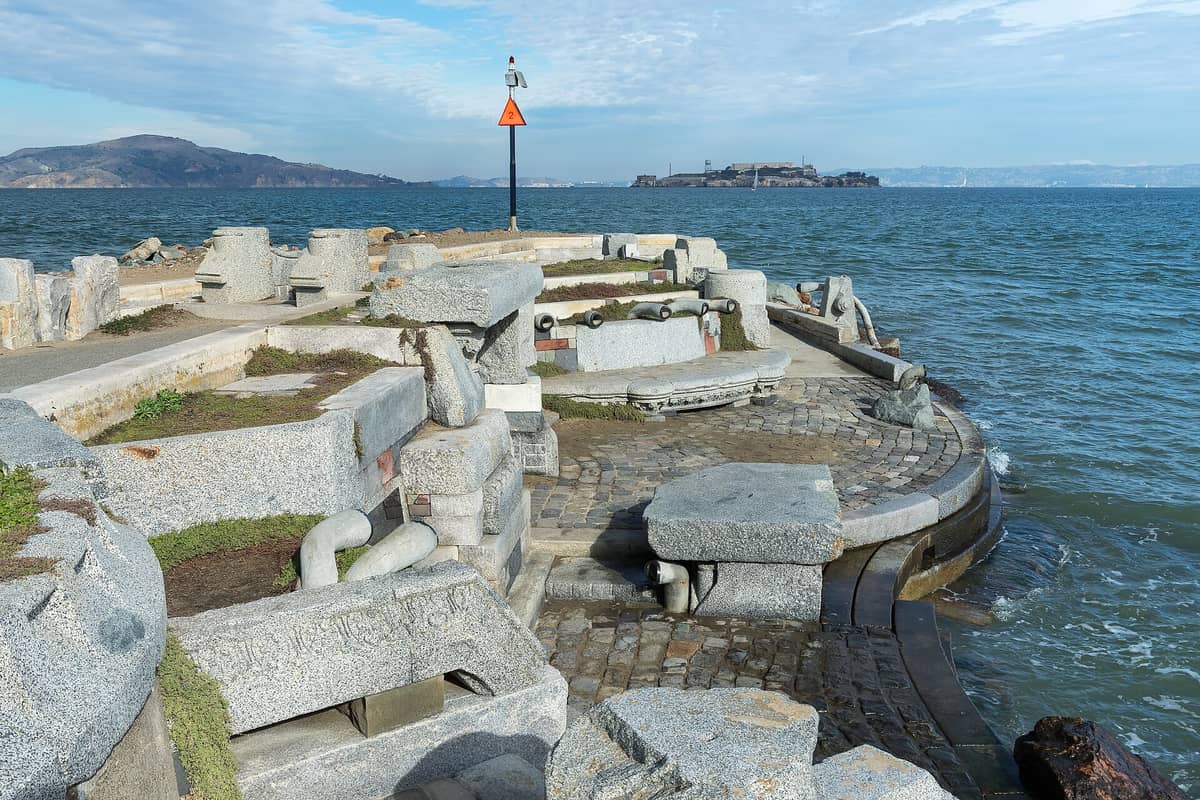
Wave Organ acoustic installation at the breakwater tip of the marina jetty
Exploratorium at Pier 15 (a short walk east along the waterfront)
The Wave Organ is worth the short detour: it sits at the end of the stone jetty that forms the marina's eastern breakwater, and it uses PVC pipes and granite tubes to amplify the sound of wave action beneath the platform. It works best at high tide. Very few visitors know it exists, and on a weekday morning you can often have it entirely to yourself.
Eating and Drinking
Chestnut Street is the Marina's culinary main street, running east-west through the center of the neighborhood between Scott and Divisadero. The concentration of restaurants, cafes, and bars here is significant for a residential neighborhood, and the quality level is generally high. This is a neighborhood where the regulars eat out several times a week, which keeps the standards honest.
The food scene leans toward California cuisine, with strong representation from Italian-American cooking reflecting the neighborhood's historical demographics. There are reliable brunch spots, several good independent coffee roasters, and a handful of wine bars that get busy on weekday evenings when the after-work crowd filters in from Pacific Heights and the financial district via the 30 or 43 Muni lines. Price ranges skew moderate to high: expect to pay around $18-30 for a main course at sit-down dinner spots, with the most popular weekend brunch places running similar numbers.
For a quick, inexpensive meal, the Marina is not the strongest neighborhood in the city. There are some sandwich shops and fast-casual spots along Chestnut and Lombard, but this is not a neighborhood with deep street food culture or the kind of taqueria-on-every-block density you'd find in the Mission. If budget eating is a priority, the Marina is worth walking through rather than basing your meals in.
💡 Local tip
The stretch of Chestnut Street between Fillmore and Divisadero has the densest concentration of good restaurants and bars. For a quieter evening meal with less foot traffic, try the blocks closer to the Palace of Fine Arts on the western end of the neighborhood, where a handful of smaller Italian and neighborhood bistro-style spots operate without the weekend queues.
Getting There and Around
The Marina District has no BART station, and that is the most important transit fact to know before deciding where to stay. The nearest BART access is downtown. From SFO airport, the fastest route into the Marina often involves taking BART into the city and then switching to a Muni bus, with total travel time varying by time of day and connection.
Muni bus service covers the neighborhood reasonably well. The 30 Stockton serves the Marina, and the 28 and 43 also provide connections through and around the area. Service is reliable during peak hours but can be infrequent late at night, so rideshare apps are the practical choice for late returns to the neighborhood after 10 p.m.
For navigating the waterfront and Presidio on foot or by bicycle, the Marina is ideal. The path from Marina Green to the Golden Gate Bridge base via Crissy Field is entirely flat and clearly marked. Bike rentals are available near Fisherman's Wharf to the east, and the route is detailed in the San Francisco hiking and walking guide. Lombard Street, which forms the southern boundary of the Marina, carries US Route 101 traffic toward the Golden Gate Bridge and is one of the primary western approaches to the bridge by car or bus.
⚠️ What to skip
Parking in the Marina is genuinely difficult on weekend afternoons and evenings, particularly near Chestnut Street and Marina Green. Street parking is metered and enforced, and the blocks around the Palace of Fine Arts fill up quickly on clear days. If you're driving to this neighborhood, budget extra time or use a parking app to find a garage in advance.
Where to Stay
The Marina is a legitimate option for accommodation if your itinerary centers on the northern waterfront, the Presidio, or the Golden Gate Bridge. It is quieter and more residential than staying near Union Square or Fisherman's Wharf, and the flat terrain makes it easy to cover ground on foot. For a broader overview of where the Marina fits among San Francisco's accommodation options, the San Francisco neighborhood accommodation guide provides useful context across all districts.
Hotels in the Marina tend toward boutique and mid-range properties rather than large convention-style buildings. The neighborhood does not have the density of hotel inventory found downtown, but the options that do exist are generally well-located for waterfront access. Short-term rental apartments are common in the residential blocks away from Chestnut Street, and these suit travelers who want space and a kitchen more than hotel services.
The best location within the Marina for most visitors is within a few blocks of Chestnut Street between Fillmore and Divisadero, which puts you walking distance from both the waterfront and the neighborhood's restaurants and cafes. The far western end near the Palace of Fine Arts is quieter but slightly more isolated from transit and nightlife. Avoid ground-floor accommodation on the Chestnut and Lombard Street commercial blocks if noise is a concern, particularly on weekend nights.
ℹ️ Good to know
A geological note worth knowing: much of the Marina District was built on fill land engineered for the 1915 Panama-Pacific Exposition. During the 1989 Loma Prieta earthquake, this made the neighborhood particularly vulnerable to liquefaction, and it suffered some of the worst structural damage in the city. Modern buildings here have been retrofitted, but it remains a fact about the neighborhood's physical foundation worth understanding.
The Marina in Context: Who It's For
The Marina District is not a neighborhood that tries to represent all of San Francisco. It is affluent, largely homogeneous, and built around outdoor activity and good dining rather than cultural institutions or nightlife. It does not have the density of history found in North Beach or Chinatown, nor the energy of the Mission District. What it does have is one of the most accessible and scenic waterfronts in the city, a well-maintained built environment, and a commercial strip with restaurants and bars that are genuinely good.
For travelers who want to be on the bay side of the city, close to the Presidio and the Golden Gate Bridge, and within walking distance of a solid neighborhood dining scene, the Marina is an excellent choice. For travelers seeking cultural depth, street life, or budget-friendly options, it is probably more rewarding as a half-day destination than a base.
TL;DR
The Marina District is San Francisco's northern waterfront neighborhood, built on 1915 exposition grounds, flat, walkable, and oriented toward bay views and outdoor activity.
Best for: travelers focused on the Presidio, Golden Gate Bridge, Crissy Field, and Palace of Fine Arts, or those who want a quieter, residential feel with a strong restaurant strip on Chestnut Street.
Transit note: no BART station in the neighborhood; Muni bus connections are adequate for daytime travel but limited late at night.
Food and drink: Chestnut Street delivers a reliable, if pricey, range of California cuisine, Italian-influenced cooking, wine bars, and brunch spots; budget eating options are limited.
Not ideal for: travelers prioritizing cultural neighborhoods, budget dining, late-night transit, or proximity to SoMa, the Mission, or Union Square.
San Francisco's beaches are unlike anywhere else in California. Cold water, dramatic fog, and powerful Pacific surf define the city's coastline, but the scenery is extraordinary. This guide covers the best beaches in San Francisco for sunset walks, surfing, coastal hikes, and day trips beyond the city.
San Francisco packs an unusually deep museum scene for a city of its size. This guide covers the city's finest institutions across art, science, history, and culture, with practical tips on pricing, free days, and how to plan your visit.
San Francisco's climate defies expectations. Summer is foggy and cool, fall is surprisingly warm, and winter can be a genuine bargain. This guide breaks down every season so you can pick the right time for your trip, your budget, and your tolerance for Karl the Fog.
San Francisco is one of the most visually dramatic cities in America, built on hills that frame the bay, the bridges, and the Pacific at every turn. This guide covers the best viewpoints in the city and beyond, from free hilltop parks to lesser-known coastal perches that most visitors never find.
San Francisco sits at the gateway to one of the most varied day-trip landscapes in America. Within two hours you can be walking among thousand-year-old redwoods, tasting Cabernet in Napa, hiking coastal bluffs in Point Reyes, or exploring a former federal prison on a rocky bay island.
San Francisco is one of America's most spectacular cities, and you don't need a big budget to experience it. From iconic bridges and coastal trails to free museum days and world-class public art, this guide covers the best free things to do in San Francisco.
From BART airport transfers to cable car fares, this guide covers every way to get around San Francisco — with practical advice on what's worth it, what to skip, and how to navigate the city like someone who actually lives there.
San Francisco offers a deep luxury travel scene for a city of its size. This guide covers where to stay, what to eat, which experiences justify the price, and how to time your visit to get the best value on high-end accommodations.
San Francisco International Airport sits 13-15 miles south of downtown, and getting into the city is straightforward once you know your options. This guide breaks down every transport method from SFO, including real costs, travel times, and the mistakes most first-timers make.
San Francisco's built environment spans Victorian row houses, Edwardian flats, Beaux-Arts civic monuments, and bold modernist towers. This guide breaks down the key styles, landmark buildings, and best neighborhoods to explore on foot, with practical advice for architecture walks in any season.
San Francisco's cable car system is one of the most recognizable transit networks in the world — and also one of the most misunderstood. This guide covers all three operating lines, how fares and passes work, the best times to ride, and clear guidance on avoiding the worst queues.
San Francisco's ferry network spans two separate operators, multiple terminals, and fares that vary by route and payment method. This guide breaks down every major route, current pricing, and how to avoid the most common mistakes first-time riders make.
San Francisco packs an enormous amount into 47 square miles of land. This guide covers everything a first-time visitor needs to know: how to arrive, where to stay, what to prioritize, and the common mistakes that waste time and money.
San Francisco Fleet Week is one of the largest free public events in the United States, drawing hundreds of thousands of visitors to the Bay waterfront each October. This guide covers the Blue Angels air show schedule, the best free viewing spots, ship tour logistics, VIP ticket options, and practical advice for navigating the crowds.
San Francisco is one of California's most naturally romantic cities. Bay views, foggy evenings, world-class food, and historic neighborhoods create an atmosphere that pairs well with almost any travel style. This guide covers where to go, what to spend, when to visit, and how to make the most of a couples trip to the City and County of San Francisco.
At 1,017 acres, Golden Gate Park is one of the great urban parks in the United States, and most visitors only scratch the surface. This guide covers the top attractions, practical logistics, seasonal timing, and the spots worth seeking out beyond the obvious.
San Francisco rewards the curious. Beyond the Golden Gate Bridge and Alcatraz, the city hides mosaic staircases, acoustic sculptures, Victorian cemeteries, and rooftop gardens that most visitors never find. This guide points you to the spots locals actually love.
San Francisco is one of America's most walkable cities, but its hiking scene goes far beyond neighborhood strolls. These trails deliver coastal cliffs, forested ridgelines, panoramic summits, and wild Pacific shorelines all within city limits or a short drive away.
San Francisco in summer is nothing like a Southern California beach vacation. Expect cool temperatures in the mid-60s°F, morning fog that can linger well past noon, and a packed event calendar from June through August. This guide breaks down exactly what you'll encounter and how to prepare.
Three days is enough to hit San Francisco's iconic landmarks, explore distinct neighborhoods, and get a real feel for the city. This itinerary routes each day logically so you spend less time in transit and more time actually experiencing the city.
The Mission burrito is not just a meal. It is a San Francisco institution with a disputed origin, a precise construction method, and a handful of taquerias that have been perfecting it for decades. This guide covers the history, the key ingredients, where to find the best version, and what separates the real thing from a pale imitation.
Muir Woods National Monument sits just 12-17 miles north of San Francisco, protecting one of the last old-growth coast redwood stands in the Bay Area. This guide covers everything you need to plan a successful day trip: mandatory reservations, transport options, trail choices, seasonal timing, and the common mistakes that catch first-time visitors off guard.
Napa Valley sits just 50-60 miles north of San Francisco, making it one of the Bay Area's most rewarding day trips. This guide covers every logistic: how to get there, what tastings cost, when to book, and how to pace a single day without burning out before the third pour.
San Francisco packs an extraordinary range of distinct neighborhoods into just 47 square miles of land. From the foggy avenues of the Outer Sunset to the sunny slopes of the Mission, this guide breaks down what each district is actually like, who it suits, and how to navigate between them.
San Francisco's nightlife runs deeper than most visitors expect. This guide breaks down the best neighborhoods for a night out, what to expect at live music venues, how late things actually run, and which parts of the city suit your style — from craft cocktail bars to late-night dance floors.
San Francisco has a reputation for draining wallets, but that reputation is only partly deserved. With the right approach to accommodation, transport, food, and attractions, a solo traveler can get by on $110–$160 per day without missing the city's best experiences. This guide breaks down exactly where your money goes and where you can cut back.
Twenty-four hours in San Francisco is enough to walk an iconic bridge, eat world-class food, explore historic neighborhoods, and watch the sun set over the Pacific. This itinerary is built around geography so you spend less time in transit and more time actually experiencing the city.
San Francisco is one of America's most rewarding cities to visit, but it rewards prepared travelers. This guide covers the real safety picture: car break-ins, petty theft hotspots, neighborhoods to navigate carefully, and practical strategies to keep your trip trouble-free.
San Francisco's shopping scene spans far more than one famous square. This guide breaks down every major retail district, from luxury flagships around Union Square to independent boutiques in Hayes Valley, vintage shops on Haight Street, and specialty food at the Ferry Building, with practical advice on getting there, what to expect, and where to skip.
The San Francisco to Los Angeles corridor is one of the most-traveled routes in the United States, with options ranging from a 90-minute flight to a two-day Pacific Coast Highway road trip. This guide breaks down every realistic method by cost, time, and comfort so you can choose the right one for your trip.
San Francisco is one of the world's great walking cities, built for exploration on foot. These 20 self-guided stops span the city's most rewarding routes, from waterfront promenades and Victorian hilltops to mural-filled alleys and coastal cliffs.
Forty-eight hours is enough time to hit San Francisco's greatest hits and still feel like you've gone beyond the surface. This guide covers the essential waterfront, neighborhoods, parks, and cultural stops to build a memorable weekend in one of America's most compelling cities.
San Francisco is one of the most family-friendly cities in the United States, with world-class science museums, free outdoor spaces, bay cruises, and a compact layout that keeps logistics manageable. This guide covers the best attractions for children, how to save on tickets, when to visit, and how to get around without a car.
San Francisco packs an extraordinary range of experiences into about 47 square miles of land. From the Golden Gate Bridge and Alcatraz to neighborhood walks through Chinatown and the Mission, this guide covers the top things to do in San Francisco with clear, practical detail to help you spend your time well.
San Francisco has one of the most serious food cultures in the United States, with about 30 Michelin-starred restaurants according to the 2026 Michelin Guide, roughly 4,400 restaurants packed into about 47 square miles, and an obsessive commitment to local, seasonal ingredients. This guide covers the iconic dishes, the neighborhoods where each food culture lives, what things actually cost, and where visitors consistently go wrong.
Choosing where to stay in San Francisco shapes your entire trip. This guide breaks down the city's most practical neighborhoods by price, transit access, safety, and atmosphere, so you can book with confidence rather than guesswork.