Golden Gate Bridge: What to Know Before You Go
The Golden Gate Bridge spans the strait between San Francisco and Marin County in one of the most recognizable silhouettes in the world. Free to cross on foot or by bike, it rewards visitors who plan around the fog, arrive early, and know where to stand.
Quick Facts
- Location
- Golden Gate Welcome Center, Coastal Trail, Presidio, San Francisco, CA 94129
- Getting There
- Muni Bus 28 or 29 to the bridge approach; GGT ferries to Sausalito for north-end views
- Time Needed
- 1 to 2 hours to walk the bridge and explore the Welcome Center; half a day if combining with the Presidio or Marin Headlands
- Cost
- Free for pedestrians and cyclists. Vehicle toll southbound into SF only (electronic, no cash); exact rates at goldengate.org
- Best for
- First-time visitors, photographers, cyclists, architecture enthusiasts, and anyone arriving by the Bay Area ferry network
- Official website
- www.goldengate.org
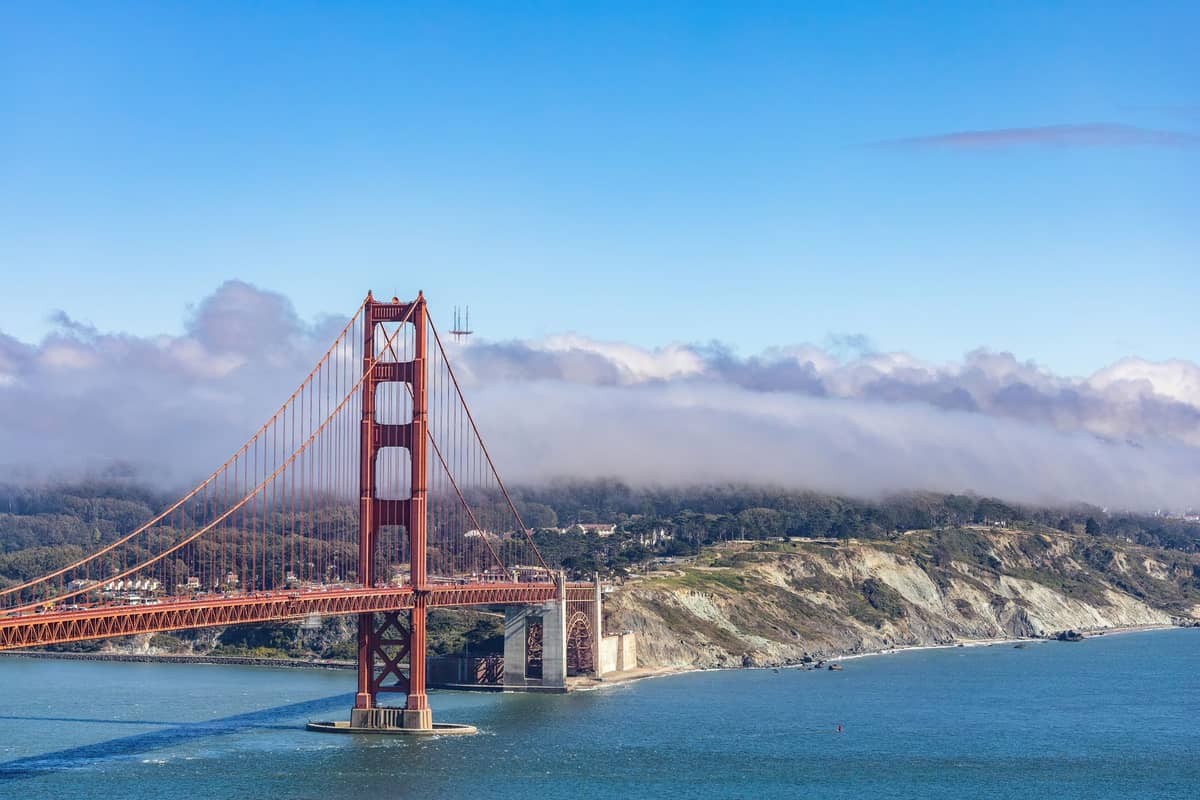
What the Golden Gate Bridge Actually Is
The Golden Gate Bridge is a suspension bridge crossing the Golden Gate Strait, the narrow, windswept passage connecting San Francisco Bay to the Pacific Ocean. It links the Presidio of San Francisco on the south shore to the Marin Headlands on the north, spanning a total length of 8,981 feet (2,737 m) with a main span of 4,200 feet (1,280 m). Construction ran from January 5, 1933 to May 29, 1937, and the bridge opened to the public on May 29, 1937.
At the time of its completion it was the longest suspension bridge in the world. Its two towers rise 746 feet (227 m) above the water, and the roadway deck sits 220 feet (67 m) above mean high tide, high enough to allow the passage of large naval vessels. The color, officially designated International Orange, was chosen partly for visibility in fog and partly because it complemented the surrounding hills and water. It has not been repainted a different color end-to-end; instead, continuous maintenance painting keeps it from fading.
The bridge is managed by the Golden Gate Bridge, Highway and Transportation District, while the surrounding land on the San Francisco side falls within the Presidio, a former military base now managed by the Presidio Trust as part of the Golden Gate National Recreation Area.
ℹ️ Good to know
Pedestrian and bicycle access is free. The Welcome Center is open daily 9:00–18:00, closed Thanksgiving and Christmas. The bridge roadway is open to autos and cyclists 24 hours a day, but pedestrian sidewalk hours vary by season—check the official website for current schedules.
How the Experience Changes by Time of Day
Early morning, roughly 7:00 to 9:00, is the most photogenic window on clear days. The low sun strikes the towers from the east and casts long shadows across the deck while the bay is often glassy and quiet. Foot traffic is minimal, and you can walk stretches of the eastern sidewalk without breaking stride. The air smells of salt and cold iron, and the hum of the cables in the wind is audible before road noise takes over.
By mid-morning, tour groups and cyclists begin to fill the approach paths, and the Welcome Center opens. Weekends between 10:00 and 13:00 see the largest crowds, with the eastern walkway becoming congested near the towers. If you are walking to the first tower and back as a short loop, this is manageable. A full crossing to Vista Point on the Marin side and back is harder to enjoy at that hour.
Late afternoon, from around 16:00 onward, brings a second photographic opportunity: the western light turns the International Orange paint warm and saturated, particularly in autumn when the sky stays clear past 18:00. Sunset from Vista Point on the north end, accessible by crossing fully or by driving across, looks back at the span and the city together. This is the view on most postcards.
⚠️ What to skip
Summer mornings (June through August) are frequently fogged in by 9:00 and may not clear until noon or later, sometimes not at all. September and October offer statistically clearer skies and warmer temperatures than the summer months. Plan accordingly.
Tickets & tours
Hand-picked options from our booking partner. Prices are indicative; availability and final rates are confirmed when you complete your booking.
Muir Woods and Sausalito guided tour with transportation
From 82 €Instant confirmationFree cancellationSan Francisco 2-day hop on hop off city and night tour
From 103 €Instant confirmationFree cancellationSan Francisco self-guided bike tour
From 27 €Instant confirmationFree cancellationGolden Gate Bridge to Sausalito guided bike tour
From 64 €Instant confirmationFree cancellation
Walking the Bridge: What to Expect
The eastern sidewalk is designated for pedestrians during the day, with cyclists using the western sidewalk. Sidewalk schedules and any seasonal changes are posted at the bridge entry points and on the official website. The pedestrian path is approximately 1.7 miles (2.7 km) one way, with the full round trip from the Welcome Center to Vista Point and back covering roughly 3.4 miles (5.4 km).
The surface underfoot is concrete, level and smooth, but the bridge moves. On windy days you can feel a subtle sway in the deck, most noticeable near the midpoint. The wind can be strong enough to make conversation difficult and cold enough in summer to warrant an extra layer regardless of what the temperature felt like in the city. Bring a jacket even if the forecast says 65°F downtown.
Views from the walkway differ at each section. Near the south tower, the city skyline and the hills of Marin appear simultaneously. At mid-span, the bay and the ocean each fill one side of your view, with Alcatraz visible to the southeast. The north tower section opens up toward the Marin Headlands, with their green ridgelines dropping sharply to the water. Most visitors stop here before turning back; a smaller number complete the crossing to Vista Point.
💡 Local tip
Photography tip: the best angles of the bridge itself require stepping away from it. Fort Point, directly beneath the south anchorage, gives an unusual upward view of the full span and is free to enter. Battery Spencer on the Marin side offers the classic full-length view from above and requires a short drive or hike up from Vista Point.
Getting to the Bridge Without a Car
Muni Bus 28 runs from the Caltrain station area and the Richmond District to the bridge approach near the Welcome Center. Bus 29 connects the Sunset District. Both are part of the SFMTA network and accept Clipper cards. For a more scenic approach, Golden Gate Ferry service runs from the Ferry Building to Sausalito, from where you can cycle back across the bridge, a route popular with rental cyclists who pick up bikes near the Embarcadero.
If you are combining the bridge with a wider exploration of the Presidio, note that the Presidio Shuttle (PresidiGo) serves several stops within the park and connects to public Muni lines, reducing the need for a car once you are inside the park.
Driving is straightforward from the city, but parking near the Welcome Center fills quickly on weekend mornings. The main south lot charges a fee; arrive before 9:00 to have realistic options. Vehicles crossing northbound into Marin pay no toll. The southbound toll, payable electronically only, applies to vehicles entering San Francisco, with current rates listed on the official website.
The Best Viewpoints Beyond the Bridge Itself
Most of the memorable photographs of the Golden Gate Bridge are taken from locations away from the walkway. The four most useful are: Fort Point (directly under the south anchorage, free), Battery Spencer (Marin side, short steep hike from Vista Point), Crissy Field (flat, bay-level view from the east), and the Marin Headlands road overlooks accessible by car from the north side.
From Crissy Field the bridge appears framed by the bay on one side and the Presidio's tree line on the other. This is also one of the flattest, most accessible approaches and works well for visitors with mobility considerations. Further east, the grassy stretch of the Marina Green offers a wider, more distant view that includes the city skyline to the right.
Battery Spencer requires a short but steep climb from the road cut above Vista Point on the Marin side. The payoff is a full-length overhead view of the bridge looking south toward the city. It is the single most dramatic terrestrial vantage point, particularly at golden hour when the towers glow against a lit-up skyline. No facilities, no fee, no signage except for the road directions.
Fog, Weather, and Realistic Expectations
San Francisco has a warm-summer Mediterranean climate, and the Golden Gate Strait is the main entry point for the Pacific marine layer. On many summer mornings the bridge is entirely invisible from shore, with only the tower tops poking above the fog bank. This is not a disappointment for everyone: the sight of International Orange spires rising from white fog is striking in its own way, and many photographers deliberately seek it out. But if you want a clear view for a classic crossing, plan for September or October.
Wind is a consistent factor at all times of year. The gap in the coastal hills that the bridge spans funnels air from the Pacific into the bay, and gusts of 30 to 40 mph are routine, occasionally stronger. In summer, this wind arrives cold even when the rest of the city is mild. Layers are not optional.
Rain, when it comes (predominantly November through March), makes the deck slippery and reduces visibility but does not close the bridge. Walking in light rain with the tower lights on and the bay churned up is an experience worth having if you are already dressed for it. The Welcome Center provides cover, and the view from Fort Point in a storm is genuinely dramatic.
💡 Local tip
Check the Golden Gate Bridge webcam at goldengate.org before leaving your accommodation. It gives a real-time picture of fog conditions and is a reliable 10-second check that saves a wasted journey on socked-in mornings.
Who Might Not Enjoy This
Travelers with a strong fear of heights may find the open-railed walkway uncomfortable at mid-span, particularly on windy days when the deck motion is perceptible. The bridge does not close under normal wind conditions, and there is no enclosed alternative pathway.
Visitors spending only a single day in San Francisco may find that a full bridge crossing takes time that could be used for other major attractions. A view from Crissy Field or a short walk to the first tower and back satisfies the visual goal in under 45 minutes and leaves room for other neighborhoods. If you are working through a tight itinerary, review a one-day San Francisco itinerary before committing to a full crossing.
Insider Tips
- Fort Point, directly under the south anchorage of the bridge, is free to visit and offers a steel arch framing the full span overhead. It is open on limited days and hours managed by the National Park Service, so check nps.gov/fopo before going. It also has a rare vantage on the bridge from directly below the deck.
- Cyclists can rent bikes near Fisherman's Wharf or the Embarcadero, ride across the bridge, and return by Golden Gate Ferry from Sausalito to the Ferry Building. This loop covers the bridge, the bay, and avoids any backtracking on foot.
- The Welcome Center's small exhibition space covers the bridge's engineering history and construction photographs. It takes about 20 minutes and gives context that makes the physical crossing more interesting. It is free and rarely crowded before 10:00.
- Battery Spencer on the Marin side, reached by a steep dirt path from the road just above Vista Point, delivers the best full-length overhead view of the bridge looking south. It involves no entrance fee, no ticket, and no crowd management. Arrive at dusk for the most dramatic light.
- The bridge deck moves vertically up to about 16 feet (5 m) and laterally several feet in extreme wind events and is designed to flex as well. What feels like unsettling movement underfoot at mid-span on a breezy day is normal and within engineering tolerances. Knowing this makes the crossing more interesting than alarming.
Who Is Golden Gate Bridge For?
- First-time San Francisco visitors wanting to see the bridge up close rather than from a distance
- Photographers with flexibility to time their visit around fog and light conditions
- Cyclists looking for a half-day route that combines the bridge crossing with a ferry return from Sausalito
- Architecture and engineering enthusiasts interested in 1930s Art Deco suspension bridge design
- Visitors combining the bridge with a wider walk through the Presidio or Crissy Field
Nearby Attractions
Other things to see while in The Presidio:
- Baker Beach
Baker Beach is a free, mile-long ocean beach within the Presidio and Golden Gate National Recreation Area, offering some of the closest ground-level views of the Golden Gate Bridge in the city. Cold water, strong currents, and reliable afternoon winds define the experience — this is a beach for walking and watching, not swimming.
- Crissy Field
Crissy Field is a restored tidal marsh and beachfront promenade on the northern shore of the Presidio, offering unobstructed views of the Golden Gate Bridge and San Francisco Bay. Free to enter and open around the clock, it rewards early risers and late-afternoon walkers in equal measure.
- Fort Point National Historic Site
Fort Point National Historic Site sits directly beneath the south anchorage of the Golden Gate Bridge at the southern entrance to San Francisco Bay, a rare surviving example of American Civil War-era masonry fortification. Managed by the National Park Service, it offers free admission, dramatic coastal views, and four floors of military history.
- Walt Disney Family Museum
Housed in a converted 1897 military barracks inside the Presidio, the Walt Disney Family Museum traces Walt Disney's life from his Midwest childhood to the creation of a global entertainment empire. This is not a theme park experience. It is a closely curated biographical museum with real depth, designed for people who want to understand the man behind the myth.