Crissy Field: San Francisco's Most Scenic Waterfront Walk
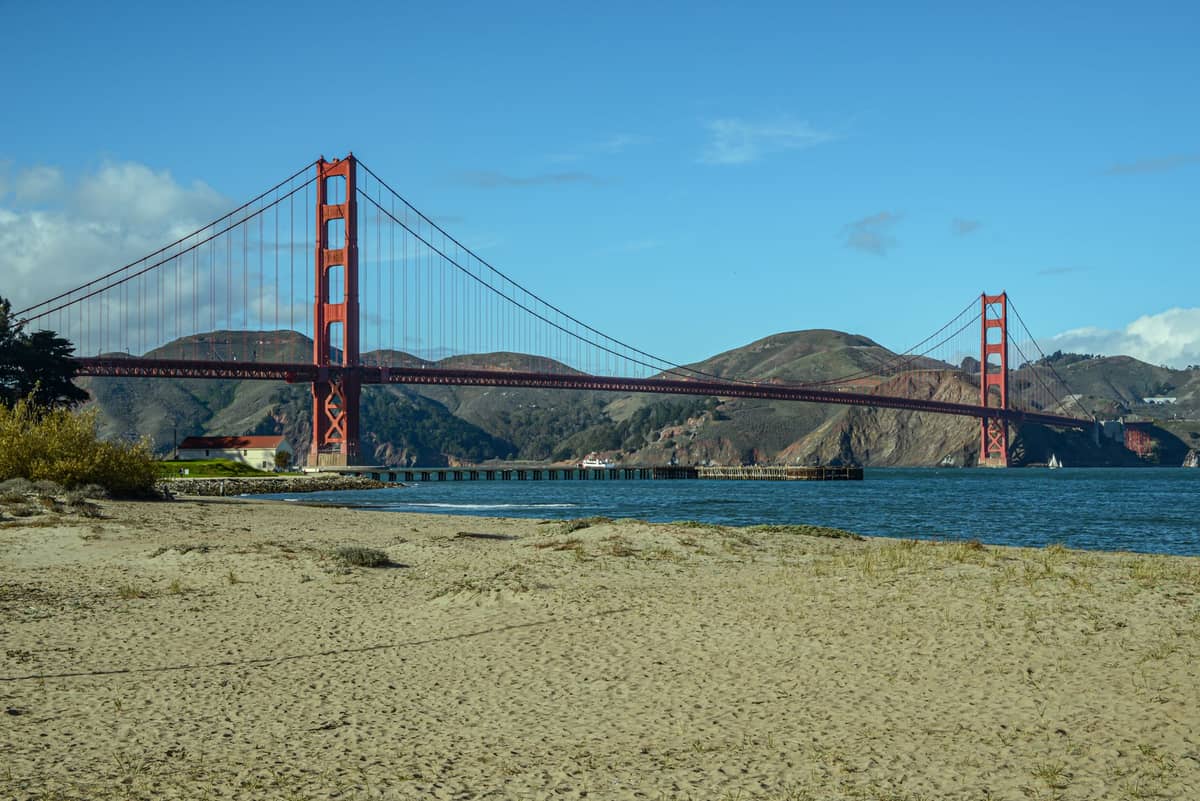
Crissy Field is a restored tidal marsh and beachfront promenade on the northern shore of the Presidio, offering unobstructed views of the Golden Gate Bridge and San Francisco Bay. Free to enter and open around the clock, it rewards early risers and late-afternoon walkers in equal measure.
Quick Facts
- Location
- 1199 East Beach, Presidio, San Francisco, CA 94129
- Getting There
- Muni bus routes 28 and 43 stop nearby; no direct BART or Muni Metro access
- Time Needed
- 1 to 3 hours, depending on whether you walk the full promenade
- Cost
- Free – no admission fee for outdoor areas
- Best for
- Waterfront walks, Golden Gate Bridge views, birdwatching, cycling, families
- Official website
- www.nps.gov/prsf/planyourvisit/crissy-field-marsh-and-beach.htm
What Crissy Field Actually Is
Crissy Field is a 100-acre waterfront park on the northern shore of the Presidio of San Francisco, sitting east of the Golden Gate Bridge. It is part of the Golden Gate National Recreation Area, one of the most visited units of the U.S. National Park system. What you get here is something rare in a major American city: a flat, open shoreline with unobstructed bay views, clean air moving off the Pacific, and a restored tidal marsh that has been quietly recovering for decades.
The site has layers. Beneath the grassy promenade and sandy beach is the history of what was once a military airfield that began operating in the early 1920s. For much of the 20th century the area was paved over and used for vehicle storage and warehousing. After the Presidio transitioned from military to national park status in the 1990s, a major community-led restoration project dismantled the asphalt, replanted native dune grasses and pickleweed, and reestablished the tidal marsh. The transformation took years and required significant volunteer effort, which is worth knowing because it explains why the place feels cared for in a way that many urban parks do not.
ℹ️ Good to know
Crissy Field's outdoor beach, promenade, and marsh areas are open 24 hours a day, 7 days a week, with no admission fee. This makes it one of the few major San Francisco attractions that costs absolutely nothing and imposes no timed entry.
The Experience: Morning, Afternoon, and Evening
Arrive before 9 a.m. and Crissy Field belongs almost entirely to joggers, dog walkers, and the occasional cyclist. The light at this hour is exceptional: low-angled and golden, it catches the cables of the Golden Gate Bridge from the east and reflects off the bay in long, broken columns. The air smells of salt and wet sand, and the only sounds competing with wind and waves are the bells and horns of vessels moving through the Gate. If you want photography without crowds and without a camera in your face, this is the window.
By midday, particularly on weekends and during summer, the promenade fills considerably. Families with strollers, cyclists, kite-flyers, and visitors walking west toward the bridge all converge. This is not a quiet, contemplative experience at peak hours, but the space is large enough that it never feels genuinely crowded. The wind picks up most afternoons, typically from the west, and can be significant. Temperatures along the waterfront are consistently cooler than the rest of the city, often by 5 to 10 degrees Fahrenheit. Summer afternoons in particular can be cold and foggy, especially June through August when San Francisco's marine layer is at its most persistent.
The late-afternoon window, roughly 4 to 6 p.m. in summer and 3 to 5 p.m. in autumn, is when the quality of light becomes extraordinary. The setting sun turns the bridge towers a deep orange-red and the bay takes on a reflective, almost metallic quality. September and October are statistically San Francisco's warmest and clearest months, and Crissy Field at golden hour in October is as good as this city gets for waterfront scenery. Evenings bring a drop in temperature and a corresponding drop in visitors; the marsh in particular is very still after sunset.
Tickets & tours
Hand-picked options from our booking partner. Prices are indicative; availability and final rates are confirmed when you complete your booking.
Sonoma and Napa Valley wine tour from San Francisco
From 127 €Instant confirmationFree cancellationGo City | San Francisco Explorer Pass
From 76 €Instant confirmationFree cancellationMuir Woods and Sausalito guided tour with transportation
From 82 €Instant confirmationFree cancellationSan Francisco CityPASS
From 77 €Instant confirmationFree cancellation
The Restored Marsh and Its Wildlife
The 20-acre tidal marsh at the western end of Crissy Field is the ecological centerpiece of the restoration. Cordgrass and pickleweed now line the shallow waterways, and the marsh functions as a nursery and feeding ground for shorebirds and wading birds. Great blue herons stand motionless in the channels. Snowy egrets work the shallows. In the mudflats, you'll see willets and dowitchers probing the sediment during migration periods. The marsh is best observed from the boardwalk or the edges of the promenade — entering the vegetation is not permitted and would disturb nesting habitat.
The restored dune habitat along the beach section supports native plants like sea rocket and beach buckwheat, and the entire area is managed by the Golden Gate National Parks Conservancy, the nonprofit partner that leads stewardship of several parks in the region. If you visit on a weekend morning, you may encounter organized volunteer restoration events, which are open to the public and give a different angle on how much active work goes into maintaining the site.
💡 Local tip
Bring binoculars if you have them. The marsh and the bay shoreline both offer good birdwatching, particularly during spring and fall migration. The bridge towers in the background make even a distant heron photograph worth taking.
Walking the Promenade: What to Expect
The paved promenade runs roughly 1.5 miles along the shoreline, from the East Beach area near Mason Street to the western end near the Warming Hut cafe, which sits just below the bridge approach. The surface is flat and smooth, well-suited for wheelchairs and strollers, making this one of the more accessible waterfront walks in the Presidio. Most visitors walk it as an out-and-back, which takes about 45 to 60 minutes at a relaxed pace.
The Warming Hut at the western terminus is a practical stop. It serves coffee, sandwiches, and snacks. Hours vary seasonally, so check before relying on it as your main food source. Beyond the Warming Hut, the trail continues up toward Fort Point and the base of the Golden Gate Bridge, which is a natural extension of the walk for anyone with the energy and time.
The promenade connects naturally to longer routes. Heading east, you can continue along the waterfront toward the Fort Mason complex and eventually the Marina District. Heading west and uphill, you reach Fort Point and the southern anchorage of the Golden Gate Bridge. This flexibility is one of Crissy Field's strengths as a starting point for a half-day on foot.
Getting There and Practical Logistics
Crissy Field is not the easiest San Francisco attraction to reach by public transit, but it is manageable. Muni bus routes 28 and 43 both stop in the vicinity and run from various points in the city; check the SFMTA trip planner for current routing before you go. Many visitors arrive by bicycle, either on their own or via a rental, since the flat promenade and the bike path along the waterfront make cycling the most efficient way to cover the area.
Driving is possible but parking, especially on weekends, requires patience. Parking lots along East Beach and near the Warming Hut fill early on weekends. Arriving before 9 a.m. generally guarantees a spot. Ride-hailing is straightforward; apps like Uber and Lyft operate throughout the Presidio without issues.
For those combining Crissy Field with other Presidio attractions, the site pairs logically with the Golden Gate Bridge to the west, the Fort Point historic site at the bridge base, and the Palace of Fine Arts a short walk or bike ride to the southeast in the Marina District.
⚠️ What to skip
Dress for wind and cold, regardless of the season. Waterfront temperatures at Crissy Field regularly run 5 to 10°F cooler than the rest of San Francisco, and afternoon winds can be strong. Even on warm days elsewhere in the city, a layer and a windproof jacket are practical here.
Who Might Want to Skip This
Crissy Field is not a destination for people seeking curated cultural experiences, indoor exhibits, or structured activity. If you are visiting San Francisco with very limited time and need to prioritize, the Golden Gate Bridge itself, Alcatraz, or one of the city's major museums will likely deliver more concentrated content per hour. Crissy Field's value is in open space, movement, and scenery, not in information density.
Travelers sensitive to wind and cold should also calibrate expectations carefully. The summer months in San Francisco are not warm by most standards, and the waterfront amplifies this. If your visit falls in June or July, check the forecast: heavy fog and temperatures below 60°F at the beach are entirely normal. September through November offers the best weather conditions by a clear margin. For more on planning around San Francisco's climate, the best time to visit San Francisco guide covers this in detail.
Insider Tips
- The East Beach section at the far eastern end of Crissy Field is less walked than the main promenade and offers some of the best unobstructed views of the Bay Bridge and the downtown skyline to the east, a completely different photographic angle than the bridge shots everyone takes from the west.
- If you want the Golden Gate Bridge with no tourists in the frame, the western end of the promenade at low tide, looking northwest from the marsh edge, gives you the bridge reflected in shallow water with open sky above. This works best in the hour after sunrise.
- The Warming Hut closes earlier than you might expect, sometimes by mid-afternoon in winter months. If you are planning a late walk, bring your own food and water rather than counting on it being open.
- Windsurfers and kitesurfers use the bay section of Crissy Field regularly on afternoons when the westerly wind is strong, typically 15 to 25 knots. This is worth watching in itself, particularly in the spring and early summer when conditions are most consistent.
- On Fleet Week in October, Crissy Field is one of the best ground-level viewing points in San Francisco for the Blue Angels air show. The beach fills up early and the angle looking north over the bay is excellent. Check the San Francisco Fleet Week schedule for exact dates each year.
Who Is Crissy Field For?
- Walkers and joggers who want flat, scenic waterfront terrain with no admission fee
- Families with young children or strollers, given the smooth paved promenade and open grassy areas
- Photographers targeting the Golden Gate Bridge from ground level at different times of day
- Cyclists using the area as a staging point for rides through the Presidio or across the bridge
- Birdwatchers interested in the restored tidal marsh and seasonal shorebird populations
Nearby Attractions
Other things to see while in The Presidio:
- Baker Beach
Baker Beach is a free, mile-long ocean beach within the Presidio and Golden Gate National Recreation Area, offering some of the closest ground-level views of the Golden Gate Bridge in the city. Cold water, strong currents, and reliable afternoon winds define the experience — this is a beach for walking and watching, not swimming.
- Fort Point National Historic Site
Fort Point National Historic Site sits directly beneath the south anchorage of the Golden Gate Bridge at the southern entrance to San Francisco Bay, a rare surviving example of American Civil War-era masonry fortification. Managed by the National Park Service, it offers free admission, dramatic coastal views, and four floors of military history.
- Golden Gate Bridge
The Golden Gate Bridge spans the strait between San Francisco and Marin County in one of the most recognizable silhouettes in the world. Free to cross on foot or by bike, it rewards visitors who plan around the fog, arrive early, and know where to stand.
- Walt Disney Family Museum
Housed in a converted 1897 military barracks inside the Presidio, the Walt Disney Family Museum traces Walt Disney's life from his Midwest childhood to the creation of a global entertainment empire. This is not a theme park experience. It is a closely curated biographical museum with real depth, designed for people who want to understand the man behind the myth.