Baker Beach: San Francisco's Most Dramatic Shoreline
Baker Beach is a free, mile-long ocean beach within the Presidio and Golden Gate National Recreation Area, offering some of the closest ground-level views of the Golden Gate Bridge in the city. Cold water, strong currents, and reliable afternoon winds define the experience — this is a beach for walking and watching, not swimming.
Quick Facts
- Location
- 1770 Gibson Road, Presidio, San Francisco, CA 94129
- Getting There
- Muni Route 29 (Sunset) to Lincoln Blvd & Bowley St; Presidio South Hills Shuttle (Baker Beach stop)
- Time Needed
- 45 minutes to 2 hours
- Cost
- Free (no admission fee)
- Best for
- Golden Gate Bridge views, coastal walks, photography, dog walking
- Official website
- presidio.gov/explore/attractions/baker-beach-2
What Baker Beach Actually Is
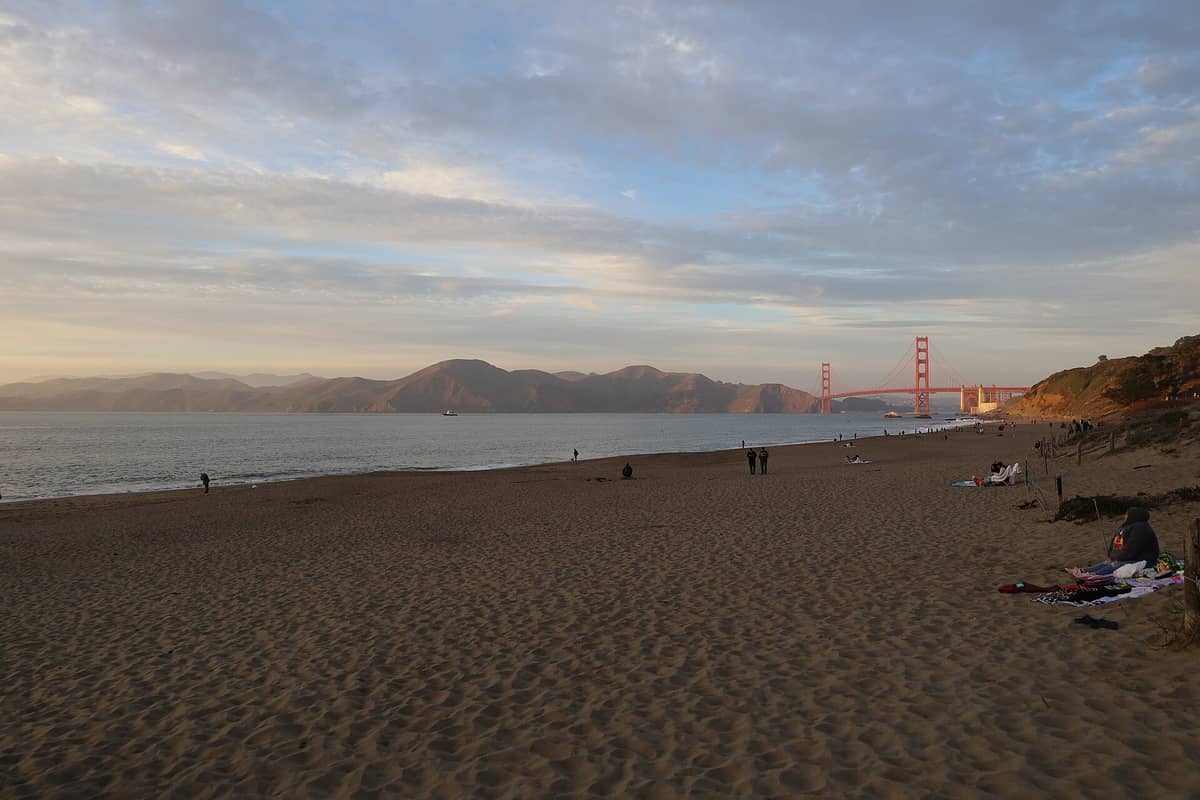
Baker Beach is a one-mile strip of Pacific coastline at the western edge of the Presidio, managed jointly by the Presidio Trust and the National Park Service as part of the Golden Gate National Recreation Area. It sits beneath a steep bluff line, with the south tower of the Golden Gate Bridge visible close enough to photograph without a telephoto lens. That proximity is the single quality that sets Baker Beach apart from every other San Francisco shoreline.
The beach faces west-northwest toward the Pacific, which means the water is cold (typically in the low 50s Fahrenheit year-round), the surf is unpredictable, and rip currents are a documented hazard. Swimming is strongly discouraged by the NPS, and there are no lifeguards. Arrive expecting to walk, sit, and look — not to swim.
⚠️ What to skip
No lifeguards are on duty at Baker Beach. Strong rip currents and cold water make swimming dangerous. The NPS advises against entering the water here.
The View and the Setting
From the northern end of the beach, the south anchorage and tower of the Golden Gate Bridge loom at close range, giving a different perspective than the postcard view from Marin or the panoramic shot from Twin Peaks. You are looking up at the bridge's cable geometry from below and to the side. On clear days, the Marin Headlands roll behind the bridge in deep green. On foggy mornings, the top of the tower disappears into the marine layer while the cables hang into visibility below it — a photographic situation that changes by the minute.
The beach itself is composed of medium-grain sand with scattered rock outcroppings toward the north end. Driftwood accumulates along the upper beach, and the cliffs behind are layered with the red chert and serpentinite that characterize Presidio geology. The Fort Point National Historic Site is visible just across the water at the bridge's base, and on calm days you can hear the low groan of the bridge cables in the wind from where you stand.
The southern half of the beach is more sheltered from wind and draws more visitors with dogs, kite-flyers, and people reading on blankets. The northern tip is rockier and typically quieter, and it offers the best unobstructed bridge sightlines. Most photographers who make the trip head straight there. Note that the far northern end is a long-standing clothing-optional area (acknowledged by the NPS), which catches some visitors by surprise.
Tickets & tours
Hand-picked options from our booking partner. Prices are indicative; availability and final rates are confirmed when you complete your booking.
Sonoma and Napa Valley wine tour from San Francisco
From 127 €Instant confirmationFree cancellationGo City | San Francisco Explorer Pass
From 76 €Instant confirmationFree cancellationMuir Woods and Sausalito guided tour with transportation
From 82 €Instant confirmationFree cancellationSan Francisco CityPASS
From 77 €Instant confirmationFree cancellation
How the Experience Changes by Time of Day
Early mornings (before 9 a.m.) on Baker Beach are genuinely peaceful. The parking lots are mostly empty, the light comes in low from the southeast, and the fog often sits on the water in layers. Dog walkers and runners are usually the only other people around. The sand is cold and damp, and the smell of brine and eucalyptus from the Presidio trail above mixes at the cliff base.
By late morning on weekends, the lots fill up and families with children spread out along the middle stretch. The afternoon brings consistent wind from the northwest, typically picking up around 1-2 p.m. That wind scours the beach with fine sand at knee level, which is relevant if you plan to stay for a while — a windbreak or at minimum a jacket becomes useful. Sunset visits are popular and can be dramatic, but arrive at least 30 minutes before sundown to find parking, as the lots close roughly one hour after dark and gate you in if you overstay.
💡 Local tip
Late summer and early fall often bring clearer, warmer conditions in San Francisco than June and July. If you want a clear bridge view, aim for a calm morning in late summer or early fall.
Getting There and Getting Around
Baker Beach sits within the Presidio, accessed via Lincoln Boulevard through the park, then south on Bowley Street to Gibson Road. Parking is available in several lots near the beach access stairs and along Bowley Street. On sunny weekends, these lots reach capacity by 10-11 a.m. The main lots close approximately one hour after sundown, so check the posted gate times if you plan an evening visit.
By public transit, Muni Route 29 (Sunset) stops at Lincoln Boulevard and Bowley Street, which is within easy walking distance of the beach access. The Presidio's free South Hills shuttle also stops directly at Baker Beach and connects to other Presidio destinations and transit hubs — check the Presidio Trust website for current shuttle schedules, as seasonal adjustments apply.
The walk from the parking area to the waterline takes about two to three minutes down a paved path and wooden stairs. The sand itself is relatively firm near the waterline and looser higher up the beach. Visitors using wheelchairs or mobility aids should contact the Presidio Trust directly for current accessibility information, as the beach's sandy surface and stairway access present limitations not detailed in general public materials.
Historical Context: A Military Beach Turned Public Shoreline
Baker Beach takes its name from Edward Dickinson Baker, a U.S. Senator from Oregon and close friend of Abraham Lincoln who was killed at the Battle of Ball's Bluff in 1861. The beach was part of the former U.S. Army post at the Presidio, which operated continuously for over a century before the Army transferred it to the National Park Service in 1994.
The Presidio's military history is visible from the beach: concrete battery emplacements from the late 19th and early 20th century are set into the bluffs above the northern end, part of the coastal defense network that also included Fort Point directly under the bridge. Battery Chamberlin, located at the north end of Baker Beach, contains a restored 6-inch M1905 rifled gun on a disappearing carriage designed to lower below the parapet after firing, protecting it from return fire. The gun is occasionally operated during ranger demonstration days.
The transfer of the Presidio to the NPS and later the Presidio Trust opened this coastline to the public for the first time in over 150 years of restricted military access. What had been an off-limits Army post beachfront is now one of the few stretches of urban Pacific coastline in the United States where you can stand on the sand and look up at a suspension bridge tower.
Photography at Baker Beach
The northern end of the beach, reached by walking past the Battery Chamberlin access point, puts the Golden Gate Bridge at roughly 45 degrees to your right when you face northwest. This angle works well for wide-angle compositions that include both the bridge and the foreground water. Sunrise doesn't light the bridge directly (the sun rises to the east, behind the bridge from this vantage), but the soft pre-dawn light on fog can produce compelling results.
For a different angle on the same bridge, Crissy Field to the east puts the full bridge span in frame with the bay behind it, while the Golden Gate Bridge itself offers the view from above. Baker Beach is the closest low-angle waterfront perspective available without a boat.
Wind and spray become relevant for camera gear by early afternoon. A UV filter for front element protection is worth using, and lens cloths are practical. The light at Baker Beach is often contrasty and bright off the water between 10 a.m. and 2 p.m., making polarizing filters useful for cutting glare and saturating the water color.
What to Wear and Bring
San Francisco's climate is Mediterranean with a strong marine influence — summers average in the mid-60s Fahrenheit (around 18-19°C), but ocean wind can make Baker Beach feel much colder, especially in the afternoon. A windproof layer is the single most important item to bring regardless of what the forecast says. Fog burns off at unpredictable times and can return quickly, and the beach is directly exposed to the prevailing northwest wind with no shelter except the cliffs at the back.
There are restrooms near the main parking area. No food or drink vendors operate on the beach, so bring your own water and snacks. Dogs are welcome and off-leash areas exist in parts of the Presidio, but leash rules vary by zone — check current Presidio rules before assuming the beach itself is off-leash.
ℹ️ Good to know
Baker Beach has restroom facilities near the main parking area. There are no food concessions on site. Dogs are welcome, but leash rules vary by zone — check current Presidio rules before assuming the beach itself is off-leash.
Insider Tips
- Battery Chamberlin at the north end of the beach has a restored 19th-century disappearing gun. The Golden Gate National Parks Conservancy runs periodic demonstrations — check the Parks Conservancy events calendar before your visit if this interests you.
- Parking lots close about one hour after sundown and the gates lock. If you plan a sunset visit, note the exact closing time posted at the lot entrance when you arrive, and leave before it.
- The Presidio South Hills shuttle is free and stops directly at Baker Beach. Using it avoids the weekend parking scramble entirely and connects you to other Presidio sites in one trip.
- Midweek mornings in September and October give you the beach almost to yourself, clearer skies than June or July, and warmer temperatures. This window is the practical peak season for Baker Beach visits.
- The cliffs above the beach have Presidio hiking trails that look down onto the beach and bridge. The walk from Baker Beach north along the bluff toward the Golden Gate Bridge gives progressively closer views of the south tower and is worth the extra 20-30 minutes.
Who Is Baker Beach For?
- Photographers wanting a low-angle, close-range view of the Golden Gate Bridge
- Walkers and hikers using Baker Beach as part of a longer Presidio trail loop
- Families looking for a free, open outdoor space with restroom facilities
- Dog owners seeking a large, open beach with Presidio trail access
- Visitors who want to understand San Francisco's military coastal defense history
Nearby Attractions
Other things to see while in The Presidio:
- Crissy Field
Crissy Field is a restored tidal marsh and beachfront promenade on the northern shore of the Presidio, offering unobstructed views of the Golden Gate Bridge and San Francisco Bay. Free to enter and open around the clock, it rewards early risers and late-afternoon walkers in equal measure.
- Fort Point National Historic Site
Fort Point National Historic Site sits directly beneath the south anchorage of the Golden Gate Bridge at the southern entrance to San Francisco Bay, a rare surviving example of American Civil War-era masonry fortification. Managed by the National Park Service, it offers free admission, dramatic coastal views, and four floors of military history.
- Golden Gate Bridge
The Golden Gate Bridge spans the strait between San Francisco and Marin County in one of the most recognizable silhouettes in the world. Free to cross on foot or by bike, it rewards visitors who plan around the fog, arrive early, and know where to stand.
- Walt Disney Family Museum
Housed in a converted 1897 military barracks inside the Presidio, the Walt Disney Family Museum traces Walt Disney's life from his Midwest childhood to the creation of a global entertainment empire. This is not a theme park experience. It is a closely curated biographical museum with real depth, designed for people who want to understand the man behind the myth.