Marina Green: San Francisco's Best Waterfront Park
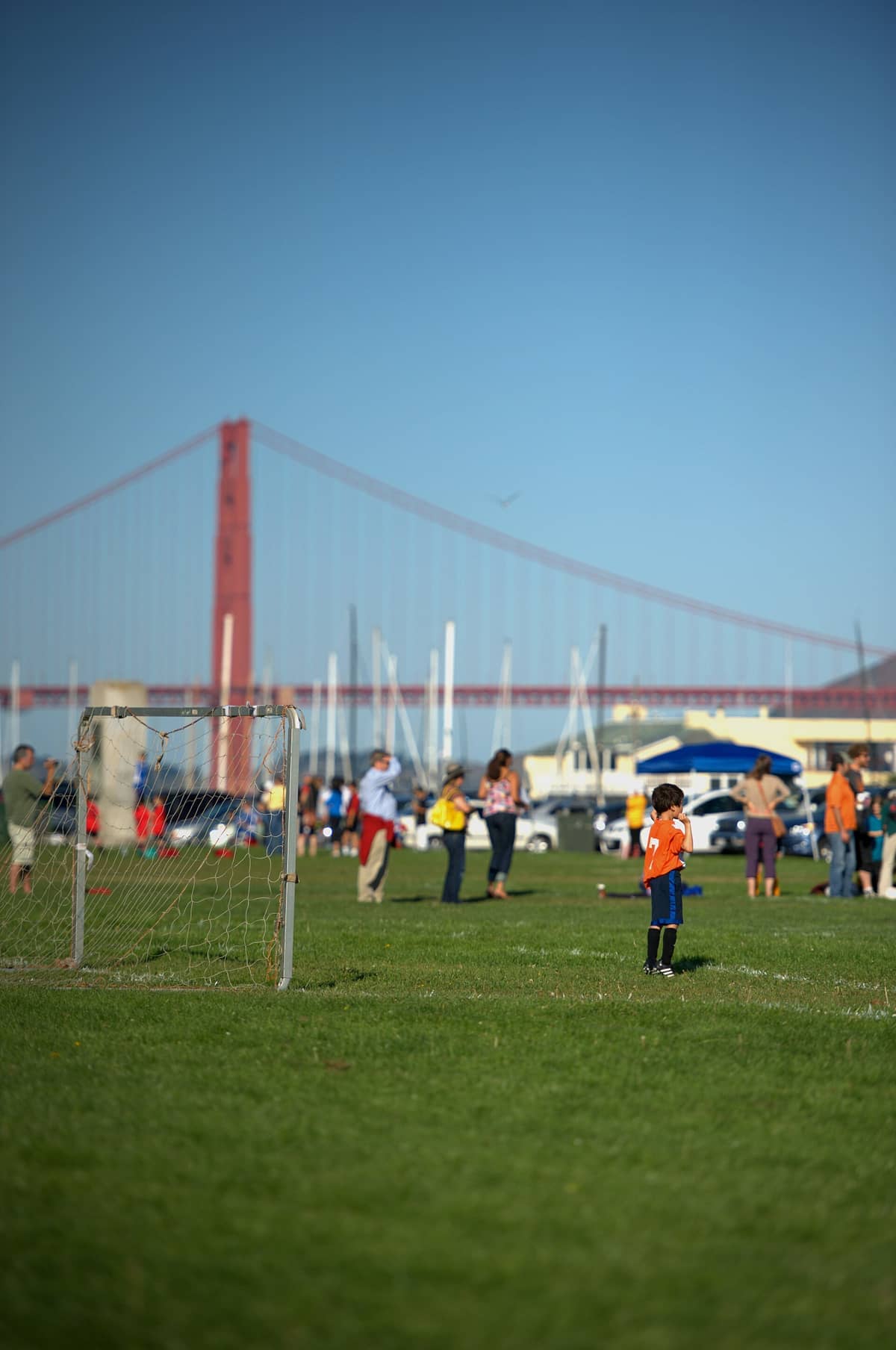
A flat, open 74-acre lawn hugging San Francisco Bay in the Marina District, Marina Green draws joggers, kite flyers, picnickers, and bay-watchers year-round. Entry is free, views of the Golden Gate Bridge are unobstructed, and the park connects directly to Crissy Field and Fort Mason.
Quick Facts
- Location
- Marina Boulevard, Marina District, San Francisco, CA 94123 (fronting the bay between Fort Mason and the Presidio)
- Getting There
- Muni bus routes serving the Marina District; no direct Muni Metro or BART stop
- Time Needed
- 30 minutes to 2 hours depending on activity
- Cost
- Free – no admission charge
- Best for
- Joggers, kite flyers, sunset watchers, families with open-space needs
- Official website
- sfrecpark.org/837/Marina-Green
What Marina Green Actually Is
Marina Green is a 74-acre public lawn running along the southern shore of San Francisco Bay in the Marina District, positioned between Fort Mason to the east and the Presidio to the west. It is one of the largest uninterrupted stretches of open grass in San Francisco, and that openness is the point. No formal gardens, no admission gates, no ticketed areas: just a wide, flat expanse facing the water, with unobstructed sightlines toward the Golden Gate Bridge, Marin Headlands, and, on clear days, Mount Tamalpais beyond.
The park sits directly along Marina Boulevard and borders the municipal small-craft marina from which the surrounding neighborhood takes its name. Paved paths run along the waterfront edge, making it suitable for cyclists, joggers, and anyone using a wheelchair or stroller. The lawn itself is firm enough for informal sports year-round, though the grass can be wind-flattened and cool underfoot in the morning.
💡 Local tip
Marina Green is open to the public at all hours with no admission fee. Permitted events, including amplified sound, are generally limited to daytime hours under San Francisco Recreation and Parks rules, so early morning visits are reliably quiet.
The Experience at Different Times of Day
Morning visits before 9 a.m. have a distinct character. The bay is usually glassy, the fog either still settled low over the bridge towers or just beginning to lift, and the park belongs mostly to solo runners and dog walkers moving at pace. The air carries salt and a faint smell of seaweed at low tide. Benches along the waterfront path face almost due north, directly toward the bridge, and sitting here as the light shifts from grey to pale gold is one of the quieter experiences available in a city that is otherwise rarely quiet at any hour.
By mid-morning on weekends, particularly in autumn when San Francisco temperatures peak (typically September and October under San Francisco's warm-summer Mediterranean climate), the lawn fills steadily. Kite flyers are a consistent presence: the bay wind funnels reliably from the west, and the flat open ground gives kites room to climb. Families set up on blankets near the midpoint of the park, informal soccer games appear toward the eastern end, and a steady stream of joggers uses the path along the water's edge.
Summer afternoons are where expectations need calibrating. San Francisco's June through August is notoriously cool and foggy due to the Pacific marine layer. Temperatures at Marina Green on a July afternoon can sit in the low 60s Fahrenheit (around 16°C), with a sharp onshore wind that makes a light jacket non-optional. The park does not feel warm or beach-like in summer; it feels coastal and invigorating, which is a different thing. Visitors expecting warm-weather lounging should note this difference.
Sunset from the western end of Marina Green, particularly in September and October, can be exceptional. The sun descends roughly in line with the Golden Gate Bridge, casting the towers into silhouette. This draws photographers in numbers, and the waterfront path gets crowded for a 30-minute window on clear evenings. Arrive early to secure a position on the low seawall without navigating around tripods.
Tickets & tours
Hand-picked options from our booking partner. Prices are indicative; availability and final rates are confirmed when you complete your booking.
Sonoma and Napa Valley wine tour from San Francisco
From 127 €Instant confirmationFree cancellationGo City | San Francisco Explorer Pass
From 76 €Instant confirmationFree cancellationMuir Woods and Sausalito guided tour with transportation
From 82 €Instant confirmationFree cancellationSan Francisco CityPASS
From 77 €Instant confirmationFree cancellation
Historical and Geographical Context
The land beneath Marina Green did not exist before the early 20th century. The entire Marina District was created from bay fill, much of it from the debris of the 1906 earthquake and fire, then developed in anticipation of the 1915 Panama-Pacific International Exposition, which was held on adjacent land near what is now the Palace of Fine Arts. The fill material, which included rubble and organic debris, contributed to the area's significant structural damage during the 1989 Loma Prieta earthquake, when liquefaction caused buildings across the Marina to collapse. Marina Green and the surrounding open spaces functioned in the aftermath as staging areas for rescue and relief operations.
Today the park is administered by the San Francisco Recreation and Parks Department and remains one of the most consistently used open spaces on the northern waterfront. Its 74 acres make it substantially larger than it appears on most maps, partly because the lawn blends continuously with adjacent Crissy Field to the west, creating what feels like an unbroken green corridor from Fort Mason toward the Golden Gate.
Marina Green sits at the eastern edge of a broader waterfront corridor that includes Crissy Field to the west and Fort Mason to the east. Understanding this geography matters: the three areas connect by path and together offer several miles of bay-edge walking without retracing steps.
What to Do Here
Marina Green is primarily a place to be in, not a place to do structured activities at. Its appeal is the combination of open sky, bay wind, unobstructed water views, and the particular quality of light that a north-facing shoreline in San Francisco produces. Within that, specific activities cluster reliably.
- Kite flying: The consistent westerly wind makes this one of San Francisco's most reliable kite-flying spots. Lightweight sport kites and large decorative kites both perform well here.
- Running and cycling: The paved waterfront path connects to Crissy Field and the path toward the Golden Gate Bridge, giving runners and cyclists a flat, scenic route of several miles.
- Picnicking: The lawn is open and free of formal zones. The western end tends to be less crowded mid-week.
- Wave Organ visit: The Wave Organ, a small acoustic installation, sits at the tip of the marina's stone jetty at the eastern end and is walkable from the park.
- Birdwatching: The shoreline and marina attract shorebirds, brown pelicans, and the occasional harbor seal hauled out on the rocks near the jetty.
The Wave Organ at the end of the marina jetty is easy to miss and worth the short detour: a stone structure with pipes that amplify the sound of the bay's tidal movement, best experienced near high tide when the sound is most active.
Getting There and Practical Logistics
Marina Green does not sit on a BART or Muni Metro line. The most practical public transit options are Muni bus routes that serve the Marina District; the 30 Stockton and 28 19th Avenue lines run nearby, depending on your point of origin. Check the SFMTA trip planner for current routes and stops before visiting, as service patterns can change. The park is reachable by bicycle from much of the city via the Embarcadero and waterfront paths, and this is often the most practical approach from downtown or Fisherman's Wharf.
Street parking along Marina Boulevard exists but is limited and fills quickly on weekends and during events. A large parking lot serves the park on the western side, but it closes during major events including the Fourth of July. If driving, arrive before 9 a.m. on weekends or plan to park in the surrounding neighborhood and walk.
Restroom facilities are available within the park. The surrounding Marina District has cafes and restaurants along Chestnut Street, roughly four blocks south of the waterfront, which is a natural extension of a visit here. Bring layers regardless of the season: the wind off the bay is persistent, and even on the clearest days the temperature at the waterfront edge will be several degrees cooler than in the city's sheltered neighborhoods.
⚠️ What to skip
Summer fog is not a rumor. On many July and August mornings the Golden Gate Bridge towers are completely obscured from Marina Green. For clear bridge views, September and October offer the best combination of warmth, visibility, and lower wind.
Photography Notes
The most photographed compositions from Marina Green use the long horizontal line of the bay to frame the Golden Gate Bridge at the left edge of the frame, with Marin Headlands providing the backdrop. Wide-angle lenses in the 24–35mm range work well from most positions along the waterfront path. The bridge is roughly 1.5 miles northwest, close enough to read in detail with a standard lens but distant enough to situate in its full landscape context.
For shooting the bridge at golden hour, position yourself at the western end of the park near the point where the path continues into Crissy Field. This gives a slightly different angle than the standard Marina Green shot and avoids the crowd that collects at the main lawn during sunset.
If bridge photography is the primary goal, the viewpoints at Fort Point and Baker Beach offer closer perspectives and different compositional options worth comparing.
Who Will Appreciate This and Who Will Not
Marina Green is well-suited to travelers who want open space, bay air, and genuine views without admission fees or queues. It rewards those who are willing to sit still for a while or who have energy to burn running or cycling. Families with children who need room to run will find it more satisfying than most of San Francisco's smaller neighborhood parks.
Visitors on a short trip who are primarily checking off iconic landmarks may find Marina Green underwhelming. It is not a spectacle. There are no monuments, no facilities beyond restrooms, and no scheduled programming on most days. Its value is atmospheric rather than documentary: this is what San Francisco's relationship with its bay actually looks like, stripped of tourist infrastructure. Travelers who find that appealing will leave satisfied. Those who need activities or interpretation boards to anchor a visit may be better served by nearby Fort Mason, Crissy Field, or the Exploratorium.
The Palace of Fine Arts is a five-minute walk south from the western end of Marina Green and pairs naturally with a visit, particularly for visitors interested in the area's pre-World War I architectural heritage and the 1915 Panama-Pacific International Exposition legacy.
Insider Tips
- The Wave Organ at the eastern jetty tip is best experienced within an hour of high tide on a day with some bay chop; the acoustics are nearly silent at low tide on flat days. Check a tide table before visiting specifically for that.
- Kite shops and rentals are not available at the park itself. If you want to fly a kite, bring your own or purchase one in advance; sport kite shops exist in the city but not within walking distance.
- The parking lot on the western side of Marina Green closes for the Fourth of July and other large permitted events. On those days, public transit or bicycle access is significantly easier than driving.
- For the clearest Golden Gate Bridge views with the least wind, aim for a weekday morning in late September or October after 9 a.m. when the fog has typically burned off but before the afternoon wind picks up.
- The low concrete seawall along the northern edge of the park is a better vantage point for bird-watching than the lawn itself; brown pelicans glide along the bay surface regularly, and the harbor seal sightings near the jetty rocks are most frequent in early morning.
Who Is Marina Green For?
- Runners and cyclists wanting a flat waterfront route with bay views
- Families with young children who need open space to move freely
- Kite enthusiasts taking advantage of consistent bay wind
- Photographers seeking Golden Gate Bridge context shots with landscape framing
- Visitors wanting a slow, fee-free afternoon on San Francisco Bay
Nearby Attractions
Other things to see while in Marina District:
- Fort Mason Center for Arts & Culture
Perched on San Francisco's northern waterfront, Fort Mason Center for Arts & Culture transforms a former U.S. Army post into one of California's most eclectic cultural campuses. Dozens of resident arts organizations, a beloved farmers market, and sweeping bay views make it far more than a venue — it's a neighborhood institution that rewards a leisurely afternoon.
- Palace of Fine Arts
The Palace of Fine Arts is a monumental Beaux-Arts rotunda surrounded by a tranquil lagoon in San Francisco's Marina District. Originally built for the 1915 Panama-Pacific International Exposition, it is one of the few surviving structures from that World's Fair. The outdoor grounds are free to enter at any hour, making it one of the most accessible landmarks in the city.
- Wave Organ
Built in 1986 by artist Peter Richards and stonemason George Gonzales, the Wave Organ is a free outdoor acoustic instrument on a rocky jetty in San Francisco's Marina District. Twenty-five pipes channel bay water to produce sounds that shift with every tide cycle, making it one of the most unusual public artworks on the West Coast.