San Francisco Cable Cars: The Complete Guide to Routes, Fares & Riding Like a Local
San Francisco's cable car system is one of the most recognizable transit networks in the world — and also one of the most misunderstood. This guide covers all three operating lines, how fares and passes work, the best times to ride, and clear guidance on avoiding the worst queues.
Plan and book this trip
Tools from our partner Travelpayouts help you compare flights and hotels. If you book through them, we may earn a commission at no extra cost to you.
Flights
Hotels map
TL;DR
- San Francisco operates three cable car lines: Powell-Hyde, Powell-Mason, and California Street.
- Single-ride fares apply per boarding; Muni Visitor Passports (when available in 1, 3, or 7-day versions) can cover unlimited cable car rides and other Muni services and may pay off quickly if you ride frequently.
- The Powell-Hyde line offers the best scenery — steep hills, bay views, and a terminus near Ghirardelli Square — but also the longest queues.
- Avoid the Powell & Market terminal on weekend mornings; board mid-route or ride before 9am or after 7pm for minimal waits.
- Cable cars are not the same as Muni streetcars or light rail — they are a separate, manually operated system pulled by underground cables and run daily from approximately 7am to 11pm.
A Brief History Worth Knowing
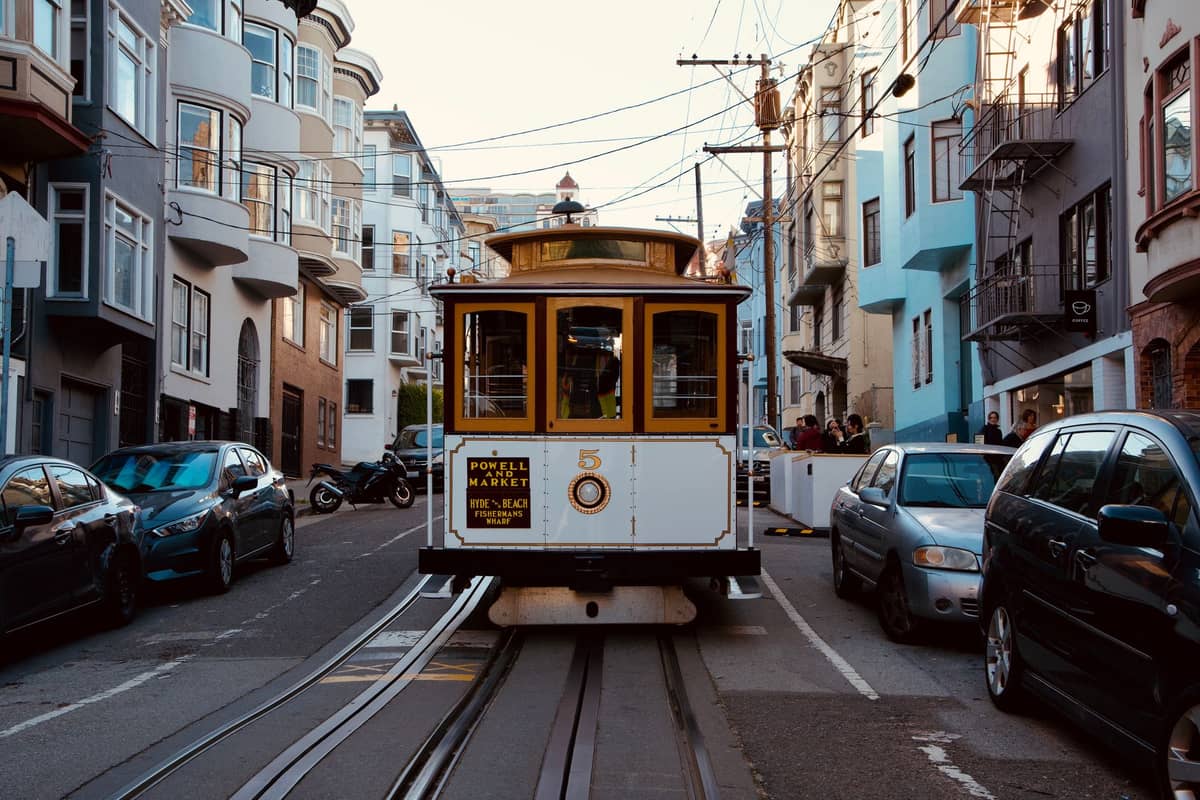
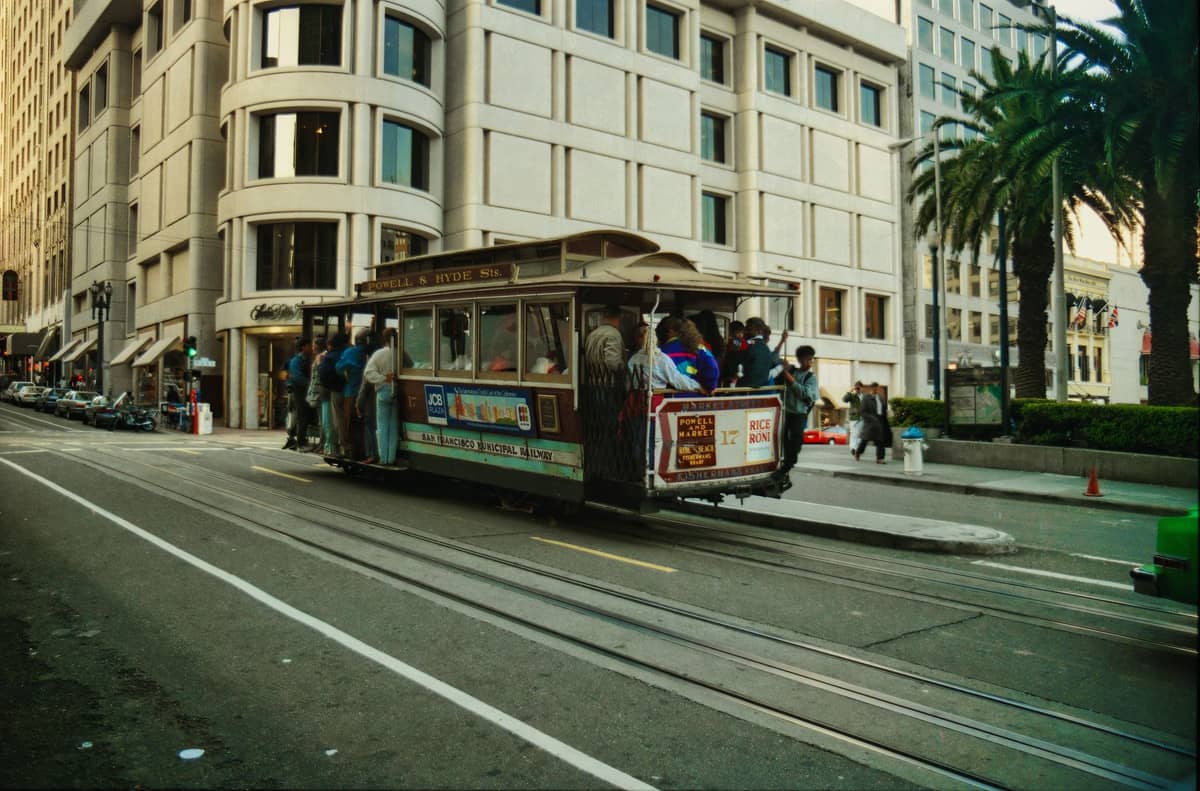
The San Francisco cable car system is widely regarded as the world’s last manually operated cable car system, and it has been a National Historic Landmark since 1964. It was invented by Andrew Hallidie, who tested the first line on Clay Street in 1873 — originally as a practical solution to the city's brutal hills, not as a tourist attraction. At its peak, San Francisco had over 20 cable car lines crisscrossing the city. Today only three remain, all operated by the San Francisco Municipal Transportation Agency (SFMTA) under the broader Muni network.
The system works on a deceptively simple principle: a continuously moving underground cable runs beneath the street at a constant speed of about 9 mph. The grip operator uses a large mechanical clamp (the grip) to grab or release the cable, controlling the car's speed. This is fundamentally different from electric streetcars or light rail, which run on overhead power. The Cable Car Museum at the Washington-Mason carbarn houses the actual winding machinery that keeps all three lines moving simultaneously — it is free to visit and genuinely worth 30 minutes of your time.
ℹ️ Good to know
The Cable Car Museum at 1201 Mason Street is free to enter and shows you the actual underground cable winding machinery in action. It is open daily, typically during daytime hours, and gives real context to how the system works before you ride it.
The Three Lines: Routes and What Each One Is Good For
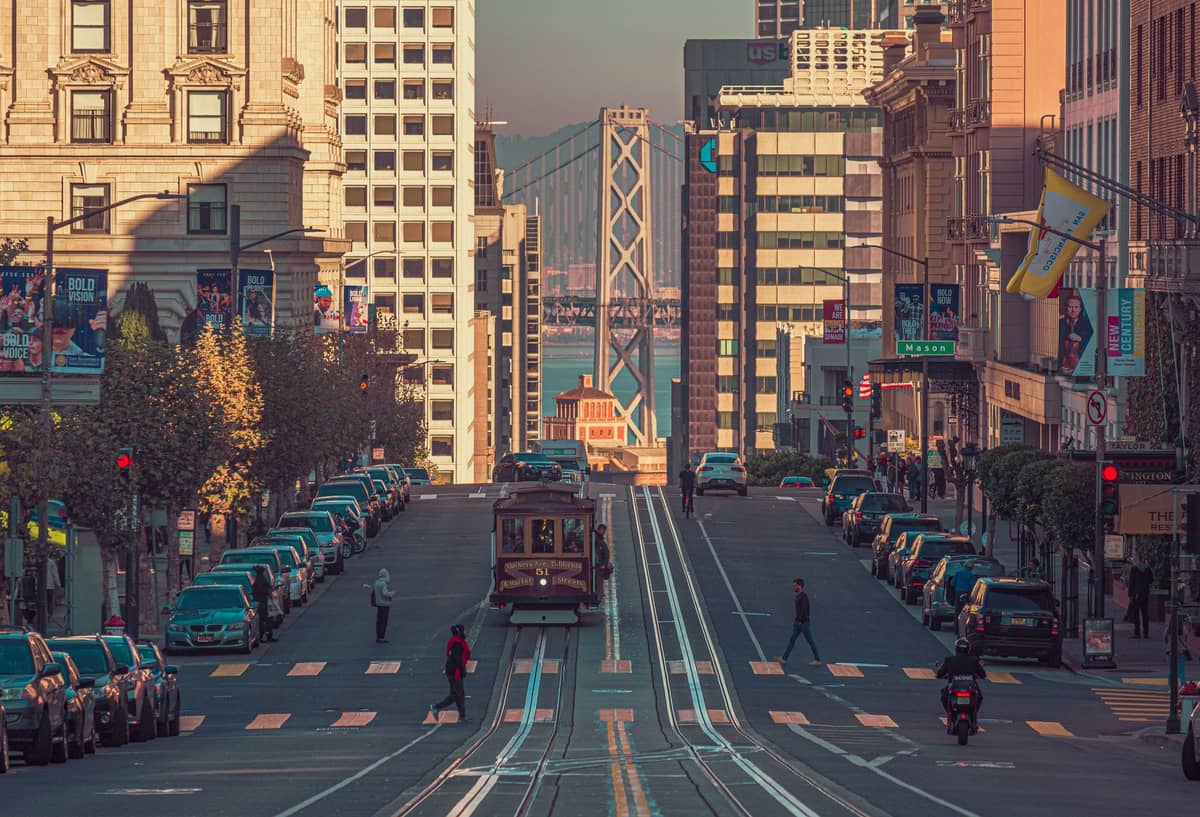
Each of the three cable car lines serves a different corridor and delivers a different experience. Knowing which one fits your plans saves time and disappointment.
- Powell-Hyde (PH) Runs from Market & Powell Streets near Union Square north and west over Russian Hill, down to Hyde & Beach Streets at Aquatic Park, steps from Ghirardelli Square and the waterfront. This is the most scenic route — it crosses the steepest grades and delivers panoramic bay views from the top of Russian Hill. It is also the most crowded. Expect waits of 30-60 minutes at the Powell & Market turnaround on summer weekends.
- Powell-Mason (PM) Also starts at Market & Powell but branches east of Russian Hill, ending at Taylor & Bay Streets near the center of Fisherman's Wharf. The scenery is slightly less dramatic than Powell-Hyde, but it deposits you closer to Pier 39 and the main Fisherman's Wharf attractions. Queues at the southern terminus are typically similar to Powell-Hyde.
- California Street (CA) Runs east-west along California Street from the Embarcadero/Drumm Street area in the Financial District, up through Chinatown and over Nob Hill, terminating at Van Ness Avenue. This is the locals' line. It carries far fewer tourists, the wait is almost never more than a few minutes, and it passes through genuinely residential and commercial San Francisco. If you want to ride a cable car without the circus of the Powell lines, take the California Street car.
The Powell-Hyde line is the right choice if you are heading toward Fisherman's Wharf and want the most photogenic ride. The California Street line is better if you are exploring Nob Hill or want to connect to the Chinatown corridor from the Embarcadero without dealing with a 45-minute queue.
Fares, Passes, and Whether a Visitor Passport Is Worth It
Cable car fares are set by SFMTA and are higher than a standard Muni bus or Metro ride, reflecting the system's unique operational cost. A single boarding costs $9 per adult at the time of research, but fares do change periodically — always verify the current rate on the SFMTA website before your trip. Children under 5 ride free, and there are reduced fares for seniors and people with disabilities.
You can pay the fare in cash directly to the conductor onboard when boarding along the line, or load funds onto a Clipper Card (the Bay Area's transit smart card). At the Powell & Market, Bay & Taylor, and Hyde & Beach terminals between 8 a.m. and 8 p.m., you must purchase your fare in advance. The Clipper Card is the most practical option if you are also using BART, Muni buses, or Caltrain during your visit.
✨ Pro tip
If you plan to ride the cable cars more than twice in a day, or if you are using Muni buses and Metro alongside them, a Muni Visitor Passport (when available in 1-day, 3-day, and 7-day versions) can pay for itself. The passport covers unlimited rides on all Muni services including cable cars. Pick one up at the SFMTA Visitor Information Center at Hallidie Plaza or at the airport; some hotel concierge desks may also sell them.
One practical note: the Muni Visitor Passport does not cover BART, even within San Francisco city limits. If you are arriving from SFO via BART or making cross-bay trips, budget separately for those fares. For a full picture of how to get around the city beyond cable cars, see the getting around San Francisco guide.
Operating Hours, Frequency, and When to Ride
All three cable car lines operate daily, including weekends and public holidays, and currently run approximately 7am to 11pm. Service frequency averages every 8 to 15 minutes depending on the time of day, though this can stretch longer during peak demand when cars are fuller.
SFMTA occasionally adjusts schedules for maintenance closures, special events, or emergencies. The agency posts service alerts on its website and on physical signs at major stops, so checking before a specific trip is worth the 30 seconds.
- Best time to ride with minimal queues: weekdays before 9am or after 7pm
- Worst time: Saturday and Sunday between 10am and 5pm, especially at Powell & Market
- Summer (June-August) is peak tourist season and also the foggiest: long queues with no guarantee of a sunny Bay view
- September and October offer the best combination of lower crowds and warmer, clearer weather — the best months to ride Powell-Hyde for views
- The California Street line rarely has meaningful queues at any time of year
💡 Local tip
To skip the Powell & Market terminal queue entirely, walk a few blocks north up Powell Street and board at an intermediate stop like Bush or Pine. The car is legally required to pick up passengers at all marked stops as long as there is room. This saves 20-40 minutes at peak times and is standard practice among regular riders.
Practical Riding Tips and Common Mistakes
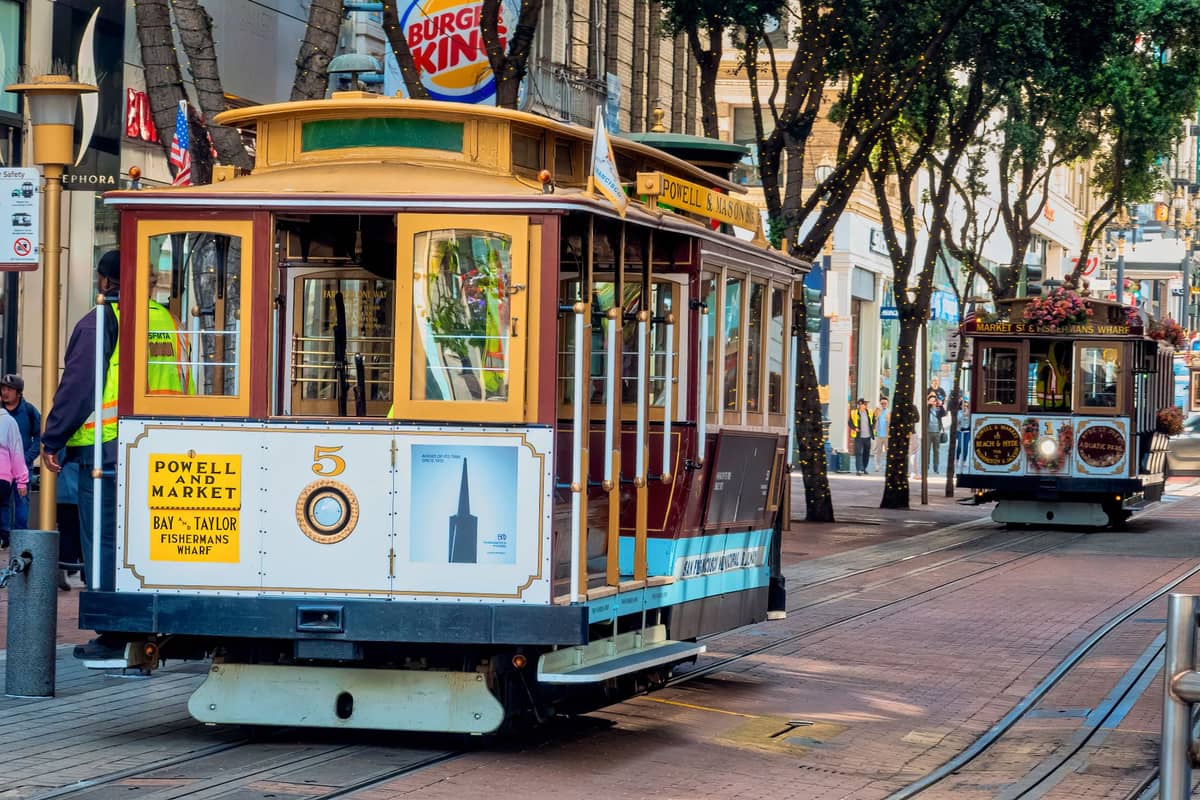
The turnaround terminals at each end of the Powell lines use manually operated wooden turntables — the car is rotated by hand by the crew. If you are at the Powell & Market end and want a good photo of this, arrive early in the morning when there is no crowd. It is one of the more genuinely interesting transit operations you will see anywhere.
Hanging off the outside of the car on the running boards is completely normal and legal. In fact, the running board is often the best seat in terms of views and fresh air. Just keep all limbs inside when the car is passing through narrow sections or near other vehicles, and hold on properly on the steep downhill sections. The grip operator will shout warnings when needed.
Cable cars do not appear on most third-party transit apps in the same way buses do. For real-time tracking, the SFMTA MuniMobile app and the agency's own website are the most reliable sources. If you are combining cable car travel with other Muni routes, the first-time visitor guide to San Francisco has a useful overview of how the different transit systems interact.
⚠️ What to skip
Cable cars have significant accessibility limitations for wheelchairs or mobility devices and often require climbing steps and standing on moving platforms. If you or someone in your group has mobility needs, the F-Market historic streetcar line (which runs from the Castro along Market Street and out to Fisherman's Wharf along the Embarcadero) offers a similar vintage transit experience on a fully accessible vehicle.
Combining Cable Cars With the Rest of Your Visit
The Powell-Hyde line drops you at Aquatic Park, within easy walking distance of Ghirardelli Square, the San Francisco Maritime National Historical Park, and the starting point for walks along the northern waterfront toward the Palace of Fine Arts and Crissy Field.
The California Street line is particularly useful for connecting to Grace Cathedral and the historic hotels atop Nob Hill, or for reaching the Embarcadero and Ferry Building Marketplace from higher up the hill without needing a rideshare.
If your trip is centered around seeing as much of the city as possible in a short window, a 3-day San Francisco itinerary can help sequence cable car rides logically alongside other major stops so you are not doubling back across neighborhoods.
FAQ
How much does a San Francisco cable car ride cost?
The standard adult single-ride fare is $9 per boarding, though SFMTA adjusts fares periodically. Always check the current rate at sfmta.com before your trip. Children under 5 ride free, and reduced fares apply for seniors and people with qualifying disabilities. A Muni Visitor Passport (1-day, 3-day, or 7-day, when available) covers unlimited cable car rides along with all other Muni services and will typically pay for itself if you ride the cable cars more than twice in a day.
Which cable car line has the best views?
The Powell-Hyde line is widely considered the most scenic. It crosses the steepest grades on Russian Hill, crests at a point where you can see the bay on a clear day, and terminates near Aquatic Park and Ghirardelli Square. For the best views, ride on the outside running boards and face north as you descend Hyde Street toward the waterfront. September and October offer the clearest skies; summer mornings are often foggy.
How do I avoid long waits at the cable car terminal?
The main queue at Powell & Market can run 30-60 minutes on summer weekends. The most effective workaround is to walk a few blocks north up Powell Street and board at an intermediate stop — Bush, Pine, or California Street. Cars must pick up passengers at all stops if space is available. Alternatively, ride before 9am or after 7pm on weekdays. The California Street line almost never has a meaningful wait.
Do cable cars run every day, including holidays?
Yes. All three lines operate daily including public holidays and currently run approximately 7am to 11pm. SFMTA occasionally adjusts these hours for maintenance or special events, so check the agency's website if you are planning around a specific departure time.
Is the San Francisco cable car system the same as the Muni Metro or streetcars?
No. Cable cars are a completely separate system from Muni buses, Muni Metro light rail, and the historic F-Market streetcars. Cable cars are pulled by a continuously moving underground cable at 9.5 mph and are manually operated by a grip operator. They have their own fare structure and are not interchangeable with a standard Muni bus transfer. They are operated by SFMTA under the broader Muni network, but they function and feel entirely different from any other transit in the city.