San Francisco Safety Tips for Tourists: What You Actually Need to Know
San Francisco is one of America's most rewarding cities to visit, but it rewards prepared travelers. This guide covers the real safety picture: car break-ins, petty theft hotspots, neighborhoods to navigate carefully, and practical strategies to keep your trip trouble-free.
Plan and book this trip
Tools from our partner Travelpayouts help you compare flights and hotels. If you book through them, we may earn a commission at no extra cost to you.
Flights
Hotels map
TL;DR
- Never leave anything in a parked car, not even in the trunk, not even for five minutes. Car break-ins are the city's most common tourist crime.
- Petty theft and pickpocketing are the main risks for visitors. Violent crime targeting tourists is rare but not impossible in certain areas after dark.
- The Tenderloin, parts of SoMa, and sections of the Mission District require extra awareness at night. Most tourist-heavy neighborhoods are generally fine during the day.
- Call 911 for emergencies, 311 for non-emergency city issues. Both lines are free from any US phone.
- Use licensed taxis or Uber/Lyft rather than unmarked cars. For getting around, the official Muni and BART network is safe and practical for most tourist routes.
The Real Safety Picture in San Francisco
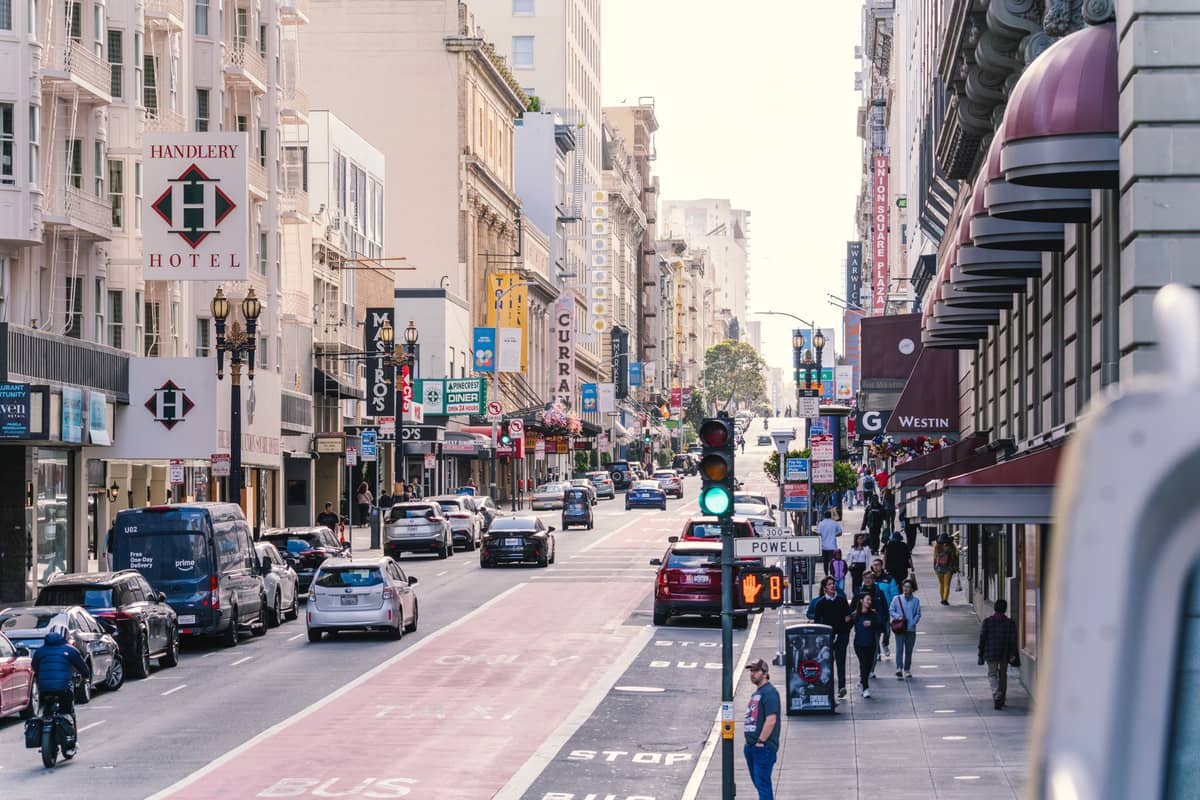
San Francisco safety tips for tourists tend to cluster around one honest reality: this is a city with a significant property crime problem, concentrated in specific areas and situations. Violent crime against tourists is relatively uncommon. What is common, and what catches visitors off guard, is opportunistic theft. Car break-ins, phone snatches, and bag grabs happen in broad daylight in busy areas. The city openly acknowledges this on its official visitor safety pages.
That context matters because it shapes how you should prepare. You do not need to be fearful walking around Fisherman's Wharf or the Financial District during the day. You do need to treat your belongings as if someone nearby is looking for an opening, because in some areas, someone is. Tourists are specifically identified as frequent targets in advisories from SF.gov and multiple consular services, largely because rental cars and distracted sightseers are easy marks.
ℹ️ Good to know
Emergency services in San Francisco: dial 911 for police, fire, or medical emergencies. For non-urgent issues such as noise complaints, street conditions, or general city information, call 311 (or +1-415-701-2311 from outside San Francisco). Both lines operate 24 hours a day and offer service in multiple languages.
Car Break-Ins: The Number One Tourist Crime
If there is one safety rule in San Francisco that has no exceptions, it is this: do not leave anything visible in a parked car. Not a jacket. Not a bag in the back seat. Not a phone charging cable. Local guidance from SF Travel, the city government, and independent tourism sites all repeat the same warning because it is that consistent a problem. Smash-and-grab thefts happen in tourist areas, near trailheads, in parking garages, and at metered spots on busy streets, often in full daylight.
The trunk is not a safe workaround. Thieves routinely watch people place items in a trunk before walking away and act within seconds. Rental cars are targeted specifically because they are identifiable and because tourists are statistically more likely to leave valuables inside. If you are driving, take everything with you or leave the car visibly empty with the glove compartment open to signal there is nothing worth breaking a window for.
- High-risk parking areas Anywhere near trailheads (Lands End, Marin Headlands), tourist parking lots at Fisherman's Wharf, street parking near Golden Gate Park, and anywhere you unload luggage from a rental car.
- Time of day does not protect you Smash-and-grabs happen in the middle of the day on busy streets. Nighttime is not uniquely dangerous for car crime; daytime visibility actually helps thieves spot what's inside.
- Best practice Use your hotel's valet or a staffed garage when possible. If you must use street parking, leave the car visibly empty and the glove compartment open.
Pickpockets and Street Theft
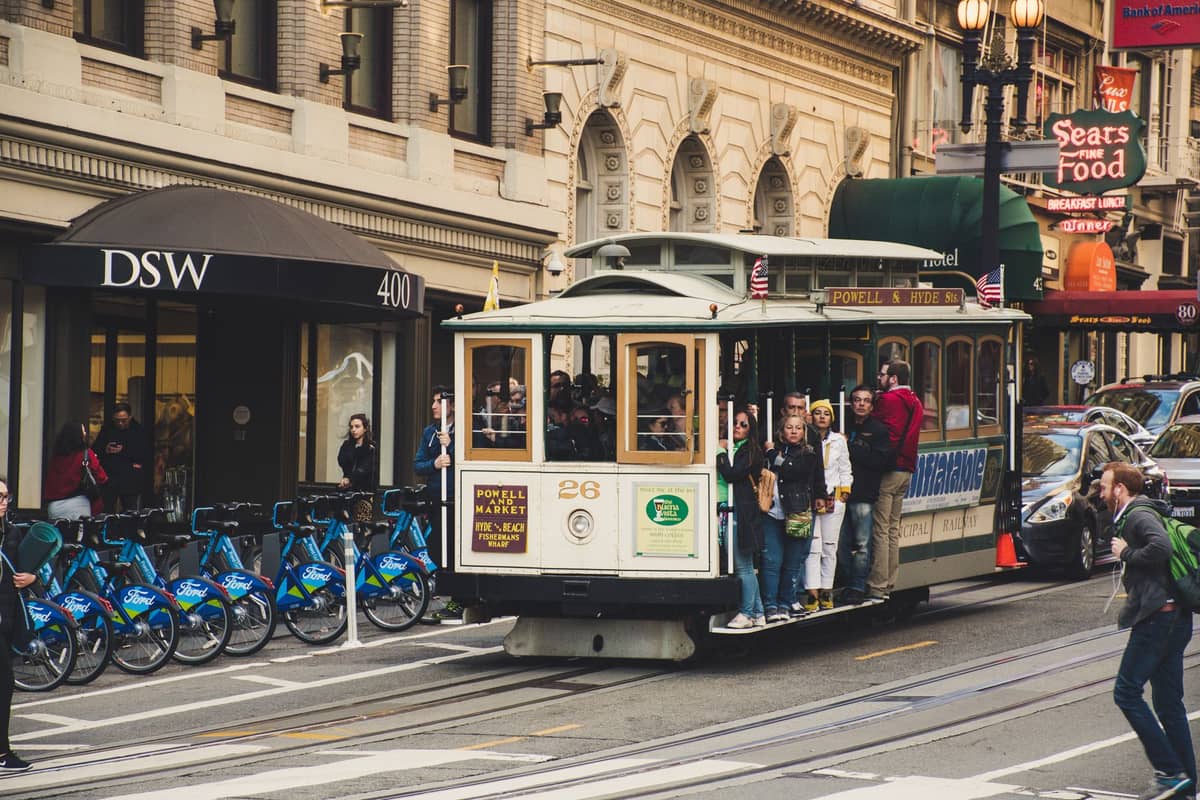
Pickpocketing concentrates where tourists concentrate: Fisherman's Wharf, Pier 39, BART trains (especially the SFO-to-downtown corridor), crowded cable car platforms, and the Ferry Building area during busy market days. Phone snatches from people walking while looking at their screens are increasingly common in commercial corridors.
The practical countermeasures are straightforward. Carry your wallet in a front pocket or a buttoned inner pocket. Keep bags on your lap in restaurants rather than hanging from the back of a chair. On the cable car, keep your phone pocketed when not actively using it. In dense crowds like the Saturday Ferry Plaza Farmers Market, wear a backpack on your chest or use a crossbody bag with the clasp facing inward.
💡 Local tip
If you use a RFID-blocking wallet or card sleeve, they are worth using in San Francisco's crowded transit environments. Contactless card skimming is a lower-profile but real risk in dense urban transit systems. This is a minor precaution, not a primary concern, but costs nothing to add.
Neighborhoods: Where to Be More Careful
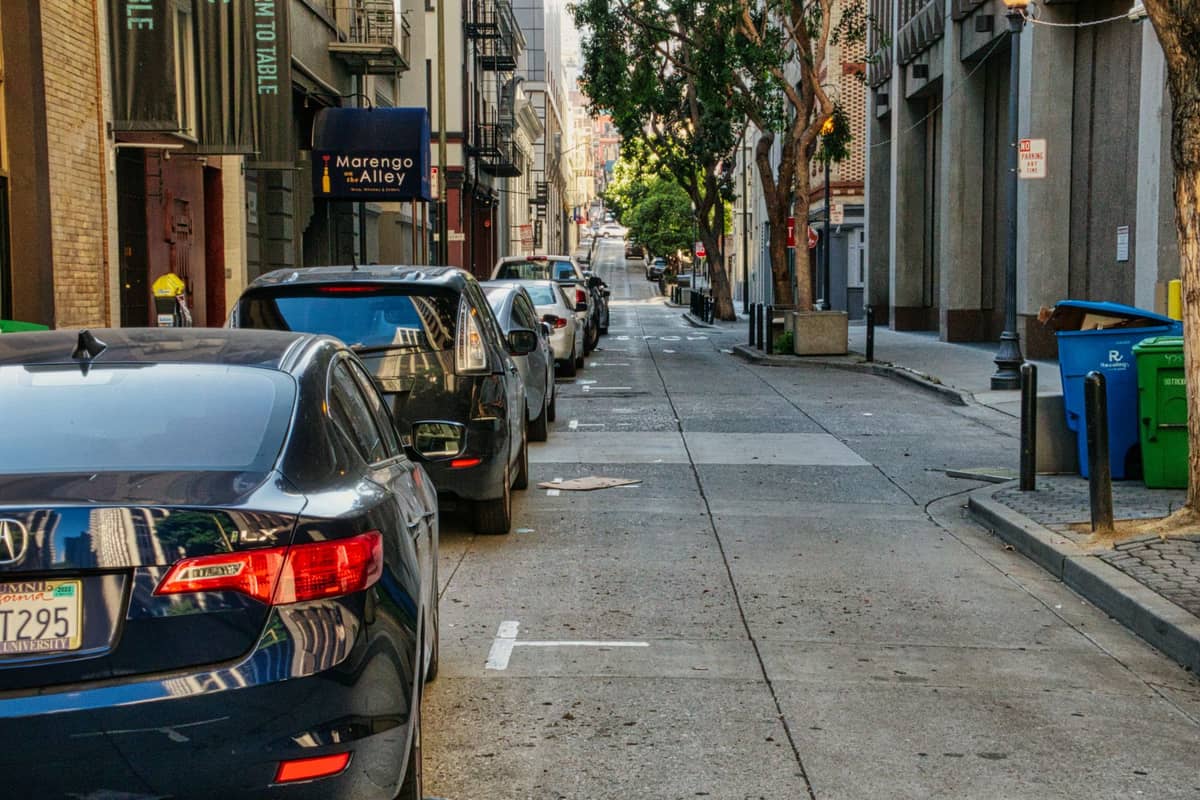
San Francisco's geography means very different street environments can sit two blocks apart. The Tenderloin, which borders Union Square to the west, has the city's highest concentration of street-level drug activity and can feel unsafe at any hour, particularly on side streets. Most tourists are fine walking through the main corridors during the day, but there is little reason to explore Tenderloin side streets unless you specifically intend to.
Parts of SoMa south of Market Street, and sections of the Mission District away from the main Valencia and 24th Street corridors, warrant more awareness at night. The Mission's main commercial strips and Dolores Park during the day are generally comfortable. Bayview-Hunters Point in the southeast is a residential and industrial area with limited tourist infrastructure and is not a destination most visitors need to navigate.
By contrast, the areas most tourists spend their time in, including North Beach, Nob Hill, the Marina, Chinatown, and the Embarcadero, are reasonable to walk in day or evening. Apply standard urban awareness: stay on well-lit streets, avoid looking lost while holding a phone up, and keep to busier sidewalks after dark.
- Extra caution advised Tenderloin (especially side streets off Turk, Ellis, Eddy at any hour), parts of 6th Street in SoMa, lower portions of the Civic Center area at night.
- Daytime fine, evening awareness needed Mission District away from Valencia/24th corridors, upper SoMa near the freeway underpasses, parts of the Tenderloin's main streets during off-hours.
- Generally comfortable for tourists Fisherman's Wharf, North Beach, Chinatown, Union Square (with bag awareness), Marina, Hayes Valley, Castro, Noe Valley, and the northern Embarcadero.
⚠️ What to skip
Union Square's main plaza is fine, but the blocks immediately west toward the Tenderloin change character quickly. If you are staying near Union Square and want to walk to dinner, go north toward Chinatown and North Beach, or south to the Embarcadero, rather than west after dark.
Getting Around Safely
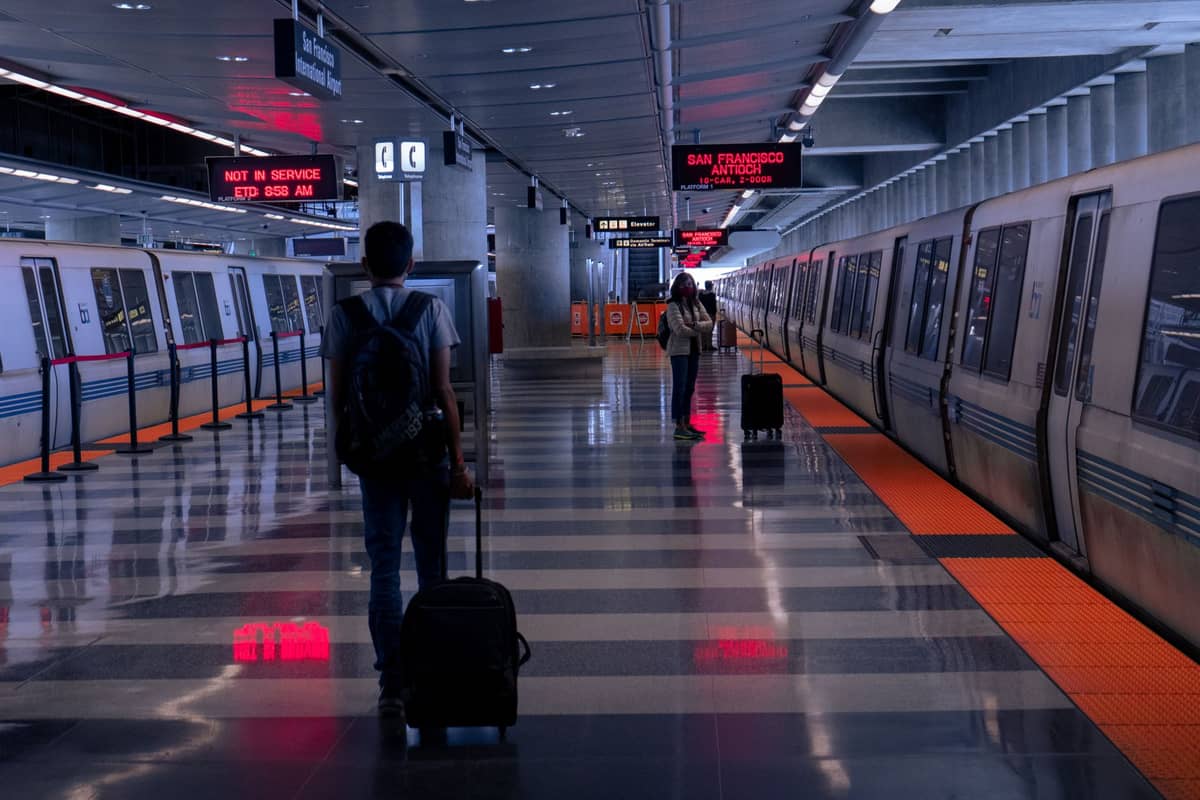
San Francisco's public transit network, operated by SFMTA and BART, is generally safe for tourists. BART connects SFO to downtown in about 30 minutes and serves the Mission District and SoMa. During peak hours and daytime, BART trains are heavily used and fine to ride. Late-night BART carriages can be sparse and occasionally uncomfortable; if traveling after midnight, Uber or Lyft are practical alternatives for getting back to your hotel.
The cable cars are worth riding as an experience, but the Powell Street boarding platforms are crowded and a known pickpocket location. Keep your phone in your pocket while waiting in line. For a full breakdown of routes, fares, and the best way to use them, see the San Francisco cable car guide. The historic F-Market streetcar along the Embarcadero is less crowded and a calmer way to move between the Ferry Building and Fisherman's Wharf.
For rideshare, use only Uber or Lyft arranged through their official apps. Do not accept rides from people who approach you at the airport or on the street offering transportation. At SFO, Uber and Lyft have designated pickup zones in the domestic and international terminals; follow the app's instructions rather than following someone who waves you toward a car.
Practical Safety Prep Before You Arrive
A few logistical steps before your trip make a real difference. Make digital copies of your passport, travel insurance documents, and accommodation confirmations and store them in cloud storage. Note your country's consulate or embassy address in San Francisco. If your home country participates in the US Visa Waiver Program, make sure your ESTA authorization is approved before departure. Travelers from non-VWP countries need a B-1/B-2 visitor visa arranged through the US Department of State.
On the practical side: tap water in San Francisco is potable and primarily supplied from the Hetch Hetchy Regional Water System, so you do not need to buy bottled water to be safe. The city runs on 120V/60Hz electricity with Type A and B plugs (the standard North American flat-pin format). International travelers from Europe, Asia, or Australia will need a plug adapter and possibly a voltage converter for certain devices. Tipping in restaurants and for taxi/rideshare drivers is standard practice in the US, with 18-20% of the pre-tax bill being the common baseline in San Francisco.
- Save the SF emergency number (911) and non-emergency line (311) in your phone before you arrive.
- Share your itinerary with someone at home, especially if you plan day trips or hiking.
- Carry a small amount of cash (USD) for places that do not accept cards, but avoid carrying large amounts on your person in tourist-dense areas.
- Travel insurance that covers theft and medical care is strongly recommended. US healthcare costs without insurance are extremely high.
- If your phone is stolen, you can file a police report online through the SFPD's official report portal, which is required for most travel insurance claims.
✨ Pro tip
San Francisco's marine climate means temperatures typically sit in the upper 60s°F (around 20°C) in summer and the city is frequently foggy in the morning. Pack layers regardless of the season. Being cold and underdressed at night on the waterfront is a comfort issue that can also push you into making rushed transit decisions, which is when inattention to belongings tends to happen.
FAQ
Is San Francisco safe for tourists?
For most visitors most of the time, yes. The primary risks are property crimes: car break-ins and pickpocketing. Violent crime specifically targeting tourists is uncommon. The main precautions are leaving nothing in parked cars, keeping valuables secured in crowded areas, and being aware of your surroundings in the Tenderloin and parts of SoMa, particularly after dark.
Which areas of San Francisco should tourists avoid?
The Tenderloin (especially side streets off Turk, Ellis, and Eddy) warrants avoidance for most tourists, as does the 6th Street corridor in SoMa at night. Bayview-Hunters Point is a residential/industrial area with little reason for most tourists to visit. The Mission District's main corridors are fine during the day; it's the quieter blocks away from Valencia Street and 24th Street that require more awareness at night.
Is it safe to walk around San Francisco at night?
In most tourist-frequented neighborhoods like North Beach, the Embarcadero, Union Square (avoiding the blocks west toward the Tenderloin), Marina, and Castro, walking at night is generally fine with standard urban awareness. Stick to well-lit streets, avoid appearing distracted with your phone, and use rideshare if you are returning late from an unfamiliar area.
Is BART safe to take from SFO to downtown San Francisco?
BART is a reliable and generally safe way to reach downtown from SFO, taking about 30 minutes. During daytime and peak commute hours it is busy and comfortable. Late at night, trains can be sparse. Keep your bag in your lap or between your feet and avoid leaving luggage unattended. Rideshare is a reasonable alternative for very late arrivals.
What should I do if something is stolen in San Francisco?
Call 911 if there is an immediate safety risk. For theft that has already occurred without an ongoing threat, file a report through the SFPD online reporting portal (for non-violent property crimes) or visit a police station. A police report number is required for travel insurance claims. Contact your bank immediately for card theft and your country's consulate if your passport is taken.