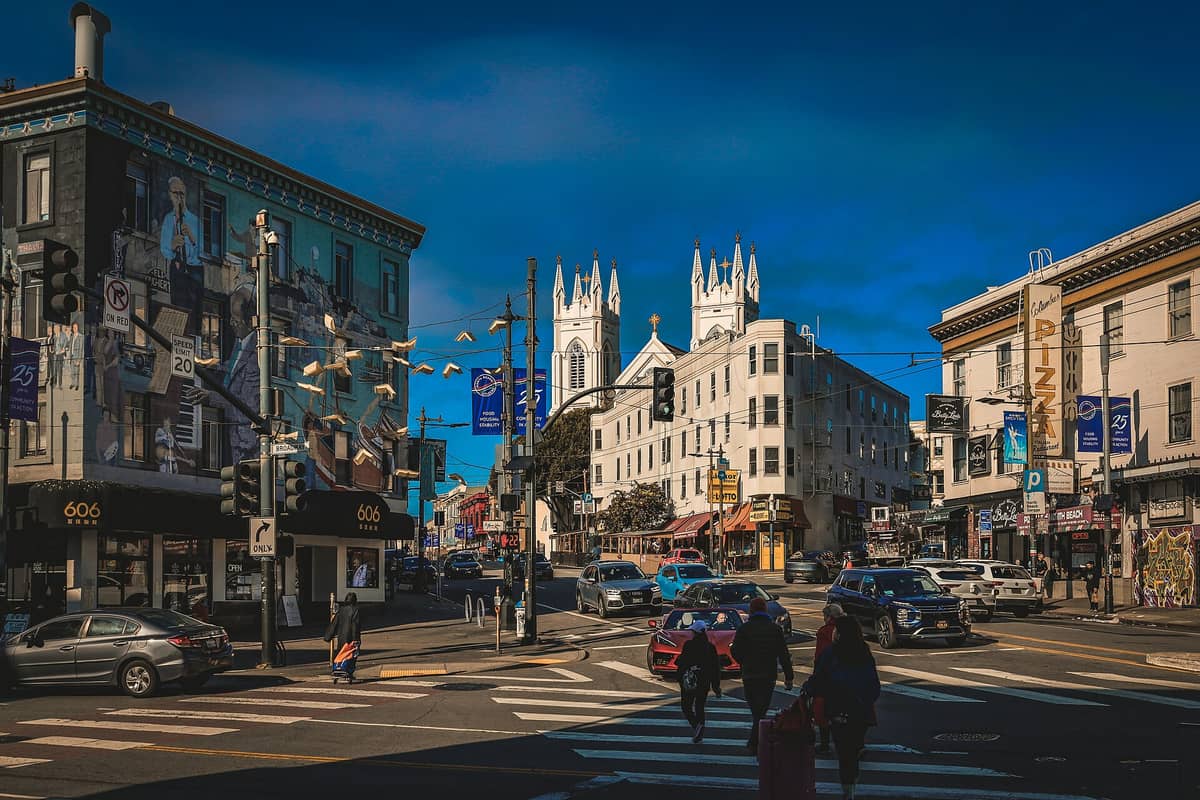
North Beach sits at the northeastern edge of San Francisco, wedged between Chinatown, Telegraph Hill, and Fisherman's Wharf. It is the city's historic Italian American quarter and the spiritual home of the Beat Generation, a neighborhood where espresso bars and independent bookshops share blocks with trattorias that have been feeding the city for decades.
North Beach is where San Francisco slows down long enough to drink a proper espresso. Strung along Columbus Avenue between the Financial District and Fisherman's Wharf, it is the city's historic Italian American quarter and the neighborhood most associated with the Beat Generation writers who made San Francisco literary famous. The result is a rare urban combination: genuine neighborhood life, serious food culture, and a literary history you can still feel on every corner.
Orientation
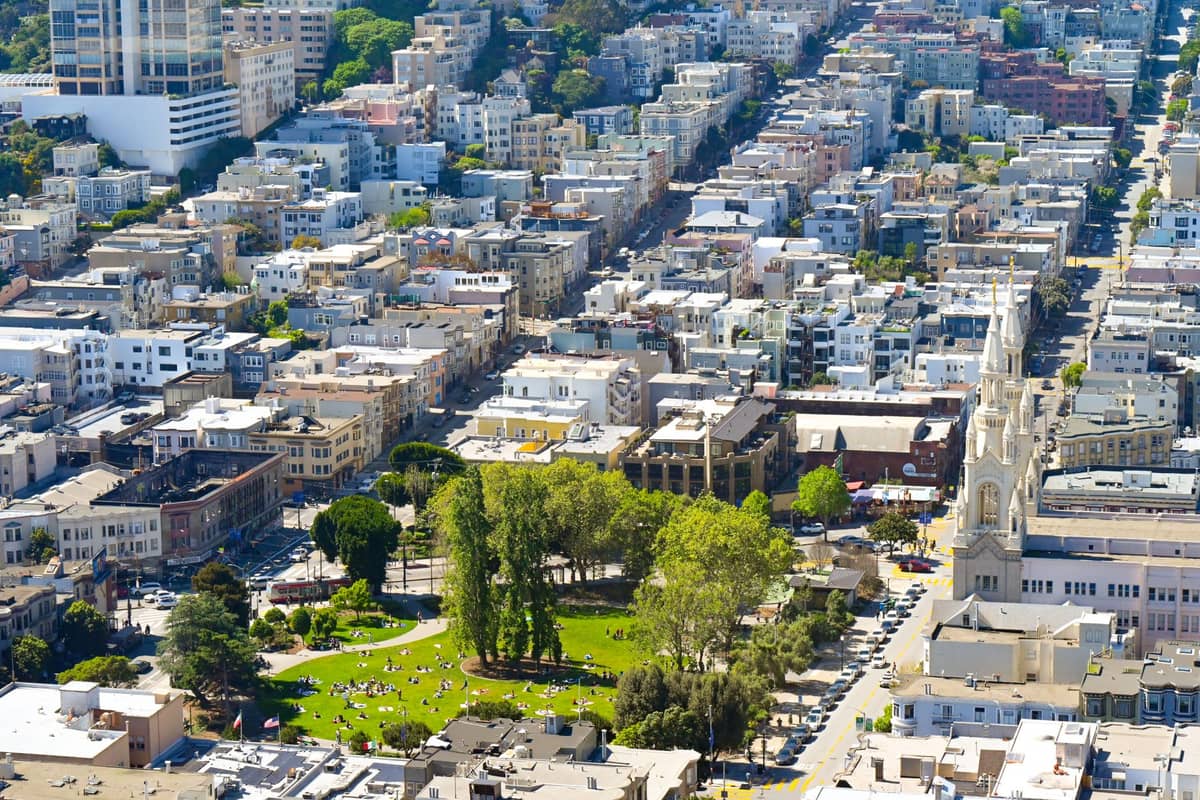
North Beach occupies the northeastern corner of San Francisco, pressing up against some of the city's most distinctive terrain. To the south, it meets Chinatown roughly where Broadway and Columbus Avenue intersect. To the east, Telegraph Hill rises sharply above the rooftops. To the west, Russian Hill's slope forms a softer boundary. To the north, the neighborhood dissolves into Fisherman's Wharf around Bay Street. Despite the name, there is no beach here today. The cove that once existed was progressively filled in over the late 19th century to create land for the expanding city.
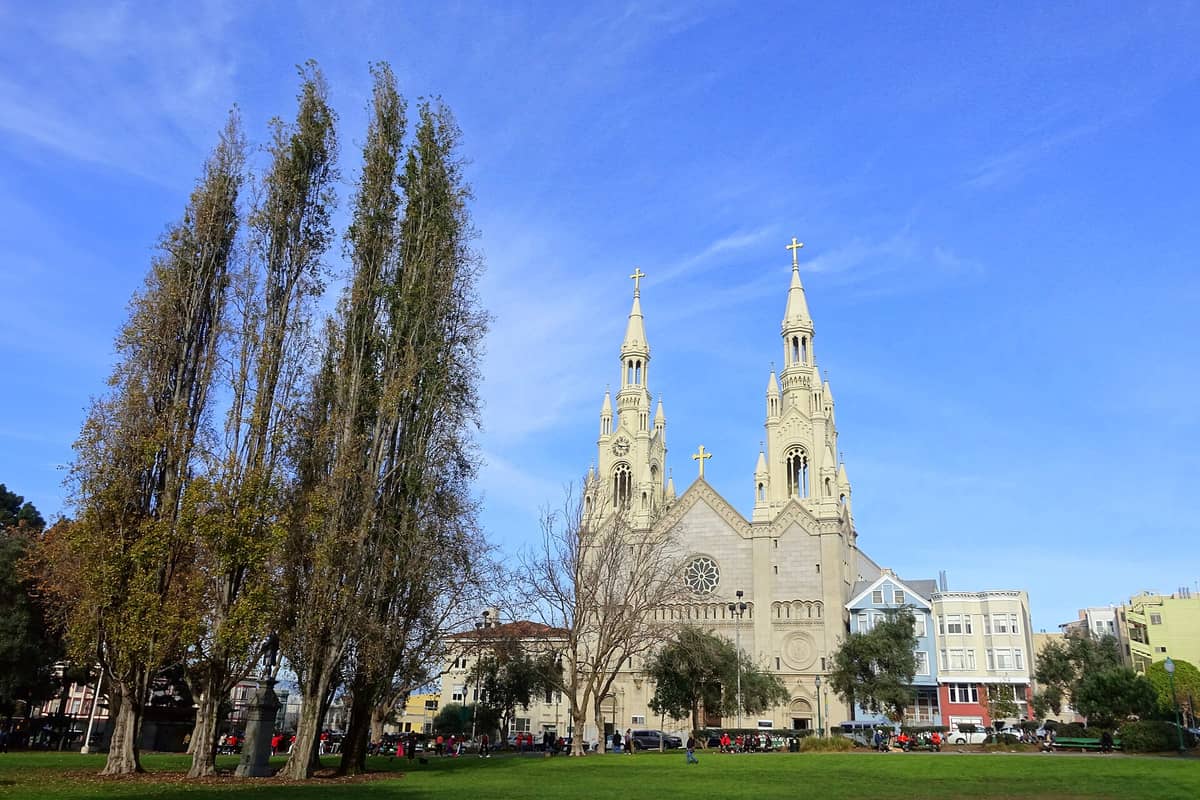
Columbus Avenue is the neighborhood's spine, cutting diagonally from Washington Street near the Financial District all the way north to Bay Street. Nearly everything worth knowing about North Beach is either on Columbus or within a few blocks of it. Washington Square Park, at Columbus and Filbert Street, functions as the neighborhood's living room. Saints Peter and Paul Church faces the park from the northeast corner of Filbert and Stockton, anchoring the Italian Catholic identity that shaped this community for over a century.
The North Beach Historic District, recognized by California's Office of Historic Preservation, runs roughly along Columbus Avenue between Chestnut Street to the north, Mason Street to the west, Sansome Street to the east, and Washington Street to the south, though exact block-by-block boundaries vary slightly by source. Immediately to the south, Columbus crosses into Jackson Square, a block of 19th-century brick buildings that were part of the old Barbary Coast. That corridor connects North Beach directly to the Financial District and makes the neighborhood surprisingly walkable from the Embarcadero waterfront.
Character & Atmosphere
North Beach rewards visitors who arrive without a strict itinerary. Early mornings belong to locals. By 7am, the espresso machines at the neighborhood's old-school Italian cafés are already running, and you will see the same faces at the counter that have been showing up for years. The light in the morning is soft and angled, catching the ornate façade of Saints Peter and Paul Church and illuminating Washington Square Park while dog walkers and tai chi practitioners claim the grass. The air carries the smell of fresh pastry from the Italian bakeries on Columbus.
By midday, Columbus Avenue fills with foot traffic. The sidewalk tables outside the cafés fill up. Tour groups drift in from Fisherman's Wharf to the north, and the side streets become harder to navigate in a straight line. Grant Avenue, one block east of Columbus, offers a quieter parallel route with a mix of bars, boutiques, and a few restaurants that see less tourist traffic than the main strip. The blocks around Broadway, especially on the eastern side toward the Embarcadero, have a grittier feel, with strip clubs and late-night bars that persist as remnants of the neighborhood's older nightlife identity.
Afternoons in North Beach have a particular quality of light. Telegraph Hill, looming to the east, creates a microclimate that keeps this part of the city slightly warmer and less foggy than neighborhoods to the west and south. September and October, San Francisco's warmest months by meteorological data, are when the neighborhood is most pleasant to simply walk and sit. The upper residential streets, climbing toward Telegraph Hill or cutting west toward Russian Hill, are genuinely quiet, lined with Italianate Victorians and apartment buildings with fire escapes draped in potted plants.
After dark, North Beach splits into two distinct zones. The Broadway corridor between Columbus and Montgomery is the city's vestigial adult entertainment strip, loud and artificially bright, not unpleasant but not reflective of the neighborhood's character. One block north or south, the streets shift entirely. The restaurants fill for dinner, the wine bars draw a local crowd, and Columbus Avenue between Vallejo and Filbert has the feel of a European street that has not yet been entirely colonized by chains. Be aware that weekend nights bring significant noise and foot traffic along Columbus, which can be a drawback for light sleepers staying nearby.
💡 Local tip
Visit Washington Square Park on a weekend morning to see North Beach at its most local. Older Italian American residents play bocce, families spread out on the grass, and the farmers market energy carries over from nearby Ferry Plaza. It is one of the few spots in the tourist corridor that actually belongs to the people who live here.
What to See & Do
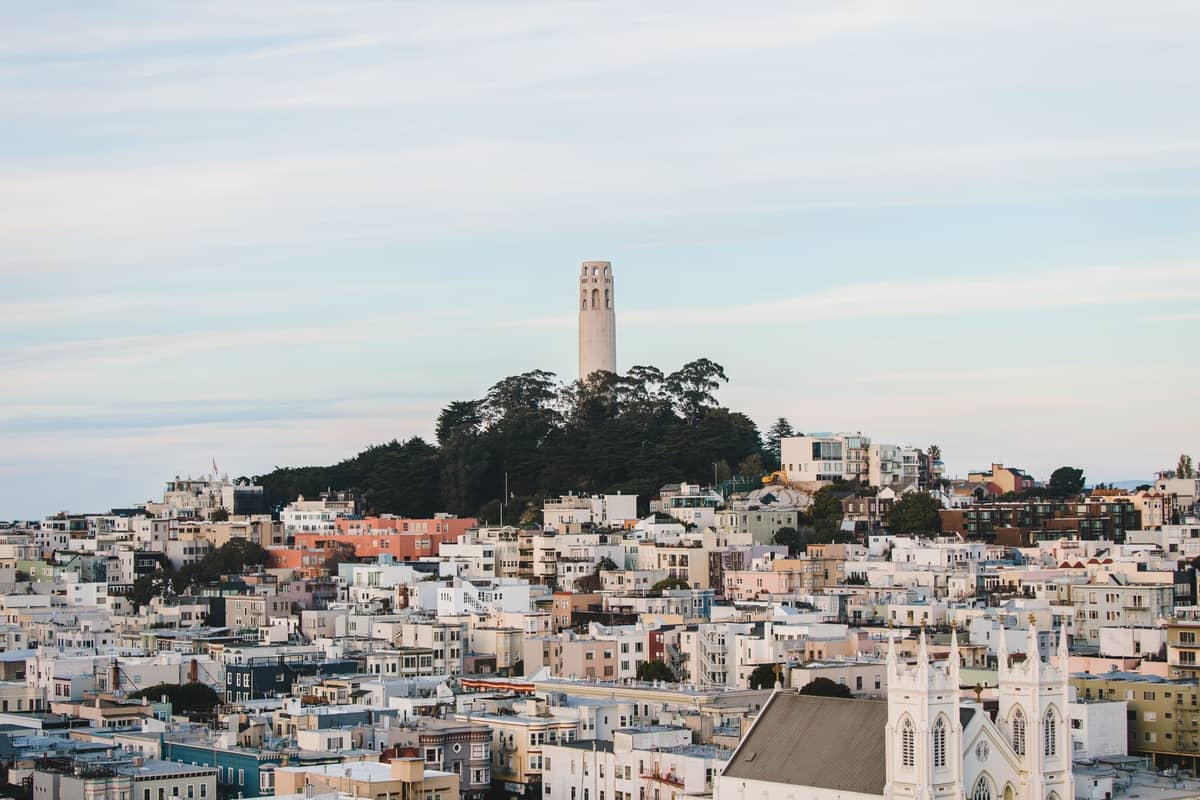
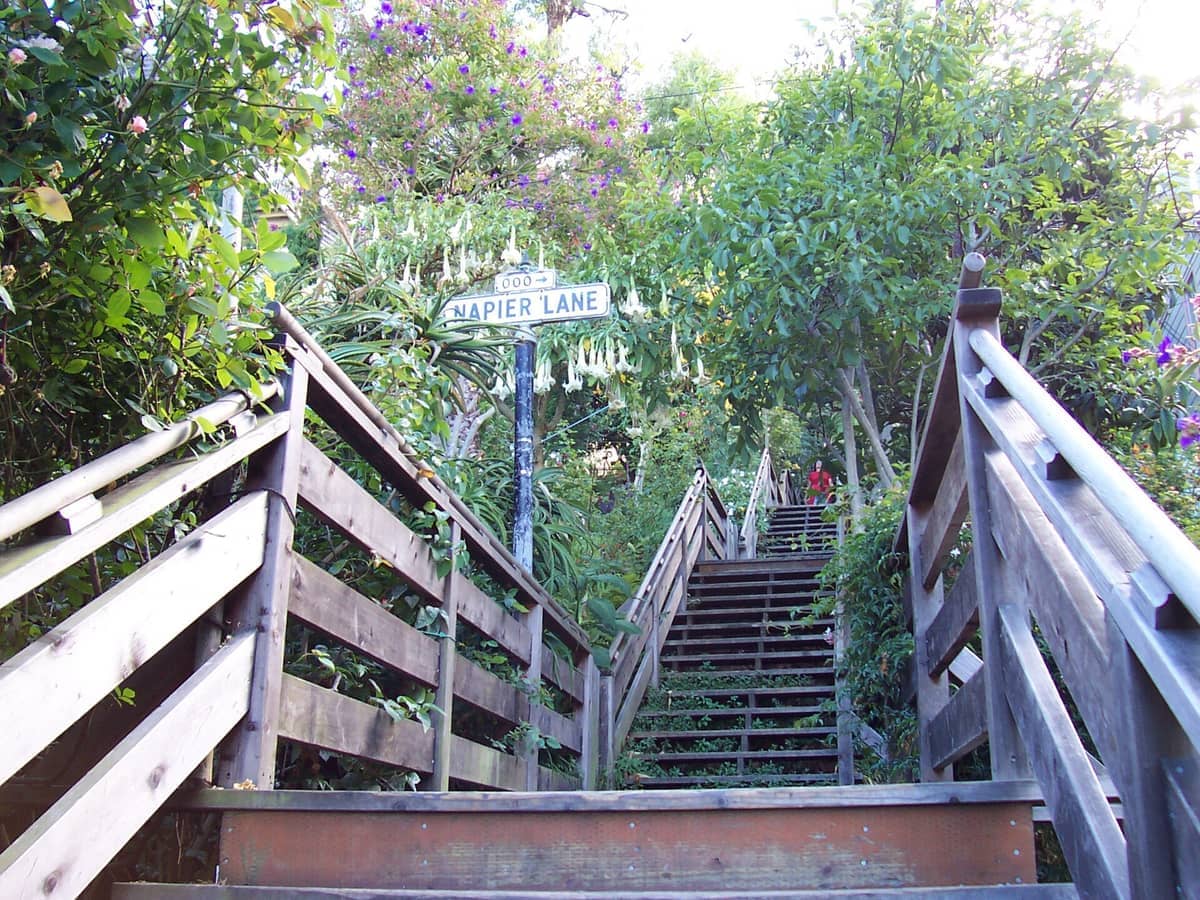
The neighborhood's most recognizable vertical landmark is Coit Tower, a 210-foot fluted concrete column that sits atop Telegraph Hill and offers panoramic views of the Bay, the Bay Bridge, Alcatraz, and the Financial District skyline. The tower is reachable by car via Telegraph Hill Boulevard, but the better approach is on foot via the Filbert Street Steps or the Greenwich Street Steps, both of which climb through wild gardens and past wooden cottages that feel improbably rural for a city of this density. Wild parrots, descendants of escaped pets, are a genuine and well-documented feature of the hill and can often be heard before they are seen.
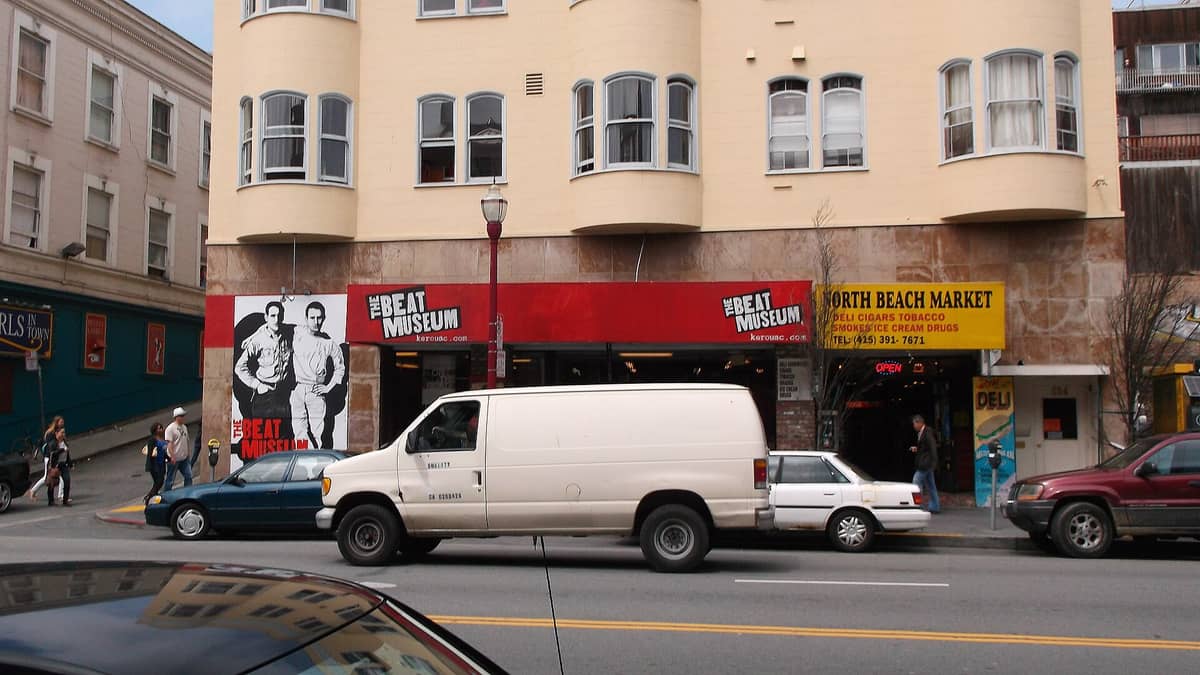
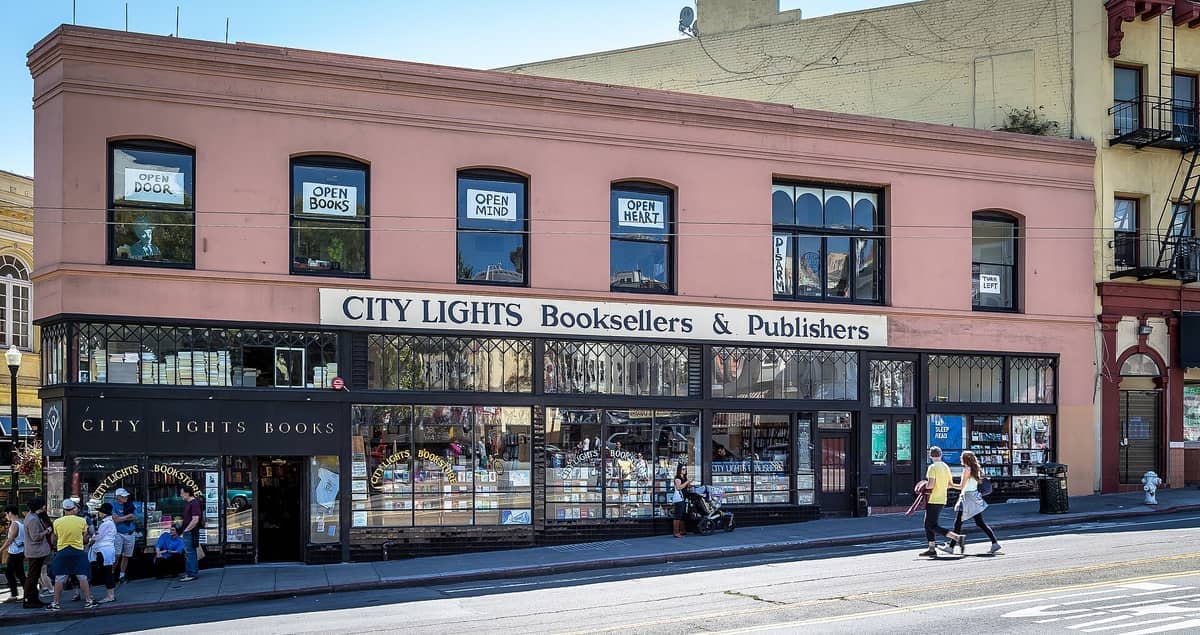
The Beat Generation connection is tangible and worth engaging with seriously. City Lights BookstoreCity Lights Bookstore sits at the corner of Columbus Avenue and Broadway, technically just at the edge of North Beach. Founded by poet Lawrence Ferlinghetti in 1953, it is one of the few genuinely historic independent bookshops in the country still operating in its original location and spirit. The basement poetry room, lined floor to ceiling with small press titles and collections, is a legitimate cultural site, not a souvenir shop. The Beat Museum, a few doors down on Broadway, provides historical context about Kerouac, Ginsberg, and the writers who gathered in North Beach coffee houses in the 1950s.
Washington Square Park is the social center of the neighborhood and one of the most human-scaled public spaces in San Francisco. Washington Square Park is framed on its north side by Saints Peter and Paul Church, a 1924 French Gothic structure where Joe DiMaggio, one of North Beach's most famous sons, took his wedding photographs with Marilyn Monroe in 1954. The church is open to visitors outside of service times and its interior is worth a look.
Coit Tower and the Filbert Street Steps: a 20-minute uphill walk from Columbus Avenue with views that justify every step
City Lights Bookstore: browse the poetry room and the well-curated fiction and cultural theory sections
The Beat Museum on Broadway: a compact but substantive overview of the literary movement that defined the neighborhood
Saints Peter and Paul Church: Italian Renaissance–style façade and a peaceful interior on the north side of Washington Square
Grant Avenue between Vallejo and Green: quieter shopping and café street parallel to Columbus
The Filbert and Greenwich Steps: steep wooden staircases through Telegraph Hill's remarkable garden landscape
ℹ️ Good to know
The wild parrots of Telegraph Hill are a flock of cherry-headed conures that have lived on the hill since the 1990s. They are most active in the early morning and late afternoon, and tend to congregate in the trees along the Filbert Steps. The 2003 documentary 'The Wild Parrots of Telegraph Hill' made them locally famous, but they were there long before and remain long after.
Eating & Drinking
North Beach has one of the densest concentrations of restaurants in San Francisco, and the range in quality is significant. The best Italian American cooking in the neighborhood tends to be in the establishments that have been operating for decades rather than the places with fresh paint and bright signage along the main tourist stretch of Columbus. Family-run trattorias serving pasta, clams, and Dungeness crab in season represent the neighborhood's culinary identity most accurately. Expect dinner prices to run moderate to expensive by most standards, with USD 22–38 per entrée at mid-range restaurants.
Caffè Trieste on Vallejo Street is one of the oldest coffeehouses in San Francisco and a direct link to the Beat era. It opened in 1956 and the interior has changed very little. On Saturday mornings, the family that owns it performs opera from a small stage in the corner, a tradition that has run for decades. The espresso is serious, the seating is tight, and the atmosphere is entirely authentic. It is not the most instagrammable café in the city, which is precisely the point.
For a broader understanding of what San Francisco actually eats, North Beach is worth combining with a walk south through Chinatown or north to the Ferry Building. The neighborhood's food scene pairs naturally with the broader city eating culture covered in the what to eat in San Francisco guide. Bakeries along Columbus sell focaccia, Italian cookies, and fresh bread to go, and several delis carry imported Italian products that make for good picnic supplies before heading up to Washington Square or the Telegraph Hill steps.
Espresso and traditional Italian café culture: several long-running establishments on Columbus and Vallejo
Italian American restaurants: pasta, seafood, and Dungeness crab when in season (typically November through June)
Wine bars on the quieter side streets with California and Italian wine lists
Italian bakeries with focaccia, biscotti, and regional pastries
Late-night pizza slices along Columbus for post-bar sustenance
⚠️ What to skip
Several restaurants along the main Columbus Avenue tourist corridor, particularly those with large menus, laminated photos, and staff actively hawking outside, prioritize volume over quality. Walk one block off Columbus toward Grant Avenue or Vallejo Street and the options improve considerably. Look for restaurants without a host standing outside trying to flag you in.
Getting There & Around
North Beach has no BART or Muni Metro station of its own, which is worth knowing before you plan a late night. The nearest BART and Muni Metro connections are at Montgomery Street and Embarcadero stations, roughly a 15- to 20-minute walk south to the heart of the neighborhood along Columbus Avenue or via connecting bus. From those stations, the neighborhood is easily walkable or accessible by several Muni bus routes that run along Columbus Avenue, Stockton Street, and Bay Street. For a full picture of transit options across the city, the getting around San Francisco guide covers Muni, BART, and the cable car system in detail.
The Powell-Mason cable car line is useful if you are connecting from Union Square or the downtown Powell Street area. The Mason Street track runs within a few blocks of Washington Square Park and offers a practical, if sometimes crowded, connection that bypasses the steepest Chinatown hill. The history and logistics of the cable car network are explained in the San Francisco cable car guide. Verify current fares and schedules with SFMTA before travel, as these are subject to change.
On foot, North Beach connects naturally to several adjacent neighborhoods. Walking south on Columbus toward Broadway puts you at the edge of Chinatown within five minutes. Walking north along Columbus or the Embarcadero brings you to Fisherman's Wharf in 10 to 15 minutes. The neighborhood is flat along Columbus and moderately hilly on the residential streets east and west of it. The climb to Coit Tower is steep regardless of which route you take.
Parking in North Beach is genuinely difficult, especially on evenings and weekends. Street parking is metered and competitive, and the residential permit zones mean most side streets are blocked to visitors during peak hours. If you are arriving by car, paid garages on Vallejo Street and near Fisherman's Wharf are the most reliable option. Ride-hailing drop-offs work well on Columbus Avenue, but pickup during evening rush and late nights can be slow due to demand and one-way street constraints.
Where to Stay
North Beach has a limited hotel inventory compared to neighborhoods like Union Square or Fisherman's Wharf. The options that do exist tend to be boutique properties or smaller independent hotels, most of which are priced at the moderate to upper-moderate range. For travelers who want to use North Beach as a base, the best-positioned hotels are those on or near Columbus Avenue between Broadway and Filbert, which puts you within walking distance of the neighborhood's cafés and restaurants without being directly on the noisy Broadway strip.
Staying in North Beach suits travelers who prioritize walkability, good food, and atmosphere over central downtown proximity. It is a particularly good base for those also planning to visit Chinatown and Fisherman's Wharf, both of which are under 20 minutes on foot. For a broader comparison of where to base yourself across the city, the where to stay in San Francisco guide covers all major neighborhoods with honest assessments of tradeoffs.
A genuine drawback for light sleepers: Columbus Avenue sees bus traffic and late-night pedestrian activity from the nearby bars and clubs until at least 2am on weekends. Rooms facing the street will be noisy. Inner-facing or upper-floor rooms in any North Beach property will be significantly quieter. If you are a light sleeper and noise is a concern, request a courtyard-facing room when booking.
Is North Beach Right for You?
North Beach is one of San Francisco's most complete neighborhoods in the sense that it has genuine residential life, serious food culture, walkable attractions, and real history all within a compact area. It is not the city's most cutting-edge or trend-driven district. The food scene is rooted in Italian American tradition rather than the newer Californian fusion restaurants drawing attention elsewhere. The nightlife along Broadway can feel dated. But for travelers who want a neighborhood that actually functions as a neighborhood rather than a curated destination zone, North Beach delivers in a way that very few areas of tourist-heavy San Francisco can match.
TL;DR
Best for: travelers who want authentic neighborhood life, Italian food and coffee culture, and literary history in a compact, walkable area
Key attractions: Coit Tower, City Lights Bookstore, Washington Square Park, Saints Peter and Paul Church, the Filbert Steps
Food and drink: strong Italian American dining heritage, genuine espresso culture, wine bars on side streets; avoid the tourist-facing Columbus Avenue restaurants closest to Fisherman's Wharf
Transit: no direct BART or Muni Metro access; served by bus routes connecting to Montgomery and Embarcadero stations; Powell-Mason cable car nearby
Not ideal for: travelers needing quick subway access to the broader city, light sleepers near the Broadway nightlife strip, or those looking for the city's most contemporary dining and nightlife scene
San Francisco's beaches are unlike anywhere else in California. Cold water, dramatic fog, and powerful Pacific surf define the city's coastline, but the scenery is extraordinary. This guide covers the best beaches in San Francisco for sunset walks, surfing, coastal hikes, and day trips beyond the city.
San Francisco packs an unusually deep museum scene for a city of its size. This guide covers the city's finest institutions across art, science, history, and culture, with practical tips on pricing, free days, and how to plan your visit.
San Francisco's climate defies expectations. Summer is foggy and cool, fall is surprisingly warm, and winter can be a genuine bargain. This guide breaks down every season so you can pick the right time for your trip, your budget, and your tolerance for Karl the Fog.
San Francisco is one of the most visually dramatic cities in America, built on hills that frame the bay, the bridges, and the Pacific at every turn. This guide covers the best viewpoints in the city and beyond, from free hilltop parks to lesser-known coastal perches that most visitors never find.
San Francisco sits at the gateway to one of the most varied day-trip landscapes in America. Within two hours you can be walking among thousand-year-old redwoods, tasting Cabernet in Napa, hiking coastal bluffs in Point Reyes, or exploring a former federal prison on a rocky bay island.
San Francisco is one of America's most spectacular cities, and you don't need a big budget to experience it. From iconic bridges and coastal trails to free museum days and world-class public art, this guide covers the best free things to do in San Francisco.
From BART airport transfers to cable car fares, this guide covers every way to get around San Francisco — with practical advice on what's worth it, what to skip, and how to navigate the city like someone who actually lives there.
San Francisco offers a deep luxury travel scene for a city of its size. This guide covers where to stay, what to eat, which experiences justify the price, and how to time your visit to get the best value on high-end accommodations.
San Francisco International Airport sits 13-15 miles south of downtown, and getting into the city is straightforward once you know your options. This guide breaks down every transport method from SFO, including real costs, travel times, and the mistakes most first-timers make.
San Francisco's built environment spans Victorian row houses, Edwardian flats, Beaux-Arts civic monuments, and bold modernist towers. This guide breaks down the key styles, landmark buildings, and best neighborhoods to explore on foot, with practical advice for architecture walks in any season.
San Francisco's cable car system is one of the most recognizable transit networks in the world — and also one of the most misunderstood. This guide covers all three operating lines, how fares and passes work, the best times to ride, and clear guidance on avoiding the worst queues.
San Francisco's ferry network spans two separate operators, multiple terminals, and fares that vary by route and payment method. This guide breaks down every major route, current pricing, and how to avoid the most common mistakes first-time riders make.
San Francisco packs an enormous amount into 47 square miles of land. This guide covers everything a first-time visitor needs to know: how to arrive, where to stay, what to prioritize, and the common mistakes that waste time and money.
San Francisco Fleet Week is one of the largest free public events in the United States, drawing hundreds of thousands of visitors to the Bay waterfront each October. This guide covers the Blue Angels air show schedule, the best free viewing spots, ship tour logistics, VIP ticket options, and practical advice for navigating the crowds.
San Francisco is one of California's most naturally romantic cities. Bay views, foggy evenings, world-class food, and historic neighborhoods create an atmosphere that pairs well with almost any travel style. This guide covers where to go, what to spend, when to visit, and how to make the most of a couples trip to the City and County of San Francisco.
At 1,017 acres, Golden Gate Park is one of the great urban parks in the United States, and most visitors only scratch the surface. This guide covers the top attractions, practical logistics, seasonal timing, and the spots worth seeking out beyond the obvious.
San Francisco rewards the curious. Beyond the Golden Gate Bridge and Alcatraz, the city hides mosaic staircases, acoustic sculptures, Victorian cemeteries, and rooftop gardens that most visitors never find. This guide points you to the spots locals actually love.
San Francisco is one of America's most walkable cities, but its hiking scene goes far beyond neighborhood strolls. These trails deliver coastal cliffs, forested ridgelines, panoramic summits, and wild Pacific shorelines all within city limits or a short drive away.
San Francisco in summer is nothing like a Southern California beach vacation. Expect cool temperatures in the mid-60s°F, morning fog that can linger well past noon, and a packed event calendar from June through August. This guide breaks down exactly what you'll encounter and how to prepare.
Three days is enough to hit San Francisco's iconic landmarks, explore distinct neighborhoods, and get a real feel for the city. This itinerary routes each day logically so you spend less time in transit and more time actually experiencing the city.
The Mission burrito is not just a meal. It is a San Francisco institution with a disputed origin, a precise construction method, and a handful of taquerias that have been perfecting it for decades. This guide covers the history, the key ingredients, where to find the best version, and what separates the real thing from a pale imitation.
Muir Woods National Monument sits just 12-17 miles north of San Francisco, protecting one of the last old-growth coast redwood stands in the Bay Area. This guide covers everything you need to plan a successful day trip: mandatory reservations, transport options, trail choices, seasonal timing, and the common mistakes that catch first-time visitors off guard.
Napa Valley sits just 50-60 miles north of San Francisco, making it one of the Bay Area's most rewarding day trips. This guide covers every logistic: how to get there, what tastings cost, when to book, and how to pace a single day without burning out before the third pour.
San Francisco packs an extraordinary range of distinct neighborhoods into just 47 square miles of land. From the foggy avenues of the Outer Sunset to the sunny slopes of the Mission, this guide breaks down what each district is actually like, who it suits, and how to navigate between them.
San Francisco's nightlife runs deeper than most visitors expect. This guide breaks down the best neighborhoods for a night out, what to expect at live music venues, how late things actually run, and which parts of the city suit your style — from craft cocktail bars to late-night dance floors.
San Francisco has a reputation for draining wallets, but that reputation is only partly deserved. With the right approach to accommodation, transport, food, and attractions, a solo traveler can get by on $110–$160 per day without missing the city's best experiences. This guide breaks down exactly where your money goes and where you can cut back.
Twenty-four hours in San Francisco is enough to walk an iconic bridge, eat world-class food, explore historic neighborhoods, and watch the sun set over the Pacific. This itinerary is built around geography so you spend less time in transit and more time actually experiencing the city.
San Francisco is one of America's most rewarding cities to visit, but it rewards prepared travelers. This guide covers the real safety picture: car break-ins, petty theft hotspots, neighborhoods to navigate carefully, and practical strategies to keep your trip trouble-free.
San Francisco's shopping scene spans far more than one famous square. This guide breaks down every major retail district, from luxury flagships around Union Square to independent boutiques in Hayes Valley, vintage shops on Haight Street, and specialty food at the Ferry Building, with practical advice on getting there, what to expect, and where to skip.
The San Francisco to Los Angeles corridor is one of the most-traveled routes in the United States, with options ranging from a 90-minute flight to a two-day Pacific Coast Highway road trip. This guide breaks down every realistic method by cost, time, and comfort so you can choose the right one for your trip.
San Francisco is one of the world's great walking cities, built for exploration on foot. These 20 self-guided stops span the city's most rewarding routes, from waterfront promenades and Victorian hilltops to mural-filled alleys and coastal cliffs.
Forty-eight hours is enough time to hit San Francisco's greatest hits and still feel like you've gone beyond the surface. This guide covers the essential waterfront, neighborhoods, parks, and cultural stops to build a memorable weekend in one of America's most compelling cities.
San Francisco is one of the most family-friendly cities in the United States, with world-class science museums, free outdoor spaces, bay cruises, and a compact layout that keeps logistics manageable. This guide covers the best attractions for children, how to save on tickets, when to visit, and how to get around without a car.
San Francisco packs an extraordinary range of experiences into about 47 square miles of land. From the Golden Gate Bridge and Alcatraz to neighborhood walks through Chinatown and the Mission, this guide covers the top things to do in San Francisco with clear, practical detail to help you spend your time well.
San Francisco has one of the most serious food cultures in the United States, with about 30 Michelin-starred restaurants according to the 2026 Michelin Guide, roughly 4,400 restaurants packed into about 47 square miles, and an obsessive commitment to local, seasonal ingredients. This guide covers the iconic dishes, the neighborhoods where each food culture lives, what things actually cost, and where visitors consistently go wrong.
Choosing where to stay in San Francisco shapes your entire trip. This guide breaks down the city's most practical neighborhoods by price, transit access, safety, and atmosphere, so you can book with confidence rather than guesswork.