Where to Stay in San Francisco: The Best Neighborhoods for Every Traveler
Choosing where to stay in San Francisco shapes your entire trip. This guide breaks down the city's most practical neighborhoods by price, transit access, safety, and atmosphere, so you can book with confidence rather than guesswork.
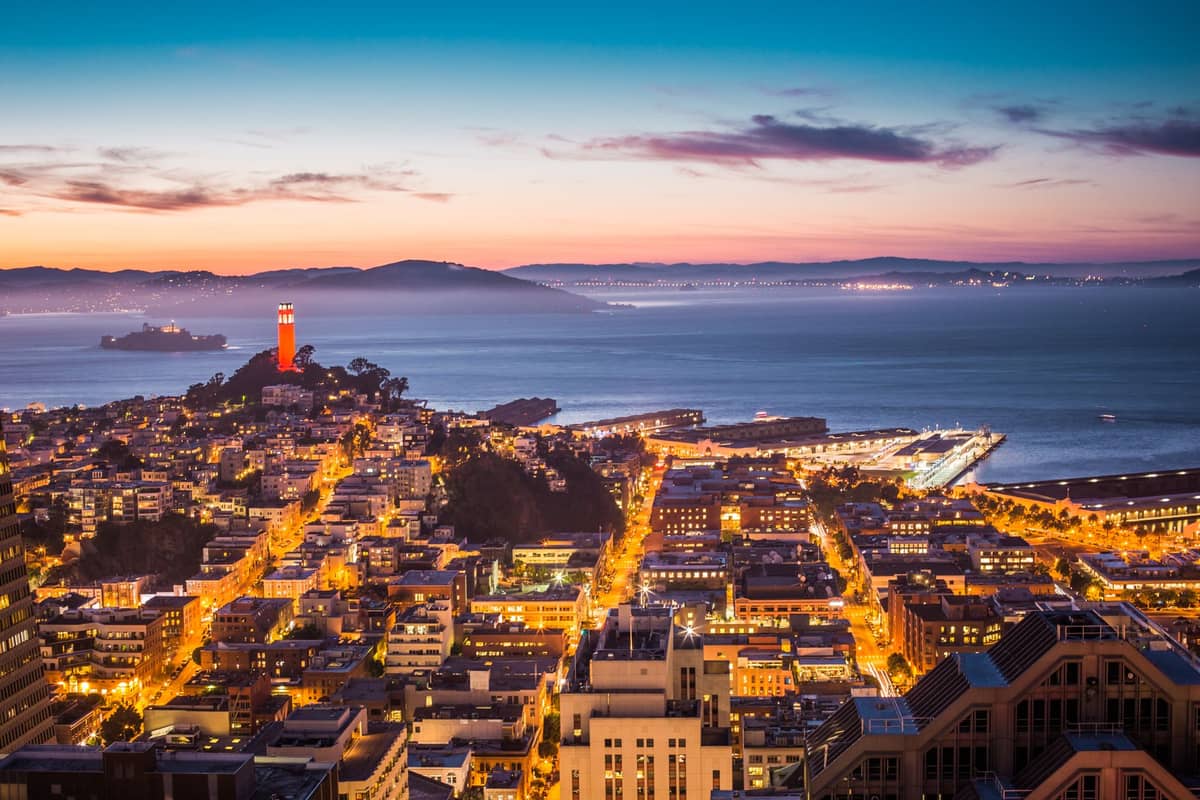
Plan and book this trip
Tools from our partner Travelpayouts help you compare flights and hotels. If you book through them, we may earn a commission at no extra cost to you.
Flights
Hotels map
TL;DR
- Union Square is the most central base for first-timers: BART, Muni, and cable cars are all within walking distance.
- Fisherman's Wharf and the Marina are often cheaper than Nob Hill or Pacific Heights, despite being popular with visitors.
- Neighborhoods near the Pacific coast (Richmond, Sunset) are notably cooler and foggier, especially June through August.
- September and October are the warmest, clearest months in SF, and also when hotel demand spikes. Book early or check our best time to visit San Francisco guide for seasonal planning.
- Avoid booking near the Tenderloin without researching the specific block. The neighborhood borders Union Square but feels very different at street level.
How San Francisco's Neighborhoods Work
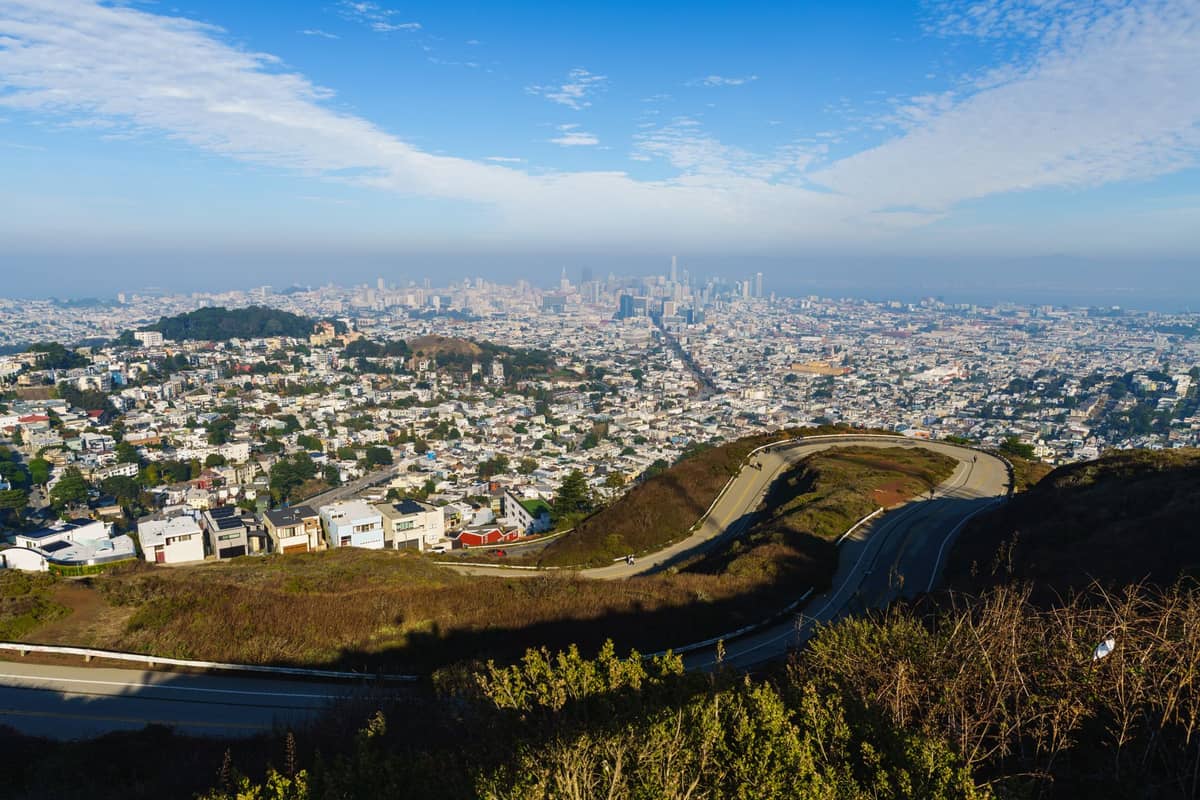
San Francisco covers just 46.9 square miles of land, but the variation between neighborhoods is extraordinary. A 15-minute drive can take you from a foggy, windswept ocean beach in the Sunset District to a sun-baked street in the Mission. Understanding this geography before you book is not just helpful, it's essential.
The city sits on a peninsula between the Pacific Ocean and San Francisco Bay in Northern California. Its famous microclimates mean that neighborhoods on the western side, like the Haight-Ashbury and the Sunset, can be 10 to 15 degrees cooler than the Mission District on the same afternoon. Plan your base around how much fog you can tolerate, not just what's on the map.
ℹ️ Good to know
San Francisco uses Pacific Time (PT). Standard time is UTC-8; San Francisco uses Pacific Time (PT). Standard time is UTC-8; daylight saving time (March through early November) is UTC-7. Tap water is safe to drink citywide, sourced from the Hetch Hetchy Reservoir and tested to federal standards.. Tap water is safe to drink citywide, sourced from the Hetch Hetchy Reservoir and tested to federal standards.
Union Square and Downtown: Best for First-Timers
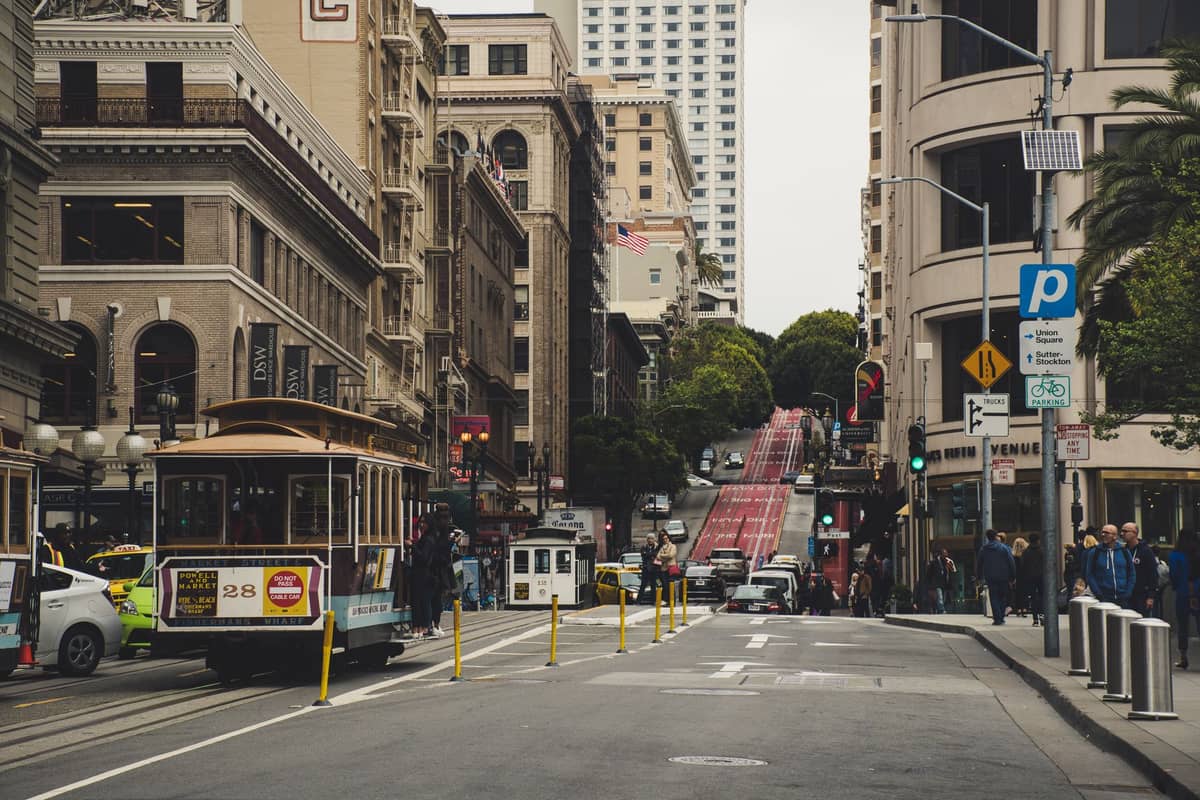
Union Square is the city's commercial core and its most transit-rich district. Two BART stations (Powell Street and Montgomery Street) sit within a few blocks, the Powell Street cable car turnaround is right by the square, and multiple Muni Metro lines run under Market Street., and multiple Muni Metro lines run under Market Street. If this is your first trip to San Francisco and you don't have a car, Union Square is the easiest place to base yourself.
Hotels here range widely in quality and price. Mid-range properties typically start around $150 to $250 per night depending on season, and luxury options push considerably higher. The area is dense with chain hotels, which means availability is generally good outside of major convention weeks at the nearby Moscone Center in SoMa.
The main drawback is the Tenderloin, which borders Union Square to the west and north. The boundary is abrupt: certain blocks near Turk and Eddy streets have significant visible drug use and homelessness. This does not make Union Square itself dangerous, but it does mean you should look at a map of your specific hotel address rather than just booking based on the neighborhood label.
⚠️ What to skip
The Tenderloin sits immediately adjacent to Union Square. Before booking a 'Union Square' hotel, check the exact address on a current map. Blocks east and south of Powell Street tend to feel more comfortable than those west of Mason Street after dark.
Fisherman's Wharf and the Marina: A Practical Choice That Gets Underrated
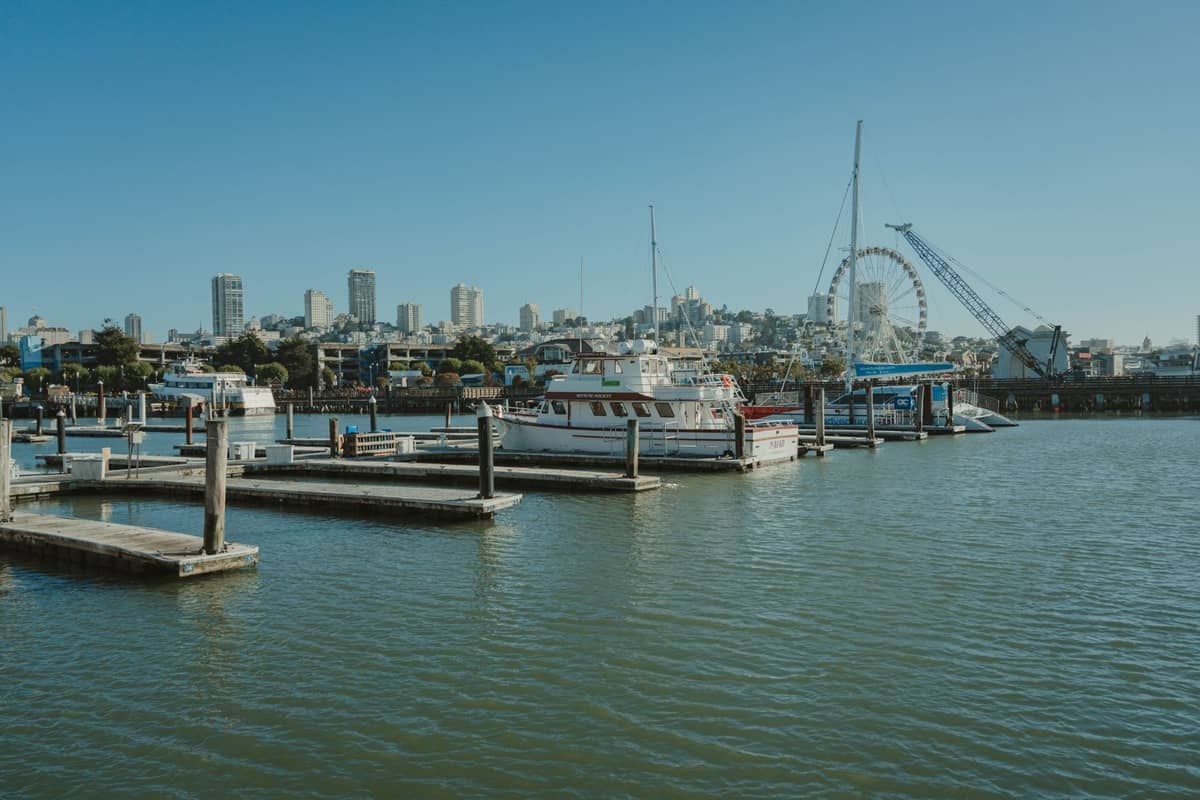
Fisherman's Wharf has a reputation as a tourist trap, but as a place to stay, it's frequently underpriced relative to more 'prestigious' areas. Hotels here and in the adjacent Marina District Hotels here and in the adjacent Marina District often come in below the average for Nob Hill or Pacific Heights, while offering some of the city's most walkable waterfront access.
From the Wharf you can walk to Pier 39, catch ferries to Alcatraz Island, and access the F-line historic streetcar along the Embarcadero. The Marina sits close to the Presidio and Crissy Field, and has a neighborhood feel that many visitors find more comfortable than downtown. Parking is also significantly easier here than in central SF.
The trade-off is distance from BART and Muni Metro. You'll be relying on buses, the F-line, or rideshares to reach SoMa, the Mission, or Haight-Ashbury. If your itinerary is heavily waterfront and Presidio-focused, this is an excellent base. If you're planning to jump between diverse neighborhoods daily, the commute adds up.
Nob Hill, North Beach, and Chinatown: Historic Character With Good Transit
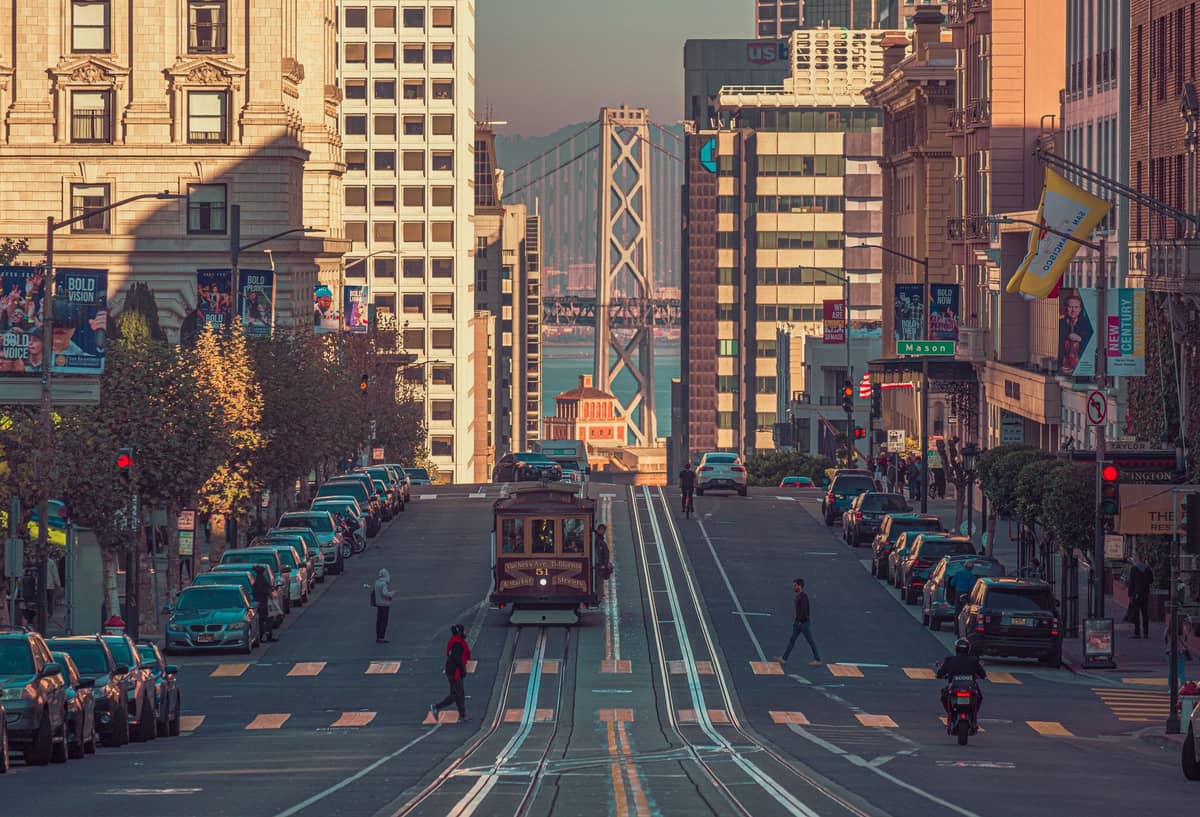
Nob Hill sits on one of the city's steepest hills, directly above Chinatown and North Beach. The California Street cable car runs through it, and the Powell-Hyde and Powell-Mason lines are a short walk away. It's a more residential and atmospheric option than Union Square, and many visitors feel more comfortable here at night.
Hotels in Nob Hill tend to sit at the higher end of the price range. The Mark Hopkins, the Huntington, and the Fairmont San Francisco are landmark properties here, all commanding premium rates. For those who want a quieter, safer-feeling base without leaving central SF, this is a strong option. Budget travelers will find better value in the Wharf or Marina areas.
North Beach, just downhill from Nob Hill, is one of the city's most walkable neighborhoods. Its Italian-American history is still visible in the cafes around Washington Square Park, and the City Lights Bookstore sits at the neighborhood's edge. Boutique hotels and B&Bs here book quickly in peak season.
The Mission, Castro, and SoMa: For Cultural Depth and Nightlife
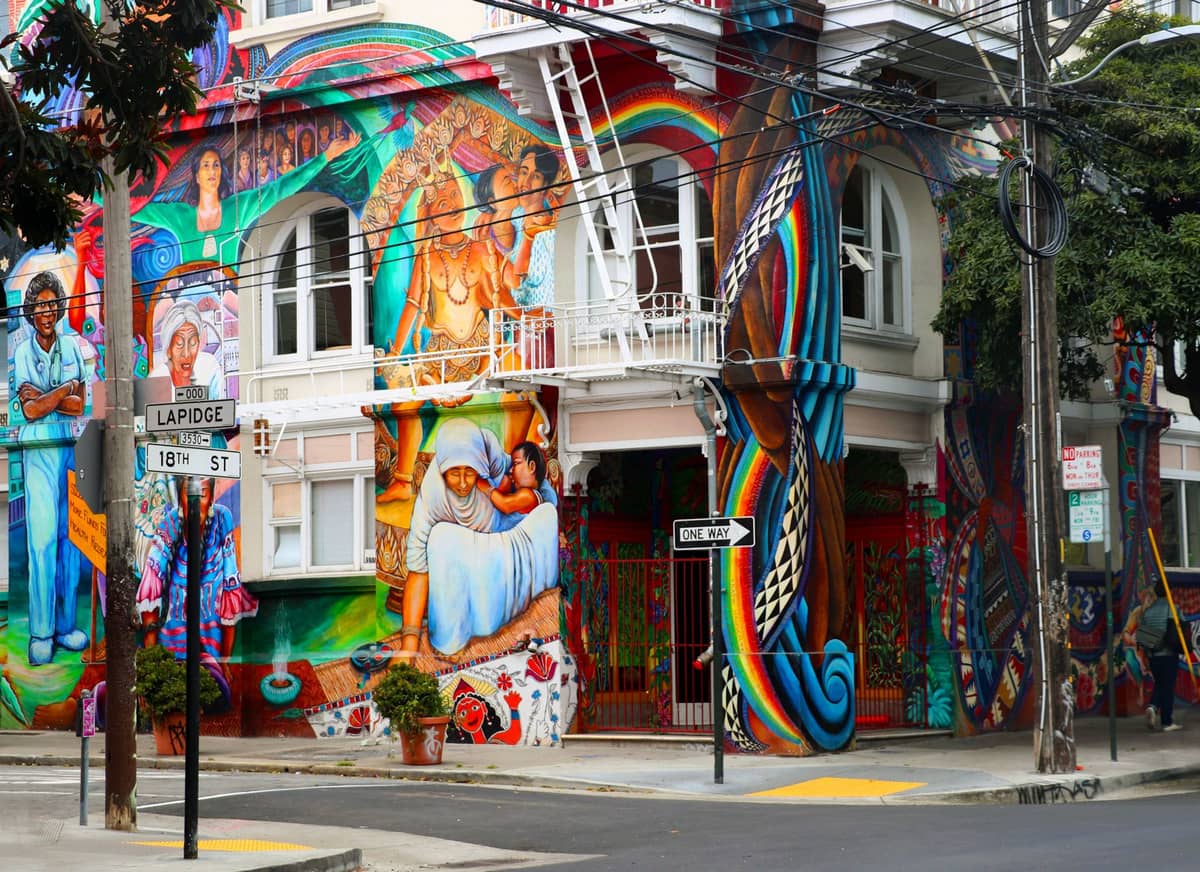
The Mission District is one of SF's warmest neighborhoods, climatically and culturally. It benefits from a rain shadow effect that keeps fog at bay more often than western neighborhoods. It's dense with taquerias, coffee shops, and bars, and has direct BART access at 16th Street Mission and 24th Street Mission stations.
Accommodation in the Mission skews toward boutique hotels and short-term rentals rather than large chain properties. It's a good base for visitors who prioritize local eating and neighborhood character over proximity to waterfront attractions. Some blocks around 16th and Mission streets can feel rough at night, so applying the same block-level scrutiny you'd use downtown is worthwhile.
SoMa (South of Market) suits conference travelers and those visiting the city's major museums, including SFMOMA and the Moscone Convention Center. It has a hotel inventory that covers budget to high-end, and it's flat and walkable to the Financial District and Embarcadero. The Castro, further southwest, works best for travelers specifically interested in LGBTQ+ history and culture, with the iconic Castro Theatre as a neighborhood landmark.
Richmond, Sunset, and the Presidio: For Space, Quiet, and Ocean Access
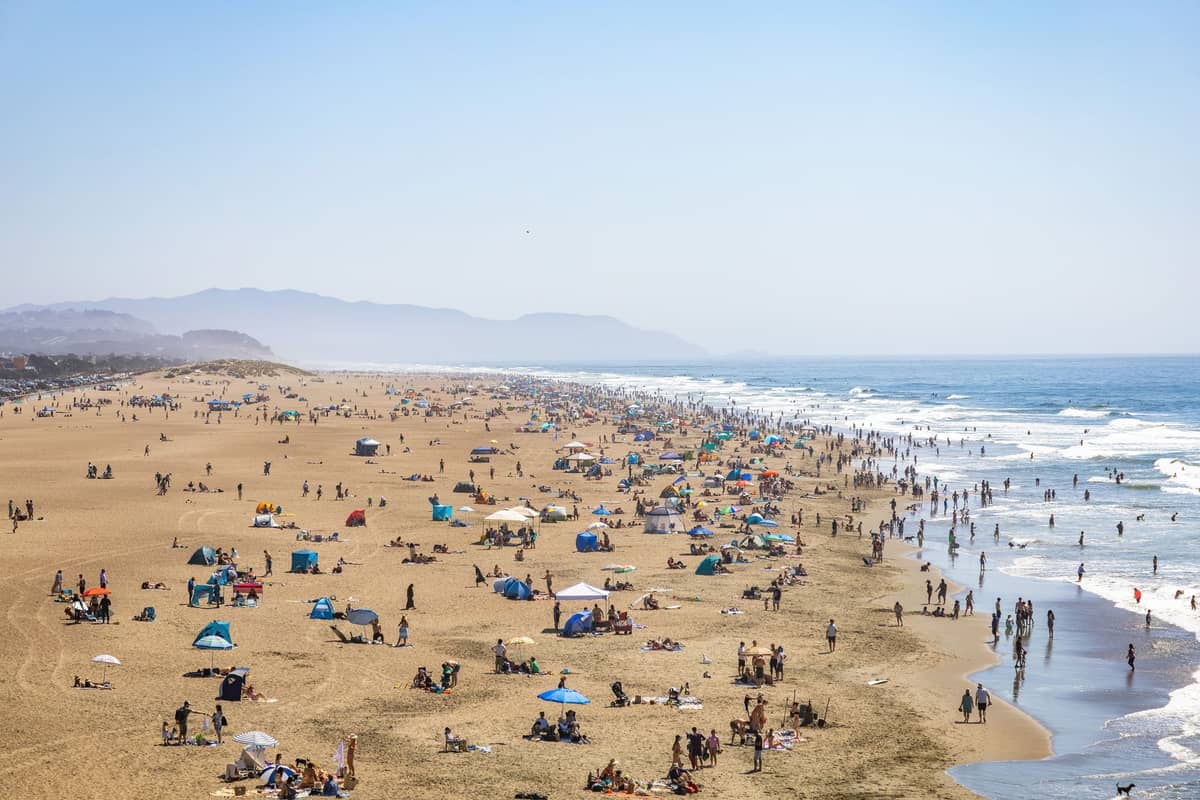
The Richmond and Sunset Districts are large, residential, and significantly quieter than central SF. They border Golden Gate Park to the north and south respectively, and both have direct access to Ocean Beach and the coastal trails at Lands End. Hotels here are rarer and the accommodation options lean more toward vacation rentals and smaller inns.
The key trade-off is the microclimate. These neighborhoods face the Pacific directly, and the marine fog layer is stronger and more persistent here than anywhere else in the city, especially June through August. If you're visiting in summer expecting warm outdoor evenings, the Sunset will frequently disappoint. September and October are much better. Check our guide to San Francisco in summer for what to realistically expect from the fog.
The Presidio is a national park site within the city and offers a unique lodging experience through the Presidio Trust's Inn at the Presidio and Cavallo Point (technically in Sausalito across the bridge). Staying here means waking up surrounded by forest and bay views while remaining inside city limits. It works exceptionally well for visitors focused on the Golden Gate Bridge and coastal hikes.
Price Ranges, Booking Timing, and Practical Tips
- Budget ($70-120/night) Basic hotels and motels exist in SF, but at this price point expect older properties, limited amenities, and locations that may require careful vetting. The Fisherman's Wharf and outer Richmond areas offer the most consistent value at this tier.
- Mid-range ($150-250/night) This is the practical range for most visitors. Union Square, SoMa, and Fisherman's Wharf all have solid options in this bracket. Weekday rates are often lower than weekends, and conventions at Moscone can spike SoMa prices suddenly.
- Upscale ($300-500+/night) Nob Hill, the Financial District, and the Embarcadero waterfront have the city's top hotels. The Fairmont, the Ritz-Carlton, and the Four Seasons consistently rank at the top. Rates at this level vary significantly by season and demand.
- Vacation Rentals Short-term rentals are available across SF but are subject to city regulations. They work best for groups or longer stays. The Mission, Haight-Ashbury, and residential parts of Nob Hill have the highest density of options.
Summer (June through August) is peak tourist season despite being the foggiest period. Hotel demand is high because it aligns with school holidays and major US travel patterns. September and October offer warmer, clearer weather at slightly lower rates in most neighborhoods. The rainy season runs roughly November through March, and while prices drop, rain and wind are genuine factors for sightseeing.
✨ Pro tip
Large tech conferences and events at Moscone Center in SoMa can fill downtown hotels weeks in advance and push rates up sharply. Check the Moscone Center's published event calendar before finalizing your dates, especially if you're booking SoMa, Union Square, or Financial District hotels.
- Book Alcatraz tickets before you book your hotel. They sell out weeks ahead and are not tied to your accommodation location.
- If you're flying into SFO, BART connects directly to downtown SF in about 30 minutes, stopping at Civic Center/UN Plaza, Powell Street, and Montgomery Street. It's the most reliable airport transfer option.
- SFO is 13 miles south of downtown. Oakland (OAK) and San Jose (SJC) are alternatives worth checking for cheaper flights, though ground transfers are longer.
- Cable cars are functional transit, but they're slow and crowded at peak times. BART and Muni buses will get you across the city faster on most routes.
- San Francisco's hills are steeper than they look on flat maps. Factor in walking fatigue when choosing a neighborhood, especially if you have mobility considerations.
For a deeper look at moving between neighborhoods once you're settled, see our guide to getting around San Francisco. And if you're trying to figure out exactly what to do once you've picked your base, the San Francisco first-time visitor guide covers the full picture.
FAQ
What is the best area to stay in San Francisco for first-time visitors?
Union Square is the most practical base for first-timers: it sits within walking distance of BART, the Powell Street cable car, and multiple Muni lines. Just check your specific hotel address relative to the Tenderloin, which borders the area to the west. Fisherman's Wharf is a close second for visitors prioritizing waterfront access and a more relaxed atmosphere.
Is it safe to stay in San Francisco as a tourist?
Safety in SF varies sharply by neighborhood and even by block. Nob Hill, the Marina, Fisherman's Wharf, the Richmond District, and the Presidio are consistently rated as comfortable by visitors. Parts of downtown adjacent to the Tenderloin and certain blocks in SoMa require more awareness. Researching your specific hotel address rather than just the neighborhood name is the most practical approach.
How far in advance should I book a hotel in San Francisco?
For summer travel (June-August) and major event periods, booking 6-8 weeks in advance is a sound approach. For September and October, the warmest and clearest months, demand also spikes so 4-6 weeks is sensible. During the rainy season (November-March) you have more flexibility, though prices drop enough that earlier booking can still lock in good rates.
Which San Francisco neighborhood has the best public transit access?
Union Square offers the widest combination of transit options: BART at Powell and Montgomery stations, the Powell-Hyde and Powell-Mason cable car lines, multiple Muni Metro lines under Market Street, and the F-line streetcar along the Embarcadero. SoMa and the Financial District are similarly well-connected. Fisherman's Wharf and the Marina are the most transit-limited of the popular visitor areas.
Is it worth staying near Fisherman's Wharf or is it too touristy?
As a place to eat, Fisherman's Wharf is overpriced for what you get. As a place to sleep, it's often underpriced relative to other central neighborhoods. Hotels here and in the Marina District consistently come in below Union Square and Nob Hill rates. If your priorities are waterfront access, easy parking, proximity to Alcatraz ferries, and a neighborhood that feels safe and walkable at night, it's a genuinely practical choice.