Alcatraz Island: What to Expect Before You Cross the Bay
Alcatraz Island sits 1.5 miles offshore in San Francisco Bay, and the ferry ride alone sets the mood. Once a military fortification, then a federal penitentiary from 1934 to 1963, the island is now a National Park Service site offering one of the most atmospheric historical experiences on the West Coast. Allow at least three hours, and book tickets well in advance.
Quick Facts
- Location
- San Francisco Bay, CA. Ferries depart from Pier 33, Embarcadero, San Francisco
- Getting There
- F-line historic streetcar to The Embarcadero; Muni Bus 8, 8AX, or 8BX to stops near Pier 33 on The Embarcadero
- Time Needed
- 2.5 to 4 hours including ferry crossings
- Cost
- Tickets vary by tour type and season; check current prices at Alcatraz City Cruises (alcatrazcitycruises.com). Advance booking strongly recommended.
- Best for
- History enthusiasts, first-time visitors, photography, families with older children
- Official website
- www.nps.gov/alca/index.htm
What Alcatraz Island Actually Is
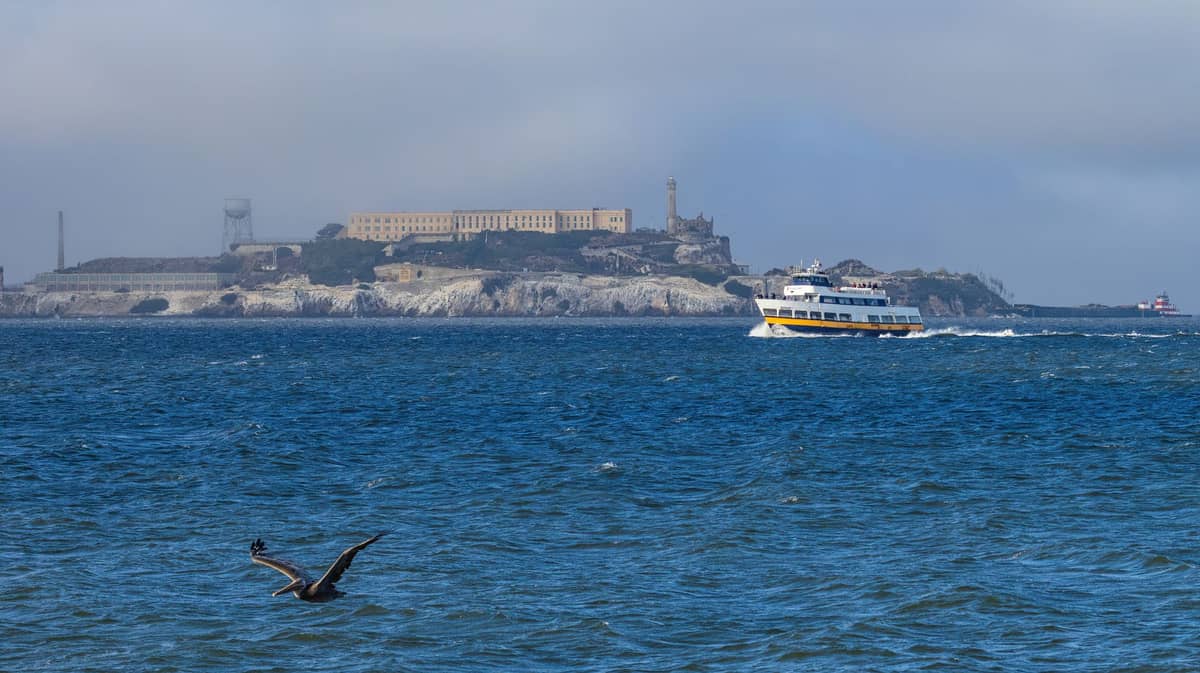
Alcatraz Island, officially a unit of the National Park Service, occupies roughly 22 acres in the middle of San Francisco Bay. Its Spanish name, Isla de los Alcatraces, is often rendered as "Island of the Pelicans," a name given by Spanish explorer Juan Manuel de Ayala when he charted the bay in 1775. The island went on to serve as a military fortification, then a military prison, before the federal Bureau of Prisons opened what would become America's most notorious penitentiary here in 1934. The prison operated for 29 years, housing inmates deemed too dangerous or escape-prone for other federal facilities, before closing in 1963 due to high operating costs.
Today the island draws over a million visitors a year, and the reputation is earned. The combination of genuine historical weight, striking bay views, and a well-produced audio tour makes it one of the few major tourist sites in San Francisco that consistently delivers on its reputation. That said, the experience is physical, weather-dependent, and requires advance planning. Walking in blind, or showing up at Pier 33 expecting same-day tickets, regularly disappoints visitors.
⚠️ What to skip
Tickets often sell out days or weeks in advance, especially for evening tours and summer departures. Book through Alcatraz City Cruises at alcatrazcitycruises.com before your trip, not when you arrive at Pier 33.
The Ferry Crossing and First Impressions
The journey begins at Pier 33 on San Francisco's Embarcadero waterfront, about a 15-minute walk north of the Ferry Building. The ferry crossing takes roughly 15 minutes. As the boat pulls away from the dock, the city skyline recedes and the island resolves from a smudge on the water into something more defined: the white cell house sitting high above a tiered ruin of old military buildings, surrounded by sheer rocky cliffs and patrolled by nesting seabirds.
San Francisco Bay is cold and often choppy, and the wind on the water cuts through clothing. Even in July, when the city might feel mild, the bay crossing calls for a jacket. The island itself sits in the path of prevailing westerly winds and gets fog earlier and more persistently than the city waterfront. Morning departures often arrive into grey, damp conditions; afternoon departures in September and October tend to offer the clearest light and the least wind.
For context on how the island fits into the broader waterfront, see the Fisherman's Wharf neighborhood guide, which covers the surrounding piers and what else is worth your time in the area.
Tickets & tours
Hand-picked options from our booking partner. Prices are indicative; availability and final rates are confirmed when you complete your booking.
Go City | San Francisco Explorer Pass
From 76 €Instant confirmationFree cancellationSan Francisco small group guided city tour with a stop at Alcatraz
From 158 €Instant confirmationFree cancellationAlcatraz and Golden Gate Bridge guided bike tour
From 124 €Instant confirmationLegendary Alcatraz Island self-guided audio tour
From 14 €Instant confirmation
The Audio Tour: What Makes Alcatraz Worth It
The Cellhouse Audio Tour, included with standard daytime tickets, is the core of the visit and is exceptional. Narrated by former guards and inmates, the 45-minute self-guided recording walks you through the main cell block, the dining hall, the library, and solitary confinement. The production quality is high, and the first-person accounts from people who actually lived inside these walls give the experience a texture that no placard or display case can replicate.
Walking the main cell block, you notice how narrow everything is. Cell blocks B and C, which made up the main housing area, consist of rows of 5-by-9-foot cages stacked three tiers high. The metal smells faintly of rust and age. Light filters in from a row of high windows at the far end, the type of weak institutional daylight that would have been the primary outdoor view for most prisoners most of the day. The audio tour allows you to go at your own pace, and many visitors spend considerably longer in the cell house than the suggested 45 minutes.
Beyond the cell house, the island has more to explore than most visitors expect: the remains of the Warden's House, the Model Industries Building, the parade ground, and cliff-edge paths with unobstructed views across the bay toward the Golden Gate Bridge. Rangers lead free talks at various points throughout the day, covering topics from the 1962 escape attempt to the 1969-1971 Native American occupation, a chapter of the island's history that is often underrepresented but is given serious attention by NPS staff.
💡 Local tip
Pick up a ranger-led program schedule when you land on the island. The talks add significant historical depth and are included in your ticket. The Native American occupation talk in particular covers events that changed federal policy on tribal land rights.
Day Tour vs. Evening Tour: Choosing Your Departure
Alcatraz City Cruises runs both daytime departures and a separate Evening Tour product. The experiences are meaningfully different. Daytime tours give you the most flexibility, the best light for photography, and time to explore the full island including outdoor areas and gardens. The island's historic garden, maintained by the Garden Conservancy, occupies the terraced slopes below the cell house and contains plants that date back to the lighthouse keepers and prison staff who once lived here.
The Evening Tour departs late afternoon and returns after dark. The cell house under low lighting feels unnerving in a way the daytime version does not. There are fewer visitors, and the rangers shift the programming toward more atmospheric elements of the prison's history. If you are specifically interested in the stories of violence, isolation, and failed escapes, the evening format frames them more effectively. The ferry return crossing at night, with the city lights reflected on the bay, is also a distinct experience from the daytime crossing.
Evening tours typically cost more than daytime tickets. Both require advance booking, but evening slots sell out faster.
Photography, Weather, and What to Bring
Alcatraz rewards photographers, but the conditions require planning. The interior of the cell house is dim, and low-light photography without a tripod is challenging. Outside, the island's elevated position provides unobstructed sightlines to the Golden Gate Bridge, Angel Island, and the Marin Headlands, making it one of the better vantage points in the bay for wide shots of the bridge from a non-standard angle.
September and October offer the clearest conditions and strongest light. Summer mornings are frequently fogged in, which creates atmosphere but limits views. For more on seasonal patterns that affect outdoor experiences around the bay, the best time to visit San Francisco guide breaks down month-by-month conditions in practical detail.
Wear layers, including a windproof outer layer, regardless of how warm the city feels when you leave. Bring water, as there is limited food and beverage on the island. Comfortable walking shoes matter: the path from the ferry dock to the cell house is steep and paved, and the surrounding outdoor areas involve uneven terrain. The National Park Service notes that while the main cell house has elevator access and accessible restrooms, much of the island involves significant grades that are not wheelchair-friendly.
ℹ️ Good to know
The island has no ATM and limited cell service. Purchase your tickets before you board the ferry, and download any digital materials you might want to reference during your visit in advance, as connectivity on the island can be spotty.
Getting to Pier 33 from the City
Pier 33 sits on the Embarcadero waterfront between the Ferry Building and Fisherman's Wharf. The F-line historic streetcar runs along the Embarcadero and stops near Pier 33; board it anywhere along Market Street or the waterfront. Muni buses on the 8, 8AX, and 8BX lines also stop nearby. The walk from the Ferry Building to Pier 33 takes about 15 minutes along a flat, pleasant waterfront path.
If you are combining Alcatraz with other waterfront stops, the Ferry Building Marketplace is a reasonable starting point for the morning: grab breakfast, walk north along the Embarcadero, and arrive at Pier 33 with a few minutes to spare before your departure.
Parking near Pier 33 is limited and expensive. Most visitors who drive to San Francisco find it easier to use public transit for the ferry portion of their day, leaving a car parked elsewhere or at their hotel.
Is It Worth It?
Alcatraz Island is one of the few high-volume tourist attractions anywhere that still delivers something irreplaceable. The physical structure of the prison, the cold bay air, the recorded voices of people who were actually incarcerated here, and the island's isolated position in the water combine to create an experience that is both informational and visceral in a way that a photograph or documentary cannot replicate.
That said, it is not for everyone. The visit involves steep walking, exposure to cold and wind, and a significant time commitment. Families with very young children may find the logistics tiring and the content too mature. Visitors with mobility limitations should read the NPS accessibility page carefully before booking, as the accessible route covers the main cell house but not the full island. Anyone hoping for a casual afternoon outing should adjust expectations: Alcatraz is heavy, both physically and emotionally, and the most rewarding visits are the ones where you arrive with time and curiosity rather than treating it as a box to check.
If you are building a wider San Francisco itinerary, the three-day San Francisco itinerary positions Alcatraz logically alongside other waterfront and historic site visits so you are not doubling back across the city.
Insider Tips
- Book the first departure of the day (usually around 9:00 AM). The cell house is quieter, and you can move through at your own pace before the mid-morning crowd arrives. By noon, the main cell block corridor fills up and the audio tour becomes harder to absorb.
- After the cell house, continue past the main building and down toward the water's edge on the north side of the island. Most visitors turn back at the cell house and miss the cliff-side paths, the historic gardens, and the closest views of the Marin Headlands.
- Bring a compact wind-resistant jacket in a bag even if it is warm at Pier 33. The temperature on the island is typically 5 to 10 degrees cooler than the city waterfront, and the exposed areas near the cliff edge can be significantly windier.
- The Evening Tour sells out faster than daytime slots, often weeks ahead. If the date you want is full, check back periodically as cancellations are released back into inventory, sometimes within 48 hours of the departure.
- Ask any ranger on duty about the 1969 Native American occupation of the island. The occupation lasted 19 months and directly influenced federal policy on Native American land rights. It receives less attention in casual guidebooks but is one of the most historically significant events associated with Alcatraz.
Who Is Alcatraz Island For?
- First-time visitors to San Francisco looking for a significant, memorable experience beyond city streets
- History and true-crime enthusiasts with a genuine interest in the federal penal system of the mid-20th century
- Photographers seeking unusual bay angles toward the Golden Gate Bridge and Marin Headlands
- Families with children aged 10 and older who can handle steep walking and mature historical content
- Travelers with a half-day free who want one concentrated, high-quality experience rather than several lighter ones
Nearby Attractions
Other things to see while in Fisherman's Wharf:
- Aquarium of the Bay
Aquarium of the Bay sits at the entrance to Pier 39 on Fisherman's Wharf, putting 24,000 marine animals and over 200 Bay-native species within arm's reach. From walk-through acrylic tunnels to touch pools filled with bat rays, it offers a focused, educational look at the waters just outside its walls.
- Ghirardelli Square
Once the city's working chocolate factory, Ghirardelli Square is now listed on the National Register of Historic Places, located at the western end of Fisherman's Wharf. The 1890s brick buildings house restaurants, shops, and the original Ghirardelli Chocolate Experience, all set around a fountain plaza with views toward San Francisco Bay. Entry is free.
- Musée Mécanique
Housed in a cavernous shed on Pier 45 at Fisherman's Wharf, Musée Mécanique is a free-admission museum of over 300 antique coin-operated machines spanning more than a century of American amusement culture. From hand-cranked peep shows to full-sized mechanical orchestras, this is a place where history runs on quarters.
- Pier 39
PIER 39 is a free-to-enter shopping and entertainment complex on San Francisco's northern waterfront. Famous for its resident California sea lions and sweeping bay views, it draws millions of visitors each year. Here's how to make the most of a visit without the rookie mistakes.