Aquarium of the Bay: San Francisco's Window Into the Bay Ecosystem
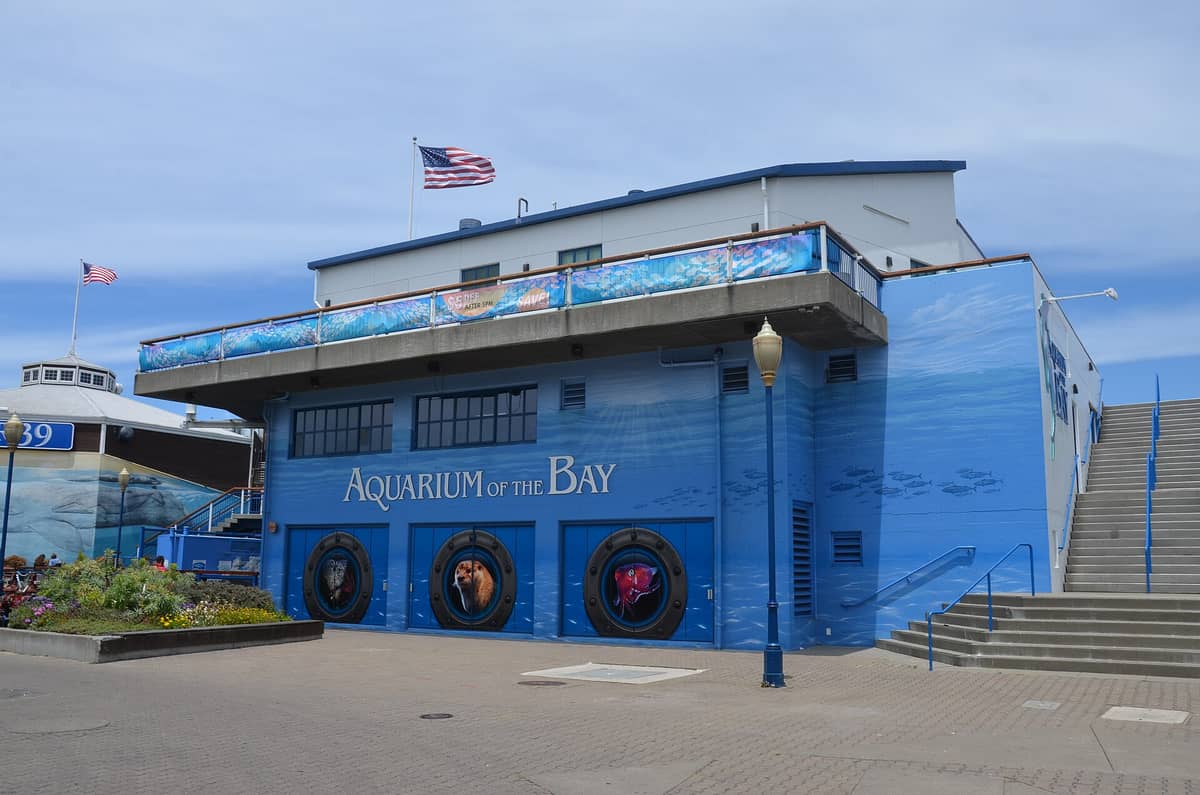
Aquarium of the Bay sits at the entrance to Pier 39 on Fisherman's Wharf, putting 24,000 marine animals and over 200 Bay-native species within arm's reach. From walk-through acrylic tunnels to touch pools filled with bat rays, it offers a focused, educational look at the waters just outside its walls.
Quick Facts
- Location
- The Embarcadero & Beach Street, Pier 39, Fisherman's Wharf, San Francisco, CA 94133
- Getting There
- F-line historic streetcar to The Embarcadero & Beach Street stop for Pier 39; Muni Bus 47 or 49 to North Point & Jones
- Time Needed
- 1.5 to 2.5 hours
- Cost
- Paid admission; timed tickets available online and on-site. Check aquariumofthebay.org for current USD pricing.
- Best for
- Families with children, marine life enthusiasts, rainy-day visits, first-time San Francisco visitors
- Official website
- www.aquariumofthebay.org
What Is Aquarium of the Bay?
Aquarium of the Bay is a public aquarium operated by Bay Ecotarium, a non-profit organization that has run the facility since 2001. Located at the entrance of Pier 39 on Fisherman's Wharf, it displays more than 24,000 marine animals representing over 200 species, all native to San Francisco Bay and its surrounding watershed. That focus on local ecology is what sets it apart from larger, more flashy aquariums: everything inside lives in or around the very body of water visible from the building's windows.
The aquarium traces its roots to UnderWater World, which opened in 1996 as one of the first tunnel-style aquariums on the West Coast. After a sale and rebranding around 2001, and its transition to non-profit status in 2001, it has continued to operate as a conservation- and education-oriented facility rather than a pure entertainment attraction. That distinction matters when setting expectations: the experience is closer to an interactive natural history exhibit than a spectacle.
ℹ️ Good to know
Standard hours are Monday through Sunday, 10:00 AM to 5:00 PM, with last entry at 4:30 PM. Hours are reduced on certain holidays — including early closure on November 26 and Christmas Eve — and the aquarium is closed on Christmas Day. Always check the official site before visiting.
The Walk-Through Tunnels: The Core Experience
The centerpiece of Aquarium of the Bay is its pair of acrylic walk-through tunnels, totaling roughly 360 feet in length. As you move through them, sharks, leopard sharks, bat rays, and large schools of anchovies glide overhead and alongside you. The light inside the tunnels is low and cool, filtered blue-green in a way that makes the fish look exactly as they would beneath the bay's surface on a clear day. The effect is quietly disorienting — pedestrian sounds from Pier 39 outside disappear, replaced by the soft hum of filtration systems and occasional bubbling.
The tunnels are wide enough for a stroller or wheelchair, and moving walkways carry visitors through at a gentle pace, though you can step off to linger. Morning visits, shortly after the 10:00 AM opening, tend to be noticeably calmer. The sharks are more active early in the day before large school groups arrive, and the relative quiet makes it easier to spend time watching individual animals rather than shuffling through with a crowd.
💡 Local tip
Photography tip: turn off your flash entirely inside the tunnels. Flash reflects hard off the acrylic walls and produces nothing useful. Instead, switch to a high-ISO setting and rely on the ambient blue light. The results are more atmospheric and the animals behave more naturally.
Tickets & tours
Hand-picked options from our booking partner. Prices are indicative; availability and final rates are confirmed when you complete your booking.
San Francisco Grand City bus tour and Aquarium of the Bay tickets
From 73 €Instant confirmationFree cancellationSan Francisco Aquarium of the Bay tickets
From 29 €Instant confirmationFree cancellationSonoma and Napa Valley wine tour from San Francisco
From 127 €Instant confirmationFree cancellationGo City | San Francisco Explorer Pass
From 76 €Instant confirmationFree cancellation
Touch Pools and Interactive Exhibits
Beyond the tunnels, the aquarium's touch pools are a genuine highlight, particularly for younger visitors. The bat ray touch pool allows direct contact with rays that glide toward the edges in anticipation of feeding — their skin feels like wet velvet, firm but flexible. Staff are stationed nearby to supervise and, if you ask, to explain what you're touching: bat rays are cartilaginous fish, related to sharks, and the stinging barb at the base of their tail is typically trimmed for safety in captivity.
Separate touch stations feature sea stars, sea urchins, and other intertidal species. The textures vary dramatically: sea urchin tests are chalky and fragile, sea star tube feet grip faintly against your fingertips. These aren't gimmicks — they're supervised encounters designed to make the biology tangible in a way that a display panel never quite achieves. For children who have seen marine life only in photographs, this section tends to produce the sharpest reactions.
The Ecosystem Context: Why Local Focus Matters
San Francisco Bay is one of the most ecologically complex estuaries on the Pacific Coast of North America, and Aquarium of the Bay uses that specificity to its advantage. Exhibits are organized around the bay's distinct zones: the open water, the rocky intertidal zone, the kelp forest fringe, and the bay floor. Species on display include sevengill sharks (rarely seen in captivity elsewhere), Pacific giant octopuses, rockfish, and various flatfish species — animals that are present in the bay outside the building.
That local specificity also connects to the aquarium's conservation work. Bay Ecotarium runs programs focused on bay water quality, salmon habitat restoration, and marine debris research. If you're spending more time exploring the waterfront, Pier 39 immediately outside has its own well-known resident California sea lions on K-Dock, which provide an unscripted complement to what you've just seen inside. The contrast between the aquarium's controlled environment and the wild colony lounging on the docks a few hundred feet away is worth the few minutes it takes to walk over.
Timing Your Visit: Crowds and Conditions
Fisherman's Wharf is one of the busiest tourist corridors in San Francisco, and Aquarium of the Bay shares that foot traffic. Weekends between late morning and early afternoon — roughly 11:00 AM to 2:00 PM — are when the building reaches its highest density. The tunnels become congested during this window, with visitors bunching up behind strollers and slow-moving groups. The touch pools can develop queues, and the ambient noise level rises considerably.
Weekday mornings are the most comfortable window, particularly Tuesday through Thursday. Arriving at opening time (10:00 AM) on a weekday gives you the tunnels almost entirely to yourself for the first 30 to 45 minutes. Late afternoons — the final hour before the 4:30 PM last entry — also thin out noticeably as day visitors shift toward dinner. This is a practical option if you've been elsewhere in the morning and want to fold the aquarium into a late afternoon on the waterfront.
San Francisco's weather is worth factoring in separately. The city's marine climate means June through August is often cool and foggy, with afternoon temperatures frequently in the mid-60s°F. For outdoor attractions, this matters a lot. For an indoor aquarium, it actually works in the facility's favor — Aquarium of the Bay is one of the better options on days when the fog sits low and heavy over the waterfront. See our guide to the best time to visit San Francisco for a fuller breakdown of seasonal conditions across the city.
⚠️ What to skip
Parking at and around Pier 39 is expensive and limited, particularly on weekends. The F-line historic streetcar runs directly along the Embarcadero from the Ferry Building to Fisherman's Wharf and is substantially easier than driving.
Getting There and Practical Details
The aquarium's address is Pier 39, The Embarcadero at Beach Street. By public transit, the most direct route from downtown San Francisco is the F-line historic streetcar, which runs along the Embarcadero from the Ferry Building northward to The Embarcadero & Beach Street for Pier 39. Muni buses 47 and 49 also serve the area, stopping near North Point and Jones streets. From those stops, it is a short walk west along the waterfront to the Pier 39 entrance.
If you're spending the day in this part of the city, the aquarium pairs naturally with other Fisherman's Wharf attractions. The San Francisco Maritime National Historical Park is a short walk west along the waterfront, and the Musée Mécanique at Pier 45 is an unusual collection of antique coin-operated arcade machines that appeals to both adults and children. Together, these three stops cover a good half-day without requiring any transit between them.
Accessibility: the aquarium was built in a modern facility at Pier 39 and the main public spaces, including the walk-through tunnels, are designed to accommodate wheelchairs and strollers. For specific accessibility questions — including seating options, elevator access, or service animal policies — the aquarium's team can be reached by phone at +1 415-623-5300.
Who Gets the Most From It
Aquarium of the Bay is a well-run, purpose-focused facility. The tunnel experience is impressive, the touch pools are among the more tactile in the region, and the ecological framing gives the visit a clarity that broader aquariums sometimes lack. For families with children between roughly 4 and 14 years old, it lands consistently well. For first-time visitors to San Francisco looking for a reliable indoor option on a foggy day, it delivers.
For visitors who have already done a major metropolitan aquarium — Monterey Bay Aquarium, for instance, which is considerably larger and more comprehensive — Aquarium of the Bay may feel limited in scope. It is also a paid attraction in a neighborhood that has several free or low-cost alternatives. The Crissy Field waterfront and the sea lion colony at Pier 39's K-Dock are both free. Travelers on tight budgets should weigh the admission cost against those options. Our guide to free things to do in San Francisco covers many waterfront alternatives.
Visitors primarily interested in large pelagic species — whale sharks, manta rays, massive tuna schools — will not find them here. The collection is intentionally local, which is its strength and its limitation simultaneously. Know that going in and the visit is satisfying; arrive expecting a comprehensive world-ocean experience and it will disappoint.
Insider Tips
- Book timed tickets online before arriving, especially on summer weekends. Walk-up availability exists but the 10:00 AM slot can sell out on peak days, and the difference between the first slot and the 11:30 AM slot in terms of crowd density is significant.
- The tunnel moving walkway has a stationary side lane. Step onto it and let the belt carry you through once for orientation, then walk back through at your own pace on the stationary side — you'll see far more.
- If you're visiting with a child who is anxious about enclosed spaces, preview the tunnel online first. The low blue light and close-overhead shark movement occasionally startles young children who aren't prepared for it.
- Ask staff at the touch pool about the animals rather than relying solely on the posted signage. The educators stationed there are generally knowledgeable and willing to explain feeding patterns, sensory biology, and conservation status in detail.
- The aquarium gift shop carries a curated selection of marine conservation materials and California-specific field guides that are genuinely harder to find elsewhere in the Fisherman's Wharf area. Worth a look even if you're not buying souvenirs.
Who Is Aquarium of the Bay For?
- Families with children ages 4 to 14 looking for an engaging, hands-on indoor experience
- First-time San Francisco visitors wanting to understand the bay ecosystem alongside the city's waterfront
- Rainy or heavily foggy days when outdoor waterfront exploration is less appealing
- Travelers with a specific interest in Pacific Coast and bay marine biology
- Groups that include both adults and young children needing a shared activity with broad appeal
Nearby Attractions
Other things to see while in Fisherman's Wharf:
- Alcatraz Island
Alcatraz Island sits 1.5 miles offshore in San Francisco Bay, and the ferry ride alone sets the mood. Once a military fortification, then a federal penitentiary from 1934 to 1963, the island is now a National Park Service site offering one of the most atmospheric historical experiences on the West Coast. Allow at least three hours, and book tickets well in advance.
- Ghirardelli Square
Once the city's working chocolate factory, Ghirardelli Square is now listed on the National Register of Historic Places, located at the western end of Fisherman's Wharf. The 1890s brick buildings house restaurants, shops, and the original Ghirardelli Chocolate Experience, all set around a fountain plaza with views toward San Francisco Bay. Entry is free.
- Musée Mécanique
Housed in a cavernous shed on Pier 45 at Fisherman's Wharf, Musée Mécanique is a free-admission museum of over 300 antique coin-operated machines spanning more than a century of American amusement culture. From hand-cranked peep shows to full-sized mechanical orchestras, this is a place where history runs on quarters.
- Pier 39
PIER 39 is a free-to-enter shopping and entertainment complex on San Francisco's northern waterfront. Famous for its resident California sea lions and sweeping bay views, it draws millions of visitors each year. Here's how to make the most of a visit without the rookie mistakes.