Castro Theatre: San Francisco's Grand Movie Palace Is Still Worth the Trip
The Castro Theatre is a 1922 Spanish Colonial Baroque movie palace in San Francisco's Castro District, seating around 1,400 people (official capacity 1,407). It currently functions primarily as an event and performance venue with programming managed in partnership with Another Planet Entertainment, and does not run traditional daily multiplex-style screenings.
Quick Facts
- Location
- 429 Castro Street, San Francisco, CA 94114 (Castro District)
- Getting There
- Muni Metro light rail: Castro Station, directly across the street (served by multiple Market Street subway lines; check current Muni map).
- Time Needed
- 2–3 hours for a film or event; 10–15 minutes to view the exterior
- Cost
- Varies by event (USD); tickets at thecastro.com or Another Planet Entertainment’s ticketing pages.
- Best for
- Film buffs, architecture lovers, LGBTQ+ history, special events
- Official website
- thecastro.com
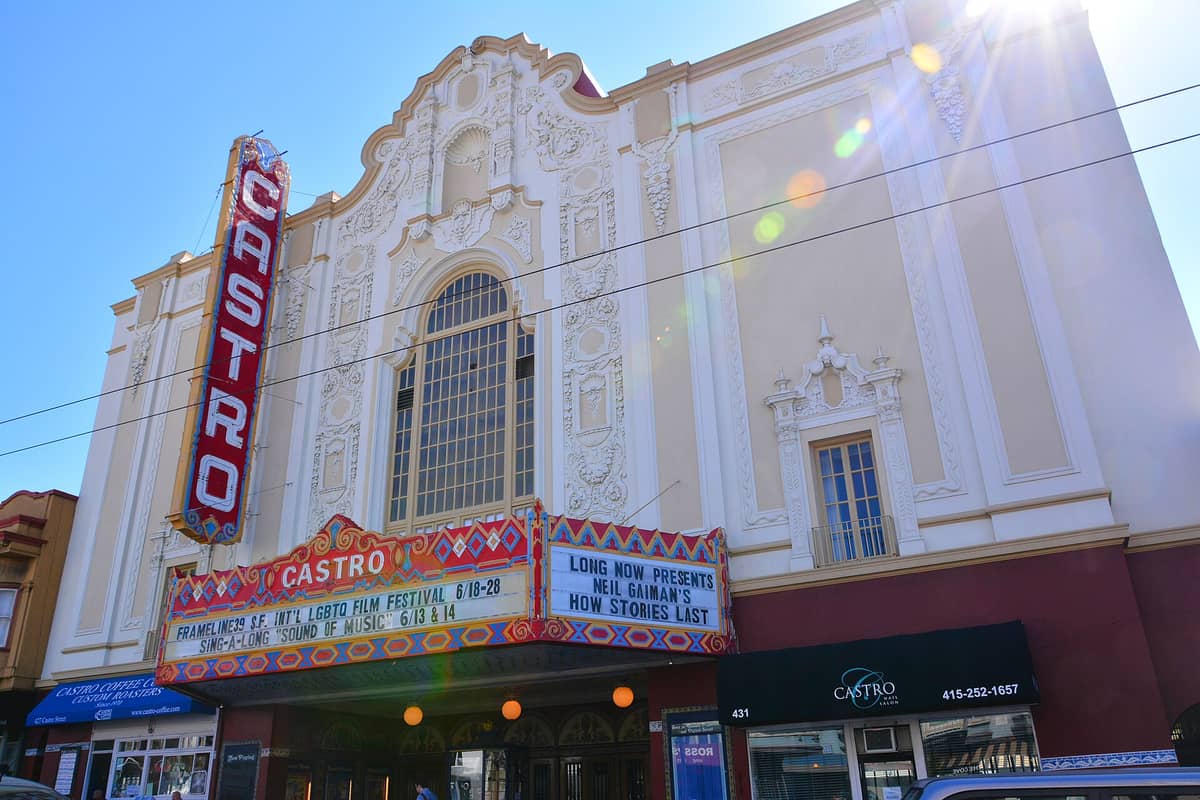
What the Castro Theatre Actually Is
The Castro Theatre is not a multiplex. It is a single-screen, 1,407-seat movie palace that opened on June 22, 1922, and has operated continuously in some form ever since. Its Spanish Colonial Baroque facade dominates the 400 block of Castro Street: a large arched central window, a scrolling pediment that references the city's early Mission architecture, and ornamental plasterwork that was expensive to execute even a century ago. Inside, the auditorium holds all the period detail you expect from a 1920s picture palace — a vaulted ceiling, a traditional pipe organ, and seating that fills to near capacity on the right night.
It is not a museum you can walk through at noon on a Tuesday. The Castro Theatre operates as an event venue: no fixed public hours, no daily screenings on a permanent schedule. Events range from classic film retrospectives and San Francisco International Film Festival screenings to elaborate themed sing-alongs, drag performances, and live concerts. The box office opens roughly 30 minutes before doors. If you want to experience the interior, you need to plan around an event.
💡 Local tip
Check the schedule at thecastro.com before visiting. The exterior is always viewable, but the interior is only accessible during scheduled events. Spontaneous walk-ins are rarely possible.
The Architecture: What to Look for on the Facade
The building was designed by Timothy Pflueger, a San Francisco architect who went on to design the Paramount Theatre in Oakland and contributed to several downtown SF landmarks. The Castro Theatre's exterior draws deliberately on California Mission iconography: the curved gable, the decorative ironwork, and the warm plaster tones all echo the 18th-century Spanish Colonial churches that dot the California coast. The reference to Mission Dolores, located about a mile away in the Mission District, is not coincidental — the Castro neighborhood itself developed in the decades after the Mission era.
The vertical marquee sign, lit at night in a warm yellow-white, is one of the most photographed details on Castro Street. Positioned mid-block, it anchors the visual identity of the neighborhood the way a church steeple might anchor a European square. Arrive in the early evening before an event and the glow of the marquee against the darkening sky above Twin Peaks gives the block a cinematic quality that photographs well from the opposite sidewalk, especially with a wide lens.
The architectural character of the Castro Theatre fits naturally into a broader exploration of San Francisco's built heritage. If this kind of detail interests you, the San Francisco architecture guide covers other significant examples across the city, from the Beaux-Arts City Hall to the Transamerica Pyramid.
Tickets & tours
Hand-picked options from our booking partner. Prices are indicative; availability and final rates are confirmed when you complete your booking.
Tour San Francisco's hidden gems of Castro in a city exploration game
From 10 €Instant confirmationFree cancellationSonoma and Napa Valley wine tour from San Francisco
From 127 €Instant confirmationFree cancellationGo City | San Francisco Explorer Pass
From 76 €Instant confirmationFree cancellationMuir Woods and Sausalito guided tour with transportation
From 82 €Instant confirmationFree cancellation
The Castro District: Context That Changes the Visit
The Castro Theatre sits at the physical and symbolic center of one of the most historically significant LGBTQ+ neighborhoods in the world. The Castro District gained international attention through the 1970s political organizing of Harvey Milk, who ran a camera shop less than two blocks from the theatre on Castro Street, and who became the first openly gay man elected to public office in California. The neighborhood's identity — and the theatre's role within it — is inseparable from that history.
Walking to the theatre from Castro Station, you pass the Rainbow Honor Walk embedded in the sidewalk, a series of bronze plaques honoring LGBTQ+ figures from history. The intersection of Castro and Market is one of the busiest in the neighborhood, particularly on weekend evenings. The mix of longtime residents, tourists, and regulars at nearby bars and restaurants creates a street-level energy that is part of the experience even before you enter the theatre.
The Castro is one of San Francisco's most distinct neighborhoods, worth at least a few hours of exploration before or after your event. The Castro neighborhood guide covers what to see, eat, and understand about the area.
What Events Are Like Inside
The auditorium interior rewards the kind of slow attention that most modern cinemas discourage. The ceiling is ornate, the side walls carry decorative plasterwork, and the curtain-and-proscenium setup gives the screen a theatrical formality that flat-walled multiplexes lack. The Mighty Wurlitzer organ — a historic instrument installed in the early 1980s — is played before certain events and during intermissions, producing a sound that fills the full volume of the space in a way that surprises people who have only heard pipe organs in churches.
Crowd behavior shifts significantly depending on the event type. Classic film screenings attract quiet, attentive audiences. Sing-along events — the Mamma Mia and Sound of Music screenings are perennially popular — draw audiences in costume who arrive early to find the best seats. Rocky Horror-style events have their own ritualistic audience participation culture. For first-timers, a classic film festival screening or a themed repertory night offers the most coherent introduction to what makes the space special.
The seating is traditional fixed-row cinema seating, not stadium-style. Sightlines from the rear of the orchestra level and from the balcony are good, though the older seats lack the reclining comfort of contemporary multiplex chairs. Come prepared to sit upright for two to three hours. There is a concession stand that operates during events.
ℹ️ Good to know
Accessibility details are not comprehensively published on the website. Contact the venue directly at +1 415-864-0815 or via thecastro.com before your visit if you have specific accessibility requirements.
Getting There and Practical Logistics
The Castro Theatre's location, directly across from Castro Street Station on the Muni Metro subway, makes it one of the more transit-accessible venues in San Francisco. Multiple Market Street subway lines stop at Castro Station, providing connections to Market Street, the Embarcadero, and the broader Muni network. From Union Square, the journey is roughly 15–20 minutes by Muni Metro including station access time. Street parking in the Castro is competitive on evenings with popular events; transit is the practical choice for most visitors.
If you are navigating San Francisco's transit system for the first time, the guide to getting around San Francisco explains Muni, BART, and cable car options clearly.
Tickets are sold through thecastro.com and apeconcerts.com, with box office sales available subject to availability on event nights. Prices vary by event and are listed in USD. No single standard admission price applies across all programming. For major film festival events or high-demand sing-alongs, advance purchase is strongly advisable; popular screenings can sell out weeks ahead.
San Francisco evenings, even in summer, trend cool. The Castro District sits in a sheltered valley between Twin Peaks and Noe Valley, which means it gets less of the city's notorious fog than western neighborhoods, but evening temperatures still drop into the mid-50s Fahrenheit (roughly 12–13°C) by the time most events let out. Bring a layer even in July or August.
Who Will Get the Most From a Visit, and Who Might Not
The Castro Theatre rewards people who care about either film history, architectural preservation, or the cultural history of San Francisco's LGBTQ+ community. For a film enthusiast, watching a classic print in a 1,400-seat picture palace with a live organ introduction is a materially different experience from any streaming service or modern multiplex. For architecture travelers, the Pflueger-designed interior is one of the best surviving examples of the form in California.
Travelers focused on LGBTQ+ history will find the Castro Theatre genuinely central to the neighborhood's cultural identity. The GLBT Historical Society Museum, a few minutes' walk away, provides deeper archival context for the community history surrounding the theatre.
Visitors looking for a standard daily tourist attraction will find it frustrating. There is nothing to see inside outside of event hours. The exterior is impressive and worth five minutes of examination, but it does not justify a dedicated trip from across the city unless an event is scheduled. If your San Francisco itinerary is short and event-focused, verify dates and book tickets before you arrive, not after.
⚠️ What to skip
The Castro Theatre has no regular daily hours. Do not arrive expecting to tour the interior. All visits require a ticket to a scheduled event.
Insider Tips
- For the clearest view of the facade and marquee, stand on the opposite side of Castro Street near the Castro Street Station entrance. The full width of the building and the vertical sign read best from roughly 40 feet away at street level.
- Organ performances before screenings are not always advertised prominently in event listings. Check the Castro Organ Devotees Association (CODA) schedule alongside the main events calendar if hearing the Wurlitzer is a priority.
- Arrive at least 20 minutes before doors open for popular events, not just 30 minutes. Pre-show queues for high-demand screenings form on the sidewalk and the best seats in the orchestra center go quickly once doors open.
- The balcony level often has better availability than the orchestra for last-minute ticket purchases and offers a solid angle for taking in the full sweep of the auditorium ceiling during intermission.
- Major film festivals—including Frameline and the San Francisco International Film Festival—regularly use the Castro Theatre as a primary venue. Checking those festival schedules separately from the theatre's own calendar often reveals screenings not prominently featured on the main booking page.
Who Is Castro Theatre For?
- Film enthusiasts who want to experience classic or repertory cinema in a historic single-screen format
- Architecture and preservation travelers interested in 1920s California picture palace design
- Visitors exploring the cultural and political history of the Castro District and San Francisco's LGBTQ+ community
- Travelers looking for a distinctive live-audience event, from sing-alongs to film festivals
- Returning visitors to San Francisco who want an experience beyond the standard tourist circuit
Nearby Attractions
Other things to see while in The Castro:
- GLBT Historical Society Museum
Located in the heart of San Francisco's Castro District, the GLBT Historical Society Museum is the first stand-alone museum of LGBTQ history and culture in the United States. Compact but deeply considered, its two galleries trace decades of queer life, activism, and identity through archival photographs, personal objects, and rotating exhibitions.