GLBT Historical Society Museum: America's First Dedicated LGBTQ History Museum
Located in the heart of San Francisco's Castro District, the GLBT Historical Society Museum is the first stand-alone museum of LGBTQ history and culture in the United States. Compact but deeply considered, its two galleries trace decades of queer life, activism, and identity through archival photographs, personal objects, and rotating exhibitions.
Quick Facts
- Location
- 4127 18th Street, Castro District, San Francisco, CA 94114
- Getting There
- Muni Metro K, L, M (and T Third through the subway) to Castro Station; F Market streetcar and buses 24, 33, 35, and 37 also stop nearby
- Time Needed
- 1.5 to 2 hours
- Cost
- General $10 USD; Discounted $6 USD (students, teachers with ID, seniors 65+, youth 13–17, active military, people with disabilities); Children 12 and under free; Free first Wednesday of each month
- Best for
- History enthusiasts, LGBTQ travelers, first-time visitors wanting cultural depth
- Official website
- www.glbthistory.org
What the GLBT Historical Society Museum Actually Is
The GLBT Historical Society Museum at 4127 18th Street is the first stand-alone museum dedicated to LGBTQ history and culture in the United States. That distinction reflects a gap this institution filled when it opened in January 2011. Before it existed, no museum in the country had committed its full permanent space to documenting queer lives, activism, and community as a primary mission.
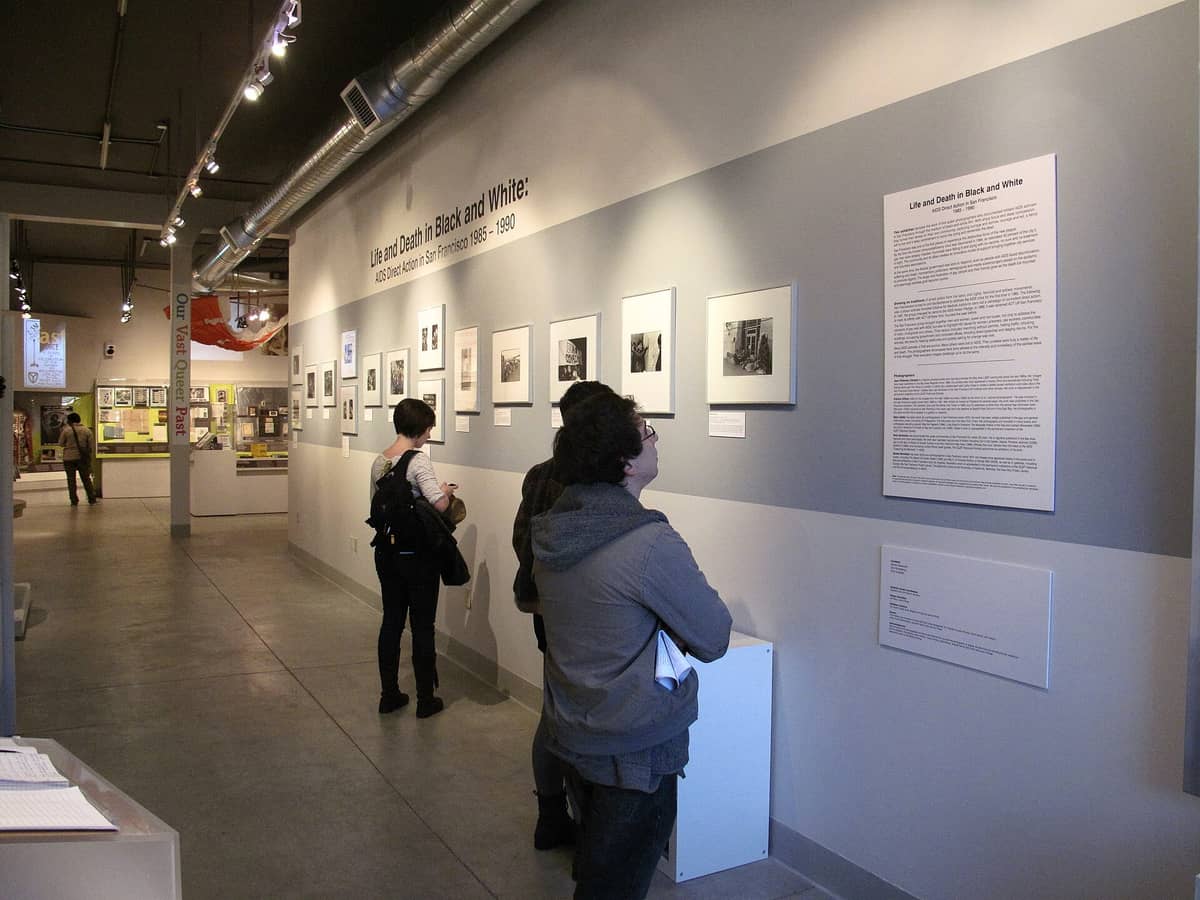
The space is modest by the standards of major institutions: approximately 1,600 square feet, housing two historical galleries, a small museum shop, a reception area, and a room used for public programs. Every object, photograph, and panel has been selected from the society's archival holdings, which include personal correspondence, political ephemera, photographs, film, and oral histories stretching back decades.
ℹ️ Good to know
The museum is free to all visitors on select free days announced on the museum's events page. Membership in the GLBT Historical Society grants free entry year-round.
The Setting: Half a Block from the Heart of the Castro
The museum sits half a block west of the Castro and 18th Street intersection, placing it at the geographic and cultural center of one of the most historically significant LGBTQ neighborhoods in the world. The Castro District earned its character through decades of community organizing, political struggle, and cultural expression. Standing on 18th Street and looking toward Castro Street, you see rainbow crosswalks, the marquee of the historic Castro Theatre, and storefronts that have served this community across multiple generations.
That context matters when you walk into the museum. The exhibitions do not exist in isolation from the neighborhood around them; the streets outside are part of the story being told inside. Visitors who take time to walk the neighborhood before or after their visit tend to find the exhibitions more resonant. For a broader orientation to the area, the Castro District is worth exploring on its own terms, with the museum as an anchor for your visit.
Tickets & tours
Hand-picked options from our booking partner. Prices are indicative; availability and final rates are confirmed when you complete your booking.
Sonoma and Napa Valley wine tour from San Francisco
From 127 €Instant confirmationFree cancellationGo City | San Francisco Explorer Pass
From 76 €Instant confirmationFree cancellationMuir Woods and Sausalito guided tour with transportation
From 82 €Instant confirmationFree cancellationSan Francisco CityPASS
From 77 €Instant confirmationFree cancellation
Inside the Galleries: What You Will Find
The museum's two galleries typically hold a combination of permanent and rotating exhibition content. The permanent material draws from the society's archival holdings to trace the history of LGBTQ life in San Francisco and, by extension, in the United States more broadly. You will encounter objects that carry genuine emotional weight: handwritten letters between lovers separated by circumstance, protest banners from marches that changed legislation, photographs of people who built community in conditions of legal and social hostility.
The rotating exhibitions allow the museum to respond to current moments in LGBTQ culture and politics, or to spotlight specific communities and periods that might otherwise receive less attention. Past exhibitions have focused on subjects ranging from transgender history to specific decades in San Francisco's queer past. It is worth checking the museum's current programming before your visit, as the rotating content significantly shapes what the experience feels like on any given day.
The scale of the space means you will not get lost. Two galleries, a shop near the entrance, and a program room. There is no sprawling floor plan to navigate; the experience rewards slow, attentive looking rather than coverage. Budget an hour at minimum. Visitors with a deeper interest in the material, particularly those who want to read archival documents in full or spend time with photographs, will find two hours passes quickly.
When to Visit and How the Experience Changes
The museum is open Tuesday through Sunday from 11:00 a.m. to 1:00 p.m. and again from 1:30 p.m. to 5:00 p.m. It is closed on Mondays. The midday break is worth noting if you are planning a tight schedule. Arriving at 11:00 a.m. when doors open tends to be the quietest time, with foot traffic picking up through the early afternoon. Weekend afternoons see the most visitors, particularly during summer and around Pride-related events.
San Francisco's summer, roughly June through August, brings peak tourism to the Castro. The neighborhood fills up on weekends, and the Castro Street Fair in October draws large crowds to the area. If you prefer a contemplative visit with room to linger over individual objects, a weekday morning between Tuesday and Friday is your best option. The museum's intimate scale means that even a moderate number of visitors can make the galleries feel full. Weather is largely irrelevant here since the experience is entirely indoors, but the walk from the Muni station is exposed to San Francisco's characteristic fog, so a light layer is sensible year-round.
💡 Local tip
Hours occasionally change for special installations, private events, or public programs. Check the visitor information page at glbthistory.org before you go, particularly if visiting on a holiday or during a major neighborhood event like Pride weekend.
Historical Context: Why This Museum Exists Here
The GLBT Historical Society was founded in 1985, initially as an archive and research organization rather than a museum. For decades it collected, preserved, and made accessible materials that mainstream institutions were not prioritizing: the personal papers of activists, the records of community organizations, the ephemera of bars, bathhouses, and political campaigns. By the time the dedicated museum space opened in January 2011, the society had built a major LGBTQ archive.
The museum was known as the GLBT History Museum until November 2018, when it was renamed the GLBT Historical Society Museum to reflect the organization behind it more clearly.
The Castro's role as a center of LGBTQ political and cultural life in the United States gives the museum's location a significance that cannot be replicated elsewhere. Harvey Milk, whose assassination in 1978 became a galvanizing moment in LGBTQ history, ran his camera shop on Castro Street. The neighborhood's story and the museum's collection are inseparable. The Castro Theatre, a block away, is itself a landmark in that story, having hosted community events and screenings for over a century.
Getting There and Practical Details
The museum is straightforwardly accessible by public transit. Muni Metro service to Castro Station connects via the downtown subway, and from there 18th Street is a short walk south. The walk is flat from the station to the museum. Parking in the Castro is limited and competitive, particularly on weekends, so transit is the practical choice for most visitors.
The museum is on a single level, which makes it accessible for wheelchair users and those with mobility considerations. Discounted admission is available for people with disabilities. For specific questions about accessibility services, contacting the museum directly through the details on glbthistory.org is recommended. For broader guidance on getting around the city, the getting around San Francisco guide covers Muni, BART, and transit passes in detail.
Admission is $10 USD for adults and $6 USD for youth aged 13 to 17, seniors aged 65 and over, students and teachers with valid ID, active-duty military with ID, and people with disabilities. Children age 12 and under enter free. Members of the GLBT Historical Society enter free. The museum is free to everyone on the first Wednesday of each month.
Who Gets the Most From This Museum, and Who Might Not
This museum works best for visitors who come with some curiosity about history and are willing to engage closely with archival material. The exhibitions are text-heavy in places, and the value of the experience increases considerably if you slow down to read, look closely at photographs, and follow the context provided for individual objects. Visitors expecting the kind of multimedia spectacle or interactive technology common in larger institutions will find the approach more traditional.
Families with young children will need to gauge the content against their children's maturity; some exhibition material engages directly with topics including political violence, discrimination, and adult community life. The museum is not inappropriate for teenagers, and the $6 youth admission reflects that young visitors are welcome, but the content is not designed primarily for children. For family-oriented options nearby, San Francisco with kids offers better-matched alternatives.
Visitors with a deep existing knowledge of LGBTQ history may find the permanent galleries cover familiar ground, though the quality of the archival materials and the rotating exhibitions usually provide something less commonly seen. Researchers and those with academic interest in the subject are particularly well served, and the society's archival resources beyond the museum are available through separate access arrangements.
Insider Tips
- Visit on the first Wednesday of the month for free admission. It can be slightly busier than a typical weekday morning, but the savings make it worth planning around.
- The museum shop near the entrance stocks publications and archival reproductions that you will not easily find elsewhere. Worth browsing even if you are not a regular buyer of museum merchandise.
- Check the museum's event calendar before your visit. Public programs, film screenings, and panel discussions are held in the program room and are often free or low-cost; some are among the most thoughtful LGBTQ cultural events in the city.
- The Castro Street Fair in early October draws large crowds to the immediate neighborhood. The museum itself is calmer during fair day than the street outside, making it an unexpectedly good time to visit if you want contrast to the outdoor festivities.
- Give yourself time to read the wall text in full. The exhibition labels and interpretive panels are written with genuine care and contain historical detail that rewards attention, not just a quick scan.
Who Is GLBT Historical Society Museum For?
- Travelers with a specific interest in LGBTQ history and culture seeking primary source material
- First-time visitors to San Francisco wanting cultural and historical depth beyond landmark sightseeing
- History and museum enthusiasts who appreciate archival exhibitions over interactive spectacle
- LGBTQ travelers for whom the Castro and its history carry personal significance
- Researchers, students, and educators with an interest in American social and political history
Nearby Attractions
Other things to see while in The Castro:
- Castro Theatre
The Castro Theatre is a 1922 Spanish Colonial Baroque movie palace in San Francisco's Castro District, seating around 1,400 people (official capacity 1,407). It currently functions primarily as an event and performance venue with programming managed in partnership with Another Planet Entertainment, and does not run traditional daily multiplex-style screenings.