San Francisco Architecture: A Guide to the City's Buildings and Styles
San Francisco's built environment spans Victorian row houses, Edwardian flats, Beaux-Arts civic monuments, and bold modernist towers. This guide breaks down the key styles, landmark buildings, and best neighborhoods to explore on foot, with practical advice for architecture walks in any season.
Plan and book this trip
Tools from our partner Travelpayouts help you compare flights and hotels. If you book through them, we may earn a commission at no extra cost to you.
Flights
Hotels map
TL;DR
- San Francisco's architecture is not dominated by one style. Victorian, Edwardian, Mission Revival, Art Deco, and contemporary buildings coexist across different neighborhoods.
- The 1906 earthquake destroyed roughly 28,000 buildings, triggering a reconstruction boom that produced more Edwardian homes than Victorian ones. The Painted Ladies are iconic, but they represent just one layer of the city's architectural history.
- Major landmarks including the Golden Gate Bridge, Transamerica Pyramid, Coit Tower, and Palace of Fine Arts are free to view from the outside. Interior access and parking fees vary.
- Fall (September and October) offers the clearest skies for architecture photography. Summer fog can obscure skyline views from June through August.
- SF City Guides runs free docent-led walking tours covering architectural highlights. Registration is required in advance. See also the San Francisco walking tours guide for more self-guided options.
How the 1906 Earthquake Shaped San Francisco's Built Environment
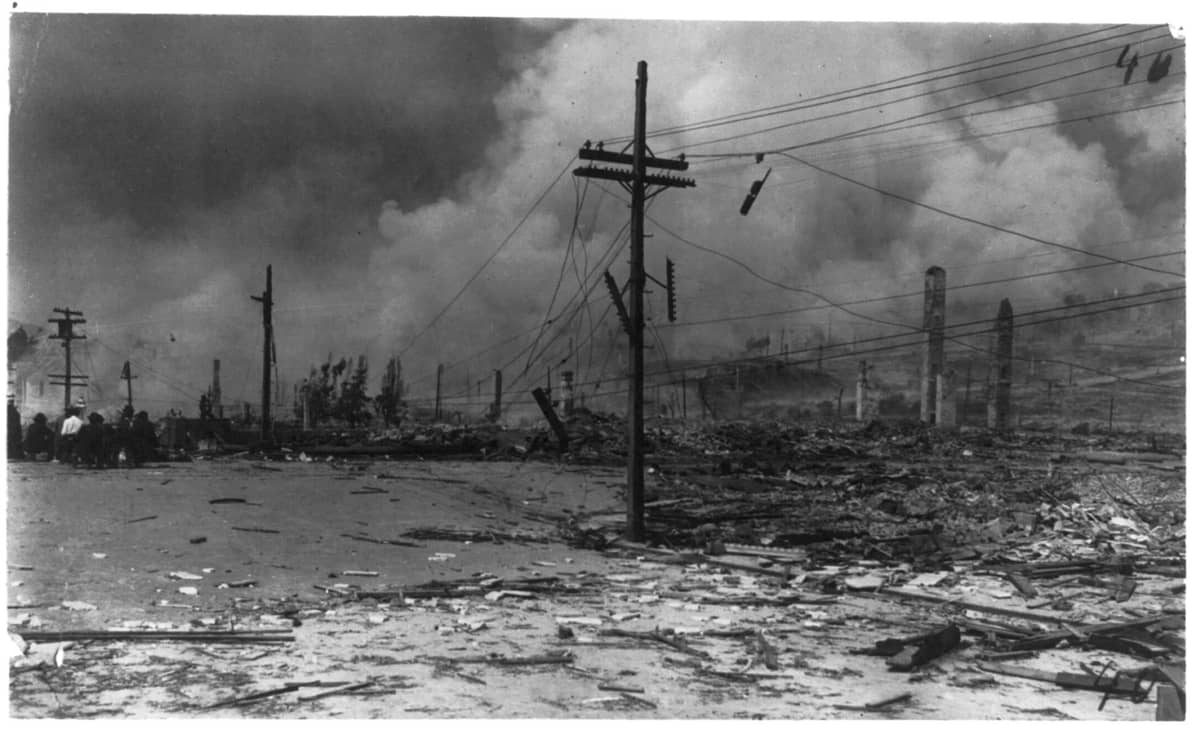
No single event has shaped San Francisco's architecture more than the earthquake and fire of April 1906. The disaster destroyed approximately 28,000 buildings, roughly half of the city's entire building stock at the time. What followed was one of the fastest urban reconstruction efforts in American history, with tens of thousands of homes built between 1906 and 1915 in what is now classified as the Edwardian style.
The common assumption is that San Francisco is a Victorian city. The reality is that Edwardian homes now outnumber Victorian ones. Edwardian construction in San Francisco typically meant flats with flat or boxed bay windows, simpler ornamentation than the ornate Queen Anne Victorians that came before, and a standardized plan that could be replicated quickly across entire city blocks. Many of these buildings are clad in the same redwood-framed stucco that still defines residential streets in the Sunset, Richmond, and Noe Valley neighborhoods today.
The earthquake also accelerated structural experimentation. Engineers and architects adopted reinforced concrete construction far earlier in San Francisco than in most American cities, partly out of necessity and partly because the rebuilding period coincided with rapid advances in the technology. The Hallidie Building (1917), often cited as one of the first glass curtain-wall buildings in the world, emerged from this post-earthquake climate of architectural ambition.
ℹ️ Good to know
San Francisco's Planning Department maintains detailed Historic Context Statements for individual neighborhoods through its SF Histories portal. These are free to download and offer block-by-block architectural surveys that serious architecture enthusiasts will find invaluable before visiting.
Victorian and Edwardian Architecture: What to Look For
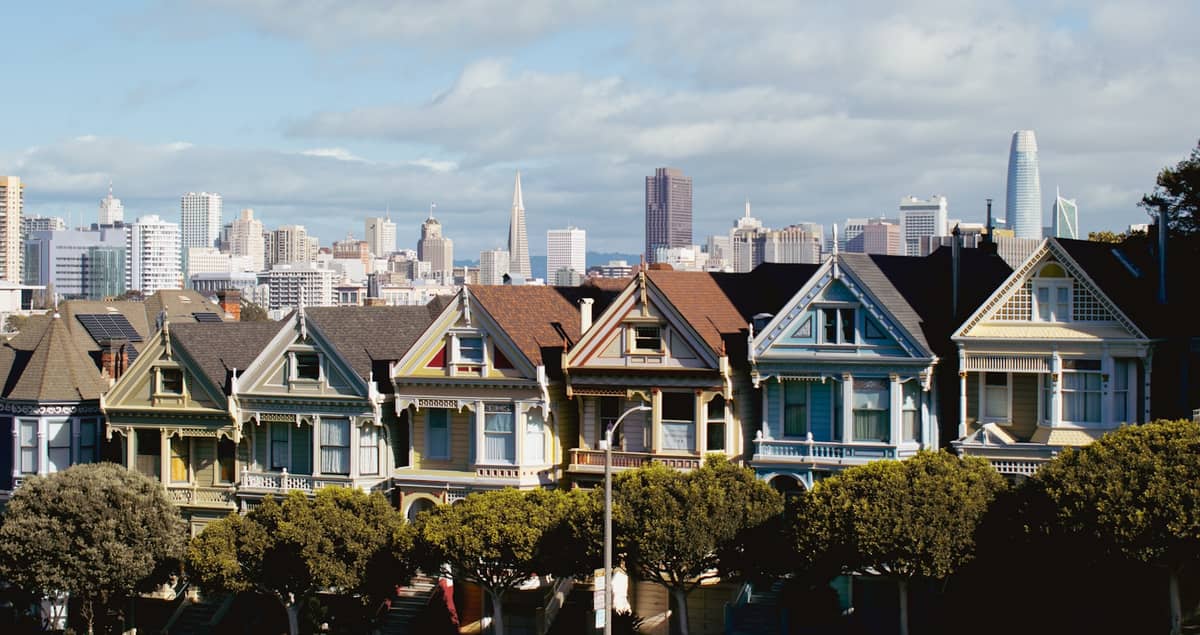
San Francisco has one of the largest concentrations of intact Victorian homes in the United States, with most built between approximately 1870 and 1906. The term 'Victorian' covers several distinct sub-styles: Italianate (flat facades, tall narrow windows, bracketed cornices), Stick-Eastlake (vertical board detailing, applied ornamentation), and Queen Anne (rounded towers, wraparound porches, asymmetric facades with heavy ornamental detail). Each style corresponds roughly to a decade, which makes San Francisco's Victorian blocks useful as an informal timeline of late 19th-century taste.
The most photographed Victorian concentration is Alamo Square's Painted Ladies, a row of Queen Anne Victorians on Steiner Street facing the downtown skyline. They photograph well, but the more architecturally varied Victorian streetscapes are found in the Western Addition and along specific blocks in Pacific Heights, where Italianate, Stick, and Queen Anne homes sit side by side. The Haight-Ashbury district also has a dense concentration of well-preserved Victorian flats, many of which retain original wood detailing that was stripped from comparable homes in other cities.
- Italianate (1860s–1880s) Flat or slanted bay windows, tall narrow proportions, decorated cornices with bracketing. Common in Western Addition and Cow Hollow.
- Stick-Eastlake (1870s–1890s) Flat facades with applied vertical boards and lathe-turned spindle ornamentation. Easier to build than Queen Anne, so more common on smaller lots.
- Queen Anne (1880s–1900s) Rounded corner towers, wraparound porches, fishscale shingles, and asymmetric rooflines. The most visually complex Victorian style, concentrated in Pacific Heights and Alamo Square.
- Edwardian (1906–1915) Post-earthquake style defined by flat or box bay windows, less ornamentation than Queen Anne, and efficient floor plans. The dominant residential style by sheer numbers.
💡 Local tip
Bay windows are not just decorative in San Francisco. They were a practical response to the city's narrow lots and Planning Code rules that exempted bay windows from square footage calculations, allowing builders to add floor space without technically exceeding lot coverage limits. Look for this detail on nearly every block of Victorian and Edwardian construction.
Iconic Landmarks: Art Deco, Beaux-Arts, and Modernist Monuments
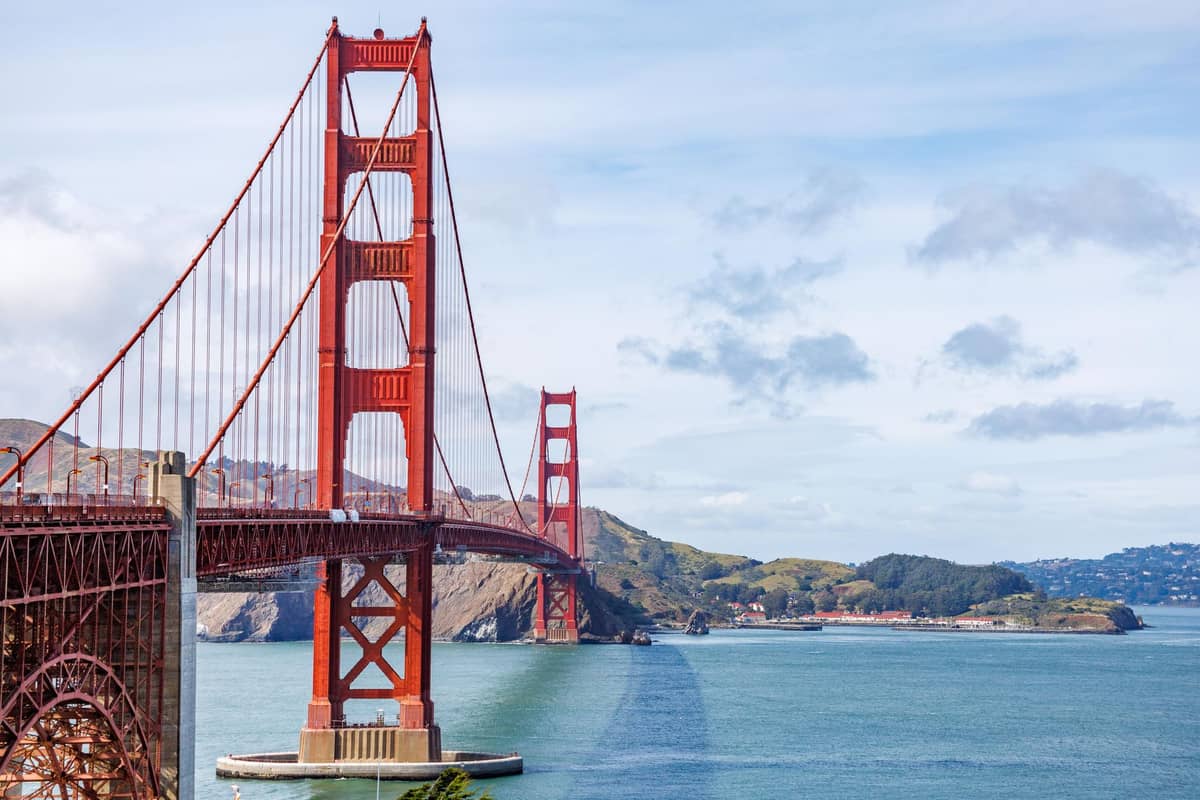
The Golden Gate Bridge, completed in 1937, is the most globally recognized piece of San Francisco architecture. Its Art Deco towers, designed with architect Irving Morrow contributing to the aesthetic detailing, rise 746 feet above the water. The International Orange paint color was originally applied as a sealant primer but was retained after Morrow argued it complemented the surrounding landscape. The bridge is free to view from multiple points, including the south plaza walkway.
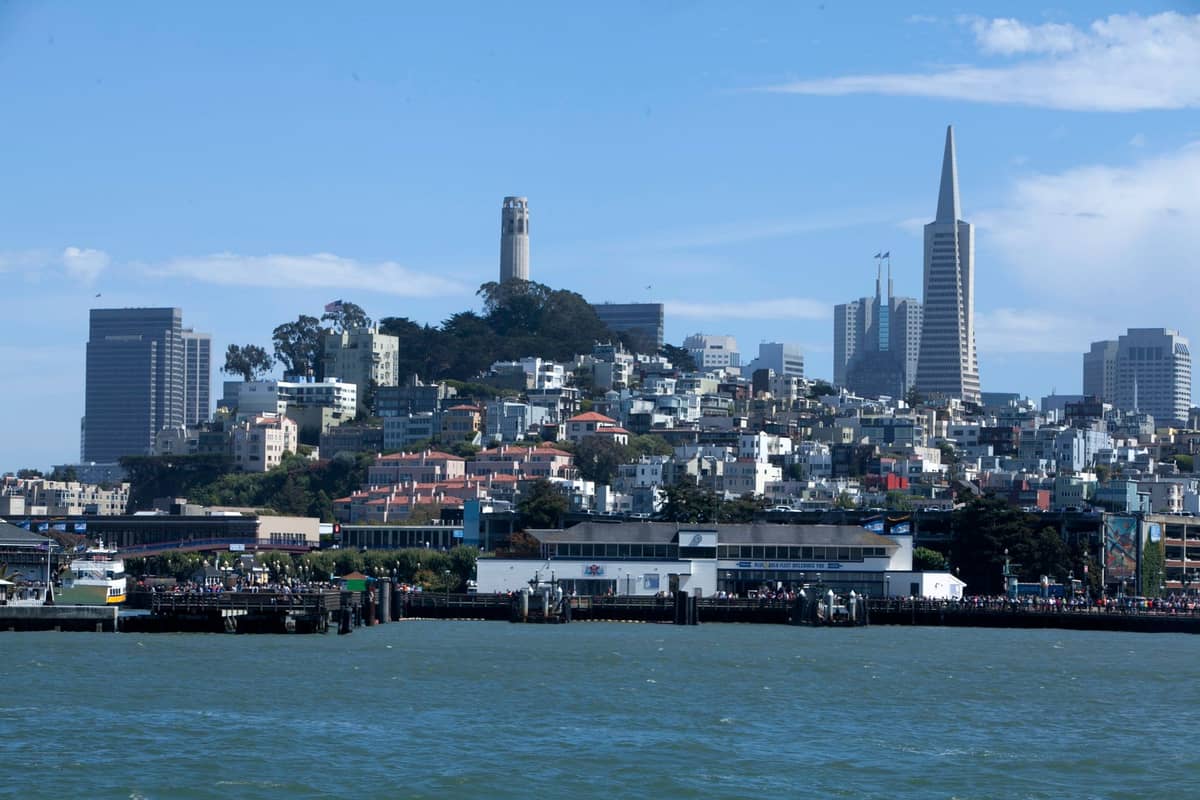
The Transamerica Pyramid (1972) is the other building most associated with the San Francisco skyline. Designed by William Pereira, its tapered form was controversial at the time of construction. The building sits in the Financial District and is visible from multiple neighborhoods. It no longer houses the Transamerica Corporation, and public access to the interior is limited, but the surrounding Redwood Park at its base is publicly accessible.
Coit Tower (1933) in Telegraph Hill is a fluted concrete column in the Art Deco style, notable as much for its interior WPA murals as for its exterior form. The tower was designed by Arthur Brown Jr., who also designed San Francisco City Hall. Entry to the interior and observation level costs a small fee, while walking to the base through the Greenwich or Filbert Steps is free and passes through gardens maintained entirely by neighborhood volunteers.
The Palace of Fine Arts in the Marina District is San Francisco's most theatrical piece of architecture. Bernard Maybeck designed the original 1915 structure for the Panama-Pacific International Exposition in the Beaux-Arts Roman-classical tradition. The current structure is a 1960s reinforced concrete reconstruction of the original. The rotunda and colonnade surrounding the lagoon are free to walk through at any time and photograph from the surrounding lawn.
Architecture by Neighborhood: Where to Focus Your Walks
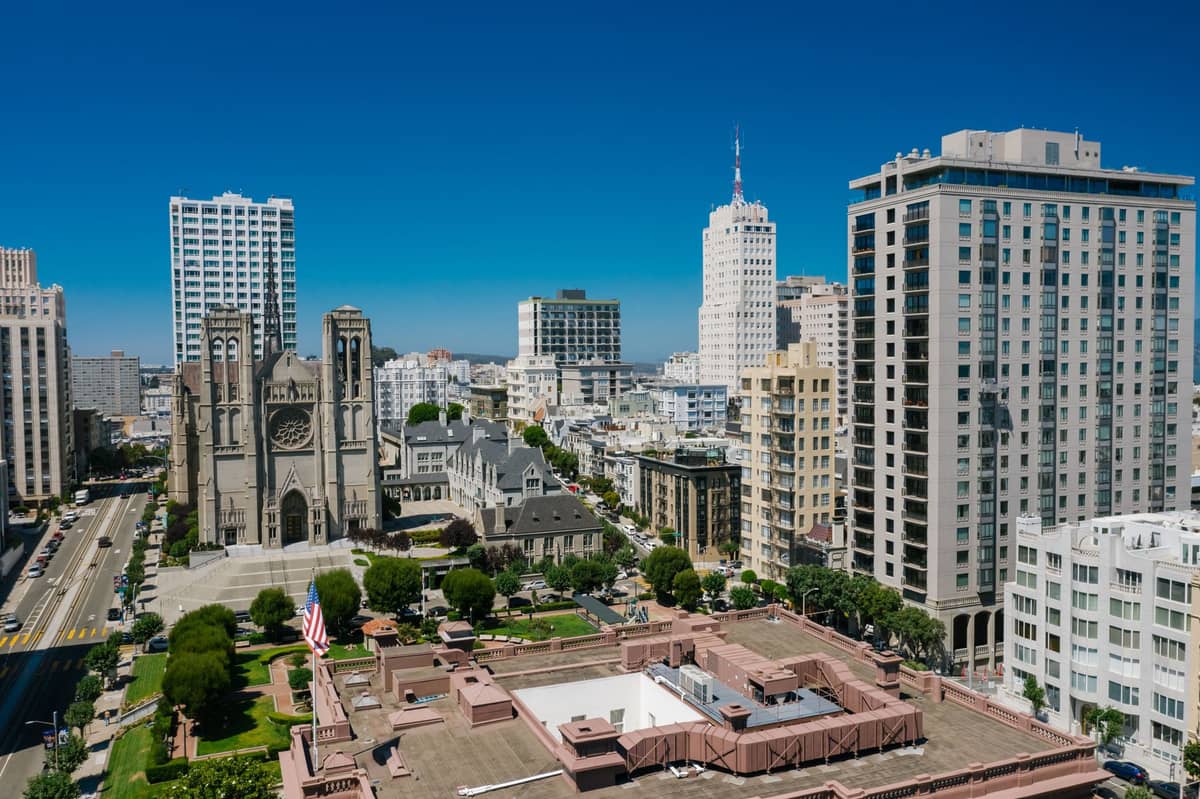
Different neighborhoods give you different architectural readings of the city. Nob Hill rewards visitors interested in Gilded Age hotels and early 20th-century civic grandeur. Grace Cathedral is a Gothic Revival structure built over several decades after the 1906 earthquake, its west facade not completed until 1964. The Fairmont and Mark Hopkins hotels on the hill date to the post-earthquake reconstruction period and are worth entering for their lobbies even if you are not a guest.
Chinatown presents a deliberate architectural identity that was partly constructed for commercial and cultural reasons after 1906. The Dragon's Gate entrance on Grant Avenue at Bush Street and the pagoda-influenced shopfronts were built to attract tourism while expressing community identity. The neighborhood is one of the most densely populated in the country, and the architecture reflects that density in multi-story brick buildings with decorative tile roofs and ornamental balconies added to otherwise standard commercial structures.
For contemporary architecture, SoMa (South of Market) has the highest concentration of post-1990 design. The San Francisco Museum of Modern Art (SFMOMA) building, expanded by Snohetta in 2016 with a fiber-reinforced polymer facade resembling rippled water, is the most prominent example. The nearby Yerba Buena Gardens complex includes the Moscone Center and several cultural buildings from the 1990s and 2000s that mark the neighborhood's transition from industrial to institutional use.
- Nob Hill: Grace Cathedral (Gothic Revival), Fairmont Hotel lobby, California Street cable car line context
- Pacific Heights: densest concentration of intact Queen Anne and Italianate Victorians in the city
- Chinatown: post-1906 vernacular commercial with Chinese decorative motifs; Dragon's Gate at Grant and Bush
- North Beach: Saints Peter and Paul Church (Italian Renaissance Revival), Washington Square Park context
- Civic Center: City Hall (Beaux-Arts dome larger than the U.S. Capitol), Main Library, War Memorial Opera House
- Financial District: Transamerica Pyramid, Hallidie Building curtain wall, Salesforce Tower (2018)
- SoMa: SFMOMA expansion, Yerba Buena Gardens cultural complex, Moscone Center
Practical Tips for Architecture Walks and Tours
SF City Guides, operated by the San Francisco Public Library Foundation, offers free docent-led walking tours that cover specific neighborhoods and architectural themes. Tours vary by day and season and require advance registration on the SF City Guides website. Most tours last about 90 minutes and cover between 10 and 20 city blocks. The terrain in San Francisco is genuinely steep in neighborhoods like Nob Hill, Russian Hill, and Telegraph Hill. Wear flat, rubber-soled shoes. Tours involving the Filbert Steps or Lyon Street Steps include staircases of 100 or more steps.
The American Institute of Architects San Francisco (AIASF) publishes a Visiting SF resource listing architecturally significant structures across the city, organized by type and neighborhood. This is a reliable starting point for a self-guided route. For photography, September and October provide the clearest light and the least fog. Summer mornings from June through August are frequently overcast until noon or later, which can flatten building facades and limit views of the Golden Gate Bridge from the south plaza. Check the best views in San Francisco guide for specific vantage points by weather condition.
✨ Pro tip
For architecture photography in SoMa and the Financial District, the light is best in the late afternoon when the low western sun hits east and south-facing facades directly. Morning light works well for the Golden Gate Bridge and Palace of Fine Arts, both of which face roughly east or southeast. Avoid midday in summer when fog often lingers into early afternoon.
San Francisco is a very walkable city for architecture exploration, but the hills affect how you plan routes. Most people find it easier to walk downhill where possible, taking transit back to the start. The Muni network and historic F-line streetcars are useful for covering larger distances between architectural clusters. See the guide to getting around San Francisco for transit options that work well alongside walking tours.
What Most Guides Get Wrong About San Francisco Architecture
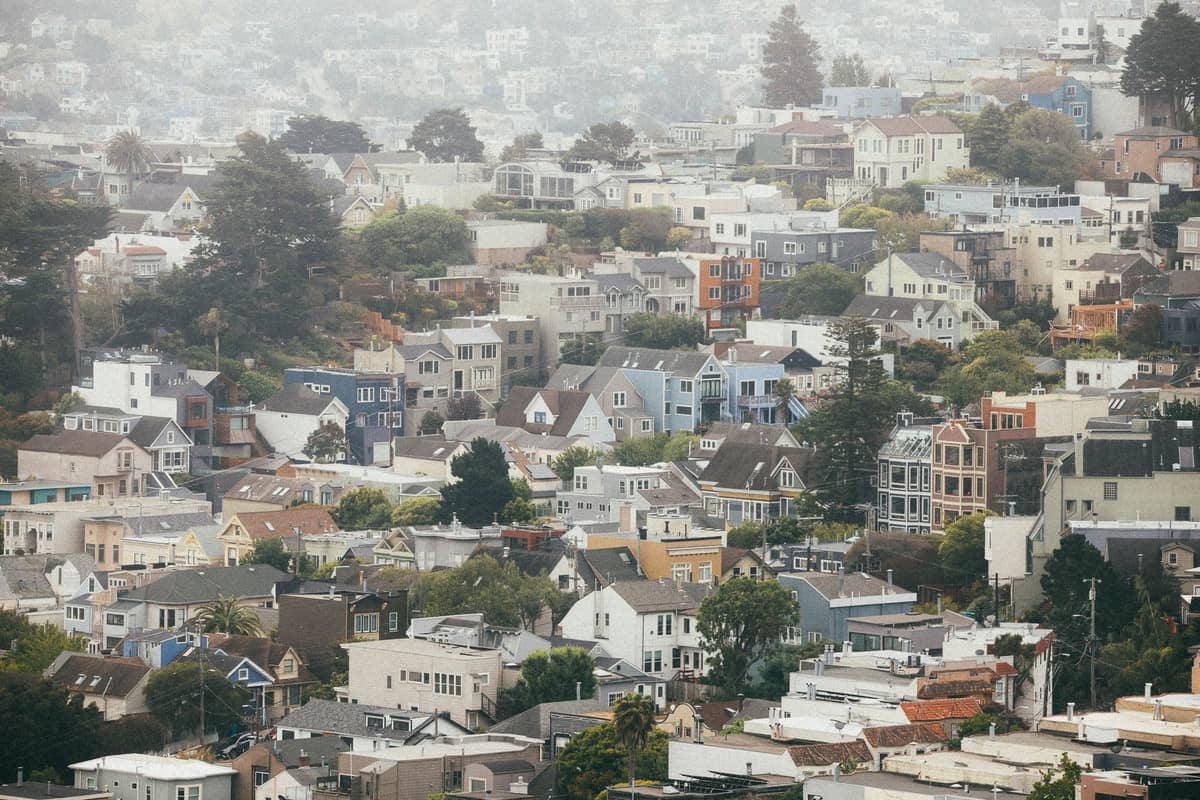
The standard narrative frames San Francisco as a Victorian city saved by geography and luck. The reality is more complicated. The western neighborhoods, including the Richmond and Sunset districts, contain thousands of blocks of 1920s to 1950s stucco row houses in Mediterranean Revival and Streamline Moderne styles that almost no visitor sees. These neighborhoods house the majority of San Francisco's population and represent the most ordinary and in some ways most interesting architectural expression of the city as a working residential environment.
The Civic Center district is also consistently underappreciated. San Francisco City Hall, completed in 1915 with a dome that rises higher than the United States Capitol at 307.5 feet, is one of the finest Beaux-Arts public buildings in North America. It was designed by Arthur Brown Jr. and John Bakewell after winning a competitive commission in 1912. Entry to the main hall and rotunda is free during business hours. The surrounding Civic Center plaza includes the Main Public Library, the Asian Art Museum, the War Memorial Opera House, and Davies Symphony Hall, making it one of the densest concentrations of civic architecture in any American city.
⚠️ What to skip
The Civic Center area, particularly around Civic Center Plaza and UN Plaza, has significant pedestrian activity from the city's unhoused population, especially in the early morning. This does not affect safety for most visitors during daytime hours, but it is worth being aware of if you are planning architectural photography or bringing children. The City Hall interior is staffed and secure during normal operating hours.
FAQ
What is the most famous example of Victorian architecture in San Francisco?
The Painted Ladies on Steiner Street at Alamo Square are the most photographed Victorian buildings in the city. They are Queen Anne style homes built in the 1890s, recognizable from their colorful painted exteriors and the downtown skyline visible behind them. That said, for a broader range of Victorian styles, Pacific Heights and the Western Addition contain more architecturally varied examples across the Italianate, Stick-Eastlake, and Queen Anne sub-styles.
Are there free architecture tours in San Francisco?
Yes. SF City Guides, run by the San Francisco Public Library Foundation, offers free docent-led walking tours covering architectural neighborhoods and specific buildings. Tours require advance registration and vary by day and season. Check the SF City Guides website for the current schedule. Many major architectural landmarks, including the Palace of Fine Arts grounds, City Hall rotunda, and the exterior of the Golden Gate Bridge, are also free to visit independently.
What architectural style is the Golden Gate Bridge?
The Golden Gate Bridge is Art Deco in style, completed in 1937. The towers and structural elements were designed by chief engineer Joseph Strauss and engineers Charles Ellis and Leon Moisseiff. Architect Irving Morrow contributed the Art Deco detailing of the towers, the lamp standards, and the International Orange color choice. The bridge's total length is 8,981 feet, with a main span of 4,200 feet.
What is the best neighborhood to walk for architecture in San Francisco?
It depends on the style you want to see. For Victorian and Edwardian residential architecture, the Western Addition and Pacific Heights are the most concentrated. For civic and Beaux-Arts grandeur, the Civic Center district around City Hall is unmatched. For Art Deco and early modernism, the Financial District and North Beach offer the best examples. For contemporary design, SoMa is where most post-1990 architecture is concentrated. Many visitors combine Nob Hill, North Beach, and the waterfront into a single half-day walk, which covers a useful cross-section.
When is the best time to visit San Francisco for architecture photography?
September and October are consistently the best months. Temperatures are mild (averaging highs around 67 to 71°F / 19 to 22°C), fog is minimal compared to summer, and the light is warm and directional in the late afternoon. Summer mornings from June through August frequently have fog that burns off by noon or later, which limits visibility and softens building facades. Winter months (November through March) can offer clear days but also bring rain and overcast skies.