Painted Ladies (Postcard Row): San Francisco's Most Photographed Streetscape
The Painted Ladies at 710–722 Steiner Street are a row of 1890s Victorian houses framed by the San Francisco skyline, best seen from Alamo Square Park. Entry is free, the view is genuine, and the experience varies enormously by time of day and season.
Quick Facts
- Location
- 710–722 Steiner Street (between Grove & Hayes), Alamo Square, San Francisco, CA 94117
- Getting There
- Muni bus line 21 (Hayes) and the 5/5R (Fulton) stop within walking distance; Alamo Square Park is a short walk from multiple routes
- Time Needed
- 20–45 minutes for viewing and photography; longer if you walk the park
- Cost
- Free — these are private residences visible from public streets and Alamo Square Park
- Best for
- Architecture enthusiasts, photographers, first-time San Francisco visitors
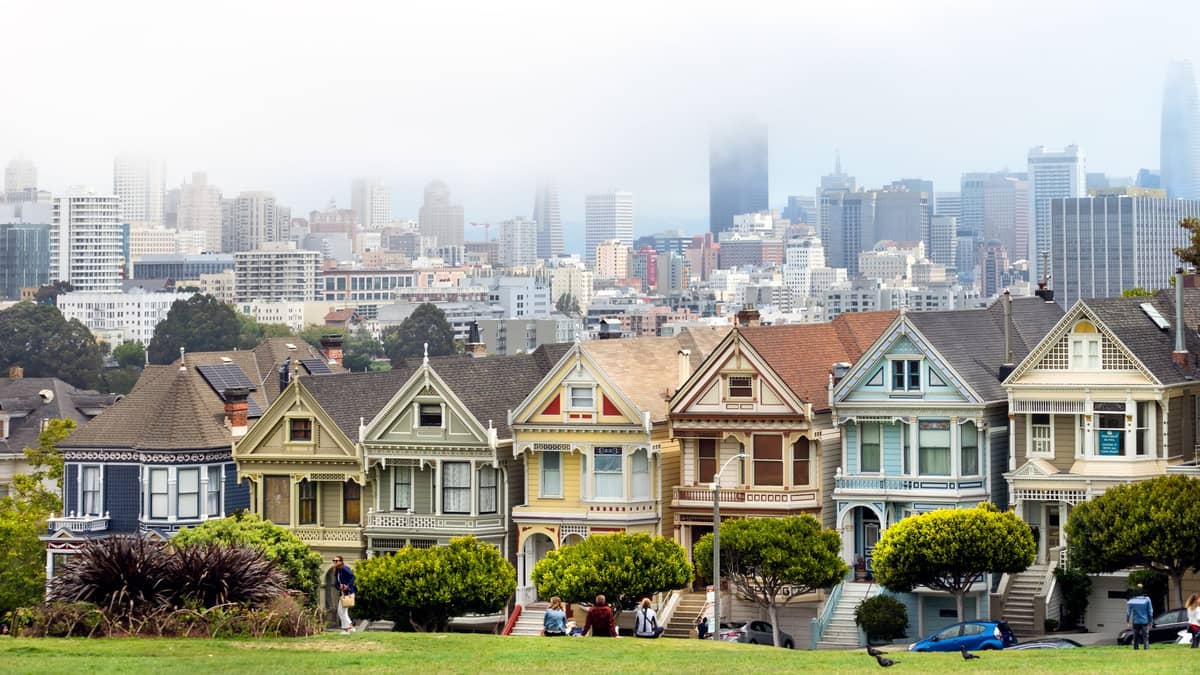
What the Painted Ladies Actually Are
The Painted Ladies are a row of Victorian houses at 710–722 Steiner Street, painted in three or more colors to emphasize their ornate architectural details. They face Alamo Square Park, and with the downtown San Francisco skyline rising behind them, they form one of the most recognized residential streetscapes in the United States. The term "Painted Ladies" as applied to multicolored Victorian and Edwardian houses entered wide use after the 1978 book Painted Ladies: San Francisco's Resplendent Victorians. This specific row has also been called Postcard Row and the Seven Sisters.
These are not a museum or a managed attraction. They are privately owned homes, built in the 1890s in the Queen Anne Victorian style that was common throughout San Francisco before the 1906 earthquake and fire destroyed much of the city. The Alamo Square neighborhood survived largely intact, which is why this block of Steiner Street still reads as a coherent Victorian streetscape rather than an isolated survivor.
If you want broader context for San Francisco's surviving Victorian architecture, the San Francisco architecture guide covers the different styles across neighborhoods and explains why the Western Addition and Haight-Ashbury retain so many pre-earthquake buildings.
ℹ️ Good to know
The houses are private residences. Do not approach doors, ring bells, or step onto private property. Viewing and photography happen from the public sidewalk on Steiner Street and from Alamo Square Park directly across the street.
What It Looks and Feels Like On the Ground
Standing on the sloped lawn of Alamo Square Park, looking east across Steiner Street, you see the seven houses clearly (the Seven Sisters designation refers to all seven houses in the row, even though some photos emphasize six). Their cream, sage, terracotta, and pale blue facades are trimmed in contrasting colors that pick out the fish-scale shingles, bay windows, and decorative gable details typical of Queen Anne Victorian design. Behind them, the Financial District and SoMa skylines sit in a clean horizontal band, creating the layered composition that has appeared in millions of photographs.
The park's grass terraces serve as natural bleachers. On a clear morning, the light falls directly on the facades from the east, which is why early arrivals consistently get the best photographs. By midday, the light flattens against the front of the houses, and by late afternoon, you're shooting into partial shadow. The surrounding neighborhood smells of eucalyptus and cut grass when the park is freshly mown. On foggy mornings, the skyline disappears entirely, and the houses read against a white background, which produces a completely different, more intimate photograph.
The park itself is well maintained and family-friendly. Dogs are walked here on weekday mornings. On weekends, particularly in spring and fall, the park fills with picnickers, children, and tour groups. The sound level can be surprisingly high when a dozen tour buses schedule overlapping stops.
Tickets & tours
Hand-picked options from our booking partner. Prices are indicative; availability and final rates are confirmed when you complete your booking.
Sonoma and Napa Valley wine tour from San Francisco
From 127 €Instant confirmationFree cancellationGo City | San Francisco Explorer Pass
From 76 €Instant confirmationFree cancellationMuir Woods and Sausalito guided tour with transportation
From 82 €Instant confirmationFree cancellationSan Francisco CityPASS
From 77 €Instant confirmationFree cancellation
How the Experience Changes by Time of Day
Early morning, roughly 7:00–9:00 a.m., is the clearest window for photography and for appreciating the houses without competition from tour groups. The park is quiet, the light is angled and warm on clear days, and the skyline backdrop is sharp. Residents walk dogs, and the general atmosphere feels residential rather than touristic.
Mid-morning through early afternoon is peak crowd time. Tour buses from Fisherman's Wharf and downtown typically arrive between 10:00 a.m. and 1:00 p.m. The lawn fills quickly, and getting a clean photograph without other tourists in the frame requires patience or a willingness to include them. For most visitors, this is still a satisfying visit; the setting is spacious enough that it never feels suffocating.
Late afternoon and early evening offer their own appeal. As daylight shifts, the skyline sometimes catches a warmer tone, and the park thins out. On clear September and October evenings, when San Francisco typically has its warmest and clearest weather, the sunset colors behind the Financial District can produce striking photographs. Alamo Square Park is open daily from 5:00 a.m. to midnight, so there is no formal curfew on evening visits during standard hours.
💡 Local tip
September and October are statistically the warmest and clearest months in San Francisco, with less marine fog than June through August. If your trip allows flexibility, plan your Painted Ladies visit during those months for the best chance of the full skyline backdrop.
Historical and Architectural Context
San Francisco was one of the most active Victorian house-building cities in North America during the 1880s and 1890s, driven by the wealth generated by the transcontinental railroad connection and the earlier Gold Rush economy. Developers built rows of houses quickly using pre-cut wooden components, which is why so many San Francisco Victorians share similar structural bones while varying in decorative detail. The Steiner Street houses date from the 1890s and represent the Queen Anne Victorian style at its most ornate, with asymmetrical facades, decorative shingles, and elaborate gingerbread trim.
The 1906 earthquake and subsequent fires destroyed approximately 28,000 buildings and roughly half the city's housing stock. The Alamo Square neighborhood sits far enough west from the main fire corridor that it survived largely intact, preserving a density of Victorian residential architecture that is now extremely rare. The Painted Ladies row benefits from this geography: it is not a curated preservation project but an accidental survivor.
The multi-color painting tradition that gives Painted Ladies their name was not the original Victorian standard. Many of these houses were painted in drab, single-tone Victorian-era colors for decades. The vivid multi-color approach became fashionable in the 1960s and 1970s, partly inspired by local colorist Butch Kardum and later popularized by the 1978 book. The houses were subsequently featured in the opening sequence of the television series Full House, which cemented their national recognition in the 1980s and 1990s.
Getting There and Getting Around
The most straightforward transit option is Muni bus line 21 (Hayes) or line 24 (Divisadero), both of which stop within a short walk of Alamo Square Park. From downtown, the walk from the nearest BART station at Civic Center is approximately 20–25 minutes on foot heading west on Hayes Street, which passes through the Hayes Valley neighborhood and offers good coffee stops along the way.
Driving is possible but parking around Alamo Square is residential permit parking on most streets, and weekend spaces are limited. Rideshare drop-off on Steiner Street in front of the park is the most convenient option if you are not traveling by transit.
If you are incorporating the Painted Ladies into a broader San Francisco day, they pair naturally with a walk through Haight-Ashbury to the south, which is walkable in under 15 minutes. The neighborhood's commercial strip on Haight Street offers food, coffee, and vintage shops.
For visitors building a full itinerary, the San Francisco one-day itinerary positions the Painted Ladies efficiently alongside other western neighborhoods without requiring a car.
Photography Tips and Practical Details
The classic composition is from the middle section of the park's upper lawn, roughly centered on the row of houses, at a height that puts you slightly above street level. A standard 24–50mm focal length captures both the houses and a reasonable portion of the skyline backdrop. Wide-angle lenses tend to distort the facade proportions and are less effective here.
The park's grass slopes can be slippery after rain or heavy fog, particularly on the steeper north-facing sections. Wear shoes with grip if visiting in winter or on foggy mornings. The sidewalk on Steiner Street itself is flat, but the surrounding blocks are hilly, consistent with most of San Francisco's terrain.
⚠️ What to skip
Summer mornings in San Francisco are frequently foggy, often until 11:00 a.m. or later. If you arrive in June or July expecting a clear skyline and find dense fog, the typical clearing pattern means coming back in the early afternoon. Checking a local weather forecast for fog burn-off time the night before will save wasted trips.
Accessibility on the park's lawn is limited by the sloped terrain. The flat sidewalk on Steiner Street opposite the houses provides a street-level view of the facades and is wheelchair and stroller accessible. The upper lawn viewing position is reached via grass slopes without paved paths, which may be difficult for mobility-impaired visitors.
Is It Worth Your Time?
The Painted Ladies are photogenic, historically interesting, and free. The visit is also short: most people have photographed the row, absorbed the context, and are ready to move on within 30 minutes. That is not a criticism; it reflects what the site is. It is a streetscape, not an immersive experience.
Visitors who arrive expecting a quiet, undiscovered corner of San Francisco will be disappointed. This is one of the most photographed spots in the city, and on busy weekend mornings it can feel crowded. Visitors who expect a quick, visually satisfying stop in a pleasant park, with the option to extend the morning into the surrounding neighborhoods, will find the reality matches the description.
If you are specifically interested in elevated views over San Francisco rather than streetscape photography, Twin Peaks and the best viewpoints in San Francisco offer perspectives the Painted Ladies cannot.
Insider Tips
- Arrive before 8:30 a.m. on weekdays for clean photographs without tour groups. The park is quiet, the morning light is favorable, and you'll have the classic viewpoint to yourself for stretches of several minutes.
- The fog in summer creates a flatter, softer light that some photographers prefer over the high-contrast midday look. If you arrive on a foggy morning, consider waiting 30–45 minutes rather than leaving immediately.
- The north end of Alamo Square Park offers a slightly elevated diagonal view of the houses that includes more of the park's trees in the foreground. It's less common in guidebook photos and gives a sense of the scale of the neighborhood.
- Combine the visit with Hayes Valley, a 10-minute walk east. The commercial strip has strong coffee options and some of San Francisco's better boutique food spots, making a natural post-photography stop.
- Check Google Street View before your trip to preview the exact spot on the park lawn that matches the composition you want. This saves time orienting on arrival, especially if you have limited time before a tour bus arrives.
Who Is Painted Ladies (Postcard Row) For?
- First-time San Francisco visitors completing a visual checklist of city icons
- Architecture enthusiasts interested in surviving Victorian residential streetscapes
- Photographers who plan their visit around early morning light or specific weather conditions
- Families looking for a free, low-effort outdoor stop with space for children to run
- Visitors pairing the stop with a walking tour of Haight-Ashbury or Hayes Valley
Nearby Attractions
Other things to see while in Haight-Ashbury:
- Alamo Square Park
Alamo Square Park is a 12.7-acre hilltop public park in San Francisco's Alamo Square / Western Addition area, best known for its east-facing viewpoint overlooking a row of ornate Victorian houses with the downtown skyline rising behind them. Free to enter and open almost around the clock, it rewards visitors who arrive early or late, when the crowds thin and the light turns the city gold.
- Buena Vista Park
Established in 1867, Buena Vista Park is San Francisco's oldest official park, rising 589 feet above Haight-Ashbury with forested trails and panoramic views of the city skyline, the Bay, and beyond. Free to enter and open daily, it rewards visitors who are willing to climb for their views.