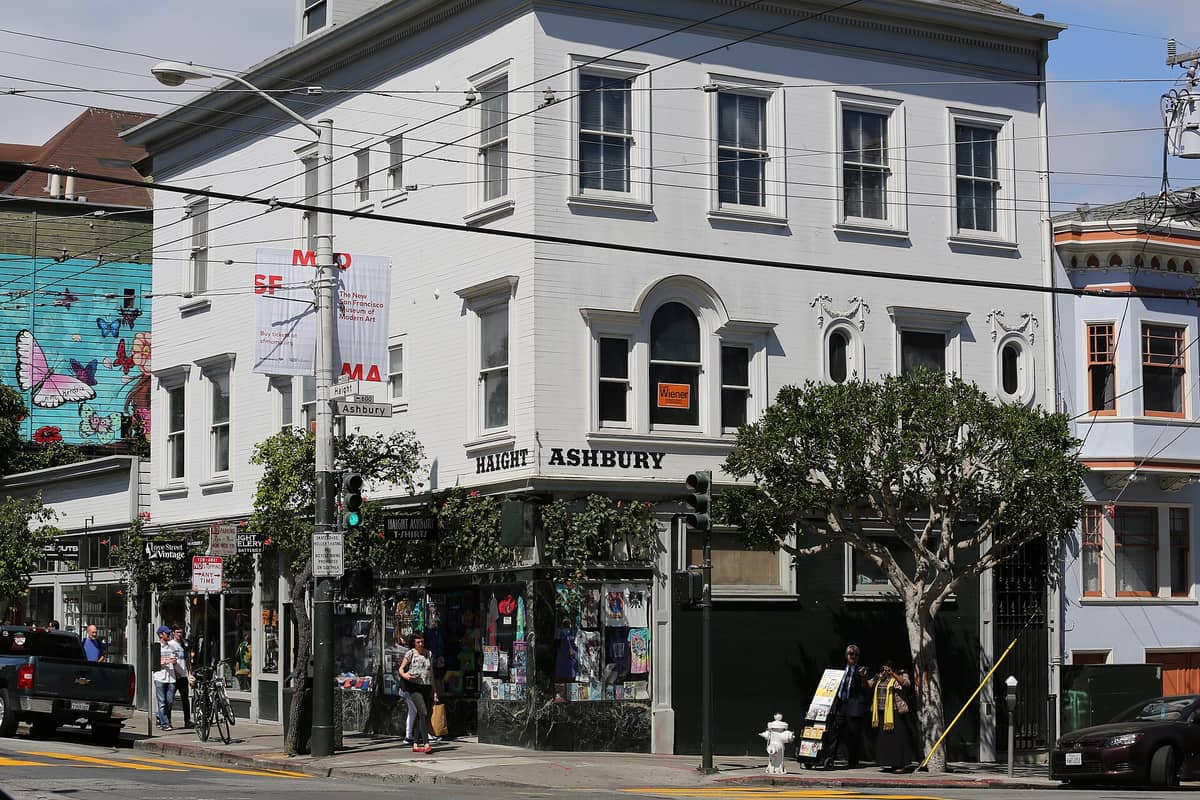
Haight-Ashbury is San Francisco's most mythologized neighborhood, built around the junction of Haight and Ashbury streets and forever tied to the Summer of Love. Today it balances its countercultural past with a lived-in residential character, offering vintage clothing stores, independent record shops, eclectic food, and immediate access to Golden Gate Park.
No corner in San Francisco carries more symbolic weight than the intersection of Haight and Ashbury streets, where the 1960s counterculture reached its most visible peak. Half a century on, the neighborhood has settled into something more layered: part living museum, part genuine residential community, with a commercial strip that still rewards slow, curious walking.
Orientation
The historic Haight-Ashbury district is commonly defined as the area bounded by Fulton Street to the north, 17th Street to the south, Stanyan Street to the west at the eastern entrance of Golden Gate Park near Alvord Lake, and Baker Street to the east.
Within the broader city grid, the Haight sits roughly midway between downtown and the Pacific coast. Walking east along Haight Street for about 15 to 20 minutes brings you down toward Market Street and the Castro. Head north through the Panhandle and you reach the main body of Golden Gate Park within minutes. The neighborhood divides loosely into two zones: the Upper Haight, centered on the Haight and Ashbury intersection and the blocks immediately surrounding it, and the Lower Haight further east toward Divisadero Street, which has a quieter, less tourist-oriented character.
Key cross streets give the neighborhood its internal logic. Masonic Avenue, Divisadero Street, and Fillmore Street all cut north to south through the area, each carrying Muni bus routes. Stanyan Street links north to the Inner Richmond district and south toward Cole Valley and Twin Peaks. Understanding these axes makes it easy to navigate on foot without getting disoriented on the area's mildly hilly terrain.
Character and Atmosphere
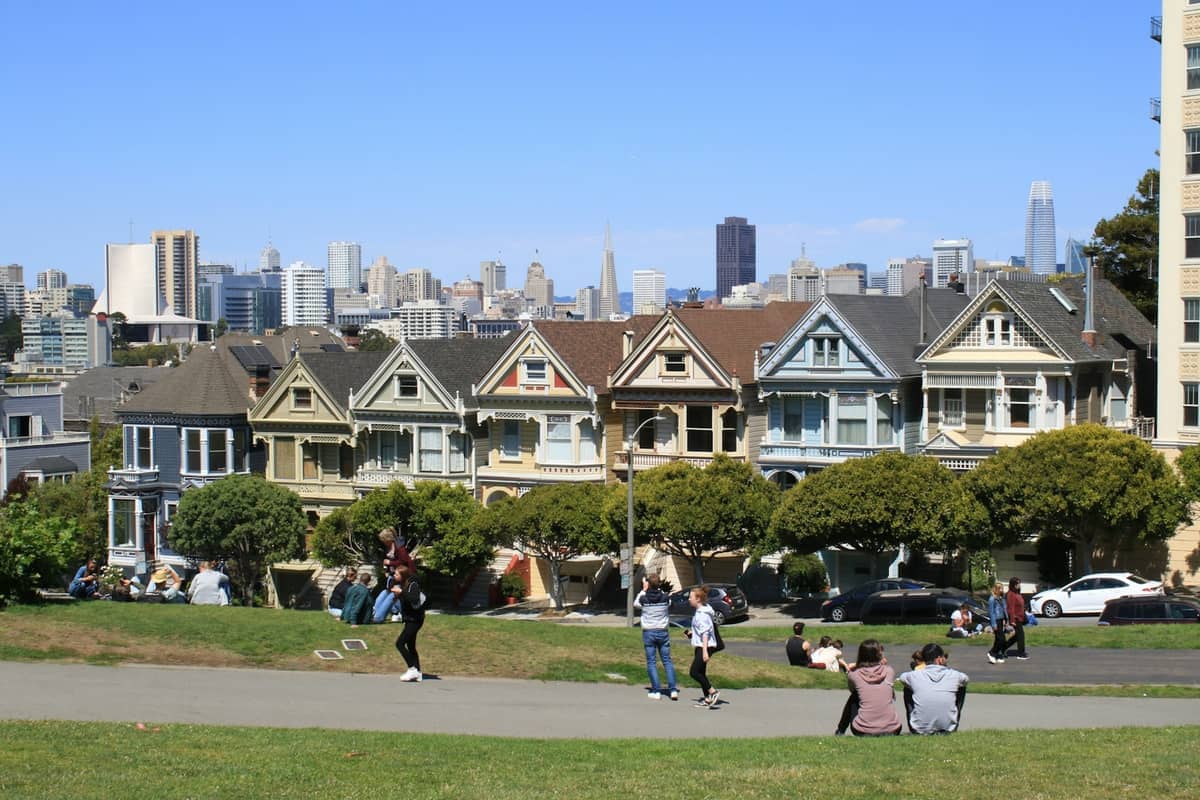
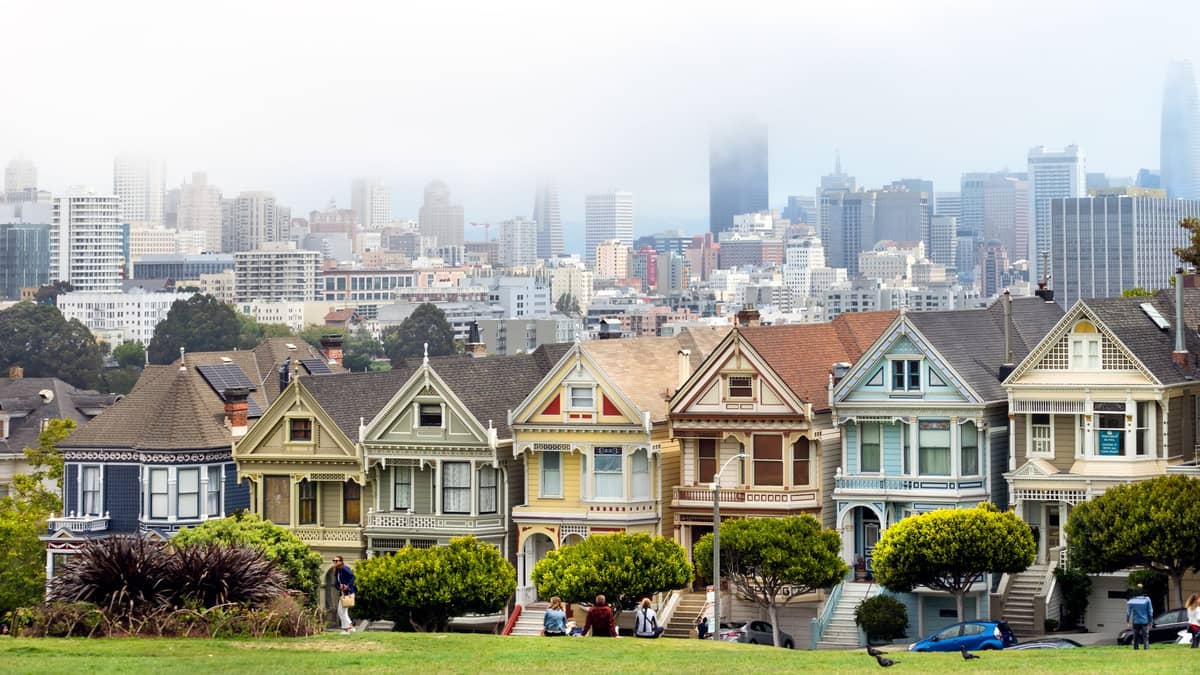
Haight Street in the morning feels different from what the neighborhood's reputation suggests. Cafes along the strip open early for a largely local crowd: residents walking dogs, cyclists heading toward the park, students from the nearby university neighborhoods. The Victorian and Edwardian facades of the residential side streets catch the morning light in a way that makes the architecture feel almost theatrical. The fog that clings to San Francisco in summer usually burns off by mid-morning here, slightly faster than on the western side of the park.
By afternoon, the commercial blocks between Masonic and Stanyan pick up pace. This is when the vintage shops, record stores, and smoke shops do their main business, and the sidewalks develop the relaxed, unhurried energy that has defined the street for decades. Street vendors occasionally set up near the famous corner, and the Haight-Ashbury intersection itself draws visitors who want to photograph the street signs. The foot traffic is noticeable but rarely overwhelming outside of summer weekends.
After dark, the Haight has a low-key bar and live music scene concentrated in the Upper Haight, with the Lower Haight around Divisadero drawing a younger, more local crowd to its bars and small venues. Neither zone turns into a late-night scene in the way that SoMa or the Mission do, which makes the neighborhood feel genuinely residential rather than purely entertainment-oriented after 10pm. That said, Haight Street on a Friday or Saturday night is noisy enough that light sleepers staying on or near the main strip should keep that in mind.
ℹ️ Good to know
The Haight divides into two distinct sub-neighborhoods. The Upper Haight (west of Divisadero) is the historic core with most visitor-oriented shops and the famous intersection. The Lower Haight (east toward Market Street) is quieter, more residential, and frequented mainly by locals.
What to See and Do
The corner of Haight and Ashbury streets is the obvious starting point for any visit. The intersection itself is simply two streets meeting, but the accumulated meaning attached to it, including its role as a gathering place during the Summer of Love in 1967 and the concentration of the counterculture's most visible moments, gives it an unmistakable gravity. Walk one block in any direction and you encounter the kind of densely packed Victorian streetscape that defines San Francisco's residential character at its most concentrated.
The immediate access to Golden Gate Park is one of the strongest practical reasons to spend time in the Haight. Stanyan Street at the western end of Haight Street leads directly into the park's eastern entrance. From there, the park's main attractions, including the California Academy of Sciences, the de Young Museum, and the Japanese Tea Garden, are all reachable on foot within 10 to 20 minutes.
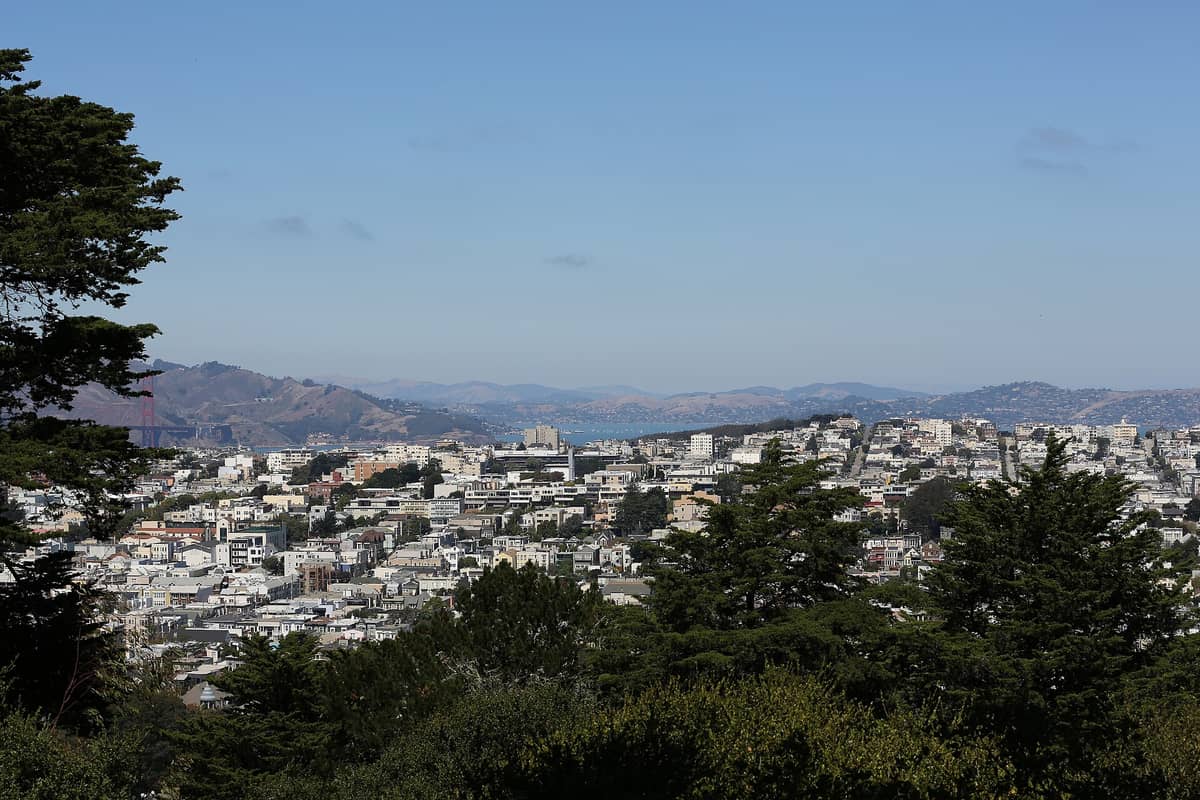
Buena Vista Park at the eastern boundary of the Haight is one of San Francisco's oldest parks and one of its least visited by out-of-towners. The forested hill rises steeply off Haight Street and offers views across the city from its upper paths. It is a genuinely local green space: quieter and wilder than Dolores Park, with none of the weekend scene that defines Dolores Park in the Mission. The steep trails are worth the climb for the perspective they give on how San Francisco's neighborhoods tile across its hills.
Walk the Haight-Ashbury intersection and explore the surrounding residential blocks for intact Victorian architecture
Enter Golden Gate Park at Stanyan Street and walk west toward the museums and conservatory
Climb Buena Vista Park for city views without the crowds
Browse the independent record stores and vintage clothing shops along Haight Street between Masonic and Stanyan
Walk the Golden Gate Park Panhandle, a long narrow green strip perfect for an easy north-south transit between the Haight and the Western Addition
💡 Local tip
If you're combining a Haight visit with Golden Gate Park, enter at Stanyan Street and walk west along the main concourse. The de Young Museum and California Academy of Sciences are roughly a 15-minute walk from the park entrance, and both are worth planning your timing around.
Eating and Drinking
Haight Street's food scene is genuinely diverse without being particularly trend-driven. The emphasis is on independent, mid-range spots rather than high-concept dining. You'll find cafes that have been operating for decades alongside newer coffee shops, a reasonable spread of international cuisines, and a bar scene that skews toward classic neighborhood taverns rather than cocktail bars. Prices are moderate by San Francisco standards.
The breakfast and coffee options along the street are well suited to a slow morning before heading into the park. Several cafes cluster between Masonic and Ashbury, with sidewalk seating that fills up on weekend mornings. For lunch and dinner, the stretch between Ashbury and Stanyan offers the densest concentration of restaurants, covering Mexican, Thai, Japanese, and American options at price points that are accessible rather than premium.
The bar scene in the Upper Haight centers on a handful of long-standing venues that draw both residents and visitors. Live music is part of the picture on weekend nights, with a few spots hosting local bands in the evenings. The Lower Haight around Fillmore and Divisadero has its own smaller cluster of bars with a more local, less tourist-conscious atmosphere. Neither end of the street is a destination for cocktail enthusiasts seeking the kind of craft-focused bars found in the Mission or Hayes Valley.
💡 Local tip
Arrive at Haight Street cafes before 9am on weekends if you want a seat. The most popular spots fill quickly with locals heading to the park, and the limited indoor space means waits are common by mid-morning.
Getting There and Around
Haight-Ashbury is well served by Muni bus routes, though it lacks a direct Muni Metro connection. The most useful route is the 71/71L (Noriega-Haight), which runs along Haight Street from Market Street westward, stopping throughout the commercial strip before continuing toward the park. From downtown, this gives you a direct, no-transfer ride of around 15 to 20 minutes. The 6 and 7 lines also connect Haight Street to Market Street. For a broader look at getting around the city, the San Francisco transit guide covers all Muni options in detail.
From the Civic Center or Powell Street BART stations, the walk to the Upper Haight along Haight Street itself takes around 25 to 30 minutes and passes through the Lower Haight, which is worth doing at least once to compare the two sub-neighborhoods. Alternatively, N-Judah Muni Metro stops on Carl Street at the southern edge of the neighborhood, near Cole Valley, putting the upper end of Haight Street a short uphill walk away.
Cycling is a practical option given the flat profile of Haight Street itself, though the cross streets heading south toward Ashbury Heights gain elevation quickly. The Panhandle path running parallel to Fell Street provides a comfortable protected bike route from the Western Addition into the park. Ride-hail services (Uber and Lyft) operate throughout the neighborhood and are the simplest option for reaching the Haight from areas not well connected by direct bus routes.
Parking is available on residential side streets but competition is high, particularly on weekends. Driving is not recommended as a first-choice approach, especially when combining a Haight visit with Golden Gate Park.
Where to Stay
The Haight offers a limited but useful selection of accommodation, weighted toward smaller boutique hotels, guesthouses, and Victorians converted into inns. The neighborhood suits travelers who prioritize access to Golden Gate Park and a residential neighborhood feel over proximity to downtown attractions. For a broader comparison of where to base yourself in the city, the San Francisco neighborhood accommodation guide covers the trade-offs across all major areas.
Staying on or immediately off Haight Street puts you within walking distance of the park entrance and the commercial strip, but noise from bars and foot traffic on weekend nights is a genuine consideration for those staying on the main road. The residential side streets north and south of Haight, such as the blocks off Ashbury or Masonic, offer considerably more quiet while keeping you within a few minutes of the action.
The Haight is not the right base for travelers whose main focus is Fisherman's Wharf, Chinatown, or the Financial District. The transit connections are solid but not instant, and the neighborhood's character, relaxed and residential with bursts of activity on the main strip, rewards visitors who are happy to use it as a starting point for park-heavy days and don't need to be in central downtown each morning.
Honesty Check: Who the Haight Is and Isn't For
Visitors expecting a preserved snapshot of 1967 will find the reality more complicated. The counterculture is present in the neighborhood's aesthetic, its shops, its general tolerance for eccentricity, and the famous street signs, but the Haight is a functioning residential neighborhood with rising rents, coffee shop lines, and dog walkers. The mythological version of the neighborhood exists more in its history than in its daily life.
Like most of central San Francisco, the Haight experiences the urban challenges common to the city: property crime and car break-ins are reported throughout the neighborhood. The San Francisco safety tips guide covers citywide precautions. The practical advice is consistent with the rest of the city: don't leave valuables visible in parked cars, keep bags secured in crowds, and be aware of your surroundings on quieter side streets after dark.
The neighborhood rewards travelers who like to walk, browse, and observe street-level life without a rigid agenda. It is less suited to travelers with limited time who are working through a list of major attractions, since the Haight itself is more of an experience than a checklist. The primary exception is the access it provides to Golden Gate Park, which is one of the best reasons to be in this part of the city regardless of your interests.
TL;DR
Best for: travelers who want to combine the history of San Francisco's counterculture with genuine access to Golden Gate Park and a residential neighborhood feel.
The Upper Haight (west of Divisadero) is where most visitor-oriented shops and the famous intersection are located; the Lower Haight is quieter and more local.
Transit access via Muni bus along Haight Street is reliable; no direct Muni Metro stop, but N-Judah on nearby Carl Street and BART at Civic Center are both workable.
Not ideal for travelers focused primarily on downtown, Fisherman's Wharf, or Chinatown, as the transit connections involve some transfer or walk time.
Accommodation is limited and the main strip can be noisy at night; book early for weekend stays and consider side streets for quieter rooms.
San Francisco's beaches are unlike anywhere else in California. Cold water, dramatic fog, and powerful Pacific surf define the city's coastline, but the scenery is extraordinary. This guide covers the best beaches in San Francisco for sunset walks, surfing, coastal hikes, and day trips beyond the city.
San Francisco packs an unusually deep museum scene for a city of its size. This guide covers the city's finest institutions across art, science, history, and culture, with practical tips on pricing, free days, and how to plan your visit.
San Francisco's climate defies expectations. Summer is foggy and cool, fall is surprisingly warm, and winter can be a genuine bargain. This guide breaks down every season so you can pick the right time for your trip, your budget, and your tolerance for Karl the Fog.
San Francisco is one of the most visually dramatic cities in America, built on hills that frame the bay, the bridges, and the Pacific at every turn. This guide covers the best viewpoints in the city and beyond, from free hilltop parks to lesser-known coastal perches that most visitors never find.
San Francisco sits at the gateway to one of the most varied day-trip landscapes in America. Within two hours you can be walking among thousand-year-old redwoods, tasting Cabernet in Napa, hiking coastal bluffs in Point Reyes, or exploring a former federal prison on a rocky bay island.
San Francisco is one of America's most spectacular cities, and you don't need a big budget to experience it. From iconic bridges and coastal trails to free museum days and world-class public art, this guide covers the best free things to do in San Francisco.
From BART airport transfers to cable car fares, this guide covers every way to get around San Francisco — with practical advice on what's worth it, what to skip, and how to navigate the city like someone who actually lives there.
San Francisco offers a deep luxury travel scene for a city of its size. This guide covers where to stay, what to eat, which experiences justify the price, and how to time your visit to get the best value on high-end accommodations.
San Francisco International Airport sits 13-15 miles south of downtown, and getting into the city is straightforward once you know your options. This guide breaks down every transport method from SFO, including real costs, travel times, and the mistakes most first-timers make.
San Francisco's built environment spans Victorian row houses, Edwardian flats, Beaux-Arts civic monuments, and bold modernist towers. This guide breaks down the key styles, landmark buildings, and best neighborhoods to explore on foot, with practical advice for architecture walks in any season.
San Francisco's cable car system is one of the most recognizable transit networks in the world — and also one of the most misunderstood. This guide covers all three operating lines, how fares and passes work, the best times to ride, and clear guidance on avoiding the worst queues.
San Francisco's ferry network spans two separate operators, multiple terminals, and fares that vary by route and payment method. This guide breaks down every major route, current pricing, and how to avoid the most common mistakes first-time riders make.
San Francisco packs an enormous amount into 47 square miles of land. This guide covers everything a first-time visitor needs to know: how to arrive, where to stay, what to prioritize, and the common mistakes that waste time and money.
San Francisco Fleet Week is one of the largest free public events in the United States, drawing hundreds of thousands of visitors to the Bay waterfront each October. This guide covers the Blue Angels air show schedule, the best free viewing spots, ship tour logistics, VIP ticket options, and practical advice for navigating the crowds.
San Francisco is one of California's most naturally romantic cities. Bay views, foggy evenings, world-class food, and historic neighborhoods create an atmosphere that pairs well with almost any travel style. This guide covers where to go, what to spend, when to visit, and how to make the most of a couples trip to the City and County of San Francisco.
At 1,017 acres, Golden Gate Park is one of the great urban parks in the United States, and most visitors only scratch the surface. This guide covers the top attractions, practical logistics, seasonal timing, and the spots worth seeking out beyond the obvious.
San Francisco rewards the curious. Beyond the Golden Gate Bridge and Alcatraz, the city hides mosaic staircases, acoustic sculptures, Victorian cemeteries, and rooftop gardens that most visitors never find. This guide points you to the spots locals actually love.
San Francisco is one of America's most walkable cities, but its hiking scene goes far beyond neighborhood strolls. These trails deliver coastal cliffs, forested ridgelines, panoramic summits, and wild Pacific shorelines all within city limits or a short drive away.
San Francisco in summer is nothing like a Southern California beach vacation. Expect cool temperatures in the mid-60s°F, morning fog that can linger well past noon, and a packed event calendar from June through August. This guide breaks down exactly what you'll encounter and how to prepare.
Three days is enough to hit San Francisco's iconic landmarks, explore distinct neighborhoods, and get a real feel for the city. This itinerary routes each day logically so you spend less time in transit and more time actually experiencing the city.
The Mission burrito is not just a meal. It is a San Francisco institution with a disputed origin, a precise construction method, and a handful of taquerias that have been perfecting it for decades. This guide covers the history, the key ingredients, where to find the best version, and what separates the real thing from a pale imitation.
Muir Woods National Monument sits just 12-17 miles north of San Francisco, protecting one of the last old-growth coast redwood stands in the Bay Area. This guide covers everything you need to plan a successful day trip: mandatory reservations, transport options, trail choices, seasonal timing, and the common mistakes that catch first-time visitors off guard.
Napa Valley sits just 50-60 miles north of San Francisco, making it one of the Bay Area's most rewarding day trips. This guide covers every logistic: how to get there, what tastings cost, when to book, and how to pace a single day without burning out before the third pour.
San Francisco packs an extraordinary range of distinct neighborhoods into just 47 square miles of land. From the foggy avenues of the Outer Sunset to the sunny slopes of the Mission, this guide breaks down what each district is actually like, who it suits, and how to navigate between them.
San Francisco's nightlife runs deeper than most visitors expect. This guide breaks down the best neighborhoods for a night out, what to expect at live music venues, how late things actually run, and which parts of the city suit your style — from craft cocktail bars to late-night dance floors.
San Francisco has a reputation for draining wallets, but that reputation is only partly deserved. With the right approach to accommodation, transport, food, and attractions, a solo traveler can get by on $110–$160 per day without missing the city's best experiences. This guide breaks down exactly where your money goes and where you can cut back.
Twenty-four hours in San Francisco is enough to walk an iconic bridge, eat world-class food, explore historic neighborhoods, and watch the sun set over the Pacific. This itinerary is built around geography so you spend less time in transit and more time actually experiencing the city.
San Francisco is one of America's most rewarding cities to visit, but it rewards prepared travelers. This guide covers the real safety picture: car break-ins, petty theft hotspots, neighborhoods to navigate carefully, and practical strategies to keep your trip trouble-free.
San Francisco's shopping scene spans far more than one famous square. This guide breaks down every major retail district, from luxury flagships around Union Square to independent boutiques in Hayes Valley, vintage shops on Haight Street, and specialty food at the Ferry Building, with practical advice on getting there, what to expect, and where to skip.
The San Francisco to Los Angeles corridor is one of the most-traveled routes in the United States, with options ranging from a 90-minute flight to a two-day Pacific Coast Highway road trip. This guide breaks down every realistic method by cost, time, and comfort so you can choose the right one for your trip.
San Francisco is one of the world's great walking cities, built for exploration on foot. These 20 self-guided stops span the city's most rewarding routes, from waterfront promenades and Victorian hilltops to mural-filled alleys and coastal cliffs.
Forty-eight hours is enough time to hit San Francisco's greatest hits and still feel like you've gone beyond the surface. This guide covers the essential waterfront, neighborhoods, parks, and cultural stops to build a memorable weekend in one of America's most compelling cities.
San Francisco is one of the most family-friendly cities in the United States, with world-class science museums, free outdoor spaces, bay cruises, and a compact layout that keeps logistics manageable. This guide covers the best attractions for children, how to save on tickets, when to visit, and how to get around without a car.
San Francisco packs an extraordinary range of experiences into about 47 square miles of land. From the Golden Gate Bridge and Alcatraz to neighborhood walks through Chinatown and the Mission, this guide covers the top things to do in San Francisco with clear, practical detail to help you spend your time well.
San Francisco has one of the most serious food cultures in the United States, with about 30 Michelin-starred restaurants according to the 2026 Michelin Guide, roughly 4,400 restaurants packed into about 47 square miles, and an obsessive commitment to local, seasonal ingredients. This guide covers the iconic dishes, the neighborhoods where each food culture lives, what things actually cost, and where visitors consistently go wrong.
Choosing where to stay in San Francisco shapes your entire trip. This guide breaks down the city's most practical neighborhoods by price, transit access, safety, and atmosphere, so you can book with confidence rather than guesswork.