Golden Gate Park is San Francisco's largest urban park, stretching three miles across the city's western side between the Richmond and Sunset districts. With world-class museums, historic gardens, lakes, and open meadows, it draws around 24 million visits a year while still offering quiet corners that feel far removed from the city.
Golden Gate Park is one of the great urban parks of the United States: 1,017 acres of woodland, meadows, lakes, and cultural institutions carved out of what was once windswept sand dunes on San Francisco's western edge. It is simultaneously a world-class museum campus, a weekend playground for locals, and a genuinely peaceful escape from the city grid that surrounds it.
Orientation: Where the Park Sits and How It Fits
Golden Gate Park occupies a long, narrow rectangle on the western side of San Francisco. Its northern edge runs along Fulton Street, its southern edge along Lincoln Way, its eastern entrance sits at Stanyan Street, and its western boundary meets the Great Highway at Ocean Beach. From Stanyan to the ocean is roughly 3 to 3.5 miles. North to south, the park is only about half a mile wide, which gives it the feel of a long green corridor cutting through the city.
To the north of the park lies the Richmond District, a residential neighborhood of avenues and row houses that transitions into the Outer Richmond as you move west toward the coast. To the south is the Sunset District, San Francisco's largest residential neighborhood, with a similar grid of avenues running down to the sea. The park effectively separates these two large western neighborhoods from each other, acting as a green spine between them.
Just east of Stanyan Street, the park extends a narrow strip called the Panhandle, running between Fell and Oak Streets from Stanyan to Baker Street. This shaded, tree-lined promenade connects the park to the Haight-Ashbury neighborhood, and it is where many cyclists and joggers begin their approach from the east. From downtown, Haight-Ashbury sits just one block south of the Panhandle, making it a natural pairing for a day that moves from neighborhood streets into the park itself.
ℹ️ Good to know
John F. Kennedy Drive, the park's main internal road running east-west, is closed to through vehicle traffic on Sundays. This makes Sundays the best day to walk or cycle the park without worrying about cars, but it does affect drop-off and pick-up logistics if you are arriving by rideshare.
Character and Atmosphere: What the Park Actually Feels Like
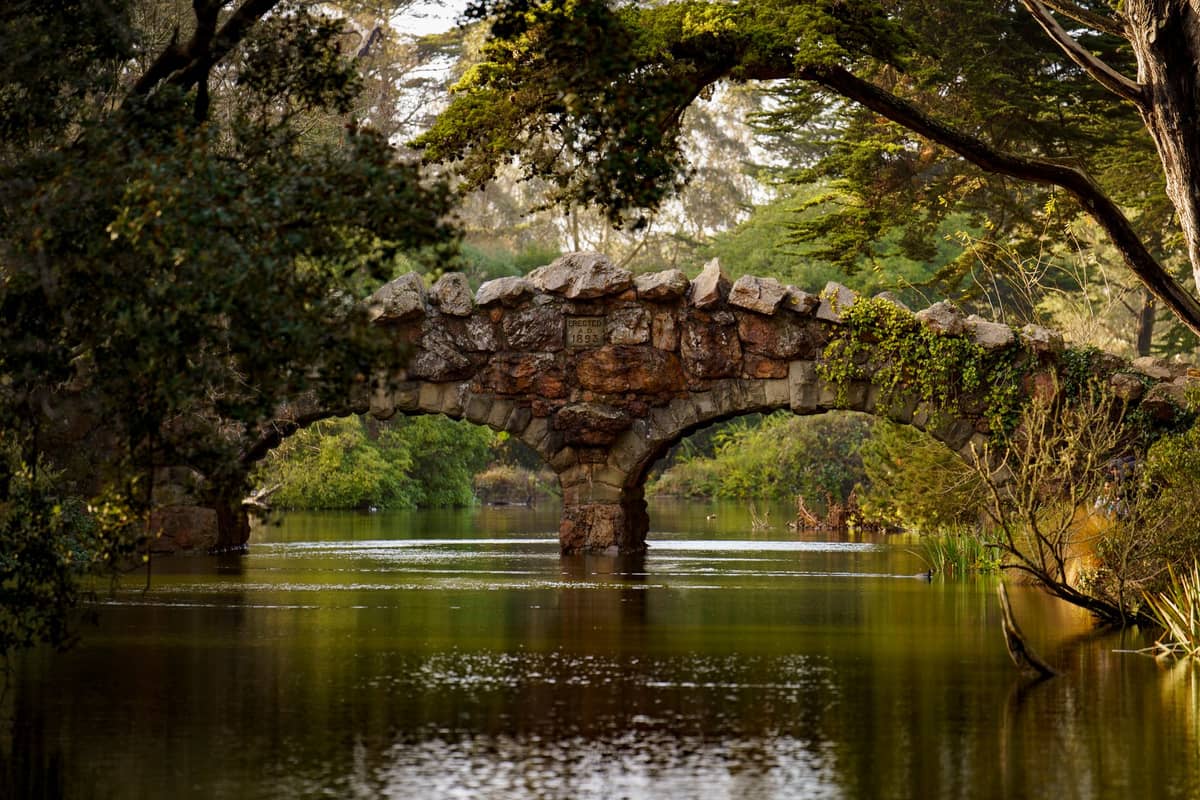
The park's character shifts depending on where you are within it and what time of day you visit. The eastern end, closest to Stanyan, is the most active: meadows fill with picnickers on weekends, the museums anchor a central cultural zone, and foot traffic is steady. As you move west, the park becomes progressively quieter and wilder. Near the western end, close to Ocean Beach and the Dutch Windmill, the tree cover thickens, fog sits lower, and you can walk for long stretches without seeing another person.
Early morning in the park is particularly distinct. By 7am on a weekday, you will find dog walkers moving through the meadows, cyclists on Kennedy Drive, and tai chi groups in the open spaces near the Panhandle. The light filters through the eucalyptus and cypress in long, low shafts, and the marine fog that rolls in from the Pacific overnight often lingers until late morning, giving the wooded sections a cool, almost northern European atmosphere. The Conservatory of Flowers looks especially dramatic in this early mist.
Weekend afternoons bring a different energy entirely. Drum circles gather near the Haight Street entrance on Sundays. The main meadows fill with frisbee players, families with strollers, and groups gathered around portable speakers. The area around the de Young Museum and California Academy of Sciences sees lines of visitors forming at opening time. This is not a park that hides its popularity. On a warm autumn weekend, it can feel genuinely crowded around the main cultural corridor.
After dark, the park is a different proposition. It is large, poorly lit in its interior sections, and not recommended for solo walking at night, particularly in the western and more wooded areas. The areas immediately around the museums and near the park's main entrances remain relatively active in the early evening, but once the facilities close, the park empties quickly.
⚠️ What to skip
San Francisco's summer fog is real and the park amplifies it. June and July mornings near the western end of the park can feel cold and grey even when the rest of the city is mild. Bring a layer regardless of the season, and check conditions before planning an all-day outdoor visit.
What to See and Do
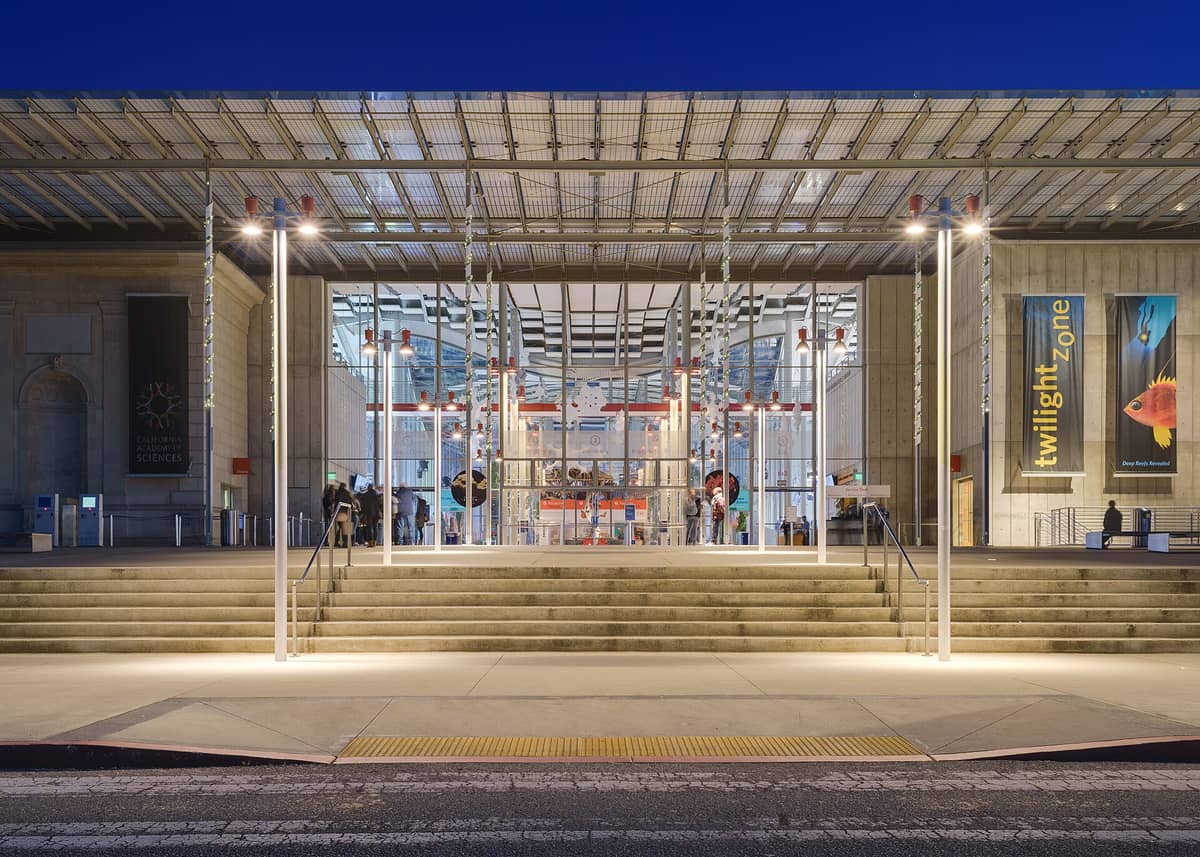
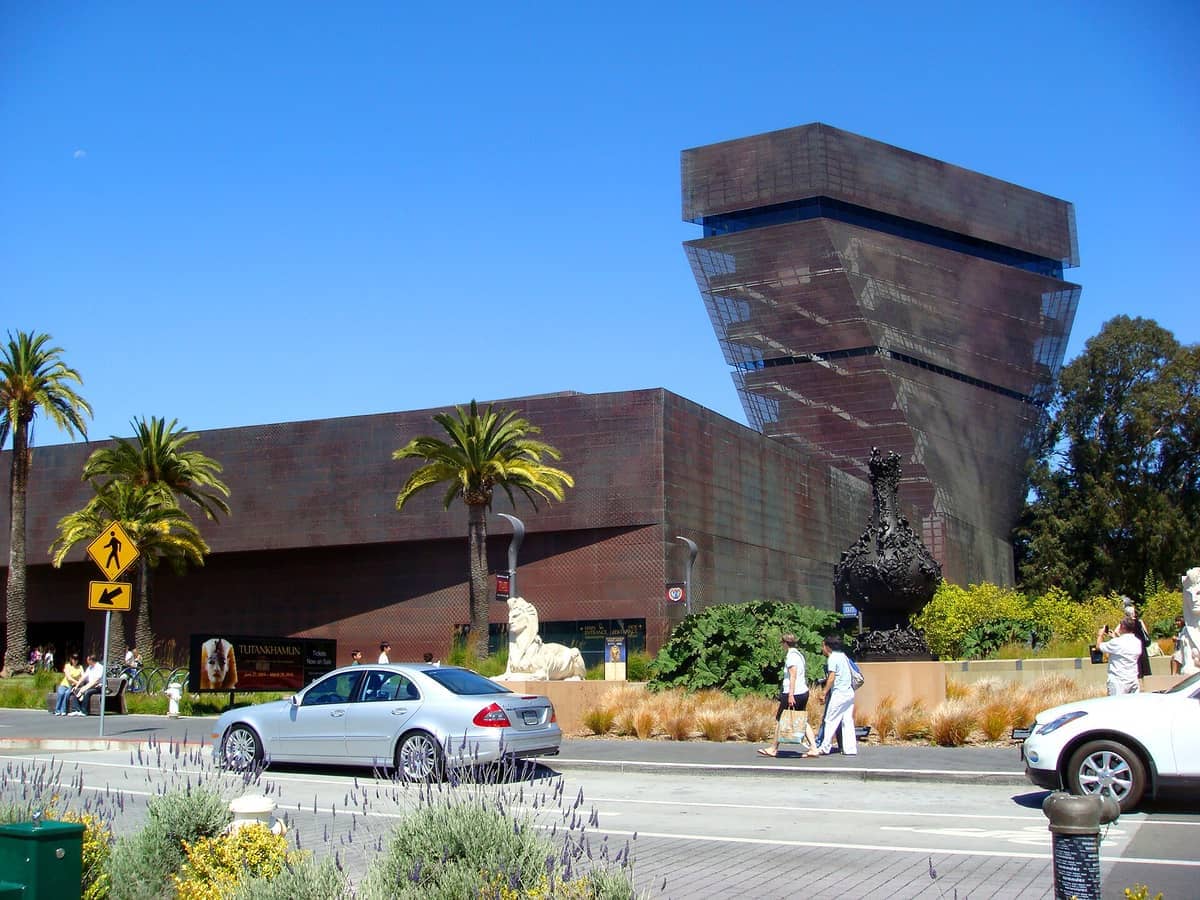
The park's cultural institutions are clustered in the middle section, roughly between 8th and 10th Avenues, and they alone could fill a full day. The California Academy of Sciences houses a natural history museum, a planetarium, an aquarium, and a living rainforest exhibit under one roof. Directly across the Music Concourse, the de Young Museum holds one of the West Coast's strongest collections of American art alongside international textiles and modern works. Both are world-class institutions that happen to share a courtyard.
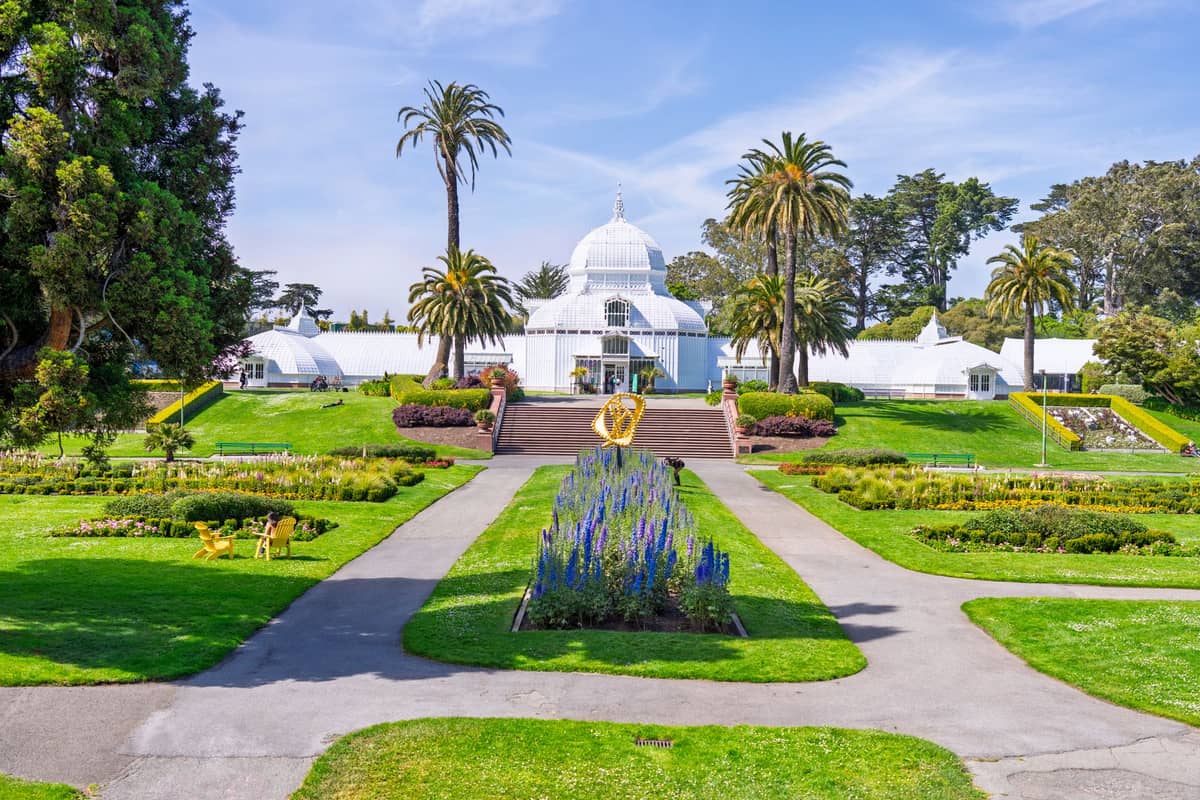
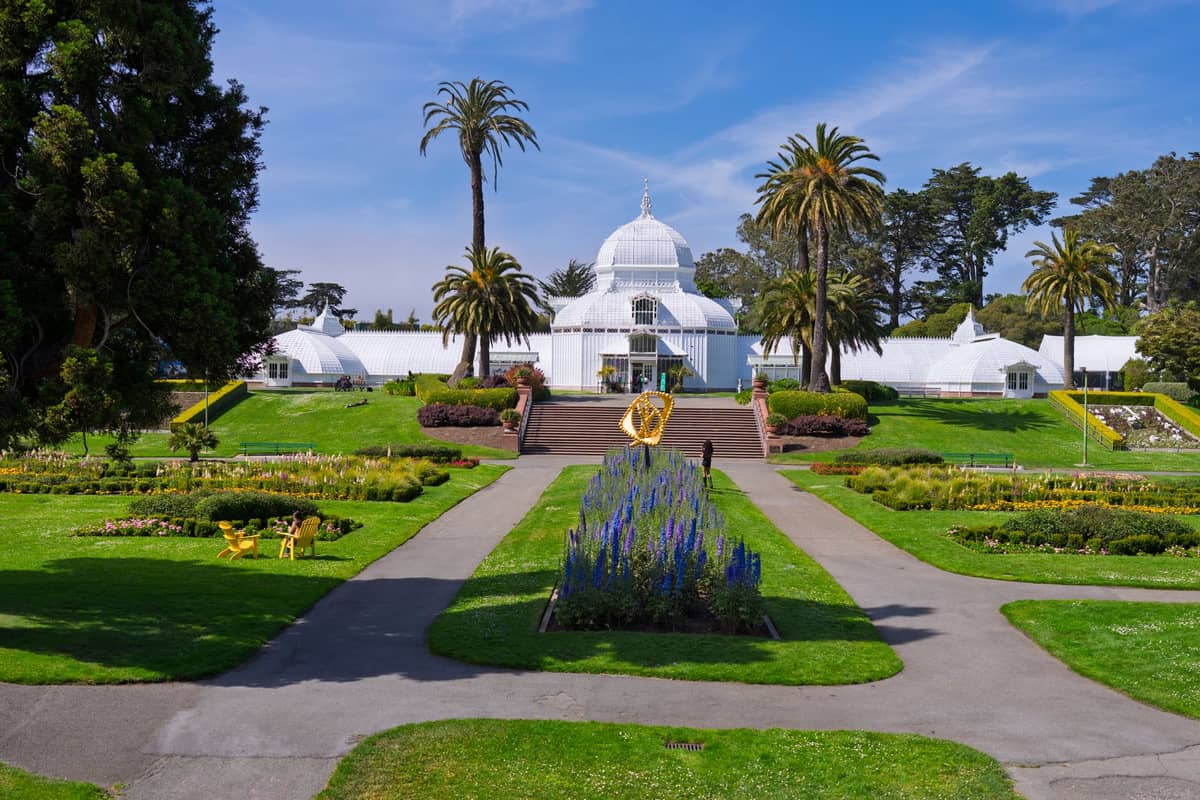
The Conservatory of Flowers near the park's eastern entrance is among the oldest wood-and-glass conservatories in North America, built in 1879. Inside, the air is thick and warm, filled with tropical plants, orchids, and carnivorous species. Even if you spend only 30 minutes here, it is worth the admission. The Victorian structure alone is one of San Francisco's most photogenic buildings.
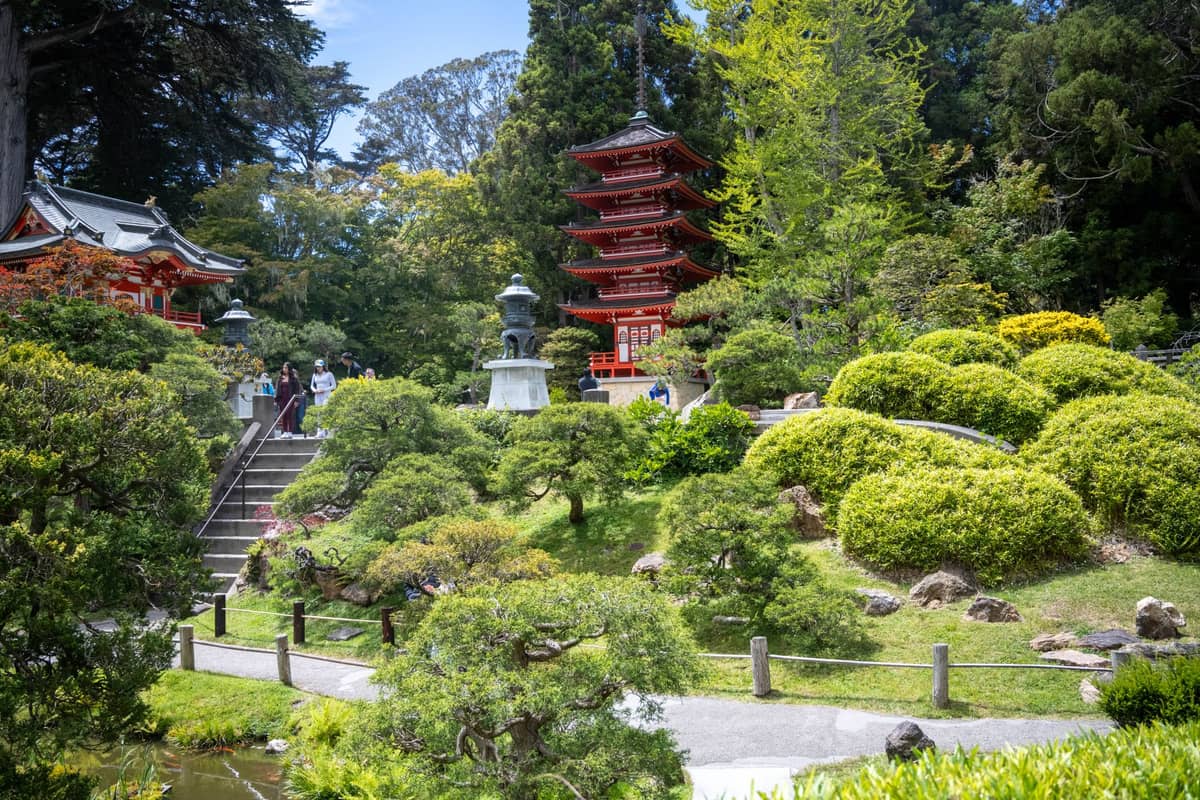
The Japanese Tea Garden is the oldest public Japanese garden in the United States, originally constructed for the 1894 California Midwinter International Exposition. It covers five acres and includes a ceremonial teahouse, koi ponds, stone lanterns, and a drum bridge. Arrive early to avoid the largest crowds, particularly on weekends.
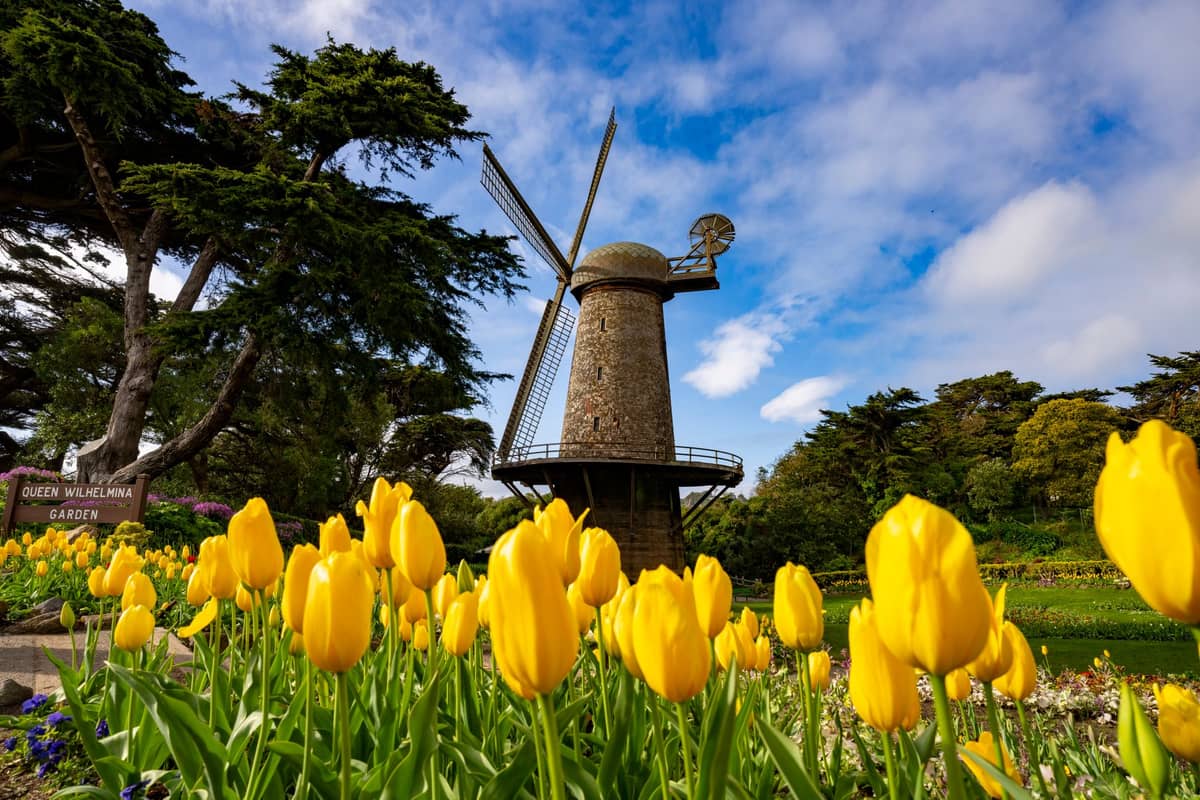
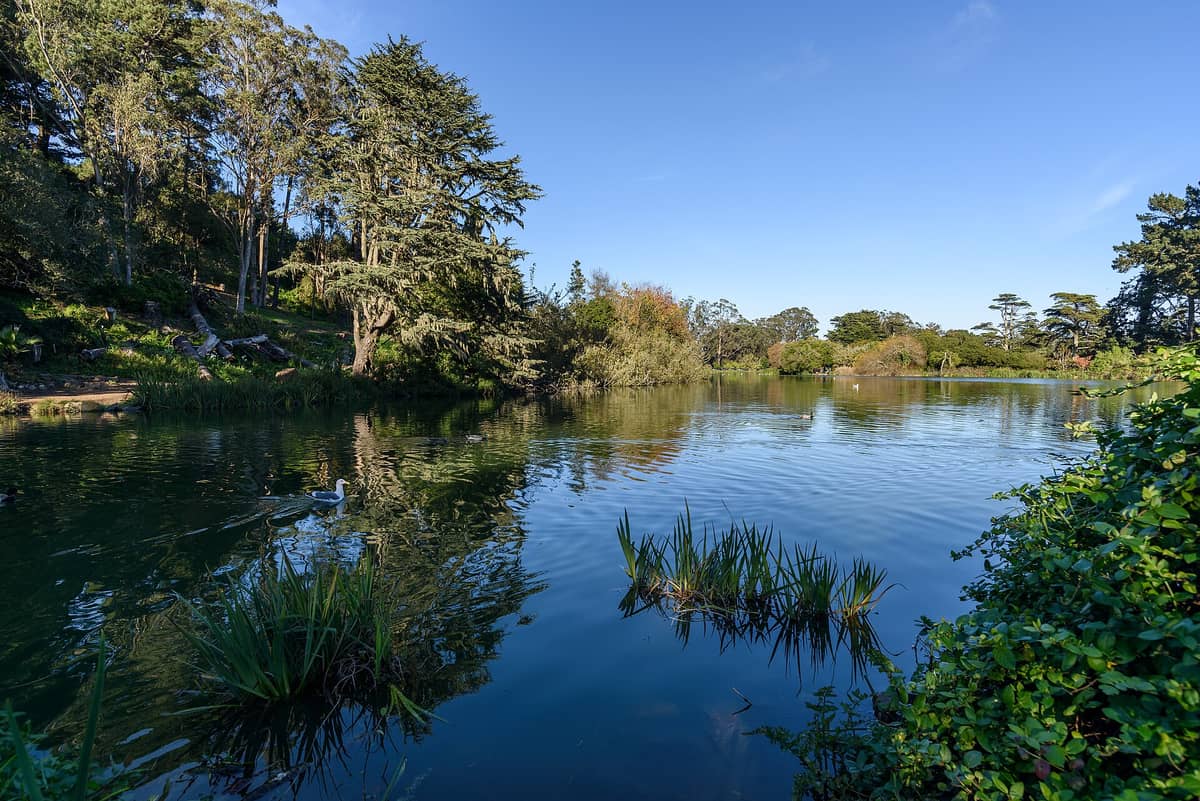
For something more active, Stow Lake offers pedal boat and rowboat rentals. The lake circles Strawberry Hill, a small island in the park's center, and the walk around it takes about 20 minutes. Further west, the Dutch Windmill near the park's northwestern corner was originally built to pump groundwater and is surrounded by a tulip garden that blooms in spring.
California Academy of Sciences: natural history, aquarium, and planetarium in one building
de Young Museum: American and international fine art with a tower offering free city views
Conservatory of Flowers: Victorian greenhouse with rare tropical plants
Japanese Tea Garden: five-acre traditional garden with teahouse service
San Francisco Botanical Garden: 55 acres of plant collections, free for San Francisco residents
Stow Lake: boat rentals and a circumnavigation walk around Strawberry Hill
Dutch Windmill and Queen Wilhelmina Tulip Garden at the park's western end
The park also forms the core of our complete Golden Gate Park guide, which covers seasonal events, ticketing, and how to sequence your visit efficiently.
Eating and Drinking
The park itself has limited but serviceable food options. The Japanese Tea Garden serves matcha, traditional sweets, and light snacks in its teahouse, which is worth experiencing for the setting alone even if the food is modest. The de Young Museum has a cafe and a basement-level restaurant. The California Academy of Sciences has a cafe as well. These are convenient but priced at the premium you would expect from museum dining.
Most visitors who plan to eat well leave the park for the surrounding neighborhoods. Along Judah Street in the Inner Sunset, a few blocks south of the park's southern boundary, you will find a strong concentration of neighborhood restaurants, cafes, and bakeries serving everything from Japanese ramen to Burmese food to classic American diner breakfasts. This strip is a local residential eating corridor, not a tourist destination, and prices reflect that.
On the Richmond side, along Clement Street two blocks north of Fulton, you have one of San Francisco's most underrated food streets, sometimes called the city's 'second Chinatown.' Dim sum restaurants, Burmese teahouses, Russian bakeries, and Vietnamese pho shops sit side by side across more than 20 blocks. It is an excellent option for a meal before or after the park, particularly in the morning when dim sum service runs.
For a broader picture of what to eat across San Francisco, the what to eat in San Francisco guide covers neighborhood food scenes including the Richmond and Sunset Districts in more detail.
💡 Local tip
If you are visiting the park on a Saturday morning, the Ferry Building Farmers Market is running simultaneously across town. But the Inner Richmond also has its own excellent Sunday farmers market near Clement Street, making it a natural pairing with a morning in the park.
Getting There and Around
The park has no single primary entrance, which initially confuses visitors accustomed to a ticketed gateway. You can enter from dozens of points along Fulton, Lincoln Way, Stanyan, or the Great Highway. Most first-time visitors approach from the east via Stanyan Street, which puts you closest to the Conservatory of Flowers and the main museum corridor.
By Muni, the most direct option from downtown is the N Judah light rail line, which runs west along Judah Street and stops at 9th Avenue, just one block south of the park's main cultural area. The 5 Fulton bus runs along the northern boundary on Fulton Street, making it useful for accessing the park's length from the east side. The 7 Haight-Noriega and 33 Ashbury-18th buses also serve the Haight-Ashbury and Panhandle area. For full Muni route details, check the getting around San Francisco guide.
By bicycle, the park is one of San Francisco's most cycling-friendly destinations. Kennedy Drive runs the length of the park and is closed to cars on Sundays, making it a smooth, car-free ride from Stanyan to the ocean. Bike-share stations (Bay Wheels) are available near the eastern entrances, and rental shops cluster along Stanyan Street and in the Haight. If you are cycling, plan your route before you enter: the park's internal road network is not intuitive without a map.
By car, parking inside the park exists but is competitive on weekends. The underground garage beneath the Music Concourse, between the de Young and the Academy of Sciences, is the most practical option for the central museum zone. Street parking on adjacent avenues is metered and typically limited to two hours. Rideshares are straightforward to the eastern end but less practical for the western sections, where drop-off points can be far from the main attractions.
Where to Stay
There are no hotels inside the park itself. Accommodation options closest to the park are concentrated in two areas: along the eastern park boundary near Stanyan Street and the Haight, and in the Inner Richmond along Geary Boulevard and nearby streets.
The Inner Richmond and the streets immediately north of the park offer smaller hotels, inns, and guesthouses that tend to be priced below the downtown average. This is a practical base for visitors whose primary focus is the park and its museums, but the trade-off is distance from the city's central attractions. Getting to Fisherman's Wharf or the Financial District requires either a Muni ride or a 30-40 minute trip. For a broader overview of where to stay across the city, the where to stay in San Francisco guide covers neighborhood options across all price ranges.
Staying near the park works best for travelers who prioritize space, quiet mornings, and easy access to the western neighborhoods over proximity to the waterfront or downtown. If you have children, the combination of the California Academy of Sciences, the Botanical Garden, and the open meadows makes a park-adjacent base genuinely convenient.
Planning Your Visit: Practical Notes
September and October are generally the warmest and clearest months in San Francisco, based on historical climate data, making them the most reliable time to visit the park for outdoor activities. Summer months, particularly June and July, are often cooler and foggier than visitors expect. For a detailed breakdown of how San Francisco's climate affects sightseeing, see the best time to visit San Francisco guide.
The park's size means that trying to see everything in a single day is neither realistic nor enjoyable. A focused visit might combine the de Young Museum, a walk through the Japanese Tea Garden, and a loop around Stow Lake. A more relaxed visit might skip the museums entirely and simply walk or cycle from Stanyan to Ocean Beach, stopping at the Botanical Garden on the way back. Both are legitimate approaches. The park rewards slowing down.
If you are visiting San Francisco for the first time, the park is often most enjoyable as a half-day or afternoon component rather than a standalone full-day destination unless you are specifically interested in the museums. Pairing it with Haight-Ashbury to the east or a walk along Ocean Beach to the west gives the day more variety. The first-time visitor guide to San Francisco suggests practical day-by-day sequences that incorporate the park without making it the sole focus.
💡 Local tip
The de Young Museum's observation tower offers free panoramic views of the park and city skyline and does not require a paid museum admission ticket. It is one of the better free viewpoints in San Francisco and an easy way to orient yourself before heading deeper into the park.
TL;DR
Golden Gate Park covers 1,017 acres across San Francisco's western side, bordered by Fulton Street, Lincoln Way, Stanyan Street, and the Great Highway at Ocean Beach.
The park's cultural core, including the de Young Museum, California Academy of Sciences, Japanese Tea Garden, and Conservatory of Flowers, is clustered in the middle section and suits visitors with a dedicated half to full day.
John F. Kennedy Drive is largely closed to private through vehicle traffic, making the park's main road a mostly car-free corridor from Stanyan to the ocean.
The western sections of the park are quieter, foggier, and more wooded; they reward walkers and cyclists who want to escape crowds but are not recommended for solo visits after dark.
The park suits almost every type of traveler: families with children, museum-goers, cyclists, joggers, and anyone who wants a genuine break from the city's pace. It is less suited as a primary base for visitors whose main priorities are nightlife, dining, or the waterfront.
San Francisco's beaches are unlike anywhere else in California. Cold water, dramatic fog, and powerful Pacific surf define the city's coastline, but the scenery is extraordinary. This guide covers the best beaches in San Francisco for sunset walks, surfing, coastal hikes, and day trips beyond the city.
San Francisco packs an unusually deep museum scene for a city of its size. This guide covers the city's finest institutions across art, science, history, and culture, with practical tips on pricing, free days, and how to plan your visit.
San Francisco's climate defies expectations. Summer is foggy and cool, fall is surprisingly warm, and winter can be a genuine bargain. This guide breaks down every season so you can pick the right time for your trip, your budget, and your tolerance for Karl the Fog.
San Francisco is one of the most visually dramatic cities in America, built on hills that frame the bay, the bridges, and the Pacific at every turn. This guide covers the best viewpoints in the city and beyond, from free hilltop parks to lesser-known coastal perches that most visitors never find.
San Francisco sits at the gateway to one of the most varied day-trip landscapes in America. Within two hours you can be walking among thousand-year-old redwoods, tasting Cabernet in Napa, hiking coastal bluffs in Point Reyes, or exploring a former federal prison on a rocky bay island.
San Francisco is one of America's most spectacular cities, and you don't need a big budget to experience it. From iconic bridges and coastal trails to free museum days and world-class public art, this guide covers the best free things to do in San Francisco.
From BART airport transfers to cable car fares, this guide covers every way to get around San Francisco — with practical advice on what's worth it, what to skip, and how to navigate the city like someone who actually lives there.
San Francisco offers a deep luxury travel scene for a city of its size. This guide covers where to stay, what to eat, which experiences justify the price, and how to time your visit to get the best value on high-end accommodations.
San Francisco International Airport sits 13-15 miles south of downtown, and getting into the city is straightforward once you know your options. This guide breaks down every transport method from SFO, including real costs, travel times, and the mistakes most first-timers make.
San Francisco's built environment spans Victorian row houses, Edwardian flats, Beaux-Arts civic monuments, and bold modernist towers. This guide breaks down the key styles, landmark buildings, and best neighborhoods to explore on foot, with practical advice for architecture walks in any season.
San Francisco's cable car system is one of the most recognizable transit networks in the world — and also one of the most misunderstood. This guide covers all three operating lines, how fares and passes work, the best times to ride, and clear guidance on avoiding the worst queues.
San Francisco's ferry network spans two separate operators, multiple terminals, and fares that vary by route and payment method. This guide breaks down every major route, current pricing, and how to avoid the most common mistakes first-time riders make.
San Francisco packs an enormous amount into 47 square miles of land. This guide covers everything a first-time visitor needs to know: how to arrive, where to stay, what to prioritize, and the common mistakes that waste time and money.
San Francisco Fleet Week is one of the largest free public events in the United States, drawing hundreds of thousands of visitors to the Bay waterfront each October. This guide covers the Blue Angels air show schedule, the best free viewing spots, ship tour logistics, VIP ticket options, and practical advice for navigating the crowds.
San Francisco is one of California's most naturally romantic cities. Bay views, foggy evenings, world-class food, and historic neighborhoods create an atmosphere that pairs well with almost any travel style. This guide covers where to go, what to spend, when to visit, and how to make the most of a couples trip to the City and County of San Francisco.
At 1,017 acres, Golden Gate Park is one of the great urban parks in the United States, and most visitors only scratch the surface. This guide covers the top attractions, practical logistics, seasonal timing, and the spots worth seeking out beyond the obvious.
San Francisco rewards the curious. Beyond the Golden Gate Bridge and Alcatraz, the city hides mosaic staircases, acoustic sculptures, Victorian cemeteries, and rooftop gardens that most visitors never find. This guide points you to the spots locals actually love.
San Francisco is one of America's most walkable cities, but its hiking scene goes far beyond neighborhood strolls. These trails deliver coastal cliffs, forested ridgelines, panoramic summits, and wild Pacific shorelines all within city limits or a short drive away.
San Francisco in summer is nothing like a Southern California beach vacation. Expect cool temperatures in the mid-60s°F, morning fog that can linger well past noon, and a packed event calendar from June through August. This guide breaks down exactly what you'll encounter and how to prepare.
Three days is enough to hit San Francisco's iconic landmarks, explore distinct neighborhoods, and get a real feel for the city. This itinerary routes each day logically so you spend less time in transit and more time actually experiencing the city.
The Mission burrito is not just a meal. It is a San Francisco institution with a disputed origin, a precise construction method, and a handful of taquerias that have been perfecting it for decades. This guide covers the history, the key ingredients, where to find the best version, and what separates the real thing from a pale imitation.
Muir Woods National Monument sits just 12-17 miles north of San Francisco, protecting one of the last old-growth coast redwood stands in the Bay Area. This guide covers everything you need to plan a successful day trip: mandatory reservations, transport options, trail choices, seasonal timing, and the common mistakes that catch first-time visitors off guard.
Napa Valley sits just 50-60 miles north of San Francisco, making it one of the Bay Area's most rewarding day trips. This guide covers every logistic: how to get there, what tastings cost, when to book, and how to pace a single day without burning out before the third pour.
San Francisco packs an extraordinary range of distinct neighborhoods into just 47 square miles of land. From the foggy avenues of the Outer Sunset to the sunny slopes of the Mission, this guide breaks down what each district is actually like, who it suits, and how to navigate between them.
San Francisco's nightlife runs deeper than most visitors expect. This guide breaks down the best neighborhoods for a night out, what to expect at live music venues, how late things actually run, and which parts of the city suit your style — from craft cocktail bars to late-night dance floors.
San Francisco has a reputation for draining wallets, but that reputation is only partly deserved. With the right approach to accommodation, transport, food, and attractions, a solo traveler can get by on $110–$160 per day without missing the city's best experiences. This guide breaks down exactly where your money goes and where you can cut back.
Twenty-four hours in San Francisco is enough to walk an iconic bridge, eat world-class food, explore historic neighborhoods, and watch the sun set over the Pacific. This itinerary is built around geography so you spend less time in transit and more time actually experiencing the city.
San Francisco is one of America's most rewarding cities to visit, but it rewards prepared travelers. This guide covers the real safety picture: car break-ins, petty theft hotspots, neighborhoods to navigate carefully, and practical strategies to keep your trip trouble-free.
San Francisco's shopping scene spans far more than one famous square. This guide breaks down every major retail district, from luxury flagships around Union Square to independent boutiques in Hayes Valley, vintage shops on Haight Street, and specialty food at the Ferry Building, with practical advice on getting there, what to expect, and where to skip.
The San Francisco to Los Angeles corridor is one of the most-traveled routes in the United States, with options ranging from a 90-minute flight to a two-day Pacific Coast Highway road trip. This guide breaks down every realistic method by cost, time, and comfort so you can choose the right one for your trip.
San Francisco is one of the world's great walking cities, built for exploration on foot. These 20 self-guided stops span the city's most rewarding routes, from waterfront promenades and Victorian hilltops to mural-filled alleys and coastal cliffs.
Forty-eight hours is enough time to hit San Francisco's greatest hits and still feel like you've gone beyond the surface. This guide covers the essential waterfront, neighborhoods, parks, and cultural stops to build a memorable weekend in one of America's most compelling cities.
San Francisco is one of the most family-friendly cities in the United States, with world-class science museums, free outdoor spaces, bay cruises, and a compact layout that keeps logistics manageable. This guide covers the best attractions for children, how to save on tickets, when to visit, and how to get around without a car.
San Francisco packs an extraordinary range of experiences into about 47 square miles of land. From the Golden Gate Bridge and Alcatraz to neighborhood walks through Chinatown and the Mission, this guide covers the top things to do in San Francisco with clear, practical detail to help you spend your time well.
San Francisco has one of the most serious food cultures in the United States, with about 30 Michelin-starred restaurants according to the 2026 Michelin Guide, roughly 4,400 restaurants packed into about 47 square miles, and an obsessive commitment to local, seasonal ingredients. This guide covers the iconic dishes, the neighborhoods where each food culture lives, what things actually cost, and where visitors consistently go wrong.
Choosing where to stay in San Francisco shapes your entire trip. This guide breaks down the city's most practical neighborhoods by price, transit access, safety, and atmosphere, so you can book with confidence rather than guesswork.