The Beat Museum: North Beach's Shrine to the Beat Generation
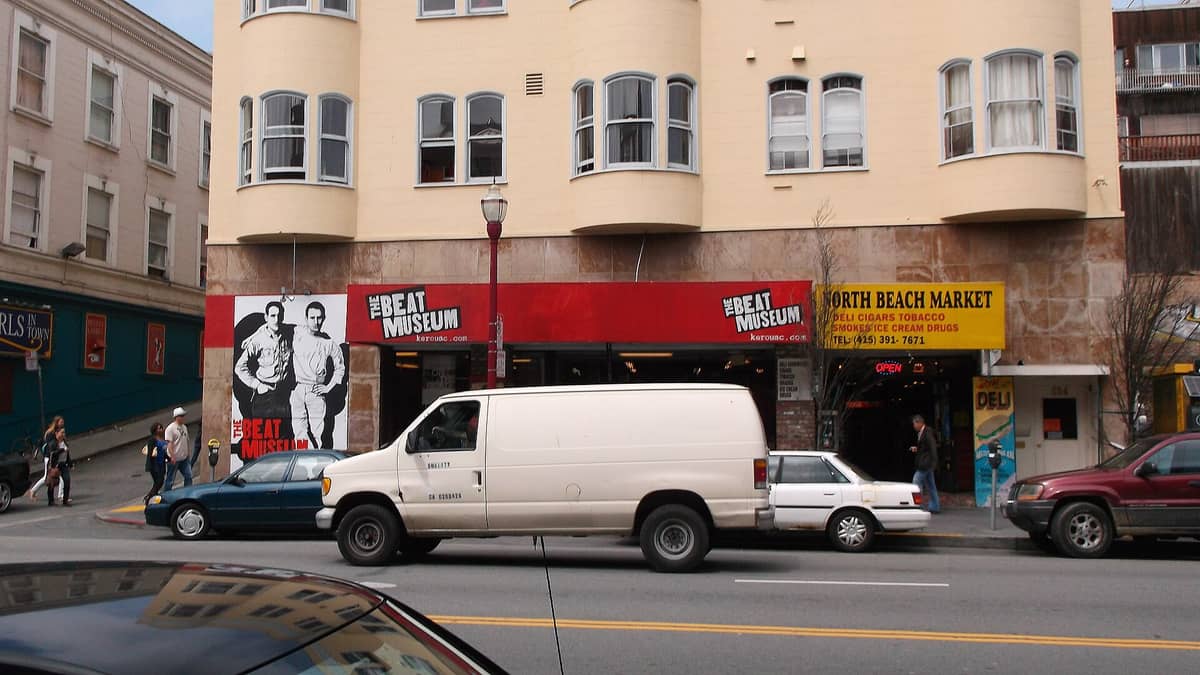
Housed at 540 Broadway in San Francisco's North Beach, The Beat Museum is a compact but richly layered tribute to the writers and artists who rewired American literature in the 1950s. With rare manuscripts, personal artifacts, first editions, and an evocative recreation of the era, it's the most concentrated encounter with Beat culture you can have anywhere in the world.
Quick Facts
- Location
- 540 Broadway at Columbus Ave, North Beach, San Francisco, CA 94133
- Getting There
- Muni buses to Broadway/Columbus; F-line streetcar to nearby Embarcadero, then walk north
- Time Needed
- 1 to 2 hours
- Cost
- General admission USD $8; Students, Teachers, Seniors, Military USD $5 (verify current prices)
- Best for
- Literary travelers, countercultural history buffs, first-time visitors to North Beach
- Official website
- www.kerouac.com
What Is the Beat Museum?
The Beat Museum is a literary and cultural museum dedicated entirely to the Beat Generation, the mid-20th-century American movement whose writers upended the conventions of postwar prose and poetry. Jack Kerouac, Allen Ginsberg, Neal Cassady, William S. Burroughs, Lawrence Ferlinghetti, Gregory Corso: the names on the walls here read like a who's who of American literary rebellion. The collection was assembled over roughly 25 years by founder Jerry Cimino, who opened the museum in San Francisco in 2003.
The location is no accident. North Beach was the geographic and spiritual center of the Beat world. The neighborhood's cafes, cheap apartments, and tolerant social atmosphere attracted writers from across the country in the 1950s, and the museum sits diagonally across Columbus Avenue from City Lights Bookstore, the legendary independent press and bookshop that published Ginsberg's 'Howl' in 1956. Standing on that corner with a sense of what happened here gives the museum visit a different weight before you even step inside.
⚠️ What to skip
Important: As of the time of writing, The Beat Museum is temporarily closed for seismic retrofitting. Normal operating hours are Thursday through Sunday, 10:00 to 19:00; closed Monday through Wednesday. Check the official website at kerouac.com before planning your visit, as reopening timelines can shift.
Inside the Collection: What You Actually See
The museum occupies a storefront-scale space, which means it rewards slow, close attention rather than grand panoramic viewing. The collection includes first editions and rare printings of canonical Beat texts, original manuscripts, personal correspondence, photographs, and physical objects that belonged to the writers themselves. Kerouac's original scroll draft of 'On the Road' is not here in permanent form, but the museum has displayed related artifacts and facsimiles that bring the creative process into focus in ways a library collection rarely does.
The walls are dense with photographs: candid shots of Ginsberg and Cassady, performance images from early poetry readings, pictures of the North Beach streets as they looked in the 1950s. The overall aesthetic is more archival than polished, which is precisely its strength. This is not a museum that has been sanitized into abstraction. It feels like someone who genuinely cared about these people spent decades hunting down the objects and putting them somewhere they could be seen.
There is also a bookshop component to the museum, stocked with Beat literature, criticism, biography, and related titles. It doubles as a browsing experience in its own right. Visitors who walk out with a paperback of 'Howl' or Kerouac's 'The Dharma Bums' are not deviating from the spirit of the place.
Tickets & tours
Hand-picked options from our booking partner. Prices are indicative; availability and final rates are confirmed when you complete your booking.
Sonoma and Napa Valley wine tour from San Francisco
From 127 €Instant confirmationFree cancellationGo City | San Francisco Explorer Pass
From 76 €Instant confirmationFree cancellationMuir Woods and Sausalito guided tour with transportation
From 82 €Instant confirmationFree cancellationSan Francisco CityPASS
From 77 €Instant confirmationFree cancellation
The Beat Generation: Why North Beach, Why Now
The Beat Generation emerged in the late 1940s and reached its cultural peak through the 1950s and into the early 1960s. Writers associated with the movement rejected the conformist materialism of postwar America, experimenting with spontaneous prose, jazz-influenced rhythm, Buddhist philosophy, and frank explorations of sexuality and substance use. Their work arrived as a direct precursor to the countercultural movements of the 1960s, particularly in San Francisco.
North Beach provided the environment. Coffeehouses like Caffe Trieste, still open today a few blocks away, offered cheap tables and an atmosphere tolerant of long conversations and unconventional behavior. The 1955 Six Gallery poetry reading, at which Ginsberg first performed 'Howl' publicly, took place on Fillmore Street (west of North Beach) and is considered one of the most important literary events of 20th-century American culture. The neighborhood's connection to the City Lights Bookstore across Columbus Avenue is particularly significant: Lawrence Ferlinghetti's shop and press gave the Beats a publisher willing to take legal and reputational risks on their behalf.
Understanding that context makes the museum more than a static display. It becomes a reason to read the neighborhood as a text. After visiting, walk the surrounding blocks of North Beach with fresh attention: the architecture, the lingering cafe culture, the proximity of Washington Square Park where writers gathered, and the hill rising toward Coit Tower in the distance.
Time of Day and Crowd Patterns
On a typical open day (Thursday through Sunday), the museum sees its heaviest foot traffic in the early afternoon, roughly between noon and 3:00 PM, when tourists are moving between Fisherman's Wharf and the surrounding neighborhoods. Arriving when doors open at 10:00 AM offers a noticeably quieter experience: the light is different, the street outside is less crowded, and the staff tend to have more time for conversation. The museum's small scale means that even a modest surge of visitors can make the space feel congested.
Late afternoon, particularly around 4:00 to 5:00 PM, can be another relatively calm window. The tour groups have typically moved on, and the remaining visitors tend to be more engaged. If you want to have a genuine exchange with staff about the collection, or ask about specific items, these quieter hours are the time to do it. The museum closes at 7:00 PM, which is late enough to fold into a wider North Beach evening that includes dinner in the neighborhood.
Getting There: Transit and Walking
The Beat Museum is at 540 Broadway at Columbus Avenue in North Beach. Several Muni bus lines serve the Broadway/Columbus corridor; check current routes and timetables with the SFMTA before your visit, as service patterns change. Public transit along the waterfront connects to a reasonable walking distance into the neighborhood.
Walking from Union Square takes approximately 20 to 25 minutes through the Financial District, passing through Chinatown and entering North Beach via Columbus Avenue. This approach is itself worthwhile: Columbus cuts diagonally through the neighborhood grid, lined with Italian restaurants, coffee bars, and the kind of mixed-use street life the Beats were writing about. For a fuller understanding of how to navigate the city on foot, the San Francisco walking tours guide offers useful route-planning context.
💡 Local tip
Parking in North Beach is consistently difficult, especially on weekends. Do not rely on finding street parking. Public transit or walking from a nearby parking structure is the practical approach.
Photography and What to Bring
The interior lighting is atmospheric but dim in places, which means smartphone cameras will struggle with some exhibits. A dedicated camera with decent low-light performance will give better results. Check current photography policies with staff when you arrive, as restrictions around certain archival items can vary.
The museum is a compact indoor space, so weather does not affect the experience directly. That said, North Beach in summer is subject to San Francisco's marine layer, which typically burns off by mid-morning and returns as evening fog. If you plan to combine the museum with an outdoor walk around the neighborhood, a light layer is worth carrying regardless of the season. San Francisco's September and October tend to offer the clearest, warmest conditions.
Is the Beat Museum Worth Your Time?
At $8 for general admission, the museum is not making a financial demand on anyone. The more relevant question is whether the subject matter speaks to you. Visitors who arrive with at least a passing familiarity with Kerouac, Ginsberg, or the broader movement will get substantially more from the experience than those coming in cold. The collection rewards prior reading.
For travelers building a literary itinerary through San Francisco, this museum is the anchor point. Pair it with City Lights Bookstore directly across the street, then follow up with the broader neighborhood. For context on how North Beach fits into the larger city, the San Francisco neighborhoods guide provides useful orientation. Those focused primarily on visual art or natural landscapes will likely find their time better spent elsewhere, perhaps at the de Young Museum or along the Lands End Trail.
Visitors with mobility limitations should contact the museum directly at 1-800-KEROUAC (1-800-537-6822) or info@kerouac.com before visiting. The official website does not provide detailed step-free access specifications, and the building's older North Beach architecture means conditions may not meet all accessibility requirements.
Insider Tips
- Arrive when doors open at 10:00 AM on a Thursday or Friday for the quietest experience. Weekend afternoons bring the highest foot traffic, and the space is small enough that a dozen visitors at once changes the atmosphere noticeably.
- Strike up a conversation with staff. The museum's team tends to be genuinely knowledgeable about specific objects in the collection, and informal context you will not find on the labels often comes out in conversation.
- Cross Columbus Avenue before or after your visit and spend time at City Lights Bookstore. The two spaces are deeply complementary: the museum contextualizes what City Lights published, and City Lights makes the literature immediately accessible to take home.
- If you are serious about the Beat Generation, read at least the opening pages of 'On the Road' or 'Howl' before visiting. The artifacts and photographs land with considerably more weight when you already have the words in your head.
- The museum's bookshop stocks titles that go beyond the obvious Kerouac and Ginsberg. Ask staff for recommendations on lesser-known Beat writers; the women of the Beat Generation, including Diane di Prima and Joyce Johnson, are frequently underrepresented in general coverage but well represented in specialist stock here.
Who Is Beat Museum For?
- Literary travelers and readers with prior interest in Beat Generation writers
- First-time San Francisco visitors wanting to understand the city's countercultural history
- Anyone building a North Beach literary and cultural walking day
- Students and researchers with an interest in mid-20th-century American literature
- Travelers who appreciate small, curator-driven museums over large institutional collections
Nearby Attractions
Other things to see while in North Beach:
- City Lights Booksellers & Publishers
Founded in 1953 by poet Lawrence Ferlinghetti, City Lights Booksellers & Publishers is one of America's most historically significant independent bookstores. Spread across three floors in North Beach, it shaped American literary culture and remains a working bookstore and publisher open every day until 10 PM.
- Coit Tower
Rising 210 feet above North Beach on Telegraph Hill, Coit Tower is one of San Francisco's most recognizable landmarks. The real draw is twofold: sweeping 360-degree views of the Bay and a ground-floor lobby lined with remarkably preserved 1930s fresco murals. Neither is as simple as it looks on a postcard.
- Filbert Steps
The Filbert Steps are a free, publicly accessible stairway climbing the eastern face of Telegraph Hill from Sansome Street up to Coit Tower. With roughly 400 steps, hidden cottage gardens, wild parrots, and Bay views that open up mid-climb, this route is one of the most distinctive walks in San Francisco.
- Saints Peter and Paul Church
Standing tall above Washington Square Park in San Francisco's North Beach neighborhood, Saints Peter and Paul Church is a working Catholic parish with twin spires, a storied Italian-American heritage, and a facade that has anchored this corner of the city since 1924. Admission is free, the interior is open to visitors during posted hours, and the surrounding plaza makes it one of the most photogenic church settings in California.