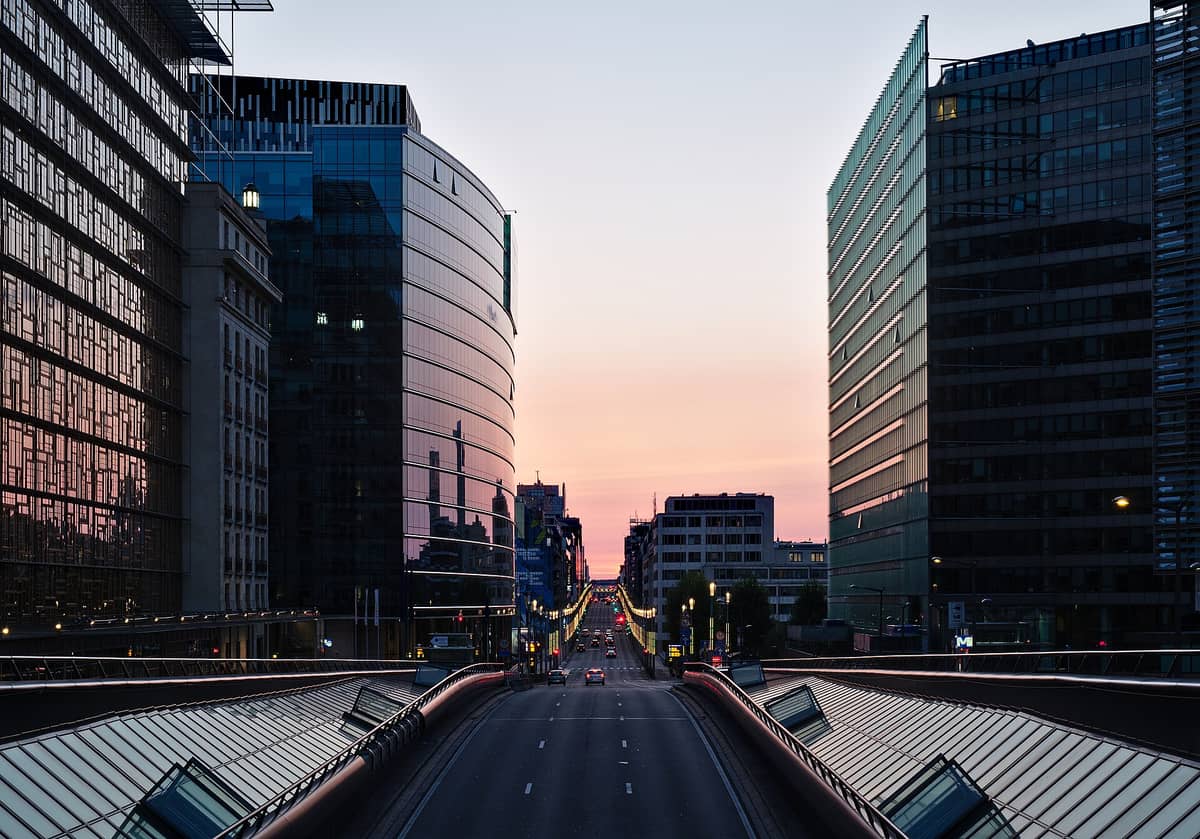
The European Quarter is Brussels' institutional heartland, built around the Schuman roundabout and stretching east toward the Parc du Cinquantenaire. It is where the machinery of the European Union operates daily, yet between the commission buildings and council chambers lie elegant parks, world-class museums, and a neighborhood that rewards those who look past the glass facades.
The European Quarter in Brussels is where the architecture of power meets the quieter rhythms of a city that has been absorbing bureaucrats, diplomats, and lobbyists for decades. It is not the most photogenic neighborhood in Brussels, but it is one of the most consequential, and understanding it changes how you see the whole city.
Orientation
The European Quarter, known in French as the Quartier Européen and in Dutch as the Europese Wijk, sits immediately east of the historic Pentagon, the ring-road-enclosed city core. The neighborhood spreads across parts of three municipalities: Brussels-City, Etterbeek, and Ixelles. Its rough boundaries form a triangle anchored by three green spaces: Brussels Park to the west, Parc du Cinquantenaire to the east, and Parc Léopold to the south.
The main east-west spine is Rue de la Loi (Wetstraat in Dutch), one of Brussels' most recognizable institutional corridors. Running parallel to the south is Rue Belliard, which curves past the European Parliament complex. The Schuman roundabout sits at the functional center of the quarter, where Rue de la Loi meets Rue Archimède, and where the Berlaymont building of the European Commission anchors the skyline. Further north, the residential squares district, including Square Ambiorix and Square Marie-Louise, provides a gentler counterpoint to the office towers.
For travelers building a mental map of Brussels, the European Quarter connects naturally to two adjacent neighborhoods. Walking west along Rue de la Loi for about fifteen minutes brings you into the city center and the Royal Quarter, while heading south from Place du Luxembourg drops you into the upper reaches of Ixelles, one of Brussels' most livable residential communes.
Character & Atmosphere
The European Quarter operates on a very different clock from the rest of Brussels. On weekday mornings, Rue de la Loi fills with a particular kind of commuter: suited officials, badge-carrying lobbyists, interns moving briskly between buildings, and security teams checking credentials at reinforced entrances. The cafés around Schuman open early and fill fast, the conversation mixing French, English, German, and a dozen other languages with total unselfconsciousness. This is genuinely one of the most multilingual corners of Europe, where English functions as a neutral working language even among people who share a native tongue.
By midday the office district reveals its limitations as a destination. The streets around Rue de la Loi feel broad and wind-exposed, the glass-and-steel buildings offering little in the way of street-level animation. Lunch crowds thin quickly as people return to meetings, and by early afternoon the neighborhood can feel oddly empty for somewhere so central. The light in autumn and winter, falling flat across the wide institutional corridors, gives the area a gray-toned severity that matches its function.
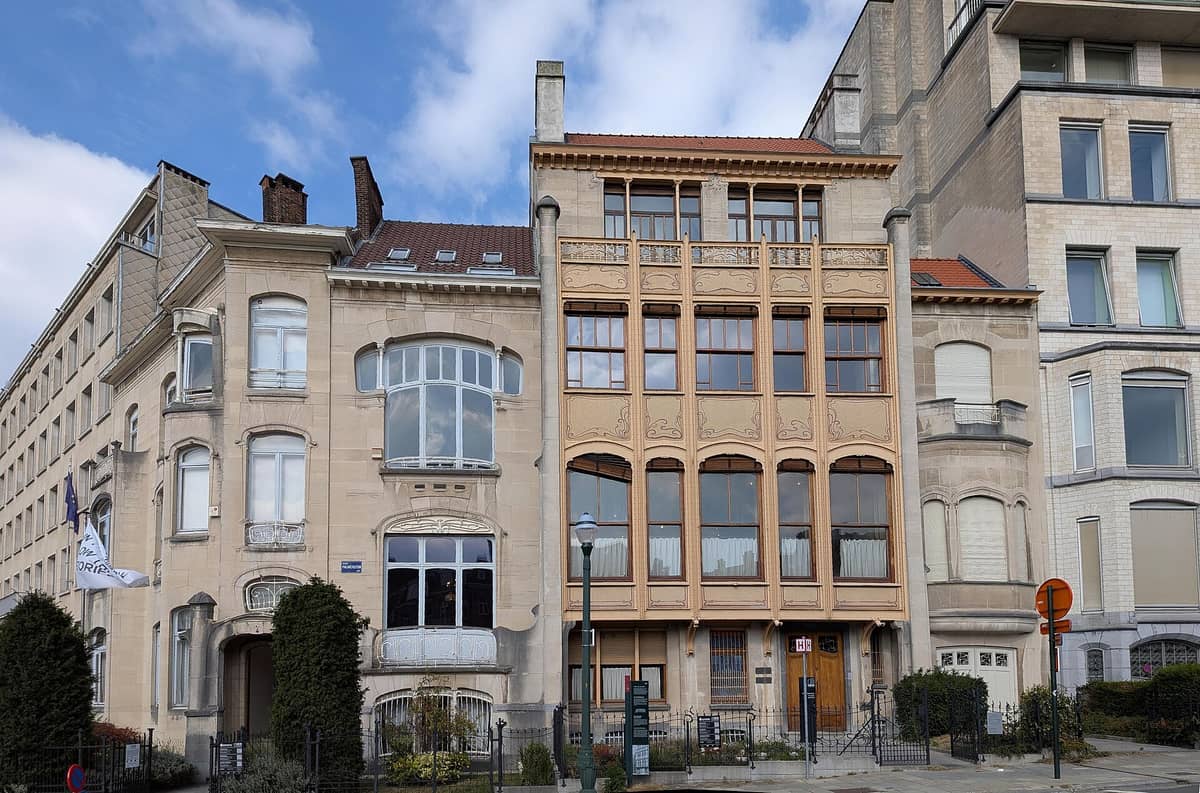
The contrast sharpens when you step into the side streets or the parks. Parc Léopold, which slopes down behind the European Parliament complex, is one of Brussels' most underappreciated green spaces: a Victorian-era scientific park with a lake, mature trees, and benches occupied at lunch by parliamentary staff eating sandwiches. The Squares district to the north, with its Art Nouveau townhouses lining Square Ambiorix and Square Marie-Louise, feels like a completely different city from the Berlaymont's shadow.
After dark, the European Quarter largely empties. The restaurants near Place du Luxembourg stay lively on weeknights when Parliament is in session, and the bars around Rue Stevin and Rue Archimède draw the after-work EU crowd for Belgian beer and loud political debate. But on weekends and during EU recess periods, large stretches of the neighborhood go quiet in a way that surprises visitors expecting a European capital to hum around the clock.
ℹ️ Good to know
The European Quarter is noticeably livelier when the European Parliament is in session. During recess periods in summer and around EU summits, expect road closures, heightened security checks near Schuman, and a significant drop in restaurant and bar activity.
What to See & Do
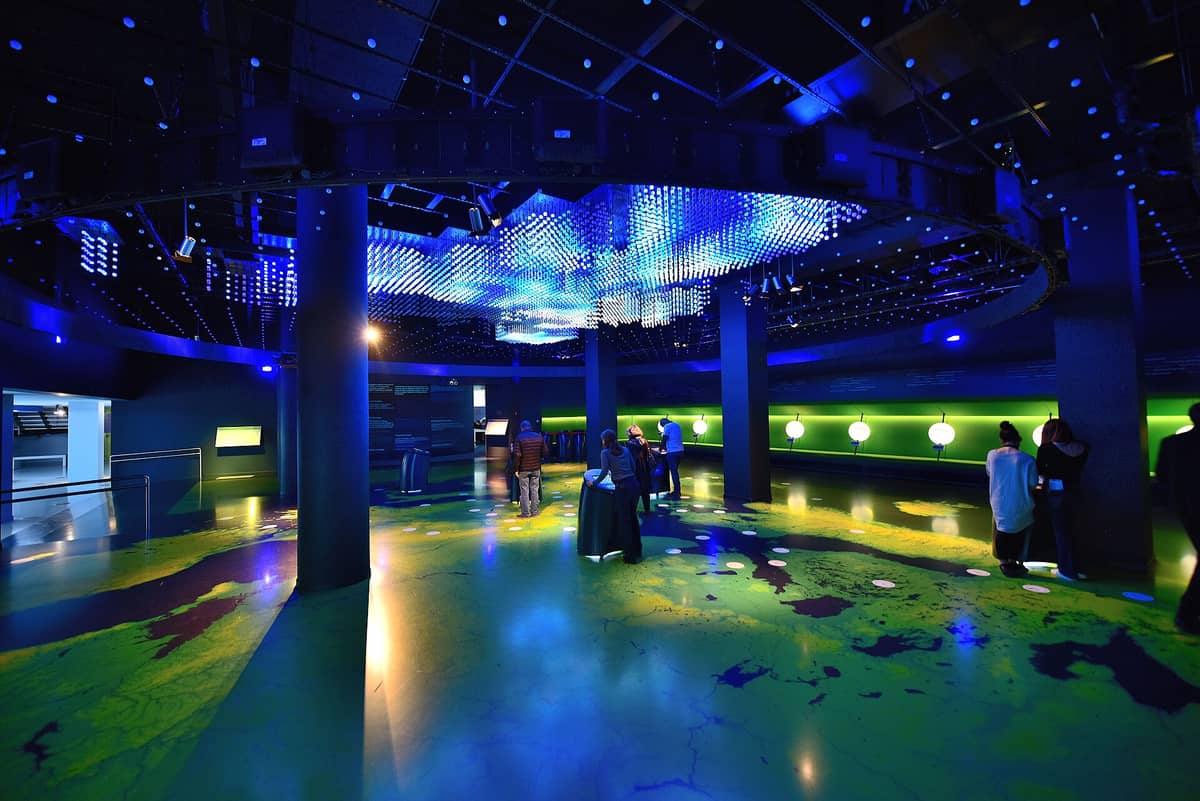
The Parlamentarium is the European Parliament's free visitor center on Rue Wiertz, and it is far better than its institutional origins might suggest. The interactive multimedia exhibition takes visitors through the history of European integration, the mechanics of how EU law is made, and the stories of the Parliament's members. It handles complex material accessibly, and admission is free. Group tours of the Parliament chamber itself can be booked in advance and are worth the effort for anyone with an interest in European governance.
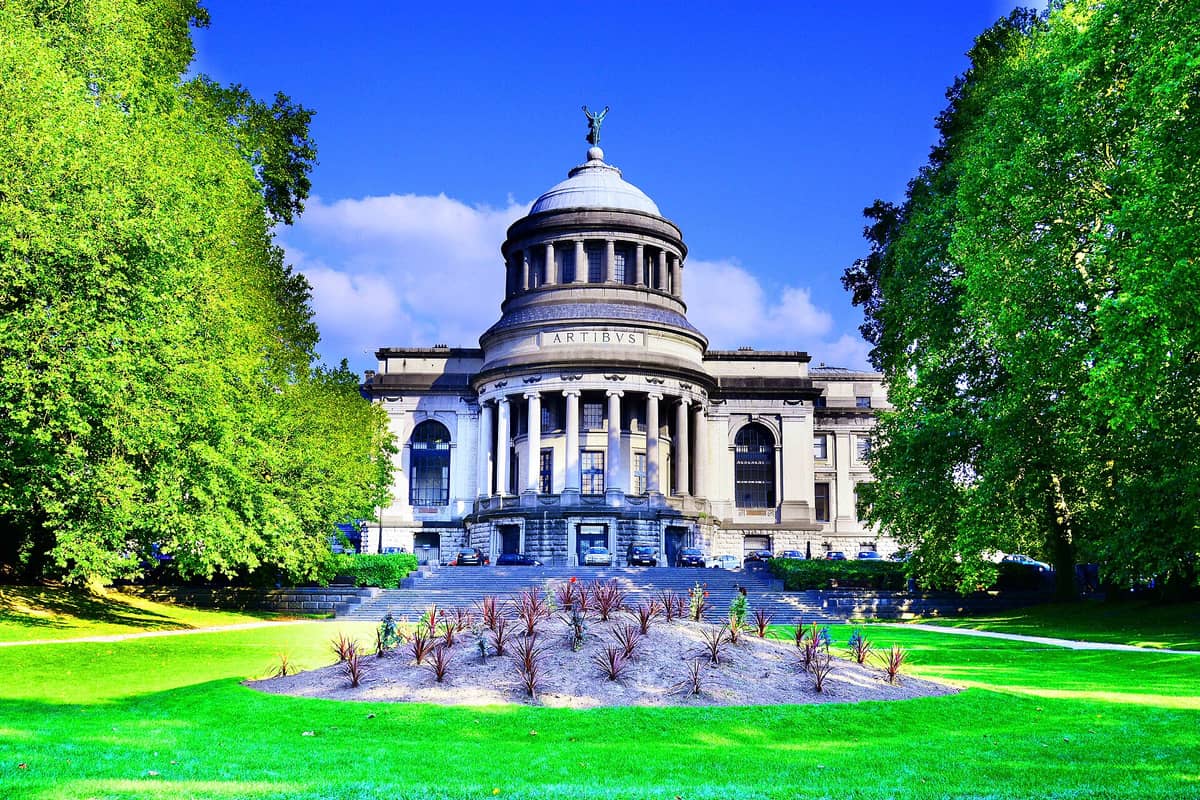
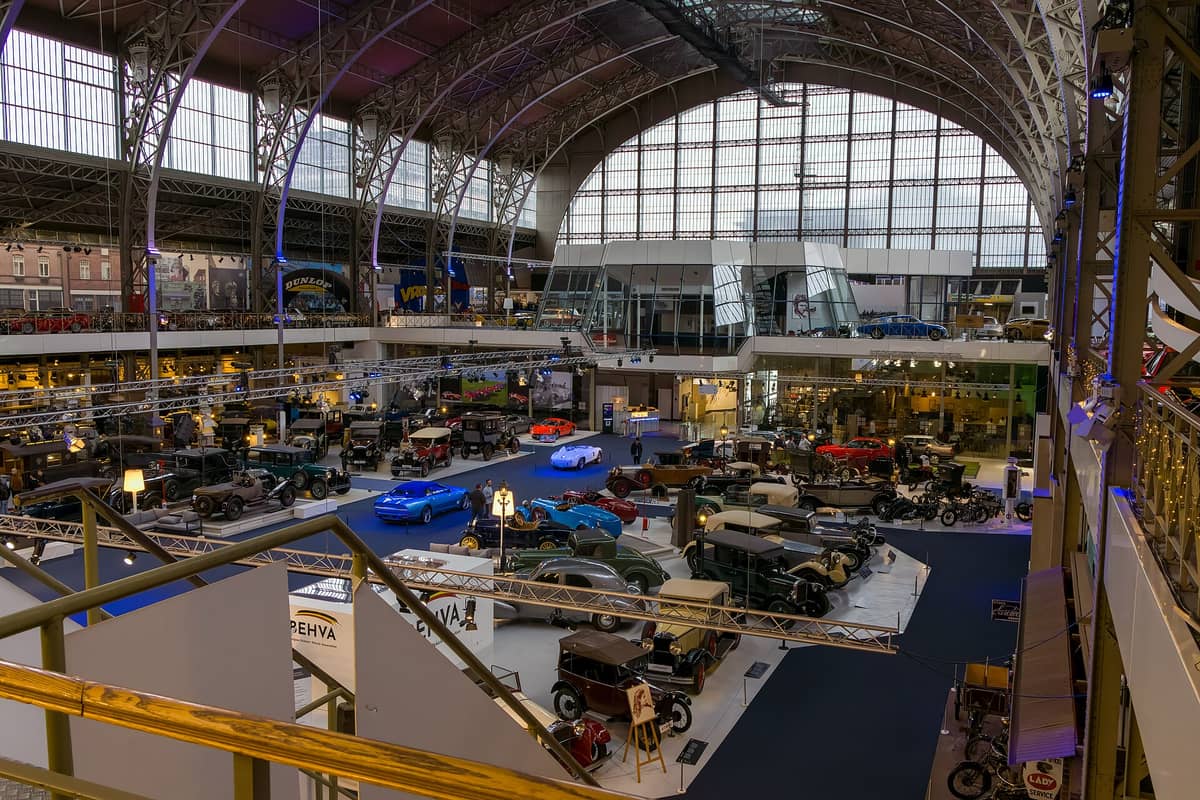
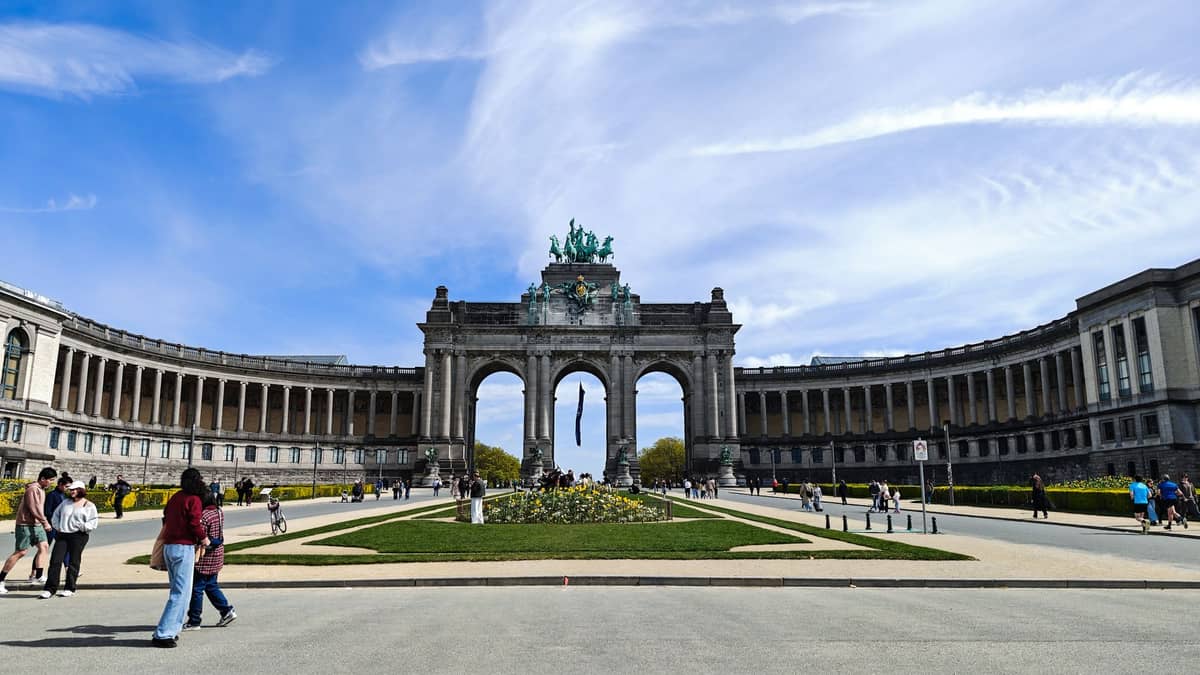
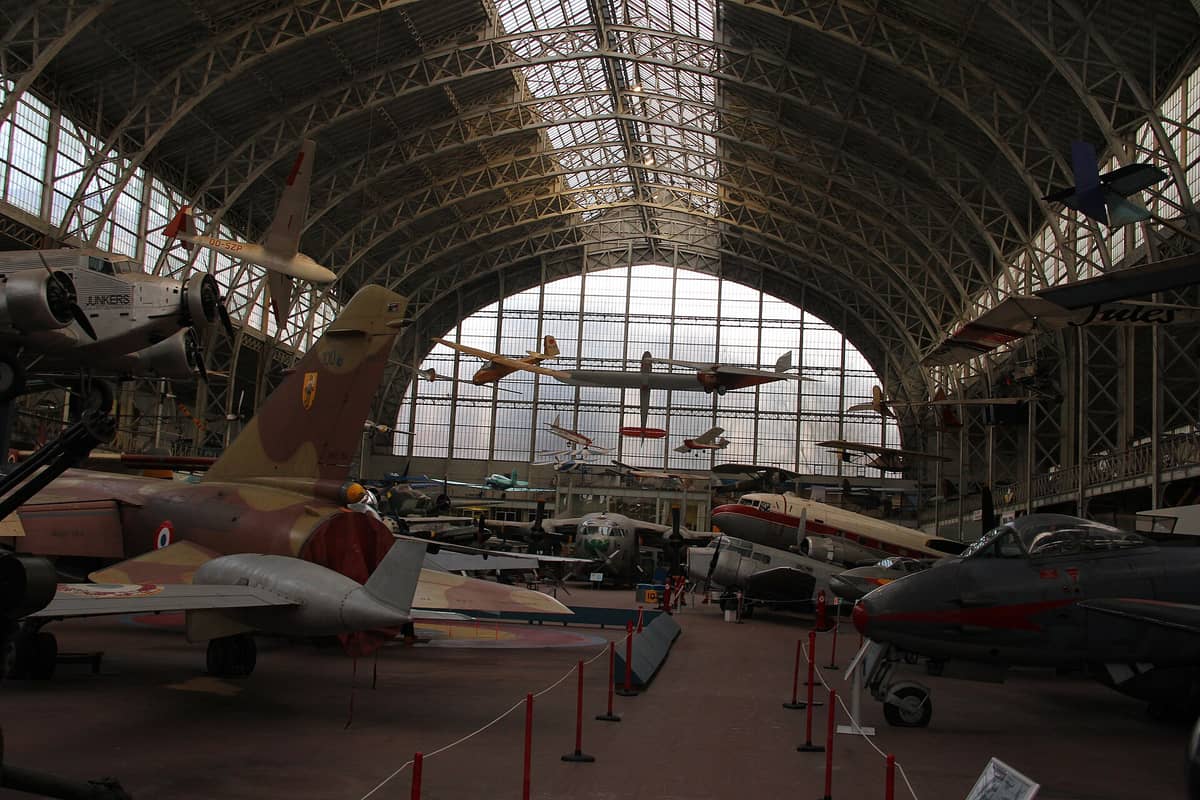
At the eastern end of the quarter, the Parc du Cinquantenaire is one of Brussels' grandest public spaces, built to celebrate the 50th anniversary of Belgian independence. The triumphal arch at its center frames the park's main axis, and the semicircular colonnaded halls on either side house several significant museums. The Art and History Museum holds one of Europe's largest collections of decorative arts and antiquities, while Autoworld fills its hall with a century of automobile history. The park itself is open to all and functions as a genuine neighborhood lung, with joggers, dog walkers, and chess players using it daily.
Also within the Cinquantenaire complex is the Royal Museum of the Armed Forces, which includes a rooftop terrace offering some of the best views across the Brussels skyline. For those interested in military history spanning from the Napoleonic era through both World Wars, this museum covers its subject thoroughly and is rarely crowded.
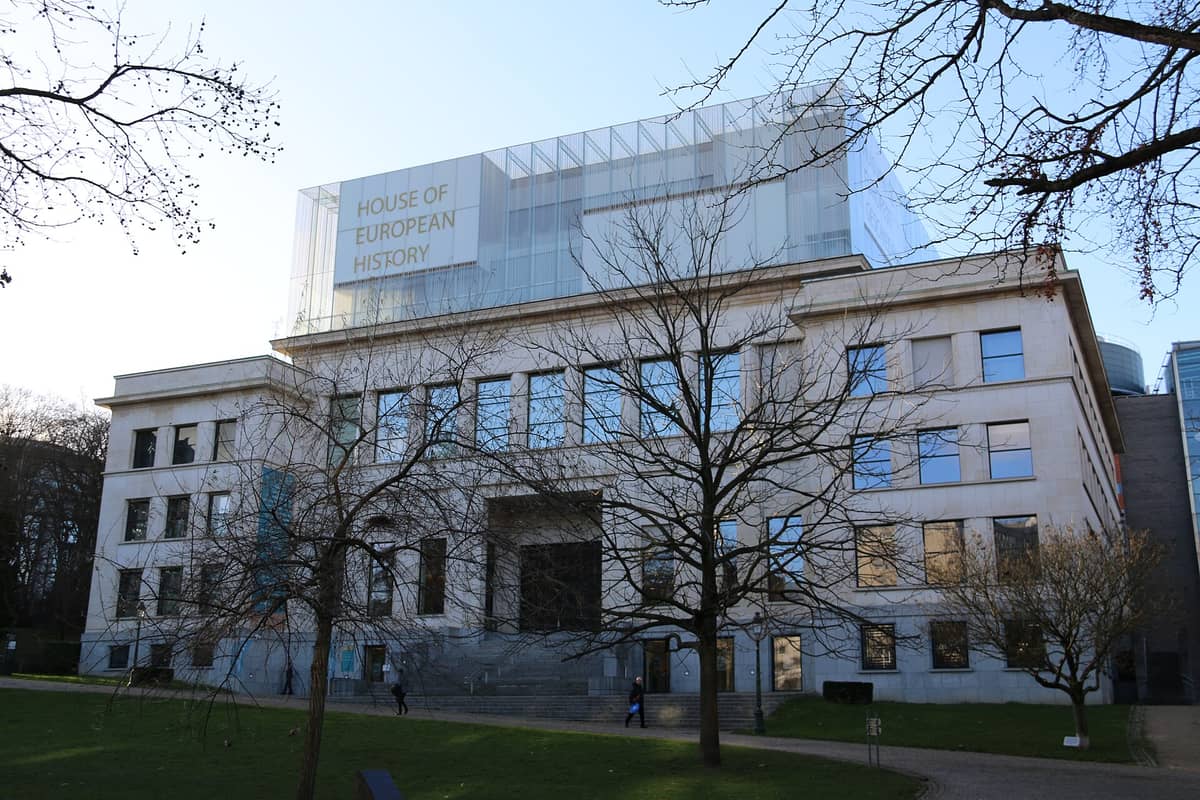
The House of European History on Rue Belliard is another free museum, this one dedicated to the history of Europe as a whole rather than just the EU institutions. Opened in 2017, it takes a broader and more honest view of European history than the Parlamentarium, including episodes of conflict, colonialism, and political failure alongside the post-war reconstruction narrative.
Parlamentarium: free, book group tours of the Parliament chamber in advance
Parc du Cinquantenaire: open daily, free entry to the park
Art and History Museum: closed Mondays, free on first Sunday of the month
Autoworld: paid entry, particularly strong collection of early 20th-century vehicles
House of European History: free, open Tuesday to Sunday
Parc Léopold: open daily, lake and mature tree gardens behind the Parliament
💡 Local tip
The museums in the Cinquantenaire complex are best visited on a weekday morning when crowds are thinnest. The Art and History Museum in particular has vast galleries that reward a slow visit, and it is rarely busy except on free Sunday mornings.
Eating & Drinking
The food scene in the European Quarter is shaped by its clientele: professionals eating on expense accounts, diplomats hosting lunches, and interns grabbing quick meals between sessions. This produces a range of restaurants skewed toward the mid-to-upper price bracket, with a high density of places offering set business lunches that represent considerably better value than their dinner menus.
The streets around Place du Luxembourg and Rue Archimède have the highest concentration of bars and restaurants. On evenings when the Parliament is sitting, Place du Luxembourg itself becomes one of the more animated spots in eastern Brussels, with terrace tables spilling onto the square and a demographic mix that leans young and international. The beer selection at most of these bars is genuinely good: this is Belgium, and even the most office-focused establishment tends to stock a respectable range of Belgian ales.
For more affordable eating, the area around Schuman and Rue Stevin has sandwich shops and quick-service places targeting the lunch crowd. These are not destinations in themselves, but they fill a practical need if you are spending the day moving between attractions in the quarter. For a proper sit-down meal at reasonable prices, heading ten minutes south into Ixelles or west toward the city center will open up considerably more options.
The neighborhood is not a food destination in the way that, say, the Sablon or the Dansaert district are. Travelers prioritizing the Brussels food scene should base themselves or plan meals elsewhere, but the European Quarter can sustain a full day without eating badly if you choose thoughtfully.
⚠️ What to skip
Many restaurants around Schuman and Rue de la Loi close on weekends or reduce their hours significantly. If you are visiting on a Saturday or Sunday, check opening hours before planning a meal in this part of the quarter.
Getting There & Around
The European Quarter is very well connected to the rest of Brussels by metro. Schuman station is served by metro line 1 (towards Stockel) and line 5 (towards Herrmann-Debroux), and the adjacent Maelbeek/Maalbeek station adds a second nearby entry point. Arts-Loi/Kunst-Wet station lies at the western edge of the quarter where it meets the city center. For the European Parliament and Place du Luxembourg, the Brussels-Luxembourg train and metro station provides direct rail connections to Brussels-Central and Brussels-Midi, making this one of the better-connected parts of the city for travelers arriving by train.
From Brussels Airport (BRU, near Zaventem), the STIB bus line 12 on weekdays and bus 21 on evenings and weekends runs directly to the Schuman area, making the European Quarter the first major destination these airport buses reach before continuing into the city center. The journey takes approximately 30 minutes depending on traffic. SNCB trains from the airport stop at Brussels-Luxembourg station, which is a short walk from the Parliament and about ten minutes by foot from the Schuman roundabout.
Walking from the city center is practical and pleasant for anyone with the time. From the Grand-Place, following Rue de la Loi eastward takes about 20 to 25 minutes on foot, passing through the transition from historic Brussels into the institutional corridor. The route is mostly flat. For more detail on navigating Brussels' transit network, the getting around Brussels guide covers STIB metro, tram, and bus options in full.
Metro: Schuman (lines 1 and 5), Maelbeek, Arts-Loi
Train: Brussels-Luxembourg station (regional rail, direct to Brussels-Central and Brussels-Midi)
Airport bus: Line 12 (weekdays) and Line 21 (evenings and weekends) from Brussels Airport (BRU) to Schuman
On foot from Grand-Place: approximately 20-25 minutes east along Rue de la Loi
On foot from Parc du Cinquantenaire to Schuman: approximately 10-15 minutes west
Where to Stay
The European Quarter has a solid range of accommodation, largely oriented toward business travelers and conference guests. Hotels cluster around Schuman, Rue de la Loi, and the streets near the Cinquantenaire, and they tend to be mid-range to upper-mid-range in price with good connectivity but limited personality. Weekend rates often drop significantly compared to weekday prices, reflecting the business-travel demographic.
For leisure travelers, staying in the European Quarter is a practical choice if your primary interests are the Cinquantenaire museums, the EU institutions, or easy transit connections across the city. The metro links are excellent and the airport bus connection is a genuine convenience. However, travelers who want to feel embedded in Brussels' street life, restaurant culture, or evening social scene will find that the quarter goes quiet early and lacks the layered neighborhood character of places like Saint-Gilles or Ixelles. For those visitors, using the European Quarter as a day destination and basing yourself in the city center or one of the inner residential communes will likely prove more satisfying.
If budget is a priority, consult the full Brussels accommodation guide for a neighborhood-by-neighborhood comparison. The European Quarter is rarely the cheapest option, but weekend deals can make it competitive with more centrally located alternatives.
Practical Notes for Visitors
Security is a constant presence in the European Quarter. The Berlaymont and surrounding EU buildings are monitored and access is restricted, so do not expect to walk into any major institutional building without prior arrangement. During EU Council summits, significant stretches of Rue de la Loi and surrounding streets can be closed to public access, and the area around Schuman fills with police and security vehicles. These events are publicly listed on the EU Council calendar and are worth checking if you plan to visit on a specific date.
Demonstrations and protests are common near the Parliament and Schuman, particularly when controversial EU legislation is being debated. These are generally peaceful and well-managed by Brussels police, but they can cause delays on public transport and affect foot access to certain streets. For general safety advice in Brussels, including guidance on navigating areas affected by large gatherings, the Brussels safety tips guide provides useful context.
The European Quarter is a genuinely international environment where English is spoken widely and comfortably, even more so than in many other parts of Brussels. French is the dominant local language, but in cafés, restaurants, and institutions around Schuman, service in English is standard rather than an accommodation. For travelers who find language navigation stressful, this makes the quarter one of the easier parts of Brussels to move through independently.
Brussels is the de facto capital of the European Union and the seat of its major institutions, a status that gives the European Quarter its particular weight in the city's identity. If you are trying to understand Brussels as a city, visiting this neighborhood is part of completing the picture. The guide to Brussels' EU institutions explains the function of each building, which bodies are based where, and how to arrange formal visits to the Parliament and Commission.
TL;DR
The European Quarter is best understood as a working institutional district that also happens to contain some of Brussels' most significant museums, especially around the Parc du Cinquantenaire.
The Parlamentarium and House of European History are both free, genuinely interesting, and easy to combine in a single day alongside the art and history collections in the Cinquantenaire complex.
The neighborhood is most lively on weekdays when the EU institutions are in session; weekends and recess periods can feel noticeably empty, particularly around Rue de la Loi and Schuman.
Transit connections are excellent: direct metro lines, the Brussels-Luxembourg rail station, and the airport bus from BRU all make this one of the most accessible parts of the city.
Best suited to travelers interested in European history, political institutions, or architecture, and to anyone who values easy transit connections over neighborhood atmosphere and nightlife.
Two days is enough time to cover Brussels' historic core, world-class museums, and legendary food scene — if you plan it right. This itinerary cuts through the noise to give you a practical, hour-by-hour plan that works around real opening hours, Monday closures, and the best use of the Brussels Card.
Brussels holds one of the greatest concentrations of Art Nouveau architecture on the planet. This guide covers the essential buildings, the best museums, how to use the Art Nouveau Pass, and when to visit for the BANAD Festival — with a frank note on what's actually open and what requires booking ahead.
Brussels sits at the heart of one of the world's great beer cultures. This guide covers every major brewery, museum, and tasting experience in the city, with clear pricing, practical logistics, and the context to understand what makes Belgian beer genuinely different.
Brussels is the undisputed capital of Belgian chocolate, with heritage praline houses, boundary-pushing artisan makers, and chocolate museums all within walking distance of each other. This guide covers the best chocolate shops, realistic prices, seasonal considerations, and exactly what to skip.
Brussels has an unusually dense museum scene for its size. From a world-class Surrealism collection to a living lambic brewery, a spectacular natural history hall, and a free EU history centre, the Belgian capital offers remarkable depth across every genre. This guide covers the best of them.
Brussels rewards visitors in every season, but the timing of your trip shapes everything from hotel rates to crowd levels to which festivals you can catch. This guide breaks down exactly what to expect each month, with the real trade-offs for every type of traveller.
Brussels rewards those who seek elevation. This guide covers the city's best viewpoints, from iconic hilltop terraces and Art Deco rooftops to medieval towers and futuristic observation spheres. Whether you want free skyline vistas or ticketed platforms, here's exactly where to go and when.
Brussels Airport (BRU) in Zaventem is 12 km from the city centre, with a direct train station beneath the terminal. This guide covers every transport option, realistic fares, terminal layout basics, and the common mistakes that cost travellers time and money.
Brussels transforms each winter into one of Europe's most atmospheric seasonal destinations. This guide covers every aspect of Winter Wonders (Plaisirs d'Hiver): where the markets actually are, what things cost, when to visit to avoid the worst crowds, and the practical details that most guides overlook.
Brussels takes comic art more seriously than almost any city on earth. This guide covers the official mural route with 60+ painted walls, the Belgian Comic Strip Center housed in a Victor Horta building, and everything you need to navigate the city's Franco-Belgian comic heritage without wasting a step.
Brussels is the de facto capital of the European Union, and its EU quarter is one of the few places on earth where you can step inside a functioning democratic institution for free. This guide covers every visitor attraction in the European Quarter, with opening hours, booking tips, and a frank take on what's worth your time.
The Brussels Flower Carpet is one of Europe's most spectacular temporary installations, covering the Grand-Place in nearly one million flowers for just four days every two years. This guide covers dates, viewing options, crowd strategy, and practical tips to help you plan a visit worth the trip.
Brussels rewards couples who look beyond the obvious. This guide covers the city's most romantic squares, gardens, museums, and neighborhoods, with practical details on timing, cost, and what to skip, so you can plan a genuinely memorable trip together.
Brussels rewards curious travellers who look beyond the Grand-Place. From buried medieval palaces and spontaneous-fermentation breweries to Art Nouveau masterpieces and canal-side art museums, the city's best experiences are often the least obvious ones.
Brussels has a deeper luxury scene than many visitors expect. From a dense cluster of Michelin-starred restaurants across the Brussels-Capital Region to a cluster of exceptional five-star hotels along Avenue Louise, this guide covers exactly where to stay, eat, and spend your time when budget is not the constraint.
Brussels nightlife is not one scene but many, spread across distinct neighborhoods from the beer bars of Saint-Géry to the techno clubs of Ixelles. This guide breaks down the best districts, key venues, realistic costs, and the practical logistics every visitor needs to know.
Brussels has a reputation as an expensive EU capital, but the reality is more nuanced. Between free museum Sundays, affordable public transport, and some of the best street food in Europe, a trip to Brussels can cost surprisingly little. This guide breaks down exactly where your money goes and where you can save it.
Brussels gets rain year-round, but a wet day here is far from a wasted one. The city packs in some of Europe's finest museums, covered galleries, breweries, and atmospheric indoor spaces that reward slow exploration whatever the weather.
Brussels is the capital of Belgium and the de facto capital of the European Union, drawing millions of visitors each year. Most trips are trouble-free, but understanding where the real risks lie, and which fears are overblown, makes a significant difference. This guide covers crime patterns, safe neighborhoods, transport safety, emergency contacts, and practical tips for navigating the city with confidence.
Brussels rewards shoppers at every budget level, from designer boutiques on Avenue Louise to the chaotic pleasures of the Marché du Midi. This guide breaks down every major shopping district, market, and seasonal event with plain assessments, opening hours, and local context.
The Brussels to Amsterdam corridor is one of Europe's most well-connected intercity routes, with high-speed trains completing the journey in under two hours and budget buses offering a cheaper alternative. This guide breaks down every option, what it actually costs, and how to book smart.
Bruges is Belgium's most visited city for good reason, and from Brussels it takes under 70 minutes by direct train. This guide covers every transport option, what to expect on arrival, the best way to structure your day, and the honest truth about crowds, costs, and whether one day is actually enough.
Brussels takes its waffles seriously, and visitors who don't know the difference between a Brussels waffle and a Liège waffle often end up disappointed. This guide explains exactly what to order, where to find the best versions across the city, what you should expect to pay, and which spots are overpriced tourist traps.
Brussels rewards walkers more than almost any other European capital. This guide covers the best walking tours and self-guided routes in the city — from the medieval Grand-Place loop to Art Nouveau trails in Saint-Gilles — with honest breakdowns of costs, crowd patterns, and what to skip.
Brussels rewards families with an unusually rich mix of hands-on museums, outdoor parks, and genuinely weird landmarks that kids actually remember. This guide covers the best family activities in Brussels, from the Atomium to Train World, with practical advice on what to prioritise.
Brussels sits at the centre of one of Europe's most rewarding day-trip networks. Within 90 minutes by train or car, you can reach medieval cities, ancient forests, living brewery museums, and one of history's most significant battlefields. This guide covers the best excursions, organised by type.
Brussels offers an unusually rich set of free experiences. From its UNESCO-listed Grand-Place and world-class museums with free admission days to self-guided comic mural trails and sweeping city panoramas, you can fill several days in Brussels without opening your wallet.
Brussels has one of Western Europe's most comprehensive urban transport networks, but navigating two airports, four metro lines, and a tangle of tram routes takes some preparation. This guide covers every practical option — from the STIB/MIVB metro to airport trains, taxis, and cycling — with current fares, route logic, and the mistakes most visitors make.
Brussels divides opinion like few European capitals. This guide gives you a clear-eyed look at what the city genuinely offers, what it gets wrong, and exactly who will love it, so you can decide before you book.
The Paris to Brussels train is one of Europe's most efficient city-to-city rail connections: under 1h30, departures nearly every hour, and advance fares starting around €29. This guide covers everything from booking strategy and station logistics to what awaits you in Brussels.
Brussels rewards visitors who look past the postcard images. This guide covers the essential things to do in Brussels, from UNESCO-listed squares and world-class museums to flea markets, beer culture, and EU institutions, with practical notes on timing, costs, and what to skip.
Brussels is a serious food city for its size. This guide covers every dish worth knowing, from the classics served in century-old brasseries to street food you should seek out, with clear price guidance and tips on what to skip.
Brussels offers far more than one good neighborhood for visitors. This guide breaks down the best areas to stay by location, budget, and travel style, with a clear read on each district, current price benchmarks, and practical advice on taxes, timing, and transport.