Getting Around Brussels: The Complete Transport Guide
Brussels has one of Western Europe's most comprehensive urban transport networks, but navigating two airports, four metro lines, and a tangle of tram routes takes some preparation. This guide covers every practical option — from the STIB/MIVB metro to airport trains, taxis, and cycling — with current fares, route logic, and the mistakes most visitors make.
Plan and book this trip
Tools from our partner Travelpayouts help you compare flights and hotels. If you book through them, we may earn a commission at no extra cost to you.
Flights
Hotels map
TL;DR
- The STIB/MIVB network (metro, tram, bus) covers almost everything tourists need; a contactless single ride costs €2.40 with an €8.50 daily cap after four trips.
- Brussels Airport (BRU, Zaventem) is 12 km from the centre — the SNCB/NMBS train takes 17-25 minutes for around €9-13 including the airport supplement. Do not confuse it with Brussels South Charleroi Airport (CRL), which is much farther away and costs around €100 by taxi.
- A Brupass ticket covers all STIB/MIVB modes plus some regional trains; upgrade to Brupass XL for travel beyond the Brussels zone.
- Taxis are regulated: the regional minimum fare for a booked journey is €8.00, with per-kilometre rates set by the Brussels-Capital Region. Airport taxis to the centre run €40-55.
- For a fuller picture of the city before you plan your routes, see things to do in Brussels to understand which neighbourhoods you'll actually be moving between.
The STIB/MIVB Network: Metro, Tram, and Bus
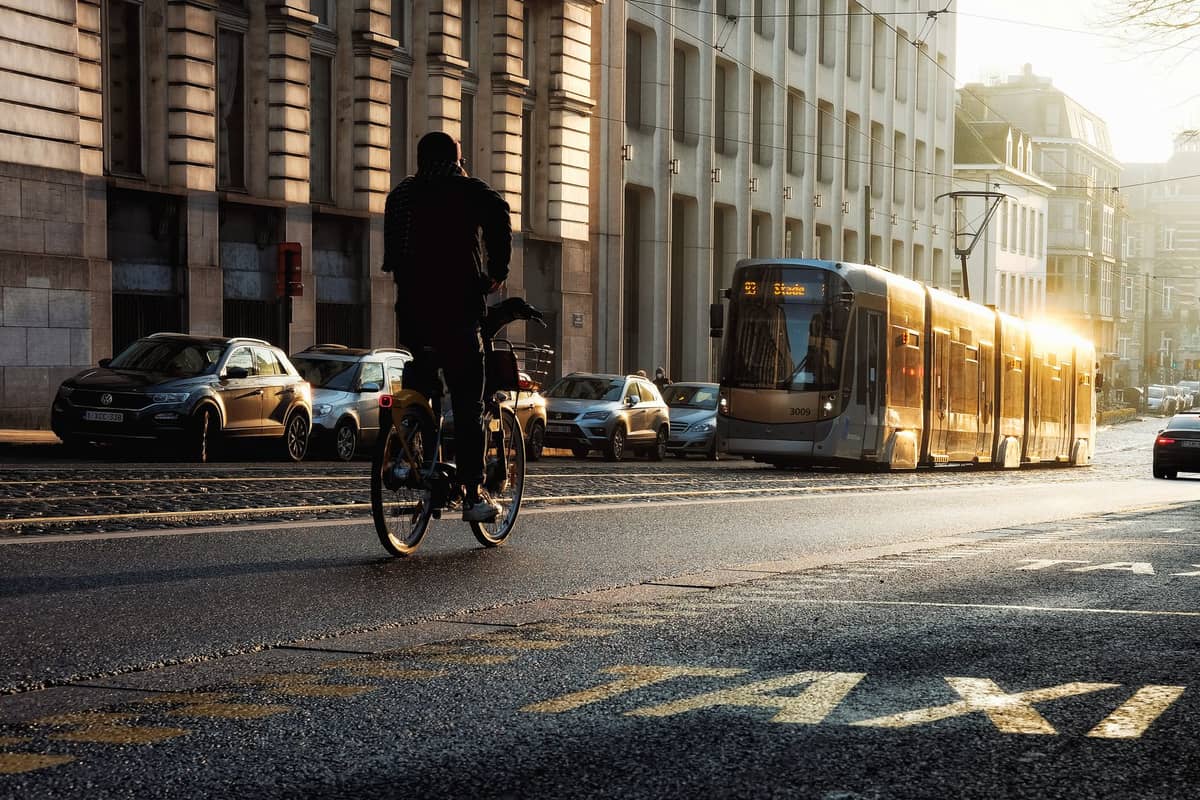
The Brussels urban transport network is operated by STIB/MIVB (Société des Transports Intercommunaux de Bruxelles / Maatschappij voor het Intercommunaal Vervoer te Brussel). It runs four metro lines, an extensive tram network, and dozens of bus routes across the Brussels-Capital Region. For most tourists, this network will get you everywhere you need to go without needing a taxi.
The metro is the fastest option for cross-city travel. Line 1 and Line 5 run east-west through the European Quarter (Schuman) and the city centre; Line 6 continues north to Heysel and the Atomium. Lines 2 and 6 form a loop around the inner city. Trams are slower but give better ground-level access to neighbourhoods like Ixelles and Saint-Gilles that metro lines don't fully serve. Buses fill the gaps, though they share road space and can be slow during peak hours.
ℹ️ Good to know
STIB/MIVB fares as of 2026: a single contactless ride costs €2.40. After four validated trips in one day, a daily cap of €8.50 kicks in — meaning you effectively travel free for the rest of that day. This makes contactless payment the smartest option for most visitors over 2-3 days.
For multi-day visits or travel beyond the central zone, STIB sells the Brupass (€2.70 per journey, €18.90 for 10) and Brupass XL (€3.60 per journey, €25.20 for 10). The regular Brupass covers STIB/MIVB modes and some regional SNCB/NMBS trains within the Brussels zone. Brupass XL extends coverage to a wider area. This matters if you're heading out to places like the AfricaMuseum in Tervuren or planning day trips from Brussels by train.
⚠️ What to skip
A common mistake: the standard Brupass does NOT cover the airport bus line or travel beyond the Brussels zone. If you plan to use STIB bus 12 or 21 from the airport, you need either an Airport2City ticket or a Brupass XL. Check current STIB/MIVB tariffs before travel, as ticket products and prices do change.
Getting from Brussels Airport (BRU) to the City Centre
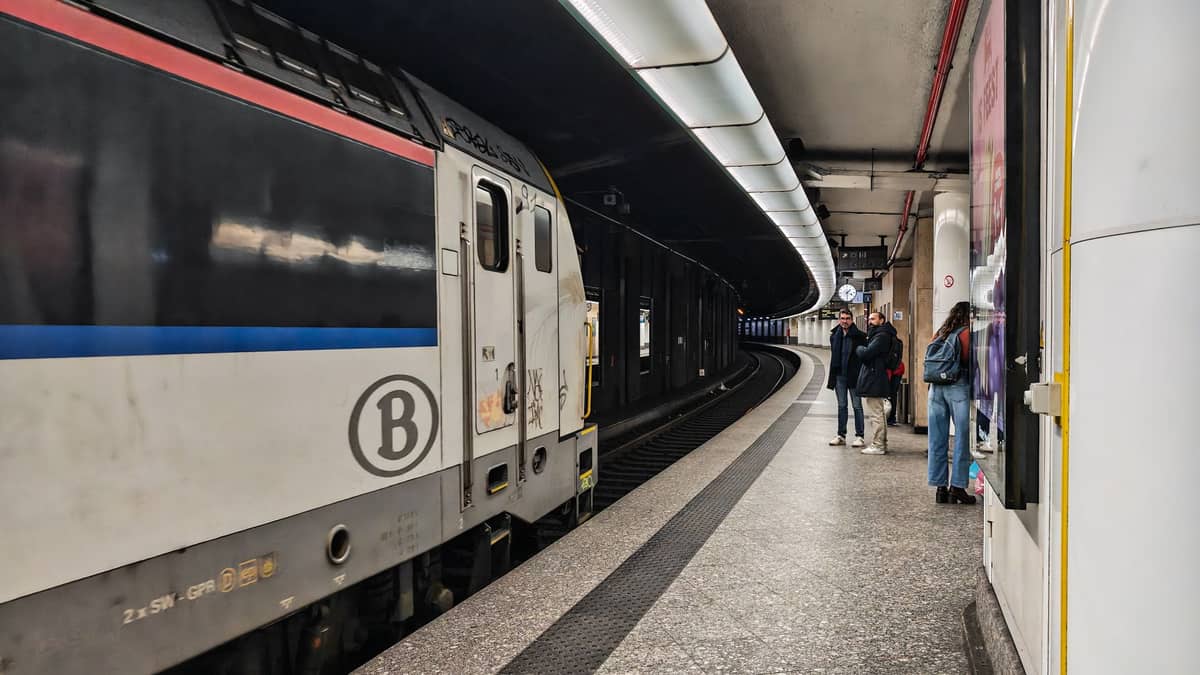
Brussels Airport (IATA: BRU) is located in Zaventem, approximately 12 km northeast of the city centre. You have three realistic options: train, bus, or taxi. The train is the default choice for most travellers and for good reason.
- Train (SNCB/NMBS) — Best overall Direct trains run from Brussels Airport station to Brussels-Central and Brussels-Midi every 15-20 minutes. Journey time is 17-25 minutes. Fares including the mandatory Brussels Airport Supplement (€6.90, often already built into the ticket price) come to roughly €9-13 one way. Trains run from early morning to midnight. Fast, frequent, and immune to traffic.
- Bus (STIB Line 12 / Line 21) — Budget option STIB operates bus 12 on weekdays and bus 21 on evenings, nights, and weekends. Both run to the European Quarter (Schuman) and central stops in about 35-45 minutes. A Go2City ticket from STIB vending machines at the airport costs around €7.50. Add a metro connection and total journey to the city centre is roughly 40-50 minutes. Slower and less comfortable than the train, but cheaper.
- Taxi — Fastest door-to-door, priciest Metered taxis from BRU to central Brussels typically run €40-55. Night surcharges and traffic can push this higher. Pre-booked private transfers cost more. Useful if you have heavy luggage or arrive late when train frequency drops.
⚠️ What to skip
Brussels South Charleroi Airport (CRL) is marketed under the Brussels name but sits roughly 60 km south of the city — it is primarily used by low-cost carriers like Ryanair. Getting to Brussels city centre from CRL costs around €90-110 by taxi. Budget airlines fly into CRL to save money on airport fees, and that cost gets passed on to you in ground transport. Factor this in when comparing flight prices.
Taxis and Ride-Hailing in Brussels
Brussels taxis are regulated by the Brussels-Capital Region. For booked journeys, the minimum fare is €8.00, with per-kilometre and per-minute rates set regionally. The city also permits collective taxi journeys at €6.00 per user per trip, which is worth knowing if you're splitting a ride from a central hub. Official licensed taxis are identifiable by their roof sign and registration.
Ride-hailing apps operate in Brussels, with Uber consistently reported as available. However, the regulatory status of specific apps has changed in recent years, and rules around app-based transport in Belgium are not always stable. Before relying on any specific app, check its current status — do not assume the same rules apply as in other European capitals.
Moving Between Neighbourhoods: What to Know on the Ground
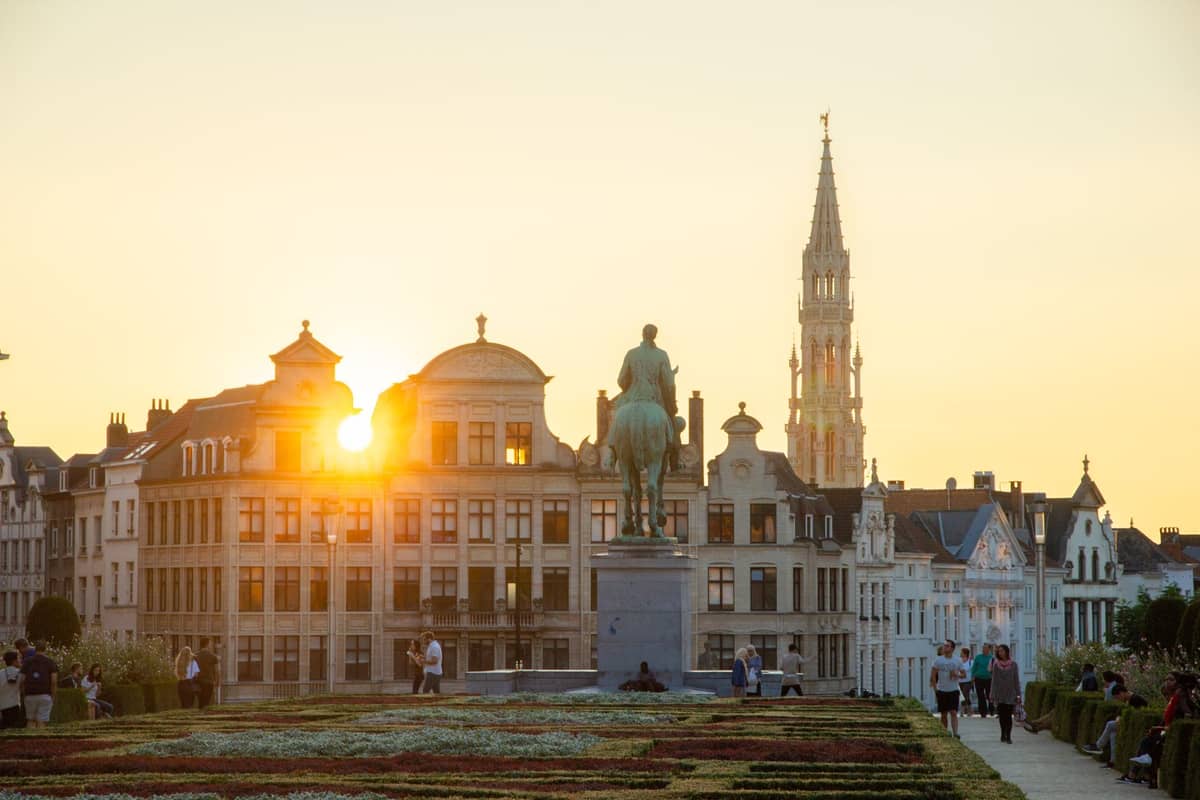
Brussels is a physically compact city with a walkable historic core, but its terrain is more varied than it looks on a map. The lower town around the Grand-Place is flat and easy to cover on foot. Move south toward the Sablon or the Royal Quarter and you'll climb noticeably. The upper town sits roughly 30 metres higher than the lower town — not a problem for a short walk, but worth knowing if you're navigating with luggage or planning a full day on foot.
For the European Quarter around Schuman, metro line 1 is the most direct connection from the city centre. Trams serve Ixelles and the area around Place Flagey well. For the Marolles district below the Palace of Justice, you can take the free glass elevator (Ascenseur des Marolles) from Place Poelaert down to the lower town — a practical shortcut that most guidebooks understate.
The Brussels-Capital Region operates entirely separately from Belgium's provinces, which matters for public transport. STIB/MIVB covers travel within the region. For journeys to Flanders or Wallonia — whether you're heading to Bruges, Ghent, or Waterloo — you switch to SNCB/NMBS trains at one of Brussels' three main stations: Brussels-Central, Brussels-Midi, or Brussels-Nord.
- Brussels-Midi (Gare du Midi / Zuidstation): international hub for Eurostar, TGV, and other international services; also the main SNCB terminus for Bruges, Ghent, and Antwerp
- Brussels-Central (Gare Centrale / Centraal Station): closest station to the Grand-Place and the historic city centre; most useful for tourists
- Brussels-Nord (Gare du Nord / Noordstation): northern hub, less tourist-facing but useful for connections across Belgium
Cycling, Walking, and Other Options
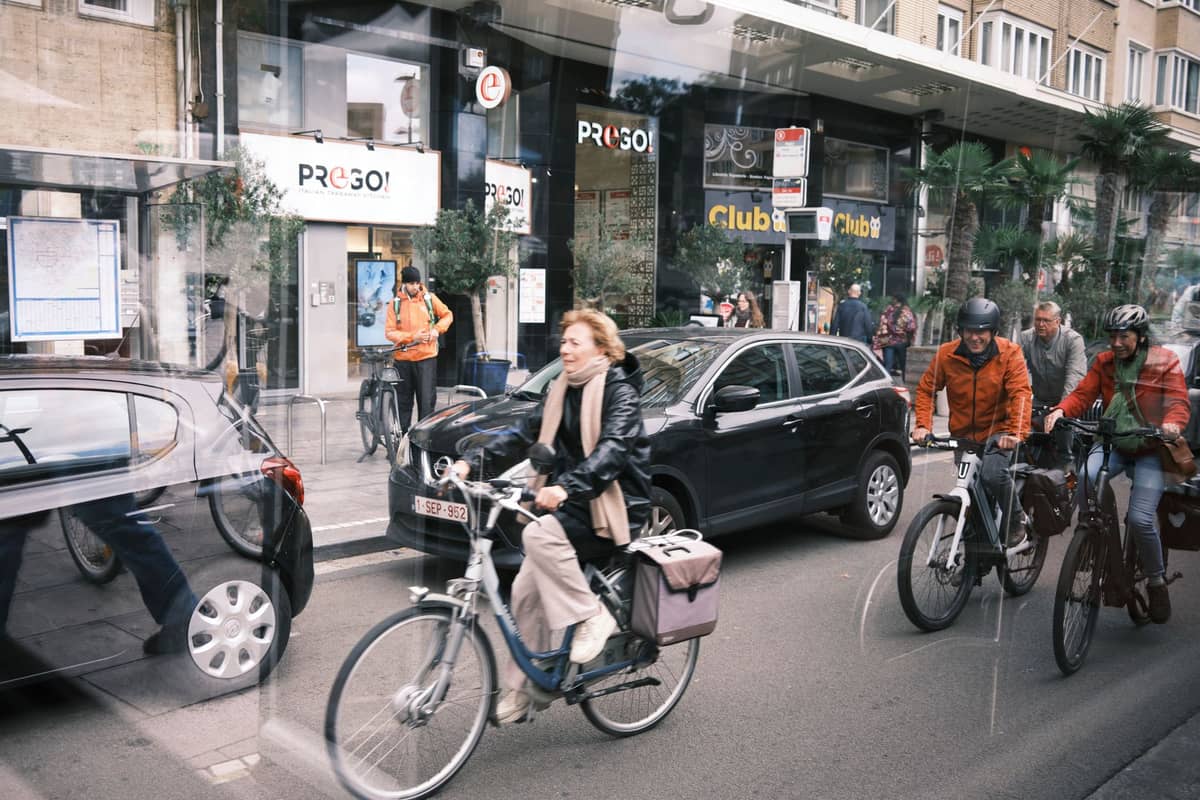
Brussels has invested in cycling infrastructure over the past decade, with bike lanes across much of the city centre and an expanding network of Villo! shared bikes (the regional bike-share scheme). That said, Brussels is not Copenhagen: roads can be narrow, drivers are assertive, and cobblestones on the historic streets make cycling uncomfortable in places. Cycling works well for flat stretches in the lower town or along canal routes toward Molenbeek, less so for routes that involve significant elevation change.
Walking is genuinely the best way to explore the historic core. The stretch from the Grand-Place to Mont des Arts, then up to the Parc du Cinquantenaire covers most of central Brussels in around 40 minutes of walking — though the hill between the lower and upper town will slow you down. If you prefer a structured route, Brussels walking tours offer guided itineraries that double as orientation tools for first-time visitors.
✨ Pro tip
Car Free Sunday in Brussels (in 2026 this falls on 20 September) closes the entire Brussels-Capital Region to private vehicles for the day. If you happen to be in the city then, it's genuinely one of the best days to explore on foot or by bike — the streets empty out and the city feels completely different. Taxis, emergency services, and permit holders are exempt.
Practical Ticketing: What to Buy and When
The simplest approach for most visitors staying 2-4 days is to use a contactless bank card directly on STIB/MIVB validators. The €2.40 single fare and €8.50 daily cap make this competitive with any multi-day pass, and you avoid the overhead of loading a separate card. The MOBIB card (STIB's reloadable smart card) makes sense for longer stays or residents but involves a card fee that rarely pays off on a short trip.
One ticket covers transfers between metro, tram, and bus within the validation window — you do not need to re-tap for a connection. This is a source of confusion for visitors who over-validate and burn through tickets unnecessarily. Validate once per journey, not once per vehicle.
- Contactless single (2026) €2.40 per journey. Daily cap of €8.50 after four validated trips. Best for short stays with moderate travel.
- Brupass €2.70 single / €18.90 for 10 journeys. Covers STIB/MIVB plus some SNCB trains within the Brussels zone.
- Brupass XL €3.60 single / €25.20 for 10 journeys. Extends to broader regional travel. Needed for airport bus lines and out-of-zone SNCB connections.
- Go2City / Airport2City (airport) Airport-specific STIB tickets for bus lines 12 and 21. Around €7.50 from vending machines at the airport. Covers onward connections by metro or tram.
💡 Local tip
Fares are updated periodically. Always verify current prices on the official STIB/MIVB website (stib-mivb.be) before travel. The figures here reflect 2026 tariffs but should be treated as a reference range, not a guaranteed price.
If you're travelling on a tight budget and want to minimise transport costs across your stay, the guide to Brussels on a budget covers how to structure your days around walkable clusters of attractions rather than relying heavily on paid transit.
FAQ
Is it easy to get around Brussels without a car?
Yes. Brussels has a dense STIB/MIVB network of metro, tram, and bus lines that covers the entire Brussels-Capital Region. The historic city centre is also highly walkable. A car is a disadvantage in central Brussels — parking is limited and expensive, and many tourist areas are pedestrianised or difficult to navigate by road.
What is the cheapest way to get from Brussels Airport to the city centre?
The STIB bus (line 12) to the European Quarter is the cheapest option at around €7.90 for an Airport2City ticket. The SNCB/NMBS train costs €11-13 but is significantly faster (17-25 minutes vs. 35-45 minutes) and more comfortable. Taxis cost €40-55 and are only worth it for late-night arrivals or heavy luggage.
Can I use one ticket for the metro, tram, and bus in Brussels?
Yes. A single STIB/MIVB ticket covers transfers between metro, tram, and bus within the validation window. You only need to validate once per journey — not once per vehicle. This applies to contactless payments, Brupass, and Brupass XL tickets.
How far is Brussels South Charleroi Airport from Brussels city centre?
Roughly 60 km south of central Brussels. Despite the name, it is not conveniently close to the city. Getting to Brussels from CRL by taxi costs around €90-110. Coach services are available but take significantly longer than the train from Brussels Airport (BRU). Always check which airport your flight uses when booking.
Is Uber available in Brussels?
Uber has been reported as operating in Brussels, but ride-hailing regulations in the Brussels-Capital Region have changed several times in recent years. Before relying on any specific app, check its current operational status. Licensed taxis regulated by the Brussels-Capital Region are always a reliable fallback, with a minimum booked-journey fare of €8.00.