AfricaMuseum Tervuren: Africa's Complex History in a Palace Outside Brussels
Set in a grand neoclassical palace 14 km east of Brussels, the AfricaMuseum is one of Europe's largest museums dedicated to Central Africa. Reopened in 2018 after a five-year renovation, it now confronts its own colonial past head-on while housing world-class natural history, ethnographic, and art collections.
Quick Facts
- Location
- Leuvensesteenweg 13, 3080 Tervuren, Belgium (approx. 14 km east of Brussels city centre)
- Getting There
- Tram 44 from Montgomery metro station (Brussels) to Tervuren Station terminus, then a short walk through the park to the museum entrance
- Time Needed
- 2.5 to 4 hours for the museum; add 30–60 min to walk the surrounding Tervuren Park
- Cost
- Paid admission; verify current ticket prices at africamuseum.be/en/visit/buy before visiting
- Best for
- History and anthropology enthusiasts, families with older children, architecture lovers, travellers on a half-day trip from Brussels
- Official website
- www.africamuseum.be/en
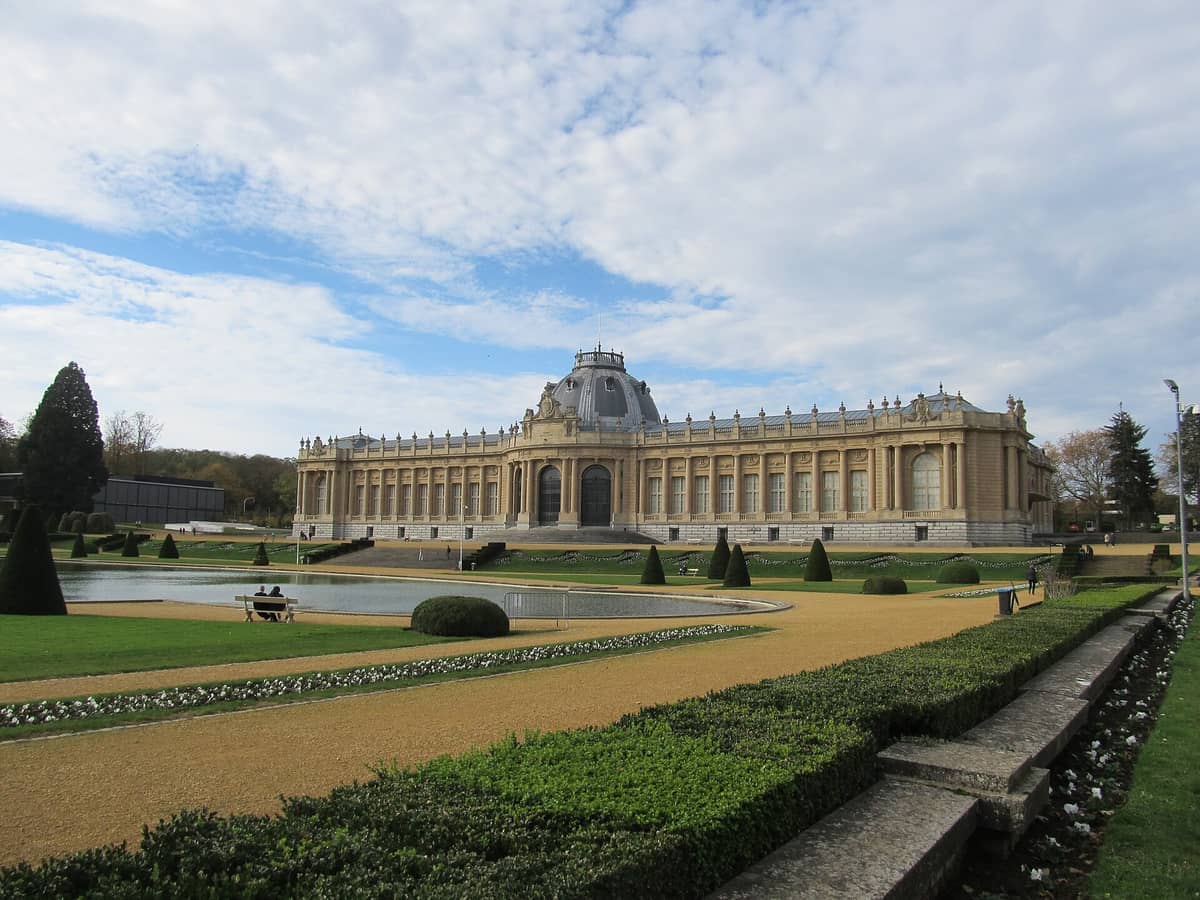
What the AfricaMuseum Actually Is
The AfricaMuseum, formally the Musée royal de l'Afrique centrale (Royal Museum for Central Africa), is not a typical city attraction. It sits in Tervuren, a leafy suburb east of Brussels, inside a palace-scale neoclassical building commissioned by King Leopold II and inaugurated by King Albert I on 30 April 1910. For decades it stood largely unchanged as one of the largest colonial museums in the world, its dioramas and trophy displays a relic of a deeply troubling era. Then it closed in 2013 for a renovation that took five years and reopened on 8 December 2018 as something far more complicated and honest.
The museum now holds roughly 700 objects on public display, drawn from a total collection of some 180,000 ethnographic pieces, 10 million animal specimens, and significant archives. The permanent galleries cover Central African history, cultures, ecology, and biodiversity, but they do so while explicitly addressing Belgium's colonial record in the Congo. That self-critical dimension is what separates this institution from many of its European peers, and it is the main reason serious travellers make the journey out here.
ℹ️ Good to know
Opening hours: Tuesday to Friday 10:00–17:00, Saturday and Sunday 10:00–18:00. Closed Mondays and on 1 January, 1 May, and 25 December; on 24 and 31 December the museum closes at 14:00. Allow extra time on weekends when the tram from Brussels fills up and the entrance queue can stretch outside.
The Journey Out: Tram 44 and the Approach Through the Park
Getting to the AfricaMuseum is itself part of the experience, and it is one of the more pleasant journeys in the greater Brussels area. Take metro line 1 or 5 to Montgomery station, then board tram 44, which runs on a dedicated track through a long wooded corridor all the way to the Tervuren terminus. The tram ride takes about 20–23 minutes, and by the time you pass the Parc de Woluwé and the grounds begin to open up, the pace of the city has already dropped away.
From the Tervuren tram stop, a signposted path leads through the formal grounds of the Tervuren Park, past long ponds edged with willows and poplar. On a dry morning the walk takes about ten minutes and feels nothing like a commute to a museum. The building itself becomes visible well before you reach it: a long, pale stone facade with a central dome and colonnaded wings, reflected in the water. Arrive in the early morning on a weekday and you may have this approach almost entirely to yourself.
💡 Local tip
Tram 44 is part of the Brussels STIB/MIVB network. A standard STIB ticket covers the full journey from Montgomery to Tervuren Station. Buy your ticket before boarding using the STIB app or a ticket machine at Montgomery station to avoid delays.
Tickets & tours
Hand-picked options from our booking partner. Prices are indicative; availability and final rates are confirmed when you complete your booking.
AfricaMuseum skip-the-line entrance tickets
From 15 €Instant confirmationGhent tour from Brussels
From 43 €Instant confirmationFree cancellationTablet Workshop at Choco-Story Brussels
From 45 €Instant confirmationShared tour of Delft and the Keukenhof Estate from Brussels
From 86 €Instant confirmationFree cancellation
The Building: Architecture as Colonial Statement
The museum building was designed by French architect Charles Girault, the same architect responsible for the Petit Palais in Paris, and construction ran from 1904 to 1910. Leopold II's intention was explicit: a palace that would display the wealth and reach of Belgian civilisation in the Congo Free State, which he controlled personally as a private colony before its transfer to the Belgian state in 1908. The architecture does exactly what it was designed to do. The central rotunda is imposing, with marble floors, high coffered ceilings, and natural light pouring through a glazed dome. Allegorical statues from the original building remain on display, some with interpretive panels explaining what they meant in 1910 and what they mean now.
The 2013–2018 renovation added a largely underground entrance pavilion at the rear, designed by the Belgian firm Stéphane Beel Architects. This contemporary structure links to the historic building through a glass-roofed interior garden and provides modern facilities without altering the original facades. The contrast is handled with restraint: you pass from pale stone and imperial grandeur into a cooler, lower space of concrete and glass before the galleries begin. It works as architectural storytelling, even if unintentionally.
What You'll Find Inside: The Permanent Collections
The permanent galleries are organised thematically rather than geographically, covering sections on Central African history, the colonial period, contemporary Congo, biodiversity and natural history, and ethnographic collections. The natural history holdings are genuinely extraordinary: the AfricaMuseum holds one of the world's most significant collections of Central African fauna, including large mounted specimens, fish collections numbering in the hundreds of thousands, and geological and botanical archives that remain active research resources.
The colonial history section is the most discussed and the most carefully handled. Display panels written in collaboration with Congolese academics and diaspora communities address the violence of Leopold's regime directly, including the rubber terror and the death toll estimates now attributed to that period. This is not comfortable material, and the museum does not try to make it comfortable. Glass cases containing original propaganda objects from the colonial era are placed alongside photographs, testimonies, and analysis. The result is more like a historical reckoning than a celebration, and most visitors find it absorbing rather than overwhelming.
The ethnographic and contemporary art collections offer balance: masks, textiles, musical instruments, carved figures, and modern works by Congolese artists demonstrate the depth and variety of Central African cultures on their own terms, not as curiosities. If your interest in African art extends further, the Royal Museums of Fine Arts in Brussels also hold relevant holdings, though the AfricaMuseum's Central African focus is unmatched in Belgium.
How the Experience Changes by Time of Day
Weekday mornings are quietest, particularly Tuesday through Thursday before noon. School groups arrive regularly on weekday mornings, concentrated mainly in the natural history and ecology sections, which means those galleries can briefly feel crowded. The colonial history and contemporary art sections tend to draw more adult visitors and remain calmer throughout the day.
On Saturday and Sunday afternoons the museum fills considerably, especially in the rotunda and the main entrance hall, where ambient light changes as the sun shifts around the dome. Photography is generally permitted without flash in most sections. The rotunda catches the best light between roughly 11:00 and 14:00. If you are visiting specifically to photograph the architecture, arriving at opening time on a weekday gives you at least 30 minutes before the first tour groups enter.
The grounds of Tervuren Park, which surround the museum, are free to access at any time. Late afternoon visits to the museum can be paired with a walk around the ponds before the park quiets for the evening. In autumn the tree lines around the water are striking, and the tram ride back through the copper-coloured Parc de Woluwé is one of the more atmospheric commutes in the Brussels area.
Practical Walkthrough: What to Prioritise
If you have two and a half hours, spend the first hour in the colonial history and memory galleries, which are the most intellectually demanding and reward slow reading. The second hour works well in the natural history section, where the scale of the collections becomes apparent. Reserve your final 30 minutes for the ethnographic and contemporary art holdings, which are lighter on text and allow a less structured pace. The museum café and shop are located in the new entrance pavilion; the café offers sandwiches and hot drinks and is a reasonable place to break between sections.
The AfricaMuseum is best understood in the context of Brussels's broader museum landscape. For comparison, the Art and History Museum at the Parc du Cinquantenaire holds a wider world cultures collection but lacks the critical colonial framework that distinguishes the AfricaMuseum. Visitors with a full day can combine both, though the journey to Tervuren requires a separate commitment.
💡 Local tip
The museum's audio guide is worth the extra cost if you want context for the colonial history galleries, where the visual material alone can be difficult to interpret without background knowledge.
Accessibility and Practical Notes
The 2018 renovation brought the building up to modern accessibility standards in most areas. The new entrance pavilion is fully step-free, and lifts connect the underground section to the historic building. That said, parts of the original palace retain features such as stone thresholds and uneven flooring that may present challenges. Check the museum's dedicated accessibility page at africamuseum.be/en/visit/accessibility for current information before planning a visit with mobility requirements.
The museum is located outside the Brussels-Capital Region, which means Brussels metro and tram passes cover the transit portion but the attraction itself is in Flemish Brabant. This has no practical impact on visitors, but it is worth knowing if you are using a city tourism card. For broader planning across Brussels attractions, the guide to the best museums in Brussels gives useful context on which cards apply where.
Is It Worth the Trip?
The AfricaMuseum is not for everyone. It is not a quick stop on a city walking route. The colonial history galleries are heavy reading and demand attention. The distance from central Brussels means committing a half-day minimum, including transit. And for visitors primarily interested in the kind of light, social museum experience that pairs well with a coffee and a gift shop tote, this is probably not the right destination.
For travellers with genuine interest in African history, colonialism, natural history, or the ethics of museum-keeping, it is one of the most substantive cultural experiences available in Belgium. Few institutions anywhere in Europe have attempted the kind of self-examination this museum undertook during its renovation, and fewer still have done it with this level of academic rigour. If you are building a broader Brussels itinerary, the two-day Brussels itinerary can help you slot it in alongside the city's central attractions.
Insider Tips
- The walk from the Tervuren tram stop through the park to the museum entrance takes about ten minutes and passes several benches along the ponds, which are worth stopping at. On the return journey, most visitors rush straight to the tram; if you have 20 extra minutes, the northern loop around the lower pond is quieter and often empty by late afternoon.
- The museum's orientation map (available at the entrance desk) is more useful than it looks. The historic building has a non-obvious internal logic and several galleries that branch off without clear signage. Marking your intended route before entering saves backtracking.
- Tram 44 runs at roughly 10-minute intervals during the day, but frequency drops in the evening. Check the last tram time before you go in, particularly on Sunday, to avoid a long wait at the Tervuren stop after closing.
- The temporary exhibition galleries (accessed from the new pavilion) often host work by contemporary African artists and are frequently stronger than the permanent collection implies. These rotate regularly and are not always well-publicised in English-language travel coverage, so check the museum website for what is currently showing.
- If you are visiting with children under 12, the natural history section holds their attention best. The large mounted animals and dioramas, while somewhat old-fashioned in presentation, are visually dramatic and work well as an introduction to Central African ecosystems before the more text-heavy history sections.
Who Is AfricaMuseum Tervuren For?
- Travellers with a serious interest in African history, colonialism, or the ethics of museum collections
- Natural history enthusiasts, particularly those interested in Central African fauna and biodiversity
- Architecture lovers who want to see how a historically sensitive renovation can be handled with care
- Families with children aged 10 and older who are ready for a longer, more demanding cultural visit
- Visitors spending two or more days in Brussels who want to go beyond the central tourist circuit
Nearby Attractions
Combine your visit with:
- Basilica of the Sacred Heart (Koekelberg)
The National Basilica of the Sacred Heart in Koekelberg is one of the largest Art Deco religious buildings in the world, its green copper dome rising 89 metres above Brussels. Entry to the basilica is free; a paid climb to the dome platform delivers one of the city's most underrated panoramas.
- Cantillon Brewery (Brasserie Cantillon)
Cantillon Brewery (Brasserie Cantillon) is one of the few remaining traditional lambic breweries in Brussels, doubling as the Brussels Museum of the Gueuze since 1978. Located a short walk from Gare du Midi in Anderlecht, it is a working industrial site and a serious destination for anyone wanting to understand why Belgian beer culture earned UNESCO recognition.
- Comic Strip Route (Mural Trail)
Brussels' Parcours BD is a free, self-guided trail of more than sixty large-scale comic murals painted on building walls across the city. Created in 1991, it turns the streets themselves into an open-air gallery celebrating Belgium's most distinctive art form. No ticket required, no opening hours to check.
- Erasmus House (Maison d'Érasme)
Built between 1460 and 1515, the Maison d'Érasme in Anderlecht is among the oldest surviving houses in Brussels and one of the few places in the world where you can stand in rooms Erasmus himself occupied. The museum pairs period furnishings with original prints, manuscripts, and artworks in a late-Gothic setting that rewards slow, attentive visitors.