Marolles is Brussels's oldest popular quarter, a compact triangle of streets below the Palace of Justice where flea market traders, antique dealers, and longtime residents share cobblestone lanes with curious visitors. It sits apart from the polished tourist circuit, offering a rawer, more lived-in version of the Belgian capital.
Marolles is the neighborhood Brussels hasn't fully gentrified yet, and that's precisely what makes it worth your time. Anchored by the daily flea market at Place du Jeu de Balle, this compact quarter beneath the looming Palace of Justice has a working-class identity that dates back centuries, and it wears that history on every peeling facade and mismatched market stall.
Orientation
Marolles occupies a triangular pocket in the lower city of Brussels, squeezed between the upper town and the inner ring road. Its spine runs along Rue Haute and Rue Blaes, two parallel streets that stretch roughly north to south, connected by a web of smaller lanes including Rue des Renards, Rue des Tanneurs, and Rue du Vieux Marché aux Grains. The whole walkable core is compact enough to cross on foot in under fifteen minutes.
To the north, Marolles brushes against the Sablon district, where the antique shops become more formal and the prices climb sharply. To the east, the ground rises steeply toward the upper town and the Palace of Justice, which sits on the escarpment above and casts a literal shadow over the neighborhood below. To the south, Marolles lies just north of the Porte de Hal, one of the last surviving medieval city gates, which now houses a history museum. The inner ring road, Boulevard du Midi, marks the western edge.
Geographically, Marolles sits within the City of Brussels municipality, unlike neighboring areas such as Saint-Gilles or Ixelles, which are separate municipalities entirely. Its position between the grand institutions of the upper town and the working transit hub of Brussels-Midi gives it a peculiar in-between quality: neither the polished center nor the outer residential belt, but something older and harder to categorize.
Character & Atmosphere
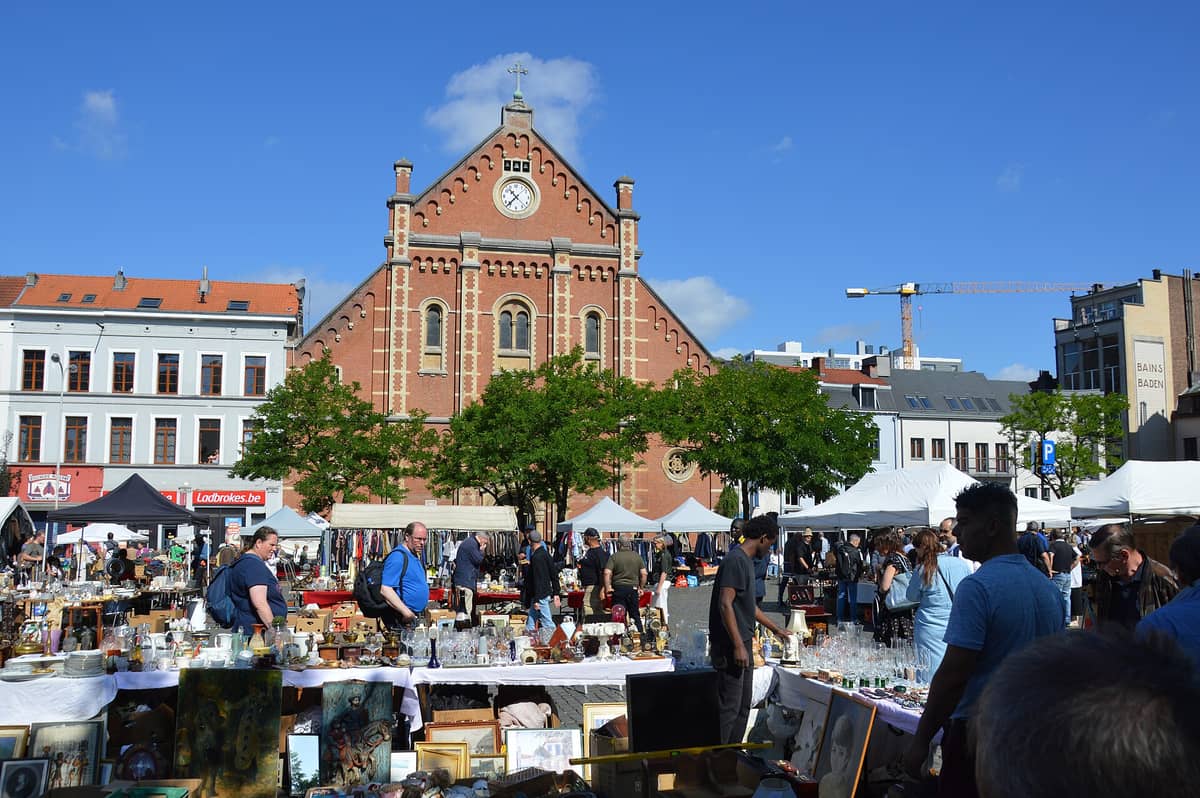
Early on a Sunday morning, Place du Jeu de Balle is already in full swing by around 9am. Traders arrive before dawn to lay out their goods on the cobblestones: chipped enamelware, stacks of vinyl records, military medals, mismatched cutlery, Belgian art nouveau lampshades with cracked glass, and boxes of postcards no one sent. The light is flat and grey most mornings, and the air smells of damp stone and coffee from the café terraces surrounding the square. The crowd is a mix of genuine bargain hunters, professional dealers scouting for resale pieces, and visitors who wandered over from the Sablon and haven't yet learned how the pricing works here.
By midday the market thins out and Rue Blaes takes over as the neighborhood's main artery. The street is lined with antique and bric-a-brac shops that operate as permanent extensions of the flea market spirit, their wares spilling onto the pavement. Some are curated and expensive, others are barely organized at all. Alongside them sit local sandwich counters, Turkish grocery stores, and a handful of cafés that have been serving the same regulars for decades. This is not a street that performs for tourists. It simply continues doing what it has always done.
In the afternoon, the neighborhood quiets considerably on weekdays. Rue Haute, the parallel street to the east, has a slightly more residential feel with fewer shops and more apartment buildings, their ground floors sometimes converted into small studios or ateliers. The sound of conversation drifts from open windows. Children play in the narrow side streets off Rue des Renards. This is when Marolles feels most like what it actually is: a neighborhood where people live, not a heritage experience curated for visitors.
After dark, Marolles is quiet rather than lively. A few bars on and around Place du Jeu de Balle stay open late, and there is genuine neighborhood life if you know where to look, but this is not an area with a concentrated nightlife scene. The streets around the flea market square are better visited during daylight. The lanes east of Rue Haute, heading uphill toward the Palace of Justice, become poorly lit and largely empty after 9pm.
💡 Local tip
The flea market at Place du Jeu de Balle runs every day, but Sunday is the main event. Arrive before 10am if you want first pick of serious finds. By 11am, the best pieces are gone and the crowd becomes harder to move through.
What to See & Do
The Place du Jeu de Balle flea market is the reason most people come to Marolles, and it earns its reputation. The square itself is a wide, slightly sloping expanse of cobblestones that becomes an open-air market every single day in the morning, rain or shine. What you find depends entirely on the day and your willingness to dig. Regulars develop relationships with specific traders and know which sections of the square to check first. Visitors should budget time rather than a shopping list.
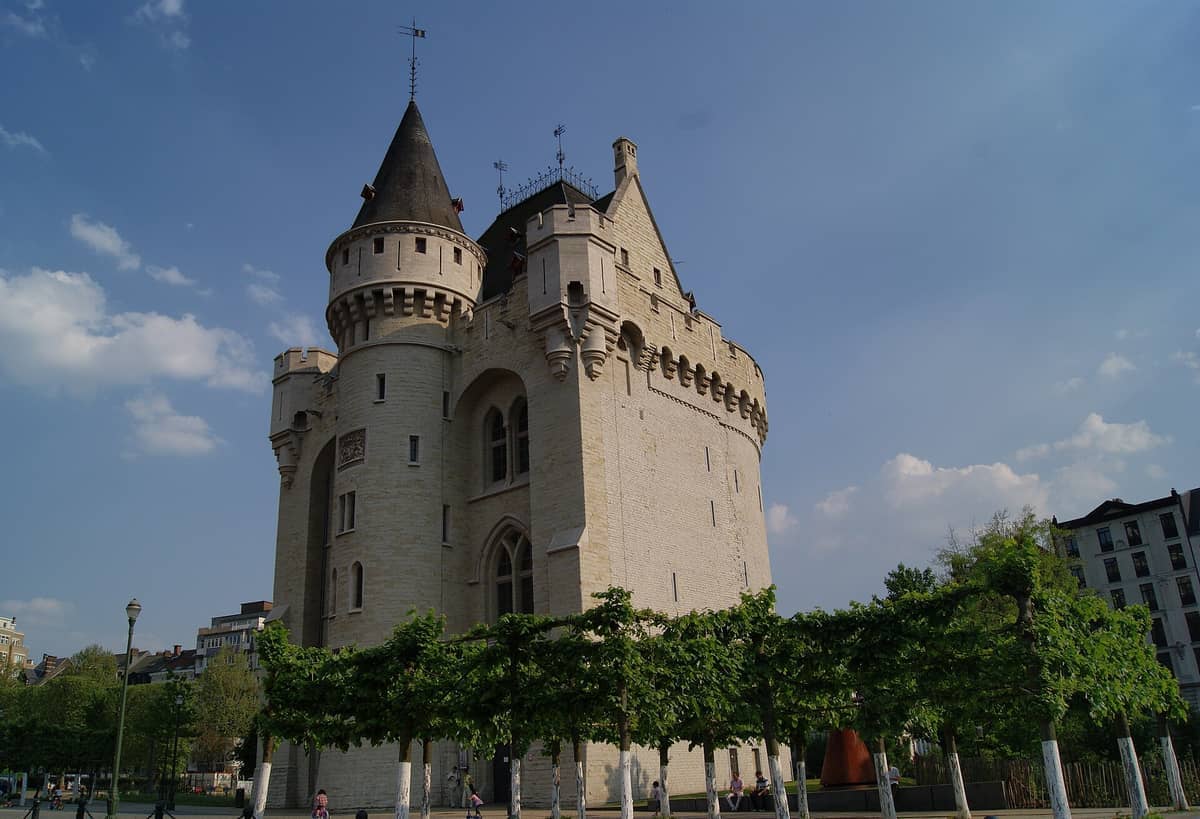
At the southern boundary of Marolles, the Porte de Hal is the only remaining medieval gate from the 14th-century city walls. It now functions as a branch of the Royal Museums of Art and History and contains a permanent collection covering medieval Brussels and the history of the city walls. The tower itself is architecturally striking, and the museum inside is small enough to visit without dedicating a full afternoon.
Rue Blaes and the surrounding streets form one of the most concentrated antique and vintage shopping corridors in Brussels. The shops here differ from the Sablon in that they are less formal and the stock is more unpredictable. You might find a serious piece of Belgian art nouveau furniture next to a box of cassette tapes and a broken accordion. Several dealers specialize in specific categories: vintage clothing, art deco lighting, colonial-era prints, and mid-century furniture all have their dedicated traders.
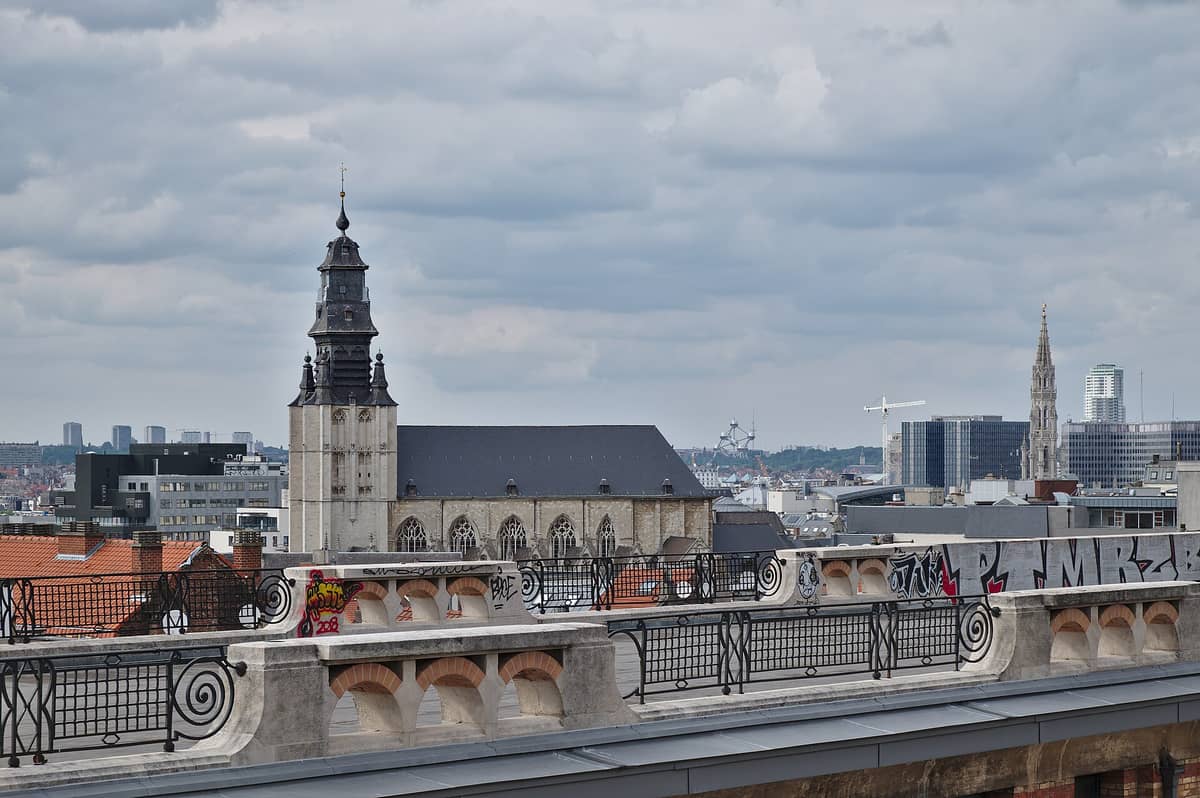
The Church of Our Lady of the Chapel, located just north of the market square, is one of Brussels's oldest churches and worth stepping into for its gothic interior and the relatively uncrowded atmosphere. It's significantly calmer than the major churches in the city center and rarely has queues. Pieter Bruegel the Elder is believed to be buried here, which gives the building a certain art-historical weight that most visitors walk past without knowing.
From the upper end of Rue Haute, it is a short walk uphill to the area around the Palace of Justice, the vast 19th-century courthouse that dominates the Brussels skyline and looks directly down over Marolles. The views from the esplanade in front of it are among the best in the city, stretching across the lower town and west Brussels. The building itself is controversial by history: its construction in the 1860s and 1880s required demolishing much of the original Marolles neighborhood, displacing thousands of working-class residents. That displacement shaped the area's identity and the locals' long-standing distrust of the upper city.
ℹ️ Good to know
The Palace of Justice area connects Marolles to the upper town via a lift (ascenseur des Marolles) that runs from street level near Rue Haute up to the Place Poelaert. It is free to use and saves a steep uphill walk. The lift has had intermittent maintenance closures, so check before relying on it.
Eating & Drinking
The food scene in Marolles reflects the neighborhood itself: unpretentious, mixed, and far less expensive than the Sablon or the city center. The cafés surrounding Place du Jeu de Balle are the natural starting point. Several have been operating for decades and function as much as social centers for regular traders and residents as they do as places to eat. Expect straightforward Belgian café food: croque-monsieurs, soups, steak-frites, and local beer at prices that feel almost anachronistic compared to the rest of central Brussels.
Rue Blaes and Rue Haute have a broader range of options. Turkish and North African restaurants sit alongside more recent additions: small wine bars, a few contemporary Belgian bistros, and the occasional brunch spot that signals the early stages of gentrification without yet dominating the street. The neighborhood's ethnic diversity means you can find genuinely good Middle Eastern and Mediterranean food at mid-range prices within a few minutes' walk of the market square.
Beer is, of course, omnipresent. The cafés around Jeu de Balle stock a solid range of Belgian ales without the performance of the more tourist-facing bars in the center. If you want to understand what drinking in Brussels actually looks like for residents, rather than visitors, the bars here on a Sunday afternoon as the market winds down are a reliable indicator.
Cafés on Place du Jeu de Balle: long-standing neighborhood bars, Belgian food staples, affordable beer, best visited Sunday morning through early afternoon
Rue Blaes restaurant strip: mixed European and North African options, mid-range pricing, open for lunch and dinner
Rue Haute: quieter, more residential options, a few wine bars and small bistros aimed at locals rather than market visitors
Street food near the market: sandwich vendors and small counter-service spots open during market hours
⚠️ What to skip
Several cafés around Place du Jeu de Balle keep irregular hours and may be closed or operate reduced service on weekdays outside market hours. If you are visiting specifically to eat on a weekday, check opening times before making it your destination.
Getting There & Around
Marolles is walkable from several parts of central Brussels. From the Grand-Place area, the walk takes around 15 to 20 minutes heading south and slightly downhill through the lower city. From the Sablon, it is under five minutes on foot: walk down any of the steep lanes west of Place du Grand Sablon and you will find yourself on Rue Blaes almost immediately.
By metro and tram, the most practical stop is Porte de Hal on metro line 2 and line 6, which puts you at the southern edge of the neighborhood. From there, Rue Haute runs directly north into the heart of Marolles. STIB bus lines 48 and 52 both stop at Jeu de Balle, a stop on the square, which is more convenient if you are coming specifically for the market. Brussels-Chapelle train station (also called Brussels-Chapel) is a short walk from the northern end of the neighborhood and is served by local suburban rail services.
The neighborhood is entirely walkable once you arrive. The main streets are flat or gently sloping, though the lanes heading east toward the Palace of Justice become noticeably steep. For wider Brussels navigation, the getting around Brussels guide covers STIB transit in detail, including how to use the MOBIB card and day passes.
Where to Stay
Marolles itself has limited dedicated hotel infrastructure. The neighborhood's accommodation options lean toward apartments and smaller guesthouses rather than chain hotels. For visitors who want to be based in this area, the northern edge near the Sablon or the streets just off Rue Haute offer the best balance of access to the market and connection to the wider city center.
Most visitors staying near Marolles choose hotels in the Sablon or lower city center, which provide easier access to metro connections while keeping the flea market within walking distance. The where to stay in Brussels guide breaks down the best base neighborhoods by travel style and budget, including options in and around the historic center.
Marolles suits travelers who want to experience a less performative side of Brussels and are comfortable with a neighborhood that is genuinely mixed rather than curated. It is not the right base for visitors who prioritize proximity to the European Quarter, major museums, or a polished hotel experience. For those who value local atmosphere, independent shops, and a short walk to both the Sablon and the Grand-Place, the location works well.
Safety & Practical Notes
Marolles is generally safe during the day, particularly around Place du Jeu de Balle and the main shopping streets. Standard urban precautions apply: keep bags closed and in front of you, avoid displaying expensive cameras or phones conspicuously at the market, and be aware of your surroundings in the denser parts of the crowd on Sunday mornings. For broader safety context in Brussels, the Brussels safety tips guide covers common situations travelers encounter across different neighborhoods.
After dark, the streets east of Rue Haute and the lanes heading toward the Palace of Justice become poorly lit and quiet. The area around Place du Jeu de Balle itself remains reasonably active until the last bars close, but the surrounding streets empty out quickly. Solo travelers should stick to the main arteries at night. The neighborhood is not unusually dangerous by Brussels standards, but it is not the well-lit, well-trafficked environment of the city center.
Brussels is officially bilingual in French and Dutch, with English widely spoken across the city. In Marolles specifically, French dominates in everyday interactions, though many traders and shopkeepers also speak basic English. The neighborhood has a historically distinct local dialect, Brusseleer or Marols, a blend of French and Dutch with unique vocabulary, though this is now heard mainly from older residents.
Is Marolles Worth Your Time?
Marolles offers something that most neighborhoods in central Brussels cannot: the feeling of a place that hasn't been fully repackaged for tourism. The flea market is the draw, but the wider area rewards slower exploration, particularly along Rue Blaes and the side streets between it and Rue Haute. If you pair a Sunday morning visit here with an afternoon in the Sablon just uphill, you get an instructive contrast between Brussels's popular history and its patrician self-image, all within a ten-minute walk.
For first-time visitors to Brussels trying to see the major sights efficiently, Marolles works best as a morning excursion before moving on rather than a full-day destination. Those with more time, or with a particular interest in the less-visited corners of Brussels, will find it one of the city's most rewarding areas to walk through without an agenda.
TL;DR
Marolles is Brussels's most authentic working-class quarter, centered on the daily flea market at Place du Jeu de Balle and the antique shops along Rue Blaes.
Best visited on Sunday morning for the full flea market experience; quieter on weekdays but still worth exploring for independent shops and local cafés.
Compact and walkable: the core area is covered easily on foot, with metro access at Porte de Hal and bus stops directly on the market square.
Not a nightlife destination: the neighborhood is most alive during daytime hours, and the quieter streets after dark require standard urban caution.
Ideal for travelers interested in local Brussels life, antiques, and vintage finds; less suited to visitors prioritizing polished tourist infrastructure or major museum access.
Two days is enough time to cover Brussels' historic core, world-class museums, and legendary food scene — if you plan it right. This itinerary cuts through the noise to give you a practical, hour-by-hour plan that works around real opening hours, Monday closures, and the best use of the Brussels Card.
Brussels holds one of the greatest concentrations of Art Nouveau architecture on the planet. This guide covers the essential buildings, the best museums, how to use the Art Nouveau Pass, and when to visit for the BANAD Festival — with a frank note on what's actually open and what requires booking ahead.
Brussels sits at the heart of one of the world's great beer cultures. This guide covers every major brewery, museum, and tasting experience in the city, with clear pricing, practical logistics, and the context to understand what makes Belgian beer genuinely different.
Brussels is the undisputed capital of Belgian chocolate, with heritage praline houses, boundary-pushing artisan makers, and chocolate museums all within walking distance of each other. This guide covers the best chocolate shops, realistic prices, seasonal considerations, and exactly what to skip.
Brussels has an unusually dense museum scene for its size. From a world-class Surrealism collection to a living lambic brewery, a spectacular natural history hall, and a free EU history centre, the Belgian capital offers remarkable depth across every genre. This guide covers the best of them.
Brussels rewards visitors in every season, but the timing of your trip shapes everything from hotel rates to crowd levels to which festivals you can catch. This guide breaks down exactly what to expect each month, with the real trade-offs for every type of traveller.
Brussels rewards those who seek elevation. This guide covers the city's best viewpoints, from iconic hilltop terraces and Art Deco rooftops to medieval towers and futuristic observation spheres. Whether you want free skyline vistas or ticketed platforms, here's exactly where to go and when.
Brussels Airport (BRU) in Zaventem is 12 km from the city centre, with a direct train station beneath the terminal. This guide covers every transport option, realistic fares, terminal layout basics, and the common mistakes that cost travellers time and money.
Brussels transforms each winter into one of Europe's most atmospheric seasonal destinations. This guide covers every aspect of Winter Wonders (Plaisirs d'Hiver): where the markets actually are, what things cost, when to visit to avoid the worst crowds, and the practical details that most guides overlook.
Brussels takes comic art more seriously than almost any city on earth. This guide covers the official mural route with 60+ painted walls, the Belgian Comic Strip Center housed in a Victor Horta building, and everything you need to navigate the city's Franco-Belgian comic heritage without wasting a step.
Brussels is the de facto capital of the European Union, and its EU quarter is one of the few places on earth where you can step inside a functioning democratic institution for free. This guide covers every visitor attraction in the European Quarter, with opening hours, booking tips, and a frank take on what's worth your time.
The Brussels Flower Carpet is one of Europe's most spectacular temporary installations, covering the Grand-Place in nearly one million flowers for just four days every two years. This guide covers dates, viewing options, crowd strategy, and practical tips to help you plan a visit worth the trip.
Brussels rewards couples who look beyond the obvious. This guide covers the city's most romantic squares, gardens, museums, and neighborhoods, with practical details on timing, cost, and what to skip, so you can plan a genuinely memorable trip together.
Brussels rewards curious travellers who look beyond the Grand-Place. From buried medieval palaces and spontaneous-fermentation breweries to Art Nouveau masterpieces and canal-side art museums, the city's best experiences are often the least obvious ones.
Brussels has a deeper luxury scene than many visitors expect. From a dense cluster of Michelin-starred restaurants across the Brussels-Capital Region to a cluster of exceptional five-star hotels along Avenue Louise, this guide covers exactly where to stay, eat, and spend your time when budget is not the constraint.
Brussels nightlife is not one scene but many, spread across distinct neighborhoods from the beer bars of Saint-Géry to the techno clubs of Ixelles. This guide breaks down the best districts, key venues, realistic costs, and the practical logistics every visitor needs to know.
Brussels has a reputation as an expensive EU capital, but the reality is more nuanced. Between free museum Sundays, affordable public transport, and some of the best street food in Europe, a trip to Brussels can cost surprisingly little. This guide breaks down exactly where your money goes and where you can save it.
Brussels gets rain year-round, but a wet day here is far from a wasted one. The city packs in some of Europe's finest museums, covered galleries, breweries, and atmospheric indoor spaces that reward slow exploration whatever the weather.
Brussels is the capital of Belgium and the de facto capital of the European Union, drawing millions of visitors each year. Most trips are trouble-free, but understanding where the real risks lie, and which fears are overblown, makes a significant difference. This guide covers crime patterns, safe neighborhoods, transport safety, emergency contacts, and practical tips for navigating the city with confidence.
Brussels rewards shoppers at every budget level, from designer boutiques on Avenue Louise to the chaotic pleasures of the Marché du Midi. This guide breaks down every major shopping district, market, and seasonal event with plain assessments, opening hours, and local context.
The Brussels to Amsterdam corridor is one of Europe's most well-connected intercity routes, with high-speed trains completing the journey in under two hours and budget buses offering a cheaper alternative. This guide breaks down every option, what it actually costs, and how to book smart.
Bruges is Belgium's most visited city for good reason, and from Brussels it takes under 70 minutes by direct train. This guide covers every transport option, what to expect on arrival, the best way to structure your day, and the honest truth about crowds, costs, and whether one day is actually enough.
Brussels takes its waffles seriously, and visitors who don't know the difference between a Brussels waffle and a Liège waffle often end up disappointed. This guide explains exactly what to order, where to find the best versions across the city, what you should expect to pay, and which spots are overpriced tourist traps.
Brussels rewards walkers more than almost any other European capital. This guide covers the best walking tours and self-guided routes in the city — from the medieval Grand-Place loop to Art Nouveau trails in Saint-Gilles — with honest breakdowns of costs, crowd patterns, and what to skip.
Brussels rewards families with an unusually rich mix of hands-on museums, outdoor parks, and genuinely weird landmarks that kids actually remember. This guide covers the best family activities in Brussels, from the Atomium to Train World, with practical advice on what to prioritise.
Brussels sits at the centre of one of Europe's most rewarding day-trip networks. Within 90 minutes by train or car, you can reach medieval cities, ancient forests, living brewery museums, and one of history's most significant battlefields. This guide covers the best excursions, organised by type.
Brussels offers an unusually rich set of free experiences. From its UNESCO-listed Grand-Place and world-class museums with free admission days to self-guided comic mural trails and sweeping city panoramas, you can fill several days in Brussels without opening your wallet.
Brussels has one of Western Europe's most comprehensive urban transport networks, but navigating two airports, four metro lines, and a tangle of tram routes takes some preparation. This guide covers every practical option — from the STIB/MIVB metro to airport trains, taxis, and cycling — with current fares, route logic, and the mistakes most visitors make.
Brussels divides opinion like few European capitals. This guide gives you a clear-eyed look at what the city genuinely offers, what it gets wrong, and exactly who will love it, so you can decide before you book.
The Paris to Brussels train is one of Europe's most efficient city-to-city rail connections: under 1h30, departures nearly every hour, and advance fares starting around €29. This guide covers everything from booking strategy and station logistics to what awaits you in Brussels.
Brussels rewards visitors who look past the postcard images. This guide covers the essential things to do in Brussels, from UNESCO-listed squares and world-class museums to flea markets, beer culture, and EU institutions, with practical notes on timing, costs, and what to skip.
Brussels is a serious food city for its size. This guide covers every dish worth knowing, from the classics served in century-old brasseries to street food you should seek out, with clear price guidance and tips on what to skip.
Brussels offers far more than one good neighborhood for visitors. This guide breaks down the best areas to stay by location, budget, and travel style, with a clear read on each district, current price benchmarks, and practical advice on taxes, timing, and transport.